


The United Nations and eight decades of impotence
By Amir Abdulazeez
The United Nations is currently holding its 80th General Assembly sessions in New York. Some days earlier, the U.S. State Department, under the pretext of national security and anti-terrorism laws, revoked visas for dozens of Palestinian officials, including President Mahmoud Abbas slated to participate, at the General Assembly and a high-level two-state conference. This move drew criticism from the UN itself, EU and some human rights groups, with calls to relocate Palestinian-related meetings outside New York. This echoes historical precedents, notably the 1988 visa denial to Late Yasser Arafat, which forced the UN to shift one of its sessions to Geneva to allow him participate.
Although the 1947 ‘Headquarters Agreement’ obliges the United States to admit all UN participants, Washington occasionally and selectively invokes security and legal excuses to discriminate between entrants. Such practices explain how the UN’s operations remain vulnerable to U.S. control, thereby undermining its independence, authority and credibility. As the UN marks the 80th anniversary of the ratification of its charter on 24th October 2025, the organization which was founded on the ashes of World War II in 1945 faces an existential crisis of credibility and effectiveness.
While it has achieved notable successes in humanitarian aid, educational research and global environmental and health initiatives, its core mission of maintaining international peace and security has been repeatedly undermined by structural and diplomatic flaws. The organization’s inability to meaningfully respond to crises from Syria to Ukraine and most visibly in the Israeli-Palestinian conflict, has exposed fundamental weaknesses that warrant urgent reform. The UN’s record is one of profound paradox: a body designed for action but often defined by its inaction. Nowhere is this impotence more starkly illustrated than in its 70 years’ failure to resolve the Palestinian question or to hold Israel accountable for its international impunities.
From the outset of the Israeli-Palestinian conflict, the United Nations assumed a central role by proposing the 1947 Partition Plan, which sought to establish separate independent states for both parties. Although initially conceived as a potential path to peace, the plan was never enforced and the UN has since struggled to translate its own decisions into reality. Further failures are documented in a paper trail of unimplemented resolutions: Security Council Resolution 242 (1967) called for Israel’s withdrawal from territories occupied during the Six-Day War; Resolution 338 (1973) and countless subsequent resolutions reaffirmed this demand that was not only ignored but instead empowered Israel’s massive expansion of illegal settlements.
Beyond the unimplemented resolutions, a critical UN failure in this regard is that of narrative framing. It has been unable to consistently enforce a foundational principle: that the right to self-determination for one people (Israelis) cannot be predicated on the denial of that same right to another (Palestinians). The organization’s various bodies often treat the conflict as a symmetrical dispute between two equal parties, rather than an asymmetrical struggle between a nuclear-armed occupying power and a stateless, occupied population living under a brutal blockade.
The core of the UN’s ineffectiveness lies in the flawed decision-making structure of its Security Council, where the five permanent members (United States, Russia, China, France and United Kingdom) hold the autocratic privilege of veto power. This system of outdated World War II geopolitics has frequently paralyzed the organization in hours of need. Since 1946, the veto has been selfishly exercised about 300 times. Between 2011 and 2023, Russia and China blocked 16 resolutions on Syria, enabling the Assad regime’s brutal campaign against civilians. The United States, meanwhile, has used its veto more than 50 times to shield Israel from accountability, making Palestine the single most vetoed issue in UN history. Instead of serving as a platform for global security, the Council has become an arena for shameless and hypocritical power politics.
The General Assembly, despite representing all 193 member states equally, has been relegated to a largely ceremonial role in matters of international peace and security. While the Assembly can pass resolutions by majority vote, these carry no binding legal force and are routinely ignored by powerful nations. The 2012 resolution calling for an arms embargo on Syria passed with 133 votes but had no practical effect, as Russia continued supplying weapons to the Assad government. This has created a two-tiered system where the views of the international majority are systematically subordinated to the interests of Security Council Super Powers.
The selective enforcement of international law has become a defining hallmark of UN impotence. While the organization has at times demonstrated resolve such as coordinating global sanctions against apartheid South Africa in the 1980s or authorizing military intervention in Libya in 2011, its responses to other similar crises have been inconsistent and politically driven. Similarly, the International Criminal Court, often operating with UN support, swiftly indicted leaders of Liberia, Sudan and Libya, yet no Western or allied leaders like George W. Bush or Tony Blair have been held to account for baseless interventions in Iraq, Afghanistan or Yemen. These double standards have eroded the UN’s credibility and moral authority, particularly in the Global South, where it is increasingly viewed as an instrument of Western hegemony.
The UN’s peacekeeping apparatus, while successful in some contexts, has also demonstrated significant limitations when confronting determined state actors. The United Nations Disengagement Observer Force (UNDOF) on the Golan Heights and the United Nations Interim Force in Lebanon (UNIFIL) have maintained buffer zones during their operations, but have been powerless to prevent violations by all parties. During the 2006 Lebanon War and subsequent conflicts, these forces could only observe and report violations rather than enforce compliance.
Financial manipulation has emerged as another tool of selective pressure within the UN system. The United States, which contributes 22% of the UN’s regular budget, has repeatedly withheld or threatened to withhold funding to pressure the organization on specific issues. In 2018, the Trump administration cut $285 million from UN peacekeeping operations and reduced contributions to various UN agencies. The UN’s human rights mechanisms face similar challenges of selective application and political manipulation. The Human Rights Council, reformed in 2006 to address criticisms of its predecessor, continues to be influenced by bloc voting and political considerations rather than objective human rights assessments. Countries with questionable human rights records have served on the Council while using their positions to deflect criticism and protect allies.
Critics argue that the UN has become a stage for symbolic debates while real decisions and tangible actions are outsourced to global bullies like the US, less formal coalitions like the NATO and regional actors like the EU. For example, the U.S.-brokered Abraham Accords normalized relations between Israel and several Arab states without addressing core Palestinian concerns while side-lining the UN. Similarly, its response to Russia’s invasion of Ukraine in 2022 was limited to humanitarian aid and symbolic condemnation, as bodies like EU looked more relevant and assertive.
The rise of new global powers and changing geopolitical realities have rendered the UN’s 1945 structure increasingly obsolete. Reform proposals have circulated for decades but have consistently failed due to the resistance of existing power holders. Things have changed since World War II, nations have evolved, others have declined and hence the UN must be reformed to reflect current realities. The permanency of the Security council membership must be reviewed and the senseless veto authority must be abolished or modified along the lines of justice and accountability. As the United Nations approaches its 80th anniversary, the choice is clear: fundamental reform or continued irrelevance.
Maintaining the United Nations system costs about $50–55 billion per year, not counting military deployments and opportunity costs. Beyond money, states commit significant diplomatic, military, humanitarian and bureaucratic resources to maintain their participation. This makes the UN one of the most resource-intensive international organizations ever created. Without serious reforms to address structural inequalities, eliminate veto abuse and restore the primacy of international law over great power politics, the UN risks becoming a historical footnote rather than the cornerstone of the global governance its founders envisioned. The international community must decide whether it will tolerate continued dysfunction or demand the transformative changes necessary to address 21st century challenges.

Body of missing toddler recovered following Zaria flood search
By Abdullahi Mukhtar Algasgaini
The remains of three-year-old Haneefa, the last missing victim of last week’s devastating flood in Tudun Jukun, Zaria, have been recovered, bringing a tragic close to the search operation.
The recovery was confirmed on Sunday, September 14th, by the Nigerian Red Cross Society, Zaria division.
In a statement, official Abdulmumin Adamu said the body was discovered at approximately 11:00am at Gangaren Kasan Killaco in the Gyallesu area.
“This recovery concludes the search and confirms that all the flood victims have now been accounted for,” the statement read.
The fatal incident occurred on Monday, September 8th, after a heavy downpour triggered severe flooding that swept away several children.
The flood claimed the lives of two students: Fatima Sani Danmarke, a student of the School of Basic and Remedial Studies in Funtua, and Yusuf Surajo, known as Abba.
Haneefa, who was being carried on the back of her sister, Fatima, at the time of the disaster, had been missing since.
Her grandfather, Mallam Suleiman of Layin Adamu Mai Aljana, confirmed the recovery, stating he was called around noon on Sunday and informed of the news.
“I rushed home to discover the story is true,” Suleiman said. “We then organized for funeral prayer and subsequent burial of the deceased at about 1pm.”
He added that the family had previously performed Salatul Gaib (prayer for the absent) for Haneefa after Maghrib prayers at the Isa cikon kwami mosque in Magume.
Suleiman expressed gratitude to all who assisted the family during the difficult period.
Haneefa’s father, Sunusi, who was present when the incident occurred but had since left for Umrah, was informed of the recovery.

Kano to introduce compulsory mental health tests for couples before marriage
By Uzair Adam
The Kano State Hisbah Board says it will soon introduce mandatory mental health tests for intending couples as part of measures to address the rising cases of domestic violence and divorce.
Deputy Commander-General of Hisbah, Mujahideen Aminudeen, disclosed this while speaking to journalists, noting that many marital crises are linked to mental health challenges.
“We have realized that many of the problems we see in marriages today are linked to mental health. The test will help us know if both partners are truly ready to live together without harming one another,” Aminudeen said.
He explained that during marital counseling sessions, many women are discovered to be battling anxiety and depression, which makes mental health stability crucial for successful unions.
The Hisbah chief also expressed concern over the sale and use of alcohol and intoxicants in homes, describing them as major contributors to mental health problems.
“We have uncovered that there are women at home who are selling alcohol and other intoxicants. This is a major cause for concern for us and it is adding to the mental health crisis,” he said.
Aminudeen further stated that the policy would also cover divorcees whose marriages are sponsored by the state government.
“We already have a series of mandatory tests before marriage, like genotype and sexually transmitted diseases, so adding a mental health evaluation will not be a stretch,” he explained.
He advised parents to thoroughly investigate the character of prospective suitors before approving marriages, stressing that family scrutiny remains vital.

Kano law students appeal to Gov. Yusuf as scholarship delay bites harder
By Uzair Adam
Kano State students currently enrolled at the Nigerian Law School have appealed to Governor Abba Kabir Yusuf to intervene in the delayed payment of their scholarships.
The students, in an open letter signed by Najeebullah Lawan on behalf of his colleagues, said they concluded the mandatory screening exercise conducted by the Kano State Scholarship Board over five months ago but have not received any information on their entitlements since then.
They described the situation as frustrating, noting that the financial strain of law school has left many of them struggling to cope.
“After undergoing the basic screening by the Kano State Scholarship Board more than five months ago, we were hopeful of receiving the much-needed scholarship support to aid our studies. However, we haven’t received any update on the status of our awards,” the letter stated.
The students further explained that the cost of books, study materials, and daily upkeep has become overwhelming, stressing that a timely response from the state government would greatly ease their burden.
“The cost of buying books, materials, and meeting our daily needs is overwhelming. Your timely intervention would be a huge relief and a boost to our academic pursuits,” they added.
They urged Governor Yusuf to fast-track the payment of their scholarship, saying the intervention would motivate them to excel and return to contribute meaningfully to the development of Kano State.

Journey of three friends: Overcoming with resilience
By Abdullahi Kabiru Muhammed
Life as a student is rarely easy, and for three close friends at Bayero University, Kano, the journey has been both tough and inspiring.
Their journey, which began in Level 100 and is now in Level 400, serves as a powerful testament to faith, friendship, sacrifice, and perseverance.
From the very start, the three friends knew the odds were stacked against them. Two of them were students of Mass Communications, while the third was studying Law, a five-year program. They began their academic journey with no sponsor, relying solely on faith in God and a strong will to succeed.
Despite the uncertainties, their bond grew stronger. There was no conflict, no hatred, only unity. They shared everything and supported one another with love and understanding.
Their first year was marked by some struggles, but they managed to survive. The hardships were there, but not as overwhelming as what was to come.
In their second year, things became even tougher. The school fees were increased from ₦37,000 to ₦100,000, causing panic and fear. They started Level 200 without paying their fees, holding on to hope as Bayero University, Kano,continued to extend the registration deadlines. They rarely ate more than once a day, dinner only. Many nights, they went to bed on empty stomachs, and in the morning, they would head to class without breakfast. But through it all, they never gave up. They could only afford ₦40,000 for a single bed space, yet all three of them managed to squeeze into the room.
Just when it seemed impossible, help came. Governor Abba Kabir Yusuf’s administration intervened and covered the school fees for Kano State indigenes. It was a moment of relief and joy. May Allah (S.W.T) guide and protect him, and may He grant him his heart’s desires, amin.
Level 300 came with fewer school fee issues, as NELFUND covered their tuition. However, the cost of living increased, and they struggled to afford food. Two of the friends took on labour jobs, and the third, a tailor, tried to support himself with his handwork.
Among the labourers, one could travel out every weekend for work, while the other could only leave during holidays. The tailor worked under someone and had a few customers. Income was unstable.
Even though they received a monthly ₦20,000 upkeep allowance from NELFUND, it was often delayed. They sometimes had to borrow money and were usually refused, as people doubted their ability to repay.
Their families supported them too, but the assistance barely covers 10% of their needs. They didn’t desire luxury, just enough to eat and survive.
Now in Level 400, nothing much has changed materially. The hunger, the hustle, the struggles—they remain. But the friends remain grateful, and more than ever, they are hopeful.
They continue to share, encourage, and support one another, believing that tough times don’t last forever. Their academic performance is commendable, and they are determined not to let poverty or hardship define their future.
Their story is a reminder that Allah is always in control. Through all the pain, hunger, and financial stress, they have continued to pray, to trust, and to push forward. Without divine intervention, they believe they would have dropped out, despite their passion to learn.
So, they say “Life is full of ups and downs, but we believe good things will surely come our way. Just be prayerful. Allah knows, and He will surely answer your prayers. All you have to do is believe in Him”
Abdullahi Kabiru Muhammed wrote via khaybhee006@gmail.com.

Nepal’s new PM promises to address protesters’ demands
By Sabiu Abdullahi
Nepal’s newly appointed Prime Minister, Sushila Karki, has pledged to act on the demands of young protesters who pushed for change after weeks of demonstrations toppled the previous government.
“We have to work according to the thinking of the Gen Z generation,” Karki declared on Sunday in her first remarks since taking office. “What this group is demanding is the end of corruption, good governance and economic equality. You and I have to be determined to fulfil that.”
Karki, a 73-year-old former chief justice known for her independence, assumed office on Friday following negotiations involving army chief General Ashok Raj Sigdel and President Ram Chandra Paudel.
Representatives of the youth-led “Gen Z” movement were also part of the talks.Her appointment followed mass protests that shook the Himalayan nation.
The unrest, described as the most violent since the abolition of the monarchy in 2008, left at least 72 people dead and 191 others injured, according to Chief Secretary Eaknarayan Aryal.
The demonstrations escalated on Tuesday when several government buildings in the Singha Durbar complex were set on fire.
On Sunday, Karki observed a minute’s silence in memory of those killed before beginning meetings in the damaged government compound.
Thousands of young activists, who coordinated their movement through the Discord app, had put forward her name as their preferred candidate for prime minister.
“The situation that I have come into, I have not wished to come here. My name was brought from the streets,” she admitted.
Following her appointment, parliament was dissolved and elections scheduled for March 5, 2026. In a national address, Karki assured citizens that her role would be temporary.
“We will not stay here more than six months in any situation; we will complete our responsibilities and pledge to hand over to the next parliament and ministers,” she said. “This is not possible without your support.”
President Paudel, who administered her oath of office, acknowledged the complexity of the crisis. He described it as a “very difficult, complicated, and grave situation” and urged citizens to rally behind the interim government.
“A peaceful solution has been found through a difficult process,” he noted, while appealing to the public to ensure the success of the upcoming elections.

Books before bridges: Emir Sanusi faults Northern leaders’ misplaced priorities
By Uzair Adam
The Emir of Kano, Muhammadu Sanusi II, has criticised successive governments in Northern Nigeria for neglecting education while focusing on roads and flyovers, warning that the region is sliding behind the rest of the country.
Sanusi spoke on Saturday as a panellist at the Kano International Poetry and Art Festival (KAPFES), organised by the Poetic Wednesdays Initiative, during a session themed “Beyond Words: Unlocking Northern Nigeria’s Literacy Potential.”
The former Central Bank governor recalled how Kano State sponsored his secondary and university education in the 1970s and 1980s, covering tuition, living expenses, and allowances.
He said, “My parents did not pay a dime. Why is it that the younger generation has not been able to get those benefits? Something went wrong in terms of the political class and its priorities.”
He argued that leaders must channel “huge resources” into schools, scholarships, and teacher training rather than spending billions on physical projects.
“It’s nice to have beautiful flyovers and underpasses, but you are building these roads for uneducated children to walk on. Who will maintain them in the future?” the Emir queried.
Describing education as the most valuable investment, Sanusi stressed that it is the only asset that cannot be inherited or taken away.
“You can be given money, a house, or even a political position, and all of these can disappear. But once you are educated, no one, no ruler, no oppressor can take it away from you,” he said.
He linked Northern Nigeria’s current setbacks to colonial policies that discourage the growth of an intellectual Muslim class.
According to him, Arabic literacy, despite its intellectual depth, was devalued under British rule and is still treated as illiteracy today.
Sanusi also highlighted the role of language as a barrier, calling for the adoption of mother tongues in teaching.
“In Germany, you study in German; in France, you study in French; in China, you study in Mandarin. Why can’t a doctor be trained in Hausa, Yoruba, or Igbo?” he asked, noting that mother-tongue instruction reduces dropout rates and improves learning outcomes.
Challenging conventional views of schooling, he argued that communities should utilise available spaces, such as mosques, as temporary classrooms instead of waiting years for new buildings.
“If a mosque is vacant between morning prayers and the afternoon, why can’t children be taught there?” he asked.
The Emir concluded with a call for leaders, policymakers, and citizens to humanise statistics. “When we say three million children are out of school, these are not just numbers.
“This is somebody’s son, somebody’s daughter, a future mother on the street without hope. In everything we do, we must ask ourselves: who is the human being at the end of it?”

UNIMAID appoints Prof. Mu’azu as Pioneer Dean, Faculty of Communication
By Kasim Isa Muhammad
The Vice-Chancellor University of Maiduguri, Prof. Mohammed Laminu Mele, has approved the appointment of Prof. Abubakar Mu’azu as pioneer Dean, Faculty of Communication and Media Studies (FCM).
The faculty, which has Departments of Mass Communication, Journalism and Media Studies, Broadcasting, Public Relations, Advertising, Development Communication as well as Multimedia and Film Studies, was established by the Senate of the University at its 319th Regular Meeting held on July 31, 2025.
Therefore, the appointment, which is on acing capacity, would last for a period of six months with effect from 9th September, 2025, and it may be renewed subject to satisfactory performance.
The letter, which was signed by the Registrar of the University Ahmad Lawan, stated that the new dean “will responsible to the Vice-Chancellor for day-to-day administration of the faculty”, adding that further details of the functions of the dean were “contained in the Schedule 3, Section 8(3) – 5 University of Maidugur Act, CAP.U10 as may be determined from time to time by the Vice-Chancellor”.
Prof. Mu’azu is renown communication scholar with interests in mass communication, media and peace studies.
He was the immediate past Director of the University’s Centre for Peace, Diplomatic and Development Studies (CPDDS) and former Director Remedial Studies of the University and subdean of the Faculty of Social Sciences.
According to Dr. Abdulmutallib A. Abubakar the university management has made a right decision for appointment Prof. Mu’azu who would bring wealth of experience and connection in order to develop the new faculty.
He further added that the staff and students of the faculty would give him all the necessary cooperation and supports to succeed.
Power privatisation scam and the N4trn GenCos time bomb
By Lawal Dahiru Mamman
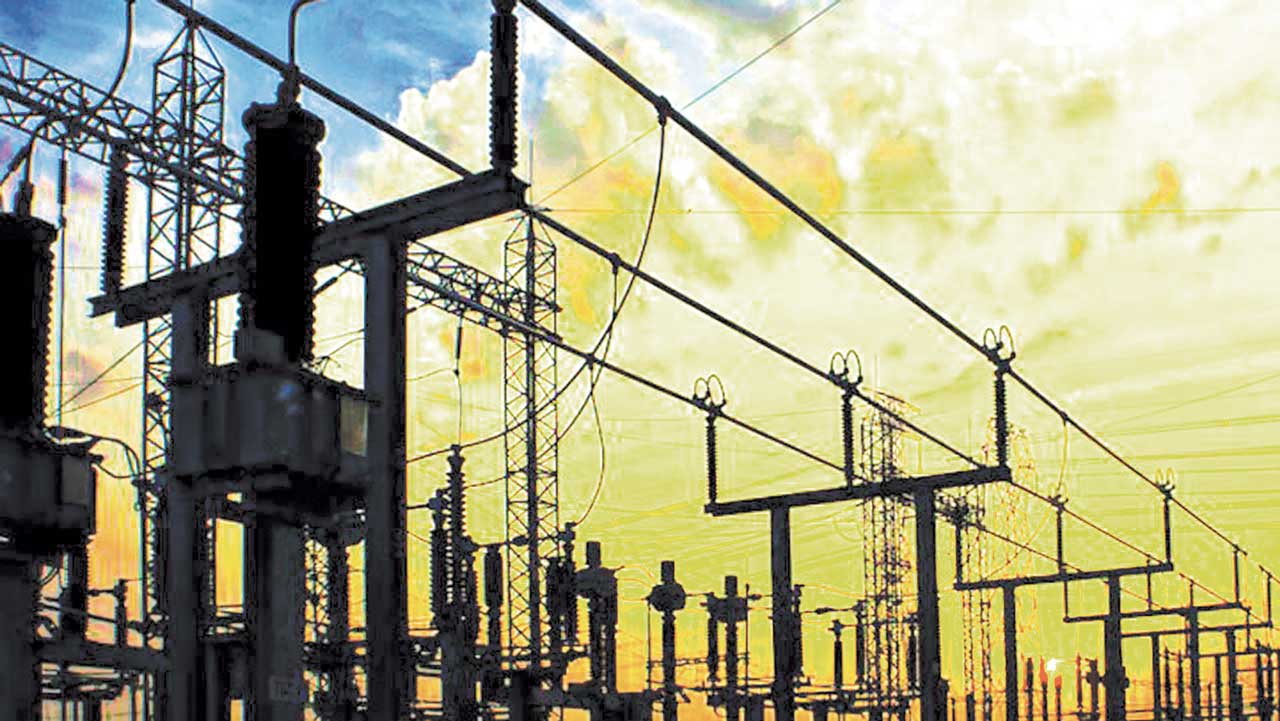
Nigeria’s struggle with electricity is not just about flickering bulbs or darkened homes. It is about the survival of industries, the health of small businesses, and the very foundation of national development.
A stable power supply is the bedrock of productivity, yet, after more than a century of electricity generation, the sector still reflects more chaos than progress. The story began modestly in 1896, when Lagos hosted Nigeria’s first power plant, which had a capacity of just 60 kilowatts.
Over the next few decades, plants sprouted in Port Harcourt, Kaduna, Enugu, Maiduguri, Yola, Zaria, Warri, and Calabar. However, the system was fragmented—managed by native authorities and the Public Works Department—until 1950, when the Electricity Corporation of Nigeria (ECN) was established.
ECN soon became a national monopoly, consolidated further in 1972 when it merged with the Niger Dams Authority to form NEPA. For decades, “NEPA” became a household word, but mainly for the wrong reasons: inefficiency, chronic underinvestment, system losses, power theft, and blackouts that forced families and businesses to rely on expensive generators.
By 1999, fewer than 20 of Nigeria’s 79 power plants were functional. Barely 28% of installed capacity was delivered, leaving millions in perpetual darkness. These failures spurred reform efforts.
The National Electric Power Policy (2001) and the Electric Power Sector Reform Act (2005) paved the way for privatisation, resulting in the establishment of 18 successor companies: 6 generation companies (GenCos), 11 distribution companies (DisCos), and 1 transmission company (TCN).
The promise was clear: privatise, attract investors, boost efficiency, and deliver reliable power. By November 2013, the federal government sold its stakes in the GenCos and DisCos, earning $2.5 billion in proceeds.
Companies like Transcorp Power, Geregu, Ughelli, Shiroro, Sapele, and Kainji took control of generation, while 11 Distribution Companies (DisCos) took charge of retail distribution. But the dream quickly soured. A decade later, efficiency gains remain elusive.
Generation hovers below 5,000MW for a nation of over 200 million. Blackouts are frequent, tariffs are contested, infrastructure remains weak, and both Generation and Distribution Companies (GenCos and DisCos) are drowning in debt.
The situation worsened in 2025 when GenCos raised alarm over a staggering N4 trillion owed to them by the federal government—N1.9 trillion in legacy debts and N2 trillion for power supplied in 2024 alone.
President Bola Tinubu admitted government liability, but insisted only verifiable claims would be honoured. By August, Finance Minister Wale Edun confirmed plans to clear the debts, signalling tacit acknowledgement.
This mountain of debt builds upon years of heavy subsidies and bailouts, with government interventions since 2023 alone estimated to be above N7 trillion. These include tariff adjustments through the Multi-Year Tariff Order (MYTO), direct subsidies, bailout funds, and payment guarantees.
Yet, paradoxically, Nigeria continues to subsidise a sector that was supposed to thrive under private ownership. The Electricity Act 2023 pushed for cost-reflective tariffs, expanded metering, and transmission upgrades.
But the larger question looms: has Nigeria’s privatisation model failed? Or has the government’s constant interference, through subsidies and political tariff control, undermined the very logic of privatisation?
As the GenCos demand arrears, the DisCos complain of low remittances, and consumers grumble under rising tariffs and unreliable supply, Nigeria must confront a harsh reality: electricity is not just an economic issue, but a governance test.
If the sector is to function effectively, the government must draw a clear line—provide enabling policies, enforce regulations, but step back from perpetual bailouts. The time has come to interrogate privatisation, recalibrate the framework, and design a power sector that delivers light, not debt.
For without power, the dream of industrial Nigeria remains trapped in darkness.
Lawal Dahiru Mamman writes from Abuja. He can be reached at: dahirulawal90@gmail.com.

Yobe senator empowers six female constituents with ₦1 million each
By Kasim Isa Muhammad
In a deliberate move to cushion the impact of economic hardship and create sustainable opportunities for women, Senator Ibrahim Mohammed Bomai, who represents Yobe South Senatorial District, has empowered six women with financial support of ₦1 million each.

The initiative, which was unveiled in Potiskum on Friday, is part of the senator’s ongoing interventions aimed at addressing poverty, improving livelihoods, and encouraging women to actively participate in business and community development.
According to Yusuf Zaki, a close aide of the senator who represented him at the event, the programme was carefully designed to give women in the constituency the financial muscle to either start or expand their businesses.
He explained that Senator Bomai recognises the enormous contributions that women make to household welfare and the local economy, and has therefore prioritised their empowerment.
“Senator Bomai believes that empowering women is one of the most effective ways of reducing poverty and improving livelihoods in our communities. The ₦1 million given to each of the beneficiaries will enable them to invest in viable ventures that can sustain their families and, by extension, contribute meaningfully to the growth of the local economy,” Zaki stated while addressing journalists.
He also noted that this intervention is not an isolated gesture, but part of a broader empowerment agenda that the senator has consistently pursued since assuming office.
According to him, the lawmaker has previously supported educational programmes for indigent students, invested in healthcare projects, and initiated youth empowerment schemes to tackle unemployment in Yobe South.
Zaki added that the women’s empowerment programme was deliberately crafted to focus on those who have shown entrepreneurial drive but lacked access to capital due to the harsh economic realities and limited opportunities in rural communities.
One of the beneficiaries, Aisha Mohammed, who operates a small tailoring business, spoke emotionally about how the support has given her a renewed sense of hope.
She said she had struggled for years to keep her shop running with outdated sewing machines and insufficient materials.
“This money is a lifeline for me. With ₦1 million, I can now buy better sewing machines, employ two apprentices and expand my shop to cater for more customers. It is not just about money; it is about the dignity and confidence it gives me to keep going. I am grateful to Senator Bomai for remembering women like us who are struggling to survive,” she told our correspondent.
Another beneficiary, revealed that she intends to invest in poultry farming, which has long been her dream but was hampered by lack of capital.
According to her, poultry has the potential to provide steady income and create employment opportunities for others in her community.
“With this support, I can start on a solid foundation by setting up proper structures and buying enough birds and feed. It is a dream come true because women in rural communities like ours hardly get access to bank loans or financial institutions. This is why we are so grateful to the senator for giving us a chance to stand on our feet,” she said.
Community leaders in Yobe South have also applauded the initiative, describing it as a commendable step towards poverty reduction and local economic revitalisation.
Alhaji Idi Jugujugu, a respected elder in Potiskum, said the programme goes beyond financial empowerment, as it also builds confidence in women and encourages them to see themselves as active contributors to development.
“This is not just about giving money, it is about building confidence in women and showing them that they can also be economic pillars in their families and communities. If more leaders would replicate such interventions, many families would escape poverty and our society would be stronger,” he stressed.