

Need to tackle phone snatching and theft in Kano
By Suleiman Musa Yahaya Ikara
The jeopardy of thuggery and phone snatching in Kano State has evolved into a crisis, affecting the lives of students, as well as other residents in Kano. Just weeks ago, a student of Bayero University, Kano (BUK), became a victim during a routine trip in Dorayi.
This mounting violence threatens the safety, security, and well-being of residents, particularly in the metropolitan areas of Kano.
The Bayero University community has been thrown into mourning following the gruesome killing of a 300-level student, Umar Abdullahi Hafiz, by suspected phone snatchers.
The incident occurred late Wednesday at the student’s off-campus residence in the Dorayi area of Kano metropolis.
Despite the crushing fear that spellbinds communities, remaining silent is not the positive alternative; being silent may simply refer to becoming the next victim of these brutal gangs that prey on the innocent souls.
From the streets of Danbare, Kofar Kabuga, Kofar Mata, Zoo Road, Dorayi, Rijiyar Lemo, Kurna and Gwagwarwa, terrifying reports of violence have become a daily routine.
Street smashes, stabbings, daylight robberies, and innocent lives traumatised by mobs using axes, stones, and knives have turned these areas into unsafe districts.
The brutality of these mobs, commonly known as practitioners of “fadan daba”, is more shocking.
Media platforms are flooding with illustrative graphics, videos and images portraying these violent incidents.
Terrified witnesses film young thugs attacking victims who resist having their phones snatched, with many victims bleeding from multiple stab injuries.
These vehement encounters are no longer isolated incidents but part of an alarming pattern that threatens the peace and stability of Kano.
Confirming the development in a statement on Thursday, the university’s Director of Public Affairs, Lamara Garba, stated that the institution has initiated a manhunt for the perpetrators in collaboration with security agencies.
“BUK Vice-Chancellor, Prof. Sagir Adamu Abbas, condemned the killing and vowed to work closely with law enforcement to ensure those responsible are brought to justice. He further urged students and staff to remain calm, assuring them of the institution’s commitment to their safety and security”.
Phone snatching has become a daily occurrence in Kano, often resulting in the loss of lives and injuries to innocent residents, just as in the case of Umar Abdullahi Hafiz.
This encounter serves as a sobering reminder of the escalating violence erupting anytime, anywhere, and of course ending in catastrophe in Kano.
This terrible act has ignited outrage across Kano. The fact that a well-known and respected educator could fall victim so brutally sends a clear message that no one is safe in the current climate of violence.
Despite these efforts, the menace persists, the gangs’ deep-rooted networks rapidly replenish lost members, highlighting the inadequacy of enforcement alone.
Underlying Political and socioeconomic challenges, including high unemployment, widespread drug abuse, and poor educational opportunities, fuel the cycle of crime and violence.
Need for Holistic Action
Security agencies cannot rely solely on arrests to resolve such enduring crises, which require a community-based approach.
Strengthening community policing, empowering neighbourhood vigilante groups, improving local surveillance, and fostering trust between residents and law enforcement are critical for restoring safety.

Nigeria Customs Service declares open 2025 PRO Workshop in Kano, urges officers to uphold integrity
By Sabiu Abdullahi
The Nigeria Customs Service (NCS) on Monday, September 22, 2025, officially flagged off its 2025 Public Relations Officers Workshop in Kano, charging officers to demonstrate professionalism, resilience, and innovation in sustaining the Service’s image and public trust.
The Comptroller-General of Customs, Adewale Adeniyi, was represented by Acting Deputy Comptroller-General in charge of Enforcement, Inspection, and Investigation, Timi Bomodi, at the opening ceremony held at the Centre of Excellence, Twin Theatres, Bayero University, Kano.
Delivering the CGC’s keynote address, Ag. DCG Bomodi highlighted the Service’s critical role at the “confluence of revenue generation, trade facilitation, and national security,” noting that every decision made by Customs affects citizens, the business community, and international partners.
He stressed that communication in such a sensitive environment must be more than ceremonial.
According to him, public relations officers serve as policy interpreters, dispute mediators, crisis managers, and custodians of the Service’s corporate image.
“Our actions may speak, but it is the voice of public relations that interprets, contextualises, and gives meaning to these actions. That is why this workshop is not just a routine exercise, but a strategic investment in the future of the Service,” he said.
Speaking on the workshop’s theme, “Beyond Masters of Ceremony: The Strategic Role of Public Relations Officers for Institutional Growth and Stakeholder Trust,” the CGC described it as timely and transformative, as it redefines the role of PROs from mere event announcers to key players in policy and stakeholder engagement.
He called on participants to embrace new technologies and crisis response tools, explaining that the rise of artificial intelligence and the risks of misinformation demand higher communication standards.
According to him, “The work of a PRO is not without its challenges. You will face crises that test your judgment, criticism that questions your integrity, and moments where silence may seem safer than speaking. But it is in these moments that your professionalism is most needed.”
Bomodi further assured that the leadership of the Service regards public relations as a vital component of its reform agenda, adding that its partnership with Bayero University represents “a bridge between scholarship and practice.”
He also welcomed BUK students present at the session, noting that their interaction with officers would enrich their academic exposure.
Declaring the workshop open, he urged participants to recommit to integrity and innovation, remarking: “The legacy you leave will not be measured by the number of events you anchored, but by the trust you built, the narratives you shaped, and the credibility you sustained for the Service.”
Governor Abba Yusuf of Kano State, represented by his Director-General of Media, Sanusi Bature, commended the Customs Service for its role in national security, trade facilitation, and revenue generation. He described integrity and fairness as the backbone of effective public relations, stressing that the Service’s National PRO had set a standard for building public confidence.
He added that artificial intelligence, digital analytics, and social media engagement have become new frontiers for PR professionals.
However, he cautioned that “no technology can replace human values of honesty, empathy, and responsibility in communication.”
The Vice Chancellor of Bayero University, Professor Haruna Musa, also welcomed participants and reaffirmed the institution’s readiness to support the Service through training and research.
He described the workshop as a platform that “blends theory with practice in preparing officers for the demands of modern communication.”
In his presentation, President of the Nigerian Institute of Public Relations (NIPR), Ike Neliaku, emphasised that strategic communication is central to nation-building, urging officers to evolve from “managing perception to actively shaping the credibility and trust upon which governance thrives.”
Also speaking, Professor Abdalla Uba Adamu, former Vice Chancellor of the National Open University of Nigeria, underlined the importance of social media as a tool for transparency and accountability.
He advised officers to deploy digital platforms effectively while guarding against disinformation.
Other experts at the event expressed optimism that the four-day workshop would enhance officers’ communication capacity, strengthen their stakeholder engagement, and further solidify the Service’s reputation as a forward-looking institution.

Kano clerics trained on fact-checking to combat misinformation in sermons
By Uzair Adam
Some Islamic clerics in Kano State have received training on fact-checking and media literacy to help them counter false narratives and disinformation in their sermons and public engagements.
The two-day training, organised by Alkalanci, a fact-checking platform, brought together members of the Council of Ulamas and other religious leaders across the state.
The Daily Reality reports that the programme focused on equipping clerics with tools to identify, verify and dispel fake news, particularly on social media.
Speaking at the session, the Chairman of the Council of Ulamas in Kano, Sheikh Ibrahim Khalil, emphasised that religious leaders carry the responsibility of upholding truth and preventing the spread of falsehood.
He noted that misinformation has contributed to social tension and division, urging clerics to lead by example in promoting accuracy and fairness.
“Millions of people listen to you. Whatever you tell them carries weight,” Khalil said, adding that Islam condemns lies and encourages verification before passing information to followers.
Similarly, the 16th Emir of Kano, Muhammadu Sanusi II, represented by Bauren Kano, Alhaji Abbas Dalhatu, Managing Director of Freedom Radio Group, highlighted the impact of social media on shaping public opinion.
“Freedom Radio reaches over 230 million people. The impact of fake news is delicate and dangerous,” he said.
He also cited Surah An-Naml, where Prophet Suleiman instructed his servant and a bird to verify reports about Queen Bilqis, describing it as an Islamic precedent for fact-checking.
Earlier, the founder of Alkalanci, Alhasan Bala, said the workshop targeted religious leaders because of their central role in shaping public opinion.
“We live in a time where information travels faster than ever. A single message, video, or image can reach thousands in seconds, and much of it is inaccurate,” Bala said.
He warned that misinformation threatens peace, unity, and trust in society, stressing that clerics must ensure what they share is true, informed, and beneficial.
Bala added that Alkalanci, established in October 2024, is committed to promoting media literacy and countering disinformation in Hausa-speaking communities.
The training included practical methods of verifying information both online and offline. Bala expressed appreciation to the emir, the Council of Ulamas, and other facilitators for their support.

Prof. Umaru Pate makes history after induction as fellow of Nigerian Academy of Letters
By Gambo Zilkifilu Mohammed
In a moment that resonated with profound significance, the world of Nigerian academia has a new, groundbreaking milestone, and it bears the name of yet none other than the humble yet Noble Professor Umaru A. Pate (Kaigama of Adamawa state). He was inducted as a Fellow of the prestigious Nigerian Academy of Letters (NAL), shattering a long-standing tradition.
For the first time in the Academy’s esteemed history, this highest of honours has been bestowed upon a scholar from the field of Communications, a moment that feels both like a personal triumph and a victory for an entire discipline. The induction ceremony in Lagos was more than just a formal event, it was a heartfelt recognition of a lifetime of dedication.
The Academy, a hallowed body of the finest minds in the arts and humanities, wasn’t just celebrating a list of publications, they were honouring the immense impact of Professor Umaru Pate’s work. They acknowledged how his prolific research and visionary scholarship have fundamentally shaped the development of Mass Communication and Media Studies in Nigeria, empowering a generation of thinkers to understand the powerful role media plays in weaving the fabric of society.
But this historic moment didn’t appear out of thin air. It is the culmination of a decades-long journey marked by relentless pursuit of excellence.
Long before this fellowship, Professor Umaru Pate(Kaigama of Adamawa state) had already cemented his legacy as an academic titan. His path saw him shape young minds as the pioneer Dean of the Faculty of Communication, also the Dean school of post graduate Studies both at Bayero University, Kano.
The pioneer president society of Nigerian Broadcasters (SBN), The current president of Association of communication scholars and practisioners (ACSPN).
He didn’t just teach curriculum but nurtured the ethical core of future media professionals. Today, he provides strategic leadership as the current Vice-Chancellor of Federal University, Kashere, guiding an entire institution toward its potential.
Beyond the walls of universities, his expertise has rippled out into the real world, impacting lives through his work as a consultant for global organizations like USAID, UNFPA, UNICEF, UNESCO, World Bank, Ford Foundation, Mac Arthur foundation and the BBC World Service Trust.
Here, he leveraged the power of communication not for theory, but for tangible human development.
This profound body of work, over 70 publications strong, has already been celebrated with awards like the NUC’s Best Researcher Award and Award of excellence for service to humanity by the National Association of Women Journalist (NAWOJ )in 2020, yet this latest induction carries a unique emotional weight.
Professor Umaru Pate’s story is about more than one man’s ceiling-breaking achievement. It affirms, in the most powerful way possible, that the study of how we connect, inform, and persuade one another is not just a social science. it is a vital humanity, one that sits at the very heart of media, culture and society.
His fellowship is a beacon, illuminating the path for future pioneers.Gambo Zulkifilu Muhammad is a final year student at thedepartment of mass communication BUK

The gentle power of giving: The life story of Dr Bala Maijama’a Wunti
By Usman Abdullahi Koli, ANIPR
Some lives are measured in years, others in titles, and some in possessions. The rarest and most enduring lives are measured in the hearts they touch and the hope they restore. Dr Bala Maijama’a Wunti belongs firmly in that rare place. His journey has been one of resilience and quiet strength, of rising from hardship to become a fountain of generosity whose waters reach far beyond the place where they spring.
Born on 8th August 1966, his earliest years were marked by a loss that would shape the rest of his life. Losing both parents as a child meant entering the world with an emptiness most could never imagine. Those days were not kind; survival was his only option. There were no easy comforts, no safety nets, only the will to push forward and the dream that tomorrow could be better.
Instead of allowing hardship to harden him, it softened him in extraordinary ways. The hunger he knew became a hunger to feed others. The loneliness he endured became a desire to stand by those who had no one to stand by. The obstacles he faced became a determination to clear the paths for others. He did not allow pain to turn into bitterness; he transformed it into kindness.
Over the years, giving has become so deeply ingrained in his life that it no longer feels like charity; it feels like breathing. He has lifted burdens that would have crushed families, stepped in quietly where hope was fading, and turned despair into relief for people who may never know his face but will always remember his help. For him, giving is not a grand event; it is the natural rhythm of his days.
Only yesterday, on the eve of his birthday, he paid the full registration fees for Bauchi State indigenous Law students across Law Schools in Nigeria and added incentives to support their journey. For those young men and women, it was more than a payment. It was a belief in their dreams and a reminder that someone cares enough to invest in their future. Acts like this are not exceptions in his life; they are the pattern.
His foundation, Wunti Alkhair, is an extension of his own values. It reaches into communities, lifts the sick from their sickbeds by clearing medical bills, opens doors of opportunity for young people to acquire skills, and creates moments of dignity where they seemed lost. It strengthens faith by building and restoring places of worship, not as monuments of wealth but as sanctuaries of hope.
What makes him remarkable is not just the scale of what he gives but the sincerity with which he provides it. There is no fanfare, no calculation, no search for applause. Many of those who have felt his kindness will never meet him, yet they carry a piece of him in their stories, in their survival, and in their renewed strength to face life again.
As we celebrate his birthday, we celebrate far more than a date. We honour a man whose life is proof that greatness is not in what we take but in what we give. A man who rose through the storms of his own childhood to become a shelter for others. A man who, in a world too often cold and self-serving, has chosen to be warm and selfless.
May Allah grant him long life, good health, and the strength to keep shaping lives for the better. May his journey remind us all that no matter where we start, we can choose to live in a way that makes the world a little softer, a little fairer, and a little kinder.
Your life is not only a blessing to those who know you but to many who never will, and that is the highest form of legacy.
Usman Abdullahi Koli wrote via mernoukoli@gmail.com.

Scholars converge at BUK to celebrate literary works of Aliyu Kamal
By Fatima Badawi
The Department of English and Literary Studies at Bayero University, Kano (BUK), successfully convened a two-day National Conference to critically examine and celebrate the prolific, well-grounded and giant literary works of the literary guru, Professor Aliyu Kamal, one of the Northern Nigeria’s most influential literary figures.
Held at the University’s Main Campus under the theme “Interdisciplinary perspectives on the works of Aliyu Kamal,” the conference attracted a diverse gathering of academics, writers, students, and family members of the prolific English author.
The event served as a significant platform to re-evaluate Kamal’s contributions to Nigerian literature and his unique portrayal of the socio-cultural dynamics of Northern Nigeria, which some view as Islamic genre.
The opening ceremony was chaired by the Vice-Chancellor of Bayero University, Professor Haruna Musa, who was represented by the Deputy Vice Chancellor Research and Development, Professor Amina Abubakar. In his address, the Vice-Chancellor commended the department for its initiative, stating that “Aliyu Kamal’s works are not merely stories; they are cultural archives that document the complexities, the joys, and the challenges of our society. This conference is a vital step in preserving our intellectual heritage, and it will pave way to getting a Nobel Laureate, starting from home.”
The keynote address was delivered by the renowned literary scholar, Professor Sani Abba Aliyu, mni. In a compelling presentation were he maintained that
Kamal possessed an uncanny ability to weave intricate tales that are simultaneously local and can equally be regarded as universal. His characters grapple with issues of modernity, tradition, governance, religion and personal identity in a way that resonates deeply across the Northern Nigerian landscape. He gave a distinct voice to the Northern Nigerian experience, ensuring it was an integral part of the national literary conversation.
Over the course of the conference, multiple lead papers featured presentations from scholars from various universities across the country. Papers explored diverse aspects of Kamal’s oeuvre, including feminist readings of his female characters, post-colonial interpretations of his narratives, stylistic and metaphorical analyses of his use of language, the Islamic genre and the philosophical underpinnings of his themes.
The Head of the Department of English and Literary Studies, Dr. A’isha Umar, in her remarks, described the conference as a resounding success. “Our objective was to ignite a renewed scholarly interest in Aliyu Kamal and to introduce his rich legacy to a new generation of students. We expect an overwhelming participation and the quality of discussions today and in the remaining days of the conference. This is not an end, but a beginning of a more sustained engagement with his works.”
Some of the participants urged that the papers presented should be compiled and published in an edited volume, ensuring that the critical insights generated would contribute to future scholarship on Nigerian literature. The event firmly re-established Aliyu Kamal’s position as a cornerstone of the nation’s literary canon.
The conference is still ongoing and it is expected to finish next Thursday.

Opposition of ignoramus and the clout power pursuit
By Oladoja M.O
In every democracy, opposition is meant to sharpen governance, hold power accountable, and deepen national debate. However, when opposition is driven not by facts, ideas, or vision, but by ignorance and a desire for power, it ceases to be the conscience of democracy and becomes the cancer of progress. Nigeria is today saddled with an opposition that mistakes noise for logic, Twitter trends for policy, and cheap comparisons for economic analysis.
The latest shameless theatrics are the attempts by the obedient leader, our chief serial-contester, and their coalition of recycled political elders to compare Nigeria’s economic trajectory with that of Argentina. They raise Argentina as though it were a heaven of reforms, while ignorantly or deliberately ignoring the bitter cries of Argentines battered by Javier Milei’s austerity chainsaw.
Argentina has cut nearly 48,000 public-sector jobs, vetoed even modest pension increases, and forced retirees onto the streets to be beaten by police water cannons and rubber pellets. Poverty there is climbing toward 60%, subsidies have been axed overnight, and the government survives only by begging the IMF for lifelines.
That is not reform, it is desperation.
This is in contrast to the Nigerian reality. Here, we removed the cancerous fuel subsidy, unified exchange rates, and embarked on painful but necessary monetary tightening to bring inflation under control. Inflation, which soared in 2023, is now sliding downwards in 2025, with headline CPI dropping to 21.8% in August. The fiscal deficit has narrowed from 5.4% of GDP to about 3.0%. Electricity sector debts are being refinanced, and the macroeconomy, though still rough, is anchored on a foundation of stability.
Even Ngozi Okonjo-Iweala, no spokesperson of any party, but the globally respected WTO chief, publicly affirmed: “Nigeria has achieved stability, now the task is to drive inclusive growth.” Yet, the same opposition that celebrates Argentina’s IMF-borrowed pain and police-clubbed pensioners shamelessly called her “economically ignorant” for acknowledging the obvious.
Tell me what else defines nitwittery than this.
Though not so surprised, because ignorance has always been their brand. They cannot differentiate between stability and growth. To them, the economy is nothing more than the price of a bag of rice. Mr Obi throws around phrases like “lifting people out of poverty” as if they were trendy slogans for his following rally chant.
Oga Atiku, the permanent opposition aspirant, is once again cobbling together his “company of ex-this and former-that”, a cargo association of spent forces whose only qualification is that they once had access to government coffers and now desperately want another turn to loot. Their supporters, equally blind, cheer along, not out of reason but out of ignorance or bitterness, unable to see that governance is not Instagram clout, but hard, grinding policy.
This is not to canonise the Tinubu administration, make no mistake. I, too, demand more. There are ministers in this government who are sleeping on the job, and there are loopholes where reforms have yet to trickle down. Nigerians are eager for a positive impact in their daily lives, particularly in areas such as health, nutrition, education, and civil service efficiency. But unlike the ignoramus opposition, I understand sequencing. You first stabilise the macroeconomy, then you build growth on that foundation. What we need now is coordination, urgency, and social interventions that humanise the numbers. And to be fair, signs are there.
The launch of the Renewed Hope Ward Development Programme, designed to empower 1,000 persons in each of Nigeria’s 8,809 wards, is one right instinct: drilling development down to the grassroots, away from abstract figures, into real people’s lives. As Minister Atiku Bagudu explained, this initiative will stimulate ward-level economic activity, generate employment, enhance food security, and turn stability into grassroots growth. It is precisely the kind of bottom-up complement that the current macro reforms require.
So yes, the work is far from done. Nigerians need more, faster, and better delivery. However, comparing Nigeria to Argentina is intellectual dishonesty or outright ignorance. Argentina is bleeding; Nigeria is stabilising. Argentina is laying off workers; Nigeria is restructuring its debt. Argentina is on IMF life support; Nigeria is financing reforms internally. Argentina is repressing protests; Nigeria is still debating freely.
The opposition can continue to chase clout, weaponise ignorance, and gather their fellowship of losers. Unfortunately, we are not getting what we deserve. Nigerians deserve informed opposition, not this company of old cargoes and nitwits parading as saviours.
However, for those of us who see clearly, we will demand more from the government, but we will not be drawn into the cesspool of ignorance disguised as activism.
The path forward is clear: build on the stability achieved, accelerate the trickle-down effect through real social interventions, empower the workforce, integrate the informal sector, and ignite genuine growth. That is how nations rise, not through the shallow chants of ignoramus opposition, nor through the empty hunger of clout chasers, but through truth, stability, and hard work.
Oladoja M.O writes from Abuja and can be reached at: mayokunmark@gmail.com.

Court orders reopening of private school in Kano after misinterpreted closure
By Uzair Adam
A Chief Magistrate Court sitting at Gyadi Gyadi in Kano has vacated an earlier order that led to the closure of Prime College, a private secondary school in the state.
Presiding Magistrate, Fauziyya Sheshe, on Monday directed the immediate reopening of the school, clarifying that the Kano State Private and Voluntary Education Board (PVIB) had misinterpreted her earlier ruling.
The Daily Reality gathered that on September 16, the court had issued a perpetual injunction in a suit filed by PVIB against Prime College, pending the hearing of a motion on notice scheduled for October 7, 2025.
Magistrate Sheshe explained that she had now vacated any restrictions arising from the earlier order, stressing that the school was free to operate.
She said the decision was based on an application filed by the State Counsel and her own discretion.
The legal team representing Prime College had appeared in court on Monday to challenge the legality of the “perpetual orders” earlier obtained against the institution.
The dispute traces back to a July 2025 announcement by Prime College of fee adjustments for the 2025/2026 academic session.
The school cited inflation and the need to sustain quality teaching and infrastructure, assuring parents of flexible payment plans and that no student would be denied education for inability to pay.
While the management claimed that more than 94 percent of parents complied with the new rates, fewer than 20 parents rejected the increment and petitioned PVIB, describing the move as exploitative.
Following the petition, PVIB Executive Secretary, Malam Baba Abubakar Umar, visited the school with some parents and set up an interim PTA committee of eight parents and five teachers.
The committee voted in support of the fee hike, but PVIB later declared the process inconclusive and directed a reversal of the increment.
The management of Prime College alleged that attempts to dialogue with PVIB were met with “abuse, denigration, and public embarrassment.”
On September 17, the school was served with a court order halting implementation of the new fees and suspending operations.
However, the following day, September 18, media reports suggested that the school had been completely shut down — a claim the school described as a misinterpretation of the court’s directive.
With Monday’s ruling, Prime College has been cleared to reopen immediately, pending further hearing on the substantive suit.

Gov Yusuf approves minor cabinet reshuffle in Kano
By Uzair Adam
Kano State Governor, Alhaji Abba Kabir Yusuf, has approved a minor cabinet reshuffle and senior staff posting in the state civil service as part of efforts to strengthen governance and improve service delivery across key ministries.
In a statement issued on Monday by his spokesperson, Sanusi Bature Dawakin-Tofa, the Governor directed the redeployment of the Attorney General and Commissioner for Justice, Barr.
Haruna Isa Dederi, to the Ministry of Transport. Similarly, the Solicitor General and Permanent Secretary in the Ministry of Justice, Barr. Mustapha Nuruddeen Muhammad, has been reassigned to the Ministry of Environment as Permanent Secretary.
The Commissioner for Humanitarian Affairs, who has been serving in an acting capacity at the Ministry of Transport, will now return to her substantive ministry.
Governor Yusuf instructed all officials affected by the changes to hand over to the most senior officers in their respective ministries.
The handing over and taking over exercise is to be concluded immediately, effective from Tuesday, September 23, 2025, before the close of business.
Reaffirming his administration’s commitment to accountability, efficiency, and purposeful leadership, the Governor said the reshuffle was designed to maximize capacity, align responsibilities, and ensure that government delivers effectively on its mandate to the people of Kano State.
He urged the newly redeployed officials to work with dedication and called on government staff to extend maximum cooperation to them in the discharge of their duties.
Rarara’s honorary doctorate controversy: A call for Nigerian universities to recognise cultural icons
By Dr Abubakar Bello
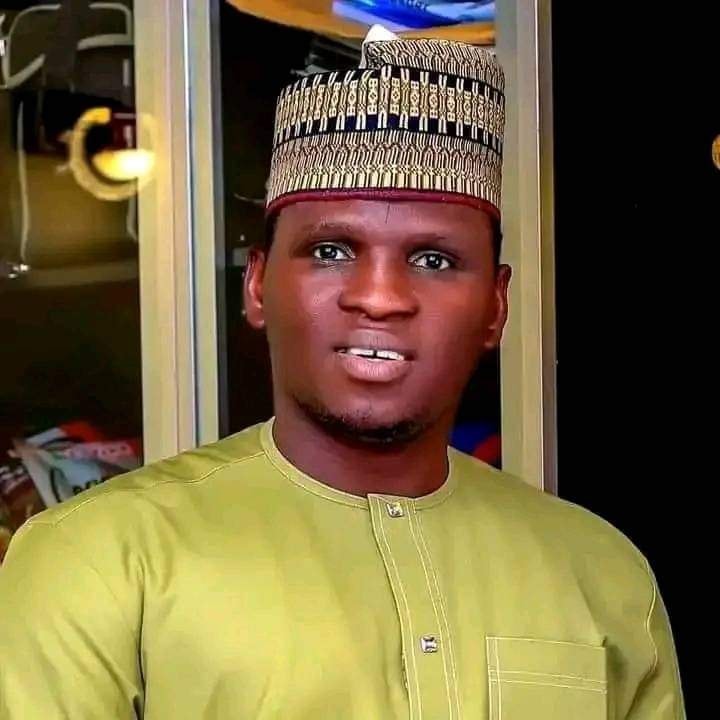
The recent controversy over an alleged honorary doctorate awarded to musician Alhaji Dauda Kahutu Rarara has sparked debate across northern Nigeria. Initially, reports indicated that the European-American University conferred an honorary doctorate on him in Abuja. However, days later, the institution publicly denied endorsing such an award, describing the event as fraudulent.
This is not the first time Rarara’s name has been caught in institutional back-and-forth. At one point, the Federal University Dutsin-Ma (FUDMA) was said to be planning a conference to celebrate his contributions to music and politics. Yet the university later backtracked, insisting the information was fake. The recurring pattern suggests not a lack of merit on Rarara’s part, but rather institutional hesitation in dealing with a figure whose art, political songs, and social influence are both celebrated and contested.
There is clear precedent for cultural icons receiving academic recognition. The late Mamman Shata, perhaps the most revered Hausa musician of the 20th century, was formally honoured by Ahmadu Bello University, Zaria. That recognition secured his place not only in the cultural memory of the Hausa people but also in academic history. By that measure, Rarara too will, sooner or later, be recognised by universities both within Nigeria and abroad for his cultural and political contributions. The real question is: which university will take the initiative?
Across Nigeria, universities have rightly celebrated industrialists, politicians, and philanthropists with honorary degrees, sometimes even surprising their own local institutions, as happened when other universities honoured Katsina’s business mogul, Alhaji Dahiru Mangal, taking Umaru Musa Yar’adua University, his home-state university, by surprise. Yet cultural figures, especially musicians whose work captures the pulse of society, are too often overlooked until history forces recognition.
This is an opportunity for Nigerian universities to redefine what they celebrate. Honorary degrees are not just ceremonial gestures. They are statements of value, affirmations that music, political commentary, and popular culture are as vital to society as commerce and politics.
Whether in Katsina or beyond, Nigerian universities have the opportunity to lead by recognising Rarara. Doing so would not only honour one man but also promote the significance of indigenous music and political expression in our collective intellectual and cultural heritage. The controversy over fake awards should not overshadow this larger truth: Rarara’s contributions are genuine, and he deserves formal recognition.
Dr Abubakar Bello wrote from the Department of Biological Sciences, Umaru Musa Yar’adua University, Katsina. He can be reached via bello.abubakar@umyu.edu.ng.