



Kwankwaso denies defection rumours to APC
By Anwar Usman
Former presidential candidate and the national leader of the New Nigeria People’s Party (NNPP), Senator Rabiu Kwankwaso, has firmly denied claims that he submitted a letter of intent to join the ruling All Progressives Congress.
He made this statement in response to reports of his imminent defection to the APC.
This comes amidst rising political chatter early Friday morning, suggesting that the former Defence Minister had made formal overtures to the APC and had already begun talks with the party’s National Chairman behind closed doors.
In a statement personally signed and released through his media team on Friday, Kwankwaso refuted the claims, describing them as “online statements” lacking credibility or foundation.
The statement in part reads “we have been alerted to some online statements suggesting that we have submitted a letter of intent to join a political party in the country”.
“We would like to clarify that we have not made any such submission to any party. The public is therefore advised to stay informed of any further information regarding our matter through the established official channels”.
The speculation has triggered fresh speculation within political circles, especially as the 2027 general elections begin to cast long shadows across the country’s volatile political landscape.
Earlier on Friday, reports from political sources within the APC said that Senator Kwankwaso had allegedly sent a “discreet” letter to the party’s national secretariat indicating interest in joining the party.
The reports also hinted at ongoing discussions between Kwankwaso and the APC National Chairman, sparking a flurry of reactions across social media platforms and party caucuses.
With 2027 elections coming closer and the APC reportedly eyeing a broader northern consolidation, insiders believe both sides may be keeping lines of communication open — even if no formal letter has yet changed hands.
For now, Kwankwaso maintains that no move has been made — but in Nigerian politics, silence and denial are often the calm before a calculated storm.
The Almajiri System: A broken legacy we must bury
By Umar Sani Adamu
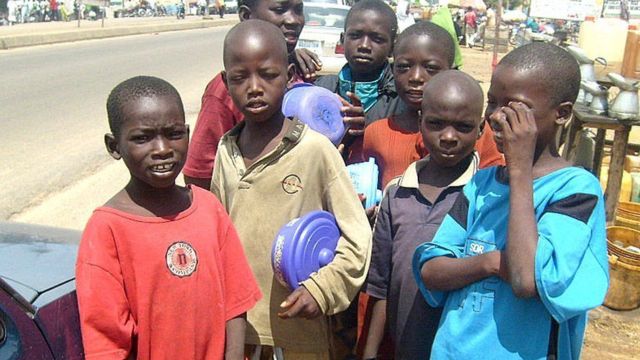
The Almajiri system, once a noble pursuit of Islamic knowledge, has degenerated into a humanitarian disaster spread across Northern Nigeria. From the streets of Kano to the slums of Sokoto, thousands of children wander barefoot, hungry, and hopeless victims of a tradition that has outlived its purpose.
The idea behind Almajiranci was simple: young boys, mostly from rural or poor families, would be sent to Islamic scholars for religious education. But over time, what began as a pathway to learning became a pipeline to poverty, abuse, and neglect. Today, these children beg for survival, live in unhygienic conditions, and face constant exposure to criminality and exploitation.
Every year, thousands more are pushed into this cycle. With no formal curriculum, no sanitation, no feeding structure, and no monitoring, the system violates every principle of child welfare and human dignity. Many of these almajiris live in overcrowded, unventilated rooms, sometimes as many as 18 children in a single space, with no access to health care, no protection, and no future.
While governments talk reform, very little action meets the urgency. Integration programs are underfunded, religious institutions are left unchecked, and families often forced by poverty continue to submit their children to this outdated system. Meanwhile, the streets of Northern Nigeria grow more unsafe as vulnerable children are manipulated by extremist groups and criminal syndicates.
Let’s be clear: the Almajiri system, in its current form, is not education. It is abandonment. It is state-sanctioned child endangerment masquerading as religion. Any society that claims moral or spiritual uprightness cannot continue to tolerate this level of systemic neglect.
What Northern Nigeria needs is not a patchwork of reforms, but a complete overhaul. Islamic education should be formalised, monitored, and integrated into the broader national curriculum. Children should learn in safe environments where Qur’anic knowledge is integrated with literacy, numeracy, hygiene, and vocational training. Religious scholars must be trained, certified, and held accountable.
Above all, we must shift the responsibility from children back to adults. Governments, communities, parents, and religious leaders must admit the system has failed and work together to end it. The Almajiri child deserves more than survival. He deserves dignity, opportunity, and a future.
This is not just a social concern. It is a national emergency.
Umar Sani Adamu can be reached via umarhashidu1994@gmail.com

VLF demands release of activists, probe of Bauchi senator
By Sabiu Abdullahi
The Visionary Leaders Foundation (VLF) has called for the immediate release of two Nigerians arrested over online posts about allegations against Senator Shehu Buba Umar of Bauchi South.
In a statement signed by its Executive Director, Abdulbasit Muhammad, the group said the arrests “illustrate a pattern of shrinking civic space, criminalisation of free expression, and intimidation of citizens who dare to engage in public debate online.”
It explained that Mr. Daure David was detained by the Bauchi State CID after translating into Hausa a Sahara Reporters headline on the senator, while TikTok creator Mr. Ishaq Abubakar Major was arrested in Abuja by the FCID for a video commentary.
According to the foundation, “He is currently held without any clear evidence of wrongdoing other than exercising his voice on a public platform.”
The group stressed that freedom of expression is guaranteed by the Nigerian Constitution and international conventions, warning that attempts to silence citizens online amount to a violation of civic rights.
It further demanded an “independent, and impartial investigation” into the allegations against Senator Umar, saying that only transparency can restore public trust.
The foundation listed six demands, including the release of the detainees, protection of digital rights, and passage of the Digital Rights and Freedom Bill.
“The arrests of Mr. Daure and Mr. Ishaq Major send a chilling message that free expression, particularly in digital spaces, is under siege. This trend must be reversed,” the statement concluded.

APC plots Kano comeback for Tinubu in 2027
By Abdullahi Mukhtar Algasgaini
Ahead of the 2027 general elections, top figures of the All Progressives Congress (APC) in Kano State have declared their intention to reclaim the state from the New Nigeria Peoples Party (NNPP) and secure the re-election of President Bola Tinubu.
The pledge was made on Thursday in Abuja following a strategic meeting of party stakeholders.
The meeting was led by former APC national chairman Abdullahi Ganduje, Deputy Senate President Barau Jibrin, and House of Representatives member Abubakar Bichi.
Addressing journalists, Dr. Ganduje, a former governor of Kano, stated that the meeting was held to assess the party’s progress and affirm its unwavering support for President Tinubu.
He expressed confidence in the APC’s growing strength in the state, despite its loss in the 2023 polls.
“We have resolved that we will continue to work very hard to ensure that we succeed in the next gubernatorial election in Kano State,” Ganduje said.
He added that part of their strategy includes mobilizing supporters for the ongoing voter registration exercise.
Echoing this sentiment, Senator Barau Jibrin cited President Tinubu’s “giant strides” and developmental projects in Kano and the wider northern region as the reason for their solid backing.
He pledged that stakeholders would intensify efforts to publicize the administration’s achievements.
Similarly, Hon. Abubakar Bichi dismissed claims that Tinubu lacks support in the north, labeling such insinuations as “cheap politics.”
He affirmed that the APC in Kano is united and determined to deliver victory for the party in the 2027 elections.

Katsina govt sacks 3,488 workers over alleged fraud
By Uzair Adam
The Katsina State Government has terminated the employment of 3,488 staff from 34 Local Government Councils and Local Education Authorities following a biometric screening exercise that uncovered extensive fraud.
Governor Dikko Radda, who received the screening report on Wednesday, said the exercise covered 50,172 staff members, verifying 46,380, while the remainder were found with fake credentials, ghost postings, absenteeism, or refusal to participate.
The report was formally presented at a State Executive Council meeting attended by top government officials and members of the Biometric Screening Committee.
The initiative has produced the state’s first-ever unified digital database of all Local Government Council (LGC) and Local Education Authority (LEA) staff, with projected monthly savings of N453.3 million if recommendations are fully implemented.
The 10-member committee identified falsified birth certificates, underage employment, illegal promotions, and instances where staff positions were sublet to others.
Additionally, N4.6 million was recovered from officers drawing double salaries or collecting pay while on leave.
Committee chairman Abdullahi A. Gagare revealed that the exercise also exposed the Education Secretary of Zango LEA for allegedly colluding with others to insert 24 ghost workers, describing the case as a “serious breach of trust.”
Governor Radda said, “We have been in the system for a long time, and we know these issues exist. Many warned me that the Committee’s work could damage my political standing, but I was determined to reform the system and do what is right for Katsina.”
He directed that the committee’s findings be converted into a White Paper for full implementation. Radda noted that local governments currently have about half a billion naira in savings, which could increase to N5.7 billion if the recommendations are applied.
“Despite high revenue allocations, many local governments in Katsina still struggle to pay salaries. Councils such as Kafur, Malumfashi, and Daura carry heavy wage bills, mostly due to staff who are not genuine,” he explained.
The governor emphasised that reducing this burden would free up resources to support grassroots development.
“This reform is aimed at saving the state from the grip of a few, ensuring more funds reach the people in our local governments,” Radda added.
The screening exercise was carried out by a 10-member committee, including four retired Permanent Secretaries and six Directors, supported by 16 co-opted members and security personnel.

Don’t postpone kindness, you may never get another chance (2)
By Aisha Musa Auyo
The second story that inspired this reflection is the death of an acquaintance. She was the HR of a company that once offered me a job as an editor. We had exchanged emails, and I went there in person to explain why I couldn’t take up the role. That first visit also turned out to be my last. The company’s owner is a friend, so it was easy to discuss things openly.
After hearing me out, she understood my situation as a young mother. She said she had once been in my shoes and offered some warm advice, assuring me that the company would always welcome me if I were ready in the future. As I was about to leave, she asked about the fragrance I was wearing. She said, “The whole office is filled with your scent. It’s so calming.”
I explained that it wasn’t a regular perfume but Turaren Wuta (incense) and humra. She smiled and said she was familiar with them but had never come across such heavenly scents before. I promised to send her some to try.
It was a casual conversation, but I took it to heart. I packed black and white humra with some incense and gave them to my driver for delivery, as I was travelling at the time. Days turned into weeks, with excuse after excuse from him. When I called her, she said she never got his call, and even if she wasn’t around, he could have left the package at the office.

Back from my trip, I retrieved the parcel and handed it to another driver. Again, excuses. Frustrated, I shared my ordeal with a family member. She dismissed my worry: “You’re overreacting. This woman has probably forgotten about the incense. She doesn’t owe you anything. Why stress yourself over this?”
But deep down, I couldn’t let it go. Something urged me on. I said, “Whatever it takes, I’ll do this delivery myself, I insisted. The family member teased me, calling me stubborn, “Aisha kina da naci wallahi, kin damu kowa a kan abin da ba shi da mahimmanci”. I said na ji. It felt as though everything, including the universe, was determined to stop me from sending that gift.
Finally, when I demanded the second driver return the parcel so I could deliver it personally, he apologised and promised to take it that week. Two days later, she sent me a message, thanking me warmly. She said, “It was worth the wait.” I apologised for the delay, and that was the last time we spoke.
This week, I received the news of her death. She had been battling a heart condition. I remembered how she once mentioned wanting to lose weight for health reasons. My heart sank. I prayed for her soul and felt profoundly grateful that I had managed to give her something she wanted before her passing. Suddenly, I understood why my instincts had been so insistent.
The lesson is clear: never postpone kindness. Please do it now, because tomorrow is never promised.
Aisha Musa Auyo is a doctoral researcher in educational psychology. A wife, a mother, a homemaker, a caterer, a parenting, and a relationship coach. She can be reached via aishamuauyo@live.co.uk.

Ex-AIG, four retired police officers to face court over alleged age falsification
By Uzair Adam
The Inspector-General of Police, Kayode Egbetokun, has filed charges against five retired senior officers of the Nigeria Police Force (NPF) for allegedly falsifying their ages to unlawfully extend their years of service.
The case, brought before the Federal Capital Territory (FCT) High Court, has been assigned to Justice Yusuf Halilu, who has fixed September 25 for the arraignment of the defendants.
The 14-count charge names Idowu Owohunwa, a retired assistant inspector-general of police; Benneth Igwe and Ukachi Opara, both retired commissioners of police; Obo Ukam Obo, a retired deputy commissioner of police; and Simon Lough, a retired assistant commissioner of police, while also referencing “others at large.”
According to the police, Owohunwa allegedly falsified his date of birth in Abuja in December 2024, claiming July 20, 1970, instead of his actual birth date. Igwe is accused of altering his records to reflect October 7, 1968, when investigators found he was born four years earlier, with his enlistment record showing contradictory entry dates of 1988 and 1996.
Lough allegedly changed his birth date from May 14, 1967, to May 14, 1969, in July 2022 to remain in service.Police say these acts violate public service rules and are punishable under sections 97, 161, 366, and 158 of the Penal Code.
The accused officers, however, denied any wrongdoing, calling the allegations malicious and politically motivated.
They said the case arose from a petition by the Integrity Youth Alliance, a civil society group led by Kelvin Adegbenga, which accused them of manipulating service records.
Following the petition, the IGP issued them queries for serious misconduct on January 7, 2025.
In response, Owohunwa admitted a clerical error in his APER form listed 1970 instead of 1967 as his birth year, insisting his official appointment date remained August 15, 1996.
Igwe and Lough also denied the allegations, claiming the petitioners had confused their career records with the Administrative Staff College of Nigeria (ASCON) scheme, which allows certain officers’ records to be updated.

Kidnapping ransoms drain N2.2trn from Nigeria in one year—Report
By Uzair Adam
Nigeria lost an estimated N2.2 trillion to ransom payments between May 2023 and April 2024 — an amount higher than the country’s 2024 defence budget — according to the 8th Nigeria SDG 16 Shadow Report released by the Civil Society Legislative Advocacy Centre (CISLAC) and Transparency International (TI) Nigeria.
The report, titled “Leaving No One Behind: Anti-Corruption, Right to Information, and Justice for All,” was unveiled during a side event at the United Nations General Assembly in New York on Tuesday.
At the launch, CISLAC’s Executive Director and Head of TI Nigeria, Comrade Auwal Ibrahim Musa (Rafsanjani), warned that the country is “trapped in a dangerous cycle of corruption, weak institutions, and worsening insecurity,” which could derail its chances of meeting the 2030 Sustainable Development Goals.
He described kidnapping for ransom as fully “commercialised,” revealing that more than 2.23 million incidents were recorded within the one-year period, with payments amounting to N2.2 trillion — about US $1.4 billion.
Rafsanjani noted that this figure surpasses Nigeria’s entire 2024 defence allocation, stressing that insecurity has been effectively “privatised” at the cost of national stability.
He also linked governance failures to political impunity, pointing out that many leaders routinely ignore constitutional requirements to declare their assets before the Code of Conduct Bureau.
According to him, such disregard erodes public trust and undermines anti-corruption efforts, while some politicians divert taxpayers’ money to luxury properties in Nigeria and abroad, fueling illicit financial flows.
The report further raised alarm over opaque asset recovery processes, allegations against judicial figures, irregularities in the electoral commission, and weak vetting of political appointees — warning that democratic institutions are increasingly viewed as compromised.
Examples cited include the arrest of Katsina whistleblower Mubarak Bello after he exposed police payroll fraud, and a UK Tribunal ruling against Chief Mike Ozekhome and his son in a case involving a property transfer linked to General Jeremiah Useni.
It also referenced allegations of luxury property purchases in the United States linked to Nigeria’s FCT Minister, Nyesom Wike.
On fiscal transparency, the report highlighted Nigeria’s poor scores in the 2024 Open Budget Survey (31/100) and Freedom of Information Act compliance (11.4%), while noting that the Open Treasury Portal has become inactive.
It also identified procurement fraud, vote-buying, campaign finance violations, and repression of civic space as persisting threats.
Rafsanjani described the report as both “a mirror and a roadmap,” stressing that Nigeria risks missing the 2030 goals not because of weak laws but due to a lack of political will.
He called for stronger institutions, an open civic space, and true respect for the rule of law to ensure that “no one is left behind.”

Ballon d’Or and the credibility question
By Amir Abdulazeez
I am writing on this not because I have any significant concern for the award or its credibility, or because it has any correlation with the well-being of anybody in need (which I am often more concerned about). I am doing so instead due to the massive perennial debate it generates, especially among youths in Nigeria, as well as the misinformed opinions surrounding it.
Again, the Ballon d’Or, like football itself, has transcended sport to become part of international politics and history. I became shocked when I saw a globally renowned Muslim scholar congratulating Ousmane Dembele for winning the 2025 version and hailing its award to a ‘practising Muslim’. Obviously, the crown now carries political significance that stretches well beyond the pitch.
Since its inception in 1956, the Ballon d’Or has been regarded as football’s most prestigious individual award. Founded by France Football (conceived by sports writers Gabriel Hanot and Jacques Ferran), the award was initially designed to honour the best European player annually, with Stanley Matthews of Blackpool becoming the pioneer winner. Later, it evolved into a global prize, celebrating many other icons. Many have rightly questioned the credibility of the award, but mostly on myopic grounds centred around player and club sentiments. However, as a long-time football observer, I believe there are much broader issues regarding the credibility of the award that are worth discussing.
Let us start with the politics. During the Cold War (1947-1991), Eastern European players (more aligned to the Soviet Union) often struggled to receive equal recognition despite dazzling performances, while Western European stars (more aligned to the United States and friends) enjoyed more favourable media attention. Although Russian goalkeeper Lev Yashin won the award in 1963, many argue that his case was only the exception that proved the unwritten rule of ‘politics, geography, and media exposure consistently play decisive roles’. Today, the award continues to reflect broader inequalities in the sport of football. European clubs dominate global coverage, which inflates the recognition of their stars. Players performing in less visible leagues, whether in South America, Africa, or Asia, rarely receive consideration, even if their contributions are extraordinary.
Another concern is the award’s inconsistent eligibility rules over time. Until 1995, only European players competing in European clubs were considered, excluding legendary figures such as Pelé and Diego Maradona from even receiving a nomination. It was only after a rule change that non-Europeans in European leagues became eligible, allowing George Weah to win in 1995. Yet, by then, the award had already excluded decades of worthy non-European and non-European-based winners. Mild allegations of racism also cast a dark shadow over the award. Many believe players like Didier Drogba, Samuel Eto’o, Yaya Touré, Sadio Mané and Mohammed Salah were routinely ranked below their pedigree. In 2021, French pundit Emmanuel Petit openly questioned whether African players were judged by double standards.
The selection of voters itself raises concerns. Initially restricted to journalists, it later expanded between 2010 and 2015 after a merger with FIFA’s “World Player of the Year,” adding coaches and captains to the electorate whose votes often reflected tribal, national or club loyalties rather than merit. The 2016 reversion to journalist-only voting may be a tacit admission of voting flaws, thereby creating difficulties in making comparisons across eras. For example, Lionel Messi’s consecutive wins (2009-2013) under a global, mixed electorate cannot be objectively compared to Michel Platini’s (1983-1985) under a European-only jury. The current co-organisation with UEFA, which began in 2024, signifies another attempt to lend the award more institutional weight. However, the constant changes in its format and governing alliances suggest an award in search of a stable identity, struggling to balance its commercial ambitions with its original purpose.
Bias towards attacking players has been an emerging hallmark of Ballon d’Or selections. Legendary defenders like Paolo Maldini, Alessandro Nesta, Sergio Ramos and Roberto Carlos, who defined an era of defensive excellence, always fell short. The exception of Fabio Cannavaro in 2006, along with a few others in the past, after a World Cup-winning campaign with Italy, serves as a testament to the rarity of a defender being recognised.
More recently, Virgil van Dijk’s 2019 narrow runner-up finish sparked debate about whether non-attacking players could ever realistically win in a sport increasingly obsessed with goals and flair. The award relies heavily on football journalists who often prioritise goal highlight reels, statistics and global recognition over tactical nuance and defensive brilliance. Strikers and playmakers dominate the headlines that directly feed into voting behaviour.
To combat positional bias, a more revolutionary approach could be implemented: nomination by quota. Why not have separate shortlists and voting panels for goalkeepers, defenders, midfielders and forwards? The top three or five of these categories could then be considered for the overall voting and eventual award. This would ensure that the unique skills of each position are evaluated by those who best understand them, guaranteeing that players are judged on their specialisations rather than against others with contrasting roles.
The criteria for judgment also lack clarity and consistency. Officially, the award considers individual performance, team achievements, talent, fair play and career consistency. In practice, however, voters often seem swayed by a single outstanding tournament or by sentimental narratives. Luka Modrić’s 2018 victory after Croatia’s World Cup run exemplified this. While Modrić was superb, critics argued that other players had stronger year-round performances, but the emotional weight of Croatia’s fairy tale run tilted the scales. But how come this same emotion did not sway voters to select any player from Leicester City’s 2016 Premier League incredible winning team? A pervasive, though often unstated, criterion for many voters is team success.
To win the Champions League or a major international tournament has become almost a prerequisite for contention. This creates an inherent unfairness, elevating players in dominant teams while punishing extraordinary individuals in less successful sides. This inconsistency reveals a fundamental confusion: is the award for the “best player,” “most popular player,” or the “most successful player”?
The timing and calendar controversies are another issue. International tournaments occur every two years, creating periods where national team success heavily influences voting. World Cup years traditionally favour tournament winners, regardless of club form. The recent calendar change, from July to August, aimed to address this imbalance but created new problems, with voters now contending with assessing performances from overlapping seasons and tournaments. This temporal confusion affects not just voting patterns but also the public’s understanding of what the award represents: is it recognition for calendar year performance, season achievement, or tournament success? The 2013 Ballon d’Or win by Cristiano Ronaldo was criticised following timing inconsistencies due to odd deadline extensions. The current system, which allows a player to win a major tournament in the summer and have their performance rewarded a year later, creates a disjointed narrative.
The question of authority is another big one. FIFA represents 211 national associations, UEFA oversees European football’s institutional framework, yet it is a private French publication that bestows football’s most prestigious individual honour. The comparison with FIFA’s The Best awards and UEFA’s Player of the Year exposes this imbalance. This raises the paradox: why should a magazine possess such outsized influence in determining football’s most prestigious individual accolade, overshadowing awards backed by governing institutions? While there is nothing fundamentally wrong with this, it only emphasises the need for France Football to show more responsibility by sanitising and standardising its award.
I am not in a position to coach France Football on how to reform its awards to minimise the credibility dilemma; they have much better experts who can do that. My concern is to see young football followers and analysts become more informed and equipped for deeper debates that are beyond sentiments. My other concern, which has little to do with the Ballon d’Or, is to see football giving a little back to its estimated 3.5 billion fans that have made it powerful. While fans give it a lot, the sport appears to be offering almost nothing significant in return.
It is sad to see football remaining silent, biased and indifferent in the face of global oppression and injustice. While it took FIFA and UEFA just four days to suspend Russia after it invaded Ukraine in 2022, both bodies have remained criminally silent for over two years since Israel launched its genocide on the football supporting people of Palestine.
Amir Abdulazeez, PhD, can be reached via abdulazeezamir@hotmail.com.

Bauchi govt sacks two senior civil servants over forgery
By Uzair Adam
The Bauchi State Government has dismissed two senior officers from its Civil Service after they were found guilty of forgery.
Mr Saleh Umar, Information and Public Relations Officer of the Bauchi State Civil Service Commission (BSCSC), confirmed the development in a statement issued on Wednesday in Bauchi.
He explained that the officers, Mr Yusuf Ningi, an Administrative Officer, and Mr Suleiman Ahmed, a Principal Executive Officer I, were dismissed during the commission’s 35th plenary session held on Tuesday.
Umar said the officers were indicted for forgery, an offence that contravenes the State Public Service Rule 0327 (ii, iii and vi).
“The officers were posted to Government House from the Office of the Head of Civil Service, and their dismissal took effect from Sept. 23,” he stated.
He also quoted the Commission’s Chairman, Dr Ibrahim Muhammad, as urging civil servants to always work in line with the Public Service Rules and Regulations, as well as internal and external circulars guiding their duties.
Muhammad stressed that strict adherence to laid-down laws would protect workers from unlawful practices and enhance quality service delivery, free of corruption.
The chairman reiterated the commission’s commitment to promoting ethical conduct, integrity, and the rule of law within the state civil service.
Meanwhile, the plenary also formalised the promotion of three substantive directors into the State Civil Service and endorsed the elevation of four Deputy Directors to Directors, covering Administration, Human Resources, Audit, Planning, Research, Statistics, Civil Litigation, Land and Valuation.
Others promoted include eight Chief State Councils and a Chief Land Officer to the rank of Deputy Directors.
It can be recalled that on Sept. 11, the commission also dismissed an Education Officer over alleged gross misconduct involving sexual harassment.