Technology

Kenya becomes the first African country to teach coding as subject in schools

By Damilare Dosunmu

Last Friday at the State House in Nairobi, the president of Kenya, Uhuru Kenyatta, announced the addition of coding as a subject into its primary and secondary schools curricula. This new development makes Kenya the first country in Africa to approve coding as a subject of study in the two early schools.

 “I applaud the Kenya Institute of Curriculum Development for leading our nation to this landmark achievement, by implementing coding as a critical skill within our new Competency Based Curriculum,”  President Kenyatta said at the event.

The President also launched the National Cybersecurity Strategy 2022, which provides strategic interventions in addressing national cybersecurity challenges in Kenya. The Kenya National Digital Master Plan, which will run till 2032, was also inaugurated.

With all these digital roll-outs, the president, whose tenure comes to an end in a few weeks, is optimistic about the impact the National Digital Master Plan would have on the country. He believes the plan will establish the country’s leadership in ICT by fostering the growth of ICT-related businesses and creating an enabling policy, legal and regulatory environment for the greater adoption of e-governance.

“This, no doubt, will enhance employment creation, enable and scale up ICT innovation and the development of a dynamic and robust ICT sector that will enhance the growth of all sectors of our economy. The master plan also guides investors while planning their investment priorities,” President Kenyatta said.

The digital master plan’s target of establishing over 20,000 village digital hubs across the country will enable the government to employ an additional 40,000 youth directly to run the centres and train interested citizens.

Kenya continues to maintain its place as one of the hotbeds for digital innovation on the continent. This new initiative reflects an ambition to reimagine education and a solid dedication to building the future. And as it seems, both the private and public sectors are aligned with this vision. Just this year alone, Microsoft, Visa, and Google opened their first development centres in the country’s capital.

Source: www.techcabal.com

AMG Foundation donates N1.2 million to train youth in automobile repairs

By Aisar Fagge

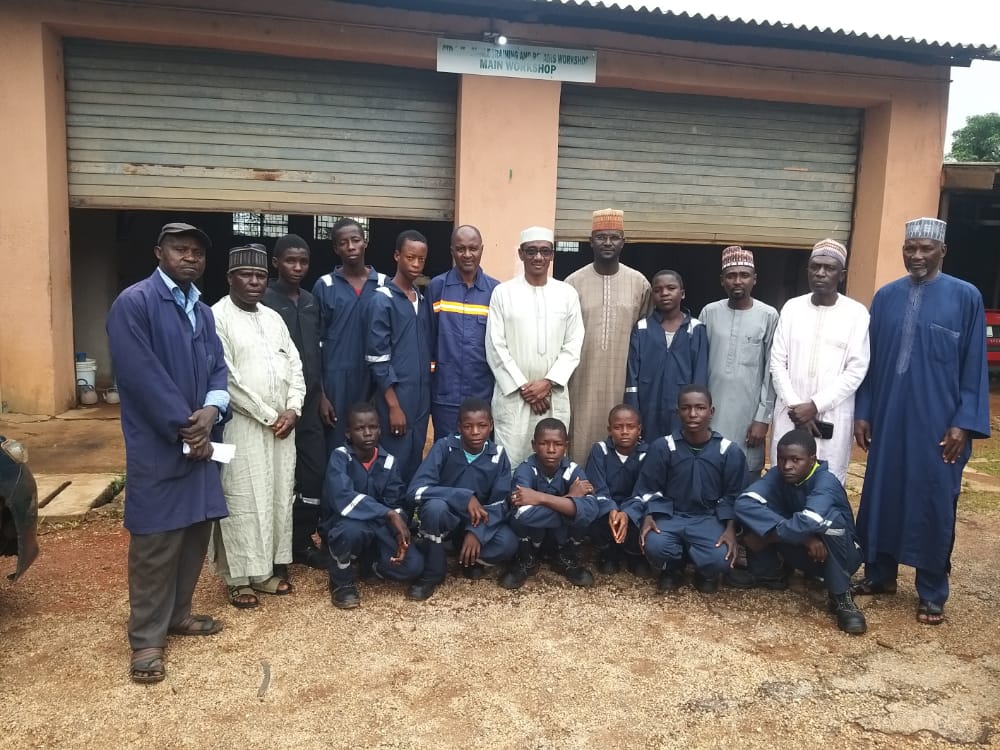
The Aminu Magashi Garba Foundation (AMG) in collaboration with the Department of Skills Acquisition and Training and Centre for Technology Development (CTD) have commenced the training of 10 dropout youth in Kaduna.

The program which started Tuesday, August 2nd, 2022, aimed at giving the dropout youth, within the age of 12-15, a skill on automobile repairs.

The dropout youth were sponsored by the AMG Foundation to undergo eight weeks training and four weeks internship at Panteka market.

It was gathered that the sum of N1.2million was paid by the foundation to give the training to the youth.

AMG hold on the belief that the skill will give them automatic job, improve their economic status, promote peace and help in addressing the challenge of insecurity in our society.

The Daily Reality recalls how AMG Foundation donated the sum of one million naira to the Youth Academy Initiative (YOSPIS) Tuesday, August 2nd, 2022 for similar activities.

Among the people that graced the event were: Engr. Auwal S. Anwar, Director, Centre for Technology Department Kaduna Polytechnic, Mallam Bashir Lawan, Manager, Out-Of-School program of the Centre and Hon. Muhammad Usman, former Commissioner of Education.

Others were: Kaduna State and former member House of Reps, Maimuna Abdulrahman, Admin and Finance Manager, AMG Foundation, Senior Program and Partnership Officer, AMG Foundation among others.

At the end of the event, philanthropists from Northern Nigerian states were urged to emulate Dr Aminu Magashi in rescuing the future of the youths who are now the major culprits of phone-snatching – a menace that ravaged many states in Nigeria.

Change Begins with Engausa Hub: Breaking barriers to digital skill acquisition

By Haruna Muhammad Inuwa

Nigeria is a great country. A country with great potential and great people. A giant of Africa and, of course, the most populous black country in Africa. Foreigners from other parts of the time – well, for some that have not travelled well – sometimes confuse Africa and Nigeria. This is because they tend to generalise that every black individual coming from Africa is from Nigeria. This is how dominating our great country has been!

In 2018, on March 10, President Muhammadu Buhari launched a national orientation program tagged “Change Begins With Me”. In the speech, he challenged Nigerians to realise that the change they want to see begins with them and that personal and social reforms are not a theoretical exercise. So, he practically says that for a developing country like Nigeria, everyone must get to work and realise their potential for the needed change we have been seeking. This must be a national assignment from Kano to Calabar, Lagos to Maiduguri. 

Embarking on a sacred expedition of bringing change in any society requires one to be passionate about their ideals. They must first identify a problem within. They must be willing to walk the talk. They must be willing to sacrifice a lot of time and resources. They must be believers in the change they wish for. Change is brought about so ordinary people can do extraordinary things. Hence, an ordinary citizen called Engr. Mustapha Habu Ringim founded Engausa Global Tech Hub. 

The Engausa model emerged as a one-size-fits-all solution in a society with system-wide problems. However, the approach is more interesting because it is skill-driven. Engausa Hub aims to empower these youths with digital skills in a community with battalions of unemployed youths. Engausa advocates teaching digital skills using home-based languages for accessible communication and understanding. From the city of Kano, Engausa Global Tech Hub is becoming a focal point of attraction to many university graduates, undergrads, Almajiris, and even those with natural talent and innovative ideas to be developed, managed or commercialised.

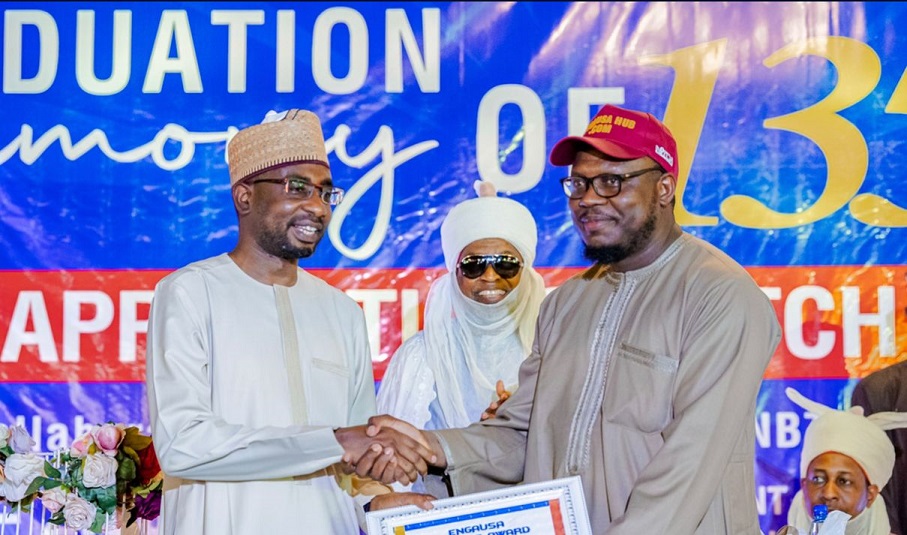
The Engausa story is inspiring because it centres on shaping the way things work and changing the narratives of our society. All thanks to the relevant authorities, who support the innovative activities of the Engausa Hub, the National Information Technology Development Agency (NITDA) and Technology Incubation Centre Kano. During the recent graduation of 1353 students who were rigorously trained in programming, video editing, blogging, graphics design and software development, social media literacy, and digital marketing, the DG of NITDA, Kashifu Inuwa, happily commended Engausa Global Tech Hub for this significant paradigm shift in the digital ecosystem.

Engausa Global Tech Hub thrives on breaking barriers and bridging gaps. So far, the hub has graduated over 1700 technology apprentices with over 50 innovation-driven enterprises owned and managed by the Engausa graduates. Statistically, the hub is turning into a school where you don’t need a college degree before earning a living. Many Engausa graduates are now managing their business; others work in private sectors or are independently freelancing.

Engausa Global Tech Hub seeks collaboration and partnership to expand its operations to other northern Nigerian states because a generational change can only be actualised.

Haruna Muhd Inuwa wrote from Lagos via diamondmuhd@yahoo.com.

Engausa Global Tech Hub trains 1353 youths in modern technical skills

By Muhammad Sabiu

A Nothern Nigerian technology firm, Engausa Global Tech Hub, has trained and certified 1353 persons, including men and women, in different modern technical skills in its effort to reduce the rate of the ravaging unemployment affecting the country.

In attendance at the certification event were the Director General of the National Information Technology Development Agency, Malam Kashifu Inuwa, and representatives of the Emir of Kano and Emir of Karaye, among other dignitaries.

Speaking on the purpose of establishing the firm and training the young people, the founder of the firm, Engr Mustapha Habu Ringim, said they had saddled themselves with the responsibility to train young people in digital technology in their mother tongue (Hausa).

He added that every human has the right to learn technology through his mother tongue, and “ENGAUSA is here to break barriers and bridge gaps” in teaching technology.

“We brought out those who speak Hausa, even if they understand Arabic or English, to train them,” according to Engr. Ringim.

While commending dignitaries on the high table, Mr Ringim said his firm wouldn’t have achieved all it achieved in the past three years without their collective efforts, stressing that he could not have done the work alone.

He noted that you mustn’t understand English before you begin to innovate, as there is what is called formal and informal education.

“Here in Northern Nigeria, we have this misperception that anybody who is not into formal education is not regarded as a literate person. This is a big mistake because the basis of this formal education you see was developed from non-formal education.

“One of our most significant efforts is getting these over 1000 young people we just concluded training. And it’s only for this year. In the year 2020, we trained over 300 people. This is proof that the knowledge of science and technology can be learned in one’s mother tongue because that was when we started featuring innovative young people, like Osama. Now, Osama owns a firm, and any is an employer.

“We also have Muhammad, who fabricated an excavator made from cartons and has now started fabricating a solar-powered generator. The BBC came here and covered what we were doing at Engausa. The news went viral. Afterwards, Muhammad is also now an employer.

“If these young people didn’t get to understand that we at Engausa teach in Hausa [mixed with English], they wouldn’t have come here to get trained,” Ringim is quoted as saying.

The firm’s founder further noted that by bridging the gap in the medium of imparting knowledge of technology, Engausa is in no way discouraging its learners from acquiring knowledge of the English language because efforts are underway to begin English, Arabic and French classes.

“We are doing all these because we have understood that the language barrier is one of the reasons that bar our people from understanding Mathematics, Physics and so on,” he said.

Another milestone achieved is that of those trained previously; about a hundred of them now own their own firms.

Flutterwave to recruit graduate trainees

By Muhammad Sabiu

The Flutterwave Graduate Trainee Programme has officially been launched, according to Flutterwave, a top African payments technology firm.

Through the training of technical and soft skills, exposure to Flutterwave’s solutions and products, and hands-on work experience at a large corporation, this program seeks to develop 200 young Nigerians. 

Additionally, the training will educate students on the culture, values, vision, and mission of Flutterwave, as well as its network of past and present workers.

With the primary goal of boosting the economy by producing skilled employment for young Nigerian graduates, Flutterwave published the application portal earlier in July 2022 to allow fresh graduates from all around Nigeria to apply for desirable roles in the company.

Chief Operating Officer of Flutterwave, Bode Abifarin, was quoted as saying:

“Flutterwave is an African company built to solve African challenges with African solutions. Some of the biggest challenges we have faced at Flutterwave have been solved by enlightened African tech experts with African needs in mind. Therefore, we would not be living up to our company’s ethos if we did not offer a leg-up to the young talent available and inspire and train them to ensure that the next future challenges in Africa’s tech scene are solved by talented young Africans.

“The graduate trainee programme and the job fair represent Flutterwave’s commitment to offering these talented individuals the opportunity to share their innovations and expertise with leading experts and tech entrepreneurs not only in Nigeria but across the continent. We hope that by powering the youth’s dreams, we power the continent’s tech scene as well.’’

Applications are expected to close on July 15, 2022.

Applicants for the upcoming Graduate trainee programme should apply via this link (https://flutterwave.com/gb/careers/graduates)

Applicants applying for the Flutterwave Job Fair are to apply through this link (https://flutterwavejobfair.disha.page/)

Proliferation of media houses in Arewa and the dearth of intellectual journalism

By Kabir Musa Ringim

I took my pen to write on this topic with mixed reactions: on the one hand, it is indeed a welcome development to have the number of media houses increasing at a fast rate in Northern Nigeria, but on the other hand, it is worrying to listen to or watch most of the new breed of journalists on several FM radio and TV stations, majority of which are newly established.

I refer to myself as an accidental journalist because I am a Computer Engineer, and I hold MSc in Information Technology and work as a polytechnic lecturer. But all my life, I have been a lover of media. I was an ardent listener of radio since childhood. I can still remember with nostalgia how I used to ask my mother to wake me up when it was time for BBC Hausa’s morning and late evening program at 8.30 pm, followed by VOA Hausa’s 9 pm program. I just couldn’t afford to miss listening to the likes of the late Hindu Rufa’i Waziri and Elhadji Diori Coulibaly.

My love for radio influenced my passion for journalism and the media profession. I started going to media house after I finished my Diploma in Computer Data Processing and IT in 2005. Furthermore, I wrote my project on the impact of radio with a case study of Freedom Radio, Kano. Thereafter, after graduating from BUK in 2011, I joined Freedom Radio Dutse as a voluntary staff working in the newsroom. I later opened my blog (ringimkabir.wordpress.com) in 2015, where I share news articles after translating them from English to Hausa. Now, I’m a freelance editor with Sawaba FM, Hadejia and SkyDaily online newspaper.

I narrated my brief sojourn in the media profession to pave the way for my moral stand and justification in talking about the dearth of intellectual, intelligent and hardworking personalities in the majority of our media houses in Arewa. A vast number of our media personalities are those that find themselves studying mass communications or languages by accident, lazy and unserious individuals with no passion for media, no love for radio but masquerading themselves as journalists to earn a living through meagre salaries or brown envelope journalism that has become the order of the day.

It is really frustrating to listen to most radio stations, especially in big cities where there are many, like Kano and Kaduna. The grammatical blunder, the mispronunciation of names of VIPs, national figures and important towns, and the incorrect voicing of arithmetic figures, dates and even times are unforgivable. The newsroom culture is dead; no intellectual discussions and arguments concerning news reports, and there is little or no investigative journalism being practised. Just copy and paste, edit, translate and cast on air or publish.

Media plays a vital role in educating, entertaining, enlightening and informing the people. It is the voice of the voiceless, a pathway to freedom for the masses and, above all, the fourth estate of the realm. Media houses, most especially radio stations, have been second to none when it comes to news dissemination in Arewa since the pre-independence period. The power of radio in Northern Nigeria is enormous.

In my view, the problem that caused the scarcity of intellectuals in the media profession originated right from universities and other higher institutions. Our institutions have been churning out thousands of half-baked graduates year in, year out. I really wonder how someone can graduate with a bachelor’s degree in Mass Communications but cannot speak or cast news in English. The majority of journalists in newsrooms cannot translate news from English, the language of instructions, to Hausa, the mother tongue.

Finally, despite the sad situation I elaborate on, I still believe we can get it right. The human brain never stops learning, provided deliberate efforts are being made to learn new things. With hard work, courage and determination, we can be like our predecessors in the media profession.

I have no intention of remaining in the media profession for long, but I will forever love radio. As such, I found it an obligation for me to speak up and energize my fellow journalists to stand up to the challenge and make a bold statement about becoming better every day. I still hold the belief that if someone can do something, I can do it too, and you can do it as well.

Kabir Musa is a lecturer at Binyaminu Usman Polytechnic Hadejia and writes from Ringim, Jigawa State.

Youths tasked on eschewing hate speech, constructive use of new media 

By Muhammad Aminu 

Youths have been advised to eschew hate speech and use new media constructively for peacebuilding and sustaining peace and peaceful coexistence in their communities.

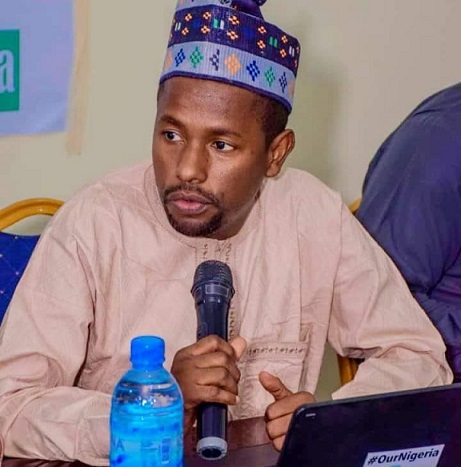
A communication expert and media scholar, Dr Ruqayya Yusuf Aliyu, gave the advice while engaging youths in a Critical Knowledge Production Dialogue Organised by the Center for Information Technology and Development (CITAD) on Wednesday.

Dr Ruqayya, who discussed the Roles of Youths in Peace Building From a Communication Perspective, said youths play active roles in conflict and peacebuilding situations due to their agility and activeness.

She reminded the youths that peace and peaceful coexistence are the bedrock for the development of any society.

“Youths can be used for good or bad, peace or violence; hence it’s imperative that they know the importance of their roles in peacebuilding in their communities.

“Although conflict is inevitable in any society, managing it matters most in escalating or de-escalating the situation, ” she added.

“You can be partisan, but avoid hate speech and use new media positively.

According to her, communication is relevant in peace building through mobilisation, advocacy, persuasion and behaviour change among the youths.

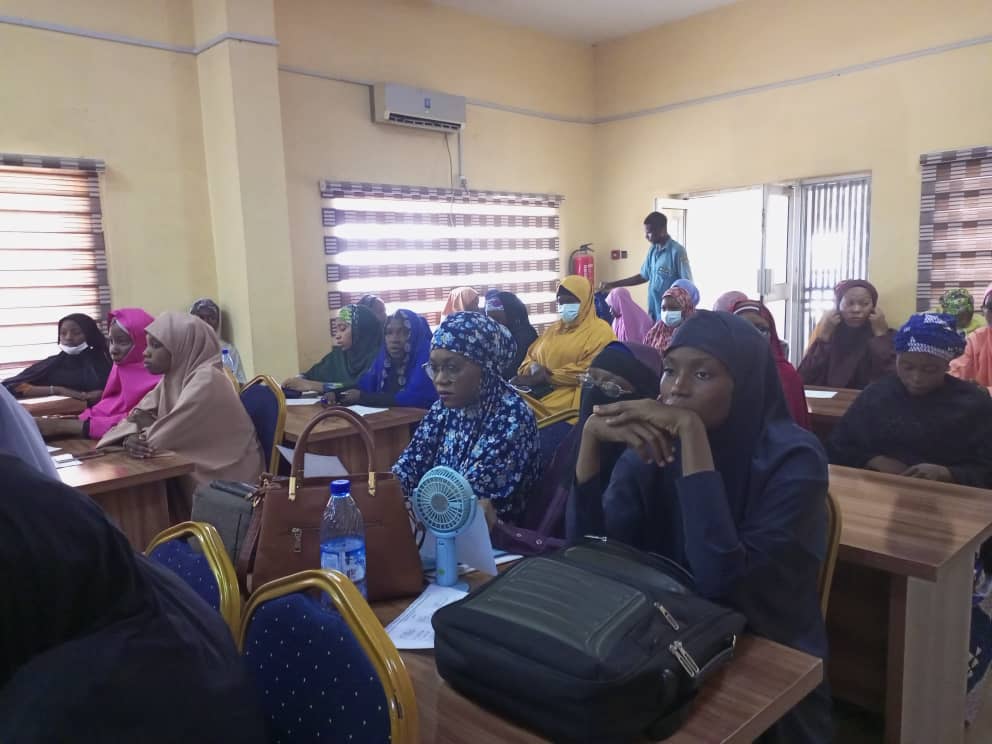
In another development, CITAD, in collaboration with eTrash2Cash, has trained 220 low-income women on plastic waste entrepreneurship in Bauchi.

Chief Executive Officer (CEO) of eTrash2Cash Abdullahi Salisu said the participants were trained to convert plastic waste into weaved bags, shoes, bangles, and flower vases, among others.

He said:” Items made from these wastes seem so original and authentic that one cannot tell if they are made from the “wastes” we improperly dispose of. Perhaps, one of the main reasons why so much keen interest is evident in the faces of the women beneficiaries.”

Some of the beneficiaries expressed their appreciation for the opportunity. 

Amina Bello and Hafsat Adamu said their newly acquired skills would enhance their living standard.

Hafsatu Adamu, while thanking the training organisers, said she benefitted greatly and had never known wastes could become useful in this way. “I’m proud to be a waste champion, and I will step down the training to my siblings, friends and immediate dependents,” she added.

According to Abdullahi Salisu, plans are underway to ensure that the trained women are continuously engaged and supported to keep cleaning the environment and support others to improve their lives and livelihoods.

Salisu said: “This social responsibility is continuous. It is non-stop. Other stakeholders have already expressed their interest to keep the impact going. We hope to keep engaging these beneficiaries through an innovation centre that will further help them in other areas of business development and entrepreneurship”.

Businesses should make digital rights and inclusion a priority in Nigeria

By Isa Ali Musa

Digital rights and inclusion is an issue that doesn’t get discussed enough. Yet, with the way things are currently going, it has the potential to become a much bigger problem in the future. And as someone who is passionate about technology and its ability to help people and businesses, this concerns me. There are many ways that digital rights and inclusion can be addressed in business, but there is also something special about doing so when you’re operating in Nigeria. The country has been hit with many unfair reputations that have held it back for too long. So, by addressing this topic from a Nigerian perspective, companies will not only be doing something good but also taking advantage of a unique opportunity to grow their businesses.

Below are five reasons your business should prioritise digital rights and inclusion in Africa if you’re operating there or plan to expand into the region soon.

Digital Rights and Inclusion is Complimentary for Business

It’s important to understand that digital rights and inclusion are not just something you should do because it’s the right thing. It’s something that you should do because it is complimentary for business. There are many reasons why this is true, but one of the most important is that digital inclusion can help you better understand your customers’ needs. This can lead to more effective management, targeted products and services, and more data for strategy. Therefore, the more you know about what people in your community need, the better your company will be able to meet those needs and, thus, increase its bottom line.

Furthermore, the more you can encourage people and organisations to use technology, the more you’ll see it become an integral part of life and business in Nigeria. This will, in turn, lead to more and better business opportunities. By being at the forefront of digital inclusion, your company will be better equipped to take advantage of these opportunities because it will have better insight into them. This can, therefore, lead to more growth and success for your business.

An Opportunity to Grow Your Company’s Reputation

As mentioned above, there are many reasons why digital rights and inclusion are good for business. Yet, there’s also a significant amount of reputational benefit that can come from the. By promoting digital rights, you are putting yourself in a position to take control of the narrative around your industry and the role your company plays in it. This is particularly important if you’re operating in Nigeria because you’ll have the chance to break many unfair stereotypes plaguing the nation’s digital ecosystem. In addition, by promoting digital rights and inclusion, you can show the world that your company is committed to serving the needs of all people and helping Nigeria catch up with the rest of the world. This can, in turn, lead to greater trust from prospective global customers and clients and, subsequently, more business opportunities in the form of partnerships for expansion.

 Commitment to Having an Equal Footing in Nigeria

While it might seem as though digital rights and inclusion are things that only global partners and governments need to be aware of, the reality is that your clients and competitors should be aware too. Nigerians need access to the same technologies, services, and opportunities that people in the rest of the world have. If your company doesn’t provide digital rights, equalities and equities, your employees are negatively impacted, and you’re missing out on talent that could otherwise be available to you. By addressing digital gender equality and including people with disabilities and special abilities, you can show prospective employees and investors that you are committed to having an equal footing in Nigeria, Africa and globally.

By Promoting Inclusion, You Can Help More People Become Employable

In addition to helping Nigerians get the technology they need and allowing them to get jobs and start businesses, digital rights and inclusion can also enable more people to become employable. Promoting digital rights and inclusion can help more people get the education they need to become computer literate and learn new skills. By promoting digital rights and inclusion, you can help to close the digital divide. This is the gap between those who have access to and proficiency in using technology and those who don’t. Closing the gap is important because it can help Nigerians get the education they need to get jobs in the 21st century. Including as many people as possible in the digital space can help Nigerians continue leading Africa’s Tech ecosystem.

Digital Rights and Inclusion can Help Increase the Quality of Life of Nigerians

There are many ways that digital rights and inclusion can help increase the quality of life for Nigerians. For starters, by promoting digital rights and inclusion, you can help people get the healthcare services they need and deserve. You can also help people better communicate with loved ones through video and audio communication. You can also help people travel more efficiently by using online transportation booking services and other technologies. By promoting digital rights and inclusion, you can also help Nigerians learn about and protect the environment. In addition, you can help people become more financially secure, thus improving the economy. Finally, you can also help improve education and access to information.

Isa Ali Musa is a Policy Fellow, Nigerian Global Affairs Council, Abuja, Nigeria.

Experts advise young women to utilize ICT to change society

By Muhammad Aminu

Experts have advised women and young girls, particularly in northern Nigeria to make judicious use of Information and Communication Technology (ICT) to better their lots and change society for the better.

The experts gave the advice at a roundtable discussion on the Challenges of Seeding and Nurturing Creativity and Innovation Among Young Women Organised by the Center for Information Technology and Development (CITAD) in Kano.

Aliyu Aliyu, an Independent Consultant, decried that socioeconomic and cultural barriers as well as inadequate role models to emulate are stifling women and young girls from actualising their full potentials in Nigeria.

Aliyu contended that women and girls are creative and problem solvers and that all they need are inspiration and mentorship to leverage digital technology to unleash their potential for their success and societal development.

“Young women need to use their time in a way that will better their lives, use social media in an effective and rewarding way, set their priorities and know how to achieve them, he added.

According to Dr Sana Muaz of the Department of Software Engineering, Bayero University, Kano, there are challenges for young women but with passion and zeal to excel, they can create a niche for themselves in society.

She advised girls to always understand a business idea well before venturing into it so that they can not just start a business but can build a sustainable brand in business against all odds.

She called on the participants to always remember their important position as women that other girls would look up to as role models.

In her contribution, Malama Aisha Bako, Chief Executive Officer, Onyx Investment Advisory Limited, challenged the participants to penetrate the ICT sector to make their contribution to society instead of wasting their resources on fruitless activities on social media.

“Platforms like TikTok and Instagram are paying huge amounts of money to those that know how to use them well,” she added.

The Chairman of the discussion, Prof. Asabe Mohammed while commended CITAD for the Initiative called on the participants to make the best use of the “unique opportunity” to improve their lives and society.

Earlier, CITAD’s head of Digital Creativity and Innovation for Girls (DICIG), Kamaluddeen Umar, said the programme is aimed at empowering girls to have access to digital skills in order to address the gender digital divide in Northern Nigeria.

He said: “The aim is to provide digital skills training for 200 girls (100 per year), to produce 80 digital entrepreneurs (40 per year) and create 160 new digital jobs for girls (80 per year).

“Selected participants were: girls between the ages of 18-30 who have a minimum secondary school education and are from Bauchi, Gombe and Kano States in addition to having an interest in building and running their business.”

According to Umar, the participants will undergo five phases of training basic, advanced, business ideation, business development support services market transition which some participants will be selected on the merit of their performance and business idea for awards.

2023: CITAD launches hate speech monitoring team

By Muhammad Aminu

The Center for Information Technology and Development (CITAD) has launched a hate speech monitoring team to monitor and record politically inclined cases of hate speech on social media as the 2023 general elections approach.

In a press briefing in Kano, the head of monitoring team, Malam Hamza Ibrahim, said the team would provide database for incidents of hate speech in Nigeria.

Mal. Ibrahim noted that monitors were trained to monitor utterances in both English and the Nigerian languages on the Nigerian political process leading to the 2023 election.

“The essence of the monitoring is to record instances of hate speech and sensitise stakeholders about them and devise strategies to counter them,” he said.

According to him, hate speech on social media when left uncountered could impede unity and diversity of Nigeria as a country.

He cautioned political actors to avoid engaging in hate speech in their electioneering as many elected political actors engaged in it during the 2019 elections.

“In 2019, politicians used hate speech for political gain and incited violence. Government elected officials used hate speech.

“Politicians need to be cautioned. We advised that as we approach the 2023 election, politicians’ utterances should be free from inciting violence and hate speech.”

He called on scial media influencers, bloggers and the media to support in countering hate speech which he described as “a cancer that must be eliminated.”

He regretted that youths were mostly used hence targeting the youths in CITAD’s intervention against the menace of hate speech.

He further revealed that June 18 was set aside by the United Nations to observe countering of hate speech. That signifies the serious attention it’s getting because of its roles in conflicts that could lead to loss of lives and displacement.

“It’s timely recognition by the UN because many lives were lost due to conflicts induced by hate speech,” he noted.

The team unveiled a publication titled “Extinguishing Hate Speech: Roles for Politicians, Religious and Community Leaders” to help guide key stakeholders to ensure peaceful election in 2013.

“It is based on researches across Nigeria with recommendation for political, religious and community leaders on how prevent and tackle hate speech,” he concluded.

In another development, CITAD converged a roundtable on the draft code of practice released by the National Information Technology and Development Agency (NITDA) to guide operations of major social media platforms in Nigeria.

Experts argued that while some parts of the codes were needed to checkmate the excesses of the giant tech, others were aimed at stifling freedom of speech and expression.

They called on Nigerians to have their inputs before the draft codes were operationalized in the country.