Technology

FUA staff develops app to ease navigating buildings and offices

By Ahmad Deedat Zakari

A staff of Federal University, Kashere, has developed a moblie app to aid lecturers and visitors navigate their way in the university.

The genius staff, Usman Shehu Muhammad, hailed from Fagge, Kano revealed his technological exploitation in a Facebook post on Monday.

Mr Shehu created the Federal University of Kashere Mobile GIS, a mobile software that aids navigation in the university.

Muhammad said in a post: “I’m to introduce a newly developed Android Application, called FUK Mobile GIS. The purpose was to make it easy for visitors, students or lecturers to identify and navigate buildings within the University.

“The application interface is simple to use, it displays the University logo and gives a lists of drop down building names which you can click to search for a building.

Each search you make it displays the hole University buildings in the map highlighting the needed building also a fastest rout either by car or by foot is calculated, identified and drown on the searched map, the map also shows the picture and attribute information about the building like the name of the building, address, distance by foot or road taking.”

He also revealed that the said app would soon be uploaded to Playstore.

Embracing 4th Industrial Revolution for socioeconomic growth in Nigeria

By Abba Ado

Investing in technology and the sciences will undoubtedly play a significant role in enhancing our socioeconomic development. The World Economic Forum reports that innovation is critical to the future well-being of society and the driving force of economic growth.

In the past, people used their energy, physique, and animals in different industries, such as agriculture, transportation, and communication, to attain economic growth. The emanation of the first industrial revolution (industry 1.0) came with a paradigm shift in various industries when people began to use steam engines instead of their bodies or animals. The second industrial revolution (industry 2.0) created a profound development with the discovery of electricity, unprecedentedly enhancing economic stability and growth.

Another remarkable achievement is the emergence of the Third Industrial Revolution 3.0; at this stage, digital computers were developed, which improved our communication sector and enabled people to store and share data. The Fourth Industrial Revolution (4.0) is an emerging epoch of industrialisation that will undoubtedly revolutionise every sector. Because industry 4.0 is a knowledge-based economy that requires manpower, creativity, and innovation, embracing industry 4.0 will significantly increase our economic development.

Despite some portable advancements in current technology, we desperately need to pertain to science and technology to be competitive and achieve a palpable objective in the outlook of the Fourth Industrial Revolution. The 4.0 Industry is an emerging technology that would revolutionise humanity in almost every aspect of our lives, including health care, agriculture, energy, and various industries. Moreover, the 4.0 industry uses the assortments of the physical, biological, and digital worlds to design and develop disruptive technologies to shape and alleviate numerous humanitarian crises. 

The fourth industrial revolution, otherwise called the “4.0 industry,” is a technological epoch encompassing artificial intelligence, automation, biotechnology, and the digital economy.

Artificial intelligence (AI) is a potential and multidisciplinary field that impacts various industries. According to Accenture’s estimation, clinical healthcare with AI applications will have a future increase of $150 billion in savings only in the healthcare sector by 2026. McKinsey reports that the global GDP of AI will be significantly boosted by 1.2% annually. Modern technology will emerge in the healthcare industry that can execute hospital services without human intervention. For example, timely automotive machines can accurately diagnose nefarious diseases like cancer and provide reliable treatment. Surgical robots are another AI approach that can effectively perform surgical tasks without medical doctors. 

Artificial intelligence in agriculture is another milestone development that will indisputably increase the rate of crop production. Innovative AI technology in agriculture can detect plant diseases, impoverished nutrients, and pests. In addition, automotive devices can be influential in quality harvesting. AI technology is a widespread approach applicable in numerous areas, such as renewable energy, climate change, and the financial sector. 

Biotechnology is another 4.0 industry with massive agriculture, biodiversity, and human diseases capabilities. Using a technique called “Clustered Regularly Interspaced Short Palindromic Repeats,” popularly known as “CRISPR Cas 9,” is a classical gene editing tool that paves the way for inserting or expelling genes of interest from an organism. This technological tool allows for rewriting plants’ “genetic composition” and disposing of unwanted genes from plants to improve plant growth. It produces genetically modified crops, thus addressing food security and production challenges. Also, CRISPR Cas 9 will probe into the human genome to decipher the onset of diseases and discover new treatments for different types of illness. Animal breeding is another integral part of biotechnology, with the aid of increasing biodiversity for economic growth. 

The digital economy will not only provide profits and economic growth, but it will also curtail the unemployment rate in Nigeria. Engaging the youth to leverage the digital economy will provide independent jobs to the citizens, and the gorgeous aspects of the digital economy are manageable, so an individual can start with zero capital and build a high-dividend startup. 

According to the International Business Machines (IBM) definition, “technology” is a field where human infusion is substantially reduced. Therefore, automation is an important part of economic growth and development. Automation machines can effectively perform a duty that humans can do; the era of automation will displace labour work in various industries. Self-driving cars are an example of automation that would help manage and prevent fatal car accidents. It can also be a substitute for vehicles or engines that require gasoline or diesel to tackle carbon dioxide emissions in the future. Automation will also play a role in business, climate change, and the energy industries. 

We must embrace “science and technology” as a significant economic growth and development source. Several studies have shown that R&D, incorporated into science and technology, is the primary driver of socioeconomic development. But, according to an essay written by Adamu Tilde titled “CBN’s Inconsistent Policies,” is this true? A quick response to Dr Sheriff Almuhajir. In this essay, he points out that “knowledge” is the ultimate goal for success in modern economic development.

Adamu adds, “There have to be deliberate, continuous efforts in producing and training skilled manpower with the required expertise to navigate the thorny terrain of the modern economy.” This would take decades.   But a journey of thousands of miles starts with a step. Let’s start with primary and secondary education. Until then, no amount of crying wolf about exclusion, unfair treatment, and harsh requirements would solve the sorry state of our economic development because the modern economy is not a respecter of sentiment. “You have to compete.” And the tool for the competition is knowledge.

Eventually, with the infatuation with the oil-based economy, the Nigerian government will neglect various other ways of economic growth. Therefore, the Nigerian government needs a paradigm shift in its economic policies. Capacity building in diverse sectors, such as artificial intelligence, agriculture, and the digital economy, can solve Nigeria’s economic problems and, at the same time, provide jobs for the youth. 

Accentuating science and technology programmes in our media and newspapers will entice the government to impose strategies that will hasten economic development and encourage the youth to engage in a knowledge-based economy. For the past centuries, when the world heavily relied on a material-based economy, war was the only way to gain wealth and economic development, and many countries invaded their neighbours to seize their resources. But we are in the 21st century, where knowledge cannot be halted. In his book Homo Deus: A Brief History of Tomorrow, Yuval Noah Harari asserts that “the current source of wealth is knowledge.” Bargaining on mineral resources such as gold, oil, and silver is no longer the best approach for economic growth; knowledge, which requires skills, creativity, and innovation, is one of the major sources of economic development. Therefore, our domestic media companies and newspapers should have a special programme or weekly column covering the importance of technology, research, and growth in economic diversification. 

Abba Ado wrote via abbaadomusa0@gmail.com.

CBN’s wrong timed cashless policy: my bitter experience

By Abubakar Umar

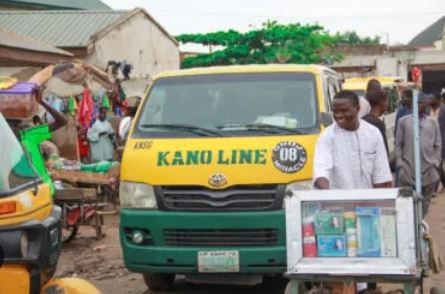
On Saturday 18/2/2023 being our training day for Civil Society Situation Room Election Observers that took place in Dutse, I left my room at exactly 7am and rushed to Hadejia old Motorpark. Without a delay, I got a car that is traveling to Dutse and got seated. After waiting for other passengers to come before the car took off for some couple of minutes the conductor asked for transport fare. I said I wanted to make a bank transfer. The conductor said they don’t have an account to receive the money. I desperately brought out the last N2,000 new notes from my pocket, gave him and collected my change of N600 unsure of how I can afford to come back in such a situation.

At the end of the training, I immediately left the venue with a desperate face looking for where to get cash. I went to where banks are located in Dutse but to my surprise, all banks were closed and no single person was standing near the Automatic Teller Machines of all the banks, except CBN which is open only to collect old notes.

With a tired body and a desperate mind, I just went straight to Dutse’s modern Motorpark. On arrival, a car traveling to Hadejia is almost full and just waiting for one passenger. On seeing me, they asked me to enter and I told the driver that I didn’t have cash and wanted to make a bank transfer. The driver said he doesn’t accept transfers. I begged him and the conductor to allow me in, but they both seemed not to care, which made me to move aside and wait. 

I was there like a statue, 3 cars left for Hadejia while I was there standing and watching. The NURTW official kept saying they don’t accept transfers and we waited for almost 2 hours.

Luckily, 3 more of my co-trainees arrived at the Motorpark and they too didn’t have any cash with them. Another woman arrived too without cash. Even then, they refused to accept the transfer. 

At last we saw one car was carrying bags of rice. We gathered and begged the driver. The driver, after refusing, finally agreed and gave us someone’s account and asked us to gather the money in the account of one of us and send it to him in one transfer. I was the first to successfully transfer the money because I was using an OPAY account which has a very good network at the moment.

In addition to the time we wasted begging them, we have to wait till they confirm the receipt of the payment before we took off. The person whose account we gathered the money was using UBA Bank trying to make the transfer using USSD code. When he couldn’t, they all begged me to send 5k to the account given to us by the driver if I have it in my account and later the other person would send back to me, when there is network. 

To avoid arriving late during this unsecured time, I agreed and transferred. The driver started the car. While on our way, the driver claimed that they didn’t receive the alert and asked me to check my balance. I showed them the receipt and everyone saw it including the driver. We continued the journey till when we arrived at Kafin Hausa, the driver stopped and insisted that they must receive transaction alert before he can continue. They gave me phone number of the person whom the account belongs to and I sent the receipt via WhatsApp. He read it and claimed that we have to copy the transaction alert (SMS) and send to him. What if someone manipulated the text and sent to him? I said Opay doesn’t send SMS alert, rather only email and Application notification which I showed to all including the driver. He then agreed and continued till we reached Hadejia. He stopped again at Kwanar Jama’are for the same issue. We all insisted that they check their bank balance.

The driver then took us to a bus stop, we alighted thanked him.

The next day (today morning), I received almost 10 missed calls from the person whose account the driver gave us. I texted him and asked what is it he wanted and he replied I have to pay the money so he will stop calling me. I said I already paid, sent him receipt in the presence of the driver who brought us and my fellow passengers all saw it. If there’s any trouble, we may need a ‘bank statement’ to support his claim. Since I sent that message to him, he hasn’t called back again.

How on the earth on the eve of cash scarcity and cashless policy an official Motorpark (State level) doesn’t operate with POS devices? Where is NURTW? Where is the State Ministry of Transport? Where is the State Government itself? Does the President really care about people’s situation? 

Abubakar Umar Gbs

How Naira redesign, cashless policy, affect prices of farm produce in Katsina

By Aliyu Ya’u Baraje

I have consistently written against the greediness of Nigerian agricultural produce suppliers since the implementation of the cashless policy. I am now fully convinced that a typical Nigerian is potentially greedy and corrupt, especially when presented with the opportunity.

There is no doubt about the scarcity of Naira, which economics has taught is a characteristic of money. This scarcity has created hardships for Nigerians, particularly for rural dwellers whose voices are hardly heard. This is partly due to a lack of modern education, IT literacy, and little or complete absence of media coverage. When visited, rural areas now seem like mourning grounds, faces barely smile, just silence, and black faces.

As a farmer and rural dweller, I feel it’s my duty to bring to light the ongoing exploitation of local farmers by produce suppliers. These suppliers are taking advantage of the cashless policy to profit at the expense of farmers whose main source of income is selling produce or livestock.

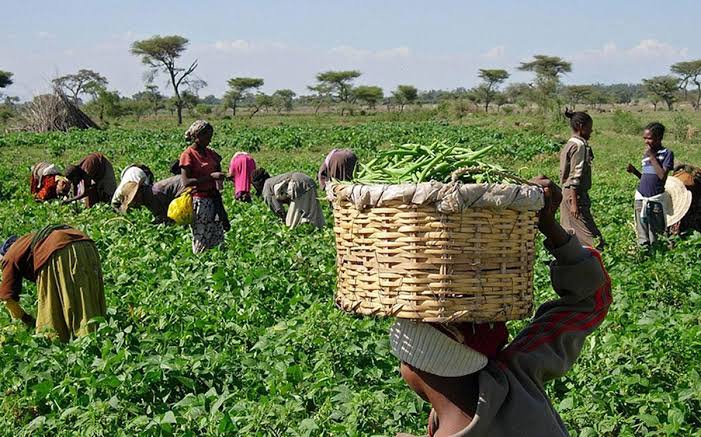
The prices of produce and livestock have plummeted dramatically. For example, the price of maize per 100kg has fallen from 22,000 to 13,000, rice from 26,000 to 15,000, beans from 42,000 to 25,000, and soybeans from 32,000 to 18,000. This trend is also seen in other produce such as millet, groundnuts, sesame, sugarcane, yams and cassava.

Farmers are offered two prices, one for a cash-and-carry deal and another for bank transfers. Those who need cash are given the lowest price, while those who require a transfer receive an increase of about 3,000 to 4,000.

This exploitation is unacceptable, especially since prices of other commodities have skyrocketed. I stand against this mistreatment of farmers and the erosion of their livelihoods.

I am from the southern part of Katsina State, which includes the local government areas of Sabuwa, Dandume, Funtua, Faskari, Danja, Qafur, and Malumfashi. This region is renowned as an agricultural hub not only in Katsina State but throughout northern Nigeria. This is due to the fertile land and extensive use of industrial

fertilizers and manure. The local government areas are rivaled only by the Saminaka, and neighboring local government areas.

Those who are familiar with this region will attest to the fact that its inhabitants are engaged in farming activities, not just subsistence farming but also what could be described as mechanized farming. In this region, farmers producing hundreds of tons or thousands of bags of the listed produce can easily be found. If one is a resident of this region, he is either a farmer or from a farming family. Even those who have switched to other businesses or occupations, most of their extended families are still farmers.

Given this, it should not be surprising that the exploitation of farmers by suppliers is a source of concern for those in the region.

2) In today’s Nigeria, the prices of processed and refined commodities have risen dramatically, with some even doubling, tripling, or quadrupling. The price increase for some commodities is so significant that it’s difficult to describe. So, why are farmers the only target for this exploitation?

3) In southern Katsina State, farming is done on a large scale, making it more of a business. This leads to the excessive use of agricultural chemicals, the prices of which have skyrocketed multiple times. For example, NPK fertilizer is sold for 32,000 Naira, Urea is sold for 22,000 to 23,000 Naira, Moroccan OCP (mixed fertilizer) is sold for 15,000 to 17,000 Naira, and the locally made Dan-Buhari fertilizer made from Kankara Local Government is sold for 10,000 to 15,000 Naira. Given these high prices, it’s understandable why a farmer would not be happy with selling their produce for less than 15,000 Naira.

Moreover, the use of tractors and other heavy engines for farming activities such as harrowing, tilling, harvesting, and transportation requires diesel, which now costs over 900 Naira per liter. The use of small equipment for dry-season farming, mobilization, pesticides, and herbicide spraying also requires petroleum, which now costs between 350 and 400 Naira. The prices of other chemicals such as pesticides, herbicides, and preservatives have not only doubled but have tripled or even worse.

This means that when a farmer who needs cash takes their produce or livestock to local markets, they feel like they are being shortchanged or receiving only a fraction of what they spent months or years nurturing. As a result, many farmers go home feeling like they have been robbed and have nowhere to turn for help

4) I seek to draw public attention to the exploitation of farmers in Southern Katsina state. The rise in prices of agricultural chemicals and equipment, along with the exploitation of farmers by produce suppliers, have led to a situation where farmers are not able to make a fair profit from their hard work. I categorizes those who are happy with the situation into two groups: those who are exploiting the farmers for their own gain (like suppliers) and those who are not involved in farming and only care about purchasing cheaper produce for domestic consumption (the consumers).

5) It is unfortunate that the farmers who work hard to produce the commodities are being exploited by the suppliers, hoarders, and processing industries. The lack of government price control mechanisms, excessive taxes and restrictions on foreign goods, and competitors. The selling of finished products at high prices, even higher than those imported from other countries has shown that farmers are intentionally targeted. This creates a situation where the farmers receive low prices for their produce while the final products are sold at high prices, leaving the farmers with little profit and often feeling exploited. It is important to address this issue and find ways to support and protect the livelihoods of local farmers

6) The exploitation of farmers in Nigeria has become a major concern as they are being targeted by suppliers, hoarders, and companies. The prices of agricultural chemicals and equipment used in farming have skyrocketed, making it difficult for farmers to make a profit from their produce. The lack of government price control and foreign competition, as well as excessive tax charges, have added to the farmers’ burden. Despite the high prices of commodities, the owners of processing, refining and packaging factories have not reduced their prices (per kg from suppliers), and instead sell the finished products at exorbitant prices. This has made life in rural areas even tougher, as the local farmers are unable to compete with foreign imports and are being forced to sell their produce at low prices. The suppliers have also adopted a cashless policy, which has made it difficult for farmers in rural areas to receive payment for their produce. The lack of recognition of wired transfers and poor network and electricity coverage in rural areas has further complicated the situation.

It’s important for the government to consider all factors and individuals, including rural settlers, when making decisions on the cashless policy. The government should strive to ensure that all citizens have equal access to financial services, regardless of their location.

Aliyu Yau Baraje, Dandume Local government area Katsina. He can be reached via: aliyuyau900@gmail.com fb: Aliyu Baraje

StarLink and Nigeria’s telcos competition

By Ibrahym El-Caleel

StarLink is a distant competitor to our telcos. The product price edges it out of immediate competition with MTN, Airtel and co. However, it is good that it is already here. In fact it will definitely gain a fair share from some businesses who have been looking for an alternative to the existing telcos.

Setting up StarLink costs more than N400,000. Personally I think it will be a better buy for businesses who spend about 60-75% of this amount for internet access. They will be bidding farewell to the periodic disappointments we experience from the contemporary telcos.

Market is dynamic. As StarLink takes some time in Nigeria, it will be ambitious about increasing its market share. It will be innovative about coming up with something that will be relatively affordable for the teeming internet subscribers. This is when the true competition will begin. For now, the penetration will be low because at the moment a lot of Nigerians are quite very rich. The consumer conversion will be minimal.

MTN began in Nigeria with N1,500 airtime card only. And it expires in 7 days. If you don’t use the airtime after 7 days, you have to buy another one. This was the case c.2001. Fast forward to 2021, you can have a N100 airtime and keep it for one year if you so wish. StarLink might have to develop something cheaper to get more subscribers onboard. If your things are expensive, you can sell it and make money in Nigeria. If they are affordable to many, you make quicker turnover, bigger sales, (arguably) more profit. This is Nigerian market.

Celebrating Prof. Pantami: The architect of Nigeria’s digital revolution

By Yakubu Sani Wudil, PhD

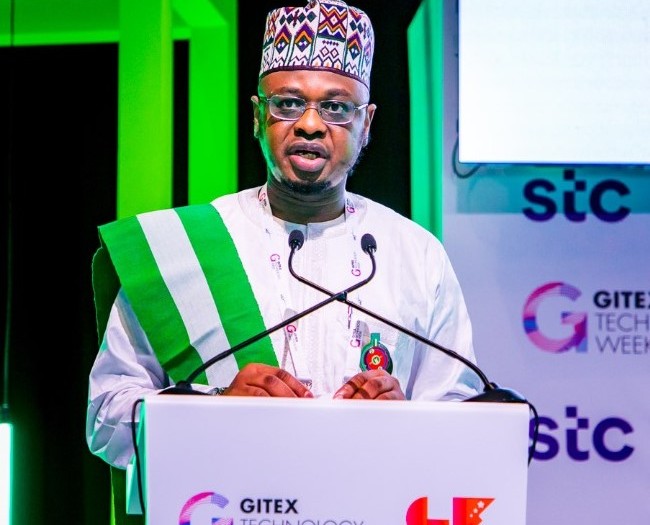
During the last three and a half years, Nigeria’s Minister of Communications and Digital Economy, Prof. Isa Ali Ibrahim Pantami—a digital dynamo—has demonstrated quality in leadership and has raised the bar of good governance in the country. Specifically, the Digital Economy sector has come to the limelight under his stewardship.  Since his assumption into office, he has become the champion of Nigeria’s digital revolution.

Prof. Pantami has exhibited exceptional leadership skills in driving the Communications and Digital Economy sector to record several unprecedented achievements. His leadership has not only escalated the sector’s quarterly revenue generation by more than 500 per cent due to his digital innovations but also played a pivotal role in lifting the Nigerian economy out of recession.

Under his watch, the Digital Economy sector has multiplied the revenue generated from fifty-one billion Naira quarterly to about four hundred and eight billion Naira, according to an independent assessment carried out by the Foreign, Commonwealth & Development Office (FCDO). On the other hand, the ICT sector recorded the highest growth rate in the year 2022, as reported by the National Bureau of Statistics.

From the onset, Professor Pantami has identified eight priority areas for development: developmental regulation, digital skills, solid infrastructure, service infrastructure, digital services development and promotion, soft infrastructure, digital society and emerging technologies, and indigenous content development and advancement. The Minister has done exceptionally well in these areas by implementing policies and projects that have significantly impacted the Nigerian economy.

For instance, he has established ICT skill acquisition centres across the states and has recorded over 219,000 direct beneficiaries of digital skills training. Additionally, he has laid about 19 kilometres of fibre cable to expand reach and coverage to MDAs (covering 28 MDAs). Furthermore, he has established digital economy centres to support the growth of the economy in the country. He has also developed policies and initiatives to promote indigenous content and created an enabling environment for the sustainable development of Nigeria’s economy, which has been able to resolve challenges that have lingered for decades.

Under Professor Pantami’s leadership, a significant number of National Policies have been developed. Currently, over a dozen of these policies are already being implemented, one of which is the National Digital Economy Policy & Strategy 2020-2030, which sets out a comprehensive plan for the growth and development of the digital economy in Nigeria.

The Minister has also executed several projects, too numerous to mention, which have significantly impacted the Nigerian economy. Nevertheless, some of these projects include the establishment of ICT skill acquisition centres in most of the states, registration of all mobile sim cards, emergency communication centres, virtual examination centres, Data Sharing Centres, Digital Industrial Parks, Wireless Internet Cloud, Digital Capacity Training Centres, NITDA Community IT Training Centres, IT Innovation Hubs, IT Capacity Building Centres, and Provision of ICT Facilities in our Institutions of learning.

In his effort to transform governance to the 21st-century model, the minister has established the E-Government Training Centre to equip stakeholders with the necessary skills to achieve optimum productivity. He also constructed several E-Health Facilities, E-Libraries, and E-Accessibility Projects. Furthermore, the minister has coordinated the establishment of multiple Community ICT Centres, NIPOST Digital Centre, Tertiary Institution Knowledge Centres, School Knowledge Centres, Rural Broadband Initiatives, National Centre for Artificial Intelligence and Robotics. He also empowered Farmers through the National Adopted Village for Smart Agriculture Program.  The Accelerated Mobile Phone Expansion-Base Transceiver Station was also accomplished under his watch.

Furthermore, to complement the efforts of security agencies in ensuring adequate National security, there have been over 92 million unique National Identification Number enrolments as of November 2022.  These achievements are a testament to the hard work and dedication of Professor Pantami, who has been tireless in his efforts to drive the digital revolution in Nigeria.

It is worth acknowledging that President Buhari must be commended for the wise decision to appoint Professor Pantami as the Minister of Communications and Digital Economy. He is one of the best-performing ministers in the cabinet and has succeeded in delivering on his mandate to the Nigerian people. The country needs more brains like him to drive the nation’s development and ensure that we can compete on the global stage.

As we look to the future, it is clear that Professor Pantami has the ability and vision to continue to drive the growth and development of Nigeria’s Communications and Digital Economy sector. The erudite scholar has distinguished himself for integrity and selflessness. In addition, he has been a worthy ambassador for Nigeria’s young population.

We pray that he will have the opportunity to serve the country in many capacities and higher positions in the future. His leadership and expertise are vital to the continued progress of our nation. The policies and projects executed under his leadership have significantly impacted the Nigerian economy and have laid the foundation for a sustainable future in the sector.

Dr Yakubu Wudil writes from King Fahd University of Petroleum and Minerals, Saudi Arabia, and can be reached via yswudil@yahoo.com.

RAIN and shaping Nigeria’s AI, robotics’ future 

By Aminat Akinyemi

As the year 2022 came to a close, the world was thrown into a frenzy after a US-based AI firm, OpenAI released a groundbreaking solution called “chatGPT”, which could converse, reply to text messages sent by humans and answer almost any question as accurately as if it were human itself and all-knowing. This solution even proves to have the capacity to write news articles, public speeches, academic papers, and computer codes and can go as far as discussing matters relating to your local traditional recipes. 

Today, unlike a decade ago, countries are now competing fiercely towards attaining AI supremacy.

This is not surprising as recent events have proven that AI, Robotics, Blockchain and Cybersecurity have a huge impact on national security, intelligence, healthcare and food security. With fast advances in technology, there is no doubt that the next decade presents an opportunity for countries to redefine their future and improve the quality of life, healthcare and availability of jobs through the needed up-skilling of their workforce and re-modelling of their industries.  

Deviating from an age-long Nigerian tradition of simply waiting to import and consume any latest technology in the world rather than contribute to its development, the nation is lucky to have some leaders that are keeping tabs on global developments and are guarding the coast keenly. 

For example, in 2019, a young Nigerian, Olusola Ayoola, after bagging his PhD in the area of Nuclear Robotics and working extensively with the UK government, decided to return home to establish Nigeria’s first fully functional robotics and artificial intelligence facility, Robotics & Artificial Intelligence Nigeria (RAIN) for training, research and product development. 

Since its establishment, RAIN has proven to be world-class and has even attracted international students and recognition from the Deputy Secretary General of the United Nations, Ms Amina J. Mohammed, the United Nations Development Programme (UNDP), USA and Canada missions in Nigeria, as well as First Bank of Nigeria Plc., Institute of Chartered Accountants of Nigeria (ICAN), Nigerian Society of Engineers (NSE), the National Institution of Electrical and Electronic Engineers (NIEEE), the Office of the Surveyor General of the Federation, the Federal Ministry of Youths and Sports, the National Information Technology Development Agency (NITDA) and the National Space Research and Development Agency (NASRDA).

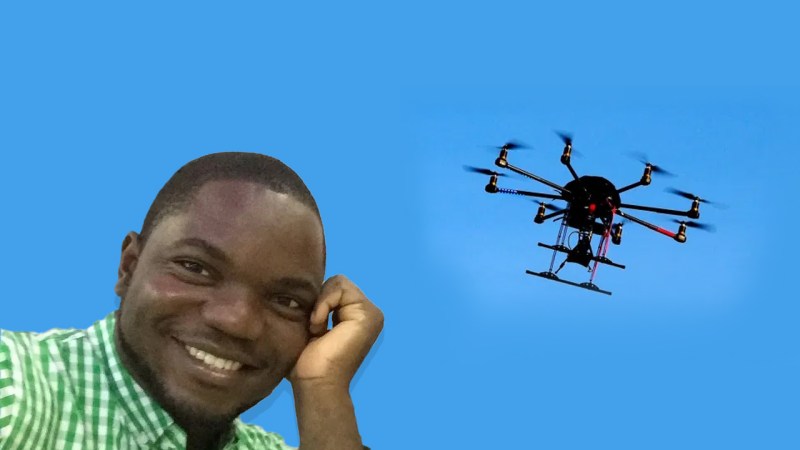
Some of the groundbreaking research carried out at RAIN include unattended baggage detection, a mini weather station, an AI-based Traffic Light System, a ground robot vehicle and unmanned VTOL aerial vehicle (IMORP), CETHED and RAINSC75/76.

The great feat which RAIN has achieved without any support from the Government and this fact only makes one want to ask what an intervention grant will do to the growth of technology in Nigeria.

This must have been the thought of Honorable Oluyemi Adewale Taiwo, a federal lawmaker representing Ibarapa East/Ido Federal Constituency, Oyo State. In January 2022 and on the floor of the green hallow chamber, Honorable Taiwo moved a motion for the house to encourage the federal government to liaise and work with RAIN, especially during the course of tackling the insecurity. The house unanimously adopted the motion and passed a resolution in support. 

Honourable Taiwo did not stop at that. The pragmatic lawmaker followed this up with the ministry of science, technology and innovation until he successfully got the nod of the ministry to provide such an intervention grant. 

This is a confirmation of his stewardship to his constituency. However, the nation could do with more of his kind that will direct the federal government’s attention to burgeoning areas within the economy that can help return this nation to the path of greatness. No doubt, with this intervention grant being well managed by the tested and proven management of the Robotics and Artificial Intelligence Nigeria board, the nation can only expect to move upwards from this point onward. 

The Chief Executive of RAIN, Dr Ayoola, has confirmed that there are lofty plans in place including the construction of a Centre for Excellence in Drone and Unmanned Vehicles for Geospatial Intelligence, provision of training scholarships to the youths of Nigeria, particularly those from Ibarapa East/Ido Federal Constituency, and the improvement of AI Robotics product prototypes up to the required military standards.

While the efforts of Honorable Taiwo are not common in this part of the world, it is not unexpected as he was basically doing what a genuine representative of the people would do in order to preserve the indigenous technological firms in his constituency, promote their global advantage and protect the future of the youths in such communities through up-skilling.

Let it be known that when Nigeria becomes a great country, it is the sacrifices of genuinely honourable men like Hon. Taiwo of House of Rep and his supportive colleagues in the National assembly, the Honourable Minister of Science, Technology and Innovation Senator Adeleke Olorunnimbe Mamora, as well as the permanent secretary of the ministry, will be mentioned for praises. Now, let Nigeria’s global competitiveness in AI and Robotics begin.

Aminat Akinyemi writes from Ibadan and can be reached via aaebunoluwa@gmail.com.

Cashless policy is too early for corrupt nations

By Lawan Bukar Maigana

I keep telling people that it is too early for us in Nigeria as a whole to adopt a cashless policy. It is just obviously too early. Yesterday, I read a post by Prof. Abdelghaffar Amoka of the Ahmadu Bello University, Zaria, in Kaduna State, about his experience with a Point of Sale, PoS, agent.

He had gone to refill his gas cylinders at the cost of 19k+ and he used a PoS machine to pay for it. Though he was debited, the money wasn’t credited to the PoS agent’s account. Rather than waste his time there, he transferred another money to someone’s account to pay for refilling. He would have become helpless if he was moneyless.

Some weeks back, I experienced a similar thing in Abuja. I went to withdraw 5k using a PoS from a woman at the NYSC parade ground. I was debited but she didn’t receive the money. She then told me that she won’t give me the money until she receives an alert. Luckily, I had a paltry sum left in my account. I then withdrew the money using a different PoS. It took my bank nearly ten days to refund me.

Before then, and about three years ago, I had the same experience with UBA. I used my father’s card to withdraw N100,000. I tried six times, but all of the transactions didn’t dispense cash, and he was debited five times. My dad only knew it after a week. He complained to the bank but they denied it, without carefully checking whether the transactions were successful or not.

They had to call me to come from school. I quickly got to the bank because it involved my father. I had to help them understand that the transactions failed. Only then they rechecked and discovered that I was right. That was indeed an issue bordering on unprofessionalism.

If not because of my father I would have sued the bank, because they threatened me with a police arrest, saying it was a criminal case. My father asked me to accept their apology else I would have sought compensation for making me look like a criminal, while they were at fault.

Before going ahead with its cashless policy, another factual and excusable factor the Apex Bank should consider is the fact that most of our businesses are done in cash, especially those trading in rural communities and towns and other remote areas where there are no banks, no network, no internet, no electricity, no education, and these people form a large portion of the Nigerian populace.

The questions I keep asking myself regarding this policy are: Did the Central Bank of Nigeria build banks in those areas? Would the people be traveling from their various villages to cities to transfer, withdraw or deposit money? What did the government do in place of these challenges? Does CBN have enough manpower to do this job even if they have built banks? Did CBN mistake Abuja, Kano, Lagos, Port Harcourt, and a few cities for Nigeria?

These, among other reasons, are the factors I want the CBN Governor to consider. Before they present this policy, they need to put all these things in place and educate people about it so that people will evaluate its strengths and weaknesses, and decide to either oppose or support it. The CBN didn’t do that. It just woke up from its slumber and served it to the Nigerians a la carte. Time will however tell if Nigerians will embrace it, warts and all.

Lawan Bukar Maigana is a social analyst. He writes from Abuja and can be reached via email: lawanbukarmaigana@gmail.com

NIGCOMSAT gets new Managing Director

By Muhammad Auwal

President Muhammadu Buhari has approved, with immediate effect, the appointment of Engineer Tukur Mohammed Lawal Funtua, as the new Managing Director of Nigeria Communications Satellite (NIGCOMSAT), following the retirement of the erstwhile Managing Director, Dr Abimbola Alale, after two terms of 10 years in office.

Engineer Tukur Mohammed Lawal Funtua, an indigene of Funtua Local Government Area of Katsina State, Northwest Nigeria, was born on 24th November 1966.

He holds a Bachelor’s Degree in Chemical Engineering, PGDM, MBA, a Professional Diploma in Education and a PhD in Environmental and Sustainable Development Management in view, at the University of Port Harcourt.

He was, before his appointment, Director, health community affairs, safety and environment with BUA Cement Plc, and served in various capacities, including Health and Safety Manager, Country HSE Manager and Regional Manager for Communications, Public Affairs and Sustainable Development at Lafarge Africa Plc and Group Head, Environment and Community Affairs at  Dangote Cement Plc among others.

Engineer Tukur, who has thirty years of professional experience in manufacturing, process engineering, health, production, safety and environmental management, communications and various other fields, is a Chartered Environmentalist at the Society for Environmental Toxicology and Pollution Mitigation, a Fellow of the Nigerian Society of Chemical Engineers, and the Professional Leadership Practitioners Institute.

He is a Registered Engineer with the Council for the Regulation of Engineering in Nigeria (COREN), a member of numerous professional bodies and institutes.

Skills rather than just degrees: A timely professional advocacy

By Engr. Mustapha Habu Ringim

Despite all his official commitments, Prof. Isa Ali Ibrahim Pantami’s internationally recognised contributions to the field of both Digital Economy and Islamic knowledge are unprecedentedly breaking colossal barriers to socioeconomic development in Nigeria and Africa at large. We are grateful to The Almighty Allah, Who has bestowed our society with such a rear gem.

The Islamic scholar and professor of cyber security, Sheik Pantami, is leaving, to some extent, a tripartite legacy for our future leaders to emulate. He is equally fostering a paradigm shift in his professional career and public office as a Minister of Communications and Digital Economy. He is an epitome of a role model, a philosopher with a positive legacy which will serve as a footprint or a sailable path for all potential leaders, academics and religious scholars to tread on.

However, Malam Pantami is building this astounding path against all criticisms from some of his academic colleagues and Islamic and Christian scholars. He patiently stands tall on his two feet. He forges ahead against all social media hypes, just like the flow of rivers, as “rivers never go reverse” – they gradually clear their paths to their destinations, entrenching a memorable route for explorers and navigators to follow passively.

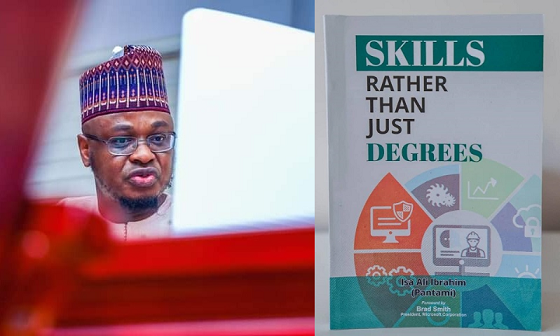
Long before writing his essential book Skills Rather than just Degrees, his advocacy out of which the book was written, has already transformed so many lives, including myself and thousands of graduates of our innovation hub, through the effective programs and seminars conducted by the National Information Technology Development Agency (NITDA) under the excellent leadership of its Director General, a “Digital Transformer”, Kashifu Inuwa CCIE.

Prof. Muhammad Bugaje, the current Executive Secretary of the National Board for Technical Education (NBTE), is another advocate of the same subject. However, his slogan, “Skills but not Degrees”, is a bit tougher. Therefore, I sincerely urge these two erudite professors to actualise an inter-ministerial or agency collaboration between NITDA and NBTE to develop a realistic action plan and strategic roadmap for entrenching ubiquitous skill capital development in our society. 

The National Board for Technology Incubation (NBTI), Industrial Training Fund (ITF) and National Directorate of Employment (NDE) would equally play an essential role in the proposed collaboration. Such agencies are supposed to be under the same umbrella, the way it is done in Morocco, which as a result of their effective work-based learning, has achieved one of the highest economic growth among African countries, as pronounced by the European Training Foundation.

ENGAUSA GLOBAL TECH HUB, publicly recognised as “technical skills enthusiasts”, will formally seek permission from His Excellency Prof. Isa Ali Ibrahim Pantami to translate the book into the Hausa language. The translation will help fit it into the bilingual-based curriculum of ENGAUSA APPRENTICESHIP PROGRAMS. That opportunity would also pave the way for using the translated version in our public awareness programs on Radio, TV and social media. This book succinctly corroborates the mission and objectives of ENGAUSA HUB, as it goes with our motto, “Breaking Barriers and Bridging Gaps”.

Engr. Mustapha Habu Ringim is the founder/CEO of EngausaHub.com.