Technology

Understanding ChatGPT and addressing issues of concern

By Ismail Ismail Tijjani

Large Language model (LLM) is a subset of Generative AI that focuses on generating human-like text based on the input it receives. Evidence shows how good it is in generating creative text formats, like poems, code, scripts, musical pieces, emails, letters, etc. Chatgpt plays a significant role in bringing LLMs to wider public attention, though it wasn’t the first one. I will use Chatgpt throughout this article because of its popularity, though there are other popular ones like Gemini, Bard.AI, LaMDA and much more.

Let me provide a very simple description of how ChatGPT works. Just imagine you enter a library and ask the librarian a question. The librarian will first try to understand your question and then scan the shelves, looking for books they think might contain your specific answer. Using their records and expertise, they connect related stories from different books and give you the best possible answer. This is what ChatGPT does in a few seconds.

ChatGPT underwent training using an extensive and diverse internet dataset, which covered a wide spectrum of content ranging from different subjects, styles, and perspectives. Its core skill lies in tranformer architecture, a neural network which is primarily designed for language processing to encode an input text, analyze its structure and meaning, and decode it to produce an output by predicting the most likely next word in a sequence.

Certainly, the introduction of new technologies often sparks heated debates. Critics often strive to oppose and even reverse these advancements. However, their efforts typically falter in the end. Some critics may genuinely misunderstand the technology, while others, perhaps a majority, are driven by the pursuit of publicity rather than accurate assessment.

ChatGPT wasn’t an exception. When it was launched in October 2022, some people argued that it would make students lazy, lead to job loss for editors, result in high plagiarism, breach copyrights, steal people’s data, exhibit sentiment, intentional bias, spread disinformation, create deep fakes, and much more. We will discuss some of these concerns below. Some of the allegations are true and have already been addressed, while others are false.

ChatGPT lacks the ability to discern whether information is biased, disinformation or false. It operates based on its programmed structure and produces results accordingly. OpenAI, the creator of ChatGPT, has taken measures to enhance the model. Although the technical details haven’t been disclosed, it likely involves implementing guardrails and filtering mechanisms to address accusations of misinformation, bias, falsehood and more.

For students and researchers, ChatGPT will serve just like an advanced internet search engine that will generate output after going into multiple webpages, saving time and stress hopping between sites. It will in no way make students lazy, However, some concerns related to students’ use will be discussed in a later article.

Its ability to remember previous prompts, though impressive, doesn’t imply sentience. It’s merely a clever technique within its architecture. This raises separate questions about the path to achieving true artificial general intelligence (AGI), discussed in my previous article. It is only a technique in tranformer that makes it capture it.

The impact of ChatGPT on jobs is a complex and nuanced issue with both potential downsides and upsides. While some job losses are inevitable, they will likely be offset by the creation of new ones. Adapting to this changing landscape through education, reskilling and responsible policymaking is key to ensuring a future where AI benefits everyone.

Despite the evident improvements seen since ChatGPT’s initial release, OpenAI must continue to dedicate significant resources to refining its model. This is crucial not only to mitigate legal risks but also to enhance its accuracy and reliability for responsible public use. While striving for absolute perfection is unrealistic, reaching a consistently high level of trustworthiness should be a priority. Additionally, users must be mindful of the model’s limitations and exercise critical judgment, fact-checking, and verification before relying on its output.

AI is here for good. Innovation often sparks a variety of perspectives, and AI is not an exception. Some people believe that AI has the potential to solve some of the world’s most pressing problems, such as poverty, hunger, climate change, corruption and disease. Others are concerned about the potential for misuse, such as the development of autonomous weapons systems or the use of AI to manipulate people.

AI is not like any other innovation we have seen before in the history of humankind. It is among the most powerful of all, and it is likely to be among the last innovation that we ever need.

AI is already making significant positive impacts in various industries, such as healthcare, finance, retail, manufacturing and many others. Of course, like any industry, there may be individuals with malicious intent in the AI sector who are willing to exploit it for negative purposes. For example, I recently came across a women-uncovering app with high precision that raised concerns. However, the actions of these individuals should not lead to the shutdown of the entire industry.

We don’t shut down the arms and weapons industry because of terrorists, the financial industry because of fraud, the biotechnology industry because of bioweapons or social media because of misinformation and hate speech. Instead, we regulate them by establishing governing bodies to oversee their operations and foster collaboration between top companies, stakeholders, researchers and the government to develop effective solutions. This approach will also be applied to AI.

Our primary focus should be on humanity. It is crucial for everyone to actively participate and collaborate in order to develop effective solutions that will propel us and the industry forward as a unified whole.

Path to Artificial General Intelligence (AGI) 1: the year 2023 stood out as an exceptional period in the AI industry, marking a significant moment when the masses truly connect with the essence of AI.

AI has been around for years, primarily utilized in backend functions like relevance ranking, personalization, spam detection, and more. ChatGPT was the remarkable innovation that astonished the world, revealing the true potential of AI. While it may not have surprised researchers who had already witnessed AI capabilities in the lab, its impact on a broader audience is undeniable to the extent that many non technical individuals use the words AI and ChatGPT interchangeably, thinking its same thing.

Other notable innovations in 2023 include Hugging Face, Google Bard, Capcutand many others, all these are great innovations we have seen in 2023.

Are these innovations clearing a path to Artificial General Intelligence (AGI), which informally means machines reaching human-level intelligence? This question remains unclear to researchers, as there are two camps with differing opinions on the matter. Some believe AGI is imminent, while others hold a more skeptical view.

Yann LeCun the chief AI scientist in Meta is among those with skeptical perspective, he believes that Language models like ChatGPT that people are using as an evidence that AGI is imminent are not as smart as a cat which is the truth and believes it will happen in decades or even a century — a point of view that I share.

For machines to achieve true intelligence, they must possess both cognitive and metacognitive abilities. While significant advancements have been made in cognitive AI, bridging the gap to metacognitive intelligence remains the key barrier. Researchers are diligently seeking solutions to overcome this challenge. For machines to be metacognitive intelligent, which necessitates the ability to sense the environment and effectively process and interpret sensory signals. Our discussion was focused on the process of it being intelligent alone, not as intelligent as a human being, which is the AGI. This clearly shows that we are nowhere near AGI.

The timeline of AGI is not only a matter of time but rather depends on the speedy research and innovation advancement. Improvement in advanced neural networks, symbolic reasoning, embodied cognition, unsupervised, and reinforcement learning will make a great impact in clearing the path to AGI.

The path to AGI is not a solitary trek for AI researchers. It demands a symphony of minds, where scientists, physiologists, engineers and other researchers from diverse fields join hands in a grand collaborative effort. Only through their combined expertise and tireless dedication can we hope to unlock the secrets of true machine intelligence.


Artificial Intelligence: The good, the bad and the ugly

By Haruna Chiroma

Artificial Intelligence, commonly known as AI, has recently garnered significant attention in mainstream media outlets such as BBC, CNN, Al-Jazeera, Daily Trust Newspaper, Forbes, New York Times, Wired, and others. It is widely considered to be the most talked-about scientific discipline globally at present. AI is like a smart and helpful digital friend. It’s a computer system trained to perform tasks that usually require human intelligence, such as learning, understanding language, and solving societal problems.

The AI-based computer system learns from experience and adjusts to new information, making it a bit like a digital wizard that can handle various tasks independently. Siri on Apple devices, Google Assistant on Android phones, Amazon’s Alexa, facial recognition capabilities, Facebook’s language translation feature, friend suggestions on Facebook, and language translators are examples of AI systems in operation. These are some of the few AI systems that illustrate how AI impacts everyday tasks.

The influence of AI on our daily lives is increasing across various domains, including security, small and medium enterprises, education, communication, health, business, entertainment, transportation, homes and workplaces. The realm of AI is a double-edged sword. While we have elucidated the opportunities and benefits, there are growing concerns surrounding risks, ethical considerations, job displacement, potential threats, and legal conflicts. Here, I will delve into the positive aspects, reserving a discussion of some negative dimensions later in the article.

AI is the foundation for transformative technologies like the widely discussed ChatGPT, which has over 18 million active users daily. Now, the GPTs store has been launched for business. An AI non-invasive device has been invented to read what a human is thinking in his mind, convert it to text and display the text on the computer screen for everyone to read. The research has been conducted and pilot-tested at the University of Sydney. Such a device has a multifaceted benefit to humans. For example, anyone with speech impairment can use the device to communicate his thoughts and wants with people without talking.

There is an AI tool for converting text to video that only requires the user to write a story in text, then prompt the AI tool with the story and a video based on the story will be generated. I foresee the possibility of rapidly integrating the text-to-video converter on phones in the near future. Imagine with a simple request like, “Hey Siri, Alexa or Google assistance, turn my story into a cool video,” you’re on your way to experiencing your tale in vibrant animations and vivid scenes. With her AI prowess, Siri makes storytelling not just a written adventure but a visual journey for all to enjoy. The text-to-video converter can potentially revolutionize the movie industry by reducing the cost of production and time for making movies. Content creators like skit makers can utilize such an AI tool to create short videos to post to engage their followers.  

In a remarkable leap forward for technology, a cutting-edge AI device has emerged, revolutionizing how we experience videos by effortlessly transcending language boundaries. A cutting-edge AI tool that seamlessly translates video-spoken words into different languages, showing the same person speaking in different languages, opening up new possibilities for global communication. The device operates as a user-friendly interface where videos are uploaded and transformed into a linguistic tapestry. The device not only translates spoken words but also adapts captions and subtitles, preserving the original intent and emotions of the content. Filmmakers and content creators worldwide have already begun incorporating AI devices into their creative process, providing viewers a more inclusive and immersive experience. As stories seamlessly unfold in multiple languages, the device adds a new layer of depth to digital storytelling.

Let’s now turn to the dark side of AI: Should AI systems attain or surpass human intelligence, there exists the potential for these systems to make decisions that could lead to the extinction of the human race on Earth or decide to go to war with humans. A recent incident in South Korea exemplifies the risks, where an industrial robot designed to identify boxes mistakenly perceived an industrial worker carrying a box as a box, leading to a fatal outcome – death. Legal conflicts further highlight the challenges posed by AI advancements.

The New York Times has initiated a court case against OpenAI, the owner of ChatGPT, in which Microsoft holds a significant investment. The lawsuit alleges copyright infringement by ChatGPT, prompting OpenAI to assert that developing a powerful system like ChatGPT without some level of copyright implications is unfeasible. This legal dispute initiates discussions on copyright issues in the AI era. Google is also facing legal action related to AI, with a patent infringement suit filed by Singular Computers against the Tensor Processing Unit, an AI-based processor.

Concerns about job displacement loom large, with an estimated 800 million jobs expected to be replaced by AI in 2024 alone. Additionally, the unethical use of AI tools to generate false or misleading information disseminated through social media raises significant concerns about potential threats to coming democratic elections in Asia, the USA, South America, and the UK, potentially leading to civil unrest.

On a final note, criticisms have emerged regarding AI tools employed in recruitment processes, with accusations of introducing bias and ethical concerns. In a recent publication by Shelton Leipzig on the responsible use of AI systems, she categorizes AI systems into three groups: low risk, high risk, and prohibited. The classification is based on the varying levels of risk associated with each AI system. Certain situations are deemed inappropriate for deploying AI systems, as exemplified by their exclusion in voting during elections.

Some AI systems are considered very low risk, such as those employed in video games or product recommendation systems on e-commerce sites. However, most AI systems fall into the high-risk category, including those used in recruitment and financial applications; 140 use cases were identified within this classification. These multifaceted challenges underscore the complex landscape surrounding AI development and deployment.     

Haruna Chiroma, University Professor of Artificial Intelligence, wrote from the University of Hafr Al Batin, Saudi Arabia, via freedonchi@yahoo.com.

Welcome to 2024 – the Digital Age!

By Ismaila Academician

People often frown at the content generated using AI. And I believe there is another set of people who copy and paste content generated by AI without any consideration or editing. Perhaps, the former group relies on the latter to pass their judgment. But I think both groups misuse and misunderstand the idea, they misuse AI and pass their opinions subjectively. Both fail to understand that AI is here not to do the actual work but to help us do it better.

Literally, intelligence refers to the capacity to understand principles, facts or meanings and apply it to practice. On the other hand, artificial implies something not natural to the human world, and not normal to certain principles or conditions. Put the two together you will have a complete clear picture of what AI is.

As a domain, Artificial Intelligence or AI, is a branch of computer science that aims to create machines capable of “thinking” and “acting” intelligently, much like humans. This could encompass various forms of intelligence, such as linguistic, biological and mathematical intelligence.

AI is a byproduct of human intelligence. It’s a human construct with limited and subjective experiences. It’s like a mirror reflecting our cognitive abilities. AI’s intelligence, designed to mimic our thought processes and actions, is a derivative of human intelligence. AI is currently available in various forms. The one we are most familiar with is ChatGPT. There are also thousands of machines in numerous industries doing remarkable jobs.

One of the key differences between AI and humans is predictability. AI is predictable as it operates based on pre-defined patterns subject to human manipulation. In contrast, we humans are unpredictable. We’re capable of creativity and spontaneity. We assume personality traits and express emotions. Human power is inimitable!

For instance, AI can recognise images of a cat but can never “feel or understand” what a cat is in reality because it doesn’t possess a mind of its own. AI can tell you the weather condition of your location, whether it’s cold, hot, sunny, hazy or raining without feeling any. It does not have feelings but can express them.

However, another striking difference between AI and humans is ‘Consciousness’. AI can neither assume nor replicate human consciousness. AI strictly operates based on algorithms designed by humans. The greater the data input the bigger the data output, and vice versa.
There’s a common misconception or fear that AI will replace us and render us jobless. But that’s far from the truth. AI was primarily created to complement our abilities. It’s a tool designed to help us do our jobs more efficiently and effectively, to enhance our skills, and to unearth and explore our hidden talents. AI is NOT here to do the work for us, but rather to teach us how to do the work faster, better and smarter.

Artificial Intelligence is not mere a trend. It’s a constant human companion like dogs and cats that will remain useful and loyal to humans as long as humanity stands. As we steadily navigate through the Digital Age, understanding AI is no longer a choice but a necessity. It’s crucial to know, learn and utilise the power of AI for productivity.

Sometimes, change can be difficult to cope with. But resisting change means missing out the opportunities that come along with it. Instead of viewing AI as a threat, we should embrace it as a tool for improvement, a lifelong companion that’s here to make our lives better.

Embrace AI, embrace the future!

Ismaila Academician can be reached via; 07034413534 or his email: ismailaacademician@gmail.com

Advocating for Tangible Change: Open letter to Prof Isa Ali Pantami

By Muhammad Sani Usman

I hope this letter finds you in good health. I want to express my sincere gratitude for your consistent advocacy stressing the significance of skills over degrees.

Your dedication to highlighting practical skills as crucial assets in today’s dynamic world resonates deeply with many, myself included.

While you are one of my favorite Islamic scholars, I’d like to bring to your attention some noteworthy and concerning aspects regarding this advocacy:

As a prominent minister under former President Muhammad Buhari, having risen through the ranks from NITDA, addressing the dilapidated state of Nigerian universities should have been a focus. Reforming the system to incorporate skills in every profession would have been invaluable.

Considering the fourth industrial revolution, your emphasis on ICT skills is commendable. However, collaboration with the Senate committee for Education and NUC during your tenure could have established mandatory digital laboratories and ensured graduates are equipped with essential skills before leaving university.

Sir, It’s disheartening to observe many IT and computer science graduates lacking basic coding and programming abilities due to a flawed educational system. While you aren’t the Minister of Education, a more vocal advocacy for change would have been impactful.

Most importantly, recognizing the importance of industrial-scale skills like Project Management and other hard skills is essential. This will ensure that people from the North benefit from the economy of scale and are not marginalized in organizations.

While NITDA introduced boot camps to train youths in ICT skills during your tenure, the exclusive focus on Abuja limited accessibility for the broader population down the North.

Sir, the introduction of blockchain and the recent three million digital skills initiative by your predecessor, Kashif, suggested limited inclusion to these valuable skills. There’s a need to practicality train our people beyond introduction and give the capital at the very end.

Thank you for your time and consideration Sir.

Muhammad Sani Usman, is a graduate of Industrial chemistry from Kaduna state. Can be reached via muhdusman1999@gmail.com.

Skin bleaching epidemic in Africa: consequences and call for action

By Ibrahim Tukur

Skin bleaching in Africa has become pervasive and a concerning issue with far-reaching consequences. This phenomenon is driven by a complex interplay of cultural, social and economic factors, with detrimental effects on individuals and society as a whole.

Skin bleaching, also known as skin lightening or whitening, involves the use of various products to reduce melanin levels in the skin, resulting in a lighter complexion. While this practice is not exclusive to Africa, it has gained significant prominence in many African countries. The desire for fairer skin is often rooted in deeply ingrained societal beauty standards, where lighter skin is sometimes perceived as more attractive and a symbol of success.

The use of skin bleaching products in Africa has dire consequences for individuals and public health:

Many skin bleaching products contain harsh chemicals such as hydroquinone, tretinoin, and mercury. Prolonged use of these substances can lead to skin irritation, burning sensations, excessive redness, permanent discoloration, and the formation of stubborn pimples that can result in scarring.

Skin bleaching can lead to health issues beyond skin damage. The use of mercury in some products can lead to mercury poisoning, causing a range of serious health problems, including kidney damage and neurological issues.

The societal pressure to bleach one’s skin can take a toll on individuals’ mental and emotional well-being. It reinforces harmful stereotypes and can lead to a sense of inferiority among those who do not conform to the “lighter is better” ideal.

Lightening the skin reduces its natural protection against the harmful effects of UV radiation. This puts individuals at a higher risk of skin cancer, a particularly concerning consequence of skin bleaching.

The widespread use of skin bleaching perpetuates harmful stereotypes and the belief that one’s worth is determined by their skin color. This affects societal cohesion and can exacerbate discrimination and inequality.

Addressing the skin bleaching epidemic in Africa requires a multi-faceted approach:

Governments should impose stricter regulations on the import, sale, and use of skin bleaching products, particularly those containing harmful substances. Banning these products can go a long way in protecting public health.

Comprehensive and targeted public awareness campaigns are crucial to dispel the myths surrounding skin bleaching and educate the population about its risks. These campaigns should promote self-acceptance and the appreciation of diverse beauty standards.

 Providing access to mental health services and counseling is essential for individuals who may suffer from the psychological effects of skin bleaching.

In conclusion, the skin bleaching epidemic in Africa is a pressing issue with far-reaching consequences. 

In conclusion, the skin bleaching epidemic in Africa is a pressing issue with far-reaching consequences. To combat this problem effectively, we must collectively strive to promote healthier beauty standards, protect public health, and support individuals affected by this harmful trend. It is our collective responsibility to create a society where every individual can embrace their natural beauty without feeling pressured to alter their skin colors.

Ibrahim Tukur

Negative influence of TikTok trends on Nigerian youths

By Manasseh Mercy

Social media integrates digital media platforms, including combinations of electronic text, graphics, moving pictures and sounds in a structured computerized environment that allows users to interact with the data for appropriate purposes or otherwise. The digital environment can include the Internet, telecommunications and interactive digital television. The Web is now part of the overall business of communication, sales and services. It changes business practices across the globe.

Its technical limitations affect the amount of material and the speed of access. The network depends mainly on the connections of the telephone line, so the more they are good on a territory, the more the service will be reliable. As a result, messages can reach audiences and target groups in real-time and generate changes and trends.

Nowadays, younger generations grow up having good contact with different social networks, easily acquire digital culture and live in a digital world where only adults are naturalized citizens. Trends can bring awareness to other organizations and not just for selling products. 

In 2014, the ice bucket challenge was a popular trend that spread across Instagram’s platform. The trend was created to help bring awareness and donations to Lou Gehrig’s Disease, also known as ALS, which stands for Amyotrophic Lateral Sclerosis. Pete Frates, a former baseball player for Boston College, helped promote the nonprofit organization ALS Association because of his diagnosis of the disease. Both celebrities and regular social media account holders made videos of pouring ice water on themselves while tagging at least three friends to post themselves participating.

This trend was an example of one of the many situations that brought light to very serious topics. The millions of people posting about the ice bucket challenge resulted in the organization raising millions of money. That year, an estimated $115 million was raised for the cause in just a few months. The Ice Bucket Challenge was created to raise money for research purposes in hopes of finding a cure for ALS disease.

The Ice Bucket Challenge is just one of the many trends that took over social media platforms. Many nonprofit organizations have been going viral over the years, bringing awareness to millions of people. Situations like these can come out of pure luck to get everyone on the Internet to discuss a topic. Getting people to talk about specific issues brings attention to a cause that can get people to donate money. It’s not only companies and organizations that get attention online but also individuals as well.

TikTok is a social media platform for creating, sharing and discovering short videos. Young people use the App to express themselves through singing, dancing, comedy and lip-syncing. It allows users to create videos and share them across a community. It is one of the most popular social media platforms in the 21st century. 

In Today’s generation, popular trends on social media have a significant influence on younger generations. Trends can consist of different things such as makeup, clothes, music, toys, and interests. TikTok trends are viral short videos that use popular features, songs, sound effects and hashtags. 

Some current TikTok Trends (November 2023) include Bird’s-eye View — November 17, 2023. In this trend, you grab your friends or coworkers, tape your phone to the ceiling, and record yourselves dancing and being silly. Another was (Added November 20, 2023) Smug Corgi/Confused Dog Meme Trend. Example: Posting a video with the CapCut template from the example with a funny text overlay describing a situation where you (the corgi) would be smugly doing something while the other person (represented by the other dog) is super baffled, often about spend a lot of money on something like Christmas decorations.

What are the potential risks? Users may be exposed to foul language and sexual content. Users can comment on other videos, which leaves the potential for online bullying or negative comments. The App promotes positive comments and encourages users to ‘say something nice’. However, if you encounter an inappropriate comment, you can report it as abuse. 

Stalking, identity theft, personal attacks and misuse of information are some of the threats social media users face. Most of the time, the users themselves are to blame as they share content that should not be in the eye of the public. 

These dangerous trends are not only harmful to the individuals who participate in them, but they also hurt society as a whole. When young people engage in these trends, they send their peers messages that it is acceptable to engage in risky and inappropriate behaviours. This can lead to a culture of recklessness and disregard for personal safety and etiquette.

It is essential for parents and educators to be aware of these dangerous trends and to talk to young people about the potential consequences of participating in them. It is also essential for social media platforms like TikTok to take responsibility for the content shared on their platform and to take steps to remove the dangerous content.

In conclusion, TikTok trends influence the social behaviour of Nigerian youths in one way or another. Nigerian youths engage in time-consuming and energy-draining trends, and sometimes, they cost money because they want to be famous and act like their peers. The Nigerian government should closely monitor and adequately regulate TikTok trends so as not to destroy Nigerian youths’ moral and social behaviour.

Mercy Manasseh is a student of Mass Communication from the University of Maiduguri and can be reached via mercymanasseh951@gmail.com.

Can AI surpass human intelligence?

By Muhammad Ubale Kiru

Whether Artificial Intelligence (AI) can surpass human intelligence is a complex and debated topic. Many scientists, AI users, and observers have argued whether what we see in movies regarding AI surpassing human intelligence will come true. I have asked this question several times, and colleagues at work and friends on social media have asked me whether this myth can be true. Since then, I have been gaining momentum, strength, and proof to be able to answer this question.

However, something triggered my urge to share my thoughts on this question today after I received a notification from OpenAI. This company developed the famous ChatGPT, informing users about their new “Terms of Use and Privacy Policy.” One of their newly updated clauses says, “We have clarified that we may collect information you provide us, such as when you participate in our events or surveys.”

The above statement has directly or indirectly revealed that if you agree to use ChatGPT, you must surrender to the fact that OpenAI will collect personal user information for research and training purposes. A non-specialist will not understand the implications or consequences of that. One may think it is an ongoing activity because social media companies like Facebook, X (formerly Twitter), etc.) collect users’ personal information for business and quality assurance purposes.

So, what is the real implication here?

It is simple. AI and machine learning algorithms are like weeds on a plant. They rely heavily on data to learn. The more data they consume, the more intelligent they become. Most of us are already using AI to solve our day-to-day activities and problems. For instance, tasks that used to take me seven days to complete can now be done in 10 minutes. I am handing over my tasks to AI to handle them for me.

Each time I ask AI to handle my task, AI is learning the task more and more. Humans perfect their skills through constant and regular learning. Now, I’m handing over most of my tasks to AI; AI learns while I lose because previously, I learned from my work experiences, and now AI does the work for me. AI is becoming more intelligent and capable, while I am becoming less intelligent and less capable. By the way, I’m not the only one in this mess. Nowadays, even programmers who rely on constant practice to improve their coding skills are also using AI to generate codes or programs that used to take months to complete.

ChatGPT, for example, is used by millions of users daily. When it was first developed, they used random internet data to train its learning models. Now, they are using real-time human input (data) to train the AI. If you look at the core foundation of any AI in the world, it is designed to capitalise on learning from its environment. Our phones are AI-enabled, laptops are AI-enabled, web apps, games, calendars—everything is now AI-enabled. The more we use AI, the more AI learns about us.

Today, your phone keypad knows more about your words and thoughts than you know yourself. As you begin typing, it completes the rest for you. So, with time, your AI-enabled devices would learn more about you than you could ever learn about yourself. Thus, what is left of us if AI has learned everything about us? In Sun Tzu’s book, The Art of War, he says, “Knowing your enemy is akin to winning half the battle. Understanding their strengths and weaknesses provides a strategic advantage that can pave the way to victory.”

The question of whether AI can start a revolution or take over the world, as we have seen in movies, is another debate for another day. The Tesla CEO Elon Musk and AI guru Lex Fridman are among the few people in the world who are always concerned about the potential danger of AI and have continued to call for regulations before AI gets out of hand. The technology has very speedy and staggering growth potential. It is growing at a breakneck pace right now.

To this end, I urge policymakers and regulatory bodies to take necessary precautions before AI gets out of control. AI is undoubtedly powerful, and if unleashed without caution, it can create devastating chaos.

Let me hear your thoughts in the comment box.

(c) Muhammad Ubale Kiru

WhatsApp enables multiple accounts on Android phone

By Ishaka Mohammed

Meta’s instant messenger, WhatsApp, has allowed Android users to have two active accounts on one phone.

The Daily Reality confirmed the development after accessing a Facebook post by one Pal Kelly Media.

Recall that on October 19, 2023, the Chief Executive Officer of Meta Platforms, Mark Zuckerberg, revealed the company’s intention to enable multiple WhatsApp accounts on Android.

WhatsApp also reported the same in a blog post guiding users on how to add a new account. Part of the post reads as follows:

“Today, we’re introducing the ability to have two WhatsApp accounts on Android logged in at the same time. Helpful for switching between accounts – such as your work and personal – now you no longer need to log out each time, carry two phones or worry about messaging from the wrong place.

“To set up a second account, you will need a second phone number and SIM card or a phone that accepts multi-SIM or eSIM. Simply open your WhatsApp settings, click on the arrow next to your name, and click ‘Add account’. You can control your privacy and notification settings on each account.”

However, users are required to update their WhatsApp to enable them to access the new feature.

Negligence of technology careers in northern Nigeria

By Salim Sani Haladu

The medical industry held the most lucrative career prospects in the past, and parents encouraged their children to study medical-related courses. During those days, parents were willing to invest any amount to see their children as doctors, nurses, and pharmacists. Some even compelled their children to study these courses. Consequently, these children achieved remarkable success in these fields.

However, the landscape of lucrative careers has shifted in contemporary times. Technology-related careers have emerged as the new leaders in terms of profitability and job opportunities. According to the US Bureau of Labor Statistics, “the projected employment growth for computer and information technology occupations from 2021 to 2031 is 15 per cent, significantly above the average for all occupations”. This shift is becoming evident even to a layperson.

This change has led many parents to guide their children toward technology careers. Nevertheless, there exists an uneven distribution of this awareness within Nigeria. While parents in southern regions have readily embraced this change, their counterparts in the northern areas lag in grasping its significance. As a result, the northern part finds itself taking a backseat in technology careers.

In 2000, the former governor of Jigawa State, Saminu Turaki, established one of the first ICT institutes in Northern Nigeria—the Jigawa State Institute of Information and Technology, located in Kazaure. Strikingly, several students who enrolled in the institute did so solely to acquire a free laptop. They then sold the computer to fund their journey to Lagos, where they eventually engaged in dead-end handwork.

Furthermore, a project manager’s experience at the NITDA Blockchain meeting in Kano State last year highlighted the technological apathy, stating, “It is evident how far behind Northerners are in the world of technology.” Even in technology projects directly related to the Hausa Language, the predominant ethnic group in the northern region, participation was surprisingly minimal. I was astonished that only two of us from the North joined a Hausa transcription project I recently participated in.

Moreover, looking at the UTME cut-off marks for most northern universities reveals that tech-related courses like Information Technology and Cybersecurity have low cut-off marks, reflecting the limited number of applicants. Numerous examples abound, illustrating how Northerners are trailing behind in technology careers. The prevailing aspiration revolves around courses that promise a meagre N150,000 salary job.

A primary reason behind this negligence is that Northerners view technology careers as unconventional, failing to perceive them as real jobs. Mainly, if someone is working from home, it is often seen as a sign of aimlessness or lack of purpose. Unfortunately, some Northerners still hold the negative stereotype that individuals working in the technology industry are merely scammers.

Another reason is many people’s preference for security. Consequently, many opt to stay within their comfort zones rather than take risks to pursue greater opportunities. Most technology careers offer wages instead of salaries, which aligns with the Northern preference for security. It’s disheartening to learn that some people are even selling their farms to secure low-paying jobs, a profoundly unfortunate decision.

I recommended an IT course to a young man inquiring about a lucrative career. He expressed concerns about finding a job immediately after graduation. I suggested he consider creating jobs instead of continuously seeking employment.

With the rapid development of Artificial Intelligence (AI), there’s a legitimate concern that the careers Northerners heavily invest in might eventually become automated. For instance, professions involving routine tasks and predictable outcomes, such as data entry, assembly line work, and customer service, are particularly susceptible to automation. As AI technologies advance, they can handle these repetitive tasks more efficiently and accurately, potentially displacing human workers. It would be disheartening for someone to invest significantly in a career only to discover that their desired job has already been automated.

Prominent figures like the late Sheik Muhammad Auwal Adam Albani and Dr. Isa Aliyu Pantami are examples from the North who have embraced technology and achieved remarkable success. They’ve made indelible marks on the country’s technological landscape through innovative technology use.

Enhancing the curriculum of high schools is essential to address this challenge. While Data Processing and Computer Studies are part of the curriculum, introducing practical skills like coding and web development is crucial. Equipping students with these skills will better prepare them for the digital age and empower them to thrive in today’s tech-driven world.

In conclusion, the negligence of technology careers in Northern Nigeria presents a concerning trend that warrants immediate attention. The shift in lucrative career prospects from traditional fields to technology careers is undeniable, with evidence supporting the exponential growth and opportunities in technology-related jobs. While the southern regions have recognised and embraced this change, the northern regions lag due to a lack of awareness about technology careers, negative stereotypes, and a preference for security over risk-taking. Educational institutions and policymakers must take proactive measures to address this issue. By integrating practical technology skills into the curriculum and promoting a positive perception of technology careers, Northern Nigeria can bridge the gap and empower its youth to thrive in the dynamic world of technology.

Salim Sani Haladu is a Pharmacy student at Bayero University, kano. He can be reached via pharmsaleemskhaleed@gmail.com.

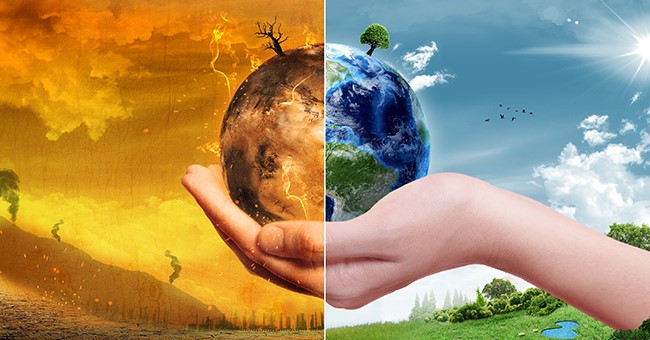
Climate change will affect everywhere: Are we at more risk?

By Saifullahi Attahir

Our grandparents used to remember with nostalgia how, in the past  50 years, they usually had a high-yield harvest yearly-round in the farms and surprisingly with total abstinence from using fertilisers and other modern additives. The bushes are full of trees of all sorts, vegetative forests with various colourful and nutritious leaves, guavas, mangoes, paw-paw, and dates, to name a  few. A farmer was almost always sure to have a sufficient harvest for the family with little manure from his domestic animal dungeons. They always harvest enough to feed themselves and their families, even more for the neighbourhoods.

Surprisingly, today, with all the powerful tools for mechanical farming, with all the ‘Almighty’ fertiliser, with all the agricultural institutions, with all the army of PhDs in academia, we harvest less and less. For the past two decades, our weather has constantly fluctuated with no certainty of what to crop this year or next. For instance, a  farmer would cut rice this year on clay land and experience drought, so precisely the following year, when he decided to switch to grains ( millet or sorghum), which would perfectly suit the dry land, unexpectedly, there would be a massive flood.

I live in Jigawa State and had first-hand experience with this scenario. Our farmers constantly switch between sesame (‘ridi’), groundnut, millet, and even rice. Places once dry land for sorghum and groundnut are now perfectly turned into rice farming lands. If you are doubting, come to areas around Sara town in Gwaram Local Govt, Jigawa state.

Jigawa state was initially named ‘Jigawa’  because of the large number of dry land primarily available for farming crops requiring less water. How are these vast areas becoming a mix-up, and even some submerged below water? How did we arrive arrived at this juncture? Why do we experience more floods and erosion disasters yearly?

Some of those answers are written on the wall as an effect of climate change caused by man-made activities that we failed to take any heed or measures. Some of those effects result from our ignorance to look into our environments and how we take care of our stomachs. These effects result from continuously perpetuating natural resources to satisfy our insatiable human greed.

Over the past decade, scientists and the media have been constantly alerting the populace on the danger that global temperature changes pose to the living conditions we are currently enjoying. Some of those warnings were already in effect in many parts of the globe. Research has shown how the continuous depletion of the ozone layer by emission from fossil fuel by our engines and industries poses a  great danger to the protection we once enjoyed from the Sun. The direct ultraviolet radiation from the heating Sun is no longer protected by the ozone layer, making it descend directly into our atmosphere. This led to the increased rise of the earth’s temperature to a fraction of a degree. The earth’s temperature has reached almost 2°c ( degree centigrade), with future expectations to reach 3°c.

The rise in earth’s temperature led to the constant melting of polar ice in the global North around Greenland. If you don’t know, these ices served as a pillar to the seas, habitation of billions of aquatic life, and a source of living for humans. If that ice melts, it will continue to kill those animals, shifting the ecological balance to the negative. Not only that, but mass migration of those living around the Poles would lead to overcrowding in other parts of the world, probably Europe or Africa.

Most of the current danger of global warming was caused by the developed Nations in the global North, especially Europe, which for over 200 years possessed engines that constantly polluted the air with carbon. Those countries include the US, UK, Germany, Russia, and China. Ironically, the underdeveloped countries in the global South are at the receiving end of the punishment, where floods, famine, earthquakes, storms, desertification, erosions, and drought constantly threaten them. The global South countries at constant risk of global warming are Pakistan, India, Indonesia, South America, and West and Sub-Saharan Africa.

One of the effects of global warming that people hardly pay attention to are as follows ;

1) Whenever any part of the world experiences a flood, famine, or earthquake, that part automatically becomes uninhabitable, and most of its inhabitants tend to migrate to safer places and greener pastures, especially cities. This would lead to overcrowding of urban areas, the creation of more slums, an increased crime rate, fewer job opportunities, and a reduction in the available land for farming and farmers themselves. These are the natural causes of food insecurity we see daily, the natural causes of the xenophobic attacks we hear daily, and the natural causes of the immigration problem we experience daily.

2) Overgrazing of the land without proper ways of replenishing and the constant encroachment of those specific forests and environments reserved for nomadic livestock in Northern Nigeria have forced the Nomadic Fulani to travel far to Southern Nigeria in search of pasture. This would automatically cause some altercation regarding rights, privacy, and intrusion, which causes the constant farmer-herders conflict escalating and metamorphosing into something else.

3) Many of those Fulani were now barren of their millennia-old source of livelihood (livestock) or were forced to abandon the practice because of the scarcity of grazing fields through encroachment by expanding Government or Private projects ( roads, railways, colleges, companies, hydroelectric dams). Worse, they could not attend schools or learn modern skills and mostly lived deep in the forest, so Government social amenities were scarce or absent. What do you expect from this scenario: aged old frustration accumulating over the years of negligence, ignorance, poverty, despair and envy? So those kinds of young idle minds can become a devil’s workshop if care is not taken. It’s easy to convince them through propaganda to carry weapons, which we now see as a form of banditry, armed robbery, kidnappings, and terrorism.

4) We have been witnessing the constant conversion of places once ecological habitats reserved for forestation and farming various food crops that our lives depend upon. These places are now becoming Universities, companies, barracks, airports, hotels, and rail tracks. These activities lead to less land for farming despite the exponential growth in the world population, hence the less harvest. This is the cause of hunger. Hunger leads to conflict, wars, illness, and debasement of human capital development.

The effect was not only caused by the developed Nations. We, too, have our share of the problem. I’m sure everyone raised in a rural area is aware of the constant deforestation by our people to gather burning sticks, and the worrying part is we cut the trees without planting others in their place. According to research, we need to plant ten trees instead of each one we cut down. But the sad story is that we are not even practising 1 for 1 (i.e. cut down one tree and plant one tree).

Sub-Saharan Africa is constantly threatened by desert encroachment, which would only be averted by planting more trees, especially along our roads and desert belt. People living around Jigawa State are aware of the continuous desertification yearly by metres in previously non-desert environments. This has a human and economic cost.

 Over the past five decades, the world has continually witnessed the gradual extinction and disappearance of many species of plants and animals from the earth’s surface whose research shows they enormously contribute to the stability and maintenance of ecological equilibrium. For instance,  vultures were once abundant over the skies, contributing to the degradation of carcasses that pollute the air, but today, rarely can you spot the vultures.

Hyenas, tigers, elephants, kangaroos, giraffes, swans, and thousands of other sauna and floras in aquatic and terrestrial forms were nowhere to be found. Some of those missing animal species have migrated to other parts of the globe with favourable weather. At the same time, many were wiped out through perpetual game hunting industrial and chemical poisoning. Did we know the catastrophic effect of the disappearance of these species from our planets?

It’s unsurprising that one day, humans too may start migrating to more favourable weather conditions if adverse climatic effects ravage them.

Some of the popularly known places affected daily by climate change include Jakarta, one of the world’s most densely populated cities in Indonesia, with floods destroying homes and lives every year. Hurricane Katrina in the US was a storm and mighty wind that destroyed houses, bridges, and humans. Makoko Slum in Lagos, Nigeria, is a densely populated area above water, inhabited mainly by immigrants searching for job opportunities from the deserted rural part of the country. Auyo in Hadejia Jigawa State, an area stretching many local Governments yearly affected by floods and erosion, causing devastating destruction and loss of human lives. Greenland is part of the globe at the far north pole around Antarctica. Those places are mostly covered with ice, but today, this ice melting rapidly, causing migration of the people around those parts.

The climate change effect is putting the world into a dilemma, with rising sea levels on the one hand and extreme drought and desertification on the other.

Some archaeological exploration has shown that today’s mostly desert Middle Eastern world flourished with vegetation and abundant water, lives, and different aquatic and terrestrial species. It’s only time that would tell whether we are retracing back to that same period conditions.

SOLUTION

Finally, the developed nations should continue diversifying their energy source through electric vehicles, solar stations, biodegradable energy, and hydroelectric power sources to abandon the toxic fossil fuels that pollute the atmosphere with excess greenhouse emission gases ( methane and carbon monoxide).

Also, the global South, including Asian, African, and Middle Eastern countries, should embrace conserving our God-given resources by planting more trees, regulating deforestation, and creating robust public awareness of the importance of Ecological Conservation.

Saifullahi Attahir wrote via saifullahiattahir93@gmail.com.