Technology

Forensic Science: An imperative tool for fight against corruption, insecurity, other woes

By Mubarak Shu’aibu

The insecurity challenge in Nigeria has assumed a formidable dimension that requires a stakeholder’s approach as it is being touted in various quarters and, in all honesty, necessitates a call for creativity and long-term work. The alarming rate of insecurity is no less disturbing despite the reform undertaken and a substantial share of the national budgets allocated to the security sector.

The sensation of insecurity citizens of our societies experience is one of the main threats against the quality of life in a democracy. Thus, this has caused public opinion to cry in favour of searching for solutions to the woes.  There is an acceptance that a lot needs to be done to turn the current malaise around, and espousing Forensic Science as a tool should be considered on the list of priorities as it would make a profound impact and or even lay a groundwork for the fight against insecurity. Proof for sexual offences, drugging, cold blood murder, bank robbery, identification of victims and other menaces could be decisively dealt with by forensic techniques.

Forensic Science refers to the application of scientific methods in the recovery, analysis and interpretation of relevant materials and data in criminal investigations. It is both an intelligence and evidential tool to assist in the crime management and delivery of justice.

Scientific advances already play an essential role in solving crimes. According to the American National Institute of Justice, since 2009, the institute has funded forensic science projects worth more than $127 million, including approximately $116 million for 269 research awards and nearly $11 million for projects by federal partners. This funding has resulted in more than 900 reports, publications in scholarly journals and presentations. Therefore, it is a wise bit of business in a country like Nigeria, where the criminal activities are devoid of sophistication like that of America, to expend more resources in forensics.

Just as medical, agricultural and economic research are crucial for the advancement of a country, a sustained progression in the research underlying forensic sciences also is critical for advancing safety and the administration of justice. Unfortunately, Nigeria is hooked on instant highs and short-term fixes, which has ultimately and gruesomely halted our general progress as a country.

In retrospect, lack of intrinsic abilities on forensic had many arguing in favour of the Kano State Governor Abdullahi Umar Ganduje when his videos stacking dollars into his pocket were leaked. This event had the public stupefied, including President Muhammadu Buhari, who in the aftermath remarked that he didn’t know the extent of technology used to record the video, a matter that could quickly be settled within a fraction of seconds with good forensics in place.

In a similar terrain, a snake swallowed handsome money in the JAMB office, a fire outbreak in one of the finance offices in Abuja, the recent accident that occurred recording scores of deaths by one of the elite sons and many more stories whose verdicts to date remain surreptitious for Nigerians.

Bringing this to a close, I can say employing forensic science techniques in our fight against lingering insecurity and corruption should be considered inevitable and necessary. That will solve many other problematic issues such as sexual offences, drugging, cold murder, etcetera.

Mubarak Shu’aibu wrote from Bauchi State, Nigeria.

YouTube removes “dislike” count across its platform

By Muhammad Abdurrahman

YouTube, the world’s biggest online video sharing and social media platform, has hidden dislike count across its platform. While the button will remain, but the “dislike” numbers will be only visible to the channel’s owner.
 
The Google-owned company further states that the move is meant to “help better protect our creators from harassment, and reduce dislike attacks — where people work to drive up the number of dislikes on a creator’s videos.“
 
The statement clarifies that:
 
|As part of this experiment, viewers could still see and use the dislike button. But because the count was not visible to them, we found that they were less likely to target a video’s dislike button to drive up the count. In short, our experiment data showed a reduction in dislike attacking behavior.
 
We also heard directly from smaller creators and those just getting started that they are unfairly targeted by this behavior — and our experiment confirmed that this does occur at a higher proportion on smaller channels.”
 
This came when some social media users, particularly Facebook, were calling on their developers to introduce the “dislike” button on those platforms. Given this development, social media experts suggested that users may not see the “dislike” option on Facebook, Instagram or other networking sites.

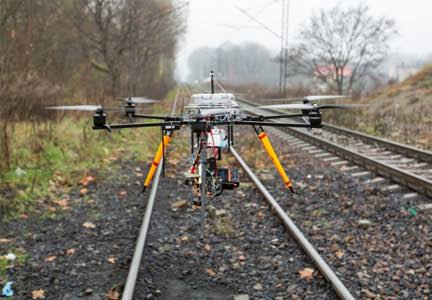
We have the simple Artificial Intelligence to secure our rail tracks

By Hamid Al-Hassan Hamid

I wrote twice about possible attacks on our rail tracks; it is just a matter of time. This, in my opinion, is just a test run; expect more to come if we continue to neglect simple and sincere advice due to ineptitude and corruption. The rail tracks are not left alone, on their own, anywhere in the world. They are protected, monitored and secured. It is done through determination and sincerity of purpose. How many souls would have been lost had the rail skidded and crashed! How disastrous!

Again, with all our tech universities, we cannot build local drones to fly 24/7 and monitor at least our rail tracks. The only thing our professors are good at is attacking another person who became a professor that they do not like.

The technology we need to curb these security challenges is too expensive to buy; we do not have the money. But it is cheaper to develop, and we can do that locally.

I once reached out to MTN, asking how much it would cost me to connect drones that will fly across the country, especially our forest, for intelligence gathering. I will build the server, and they will provide the network, without the Internet data, I don’t need the internet. They gave me two options:

1. Pay 150,000 naira monthly to connect as many drones as possible nationwide.

2. Make them partners in the project, and I will not have to pay a dime.

They needed confirmation and approval from appropriate security bodies. It has been about a year or so now. Getting the interest of the appropriate security bodies alone is more complex than quantum physics.

In Africa, the only thing we love is physical cash, but I don’t blame us. I just pray that God cures our sickness soon.

We need to establish private tech defence companies that are private entities and not owned by the government.

Artificial Intelligence has more practical use cases in Africa. In addition, it will be easier to implement because the biggest fear against Artificial Intelligence is that it will compete with humans in jobs and take away those jobs.

Africans don’t want jobs; they just want to have something to eat throughout the week. Forget about the rampant cry of unemployment. As soon as you employ, you will begin to see. Artificial Intelligence will have no resistance in Africa, especially in security.

What shall we do?

I have been getting messages and comments from brothers trying to help with the Private Defence Tech Company Startup. Some proposed sending proposals to either Minister of Communications and Digital Economy Professor Ali Ibrahim Pantami or Vice-President Yemi Osinbajo. Some also proposed promoting the idea in media houses until it reaches the ears of those in power.

First of all, I have access to Professor Pantami through childhood friends who can meet him whenever they want to. I also know people that can reach the VP. But I disdain the idea of sending proposals.

This is what I am doing at the moment:

I have a team of four individuals with backgrounds in the military and tech. We are making plans to partner with anybody (with genuine sincerity) interested in starting something simple that can be pushed into the market for testing and continue building from there.

At this point, what we want is to partner with the research department of any Nigerian university, military institutions like the Airforce Institute of Technology (AFIT), or the Nigerian Defence Academy (NDA). We want to start by building an AI that will be able to:

1. Identify faces at entrances through cameras.

2. Log check-in and checkout time of each face.

3. Determine if anyone checked in and did not check out, and report such cases to analyse the data to know why such checkout did not occur. The checkout may be missed because the camera did not capture the face or another exit was used, in which case we would like to know if the use of such alternate exits is valid and improve the AI to be more accurate with regards to missing faces.

4. Print out daily, weekly, monthly and yearly statistics on such check-ins and checkouts per individual and the whole entrants.

5. Try predicting possible movements of each individual based on the data collected as they grow.

6. Send silent alerts to mobile phones of respective security personnel on duty if a breach in the entry is detected, for example, an individual using an entrance or exit that is not within their jurisdiction.

We can develop the AI, create the server, and assist with the statistics as part of our responsibility.

We can start by using cheap Android phones as cameras at respective entrances and exits by connecting them to the server via wifi; this cuts down costs by far at the initial stage.

We want to grow the system gradually by later introducing drones to fly outside and see if they can recognise personnel that have been logged in the building at various entrances, identify the cars they use, log their car plate numbers, identify what canteen they like taking coffee within the vicinity and so on. Then gradually scale to state and federal levels.

It is very simple. But can corruption and corrupt individuals allow this?

Hamid is a social commentator, an expert in AI and writes from Sudan.

Maishayi kiosk inventor, Usman Dalhatu, wins $10,000 start-up grant

By Wiebe Boer

In February 2021, Juliet Ehimuan, the Director of Google West Africa discovered Usman Dalhatu, a university student and the CEO of Dalsman Tech who had developed an innovative solar-powered maishayi kiosk.

After a successful application, Usman Dalhatu was accepted into the All On and The Rockefeller Foundation funded Nigeria Climate Innovation Center’s 2021 off grid energy incubation programme.


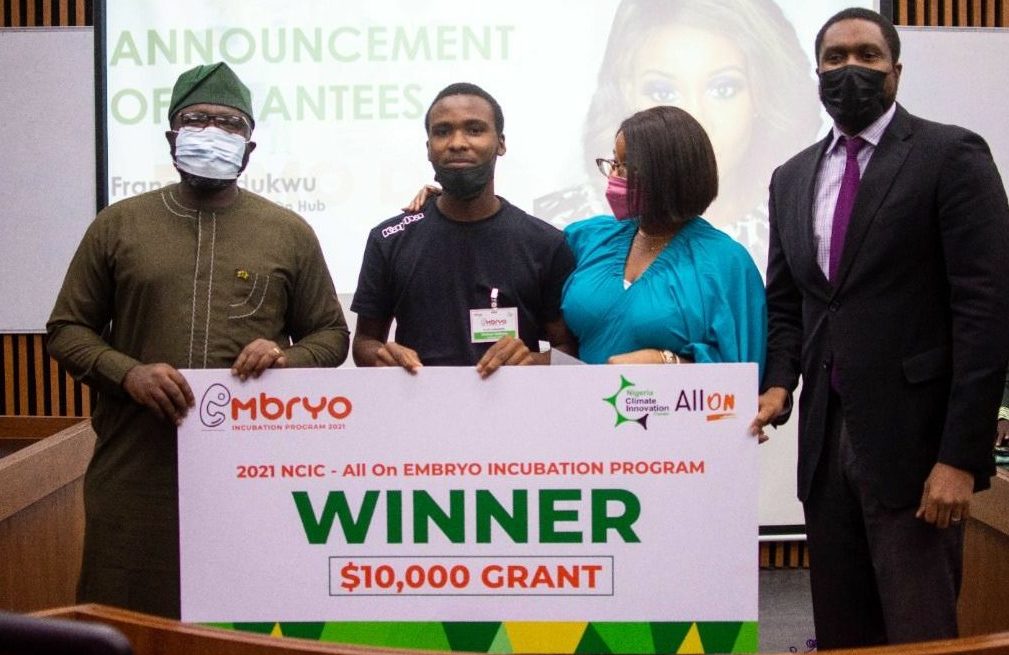
During the Nigeria Climate Innovation Center pitch session for the twenty finalists in the 2021 cohort earlier this week, Dalsman Tech was selected as one of the eight winners of the $10,000 start-up grant. The funds will be used to scale up the production of the solar-powered kiosks for distribution to kiosk franchise owners in Kaduna, Kano, FCT, and Abuja.

This brilliant innovation is highly scalable and can lead to a much cleaner energy source for tens of thousands of maishayi stands across Nigeria.

This is one of many examples of clean energy innovations developed by young Nigerian entrepreneurs that will help drive the country’s energy transition from within.

Wiebe Boer, PhD, is the CEO of All On.