Religion

From Proliferating Worship Places to Empowering Worshippers: A Reflection on Philanthropic Reprioritization in Nigeria (I)

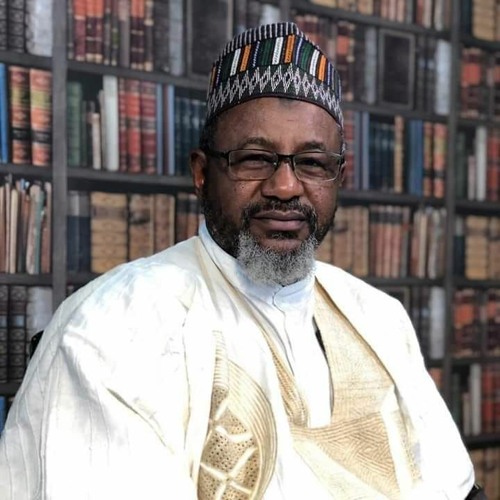
By Abdullahi Abubakar Lamido

Alhaji Halilu is a popular, wealthy businessman. Famous for his continuous investment in constructing mosques, people in his town, surrounding villages and neighbouring states came to know him as Alhaji Mai-Masallatai (roughly, the Mosques Builder). His main motivation is the authentic hadith that promises a house in paradise for anyone who builds a mosque for Allah.

Thus, whenever Mai-Masallatai is approached with a request for mosque construction, he gives an automatic positive response. Alhaji dedicated all his philanthropic budget to building mosques, with virtually zero allocation to any other act of charity. He never says no to a mosque request. Within some time, he had constructed mosques for almost all the communities within his town and neighbouring villages. His ultimate goal is to own wonderful castles in heaven, and, Alhamdulillah, he has got a guarantee for that in constructing mosques from an infallible mouth. 

Now, three things happened. One, as there are not many communities lacking mosques, people started requesting him to repair the mosques he built for them last five, ten or seven years; to rebuild their mosque, repair it, or buy them new sound system, new carpet for the mosque, electricity generator, or “solar” and so on. Mai-Masallatai gradually transformed into Mai gyaran Masallatai, from building mosques to redecorating and making existing mosques “befitting” and ultramodern.

The second trend then followed. Since Mai-Masallatai is not the only aspirant for paradise, other wealthy persons joined the mosque construction endeavour. As a result, the number of mosques increases – two or more mosques in an unnecessarily close distance. A  community that needs one mosque would request a second one for flimsy reasons; we have Sheikh XYZ, who should be an imam and has no mosque; why not get one for him so the society would benefit from his imamship! And any rich man who builds a new house would ensure that a mosque is embedded from the inception of the architectural design. So, each neighbourhood or street, and almost each “big” house, has a mosque attachment built by a person who wants paradise. Soon the third issue began to arise; imams scarcity.

It is noteworthy that Mai-Masallatai and all his emulators live and do business within a Muslim community that has thousands of orphans who live in hunger, disease, illness and squalor. They coexist with hundreds of widows who survive in shabbiness, battling the spiritual ills, psychological traumas and socio-economic vulnerabilities associated with poverty, ignorance and starvation. They reside in neighbourhoods bedevilled with noise, air and dirt population, with zero consciousness of environmental challenges; where people often urinate and defecate in the open, at public passages and places as crucial as mosques and marketplaces and stadia. They live in communities that use firewood as an energy source but with near-zero interest in planting trees.

Mai-Masallatai builds mosques for communities where well above 80% of the people cannot correctly recite the Fatiha and are mostly ignorant of the basics of purification, ablution and prayer. The worship places are beautiful, “befitting”, and “ultra-modern”. But the worshippers are ultra-ignorant, extra-hungry and super-poor. While the mosques are decorated, the mosque attendants are neglected.

The community severely lacks qualified imams and doesn’t have a plan to train religious scholars or imams. Nearly all are accidental scholars and imams. Most imams are less qualified, semi-qualified, or simply unqualified. Those with minimum requirements have no access to any “on the job training” and retraining. They have no grounding in jurisprudence nor appreciation of the complexities of their time and place. They might know a little of actually elementary Islamic texts, but not of their context. They continue to recycle their khutbas, reading for their congregation – often with a lot of mistakes – imported sermons presented for the 20th-century audience in Egypt or Morocco or Saudi Arabia or Algeria (depending upon the inclination of the imams), which are compiled in a collection of sermons or al-khutab al-minbariyya. The sermons are in Arabic, reread for an audience dominated by over 90% of people who do not understand Arabic except, perhaps, “Allahu Akbar”!  

Dear reader, to what extent is your community better than Mai-Masallatai’s? Should building worship places take priority over building the worshippers? Should we continue to construct “befitting”, “ultramodern”, and “world-class” mosques for largely poor, ignorant and confused Muslim communities? Should we, while, of course, building mosques where they are truly needed, not also prioritize producing a Muslim population that is religiously educated, morally upright, intellectually sound, socio-economic dignified and religiously conscious. What better serves the essence of the mosque as an Islamic institution: a beautiful building or an educated congregation? Should building mosques be the only priority in a village where there is not even a single person learned in the Qur’an and the jurisprudence of purification, ablution, prayer, fasting, and other rituals?

More questions are begging for answers. For example, what will be more critical between saving people’s faith through addressing their basic needs of life, thereby shielding them from the onslaughts of evangelism and other anti-Islamic missions on the one hand, and mere building a mosque where there are no qualified imams and scholars to teach them creed and worship on the other? Should we continue to have “comfortable places” for ignorant and hungry worshippers rather than building conscious and educated worshippers? 

Given the current religious and socio-economic realities of Muslims in Nigeria, what should be the focus and priority areas of intervention in terms of philanthropy? Please don’t mistake my position. No Muslims will disagree regarding the centrality of mosques as Islamic symbol numero uno. Where there is no mosque, it is a collective responsibility upon the Muslims to build one to the best of their ability. What, however, may need reflection is the question of when, where and why building a mosque should take primacy vis-à-vis other Muslim priorities and when not. Is it not imperative, for instance, for us to begin to remind ourselves that much as we can get a shortcut to paradise through building mosques, there are other philanthropic acts that not only guarantee paradise but even assure of a choice area and unmatchable edifice in Jannah?

Abdullahi Abubakar Lamido is the Chairman Zakah and Waqf Foundation Gombe, Nigeria. He can be reached lamidomabudi@gmail.com.

FG must stop these senseless killings in the North – Ulama Forum

By Aisar Fagge

The Ulama Forum in Nigeria is greatly concerned and saddened over the perpetual killings of innocent lives going on unabated in Nigeria, especially in the North West of the country in recent times.

The forum disclosed this in its press release signed by its secretary, Engr. Basheer Adamu Aliyu, on Monday, December 13, 2021, and sent to The Daily Reality today, Thursday, December 16, 2021.

The statement reads: “Our hearts bleed over the dastardly and inhuman act of burning alive of 23 passengers in Sokoto state. Other equally sad losses of lives that were witnessed in Niger, Kaduna, Zamfara and Katsina states over the last one week are heart touching, frustrating and to say the least unpardonable. It is highly inconceivable how bandits and terrorists move about freely in the land, committing heinous acts and atrocities unchecked by the power of government and its security agencies.”

“The terrorists have desecrated all religious, human and universal values and indeed, they have lost their faith and humanity; they must be confronted head-on with might and power. We most strongly urge the Federal Government of Nigeria (FGN) to sit up to its responsibility of protecting the lives of Nigerian citizens. It would be recalled that in the year 2020, out of similar concern over the deteriorating trend of insecurity, the Ulama Forum had advanced nearly a dozen suggestions to the governments at all levels so as to curb the Boko Haram menace, banditry and other security challenges facing the Northern region.”

“It is sad to note that most of our suggestions were ignored and security situation in the country has been moving from bad to worse,” the Forum lamented.

“Based on the foregoing, we would like to once more urge the FGN to re-assess its security strategies and spending with a view to unfolding a more holistic and all-inclusive approach. We believe that divine intervention is a most potent weapon against the bandits, insurgents and their collaborators.”

“To this end, members of the Forum have resolved to devote themselves to alqunut (special prayer in times of turmoil) during each prayer session. Similarly, special prayers should be observed in Madaaris (Islamiyyah Schools) and other places of gathering.”

“We pray to Allah to give our leaders the listening ears to hear the cries of its weak, terrorised and terrified citizens, particularly in the North. May they have the wisdom, will, determination and ability to do the needful and ensure peace and security in the land. There is no power or strength save in Allah,” it concluded.

The release was endorsed by its members such as:

Prof. Mansur Ibrahim (mni), Sokoto; Dr. Bashir Aliyu Umar, Kano; Dr. Abubakar Muhamad Sani B/Kudu, Jigawa; Dr. Khalid Abubakar Aliyu, Kaduna; Prof. Muhammad Babangida Muhammad, Kano; Dr. Said Ahmad Dukawa, Kano; Prof. Salisu Shehu, Bauchi; Prof. Ahmad Bello Dogarawa, Kaduna; Amir Abdullahi Abubakar Lamido, Gombe; Dr. Ibrahim Adam Omar Disina, Bauchi; Prof. Ahmad Murtala, Kano; Sheikh Tijjani Bala Kalarawi, Kano;

Yoruba Muslims in Yorubaland: Revisiting interfaith dailogue and religious tolerance

Perhaps, it was the Mathew Effect that made Professor Kpareogi’s recent article on the plight of the Yoruba Muslims in their own lands so famous that it generated so much response as if, until the piece was made public, nobody was aware that Yoruba Muslims, who were in the majority in the Southwest, have been under powerful religious subjugation by the Yoruba Christians.

But even a casual observer will not fail to notice the recurring crisis across the Yoruba land over the use of Hijab by Muslim female children in the schools. Some of these sartorial choice crises trended long enough to attract the attention of everyone while some have to be settled at the courts. The infamous ruling by an Ikeja high court that because Christians would feel less righteous in the presence of Hijab wearing children, Muslim children should not wear Hijab to their schools, is still fresh in our memories. Delivering the judgement on 17th October 2014, Justice Modupe Onyearbor declared that “The non-Hijab wearing students will feel inferior to those who are putting on Hijab.” The judge, therefore, banned the use of Hijab for Muslim girls till an Appeal Court put aside that judgement.

The sartorial choice struggle is, perhaps, the most glaring among the many struggles being fought by the embattled Muslim majority in the region, this is mainly due to publicity it is generating and the will to resist the subjugation by the new generation of Muslims who firmly believed in self-determination. The case of Barrister Firdaus Amata who refused to jettison her constitutional right on December 12, 2017, an action for which she was denied entry into the International Conference Centre by the Body of Benchers, highlighted one of such struggles.

Apart from the Hijab struggle, the most glaring inequality the Muslims are struggling with is the fact that despite being the majority in the region, not a single Islamic court exists in the whole region. They are forced to either take their cases to the imposed Christian common law courts or Customary courts. This is more worrisome given that Islamic courts existed in Yorubaland long before the arrival of the colonial armies who abolished them and imposed their own courts. Islamic courts existed since 1842 in that region, according to MURIC.

Even the Yoruba Muslim’s peaceful move to introduce sharia courts in Yorubaland through constitutional means was fiercely tamed by the Christians in that region. On May 27 this year, the Pentecostal Fellowship of Nigeria (PFN) was eloquent in its submission that the introduction of Shariah Law in the South West should be ignored by the Senate.

Nothing highlighted how the Muslims in Yorubaland are struggling to free themselves from Christian subjugation than the declaration by some Muslim groups that they are not in support of the Oduduwa Republic as they will face persecution if actualized. This belied the widely believed notion that the Yorubas are homogenous and that religion plays a second or third role in their lives. It proves that for a long time, the Muslim majority were silenced into submission out of fear of “social ostracism”. Their passiveness was fully exploited by Christians and misunderstood by northerners.

Now that the passiveness is giving way to the rising tide of Islamic awareness in the region, things are getting clearer that the hyped religious tolerance in that region was indeed the domination of Christians over Muslims.
Ironically, this is coming just as some voices are maintaining a hyperbolic but erroneous assumption that the North is the den of religious intolerance even as facts are contradicting them.

Sheikh Nuru Khalid is among those who seemed to have fallen for this fallacy recently. In his clamour for Interfaith Dialogue, he recently claimed, among other things, that Interfaith Dialogue was necessary now given the bad light in which the terrorist organizations, like Boko Haram, are painting Islam and the high level of religious intolerance in the North.

If the Sheikh is right on Interfaith Dialogue’s effect on religious intolerance, he is very wrong on the Boko Haram claim. He is also very wrong in his charge that Muslims are to be blamed for religious intolerance in the region. Because of all the religious crises in this part of the nation, over ninety per cent were NOT caused by Muslims; they were just defending themselves.

Therefore, to insinuate that Muslims are to blame for religious intolerance in the country is insidious even if said in good faith, because it is a BIG lie.

It is flabbergasting to assume that had there been an Interfaith Dialogue, Boko Haram wouldn’t have happened, because among the reasons the terrorists have for fighting is what they called the systematic downplaying of religious teachings in order to please non-Muslims.

It is evident that both the terrorists and the Sheikh have agreed on the same erroneous definition of Interfaith Dialogue. Both seemed to give Interfaith Dialogue the definition of Syncretism. Many people speak about syncretism while they think they are discussing Interfaith Dialogue.

To differentiate between the two terms, just take the stands of late Nnamdi Azikiwe who said “We must forget our differences”, and that of late Sir Ahmadu Bello (Sardaunan Sokoto) who replied, “No, let’s understand our differences…” What Azikiwe said is syncretism while the stand of Sardauna connotes Interfaith Dialogue.

I don’t think anyone who knows that Muslims are the majority of the victims of Boko Haram or understood their mission will honestly insist that an Interfaith Dialogue would have been an antidote to their aggression.

Finally, while I am not saying (the Muslim) North is totally devoid of religious intolerance (this depends on your definition of the term), it is not true that we are the purveyors of intolerance, rather, we are at the receiving end of religious intolerance. This could be discussed in another piece.

Muhammad Mahmood writes from Kano.

Many students go to university without any dream – Abdullahi Abubakar Lamido

By Aisar Fagge and Ahmad Hassan

Many students who go to university do not have the awareness and motivation to understand the need to have a personal vision and proper training on managing their time effectively.

Malam Abdullahi Abubakar Lamido of the Department of Economics, Bayero University, Kano, made this observation while presenting his papers in a lecture series organized by Al-Istiqama University, Sumaila (AUSU). Speaking about the first paper titled “My Mission in Life,” Lamido said:

“Well, essentially, the essence is to help the students with the necessary tools with which they can plan and organize their life, from developing their personal life vision; what they want to achieve in their own life, and what they want to achieve in the university.

“When we say vision, we mean how to help them develop a multi-dimensional vision that covers all the essential aspects of their life – spiritual, religious, social, economic, financial, political, family and educational life,” he added.

Lamido’s second paper was about how students manage their time where he said:

“One of the greatest assets that one needs to move towards greatness is to master the art of time management. I gave them some tools that can help them pragmatically in organizing their time. We use the “Big rock concept” and Brain Tracy’s “Eat that frog and so on.”

When commending the management style of the Vice-Chancellor of Al-Istiqama, Lamido commented thus:

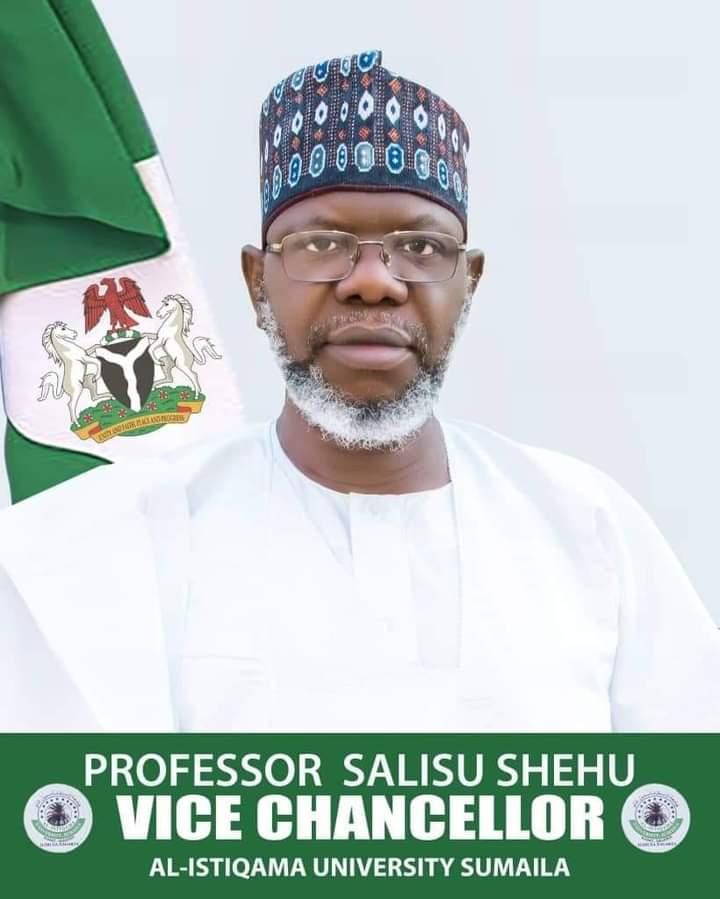
“When I heard about the appointment of Prof. Salisu Shehu as the VC of Al-Istiqama, I concluded these people are serious. Because whoever knows Prof. Salisu Shehu knows him as a man of seriousness, a man of vision, a man of commitment, a man of dedication, a man of mission, a man of good character, a man of scholarship and an accomplished administrator.”

Two students attending the event explained the impact the lectures had on them.

Ibrahim Bashir, a student of Medical Laboratory Science, said, “My mission as a student of Al-Istiqama is to become a medical laboratory scientist and memorize Holy Qur’an.”

Fatima Muhammad from the Department of Nursing said, “Today’s activities are very motivating and educative as well. I have learned the difference between the vision and mission in life and how to use time accordingly.

“As a student of Al-Istiqama University, my vision is to become a professional nurse that is going make a difference out there – someone who is going to help the society and also the people from my state, women especially.

“People are complaining in the hospital that the nurses lack good manners, nurses harassment and others. I know showing sympathy to people in need of medical services is good.”

Other scholars who presented various papers related to their fields include Eng. Bashir Adamu Aliyu, Barrister Ahmad Yarima Misau, Dr Abubakar S. Usman, Dr Halima Rabiu Abdullahi and Dr Muhammad S. Usman from their respective institutions.

Many academics, religious and traditional leaders, as well as members of the Muslims Students Society of Nigeria (MSSN), graced the occasion.


Al-Azhar University to make Al-Istiqama center for Arabic sign language – Prof. Salisu Shehu

By Aisar Fagge

On 3rd November, 2021, a delegation from the Al-Azhar University, Egypt visited Al-Istiqama University Sumaila (AUSU) for partnership, staff training and establishing a centre for Arabic sign language that no any Nigerian university has. Explaining to the Daily Reality about this development, The VC of Al-Istiqama University, Prof. Salisu Shehu said:

“You know universities in the world thrive on partnership and collaborations. You need to come to abreast with international best practices in university education. And it is only through collaboration and partnership you get that. You need to mutually interdependent on one another. And it is on this basis we get some form of partnership with Al-Azhar University. As it were, Al-Azhar University is over one thousand years old. It is our big mother.”

“We are moving towards a memorandum of understanding with Al-Azhar University, and they are going to help us in a number of ways: one of which, for example, is that we want them to give us training, to train some of our staff on Arabic sign language.”

There is a problem with Muslim deaf people when it comes to Arabic language and reciting Qur’an especially in their prayers. Lamenting about this lingering issue, the VC affirmed that:

“Muslim deaf people in Nigeria don’t read Arabic, they don’t read the Qur’an, they pray in English. Because what is taught in our school is only English sign language. So even when you write Hausa to them they don’t understand, let alone the Arabic language.”

“So we need to get Arabic sign language and, we want to make Al-Istiqama University, insha Allah, a center for the production of deaf people that are literate in Arabic sign language so that they will be able to read Arabic and Qur’an. Not the usual English they are taught.”

“So we have requested Al-Azhar University to support us in terms of training so that can establish a center for Arabic sign language in order to promote braille literacy,” he concluded.

Buhari congratulates Sultan on his 15th Anniversary

By Uzair Adam Imam

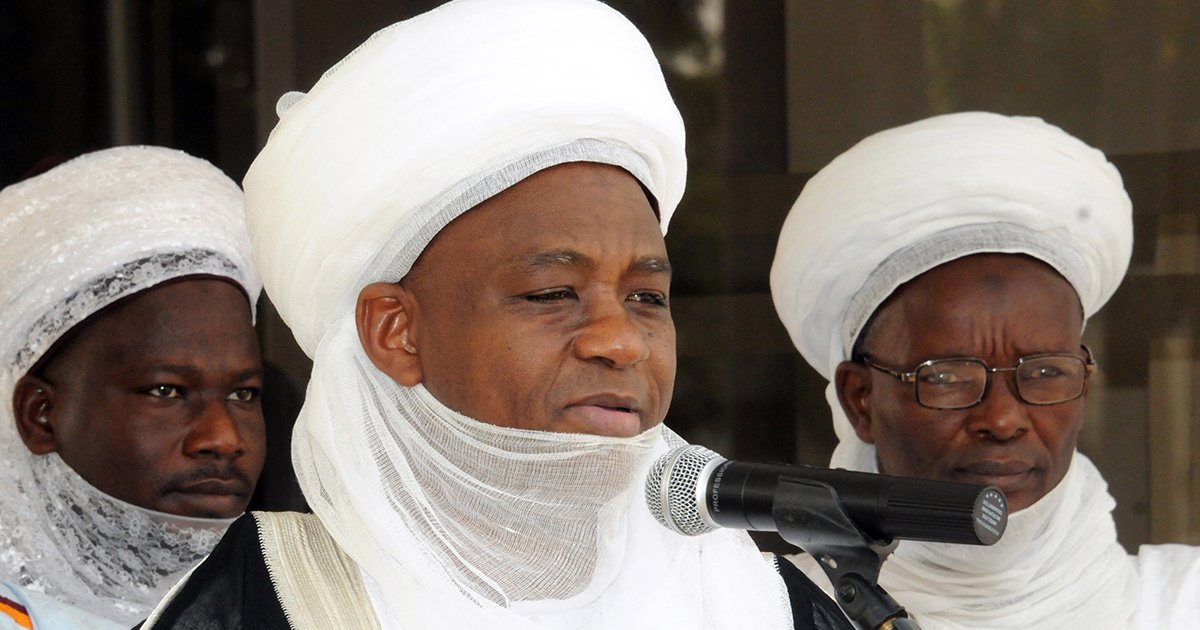
President Muhammadu Buhari congratulates the leader of Nigerian Muslim Ummah and chairman of Nigerian Supreme Council of Islamic Affairs (NSCIA), His Eminence, the Sultan of Sokoto, Muhammad Sa’ad Abubakar (III), as he marks 15 years on the throne.

The statement signed Tuesday by the Senior Special Assistant to the President, Malam Garba Shehu, disclosed this, describing the Sultan as a “peacebuilder and a true embodiment of commitment to service”.

The statement also added, “Sultan Sa’ad has remained a leader who dedicated his life to the welfare of the people.”

“Greetings to His Eminence, the Sultan on his 15th year on the throne of his fathers. On behalf of my family and I, the government and the people of Nigeria, I wish you many more years in the position and working tirelessly to promote inter-religious and inter-communal harmony throughout the federation.

“It is very reassuring to have such leadership at these challenging times. My prayers are for your long and healthy life,” said the president.

Exempt the Sultan from ‘Deposition Clause’: Prof. Akintola

By Abdullahi A. Lamido

The renowned Muslim human rights activist and Director of the Muslim Rights Concern (MURIC), Prof. Ishaq Lakin Akintola, has called for exempting the Sultan of Sokoto from the “Deposition Clause” in the Nigerian laws.

Speaking as the keynote presenter at the formal opening ceremony of the 15th Anniversary of the 20th Sultan of Sokoto, His Eminence, Alhaji Muhammad Sa’ad Abubakar CFR mni, Akintola noted that Sultan Sa’ad as the head of the Nigeria Supreme Council for Islamic Affairs (NSCIA) means well for Nigeria and his council has the potentials of solving several problems that Nigerian Muslims are bedevilling with.

“By the nature and composite of the NSCIA, anyone who occupies the position of governor in Sokoto State has the power to depose the Sultan. Unfortunately, the removal of the Sultan has the bandwagon effect of removing the President General of the NSCIA. This is because, Section 6 Cap 26 of the Laws of Northern Nigeria empowers state governors to depose the Emirs and this includes the Sultan”, he said.

Akintola stressed that in addition, Article 7 of the NSCIA constitution stipulates that the Sultan of Sokoto shall be the President General of the NSCIA. “Here lays the dilemma facing the Ummah. The governor of a single state can depose the Sultan and leader of all Nigerian Muslims. This situation is capable of causing unmitigated embarrassment. It also has the capacity to trigger a religious crisis of unimaginable dimension”.

He pointed to the fact that: “Whereas even the president of Nigeria cannot interfere in the affairs of the Christian Association of Nigeria (CAN), [but unfortunately] a state governor can interfere and even depose the Sultan and President General of the NSCIA. This has far reaching comparative disadvantage vis-a-vis the bargaining power as well as pressure group influence of Christians and Muslims in Nigeria.”

The solution to this dilemma according to Akintola is to secure immunity from deposing the Sultan. “The onus is therefore on the Sokoto State House of Assembly to set the machinery in motion for the repeal of Section 6 Cap 26 of the Laws of Northern Nigeria in such a way that it will exclude the Sultan from the governor’s exercise of the power of deposition. It is a simple exercise which may not go beyond a motion in the House seeking to insert the phrase ‘except the Sultan of Sokoto’ in the dethronement clause.”

He reiterated that this is not about the present Sultan but about the progress of the Ummah and the freedom from undue executive influence.

Commenting after the speech, the Chairman of the Occasion, His Highness, the Emir of Argungu Alhaji Samaila Muhammadu Mera, stressed that this matter raised by Akintola is a serious one and Nigerian Muslims should give it utmost attention. The Sultan is the leader of the Muslims not of Sokoto. He is not the Sultan of Sokoto State but of the Sokoto Caliphate. As the leader of the entire Nigerian Muslims, the office of the Sultan deserves special provision in a manner that safeguards the overall interest of Muslim leadership.

Muhammadu Sunusi (II) was the recent emir in Northern Nigeria to be deposed by the Kano State Governor, Dr. Abdullahi Umar Ganduje by alleging that the deposed emir interfered into the state’s political matters that almost caused him to lose his second election in 2019.

Sultan Sa’ad rewards Keke Napep rider with 500,000 naira

By Abdurrahman Muhammad

His Eminence, Sultan Muhammad Sa’ad Abubakar MNI, has honoured a Keke Napep rider, Malam Akilu Gangare in Jos, with the sum of NGN500,000, for returning NGN500,000 left in his Keke Napep to its rightful owner.

A passenger boarded Malam Akilu’s Napep to a particular place. After reaching his destination, the passenger hurriedly alighted leaving his back behind. A little while longer, Malam Akilu sighted the bag in his Napep after his passenger has disappeared. He opened the the bag out of curiosity only to see a large sum of money NGN500,000 inside.

Malam Akilu quickly turned back in search of the passenger. After he located him, he handed him back the bag with his money intact.

On receiving the news, His Eminence the Sultan made the necessary investigation and the information turned out to be true.

Yesterday, Saturday, 23-10-2021, His Eminence rewarded Malam Akilu in Jos with the sum of NGN500,000. The exact amount he honestly returned to the owner.

For His Eminence, this is not the first time of doing this kind of great gesture. He has done it several times before. It is his way of rewarding honesty and encouraging people to be good citizens.

Why Not Just Make a Waqf Now?

By Abdullahi Abubakar Lamido

I begin, after praising Allah and sending blessings to the beloved Prophet peace be upon him, with three stories from Nigeria. They are all real. The first is of a rich man who died and was survived by a wife and her two children. His estate included mansions in choice areas, high worth investments, company shares, farmlands, etc. This “beloved” wife was advised to make a waqf (perpetual charity) of just a mosque as a source of everlasting reward for the late husband from the hard-earned wealth he spent his life gathering. She was reminded that less than one per cent of his wealth could do it.  The wife answered in one word: “Impossible”! Rather, she offered to cook rice and beans every Friday and give to the begging Almajiris around as sadaqah. To be fair to her, she did so for some months until she met a new darling husband with whom she now enjoys her inherited, halal fortune! End of story!

The second story is that of a religious and highly influential personality who died and left behind several sons and daughters, all of whom had already grown wealthy and influential. The deceased’s bosom friend, who was the custodian of many of his possessions, approached the heirs. He pinpointed a plot of land in a choice area in one of the largest Nigerian cities and offered that if they would designate it as a perpetual charity, he would build an ultramodern Islamic centre there as a waqf for their late father. This, he said, was to create a ceaseless flow of rewards to their late father. Alas! To his face, they simply said no! And the rest is history.

The third is the story of a woman philanthropist who was the wife of an influential person. She was known for her dedication to building mosques, schools, among other charitable interventions. After her demise, the husband learned of several uncompleted mosques and schools that were part of her charitable initiatives. He called her children to a conference and suggested that from her inheritable wealth, they should dedicate what would be enough to complete such ongoing projects. And what a small portion of her wealth was that! They unanimously rejected his offer, departing in a “just give us our money” mood. It was the father who used his resources to finance the completion of the projects. I gather that he was lucky to have learned some lessons here and begin to emulate his late philanthropist wife. He actually increased his budget for Islamic philanthropy as he was already known for charity also. May Allah accept it for him, and for her.

I am sure by now you, my dear reader, have started to recollect several similar stories you have heard on several occasions or which might have even happened close to you. I also have many to share. But these ones suffice as examples. At least for now. What lesson, then, have you learned from this?

Now, remember the Prophetic hadith in which he explains that the moment a person dies, his reward fetching deeds terminate except three; waqf or perpetual charity being the first of them. The other two reward sources are the prayer of a pious child and beneficial knowledge. Interestingly, in the hadith is an equitable distribution of reward sources of some sort. The wealthy folks no doubt have access to the “lion share” in terms of perpetual charity. Beneficial knowledge is the share of the scholars essentially. For the non-rich, non-scholar believer, giving a good upbringing to his/her children guarantees them prayers from pious children and a continuous flow of reward.

Many owners of surplus resources miss the opportunity of making a waqf due to procrastination and other flimsy considerations. By doing so, they deny themselves the most important investment of their lifetime. How can Allah give you the opportunity of making an investment that may pass a millennium fetching you rewards only for you to refuse to do so? Daniel Crecelius explains to us that several waqfs, created for the provision of various social, religious, educational, economic and welfare services free of charge to the public, have survived for five centuries, and some for over a millennium. Now! Imagine yourself, in your grave, receiving “alerts” of rewards daily while charting with the Angels! Can you imagine the amount of reward you would earn by continuously creating benefits, solving problems, drawing happiness to thousands or millions of needy and poor lives for decades, centuries or even a millennium after your departure from this deceptive world? Consider the following stories.

You already know the third caliph of the Prophet, Uthman bin Affan (may Allah be pleased with him). After the migration to Medina, access to water became a great challenge for the believer. They had to buy from a Jew who owned a well called Ruma. The Jew was so wicked, charging exorbitant prices, and making life difficult for the believers. The solution was for the Muslim community to own it. The Prophet peace be upon him announced a guaranteed direct entry certificate to Jannah for whoever purchased it. Uthman did. He surrendered it as a waqf. People now could get water at zero cost. This charity became blessed and continued to expand. During the Umayyad period, it began to grow date palm trees in its surroundings. Many grew. The Ottoman Empire paid particular attention to developing the trees generating income from them. The returns would then be shared into two; a portion distributed as charity and the other saved. Later, the Saudi Arabian authorities opened a bank account in the name of Uthman Bin Affan. They save half of the returns and distribute half in charity. As the savings grew, a hotel was built in Medina, still in the name of Caliph Uthman. Half of the returns is reinvested while the other half, amounting to about 500 million Riyals annually (equivalent to about USD14 million) is distributed in charity. 1400 years of ceaseless reward, thanks to waqf!

Then the story of the great philanthropist, lady Zubaiyda, daughter of Ja’far al-Mansūr, granddaughter of the second Abbasid Caliph Abū Ja’far al-Mansūr; wife of the 5th Abbasid Caliph Hārūn al-Rashīd and mother to the 6th Abbasid Caliph, al-Amīn. Although she died in 216 AH (832 CE) in Baghdad, her source of reward is still yet to! In 186 AH (802 CE), she visited the Holy land as a pilgrim. She then noticed the serious difficulty people experienced in Mecca vis-à-vis accessing water. There were no reliable wells and springs from where to fetch portable water. The people rather relied on rainfall or poor wells that were irregular in providing water. She then ordered her treasurer to look for “world-class” engineers and professionals from different cities to embark on the work of constructing a befitting well. Having observed how difficult the project would be due to the nature of the soil which was rocky and hard, she declared her readiness to pay a dinar for every single digging, until they reached water level. Soon, highly professional engineers and experts flooded Mecca and started work, surveying between hard rocks until they were able to sink the well. In the end, they parted with the dinars and she parted with the never-ceasing reward! She dedicated the well as a waqf for the residents and visitors of Mecca. Water became abundantly available. Water scarcity became history.

But not only this. Zubayda also did a waqf for the waqf; waqf of rentable houses and landed properties for the maintenance of the water wells.  The ‘Ayn Zubaydah has been described as the largest waqf known in history in terms of the cost of its capital, the magnificence of its design, as well as its contributions to welfare in a sustainable manner. Importantly, the Well of Zubaydah, as it came to be known, has remained functional and productive to date. About 1200 years? It is being utilized by the people of the city as well as visiting pilgrims to the Holy land.

Dear reader! Make a waqf. Look around you. Investigate; what is the greatest problem of the poor around you? Food? Water? Lack of a clinic? Lack of a school for their children? Lack of capital for the poor widows who need money-generating ventures? Make a waqf to provide a sustainable solution for them. Build a plaza, a shopping complex, a rentable house, a garden or buy shares and dedicate as waqf for funding such charitable courses. Do not wait for your wife to make sadaqah of rice and beans for you on Fridays! If you want to enjoy your wealth perpetually, why not just make a waqf NOW?


Abdullahi Abubakar Lamido is the Chairman, Zakah & Waqf Foundation, Gombe, Nigeria. He can be contacted via lamidomabudi@gmail.com.


Maulud: Tuesday is public holiday—FG

By Muhammad Sabiu

Tuesday, October 19, has been declared by the Federal Government of Nigeria as a public holiday in commemoration of the Maulud celebration.

According to a statement signed by the Permanent Secretary, Ministry of Interior, Shuaib Belgore, on Friday, the Minister of Interior, Rauf Aregbesola, congratulated all Nigerian Muslims on the occasion of Eid-ul-Maulud.

Mr Aregbesola was quoted as saying, “As the indisputable leader of our race, we (Nigerians) must show responsible leadership in Africa.

“Irrespective of faith, ideology, social class and ethnicity, I urge you to cooperate with President Muhammadu Buhari’s administration in its effort to build a progressive and enviable nation that all citizens would be proud of.”