Religion

BUK: VC lauds Dr Sani’s new book lesson, invites Dr Bashir to begin another

By Uzair Adam Imam

The Vice-Chancellor of Bayero University, Kano (BUK), Prof. Sagir Adamu Abbas, has commended the new book lesson started by the quintessential West African Islamic scholar, Dr Sani Umar R/Lemo at the university’s new Friday Mosque in the new campus on Wednesday, February 9, 2022.

Prof. Abbas made this remark during the first lesson of the book “Alfawa’id” By Ibnul Qayyim Aljauziyya, which will be taking place on Wednesdays, saying that the plan had been in the pipeline over the years.

He stated that the intent was to shape the thought of the youth through the provision of knowledge for peaceful coexistence.

He said, “Going by the general belief that youth are the hope of the future for any given society, we don’t have a future if our youth go astray. It is also part of our plan to provide an Islamic Centre that will be providing members of the public with a fatwa concerning the issue of a time.”

The VC added that “[In our effort to achieve] all this, I had to contact our great teacher, Prof. Sani Zahraddeen, who was a former Vice-Chancellor of this university, for advice.”

However, Prof. Abbas also promised that efforts to provide a similar lesson at the Old Campus of the University are on top gear.

Dr Bashir Aliyu Umar, the chief Imam of Al-Furqan Mosque, is tipped to commence a new book lesson.

Commenting, Sheikh Umar Sani Rijiyar Lemo commended the effort of the Vice-Chancellor, saying the university is blessed with such a leader.

Head of Information and Media Studies Department, Dr Nura Ibrahim, who is also the secretary of the Mosque Committee, has urged people to cooperate.

Kashim Shettima: Principles, courage, conviction cannot kill a man

By Lawan Bukar Maigana

“Cowards die many times before their deaths; the valiant never taste death but once.”

When arguably the all-time world’s greatest playwright, Williams Shakespeare, penned the above immortal lines in Act 2 Scene 2 of Julius Caesar, he must have had a long peep into the future of one of his country’s colonies. Moreover, he must have envisioned a special kind of man who exudes rare courage and sound, consistent principles in all he does and at all times.

He is a man who abandons the bandwagon and chooses to remain on the side of truth, fairness and justice even if that stance is unpopular and can cost him his safety and freedom.

Why do some people have sleeplessness over the courage and audacity of Senator Kashim Shettima, a former Governor of Borno State, over his recent opinions on democracy, politics and good governance in Nigeria? Surprisingly, subtle threats are being expressed to warn him to thread softly in some quarters and platforms.

Kashim Shettima is not your kind of everyday politician. His inspirational life story has been that of courage, conviction and consistency and remaining on the right path, on the side of the oppressed and the vulnerable, through thick and thin.

Charismatic, sound, brilliant and masses-oriented, the qualified agricultural economist has dedicated the better part of his adult life to the service of his beloved people of Borno state.

The above outstanding qualities earned him the highest office in the state in 2011 after he served with distinction in at least four different ministries as Commissioner.

After a brilliant career as a first-rate banker, he was Commissioner for Local Government and Chieftaincy Affairs (2008), Education (2009), Agriculture and Natural Resources, and finally, Health. He then contested the Governorship election in 2011 and defeated Muhammad Goni of the PDP.

His first term in office endeared him to the hearts of the people. He further proved himself to be a compassionate, responsible and responsive leader who was always there to meet Borno people at the point of their need. His emphasis was on youth and women empowerment and infrastructural upliftment of the state.

In one of his most quoted quotes, American civil rights icon, Martin Luther King Jr said: “The ultimate measure of a man is not where he stands in moments of comfort and convenience, but where he stands at times of challenge and controversy.”

The Boko Haram menace brought the rare leadership skills out of Shettima. He stood his ground to protect his people; he never ran away from the battle. Instead, he put his life on the line and confronted the monsters. He mobilized the police, rallied soldiers and established the Civilian JTF, which helped to stem the tide of the insurgency.

In September 2014, Maiduguri, the seat of government, became very vulnerable to being attacked and overran by insurgents. The fear was so intense that notable residents relocated their families to Abuja. However, Governor Shettima, who was out of the country for an official assignment, abandoned everything and returned to Maiduguri in a show of courage and patriotism. On his return, he mobilized residents towards rising in defence of their ancestry, and they succeeded in pushing the enemies back.

Based on the sleepless nights he endured in the latter part of his first tenure – moving from one shooting or bombing scene  to the other with countless bodies and a river flowing with blood and all the back and forth he did with Presidential Villa actors over whose responsibility it was to protect Borno people – most observers thought he would chicken out and not bother to seek the second term in office

He sought and won reelection in 2015 under the All Progressives Congress, APC, and was unanimously chosen as Chairman of the Northern States Governors’ Forum, an umbrella body of Governors in the 19 States in northern Nigeria.

Alongside sincere peacebuilding, Governor Shettima championed the Reconstruction, Rehabilitation and Resettlement of victims of insurgency. He focused so much attention on the expansion and remodelling of existing schools and building new boarding primary and junior secondary schools to cater for over 50000 unaccompanied orphans whose parents were killed by insurgents across the 27 local government areas of the state.

Shettima also identified and supported a fine, fantastic gentleman as successor so that the journey of good governance he started would not perish on the way. Since coming to power, Professor Babagana Zulum has elevated good governance to world-class. Zulum’s excellence is a massive credit to Shettima. Unlike others, the two great men complement each other a lot and have not been involved in any fight.

In February 2019, Shettima’s glittering political career entered a new chapter when he won the election to represent the people of Borno Central at the Senate. Since then, his voice has been one of the most audible and laudable in the fight for justice and rights for all Nigerians in the Senate.

Speaking truth to power is part of Shettima’s DNA, and no level of elite conspiracy or underhand, high-wire, discreet manipulations, schemings or threats would take that away.

A popular adage in street parlance says: “Something must kill a man.” It is often said to justify some risk-taking that could end a man’s life. But the good people of Borno and other Nigerians of good conscience will not sit by and watch any harm come to Shettima on account of his principled stand on justice, equity and fairness as we move towards 2023.

His political choices and comments are his entitlements. However, if some powerful, vested interests are so uncomfortable with the truth that they want to unleash ‘undesirable elements’ on him, the people are watching with keen eyes and vigilance.

The people of Borno and their allies outside the state will employ all legally permissible and legitimate means to protect Shettima from any form of harassment and intimidation. They will continue to support and protect him till he accomplishes his mission of doing what is just and fair to all and sundry in the polity, not only in Borno, North-East but Nigeria at large.

Lawan Bukar Maigana wrote from Wuye District Abuja and sent the article via Lawanbukarmaigana@gmail.com.

Islam speaks about everything, including environmental protection – Dr Bashir

By Hussaina Sufyan Ahmed


The Imam of Al-Furqan Mosque of Nassarawa G.R.A, Kano, Sheikh Dr Bashir Aliyu Umar, said that during a lecture at the Faculty of Arts and Environmental Sciences, Bayero University, Kano, today, January 19, 2022. 

Dr Bashir lectured on “Islamic perspective on the drivers and ways to mitigate global environmental change”. He further explained the basis of maintaining environmental cleanliness as Muslims, citing Quranic verses and hadith. 

He said: “Islam asserts itself as a universal religion – through reaching people, geographical spheres and historical applicability.”

The former chairman of Kano State Council of Ulama, Sheikh Ibrahim Khalil, was among other scholars who attended the event. He also contributed to the seminar.

He added, “The upholding of environmental protection and maintenance of one’s environment leads to healthy wellbeing and sanity. On the other hand, a lack of environmental protection and maintenance leads to sickness, irrational thinking and poor focus by the people around such environment.”

The lecture was part of the Talking Environment Seminar Series organised by the Faculty periodically.

ISLAM: Disagreement is not a blessing but a scourge

By Abdullah Yahaya

In contrast to the popular belief that the disagreements which existed between the famous scholars of the early post-Qur’anic time [The leaders of the four schools of thoughts] and still exist between the contemporary Islamic scholars—that the variation in some of their juristic rulings is a blessing—is an antithesis to the correct teaching and lessons of the Qur’an and the authentic sayings of the Prophet [PBUH]. In no single incidence would you find either in the Qur’an or authentic hadith in which disagreement is encouraged. However, there are a plethora of divine injunctions where Allah and His Messenger [PBUH] frowned on disagreements or conflicts. 

In Suratul Anfal 7/46, Allah (SWT) says, “And you should obey Allah and his apostle, and do not dissent, you will crumble, and your strengths will fade away”. Another indication of the negative effects of disagreement happened when the Prophet Muhammad [PBUH] was alive. Two people among his companions engaged in a fierce dispute inside the Prophet’s mosque during the dawn prayer [Subh], and it happened that at that night the Prophet had a dream about the actual date in which the Night of Decree “Lailatul Qadr” will fall on. Upon reaching the mosque, the Prophet saw the two disputants and quickly went and reconciled them. As a result of that delay caused by their disagreement, the Prophet forgot about the contents of his dream and the Ummah is left until today in doubts of the actual date of Lailatul Qadr. The instances are too numerous to list out. Al-Subqee said, “Kindness and compassion require that we should eschew disagreement.”

The above and many other Quranic and sunnatic injunctions and the sayings of our guided forbears [Athaar] are combined efforts meant to stifle the adverse effects of disagreement, which include fragmentation of the Ummah, disunity, loss of strength and self-esteem among the Ummah and so on. The holy Qur’an has more of these examples.

Surat Daha, 20/83-97, explicitly relays to us what happened to the Israelites “Banu Israel” when Prophet Musa (AS) went to discuss with Allah, after which Musa Thamiri manufactured a calf from the clay embellished with gold and said it was their god and that they should worship it. Prophet Haroun (AS), whom he left as his representative, tried to call them to order to no avail. When Musa AS returned and met them in that situation, he reprimanded his brother and asked why he did allow them to commit polytheism. He said, “Oh my brother, seize me neither on my beard nor on my head, for I was afraid that you would say I cause a rift between Banu Israel just because they refuse to listen to me”, replied Prophet Haroun (AS).

With the above evidence, one can deduce that Islamic preachers ought to be extra heedful in airing to the public what will cause rift and disagreement between the Muslim community, especially on issues whose knowledge or ignorance will not harm someone’s belief. Moreover, disagreement in juristic rulings between our scholars is not a blessing but a scourge. This is considering the number of fractionation and fragmentation caused within the Muslim community then and now.

Abdullah Yahaya can be reached via abufudaily88@gmail.com.

Reminiscences of Dr Ahmad Bamba BUK

Professor Salisu Shehu

حَدَّثَنَا إِسْمَاعِيلُ بْنُ أَبِي أُوَيْسٍ، قَالَ حَدَّثَنِي مَالِكٌ، عَنْ هِشَامِ بْنِ عُرْوَةَ، عَنْ أَبِيهِ، عَنْ عَبْدِ اللَّهِ بْنِ عَمْرِو بْنِ الْعَاصِ، قَالَ سَمِعْتُ رَسُولَ اللَّهِ صلى الله عليه وسلم يَقُولُ  ” إِنَّ اللَّهَ لاَ يَقْبِضُ الْعِلْمَ انْتِزَاعًا، يَنْتَزِعُهُ مِنَ الْعِبَادِ، وَلَكِنْ يَقْبِضُ الْعِلْمَ بِقَبْضِ الْعُلَمَاءِ، حَتَّى إِذَا لَمْ يُبْقِ عَالِمًا، اتَّخَذَ النَّاسُ رُءُوسًا جُهَّالاً فَسُئِلُوا، فَأَفْتَوْا بِغَيْرِ عِلْمٍ، فَضَلُّوا وَأَضَلُّوا “‏. قَالَ الْفِرَبْرِيُّ حَدَّثَنَا عَبَّاسٌ قَالَ حَدَّثَنَا قُتَيْبَةُ حَدَّثَنَا جَرِيرٌ عَنْ هِشَامٍ نَحْوَهُ.

Narrated `Abdullah bin `Amr bin Al-`As:

“I heard Allah’s Apostle saying, “Allah does not take away the knowledge, by taking it away from (the hearts of) the people, but takes it away by the death of the religious learned men till when none of the (religious learned men) remains, people will take as their leaders ignorant persons who when consulted will give their verdict without knowledge. So they will go astray and will lead the people astray.”

My first sight of Dr. Ahmad Bamba was 37 years ago in 1984 in the UMMAH MOSQUE at the Old Campus, Bayero University, Kano where I just got registered as a pre-degree student and had begun to familiarize and acclimatize with the people, routines, events and the environment in the University. Although the Central Mosque in Bayero University, Kano would always be the first sight of any visitor or newly arriving student to the University, having been strategically located near the Main Gate, the Ummah Mosque may be the first place of worship for the new resident (on-campus) student because, in its own case, it is sandwiched between the hostels and the two major and oldest Faculties of the University- The Faculty of Arts and Islamic Studies ( FAIS) and the Faculty of Education. Because of its lively nature and vibrancy-series of nasihas, ta’alims, Qur’anic study circles and Tajweed, Arabic classes and even sometimes, very hot intra-faith dialogues and debates that may sometimes prolong from Isha to Fajr Prayer time, the Ummah Mosque, therefore, would always easily capture every newly arriving young Muslim student who might have arrived the University full of curiosity as well as,  enthusiasm and zeal to learn. We, therefore, easily got hooked up to the Ummah Mosque. We would only be seen at the Central Mosque, most surely on Fridays for the Jumu’ah prayer.

It was quite rare to see non-students’ faces at the Ummah Mosque except during Zuhr and Asr prayers when some visitors and some lecturers might be around to join the congregation. There was, however, a non-student face that was very familiar in the Ummah Mosque most especially, during Zuhr prayer and seldom during Maghrib. That was Dr. Ahmad Muhammad Ibrahim Bamba. He would certainly be the first lecturer students that used to regularly attend congregational prayer in the Ummah Mosque would be familiar with because of his regular presence. Of course, another very regular face was Professor M. D.Sulaiman of the History Department. As it were, and as earlier stated, the Mosque was very close to the Faculty of Arts and Islamic Studies where Dr. Ahmad belonged. He would easily come down to join the students’ prayer congregation and there was never an instance that he made any attempt or overtures to lead the prayer or say a word. The nasihas, the ta’alims, and sometimes the debates would be taking place in his presence and to his hearing but he would not utter a word. The situation in the Mosque could actually sometimes be rancorous but it would never stop him from coming. He would, certainly, however, observe his nawafil, and would make his way out. I had a feeling but was unable to ask him, that perhaps his regularity in the Ummah Mosque was not just for the purpose of observing the regular prayer but also to keep close contact and relationship with the students for the purposes of Tarbiyyah h. It was later when I became an Imam in the mosque that I realized that he used to invite or approach imams/leaders in the Mosque to make corrections politely or offer some advice/suggestions, as the case may be.

My first countenance of Dr. Ahmad in the Ummah Mosque reminded me of my first IRK Teacher in the Teachers’ College -Sheikh Yahya Abdul’Azeez, a fully bearded Pakistani Sheikh who was to teach me again –Kitab al -Tauheed, Bulugh al-Maram and Al-Nahwu al-Wadhih in Gwallaga Mosque in Bauchi in 1984, after he transferred his services to Bauchi College of Arts and Science (BACAS). That was shortly before I got admission into Bayero University, Kano. The two were the two fully bearded Sheikhs I first met in life. On my first sight of Sheikh Dr. Ahmad in the Ummah Mosque, the memories of Sheikh Yahya Abdul’Azeez suddenly came back to my mind. At that time, Sheikh Dr. Ahmad was certainly in his late 40s while I was just beginning the third decade (early twenties) of my life as a young undergrad. More strikingly, however, the sights of the two gentlemen present to the heart a mien of piety that sometimes made you think of the countenances of the Sahaba, or so we used to think as young people that still had some elements of naivety in our thoughts.

Our admiration of Sheikh Dr. Ahmad was ceaseless whenever he came and prayed with us in the Ummah Mosque and left. But our interaction with him was no more than the Salam and typically, he would wave at you and made his way out or extend his hand for a shake when you happened to be very close to him. The first time I ever had a conversation with him or heard him spoke to me was when I was appointed as an Imam in the Mosque, which was later to become my class where I taught Tajweed for about three years up to graduation in 1988. I was certainly the youngest of the Imams, a second deputy after Sheikh Sani from Zaria. With the benefit of early background in Qur’anic learning from home, one’s mastery, so to say,  of reading the Qur’an could easily be discovered. So, right from my first year I got appointed as one of the deputy Imams. The substantive Imam then, was the late  Malam Usman Muhammad, the Chief Imam of Laranto, Jos, who was undergoing the Diploma in Arabic, Hausa and Islamic Studies.

Still, with the vestiges of adolescent exuberance and obsession for a fashionable and smart appearance, my wardrobe had more of the fashionable shirts and trousers of the time (TOBI shirts/jeans and HARA trousers) than kaftans. Invariably, therefore, the Imam in me would most of the time lead prayers in the said kinds of fashionable shirts and trousers in the Ummah Mosque. I led the Maghrib prayer one day. After the prayer, Sheikh Dr. Ahmad Bamba called me and held my hand to the outside of the Mosque. In his typical gentle manner and way he said, “Liman, yaya kokari”. I replied, “Alhamdulillah”, with a mix of exciting and nervous mien. He then said to me, “Toh liman ga karatu mai kyau, amma kuma kullum ana mana sallah kai babu hula?”. With a sigh of relief, I said , ” Na Gode Mallam, in sha Allah, za a gyara.”. It was both an awesome and joyful moment for me. But what was most instructive was the fact that that simple and gentle counsel not only made me appreciate that I was no longer just an ordinary student on campus but I was treading the path of spiritual leaders, it also changed my life in terms of personal dispositions and appearance on campus and beyond.

A second experience with Sheikh  Dr. Ahmad Bamba made me a witness to his magnanimity. It was in the case of attending his Hadith class for students offering  Islamic Studies as Special Honours. I was not one, so I could not register for that course. I offered Islamic Studies as a subsidiary course, but I was interested in attending his Special or rather advanced Hadith class. All my friends and classmates- Professor Salihu Lawal Malumfashi (present Dean of the School of Continuing Education and one of the Darul Hadith Imams), Alhaji Bashir Sheshe (now a Permanent Secretary, Ministry of the Federal Capital Territory, Abuja), Dr. Ahmad Maigari Dutisin -ma (Department of Islamic Studies, Usmanu Dan Fodiyo University, Sokoto), Professor Usman Sani Abbas (Department of Islamic Studies, BUK) to mention just a few were all encouraging me to just enter the class and that they were sure Malam would not send me out. On the second or third lecture day, I joined some of these mates while being very scary. I  sat in the class with some bit of nervousness. Sheikh entered the class, conducted his lesson and alhamdulillah, he did not send me out. He definitely saw me, and he definitely knew that I was not duly registered for that course because it was a small class of fewer than 15 students. Later, I want to believe that one of those classmates of mine approached him and spoke to him about me, and Malam graciously permitted. By virtue of my Imamship in Ummah Mosque, I was already a familiar face to him. With a deep sense of appreciation, I must say that that opportunity was my first experience with not only some of the basic and essential rudiments of Ilm al-Hadith but was also the greatest inspiration for deeper and more advanced study of the field.

After graduation in 1988 and having left for the national youth service scheme to far away Bendel State (now Edo and Delta) I did not only cease to benefit from the Special Hadith class of Sheikh Dr. Ahmad but also lost sight of him for about a couple of years. I got intellectually and personally reconnected with him when I returned to Bayero University, Kano in 1991. I came back to pursue Masters in Educational Psychology. Graciously, that presented yet another opportunity for, in a way, to continue to drink from the fountain of the knowledge of Hadith that Sheikh Dr. Ahmad Bamba personified. That was the year Sheikh Dr. Ahmad Bamba started his very awesome, weekly/weekend Hadith Ta’alim Sessions, beginning with Sahih al-Bukhari in the BUK Central Mosque and subsequently Darul Hadith Mosque, a teaching cum admonishment exercise that he continued to conduct uninterruptedly with a great sense of passion, vigour, consistency and rare faith and commitment for THIRTY (30) SOLID YEARS up to the end of his life. Although I was not chanced to be present at the first and second sessions, I would want to remember that I was there in the third session.

In the Hadith Ta’alim Sessions, we did not only learn the texts of the Hadiths and elements of Mastalahul Hadith but we also learnt to be much more committed to Sunnah in terms of faith and practice. Quite instructively also, we learnt lots and lots and lots of the Aqwal ( wise or sayings) of the salafs, many aspects of Usul al-Fiqh (Islamic Jurisprudence), Qaw’id al-Fiqh (Jurisprudential principles and maxims) and many Islamic religious and Jahiliyyah poetries (Qasa’id and Shu’ara’ al-Jahiliyyah). I would not, therefore, end this paragraph without recalling one stanza of a poem that Sheikh Dr. Bamba used to quote very frequently, in his constant admonishment on the obligation to hold and cling tenaciously to the Sunnah of the Prophet (صلي الله عليه وسلم). That is: “دعوا كل قول عند قول محمد فما ءامن في دينه كمغامر

It would be pertinent to mention here, perhaps also to inform those who might not know that Sheikh Dr. Ahmad Bamba did not only contribute to the knowledge of Hadith through the Ta’alim Sessions. He also  contributed to it through authorship. Within the first three years after the commencement  of the Sahih al Bukhari lessons one of his very scholarly Hadith works was released. That was his Takhreej and Tahqeeq work on Imam al-Bukhari’s “Juz al-Qira’ah Khalf al-Imam. It was a book that I unhesitatingly bought a personal copy and ‘voraciously’ read cover to cover within a couple of days.

For Sheikh Dr. Ahmad Bamba, it was a life well spent. Thirty solid years of uninterrupted teaching the Hadiths of the Prophet (s.a.w) was not just a monumental intellectual and scholarly contribution but was evidence of true love of and for our Beloved Prophet Muhammad صلي الله عليه وسلم. This reminds me of the saying of one of the Hadith scholars, quoted by the late Sheikh Muhammad Nasiruddeen alAlbani in his Sifat Salat al-Nabiyy that: اهل الحديث هم اهل الرسول وان: لم يصحبوا نفسه أنفاسه صحبوا.

The death of our most honourable Sheikh Dr. Ahmad Muhammad Ibrahim Bamba is certainly a tragic loss to the world of knowledge and Da’awah as rightly and as clearly alluded to in the Hadith above, with which we opened this tribute. Our closing words would only be fervent and sincere and hearty prayers for him.

إنا لله وإنا إليه راجعون

 إنَّ للهِ ما أخذ وله ما أعطى وكلُّ شيءٍ عنده بأجلٍ مسمًّى.

اللهم اغفر لدكتور احمد، وارفع درجتَه في المهديين، واخلفه في عقبه في الغابرين، واغفر لنا وله يا ربّ العالمين، وافسح له في قبره، ونوّر له فيه

وآخر دعوانا ان الحمد لله رب العالمين

All praise is due to Allah, Lord of the Worlds. May His Peace and Blessings be upon our Beloved Prophet Muhammad صلي الله عليه وسلم.

Sheikh Daurawa pays tribute to late Dr Ahmad BUK

By Aisar Fagge

A renowned Kano-based Islamic cleric, Chief Imam of Ansarisunnah Mosque, Sheikh Aminu Daurawa, has paid tribute to the late Dr. Ahmad Ibrahim Bamba (popularly known as Dr. Ahmad BUK) who passed on on Friday morning, 7-1-2022 after a brief illness.

The Daily Reality has reported how the funeral prayer of Dr. Ahmad saw thousands of attendees amidst tears and condolences that were rained both online and offline.

At his Adabul Mufrad lesson, Sheikh Daurawa said, “This is the day we should all pray for him and may God reward him for his service to Islam. People know his with “ƙala haddathana.” He spent all his life seeking and imparting knowledge. Those of us that have been with him know the kind of struggle he had—in Madinah while seeking for knowledge and his coming to BUK since 90s.”

Sheikh Daurawa added: “Allah blessed him (Dr. BUK) with the patience to impart knowledge. He was able to spend over 30 years teaching Sahih al-Bukhari, Sahih Muslim, Abu Dawud, Tirmidhi, Nisa’i and Ibn Majah—these are the books called Kutubu as-Sittah. He also taught Muwaɗɗa Malik, Sunan Darimi and died while teaching Sharhus-Sunnah of Imam Al- Bagawy. We, therefore, have nothing to give to the doctor except to pray to Allah to accept all his deeds. And may Allah grant him Jannah.”

“His passing on on Friday where thousands of people attended his funeral prayer were indicators that he was blessed.”

The cleric recalled how Dr Ahmad facilitated in buying him his first car [Toyota], Gombe tafsir and gave him several gifts.

“Dr likes to see me wearing a turban. He rounded my head with it several times. There was also a time I went to him without it. He asked Prof. Ahmad Murtala to wear it for me,” Daurawa concluded.

The biggest takeaway from Sheikh Ahmad’s death

Yesterday, Kano state, in particular, was rocked with the untimely passing away of the revered Sheikh Dr. Ahmad BUK aka “Ƙala Haddasana”. Social media was awash with condolences and prayers for Allah’s mercy on the deceased. In all my years on this space, I have never seen a single event that generated as much unanimous positive reactions from all quarters as this one. Experience has taught me that Northern Nigerian cyberspace is one of the most polarised places on the social media. Religious/doctrinal and political differences easily blind us to reason. Yes, Islam encourages us to speak good about the dead. However, seeing how the social media mourned the late Sheikh almost in unison makes me realise that indeed there is a big lesson to learn from this death.

The late Sheikh was one of the earliest Salafi scholars in Nigeria. In his many lectures, he confessed to have earlier been a follower of Tijjaniyya, which is arguably the biggest Sufi sect in the world. Despite his doctrinal leaning, the Sheikh commanded respects from all and sundry. The secret behind this is the fact that he never created bad blood with his rivals. In other words, the Sheikh was steadfast in his Salafi ideology while at the same time maintaining a cordial relationship with others. This is a rare character trait that we all need to embrace fully.

You can be a Salafi or a Sufi, an APC or a PDP fan, a Buharist or a Kwankwasite and so on. But learn to never burn bridges with others. You can hold different religious or political opinions. You can always disagree with others on different issues. But always try to disagree politely and learn to respect others’ opinions. Most of the animosities and tensions that characterise our existence are borne out of our seeming intolerance and in-your-face attitudes towards others.

I have come to the realisation that the outpouring prayers for Allah’s mercy and forgiveness on the Sheikh are not only the results of his teaching and mentorship but are also the consequences of his tolerance and thoughtfulness. When you live a useful life, your death would leave even your detractors with a void impossible to fill in. When you make tolerance your guiding principle, even your enemies would be left with no choice than to admire you, even if grudgingly. The take-home lesson is: be respectful of others regardless of existing differences.

May Allah SWT forgive the Sheikh and all others who have passed away before him.

Aliyu Yakubu Yusuf

JIBWIS quizzes Dr Jalo Jalingo over comments on Prophet’s parents

By Muhammad Sabiu

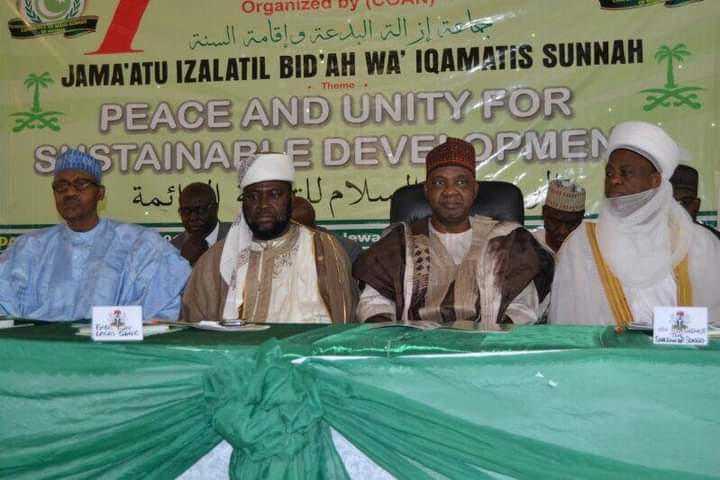
The national leadership of the Jama’atu Izalatil Bid’a wa Iqamatis Sunnah (JIBWIS) alias Izala, headed by Sheikh Abdullahi Bala Lau, has in a meeting held in Abuja on Wednesday asked its controversial national secretary, Dr Ibrahim Jalo Jalingo, to desist from discussing and publicising controversial issues.


This is coming amidst the criticism and bashing Dr Jalo receives, especially on social media, over his position that the parents of Prophet Muhammad (SAW) “would not be in Heaven.”


The Islamic organisation’s statement released through its Facebook page said the meeting was held by its top-ranking executive members. It has resolved to make it necessary for any member cleric to have a knowledge-driven discussion before publicising any controversial topic.


It also asked all its social media handlers to pull down any content that promotes the controversial thought of the secretary, adding that what is now required is prayer looking at the security challenges bedevilling the country. 


Many people describe Dr Jalo’s position as balderdash and disrespectful to the person of the Prophet (SAW).

Sultan calls on Muslims to look out for Jumada al-Thani moon

By Hussaina Sufyan Ahmed

The President-General of the Nigeria Supreme Council for Islamic Affairs (NSCIA), Sultan of Sokoto, Sheikh Sa’ad Abubakar III, has called on Muslims all over Nigeria to watch out for the new moon of Jumada al-Thani 1443 AH on Sunday, January 02 2022.


He said in the press release:
“This is to inform the Muslim Ummah that Monday, January 03, 2022, which is equivalent to the 29th day of Jumada al-Awwal 1443AH, shall be the day to look out for the new moon of Jumada al-Thani 1443AH.


“Muslims are, therefore, requested to start looking for the new moon on Monday and report its sighting to the nearest district or village head for onward communication to the Sultan.” 


This statement was signed by Sambo Junaidu, Chairman, Advisory Committee on Religious Affairs, Sultanate Council, Sokoto State.

From Proliferating Worship Places to Empowering Worshippers: A Reflection on Philanthropic Reprioritization in Nigeria (II)

By Abdullahi Abubakar Lamido

A person who sponsors and takes good care of a single orphan is assured of a mansion in the choicest quarters of Firdaus at the centre of the Prophet’s Estate, enjoying their eternal life as a neighbour to the Infallible Master (sallalahu alaihi wa sallam). In the Hadith of Bukhari, the Prophet says, “The caretaker of the orphan and I will enter paradise like this, raising (by way of illustration) his forefinger and middle finger jointly, leaving no space in-between.”

A community flooded with orphans and vulnerable children with no access to food, clothing, shelter, education, and medicare; orphans whose neglect aggravate their vulnerability to all sorts of socio-economic dangers; should prioritise taking care of them. If competing in building mosques even where there is less need is to get paradise, why not also invest in this sure way to Heaven?

And, why not consider endowments for fighting hunger also? When a person asked the Prophet, what is the best act in Islam, the Prophet mentioned two actions: “To feed (others) and to greet those whom you know and those whom you do not know” (Bukhari). And the Prophet also counted “feeding others” among the surest ways to paradise, alongside spreading salam, strengthening kinship ties and night prayers. Why not, then also emphasise in our society, making endowments for feeding the needy and the millions of the malnourished and unnourished children as a guaranteed path to paradise? 

My honest opinion is that rather than rebuilding or redecorating some mosques, we need to invest more in empowering our imams and their followers. We can all see how the “imamdom” is gradually being saturated with incapable scholars leading ignorant followers in prayers within well-decorated mosques. As if we have forgotten that giving quality education and “beneficial knowledge” to people is itself a sustainable afterlife investment, one that may even often have more multiplier effects and trickle-down effects in terms of fetching rewards perpetually and building the Muslim community progressively.

If one sponsors a young man to become an Islamic scholar and imam, anytime this trained scholar preaches and teaches, the sponsor has a reward commission. And when the students of the imam teach or use the knowledge, the sponsor is assured of a commission. It continues in that way till “the end of history”! So, if the search for reward is what makes us race in building worship places, then so should building qualitative worshipers. We should, in fact, see the creation of generations of qualitative Muslims as a “blue ocean”; a virgin and highly underexplored otherworldly investment opportunity.  

Some may remind us that the Prophet’s first thing after hijra was to build a mosque. True. But that was first because there was none. And secondly, this mosque, as a primary symbol of Islam, was built for companions who were well educated in Makkah before migration, plus the Medinan community that was also educated by no other scholar than the great Mus’ab bin ‘Umayr.

In any case, the Prophet built the mosque because it was a priority by all standards; there was a need. And so immediately after that, he also paid attention to other developmental matters, including socio-economic priorities like establishing the Medinan Market (Suq al-Madinah). He also immediately began calling companions to “purchase” homes in Jannah through addressing human needs. That was how Uthman got an edifice in Jannah by purchasing the well of Ruma and dedicating it as waqf. That was how Abu Talha got Paradise by committing a waqf of his garden to benefit the needy and his poor relatives.

In fact, as recorded, most rich companions got their direct entry admission to Jannah through spending on human needs; Uthman bought and did waqf of the Ruma well, Umar dedicated the Thamqh garden for the poor, wayfarers and the rest, and the list goes. Little did we remember that in addition to doing a waqf of his mosque, virtually all the other waqfs of the Prophet were for welfare and socio-economic empowerment. 

We need to discuss whether building the Muslims and making them self-sufficient should continue to receive our philanthropic priorities or building mansions in the name of mosques – even where there is less need – which would mostly be populated by undedicated, hungry, dirty and largely ill worshippers. Building worship places is undoubtedly required, guaranteed key to paradise, ceteris paribus. It is, however, one of many means to getting admission to paradise. Why, then, should we not start to amplify other keys to paradise, especially those in some contexts such as ours that may appear weightier on the scale of Muslim priorities?

It is not in the interest of Islam to have dirty looking Muslims attending multimillion naira mosques. Islam wants educated, neat, tranquil, self-sufficient, qualitative Muslims whose worship is knowledge-based. So, when some philanthropists focus on building worship places, others need to invest in other equally rewarding endeavours. Wherever we have no worship place, it is a collective duty upon the community members to initiate one. However, where we already have one, we must prioritise other joint obligations; taking care of the orphans, the poor and widows being one of them. We can do it through building revenue-generating waqfs that can perpetually help the poor and everlasting generate rewards to the donor.

Abdullahi Abubakar Lamido is the Chairman Zakah and Waqf Foundation Gombe, Nigeria. He can be reached via lamidomabudi@gmail.com.