Religion

The Messenger

At a time when ignorance reigns 

When human’s soul lost its sense

Amidst Banu Hashim emerged a light

Which illuminations light the earth 

He led the Beduins on the right path

To save them from God’s wrath 

He was sent to the whole of humanity

To be the doctor of the heart and mind

I envy the cloud above his head 

Which followed and gave him shade

I envy the disciples that learnt from him

They learnt the Qur’an directly from him

I envy the soldiers that went on Jihad

For if I were there, I would work hard

I envy the eye that stared at his face 

It’s the most handsome of the Human race

I envy the she-camel that led his Mi’irage

For it was very great a voyage

I envy the spider that sprong its web

Which appeared to the foes as a cobweb

I envy the cup that gave him drink

For it fed his tongue, the truthful ink

I envy those that smelled his scent 

For his body emanated smell; fragrant

I envy the pot that cooked him food

Not excluding the recipes and firewood

He is Muhammad, the chosen one

He is Ahmad; the praised one

Those are the few I can mention

For his blessings have no dimension

Written by

Hussain Abdullahi,

©Avicenna

2023 Presidency: CAN hails picking of Kashim as Tinubu’s running mate 

By Muhammad Sabiu

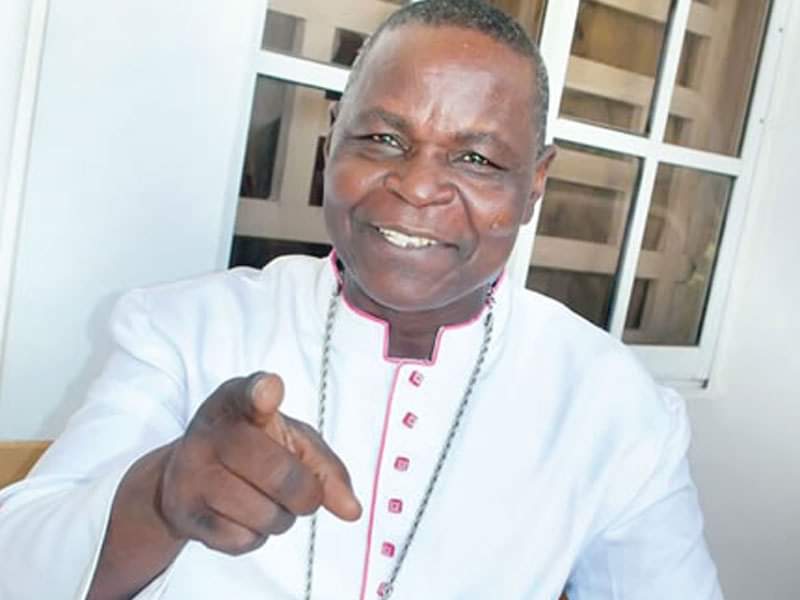
The Borno State chapter of the Christian Association of Nigeria (CAN), under the leadership of Bishop Mohammed Naga, has expressed its joy over the emergence of a former governor of Borno State, Kashim Shettima, as Bola Tinubu’s running mate in the 2023 presidential election.

Recall that Mr Tinubu announced Kashim yesterday as his prospective vice president if the All Progressives Congress (APC) emerges victorious in the next year’s election.

Reacting to the development in a statement, Bishop Naga described Kashim as an unbigoted person, stressing that “those who are not from Borno State may not know, but you and I know better.”

His statement reads, “Gov. Shettima, in the history of Borno State, is the only Governor that has sponsored the highest number of Christian Pilgrims every year since 2011.

“I am speaking boldly without fear or favour because as CAN Chairman, I don’t receive salary or kobo from the Government or any institution, but the facts need to be told.

“For example, when Gwoza people were driven from their ancestral homes, they fled to Maiduguri, and the Governor personally came to CAN Centre in Jerusalem ward two times in June and July 2014. He gave N10 million for their upkeep at first instance, but the victims weren’t many. By the end of October 2014, the IDPs from Gwoza increased to 42,000 in that camp alone. Governor Shettima came again and gave another N10 million.

“He also gave an additional N5 million to Christians from Borno who fled to Cameroon to be returned home.

“Sincerely speaking, as a Christian and a preacher, absolutely, I have nothing to fear about Asiwaju’s picking a Muslim as his running mate because he is not a religious bigot, and I am happy he has made his mind known to the public in the person of his preferred running mate.

“Seeing another presidential candidate applauding him is a plus for him and supporters of Asiwaju. Congratulations to the awaiting president and vice president.”

However, the coming of a Muslim-Muslim ticket from the APC has caused a lot of reactions, with several social media-based activists vigorously kicking against it, citing the sensitive religious atmosphere of the Nigerian society as their reason for resistance.

Advocacy, ethics and the trial of Abduljabbar Nasiru Kabara (I)

By Ibrahim Ahmad Kala, LL.M

The one-time Attorney General of the Federation and Minister for Justice in the Second Republic, Late Chief Richard Akinjede, SAN once asserted that oral Advocacy is a special science and art skill of good courtroom lawyers which is likened to the scene in Julius Caeser that took the form of funeral orations by Brutus and Antony over Ceaser’s corpse. Having just killed Ceaser, the conspirators wanted Brutus to assure the Romans that all was well and that Ceaser’s death was necessary to prevent tyranny. Antony, Ceaser’s close friend, feigned solidarity with the conspirators and persuaded them that he too should say a few words over Ceaser’s body.

In comparing Brutus and Antony as orators, we should remember two other classical orators: Cicero and Demosthenes. When Cicero finished an oration, the people would say: “How well he spoke”.  But when Demosthenes finished speaking, the people would say: “Let us March”. Brutus was like Cicero and Antony like Demosthenes. Brutus won respect, but Antony started a riot.

The funeral orations which exemplify an extraordinary example of how Shakespeare can bear on the law, underscore the effectiveness of oral Advocacy which a lawyer should read before addressing the court in a major trial.

Regrettably, like Antony, Bar Shehu Usman Dalhatu on 7/7/2022 in his appearance while defending Sheikh Abduljabbar Nasiru Kabara before a Sharia Court of Kano State, caused stirred on social media and openly accused the trial judge of being unlike Ceaser’s wife of not sitting above board in the case. As seen in a viral video, the counsel was heard castigating the court for allowing the prosecution to ask “all sorts of questions such as asking the defendant when his father died? Which he argued, is not contained in the charge,” during cross-examination,  and “denying his client right to make a no-case submission”, saying no prima facie case was established against him. According to the Daily Trust report, the mild drama led the defence counsel, Dalhatu Shehu-Usman to walk out on the judge.

The Kano State Government had charged Kabara with four counts, bordering on blasphemous comments against Prophet Muhammad (PBUH) on Aug.10, Oct. 25 and Dec 20, 2019.

With due respect to all, the entire scenario that played out in the court is, to say the least, highly nauseating and totally against the professional ethics required of players in the administration of justice in this country. In one of my previous articles on the relationship between the Bar and the Bench, I penned down as follows:

In R. vs. O’Connell (1844) p261 at 312-313 lifted from Oputa JSC’s book “OUR TEMPLE OF JUSTICE” p.14, Crampton J. said thus:

“This court in which we sit is a Temple of Justice, and the Advocate at the Bar as well as the Judge on the Bench are equally ministers in that Temple. The object of all, equally, would be the attainment of justice…”

Oputa JSC further distilled some guiding principles on the relationship between the Bench and the Bar as follows:

 “Lawyers and Judges being instruments of justice are honoured and honourable.

Such honourable men should not allow ‘the infirmity of human nature and the strength of human passion’ to lead them astray, let alone lead them to perpetuate an outright injustice.

The Legal profession is not just another avenue for quick money-making by hook or crook. To so conceive the profession, is to degrade it.”

Similarly, Richard Du Cann in his book: “The Art of the Advocate” speaking on the duty of the Advocate while quoting Lord MacMillan, a Lord Advocate-General in Scotland and a member of the Judicial Committee of the House of Lord’s declared the duty in fivefold as follows:

“In the discharge of his office, the Advocate has a duty to his client, a duty to his opponent, a duty to the court, a duty to himself, and a duty to the state. The duties, in fact, begin long before he rises to his feet resplendent in horsehair wig and stuff gown”.

Hence, it is not part of the duties of a Lawyer to win at all costs or at any cost. There is rather a heavy cost to winning at all costs and that cost is disdain and dishonour and the desecration of the sacred temple of justice. Judges and Lawyers have a prior and perpetual retainer on behalf of the truth.

All these, therefore, reflect very much the tradition of the legal profession on the relationship between the Bar and the Bench, and which is one of reciprocity. The smooth administration of justice envisages the existence of courageous, efficient, honest and fearless Bar and Bench.

The Bench is entitled to unqualified respect from the Bar and so expects it. The least Magistrate Court, Area, Sharia or Customary Court and the highest court of the land are equally entitled to this respect. Members of the Bar stand up when they address or are addressed by the Bench.

The counsel who easily picks up quarrels with the Bench acts in contravention of this important duty. The duty of respect which is as old as the profession itself is highlighted under Rule 1(a) of Rules of Professional Conduct as follows:

It is the duty of the Lawyer to maintain toward the Court, a respectful attitude, not for the sake of the temporary incumbent of the judicial office, but for the maintenance of its supreme importance. Judges not being wholly free to defend themselves against criticism and clamour. Whenever there is a proper ground for a serious complaint of a judicial officer, it is the duty of the Lawyer to submit his grievances to the proper authority. In such cases, but not otherwise, such charges should be encouraged and the person making them should be protected.

This aged-long tradition of respect has crystallized into a solid cornerstone in the edifice of the Bar-and-Bench relationship. You alone cannot change the position overnight. The tradition is so well established at the Bar that, even when counsel has nothing but rude remarks to make, by tradition he is expected to start by saying: “With respect”.

These ethics demanded the best of Man: obedience and decency, as it was demanded that Adam (A.S) should keep his own part of the bargain, and he did not; that was unethical and there came his fall.

The court is where counsel will spend the rest of his years at the Bar trying to persuade to his view. One cannot carry it along with him if, by lack of manners, one alienates its feelings beyond recall or consistently.

To be continued

Ibrahim Muhammad Kala Esq is the Head of Litigation Department, Court of Appeal Gombe division and can be reached via ibrokalaesq@gmail.com

The sociology of Eid festivals in Nigeria 

By Hassan Idris

It’s quite important to demystify the fact that in the festivity of the Eid festival, which is a religious celebration amongst Muslims all over the world, there is quite a lot of sociologically significant display, which demands sociological explanations and outlooks. Religious festivals such as Eid hold greater importance to sociologists like Emile Durkheim (1858-1917). He developed a widely used theory for explaining what holds society and social groups together through his study of religion. He identified core aspects of religious structure and participation that sociologists today apply to the study of society in its entirety.

This includes the role of religious festivals and rituals in bringing about social cohesion, social solidarity and people together around shared practices and values. It also comprises ways that participation in religious festivals and rituals reaffirms shared values and thus reaffirms and strengthens the social bonds between people and the experience of “collective effervescence,” in which people tend to share in feelings of excitement and are unified in the experience of participating in religious festivals and rituals together. The Eid festival, an Islamic holiday celebrated by many Muslims as a religious holiday with religious rituals, values, and relationships, is one of them.

Thus, Durkheim defined religion as a“unified system of beliefs and practices relative to sacred things. Sacred to him meant extraordinary—something that inspired wonder and that seemed connected to the concept of “the divine.” He argued that“religion happens” in society when there is a separation between the profane (ordinary life) and the sacred. A rock, for example, isn’t sacred or profane as it exists. But if someone makes it into a headstone, or another person uses it for landscaping, it takes on different meanings—one sacred, one profane. Durkheim, who’s generally considered the first sociologist to have analyzed religion regarding its societal impact, believed that religion is about community. It binds people together (social cohesion), promotes behaviour consistency (social control), and offers strength during life’s transitions and tragedies (meaning and purpose).

With the applicability of the methodology of natural science to the study of society, Durkheim held that the source of religion and morality is the collective mindset of society and that the cohesive bonds of social order result from common values in a society. He contended that these values need to be maintained to maintain social stability, to which explanations of Durkheim on the importance and functionality of religion would be used to explain and understand the religious Eid festivals celebrated by all the Muslims in the world.

However, the word “Eid” means festival or feast. Therefore, it depicts the event that is being celebrated. Muslims celebrate two types of Eid yearly following two significant acts of worship. The first is called “Eid Al-Fitr”, which means “the fast-breaking Festival” celebrated after fasting the entire month of Ramadan. The second, known as “Eid-ul-Adha,” meaning “the festival of sacrifice which is celebrated immediately upon the completion of Hajj, the annual pilgrimage to Mecca. The Eid Al-Adha entails going for a pilgrimage to Mecca performed by millions of Muslims simultaneously once a year. Through Eid Al-Adha, the sacrifice Abraham was willing to make to God and the mercy God had upon him becomes celebrated and manifested.

Muslims celebrate the day by sacrificing a sheep or so and sharing it not just with family and friends but also with the less privileged. This celebration lasts four days, beginning the day after the completion of Hajj. The celebration of Eid Al-Fitr lasts one day, starting with the sighting of the new moon, which marks the end of the Islamic month of Ramadan and the beginning of the following month. During Ramadan, Muslims fast to purify themselves and get closer to God. Ramadan is like a retreat, a time to step aside worldly worries, focus on spirituality, and improve connections with the one who gave them life and blessings.

After going through a long spiritual retreat for a maximum of 29 to 30 days, it is only logical that a feast is held to mark the end of the month. This is what Eid Al-Fitr is all about. Like Ramadan, Eid Al-Fitr begins with the first sighting of the new moon, so most of the time, Muslims have to wait until the night before Eid to verify its date. If the new moon is not visible, the month lasts 30 days. The date changes annually on the Gregorian calendar and varies from country to country, depending on geographical location.

Though, in declaring the start of Eid, Muslim-majority countries depend on the testimonies of local moon sighters. The Judicial High Court then decides if Eid has arrived. When the sighting has been verified, Eid is declared on television, radio stations and mosques. The celebration of Eid Al-Fitr lasts one day, starting with the sighting of the new moon, which marks the end of the Islamic month of Ramadan and the beginning of the following month.

The first Eid Al-Fitr was celebrated in 624 CE by the Prophet Muhammad (PBUH) and his companions after their victory in the battle of Badar, a turning point in the prophets’ struggle with his opponents among the Quraish in Mecca during the early days of Islam. Inasmuch as all Muslims celebrate the festival, there are many doctrines and ways of celebrating it which are sociological and are of paramount interest and importance to sociologists and Anthropologists. However, the traditions of Eid Al-Fitr entail ‘Sawm’ ( fast), which is the practice of fasting during the holy month of Ramadan and is one of the five pillars of Islam.

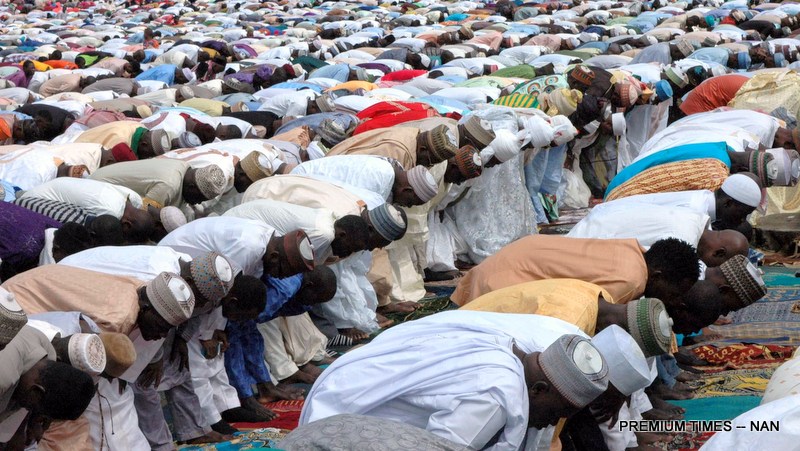
Muslims believe that during Ramadan, the Qur’an text was revealed to the Prophet Muhammad (S.A.W). Muslims celebrate Eid Al-Fitr with “Salat Al Eid” (Eid prayers). There is no audible call to prayer for the Eid prayers. Muslims will gather in mosques or open spaces and offer two units of prayer–called “Rakat”. The prayers are followed by a sermon, in which the Imam asks for forgiveness, mercy, and peace for every being worldwide.

To further bolster the sociological social solidarity and love in Islam, which clarifies Durkheim’s postulation, the other key element of the Eid festival is giving money to the poor alias ‘Zakat al-Fitr’, sending Eid greetings and feasting with families. For many Muslims, Eid al-Fitr is a festival to show gratitude to Allah for the help and strength he gave them throughout the month of Ramadan to help them practice self-control. The phrase commonly used by Muslims as a greeting on this day is “Eid Mubarak”, which is Arabic for ‘blessed festival’.

Muslims begin Eid with the observance of the Eid congregational prayer, sometimes in the mosque but usually in an outdoor location. Before going for the Eid prayer, it’s encouraged to take a bath, wear the most befitting clothes, and look dignified for the celebration. On the way to the Eid Prayer, Muslims recite the words: Allah is great, Allah is great, Allah is great. There is no other God but Allah. Allah is great; Allah is great. To him belongs all praise. And after the Eid prayer, people gather to feast with their families and friends, where they get to savour the taste of various dishes.

Some even travel to their hometowns or home countries to celebrate with their extended families and rekindle the bond of kinship. There is a rich tradition of gift exchange during Eid. For example, it is customary to gift new clothes and shoes to children in Nigeria. Sometimes, the children receive money to buy sweets and snacks to enjoy with their friends and cousins. In western countries, however, children receive gifts instead of cash, and parents decorate their homes to create a mood of excitement for the family.

Finally, Eid is meant to celebrate the completion of spiritual duty and a time to bond and exchange hugs, kisses, and laughter with family, friends and the community. Each country has traditional foods, and sweets prepared ahead of Eid or on the morning of the first day. These foods range from special biscuits and bread to cakes and puddings. On the first day of Eid al-Fitr, voluntary fasting is not allowed as Muslims are encouraged to feast and celebrate the completion of a month of worship and abstinence from food.

Greetings for Eid also vary depending on the country and language. For instance, in Indonesia, Eid is called Lebaran, so Indonesians would say, “Selamat Lebaran”, which means Happy Eid. Other variations of Happy Eid are “Barka da Sallah” in Hausa, a Nigerian language. In addendum, with clothes being an essential marker of Eid, some people wear traditional clothes from their culture, while others pick out something new to wear. Eid is a time for every Muslim to share and express love, peace, and friendship worldwide and extend hands to their non-Muslim neighbours and friends during this festival.

Hassan Idris wrote from Kogi State via idrishassan035@gmail.com.

Hajj 2022: NAHCON apologises for failure to convey 1,500 intending pilgrims 

By Muhammad Sabiu

The National Hajj Commission of Nigeria (NAHCON) publicly apologized on Friday for its inability to transport 1,500 pilgrims for the 2022 Hajj.

Mrs Fatima Usara, the commission’s Assistant Director, Public Affairs Division, issued a statement on the unfortunate drama on Friday in Abuja.

She stated that there would be nine pilgrims from Bauchi, 91 from Plateau, and 700 from Kano State, who were supposedly travelling to the holy country.

Usara also expressed regret for the commission’s inability to transport an estimated 750 intending pilgrims from the Private Tour Operators sector.

She stated that the commission accepted responsibility for the hardships and disappointments experienced during outbound airlift operations to the Kingdom of Saudi Arabia by intending pilgrims for the 2022 Hajj.

Usara was quoted in the statement as saying, “Sadly, in spite of all efforts to transport all Nigerian intending pilgrims to Saudi Arabia for the 2022 Hajj, NAHCON was incapacitated in discharging this responsibility.

“Majorly due to last-minute setbacks that frustrated its plan to conclude transportation of pilgrims by June 27.

“Unfortunately, the chartered flights option that gave so much hope to NAHCON and the Private Tour Operators’ leadership also became a failure as their IBAN accounts failed accreditation by the respective authorities in Saudi Arabia.”

Meanwhile, a video of some aggrieved intending pilgrims who also didn’t make it to the 2022 Hajj has gone viral on social media, airing their grievances and cursing anyone who has a hand in their ordeal.

MURIC calls for adjustment of NECO timetable for Sallah celebration

By Ahmad Deedat Zakari

The Muslim Rights Concern, MURIC, has called on the National Examinations Council, NECO, to adjust its examination timetable to accommodate Muslims who would be celebrating Eid-el-Adha, aka Sallah.  

NECO has scheduled Data Processing (Practical) from 10 am to 1 pm on July 9, which clashes with the first day of Eid.

MURIC Director and Founder, Professor Ishaq Akintola, made the call on Sunday, July 3, 2022, in a statement.

“We are fully aware that the clash was not deliberate as NECO had actually demonstrated goodwill by setting aside a whole week for Sallah celebrations (Monday, 11th July to Friday 15th July), and this reflected in its timetable.

“We, therefore, appeal to the NECO authorities to kindly shift the examination of that day alone (Saturday 9th July 2022) to another date in order to enable its teeming Muslim candidates [to] sit for their examinations.” Part of the statement reads.

BREAKING: Dhul Hijjah crescent sighted in Saudi Arabia

Reports coming from the Kingdom of Saudi Arabia (KSA) have indicated that the crescent for the month of Dhul Hijjah for the year 1443 has been sighted.

This is contained in a short statement posted on the verified Facebook page of Haramain Sharifain.

The statement added that “subsequently Dhul Hijjah 1443 will begin tomorrow, Thursday, 30 June 2022 pending [an] official statement from the Royal Court.”

Therefore, the day of Arafah will be Friday, 8 July 2022 while Eid Al Adha will be Saturday, 9 July 2022.

Christianization of Almajiris in Jos: the untold truth

By Abdul Mutallib Muktar

I read from today’s edition of Daily Trust how DSS rescued 21 Almajiris from a house under the custody of ECWA church in Jos North. The Almajiris were alleged to have been forcefully brought there from another state. After their rescue, the Almajiris revealed how they were forced to learn and practise Christianity.

Keep aside the pluralism of Nigeria and remember how Plateau State has been suffering from crises for over two decades. The major cause of these crises is undeniably attributable to religious divides.

Taking and camping children from another religion in the name of educating them without parental consent, especially when they’re forced to receive religious instructions and attend religious ceremonies or observance different from their own religion, is an act that clearly violates Section 38(2) of the Constitution of the Federal Republic of Nigeria, 1999 (as amended).

Therefore, the act of the Evangelical churches is constitutionally wrong. It is unacceptable in the eyes of the law. More so, looking at the situation in Plateau State, it is utterly unthinkable for the church to camp Muslim Almajiris without the consent of their parents or guardians and teach them Christianity or force them to attend church services. This act is akin to throwing an ember into a tank of fuel.

Looking at the issue from another angle, it behoves any fair pen, to tell the truth to the parents of these Almajiris. The remote places in the North still view the Almajiri system as a good way of learning merely because of its ancestral tint. It is highly condemnable to see little children roaming about the streets of our cities day and night, begging for food in the name of learning. Looking at the slavish lifestyle of Almajiris in Arewa, it will not be surprising if someone acts in the belief that the parents of these Almajiris have disowned them.

More strange news would continue to hit the headlines as long as the Almajiri system remains what it is today. However, as life changes, people must adjust to take a better breath.

Muktar writes from Jos, Plateau State and can be reached via abdulmutallib.muktar@gmail.com.

Bandits conquer Kaduna communities, marry up young girls, ban political activities

By Uzair Adam Imam

Ansaru terrorist group reportedly took over communities in the eastern part of Birnin Gwari Local Government Area of Kaduna State and banned political activities.

The Daily Reality gathered that this was not the first time the terrorists conquered the area, recruited young residents and married up their young girls.

According Birnin-Gwari Emirate Progressives’ Union (BEPU), who spoke through its chairman, Ishaq Kasai, the terrorists have camps in seven political wards in the eastern part of the Local government area.

He added, “In fact, the group continue to gain acceptance from many members of the communities, particularly in Old Kuyello and Damari of Kazage Ward. Even this week, two members of the group were engaged to wed two girls and will be tying the nuptial knots by the coming Saturday.

“The Ansaru (grooms) laid down some rules to the in-laws for the wedding. They ruled that, after the wedding, they would take the brides to the forests and live there with them and do not want the brides to go along with any furniture except plates (coolers) and mattresses because anything other than that is not in tandem with their beliefs and convictions.

“A disturbing scenario is where the group banned all political activities in many communities such as Damari of Kazage Ward. Politicians from these communities have to go far away secretly to the neighbouring communities before they hold political meetings.

“For instance, this week, an Okada rider who lives in Unguwar Makera of Kazage Ward was seen with a sticker of one of the candidates vying for the Kaduna State House of Assembly, and he was thoroughly beaten by the Ansaru.

“People in these communities are now disenchanted and frustrated about participating in political activities.

“We don’t know how the coming Elections will take place in those areas because even the last Local Government Election did not hold in the Area due to the escalating insecurity, which made the election results be declared inconclusive, and a Sole Administrator was appointed overseeing the affairs the Local Government up till now.

“In short, the Ansaru are now in charge of many of the communities in the area, and the group is expanding its occupation. They now call the shot and determine what is to be done in the villages they are dominating,”‘ he said.

No intervention from the government

Kasai decried that there has been no government or military intervention in these communities long since the attack.

He lamented, “our communities are being attacked, people kidnapped and killed daily without a response, acknowledgement or report from Government.

“We call on the Government to please organise a coordinated security operation both aerial and ground to the hideouts of these criminals in our forests in order to flush them and stop daily killings of our people by the unchallenged terrorist groups surrounding our communities,” he said.

However, the State Police Command Public Relations Officer, DSP Mohammed Jalige, stated that he needed to study the statement before comments.

Tributes pour in as Turkish Sunni Sheikh, Mahmud Effendi, dies

By Ahmad Deedat Zakari

Influential Turkish and Sunni scholar, Sheikh Mahmud Effendi passed on at the age of 93. 

Sheikh Effendi, who was well known for his emphasis on strict adherence to the sunnah, died on Thursday after battling kidney-related problems. 

His grandson announced his demise on Twitter on Friday, June 24, 2022. 

“His Excellency Mahmud Effendi, my grandfather, has reached Allah,” he tweeted. 

The late Sheikh was buried on Friday, after a funeral at the Faith Mosque in Istanbul. The funeral which was held after the Jumu’ah prayer was attended by thousands of people. 

Turkish President, Tayyip Erdogan joined mourners in paying tributes to the late shaykh.

“May God have mercy on Mahmoud Effendi, a spiritual guide in our country. He dedicated his life to Islam. I wish patience to his family, students and all his fans. Let him rest in peace,” he tweeted. 

Other important Muslim figures around the world have also joined in praying and extolling the virtues of the late sage. 

“Innā li-Llāhi wa inna ilayhi rāji’ūn. Saddened to learn of the passing of Shaykh Mahmud Effendi of Turkey. He revived Islam & Sunnah at a challenging time, inspiring millions of people in #Turkey & around the World. A great loss for the Ummah,” said Pakistan’s former Prime Minister, Imran Khan

“Do you know how you can tell a real scholar and walī of Allah?” 

“It is the fact that Allah has written the love of this person in the hearts of millions of righteous people from different backgrounds. The death of the Turkish scholar Sheikh Effendi shows such a love والله حسيبه.” Dr Yasir Qadhi tweeted

Imam Omar Suleiman was not left out in praying for the shaykh as he also took to his verified Twitter handle to mourn his demise. 

“May Allah have mercy on Shaykh Mahmud Effendi, forgive him and elevate him. What a loss for the Ummah. A man I always felt had a secret with His Lord that was manifest in his face,” said Imam Omar Suleman.

Sheikh Mahmud Effendi was born in Turkey’s northern Trabzon, he completed the memorization of the Qur’an at the age of 10. 

He authored Tafsir of the Qur’an in the Turkish language named Rahu’l Furkan

He was ranked number 34 in the 2022 edition of “The Muslim 500”; the annual publication by the Jordan-based Royal Islamic Strategic Studies Centre, which ranks the most powerful Muslims globally.