Religion

Almajiri system of education needs reform

By Dahiru Kasimu Adamu

The word “almajiri” emanated from the Arabic word used earlier to refer to the companion of the prophet Muhammad (peace be upon him), who migrated on his instruction for the sake of Islam from Mecca to Madina.

Later, “almuhajirun” refers to knowledge seekers who move from one place to another in search of religious knowledge, predominantly the holy Qur’an.

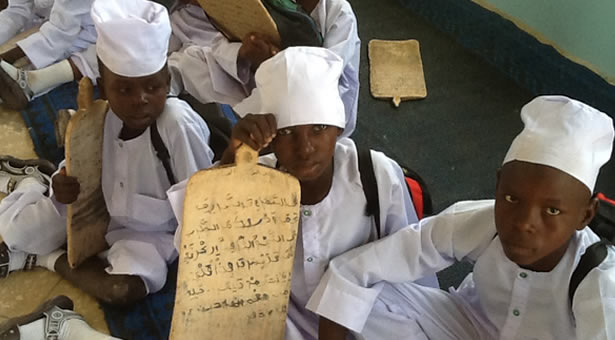
Therefore, the word “Almajiranci” refers to the traditional method of acquiring and memorising the glorious Qur’an, where boys at a tender age are sent by their parents or guardians to other villages, towns, or cities to acquire Qur’anic education under a knowledgeable Islam scholar called “Malam.”

The Almajiri system of education involves somebody who migrated for learning or for the sake of advocating Islamic knowledge.

This migration is tied to a system in which people in a particular community gather male children of school age and hand them to a teacher yearly. The purpose is for Malam to teach those young children the basics of Islam through Qur’anic schools, popularly known as “Tsanagaya or Makarantun allo”.

The pupils are taught how to read the Qur’an and write the Arabic alphabet. They also learn strict discipline and aspects of living.

Due to environmental distractions, the malam may relocate his pupil to a distant area, such as a town or city and camp them there. Almajirai (plural of Almajiri) learn self-reliance and discipline in the camp.

History shows that the population provides free accommodation and leftover food for the pupil and their teacher; even though the food may not be enough, Malam sends his students into the neighbourhood to solicit food. One reason compelling Almajiri to beg is to let them experience and appreciate the hardship and necessity they will face in life.

According to the record, after the efforts of various communities and later Native authorities around the twentieth century, a modernised version of Makarantun allo-cum-Islamiyya schools emerged. This gave birth to at least four types of Islamic schools: Quranic Schools (Makarantun allo, Tsanagaya), Islamiyya Schools, Public and private model Quranic schools, and government Arabic and Islamic institutions.

The information indicates that begging was not involved during pre-colonial times, and Almajirai were doing menial jobs. They have not been abused before they could get a job. Their noticeable hygiene and good manners can simply identify them.

Islamically, it is responsible or necessary for a parent to provide moral education to their children. But the kind of Almajiri system being practised today is an entirely bastardised system compared to the one practised in the past, as mentioned above.

Now, children are seen wandering, begging for food; Almajirai are seen and identified by their unwanted hygiene, unkempt, tattered clothes, and disease-afflicted and ulcerated skins.

Many Almajirai spend most of their time on the street, which can lead some of them to intermingle with different people, including criminals. Several reports indicate how some of them engage in theft, drug abuse and other crimes. Also, lack of food has made them vulnerable to some diseases.

In summary, as the Qur’an mentions, Islam has identified several rights granted to children. These include the right to a stable family, proper development, showing love towards children, being mindful of education and spiritual growth, and having the right to the good life (chapter 19:98).

But nowadays, due to some factors, including economic hardship and extreme poverty,  most parents are running away from their economic responsibilities enshrined in Islam, sending their children at a very tender age to mallams in towns and cities. This led to behavioural changes among all age groups.

The research found that other factors include some parents who obtained only the knowledge of the glorious Qur’an without understanding its inner meaning, always supporting the Almajiri system, and some seeing Malams benefit from the size of the Almajiri studying under him because school size increased the Malam’s life.

Due to the street begging among Almajirai and other activities, hunger and lack of moral upbringing, many Almajirai are not observing proper Islamic values in their daily life. Some take it just as traditional because if it’s education, everyone can study in his locality.

To address these issues, all hands must be on deck. Leaders must be committed to fighting against extreme poverty, illiteracy and unemployment.

Come out with a new master plan towards a new method of the Almajiri system. This includes verification of all teachers to participate in teaching Almajirai because some are not even qualified to teach, allocating the number of children every mallam should teach, and he should not allowed to exceed the number assigned to him.

Parents and mallams should at least create a new way of accommodating and feeding the pupils. There should be the right place where pupils or Almajirai could get food instead of begging on the street. This includes the total elimination of street begging.

The authorities, Malams, and stakeholders should be sensitised about the importance of this educational sector, and they should provide shelters, health care services, clothes, and other essential things that will end street begging.

This can also be achieved by empowering pupils with vocational skills to sustain themselves and improve socioeconomic standards. There should be a good record of the numbers of Almajiri in each locality, state and country at large. In addition, the fundamental human rights of Almajirai and Malam should be promoted.

Good teaching and learning materials and a conducive atmosphere for learning should be provided for both Malams and Almajirai. Seminars, workshops, lectures, campaigns, and other mobilisation activities should be carried out to counsel Almajirai, other stakeholders, and the general public on career development. Almajirai should be included in acquiring Western education and skills.

By working on all the items mentioned above and more activities, the Almajiri system would be reformed and improved. All Almajiri,malam, and society’s socioeconomic standards will improve out of illegal nature and other sundry.

Dahiru Kasimu Adamu, Argungu, Kebbi State, is a young journalist and Mass Communication student at UDUS. He can be reached at dahirukasimuadamuargungu@gmail.com.

Former Deputy Director of SGS, Malam Umar Farouk passes away

By Uzair Adam

Adam Malam Umar Faruk, the former Deputy Director at the School of General Studies (SGS) and the first Head of Department (HOD) of the Mass Communication Department at Kano State Polytechnic, has died.

The Daily Reality reports that Malam Umar Faruk passed away today, Wednesday, after a brief illness.

According to his colleague, H. Kawu, Faruk’s sudden demise was deeply saddening, noting that his WhatsApp status remains active.

Kawu shared, “Even yesterday, he called me. Unfortunately, I wasn’t near my phone. Then, all of a sudden today, I heard of his death.”

According to his relatives, the Janaza (funeral prayer) will take place at 4:00 p.m. at his residence located in Saban Titi, Mandawari, near Abu Hanifa Academy.

The late Umar Faruk, who was the pioneer HOD of the programme in 2011, played a significant role in shaping the Mass Communication Department during its early years.

His contributions, many believe, to the polytechnic will be remembered by colleagues and students alik

Senate confirms Prof Pakistan as NAHCON Chairman

By Uzair Adam

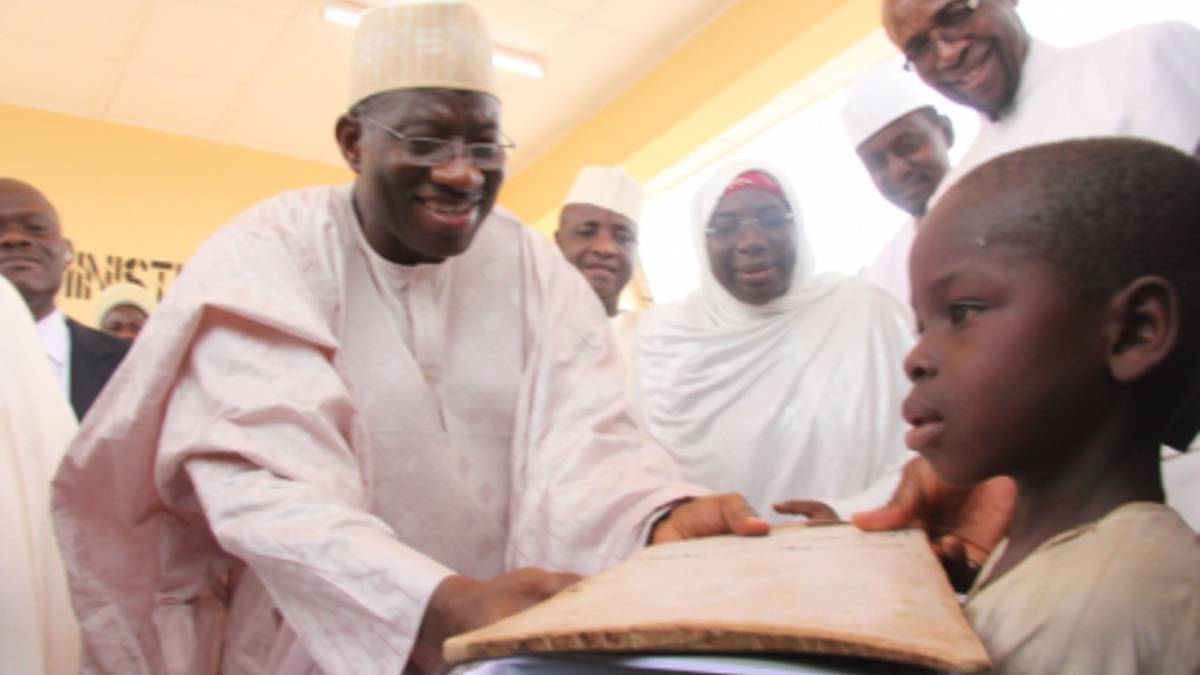
The Senate has officially confirmed Professor Abdullahi Saleh Pakistan as the substantive Chairman and Chief Executive Officer of the National Hajj Commission of Nigeria (NAHCON).

His confirmation on Thursday followed President Bola Tinubu’s nomination, which was submitted to the Senate in August 2024.

The Senate Committee on Foreign Affairs, led by Senator Abubakar Bello (APC Niger North), presented its report to the Red Chamber, affirming Pakistan’s suitability for the position.

Bello, a former governor of Niger State, highlighted Pakistan’s qualifications and his vast experience in Hajj operations.

After a voice vote led by Senate President Godswill Akpabio, Pakistan’s nomination was confirmed with the overwhelming support of lawmakers.

Professor Pakistan previously served as the Chairman of the Kano State Pilgrim’s Board, where he managed the largest contingent of pilgrims in Nigeria.

President Tinubu had formally nominated Pakistan for the role on August 19, 2024, through a statement by his former Special Adviser on Media and Publicity, Ajuri Ngelale, before transmitting the nomination to the Senate.

Hajj fare rises to ₦10 million as NAHCON withdraws subsidy

By Uzair Adam

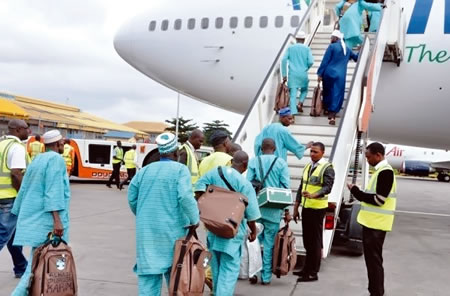
The National Hajj Commission of Nigeria (NAHCON) has announced that the federal government will no longer provide subsidies for Hajj pilgrims starting in 2025.

In previous years, pilgrims benefited from a concessionary exchange rate offered by the Central Bank of Nigeria (CBN), allowing them to purchase dollars at a lower rate.

With the naira currently at N1,650 to the dollar, pilgrims are expected to pay nearly N10 million for the Hajj fare, given that the minimum cost is around $6,000.

Although the official fare for the 2025 pilgrimage is yet to be confirmed, some State Pilgrims Welfare Boards have already started asking for an initial deposit of N8.5 million from intending pilgrims.

NAHCON also announced a refund of 64,682 Nigerian pilgrims (equivalent to 150 Saudi Riyals) who participated in the 2023 Hajj.

This was disclosed during a virtual meeting between NAHCON officials and Private Tour Operators (PTOs) on October 7, 2024.

The meeting also highlighted a reduction in the number of approved PTOs for the 2025 Hajj, with Saudi Arabia cutting the figure from 20 to 10, and each operator required to register at least 2,000 pilgrims for visa approval.

NAHCON also addressed a refund of over SR62,000 (N26.9 million) owed to PTOs for substandard feeding arrangements during the 2022 pilgrimage, while clarifying that it received N2.75 billion from 110 PTOs for the 2024 Hajj and still holds a balance of N750 million from undecided operators.

Operators who initially paid a cash deposit of N40 million as a cautionary measure for the 2025 Hajj now have the option to submit a bank guarantee instead.

Faith and reflection: My visit to Hassan II Mosque and the decline of religious observance, by Dr. Muhsin Ibrahim

Admin

I was en route to Casablanca during Ḍuhr prayer. I attempted to do it on the train, but as a traveler, I told myself that I could combine it with ʿAṣr at the famous mosque I was going to visit, Hassan II Mosque.

The inner part of Hassan II Mosque in Morocco

Completed in 1993 and named after the King of the day, Hassan Mosque is said to be the second-largest mosque in Africa and the 14th-largest in the world.

Unfortunately, it was closed to worshippers when I reached there; only tourists were allowed in. To enter, a visitor has to pay 150 Moroccan dirhams, which is about ₦26,000. I hesitated to do that. The security man told me to wait until 4:30 p.m., the time for ʿAṣr, to enter free of charge.

I left the mosque’s vicinity. After all, I am in a vastly Muslim-majority country. I said I would find another mosque nearby. To my shock, I couldn’t. Even gas stations nearby don’t have any—something strange by northern Nigerian standards.

I returned to Hassan II Mosque. Pressed to pee, I prayed for the opening time. Luckily, they gave us access before 4:30 p.m. I relieved myself, performed ablution, and walked into the beautiful, massive edifice. I was awestruck.

Unfortunately, there were only a few of us in the mosque. We did not fill the first two rows. It felt like I was in Cologne Cathedral, another large and beautiful place of worship with few or no worshippers.

What is happening to us? What are human beings becoming? Frankly, Morocco is far less religious than I thought. This wave is becoming more powerful, perhaps more threatening, than one can imagine. I will say more on this another time.

May we be guided, amin.

Muhsin Ibrahim, who teaches at the University of Cologne, Germany, wrote from Casablanca, Morocco during his short stay in the Northern African country. He can be reached via muhsin2008@gmail.com.

Tinubu appoints Professor Abdullahi Saleh Pakistan as new NAHCON boss

By Sabiu Abdullahi 

President Bola Tinubu has appointed Professor Abdullahi Saleh Usman as the Executive Chairman of the National Hajj Commission of Nigeria (NAHCON). 

This is contained in a statement released today by Chief Ajuri Ngelale, Special Adviser to the President (Media & Publicity) via his social media handles. 

The renowned scholar, who boasts qualifications from the University of Madinah and Peshawar University, Pakistan, is expected to bring his expertise to bear in leading the commission. 

Professor Usman’s experience in Hajj operations is noteworthy, having previously served as Chairman of the Kano State Pilgrims Board, where he successfully managed the largest quota of state pilgrims in the country. 

The appointment is subject to confirmation by the Senate. President Tinubu has charged the new Chairman to discharge his duties with “integrity, transparency, and utmost fidelity to the nation.”

The appointment of Prof. Pakistan comes a few days after the immediate sacked former NAHCON chairman, Jalal Arabi, was alleged to have squandered and mismanaged Hajj funds.

Winner to get 500k, laptop as Da’wah Institute launches online quiz

By Ishaka Mohammed

The Da’wah Institute (DIN) has launched an online quiz for Nigerian Muslims to deepen their understanding of Islam and win cash prizes and laptops.

According to the Institute’s director of digital media, Teslim Adeyemo, 20 winners will emerge, with the least prizewinner receiving N50,000. Part of the statement details the prizes as follows:

“Awards await the top 20 performers as follows: 1st place (laptop + N500,000), 2nd place (laptop + N350,000), 3rd place (laptop + N150,000), 4th – 10th places (N100,000 each), and 11th – 20th places (N50,000 each).”

The top ten winners will be invited in person to the prize-giving at the Islamic Education Trust (IET) headquarters in Minna, the Niger State capital, while the rest of the winners will join virtually.

The maiden “Know Your Deen Online Quiz” is scheduled for August 25, 2024 and will be based on a book titled “Authenticity of the Qur’an: A concise analysis of arguments regarding the divine authorship and authenticity of the Muslim sacred scripture.”

Interested Muslim residents in Nigeria can register for free at https://dawahinstitute.org/online-quiz-registration/ before August 15 and download the electronic (PDF) version of the book, which has fewer than 100 pages.

The Da’wah Institute (DIN) is the research and public enlightenment department of the Islamic Education Trust (IET), a non-governmental organisation established in Nigeria in 1969.

IIIT, NUJ collaborate on ethics of journalism workshop in Kano

By Uzair Adam Imam

The International Institute of Islamic Thought (IIIT), Nigeria Office, Kano, organized a one-day workshop to combat unethical reporting narratives in the state.

The workshop, held on Saturday, focused on the ethics of journalism and was themed “Guide to Best Islamic Practices.”

The event was in collaboration with the Nigerian Union of Journalists, Kano state chapter and took place at the NUJ Secretariat in Kano.

Dr. Bala Muhammad, a veteran journalist and lecturer at Bayero University’s Department of Mass Communication, emphasized the significance of the workshop.

He urged journalists to adhere to ethical reporting, reminding them that they will be accountable to Allah for the information they disseminate.

Dr. Ibrahim Siraj, a senior lecturer at Bayero University’s Department of Mass Communication, presented a paper titled “Ethics of Journalism.”

He stressed the need for professional reporting and defined ethics as “forms of behavior and conduct that are socially correct based on the core values cherished and upheld by society.”

Dr. Siraj criticized biased reporting, particularly in the western media, and lamented that the failure to follow ethical journalism practices would lead to a “mess” in the profession.

He also specifically criticized a recent report by Sahara Reporters on the Hisbah controversy regarding LGBT, describing it as “unjournalistic.”

Dr. Siraj emphasized the importance of truthfulness, fairness, credibility, and objectiveness in reporting, adding that religious and political inclinations should not influence journalists’ reports.

The NUJ President, Comrade Abbas Ibrahim, commended IIIT for collaborating with them to host the workshop, which was attended by journalists from various media organizations in the state and journalism students from Bayero University, Kano state polytechnic, and Aminu Kano College of Islamic and Legal Studies.

LGBTQ: An open letter to Kano State Governor, Abba Kabir Yusuf

Dear Government of Kano State, the Kano Emirate, Hisbah Board, and the Kano State Council of Ulamas

Peace be upon you,

An effort is being made to spread LGBTQ advocacy in Kano State in the name of human rights, seeking “freedom” and sustainable livelihoods for our daughters and helping orphans, the needy, and those with special needs.

This advocacy is being spread publicly without shame, disregarding your esteemed positions and influence in Kano State— in schools and neighbourhoods. Shockingly, even government officials were cornered in the name of dialogue or capacity building.

The organization behind this heinous act in our state is the Women Initiative for Sustainable Empowerment and Equality. They refer to themselves as “WISE.” From what we have seen on their platforms, they even have an independent office in Yankaba Kawaji, Bompai GRA, Kano.

In a statement we saw on the pages of this organization, we noted that they once organized a workshop for officials from Hisbah, KAROTA, NDLEA, and others!

If this organization has grown strong enough to gather these officials in one place under the guise of a workshop—regardless of the topic—we fear the influence they have already exerted in our state.

To verify all these, please check their Facebook page named “Wise.”

You might recall the recent uproar over the Samoa Agreement signed by the Federal Government, which is alleged to have come with strings attached, one of which is to allow advocates of LGBTQ, like WISE, to pursue their agenda freely.

This has sparked controversy in Nigeria over the past few days. We have seen how the scholars in Kano stood firm on their pulpits, as we expected, to vehemently condemn this attempt, should it prove true.

This controversy has further revealed that there are laws in our country that outright prohibit any attempt to propagate the agenda of LGBTQ. We have also found solace in the unity of Muslims and Christians in rejecting this thing we collectively see as immorality in our culture and religion.

With this, we call upon the Governor of Kano State, Alhaji Abba Kabir Yusuf, the Emir of Kano, Mallam Muhammadu Sanusi II, the Chairman of Hisbah, Mallam Aminu Daurawa, and the leadership of the Kano State Council of Ulamas, to ensure that this organization, WISE, packs up and leaves our dear state and that its activities are banned by any means possible.

The people of Kano State are your trust! And God will question you about this trust on the Day of Judgment!

We’ve done our part by letting you know about this issue. We have informed you if you were unaware of this organization or its activities.

Misbahu Hamza  

July 7, 2024

Kano declares Monday public holiday to mark new Islamic calendar

By Uzair Adam Imam 

Kano State Governor Abba Kabir Yusuf has declared Monday a public holiday to commemorate the beginning of the new Islamic calendar, 1446 AH. 

The governor urged citizens to reflect on the past year and engage in activities that benefit the community. He also promised that his administration would continue to empower citizens through policies and programs. 

Additionally, he called on Muslims to intensify prayers for peace and progress in the state.

This move comes after the Sultan declared Sunday the commencement of the Islamic New Year 1446 AH. 

Other states like Jigawa have also declared Monday a public holiday for the same reason.