Politics

You can add some category description here.

Nigeria at a crossroads: Why the everyday Nigerian matters more than the political elite

By Usman Muhammad Salihu,

In Nigeria today, the loudest voices belong to politicians, policymakers, and power brokers. They dominate the headlines, flood our timelines, and distract us with promises that rarely survive beyond campaign seasons. Yet, the true story of this country isn’t written in the echo chambers of Abuja or the mansions of Lagos. It is written daily in the struggles, resilience, and quiet innovations of ordinary citizens.

Think about the woman who wakes before dawn to fry bean cakes by the roadside, not only to feed her children but also to put other people’s children on the road to school. Or the young graduate who, tired of waiting for white-collar jobs, starts a small business online and employs three others. These stories rarely make the news. Yet, they are the heartbeat of our nation.

But here’s the tragedy: Contemporary Nigeria seems designed to work against these everyday heroes. Power cuts paralyse small businesses. Inflation, now on food items, erodes family savings before the end of the month. Insecurity forces farmers to abandon their fields and traders to fear the road. Meanwhile, most of the political class remains locked in battles over appointments, power-sharing, and personal interests.

The question is not whether Nigeria has potential; we have repeated that mantra for decades. The real question is, when will we begin to prioritise the citizen above the system?

Imagine a Nigeria where governance shifts from elite negotiations to practical solutions: working schools, safe communities, accessible healthcare, and reliable electricity. That’s not fantasy; it is a choice.

The good news is that despite the odds, Nigerians are not waiting. Communities are solving their own problems. Tech-savvy youths are creating digital markets. Women’s cooperatives are building small savings pools. Farmers are collaborating to beat middlemen. These are the silent revolutions we must amplify, not just the failures of the elite.

If the political class won’t prioritise the citizen, then the media, civil society, and Nigerians themselves must. We must shift the spotlight from what politicians promise to what Nigerians are already doing, because that is how change starts – not from the top, but from the people who refuse to give up.

Nigeria stands at a crossroads. One road leads to more political drama, endless debates, and broken promises. The other road leads to a citizen-centred nation where leaders are compelled to serve, not rule.

The choice is ours. But more importantly, the responsibility is theirs.

Usman Muhammad Salihu was among the pioneer fellows of PRNigeria and wrote from Jos, Nigeria. He can be reached via muhammadu5363@gmail.com.

When watchdogs turned politicians: The slow death of Kano’s civic space

By Muhammad Dan Kano

I have watched Kano’s civil space rise and fall over the years, and I must confess—what we are living through today is one of the saddest chapters. The silence we now see did not come from bans, threats, or crackdowns. It came from within. Our loudest voices, those who once stood before us as defenders of the people, were in fact working behind the scenes for the then-opposition party that now holds the seat of power.

On the surface, these men and women spoke the language of civil society: accountability, transparency, justice. They attended our town halls, drafted our communiqués, and stood at our press conferences. But as events have now shown, they were playing a double game—working for the citizens in daylight, but aligning their loyalties with politicians in the dark.

Take, for instance, the Kano Civil Society Platform. For years, it was the face of civil society in Kano, leading civil platforms and presenting itself as an independent voice of the people. But what many of us did not see then was that its activism tilted toward the opposition, quietly laying the groundwork for its current role. Today, the head is no longer the watchdog—but a Commissioner, the very voice of government. How can citizens trust that same platform to ever return to the civic space as an independent advocate?

Community Health Research Platform is another example. Highly respected in health advocacy and governance circles, it was perceived as fighting for the welfare of citizens. Yet, its alignment with political interests has now been made clear by its place in the system. The independence we once admired was, in truth, compromised long before official appointment.

And then there is another, Executive Director KAJA (KAYA) KAJA, who once represented the fiercest face of accountability in Kano, known for exposing governance lapses and demanding transparency. Many of us believed it was a shining example of what a watchdog should be. However, today, with KAJA appointed to the government, the fire has been extinguished. The once-vibrant KAJA is quiet, and the citizens who trusted it have been left disillusioned.

Even the Open Government Platform has not been spared. Its co-chair on the civil society side has been appointed to a government committee. This effectively blunts the citizens’ voice in Open Governance Platform processes. The very platform designed to guarantee equal partnership between government and citizens is now lopsided, tilted in favour of those in power.

Networks like Education For All, which once campaigned vigorously for education reforms, now spend their time attending government meetings, collecting transport allowances, and receiving awards from the governor. Independence is gone, credibility eroded.

The tragedy here is not just that these individuals accepted appointments—it is that for years, they masqueraded as neutral actors while quietly serving political interests. Unlike One Commissioner, who publicly and honourably resigned from the civic space before joining politics, these others chose to corrupt the system from within. They played both sides—civil society by day, politics by night.

That is why I ask: how will they return after their tenures? How will they look citizens in the eye and claim once again to be “independent voices”? How will their organisations reclaim trust when their leaders have already betrayed it? For me, and for many others, that trust has been broken.

I do not deny that bringing civic actors into government can strengthen delivery. But when watchdogs pretend to be neutral while secretly serving politicians, it is not inclusion—it is manipulation. The cost is the death of independent scrutiny.

Today, only a few brave individuals, like two Marxists, remain outside the government’s orbit. They continue to speak up, but without funding, their voices are faint. The vibrant, united civic space we once had during the days of SFTAS and FCDO’s PERL and ARC project is gone, fractured by appointments and rewards.

The lesson is clear. Civic leaders who wish to join politics must do so openly, as One Commissioner did. But those who exploit the civic space as a stepping stone to political office only betray the citizens who trusted them. They may enjoy power today, but the day they return to claim the mantle of “civil society” again, the people will not forget.

For me, that is the most tremendous loss—not just of voices, but of trust. And once trust is broken, can the civic space in Kano ever be the same again?

El-Rufai petitions police commission, accuses Kaduna CP of misconduct

By Abdullahi Mukhtar Algasgaini

A formal complaint has been lodged with the Police Service Commission (PSC) against the Commissioner of Police and other officers of the Kaduna State Command, alleging widespread unprofessional conduct and abuse of office.

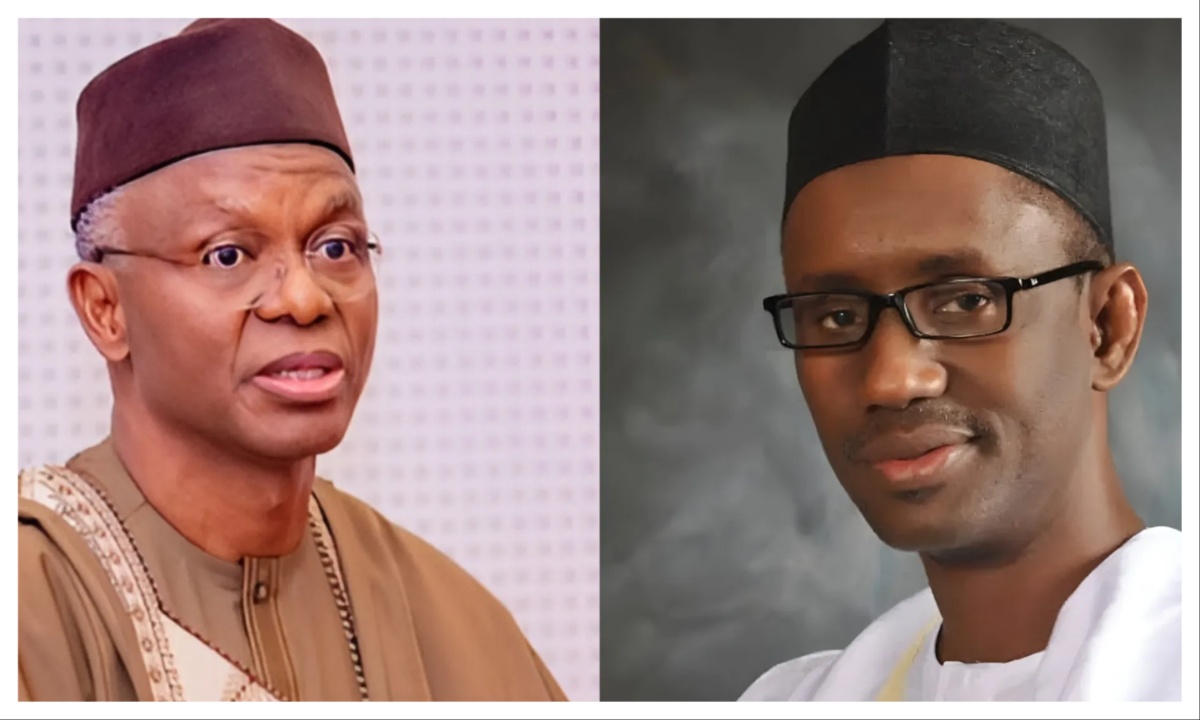
The petition, authored by the former Governor of Kaduna State, Malam Nasir El-Rufai, calls for an “immediate, impartial, and exhaustive investigation” into the officers’ activities. It alleges serial violations of the Nigeria Police Act 2020 and its regulations.

In the letter addressed to the Chairman of the PSC, El-Rufai stated he was motivated by a sense of duty as a citizen and former public servant. He highlighted his eight-year tenure as governor and expressed concern for the integrity of the Nigeria Police Force.

The former governor urged the Commission to exercise its constitutional and statutory powers to enforce discipline and promote ethical conduct within the force. The specific details of the alleged misconduct were not immediately disclosed in the petition’s introductory section.

The petition is expected to trigger a formal inquiry by the PSC into the operations of the Kaduna State Police Command under its current leadership.

NNPP declares Abdulmumin Jibrin’s expulsion invalid

By Sabiu Abdullahi

The New Nigeria People’s Party (NNPP) has dismissed the purported expulsion of Abdulmumin Jibrin, the lawmaker representing Kiru/Bebeji Federal Constituency of Kano State, describing the decision as null and void.

In a statement issued on Saturday, the party’s National Secretary, Oginni Sunday, said the announcement had no basis and was unauthorised.

He explained that the expulsion was announced by Hashim Dungurawa, a former state chairman who had earlier been removed from the party.

Describing the action as a “joke taken too far,” Sunday questioned how someone who is no longer a member could claim authority to expel a sitting legislator.

Citing an April 2, 2025 judgment of the Federal Capital Territory High Court and a ruling from an Abia State High Court, Sunday maintained that Senator Rabiu Kwankwaso, along with others including Dungurawa, had already been expelled from the NNPP and therefore lacked the legal standing to act on the party’s affairs.

According to him, Jibrin’s decision not to align with Kwankwaso’s faction provoked the Kwankwasiyya movement, which allegedly tried to weaken his political relevance in retaliation.

Sunday also cautioned that Governor Abba Yusuf’s loyalty to Kwankwaso could endanger the NNPP’s control of Kano State in the 2027 governorship election.

He said, “One of the smartest ways for Yusuf to secure a win in Kano in 2027 is to travel to Lagos and tender an apology to the party’s founder and leadership.”

Jibrin, who previously served as the Director-General of the Tinubu Support Group and played a significant role in fostering ties between the APC and the NNPP, was accused by the Kano State chapter of engaging in anti-party activities and defaulting on financial obligations.

Reacting in a statement on Saturday, Jibrin said he received the news of his removal as “a rude shock,” insisting that the interview he granted in English and Hausa, which the party cited as evidence, was in line with NNPP’s principles.

He added, “I strongly believe the contents of the interview should not warrant such a heavy penalty.

“No invitation was extended to me to defend myself before any organ of the party. Even under a military dictatorship, an accused is subjected to a court-martial.”

On the allegation that he had not paid his dues, the lawmaker rejected the claim and challenged the party to issue him an invoice, promising to pay once it is presented.

He further criticised the NNPP’s leadership, saying, “The party does not believe anybody has political value or deserves respect at various levels.”

Thinking with Sule Lamido: An inside review of Being True to Myself

By Samaila Suleiman, PhD

“No amount of deconstruction and reconstruction, to turn history on its head, can bury the truth” – Sule Lamido.

Writing a review of Being True to Myself, the autobiography of His Excellency, (Dr) Sule Lamido, is, for me, both an intellectual obligation and a profoundly personal reckoning. As a student of historiography and politics of knowledge production, book reviewing is an integral part of my professional calling. At the same time, as a member of the editorial team of the Sule Lamido Autobiography Project (SLAP), along with my colleagues Dr Nu’uman Habeeb and Mustafa Ibrahim Chinade, I lived with the idea of this book, from its conception to the first manuscript drafts, the final typeset, and its printing and public presentation. 

Book reviewers are traditionally expected to be neutral critiques, assessing works with analytical distance and relying largely on their reading of the text. What I offer here, however, is a deeply personal reflection of a tripartite engagement with the author, the text, the context of its production and the reactions it elicited from readers. This is, therefore, not a conventional book review but an attempt, as one of the editorial consultants for the project, to recount the story of thinking (working) with Sule Lamido in the making of Being True to Myselfitself. 

The Context

I first met Sule Lamido in 2019 when the late Professor Haruna Wakili introduced me, along with Dr. Nu’uman Habeeb and Mustafa Ibrahim Chinade, to serve as editorial consultants for his autobiography project. Our role was to facilitate the production of the text through interviews and other editorial interventions. Before this meeting, my knowledge of Lamido was limited. I knew him only as a former Minister and Governor. What I did not immediately realise was how profoundly the project would impact me as a historiographer, constantly negotiating the epistemological questions of truth, power, and narrative responsibility. 

The first lesson I drew from the project was the discovery of Lamido as an intellectual—an aspect of his persona that is often overshadowed by his public image as a forthright politician. At our inception meeting, I was immediately struck by his brilliance and philosophical acuityfollowing a lengthy conversation about the focus of the autobiography. My initial perception of Lamido was quickly overturned. Beneath the image of a seasoned politician, I encountered a man of deep philosophical substance, whose politics is rooted in a profound knowledge of history and critical thought. 

Although Lamido is not a career academic, his grasp of political and historical discourse is profound to the extent that some of his academic friends affectionately call him “Professor.”  He is one of the few politicians around who embodies the tradition of first-generation politicians, whose politics are grounded in principles and knowledge.

Over the course of many interviews with the editorial team, Lamido narrated his life story with a precision and wit that often left me marvelling at his hyperthymesia, attention to detail, and critical reasoning. Each time we returned to a topic for clarification, he would recount events with striking consistency, as though he had already internalised the book long before the project began. 

As the project advanced, Lamido took control of the content, style, and narrative flow of his autobiography, insisting on framing his experiences within a broader historical process. Even at the stage of typesetting and design, he remained involved, reviewing passages, fact-checking, and fine-tuning the manuscript. At one point, I jokingly said to him, while the book was already at press: “Your Excellency Sir, bakin alkalmi ya bushe”—implying that no further edits should be made, especially with the launch date approaching.

Some of our most intense editorial discussions went beyond factual accuracy to debates about historical methodology and explanation. When Lamido was advised to moderate some contentious revelations in the manuscript, he posed critical questions around secrecy and privacy in knowledge production, carefully dissecting the distinction between classified and declassified records. I found myself challenged, at times humbled, by his rigour and the depth with which he interrogated established academic assumptions about Nigerian history, politics, and writing. This level of discursive sophistication is rare among people without advanced degrees in historical studies.

There were moments when the manuscript resisted simplification, and we chose to retain its complexities rather than smooth them over, because they were intellectually honest. This demonstrates that a political memoir, at its best, is not merely a legacy-building exercise, as many autobiographies are, but a critical exercise in self-reflection within the context of history. Lamido gave himself that space and, in doing so, gave us the opportunity to reconsider some of our scholarly convictions about the nature of truth, memory, and life writing.

The Text  

Lamido’s distinctive voice is evident throughout Being True to Myself. Those familiar with his discursive signature will immediately recognise his bluntness, candour, and unfiltered expression in the text. 

Unlike many public figures whose autobiographies are primarily shaped by ghostwriters, Lamido maintained a hands-on approach. Each chapter bears his imprint, making the work not only intimate but also a demonstration of authorial agency.

Even the book’s title was not chosen lightly. It was the product of a year-long reflection on what Lamido’s life represents. Ultimately, Being True to Myself was favoured as the narrative’s central theme, mirroring the life of a man of unshakable principles and conscience.  The title comes from a passage where he describes himself as “an independent-minded child, who always stood his ground…not because I felt important, but because I tried to be true to myself.” 

What makes Being True to Myself particularly compelling is its historical nuance and emotional texture. Lamido alternates between humour, vulnerability, and defiance, recounting comical childhood stories, such as his naïve performance during Ramadan tashe, alongside harrowing experiences of persecution and betrayal. His willingness to revisit painful memories, without bitterness but with conviction, creates a text that is both deeply personal and politically insightful. 

The book is divided into eight broad thematic parts, tracing Lamido’s journey from his early life in Bamaina to his career in the Nigerian Railways and Tobacco Company, his involvement with the PRP, his time as foreign minister, and his tenure as governor of Jigawa State. It offers rich commentary on important political events such as the annulment of June 12, his detention under General Sani Abacha, his role in the formation of the PDP, the Obasanjo Presidency, his tenure as Foreign Minister, the Yar’Adua Presidency and how he was succeeded by Goodluck Jonathan, and the intricacies of power, politics and democratic governance in Jigawa state. 

In discussing Nigerian politics, Lamido dons the garb of a political scientist and historian, offering a critical examination of the military’s role in Nigerian politics. He critiques successive regimes, from Buhari’s military rule to IBB’s sophisticated but flawed transition programs, Abacha’s repression, and Abdulsalami’s genuine and successful transitional government, as well as the restoration of democracy. His reflections read as much like political history as autobiography, enriched by his insider perspective. One cannot help but wonder at the contents of his library, given his ability to weave theory and empirical detail with ease. 

The Praise and the Pushback 

Since its launch in May 2025, Being True to Myself has attracted a wide range of reactions, from praise by the media, scholars and statesmen to criticism from political associates, reflecting the complexity of both the author and the book.

At the high-profile launch in Abuja, political heavyweights celebrated the work. President Bola Tinubu, through his minister, commended Lamido as “a bold, consistent, and principled politician whose personal journey mirrors the story of Nigeria’s democratic evolution.” He described the book as a “significant contribution to Nigeria’s political literature,” encouraging other political veterans to document their experiences for posterity. 

The book reviewer, Dr. Iyorchia Ayu, lauded Lamido’s courage, recalling episodes such as the author telling an IGP, “Who are you?” and a military head of state to his face, “You must resign”. 

The book has not been without detractors. Some critics, including Malam Aminu Ibrahim Ringim, a former Chief of Staff to Lamido during his governorship, criticised the memoir as being rife with “self-glorification, misrepresentation and disrespect for the contributions of others.” 

Taken together, these divergent reactions reveal the dual nature of Being True to Myself as both an intimate self-portrait and a contested historical document. 

On the whole, the Sule Lamido Autobiographical Project is an elegant demonstration of how autobiographies can serve as a space for dialogue between politicians and scholars, working as collaborators in the pursuit of truth.

As former President Olusegun Obasanjo writes in the foreword: “No historian or public affairs officer should be without a copy of the book. I enjoyed reading it.” 

Happy 77th Birthday and best wishes, Sir!

Samaila Suleiman, PhD, wrote from the Department of History, Bayero University, Kano. He can be reached via smlsuleiman@gmail.com.

Governor Nasir Idris’ mixed approach to governance

By Zayyad I. Muhammad 

Kebbi State is no stranger to complex and sophisticated politics. To govern this dynamic state requires more than charisma; it demands deep sociopolitical mastery and a pragmatic grasp of socioeconomic realities. Governor Comrade Dr. Nasir Idris, Kauran Gwandu, has emerged as a leader who embodies both politics and development, weaving them into a single, effective strategy that is rapidly reshaping Kebbi’s political landscape and developmental trajectory.

In a state once defined by fragmented interests and rivalries, Governor Nasir Idris has achieved what many thought impossible: unity. Today, all Kebbi senators, legislators, and major political stakeholders are firmly in the All Progressives Congress (APC). Former governors who once stood on different political lines now speak with one voice. Elections that once tested the party’s strength are now won seamlessly, reflecting a politics of representation, inclusiveness, and acceptability.

This new sense of belonging has left no major stakeholder uninvolved. As one political observer put it: “In Kebbi today, everyone that matters has a seat at the table of decision-making that transforms the lives of the common man.”

That is why analysts argue that the once-ambitious former Minister of Justice and Attorney General of the Federation, Abubakar Malami, may have lost political relevance, with 2027 looking like a closed road for him.

However, politics is only one aspect of Governor Nasir Idris’ multifaceted approach. On the other hand, there is a clear, tangible commitment to socioeconomic transformation that cuts across all 21 local government areas of Kebbi, both rural and urban.

The results in just 20 months are staggering. In education: 1,954 schools have either been built or renovated, with 336 new schools constructed and 1,618 renovated. Teachers now earn wages aligned with national benchmarks, with the state implementing the ₦70,000 minimum wage categories.

On infrastructure, the administration has embarked on massive projects, including the dualization of the Birnin Kebbi–Ambursa Road, the construction of the Birnin Kebbi Ultra-Modern Motor Park, the rehabilitation of Birnin Kebbi city roads and Yauri township roads, the Koko-Mahuta-Dabai Road linking seven LGAs in Kebbi South, bridge repairs on Bunza–Dakingari Road, and culverts along Birnin Kebbi–Makera Road.

Healthcare delivery has seen the renovation of Argungu General Hospital, the rehabilitation of health centres, and the expansion of medical facilities across the state. In public institutions, the government has overseen the construction of the State Ultra-Modern Secretariat in Gwadangaji, the remodelling and furnishing of the Government House, and the expansion of the Pilgrims Welfare Agency. Other key projects include the construction of a fuel dump at Sir Ahmadu Bello International Airport and the dualization of Argungu’s Old Bypass Road.

Governor Nasir Idris has also prioritised building strategic international partnerships. By engaging with donor agencies and development partners, Kebbi is not only attracting new funding but also becoming an integral part of global development conversations.

The “Nasir Idris formula” is clear: politics without rancour, governance without neglect, and development without bias. His administration has combined inclusiveness in politics with an aggressive rollout of life-changing projects, creating a blend of stability and growth.

In Kebbi today, the once-elusive dream of a government that unites political forces while delivering practical, people-centred development is now a reality. With this trajectory, Governor Nasir Idris has not just set the pace for his state; he is redefining what effective governance looks like in Northern Nigeria.

Zayyad I. Muhammad writes from Abuja via zaymohd@yahoo.com.

Between Senator Sumaila and Senator Kwankwaso

By Kamal  Alkasim

When Kawu Sumaila decamped from NNPP to APC, it showed that the issue isn’t about party loyalty but about choosing the best leader. Blind loyalty can hinder good governance in Nigerian politics. What matters most is effective representation, not party allegiance. Let’s prioritise good leadership over partisan loyalty and choose the best candidate for the benefit of Kano South.

When choosing between Rabiu Musa Kwankwaso, a prominent figure in Kano politics known for influencing political dynamics, and Kawu Sumaila, the decision leans towards Kawu due to his genuine service to the people of Kano South. Regardless of the political party Kawu affiliates with—whether APC, PDP, or ADC—his actions demonstrate a commitment to his constituents. 

People recognise Kawu’s efforts and intentions, making party affiliations secondary to his impact. Let’s prioritise choosing the best candidate based on their service and dedication, rather than party loyalty.”

Kwankwaso’s impact will be remembered. Let’s choose leaders based on merit, not loyalty to individuals. In politics, those who deliver tangible benefits to the people should be preferred over those who seek dominance. 

After 16 years of Kabiru Gaya’s tenure, which saw the Kano senatorial district abandoned for personal interests, it’s time for a change. Kawu Sumaila has emerged as a rescuer for our region, and let’s give him the support he deserves.

Let’s choose a leader who creates jobs, empowers youth, provides scholarships, and advocates for our interests in the Nigerian Senate. Prioritise your senatorial district’s needs and be vigilant. A leader who brings in multi-million dollar projects, generates employment opportunities for youth, and develops feeder roads in our communities deserves our support. 

Both Kwankwaso and Kawu Sumaila have legacies that will be remembered, but let’s focus on the one who delivers tangible benefits to our region.

Kamal Alkasim wrote via kamalalkasim17@gmail.com.

APC North-Central urges Tinubu to retain Shettima as VP

By Anwar Usman

The All Progressive Congress Forum North-Central has advised President Bola Tinubu to retain Vice President Kashim Shettima as his running mate for the 2027 presidential election.

The statement was made by the forum’s Chairman, Alhaji Saleh Zazzaga, in Abuja on Saturday.

In a recent appearance on Channels Television’s Politics Today, the Northern Ethnic Nationality Forum, led by Dominic Alancha, warned Tinubu against a repeat of the Muslim-Muslim ticket, noting that it cost the APC several northern states like Nasarawa, Plateau and the Federal Capital Territory in the 2023 presidential poll.

Alancha further warned that the APC would lose more ground in the North, particularly in the Middle Belt, if the party repeats the Muslim-Muslim ticket in the next presidential election.

However, according to the group, calls for the President to drop the Muslim-Muslim ticket in the next election are unnecessary, insisting that the combination worked for the APC in 2023.

Zazzaga explained that the choice of running mate was a political strategy aimed at ensuring victory for the party and should not be seen as an attempt to sideline any religious group.

He further argued that with key positions in government already occupied by prominent Christians from the Middle Belt, including the APC National Chairman, Prof. Nentawe Yilwatda, and the Secretary to the Government of the Federation, Senator George Akume, the region remains well represented.

 The statement in part read, “The Muslim-Muslim ticket will not affect President Bola Tinubu’s chances in the Middle Belt, which is part of the North-Central, and this is because of the key positions held by Middle Belt Christians in the APC government.

“We can guarantee that Tinubu will get 90 per cent of the votes from the North-Central. Tinubu’s achievements in office will guarantee his reelection, and as a result, there is no need to take the needless risk of changing a winning team.

“Those who are calling on President Bola Tinubu to change Vice President Kashim Shettima, basing their agitation on the Muslim-Muslim ticket, if you check, you will notice that in 2023, most of their communities voted for Peter Obi of the Labour Party.

“Now, if Peter Obi is to come out again in 2027, as expected, what is the guarantee that they will vote for Tinubu even if he drops Shettima and replaces him with a Christian? Does it mean that these people will now leave Peter Obi and vote for Tinubu?”

The Forum maintained that Tinubu’s performance in office would play a decisive role in determining his chances of re-election, adding that the President should focus on consolidating his achievements rather than altering the political structure that brought him victory in 2023.

 The statement concluded, “We advise Mr President not to change what worked in the last election. Maintaining the same team will further strengthen the chances of the APC in 2027″.

Beyond “scandals”: Subtle war against Kwankwasiyya administration?

By Nuraddeen Nasir

In recent weeks, Kano State’s political atmosphere has been unsettled by a series of corruption allegations targeting senior government officials. From the resignation of the former Commissioner of Transportation, Honourable Ibrahim Namadi Dala, over a bail scandal to the latest accusations linking another top official to the diversion of public funds, the narrative has been one of scandal after scandal, amplified across select media platforms.

While accountability remains a cornerstone of good governance, it is important to ask a deeper question: Are these allegations isolated incidents, or do they point to a calculated effort to discredit the present administration?

A closer look reveals a pattern. Each controversy is picked up, amplified, and sensationalized in ways that extend beyond normal journalistic inquiry. The timing and intensity suggest more than coincidence; it hints at a broader political strategy designed to erode public trust in the governor’s leadership.

By targeting appointees one after another, the opposition may be seeking to create a perception that the administration is engulfed in corruption, regardless of the facts.

The real danger lies not only in the allegations themselves, but in how the administration reacts to them. Governor ABBA KABIR YUSUF has earned a reputation for his swift responses to public concerns. While such responsiveness is commendable, it can also be exploited. Reactionary decisions, especially dismissals or quick condemnations, may serve short-term public applause but risk long-term instability. They can embolden political opponents, who thrive on portraying the government as fragile and divided.

What is needed now is a balance: firm commitment to accountability, but guided by due process rather than media pressure. Investigations into any such incidents must be thorough, transparent, and credible, not dictated by headlines or political intrigue. At the same time, the administration must recognize that governance is not only about policies, but also about narratives. A robust communication strategy is essential, one that highlights achievements, places allegations in context, and exposes the political motives behind orchestrated attacks.

Kano State stands at a critical juncture. The battle is not merely about individual scandals; it is about the credibility of an administration that came to power on the promise of people-centered governance. If unchecked, the systematic discrediting of its officials could weaken the governor’s mandate and distract from his developmental agenda.

The lesson is clear: while corruption must never be condoned, neither should conspiracy be ignored. Seeing the bigger picture is essential. This is more than a string of scandals; it may well be a subtle political war aimed at shaping perceptions ahead of 2027.

Nuraddeen Nasir is a Doctoral candidate from Bayero University, Kano
MD, Data in-use Nigeria LTD

Open Letter to Hon. Aminu Sulaiman Goro: A call to return to your roots and serve the good people of Bagwai

By Bagwai LGA Concerned Forum

Dear Hon. Comrade Aminu Sulaiman Goro,

We write to you with great respect and admiration for your outstanding service to the good people of Fagge Federal Constituency over the past 12 years. Your tenure as a member of the House of Representatives has been nothing short of transformative, marked by unparalleled achievements in job creation, infrastructure development, education, and empowerment for women and youth. Your accessibility, humility, and dedication to grassroots politics have set a benchmark for leadership in Kano State and beyond.


While we celebrate your remarkable legacy in Fagge, we, the Concerned Forum of Bagwai Local Government, humbly call upon you to return to your roots—Rimin Dako, your ancestral town and one of the 10 wards that constitute Bagwai Local Government—to extend your transformative leadership to your place of origin. Bagwai has long suffered from poor governance, inadequate representation, and the mismanagement of its abundant human and natural resources by selfish and incapacitated leaders. Our people yearn for a leader of your calibre—one who is proven to be compassionate, and capable of turning challenges into opportunities.


Your return to Bagwai would not only bridge the gap of quality representation but also allow you to replicate and expand upon the successes you achieved in Fagge. Imagine the impact of your empowerment programs, educational initiatives, and infrastructure projects in a community that has been neglected for far too long. Bagwai is ripe for development, and your wealth of experience, influence, and unwavering commitment to service can ignite the change we desperately need.


Honourable Sir, we urge you to share your leadership with Bagwai, where your journey began in Rimin Dako. By answering this call, you will not only uplift your homeland but also cement your legacy as a true statesman who served his people at every level.


The time is now. Bagwai awaits you with open arms and high hopes. Come home, Hon. Goro, and let us build a brighter future together.

Signed:

Habibu Dan’ana
For: Bagwai LGA Concerned Forum
Kano State