Opinion

Dear men, without your support, we can not be the wives you need

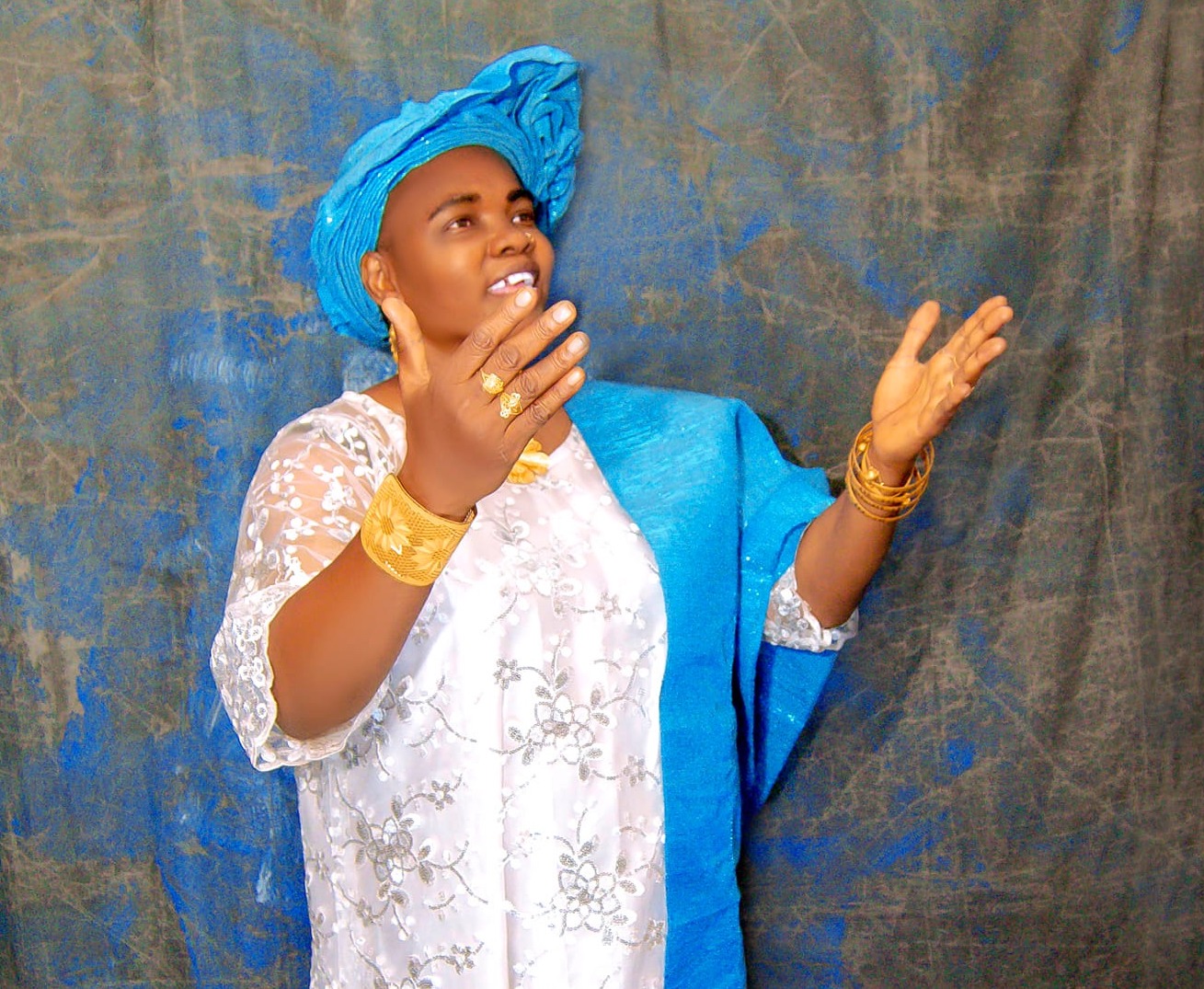
By Aisha Musa Auyo

Men’s preferences for women change with age, exposure, and income. What a man wants in his 20s will differ from what he wants in his forties. The woman he can afford at his first marriage will be different from the woman he would love to have in his midlife, especially in abubuwa na shigo masa. This is why we advise our fellow women to evolve with their men. 

This post is about men. I’ve written a lot for women and about women. It’s your turn now, especially since no one takes time to tell men what is required of them to keep their marriage going. The expectation is that a woman should keep her marriage. The reality is that it takes a husband and wife’s combined efforts to keep the marriage going.

My brother, know your woman can not be what you want without your support. Here, support means emotional, financial, and social support. If you marry a woman with minimal educational qualifications and you go ahead and add degrees without carrying her along, you are naturally creating a gap in your relationship. 

If you are always travelling within and outside your country, without her, she will be left behind in experience and exposure. 

If you are getting a lot of money, changing your wardrobe and perfume collections, and not doing so for her, she will soon be too local for you.

Know that the fine, educated, and brilliant lady you are eyeing and admiring is like that because someone invested in her. Someone allowed her to grow. Someone trusted, invested, and supported her. Good soup, they say, ‘na money me kam.’

Building meaningful connections with women, akin to nurturing a plant, involves investing time, energy, and resources. Just as they blossom with care, women flourish when given attention and support. It’s important to recognize the value of financial care, pampering, and spoiling in fostering a strong and vibrant relationship.

Let me start with these two hadiths.

Our Prophet, Muhammad, peace be upon him, said, “When a Muslim spends something on his family intending to receive Allah’s reward, it is regarded as Sadaqa for him.”

Allah’s Apostle said, “Allah said, ‘O son of Adam! Spend, and I shall spend on you.”

I don’t want to start listing the basic things a woman needs from her man because not all fingers are equal, and what is basic to one family may be a luxury to another. 

But a lady generally needs peace and care to look good and be happy. Everyone can afford that, huh? 

To chat, tease, and play with her is hard for some men. To acknowledge her efforts, praise her, pray for her, and engage in a meaningful, deep conversation with a wife is a big deal to some men. Watching movies with one’s wife, taking her out, travelling with her, or spending quality time with her is impossible for some men.

On nutrition, a good and balanced diet is the number one responsibility of a husband. A husband should spend on his family depending on his pocket. Don’t give her garri and Garau-Garau, then order shawarma, basmati, and tiger nut drink for yourself from Auyo’s Cuisines. Buying grains only and leaving her to cater to the remaining ingredients is wrong. Sometimes, the ingredients for food preparation cost more than the grains. 

Body care essentials like soap, pads, deodorants, perfumes, hair products, and clothing are non-negotiable. If you have the resources, give her money for a good skincare routine, spa treatment, gyaran jiki, salon, manicure, pedicure, etc. 

Normalize buying clothes more than two times a year. Give her money for nighties, underwear, comfy wear, and pyjamas. A woman also needs hijabs, veils, laffayas, and abayas. Everything I listed here has prices that vary with one’s income, dan Allah a kamanta.

In education, a woman needs to update and upgrade her Islamic knowledge, Western education, and socialization. The world is changing and evolving in the blink of an eye. If she’s stagnant in these areas, she might not be well-equipped to raise your kids and be the wife that you need.

Aisha Musa Auyo is a doctoral researcher in educational psychology, a wife, a mother of three, a homemaker, a chef, and a parenting/relationship coach. She can be reached via aishamuauyo@live.co.uk.

Re: CBN’s revocation of 4,173 Bureau De Change (BDC) licenses

By Rabiu Aliyu Kiru

It has been announced by the Central Bank of Nigeria (CBN) that 4,173 Bureau De Change (BDC) licenses have been revoked, while 1,368 BDCs remain valid nationwide.

In the CBN publication signed by Sidi Ali Hakama (Mrs.), she did mention a series of offenses that prompted the CBN to revoke the BDC license. Such offenses never involved more than 3,000 BDCs.

I am a professional accountant and a BDC consultant. I have consulted for over 3,000 BDCs out of the total number of BDCs quoted above, and more than half of the total number of these BDCs only engage in buying from the CBN and selling to end-users.

I am beginning to wonder how the issues of money laundering and financing of terrorism will affect such a large number of these BDCs.

Going by the CBN regulations, which were visibly stated on the Approval of Principles (AIP), there is no place mentioned on the AIP where CBN has the right to cancel a BDC License at its own discretion.

The CBN should note that owners of these BDCs have been in business for almost 10 years now, but a BDC holder pays the sum of N250,000 to CBN each year as payment for the Annual Renewal License.

The CBN should also be informed that owners of these BDCs have been in recess for almost 10 years now, yet a BDC holder pays the sum of N250,000 to CBN annually as payment for the Annual Renewal License.

Despite following the CBN guidelines, the CBN abruptly cancels a BDC holder’s license.

The CBN should also note that these BDC holders contribute to the growth of the Nigerian economy, especially by creating job opportunities and eradicating poverty among the citizenry.

In fact, I believe that with the advent of this new government, which has adequate advisers, such an action should not be taken, particularly given the high level of increase in commodity prices and other wares.

The CBN should bear in mind that the BDC owners are learned enough to fight for their rights, particularly for those that they are operating within the ambit of the law.

In my previous advice that I gave to CBN, I never presumed that such advice could not be adhered to. This made me think that I was talking to the wrong person, not to the CBN, which consists of professionals.

It is pertinent to this that I am drawing your attention once again to revisit my observations and advice I gave you directly on your CBN portal.

Rabiu Aliyu Kiru wrote from Kano State. He is a BDCs Consultant, and can be reached via rd_aliyu@yahoo.com.

Hisbah saga: governor’s public condemnation, misstep in leadership

By Umar Sani Adamu

The recent public criticism by Governor Abba of the Hisbah board in Kano State has sparked controversy and raised concerns about leadership decorum and responsible governance. While it is crucial for leaders to address concerns and seek improvement within government agencies, the manner in which Governor Abba chose to express his dissatisfaction raises questions about his leadership style and the potential consequences of his actions.

First and foremost, criticizing a government agency publicly, especially one tasked with religious and moral enforcement like the Hisbah board, can create unnecessary tension and undermine public trust in the institution. Governor Abba’s decision to air his grievances in a public forum instead of handling them internally or through diplomatic channels demonstrates a lack of discretion and undermines the credibility of the Hisbah board.

Furthermore, by openly criticizing the Hisbah board, Governor Abba risks exacerbating existing tensions within the community and fueling resentment towards the agency. This could potentially undermine the effectiveness of the Hisbah board in carrying out its duties and could lead to a breakdown of law and order in the state.

Additionally, Governor Abba’s public criticism of the Hisbah board without offering concrete solutions or constructive feedback demonstrates a lack of leadership maturity. Effective leaders understand the importance of providing constructive criticism in a constructive and respectful manner, focusing on solutions rather than simply pointing out problems.

Moreover, Governor Abba’s decision to publicly criticize the Hisbah board instead of engaging in private dialogue with relevant stakeholders, such as Sheikh Mallam Daurawa, further highlights his disregard for diplomatic protocols and his tendency to prioritize personal agendas over the well-being of the community.

Adding the context of Murja Kunya’s situation provides further insight into the potential implications of Governor Abba’s public criticism of the Hisbah board. Murja Kunya, a social media influencer, has been accused by the Hisbah board of encouraging indecency and immorality. In this context, Governor Abba’s public condemnation of the Hisbah board could be interpreted as a form of protection for Murja Kunya.

By publicly criticizing the Hisbah board’s handling of the situation, Governor Abba may be perceived as undermining their authority and potentially shielding individuals like Murja Kunya from accountability. This not only weakens the effectiveness of the Hisbah board in enforcing moral standards within the community but also sends a troubling message about the government’s commitment to upholding moral values and protecting societal norms.

In light of these circumstances, Governor Abba’s public condemnation of the Hisbah board takes on an even greater significance. It not only raises questions about his leadership style and approach to governance but also calls into question his commitment to upholding moral standards and protecting the well-being of the community.

Therefore, it is imperative for Governor Abba to reconsider his approach and prioritize responsible leadership that fosters constructive dialogue and collaboration, while also upholding the values and principles that are essential for the well-being of society as a whole.

Umar Sani Adamu (Kawun Baba) 

Hisbah Arrest: Law and morality

By Aliyu Zangina

The people of Kano State woke up to the news of the resignation of the Commander-General of the Kano State Hisbah Board (Hisbah). This came after criticisms directed at some of the activities of the Hisbah Corps by His Excellency, AbbaKabirYusuf, the governor of the state.

The Hisbah Board is a creation of the Kano State Hisbah Law 2003. Its primary responsibility is to advise on and enforce religious morality within the state. Despite this mandate, the corps has been criticized for violating moral codes and secular laws of the land by making illegal arrests, which are a damning affront to human dignity. It is on this premise that I seek to explore law and morality vis-à-vis the arrest in controversy.

THE INTERSECTION BETWEEEN LAW AND MORALITY

Arguments on the relationship between law and morality in the jurisprudential sense have lasted for ages and still rage on. The controversy surrounding Hisbah brings it to the fore.

Laws are loosely defined as enactments by a state, with binding and coercive force on individuals and institutions throughout the state.

While morality can be loosely defined as a proper behaviour in differentiation of what is right and wrong.

The major difference between them is while a breach of law attracts sanction, A breach of morality can only attract moral reprehension. The long age principle of law is that law and morality are poles apart. However, in the celebrated case of R v. Dudley & Stephens (1884)14 QDB 273 DC it was states that

“Though law and morality are not the same, and many things may be immoral which are not necessarily illegal, yet absolute divorce of law from morality would be of fatal consequence.”

In practice, morality complements the law, as many enactments were propelled by the moral demands of the people. For example, laws prohibiting theft and murder are rooted in the moral consciousness of the fact that taking other people’s property or life is morally wrong. Many laws embody moral principles within them, protecting and guaranteeing fundamental moral values. At the same time, the fundamental force is given by its moral obligation.

ACTIVITIES OF HISBAH

The term Hisbah in Kano has always been associated with controversy from its inception to date. When it is not President Obasanjo accusing the institution of jihadist tendencies, then it is people from the southern part of the country attacking the institution for destroying trucks of alcoholic drinks. The body has always been (in)famous for enforcing morality despite its efforts in curbing social and moral vices.

In November of last year, the Hisbah corps came under attack after raiding several hotels. A video of their operation surfaced on the internet, evidencing male officers harassing and apprehending female suspects and grabbing them in a commando style. Indeed, it was an affront to Islamic moral values. The actions of the Hisbah corps could be qualified as degrading treatment and, hence, unconstitutional. Allusions made to the video by the governor of Kano state prompted the commander-general’s retirement on March 1, 2024.

ARE LAWS REGULATING ARRESTS IN NIGERIA AT CONVERGENCE WITH OUR MORAL VALUES?

Unlike laws regulating search where the search is to be conducted by “persons of the same sex with strict regard to decency” and “reasonable time to withdraw” which must be given to a woman in purdah before a search is conducted on a premise she occupies, the laws regulating arrests in Nigeria have less regards to our moral values and culture as they do not have similar provisions regarding arrests to be conducted by persons of same-sex.

Therefore, the arrest carried out by the Hisbah corps is illegal only to the extent that it was done without a warrant, and their conduct violates the dignity of the suspect. However, the confinement of the female suspects by the male officers with excessive restraint cannot be faulted legally if there was a reasonable apprehension of violence, as our law does not mandate that the arrest of a woman be carried out only by a woman. This is not to serve as a justification for the degrading treatment meted out to suspects by the Hisbah corps during the arrest. They are suspects, not convicts, and even convicts are only deprived of their liberty, not their dignity.

CONCLUSION

“It is tempting to speak of law and morality as if they constitute two completely normative system whose prescriptions sometimes coincide and sometimes conflict. Maybe it is much more exact to consider law and morality as complementary. The complementarity of law and morality belies their separateness even though the two are not parallel streams whose water never mixed at any time.” UZOUKWU V. IDIKA (2022)3NWLR, (PT1818) (P, 462, paras G-H)

Many laws overlap with moral codes in Nigeria. Some laws were enacted to uphold our morality, but where the law does not contemplate our morals, it is our duty to call upon our senses of right and wrong. The Hisbah male officers should not have carried out the arrest of women, even though that alone cannot make the arrest illegal. It is their moral duty to have sent in their female officers to handle the entire scenario with a modicum of professionalism.

It is therefore put forward to our legislators that our Administration of Criminal Justice laws be amended to accommodate the model of arrest that will reflect our morals, culture, and dignity, just like the provisions on search.

Aliyu Zangina is a lawyer, and can be contacted via zanginaaliyu96@gmail.com.

On Shaikh Daurawa’s resignation

By Ibrahiym A. El-Caleel

Resignations are normal in the corporate world. Corporate culture makes employees understand that they work for their bosses, not really the organization per se. Your deliverables are the deliverables of your boss. If you achieve them, he will achieve his. If you fail, he fails. This is why bosses hold employees with high sense of accountability.

As such, employees leave bosses. They don’t really leave organizations. Whenever it goes sour between you and your boss beyond reconciliation, then you look for another job! Take a bow and go. It’s very normal there. That’s what they do. In fact I have met a high performing CEO of one of Nigeria’s beverages companies who told me that he spends a maximum of 5 years in any organization that hires him. And he leaves whenever the ovation is high. Within 15 years of starting his career, he is already an MD/CEO!

It’s only in civil service and public service that people think resignation is a big deal. In corporate world, it’s part of the culture. It is okay for both employee growth and corporate efficiency and effectiveness. An organization does not deserve an employee who is not happy with his job, or who believes his boss is frustrating his job. It impacts corporate performance. You cannot get anything significantly great from an employee who is not motivated to deliver.

Shaikh Daurawa’s resignation from Kano Hisbah is both good for him as an individual, and perhaps Hisbah as an organization. Had he stayed, he will feel tied down by the public condemnation he received yesterday from his boss, Gov Abba Kabir Yusuf. He will not be able to give Kano Hisbah his very best again. He would be an apathetic leader, who no longer cares about how TikTok’s Murja is corrupting the moral upbringing of Kano adolescents. He will now be very doubtful of every single operation he is going to make. What will be the reaction of my boss, Gov Abba? Will he be happy or not? Will he publicly lash me? These questions will always ring a bell in his heart.

Now that he has resigned, he has saved his image and mental peace. It also opens doors for him to greater job opportunities because his next boss will know that the man cannot compromise on his work ethics. It will be part of his discussion with his next boss. And if there’s a governor who truly has interest in moral policing, he would be happy to employ Shaikh Daurawa.

For Kano Hisbah, perhaps Gov Abba will have time to reflect on what he truly wants the organization to be doing under his tenure. Chase alcohol only? Or cut the hair of youth who styled them badly? This resignation gives the governor an opportunity to re-define how the enforcement agency will function in his tenure.

If you ask me, Shaikh Daurawa did very well by resigning. I could have done the same. I wish him the very best in his next job. I also wish Kano Hisbah the very best in getting their next Director-General.

Ibrahiym A. El-Caleel writes from Zaria, Kaduna State.

Navigating the risky waters of self-doubt

By Tijani Abiola

Confidence is often identified as one of the most important things in the complicated and vital
tango of life to make us closer to climbing the zenith of achievement and satisfaction. But there remains a counterintuitive danger of this confidence in low confidence. This perverse situation exposes a series of pitfalls to anyone who dares venture for his rescue from falling into the lake of un-assuredness.

Low confidence is a silent saboteur that can keep an individual’s real potential at bay and stop him from dead in his growth years. The problem is not just the lack of self-assurance; it is also that in the bargain, one may lose out on several choices and chances that come one’s way. Damaging to confidence, it makes it a self-fulfilling prophecy that will not allow people to reach their potential, dreams and its dreamer as an example.

Here’s one major pitfall to the detriment of decision-making. Confidence acts like a north star, which helps manoeuvre through choices wide and small. Yet if confidence wanes, decisions become a minefield of hesitation and second-guessing that often results in blown chances and unrealised potentials, taking a chance with all efforts put into that dream beautiful, and in the end, it ends in the cloud. 

Moreover, low confidence may develop a fear of taking risks. Innovations and success often require moving out of the comfort zone, and low confidence becomes a formidable bar to step into the new possibilities.

The amplified fear of failure causes individuals to shy away from challenging situations that prevent personal and professional growth. In self-reflection, high expectations by oneself and getting negative feedback from what you know and believe you are best at can drop down your level of confidence.

Poor self-confidence also takes its toll on interpersonal relationships. Confidence in oneself, both in their personal and professional contexts, attracts others to affiliating in pursuit of collaboration and cooperation. On the other hand, relying on low confidence would draw people further away, thereby stifling interactions and bilateral communication.

Sailing through the treacherous sea of self-doubt will require an intentional snapping out of the chains of low confidence. Seeking mentorship, investing in personal growth and learning to celebrate small wins will be critical in building and maintaining confidence. By embracing challenges, learning from failures, and reframing negative thoughts, low confidence will change gradually into powerful catalysts for growth.

In conclusion, having confidence at your lowest level is a delicate challenge that calls for self-reflection and conscious action. Realising the effects they can have on one’s life and engaging actively in building confidence opens up opportunities they thought could not come by, instilling them with resilience and confidence even when situations are uncertain.

Tijani Abiola is an executive assistant at Skyline University Nigeria with a passion for writing.

Letter to Malam Isa Yuguda

By Mukhtar Jarmajo

Your Excellency, during your tenure as the Governor of Bauchi State from 2007 to 2015, you initiated and oversaw the implementation of various initiatives in the education sector. The long-term effects of these initiatives on the state’s citizens are still being evaluated.

One cannot overstate the significance of the Bauchi State University, Gadau. Established during your administration, the university has transformed into a thriving institution, empowering thousands with higher education. These graduates are not merely individuals equipped with knowledge, they are the architects of a brighter future for the state.

Furthermore, your decision to hand over the Bauchi State Specialist Hospital to the Federal Government paved the way for the establishment of the Abubakar Tafawa Balewa University Teaching Hospital (ATBUTH). This seemingly simple act had profound consequences. ATBU, previously lacking the facilities for medical courses, now flourishes with a thriving medical program. Last week, a milestone was achieved – the graduation of the university’s first set of doctors.

These achievements, Your Excellency, stand as a beacon of your forward-thinking approach. You recognized the critical role education plays in empowering individuals and propelling the state’s development. Your decisions, made with foresight and a commitment to the betterment of Bauchi state, continue to resonate till today.

While your time in office has since lapsed, the legacy you leave behind continues to flourish. You have earned the gratitude of the people you served, and your story serves as an inspiration to aspiring leaders who understand the transformative power of education.

Mukhtar Jarmajo, Lobito Crescent, Wuse 2, Abuja.

My Language, my pride

By Abdurrazak Muktar Makarfi

Have you ever stopped to think about the language you speak and how awesome it is? Well, I’m here to tell you about the Hausa language, and let me tell you, it’s pretty amazing! As someone who speaks Hausa, I’m bursting with pride to share why this language is so special.

Let’s take a little trip back in time to the historical kingdoms of the Hausaland, nestled in what is now called Nigeria and some other neighboring countries. That’s where the Hausa language started to take shape, blending influences from trade, migration, and cultural exchanges over the centuries.

Now, here’s the cool part – Hausa isn’t just a local language. Nope, it’s a global superstar, ranking as the 11th most spoken language in the world! Can you believe it? From Africa and beyond, millions of people speak Hausa, making it a real powerhouse in the linguistic world.

But Hausa isn’t just about saying words; it’s a whole vibe, a cultural identity that connects people across borders. It’s like a treasure chest of traditions, stories and values passed down through generations. The Hausa language is the heartbeat of West Africa, pumping life into its rich cultural tapestry.

Okay, let’s talk on business and politics. Hausa isn’t just chilling in the background; it’s making things to happen. As a lingua franca in West Africa, it’s a language of trade, commerce, and diplomacy, bringing people together and driving progress in the region.

Now, let’s zoom in to education. Imagine learning in a language that’s close to your heart, that speaks to your soul. That’s what Hausa language education does for millions of kids, giving them a solid foundation in learning while celebrating their roots.

Sure, Hausa language faces challenges like any other, but it’s also full of opportunities. We’re talking about initiatives that promote awareness, document our language’s rich history, and bring Hausa into the digital age.

So there you have it – the awesomeness of Hausa language in a nutshell! It’s more than just words; it’s a celebration of culture, a bridge between people, and a source of pride for millions. As a proud Hausa speaker, I’m shouting it from the rooftops – Hausa language rocks!

From the pen of Abdurrazak Muktar Makarfi, a proud Hausa speaker

If I were Pascal Lissouba: The tragedy of African emancipation

By Saifullahi Attahir

Pascal Lissouba was a former President of the Republic of Congo Brazzaville, a country located very close to its counterpart, DRC Congo, with the capital Kinshasa. The story of these two close neighbours was another irony of our continent; both capitals are only separated by a river, which you can easily spot each other by mere sight. They share much in common but bitterly sabotage each other due to mere nonsensical issues of tribe and language. To the benefit of their former masters, this division created an opportunity to be ruled and controlled by their former colonists.

He was born around the 1940s to a middle-income family in a village before the country’s independence. He studied in a government-run school and was an intelligent student, culminating in gaining a scholarship to study Agriculture at France’s elite academy Ecole in Paris. He had a stint in Paris working as a scientist before returning home and starting a job as a senior civil servant in the Ministry of Agriculture under President Massamba Debat.

His expertise was noticed, and he soon climbed the social ladder and became the minister of Agriculture in less than a decade. He held other positions in the Debat government. He was later promoted to prime minister until their government was overthrown by an army General called Denis Sassou Nguesse. His former boss was assassinated while he was forced to resign.

Amidst this impasse, Oil (petroleum crude oil) was the central player in all this and the future unrest that would follow in this tiny country. It was discovered a little while around the 1960s, after the country gained independence, and most of the exploration, production, and transactions were handled between the government and the giant French conglomerate Elf OIL COMPANY. The deal was marred with corruption and shadowy manoeuvres, and the oil money was mostly stacked in the Paris banks. The little that got to the Congolese is also largely slashed by the politicians and the ruling class, and only little or none of the ordinary citizens of Congo benefit from this newly found wealth.

Another problem was that the discovery of this oil led to the development of Dutch disease, where the government abandoned other key infrastructural income sectors like agriculture. The common populace, too, abandoned their homes and rushed for the golden egg, only to meet with frustration. This oil also created another problem of division and hatred among the different tribes of the country; everyone was trying to dominate his brother for the booty, and no one thought for the country.

During this period, Pascal Lissouba retired from Politics and worked as an academician and genetic lecturer at the University, initially in Paris and later in his country, Congo. 

Despite the world crude oil prices in the 1970s rising due to the historic Arab Embargo, Congo Brazzaville began accumulating debts by being involved in elephant projects and depending so much on the Pseudo Economic consultant’s advice. The economic situation in the country starts to change for the worse; salary arrears accumulate for several months, inflation rises high, and hunger begins to appear. The president of that time became unpopular, creating a chance for the emergence of Pascal Lissouba as the new President of the Republic of Congo Brazzaville after an election in 1992.

It was reported that Pascal became President with the support of France and the Elf oil company with the agreement of continuing business as usual, allowing the monopoly exploration of Congo Crude oil by the Elf company only. After he settled down as the president, Pascal began to see the absolute mess his country was already in, with billions of dollars in debt and the continued siphoning of the little they got through corrupt middlemen. He discovered that almost 2/3 of their earning went into debt servicing with nothing to show of what was done with the loan received in the first instance.

He, too, begins to face public resentment due to over six months of salary arrears his government owes to workers. Face with no alternative, he rushed to Paris, met President Mitterrand for help, and was surprisingly denied. He ran to the Elf company for aid and was negotiated under terms that included conceding several millions of crude oil barrels in advance. This Mr Pascal turns down too.

Cleverly and courageously, He went to an American oil company called The Occidental and secured a deal that assured his country to collect a loan of $150 million in exchange for an oil exploration license to the company. Desperate to satisfy his people and to quench their thirst, plus an election around the corner, he quickly rushed home and, to the applause of his people, indeed won the mid-term election.

The problem between his government and the Elf Company for including the Occidental in oil exploration begins to develop. President Mitterrand also backed the grudge, and soon, Paris began to lose ties with its former friend and started supporting a new one called Suisse Nguesse. 

Nguesse, desperate for power, couldn’t allow him to wait for election time but began to finance militias to ouster President Lissouba. The country was thrown into civil war between 1995 and 1997 until President Lissouba was overpowered off course with the help of foreign powers and military intelligence. President Pascal Lissouba fled the country and was exiled to London.

This essay was written to highlight the complex situation of most African countries, especially those that depend on Natural resources such as crude oil as the sole source of exchange earnings. The story is not much different in countries like Angola, Gabon, Central African Republic, and Nigeria. It’s always the same tactics; only the players change, but the game is the same old tricks.

If I were Pascal Lissouba, and God granted me wisdom, courage and fearlessness, I would have begun a mass national orientation campaign before I assumed office to explain to the country the dire need for every citizen to sacrifice for the period ahead so that the whole country would head toward a common goal of emancipation of their natural resource.

I would have renegotiated the oil contract terms with the Elf Company, inviting other key players in the world, especially the global South block, for military and infrastructural aid.

I would have engaged in a constant national campaign to ensure the whole population is well informed to acquire their support for the hard road ahead.

But I begin to doubt the realisation of this dream due to the complex behaviour of our very own people. We Africans are creatures that mostly lack endurance of hardship; we usually prefer short-term gratification of our desires, and most of us can not sacrifice long enough, no matter the value of what is ahead. 

We are creatures that easily fall into division; we quickly delve into ethnic, religious, tribal and regional self-interest conflict. We love chaos; we love greediness that surpasses the imagination of any self-conscious human thinking. We can kill because of money; we can sacrifice our brethren because of money, and we can amass so much through the crook method that even our grandchildren cannot spend.

From my perspective, this is not a problem of leadership alone or the problem of a single or few individuals; this is a pandemic disease; it’s almost within the blood of most of us unless those few are chosen. This problem was within every stratum of our society, and I can’t believe the mere excuse of leadership alone as the only cause.

This problem is complex and multifaceted; our people fuelled it, we love the shortcut, everybody loves to arrive quickly, we love overnight riches, and we want enjoyment. Still, we lack a plan and disciplinary execution. Even at the individual level, that is how we are, and that makes our homes and families, so it’s not surprising that we have a nation or continent that laments.

Our people organise the coups; the sabotage is supported by our people. This problem is not peculiar to only politicians; it’s present among college students, academicians, families, workers, and businessmen.

I began to sympathise with people like Pascal Lissouba because most of the men who have tried to oppose the status quo are usually prematurely retired from leadership, and some even, unfortunately, got killed.

Where is Gaddafi, where is Murtala, where is Sankara, where is Abacha, where is Saddam, where is Lumumba, where is Mandela?

Saifullahi Attahir wrote via saifullahiattahir93@gmail.com.

Reconcile with our neighbors dear President Tinubu

By Nuraddeen Danjuma Maiwada

Mr. President sir, I hope this finds you in good health and high spirits. I am writing to bring to your attention the special relationship that exists between the people of Northern Nigeria and the Republics of Niger, Mali and Burkina faso, our beloved neighbors.

In Northern Nigeria, especially in towns and cities close to Niger Republic’s borders, Nigeriens are not just our neighbors, but also our relatives. The bond we share transcends borders, as we are interconnected through history, language, and culture. It is impossible to deny the fact that our roots run deep in both lands.

Our kingdoms, trade, religion, culture were the same untill colonialism and much beyond. The Frontline regions of Niger Republic namely Dosso, Tahoua, Maradi, Zinder and Diffa share common ancestry and culture with Nigeria’s Kebbi, Sokoto, Zamfara, Katsina, Jigawa, Yobe and Borno States. Emir of Maradi is still called Sarkin Katsinan Maraɗi

Despite the existence of artificial boundaries that separate us on maps, we are essentially the same people. Our shared histories and intertwined cultures make it evident that Niger, Mali and Burkina faso Republics hold a special place in our hearts. This kinship between our nations is based on a strong foundation of mutual respect, understanding, and cooperation.

In light of this, I implore you, dear President Tinubu, to adopt a peaceful approach instead of confrontation when it comes to dealing with neighbors. This approach recognizes the deep ties we share and seeks to strengthen the bonds between our nations rather than tear them apart.

By choosing dialogue and peaceful negotiations, we can establish a prosperous future for both our nations. Joint efforts in areas such as trade, education, healthcare, and security will not only benefit us but also foster a stronger sense of unity and collaboration among our people.

It is essential to remember that our shared interests and aspirations far outweigh any differences that may arise. By fostering peaceful relations, we can unlock tremendous potential for development, progress, and stability in the region.

As leaders, it is our duty to foster an environment that encourages harmony and collaboration. Let us set an example for the rest of the world by showcasing how two nations, intertwined by history and shared values, can resolve any differences through peaceful means.

I remain hopeful that under your leadership, our nations will continue to strengthen the bonds of brotherhood and cooperation. Together, we can build a future where all countries in ECOWAS and Nigeria thrive side by side, united in peace and prosperity.

Nuraddeen Danjuma Maiwada
Bayero University Kano
25.02.2024