Opinion

In defence of loyalty: Standing with the speaker and his unwavering support for the governor

By Idris Ishaq Danwanka

I stand with my boss, the Bauchi State House of Assembly Speaker, Rt. Hon. Abubakar Y. Suleiman, when he described the Bauchi State Governor as his Boss, His leader, and His Direction. The governor has consistently demonstrated kindness to the people of Bauchi State, initiating and executing numerous critical projects since assuming office. His tireless collaboration with the legislative arm of the government ensures the smooth implementation of these projects, providing the state with essential resources for its development.

However, it has come to my attention that certain individuals, particularly from the opposition party, have been attacking the Speaker’s Facebook post, which featured a picture of the governor with the caption: “Wannan shine Uban Gidana, Jagorana, kuma Alkibla ta. Abinda kace shi zamuyi, dani da magoya bayana, in shaa Allah.” The English translation of this Hausa statement is: “The man in this picture is my boss, my leader, and my direction. We will follow whatever you say, knowing fully that you will never lead us to harm, my followers and I, Allah willing.”

There is absolutely nothing wrong with what the speaker said. Unfortunately, due to political differences and a lack of substantial critiques, some individuals who are clueless about the nuances of political discourse are baselessly accusing the speaker of compromising the duties of the legislative body.


The accusations against the speaker are unfounded. To those critics, I pose the following questions:


– In what specific ways has the speaker failed to discharge his duties?
– What are the explicit duties of the speaker and the members of the State Assembly?
– What is inherently wrong with the speaker’s praise for the governor?

Here are a few key points in response to the criticisms:


– In every speech he presents, the governor refers to the speaker as his boss. What wrong does it do when the speaker also refers to the governor as his boss?


– The Speaker’s loyalty to the governor does not impede his ability to perform his constitutional duties regarding the executive arm.


– As a citizen of Nigeria, the speaker is entitled to the same rights as everyone else, including the right to freedom of expression and the press, as provided in Section 39 of the Constitution.


– The Speaker is genuinely impressed with the governor’s leadership style and ability to implement beneficial policies and programs for the state.


– Recently, the governor has flagged off the dualisation of access road in Ningi, and work is in progress… the speaker’s local government, from GSS Ningi to Gudduba. This project, long sought after since the creation of the local government, was approved due to the harmonious relationship between the Executive and Legislative branches.


– ⁠Note that this is the speaker’s personal opinion and that of his supporters (constituents), to which he is constitutionally entitled.

These and many other reasons have prompted the speaker to laud the governor and refer to him as his boss. Ultimately, we are fully committed to following the speaker’s lead and hold no regrets, retreat, or surrender for following the speaker’s directions.


We will always follow his leads and instructions and obey his commands. Our loyalty to the speaker is uncompromising.

Sen. Idris Ishaq Danwanka wrote via idrisdanwanka@gmail.com.

My earliest memory of Eid

By Aisha Mohammed Danpullo

 We were sent to get cooking oil from a house nearby. My cousin and I wore a popular Malaysian Hijab with trimmed lace at the edges and a rope around the back. We were so excited to have a ram that year (I come from a humble background). 

We were eager to watch the ram we had crowded around for days, feeding, watering and cleaning its poo. Finally, we were going to watch as it got slaughtered. I, for one, was most excited for the blood that would come gushing out as it took its last breath.

We went to the oil merchant’s house and met the husband, the head of the house with his kids around him, about to make his sacrifice. He was about to slaughter three fat fish. He had it held down by his eldest son as it squirmed just the way one would slaughter a ram.

The kids were all excited; the wife was humbled and a little bit ashamed, probably because of our presence, spilling the oil she measured with beer bottles serving as a measurement for a litre. It’s quite ironic because beers are banned in our part of the country, but somehow, the bottles are always found in every oil merchant’s shop, and their origin is never questioned.

The family generously offered us some, but we wouldn’t take it because there wasn’t enough for them to share.

Every year during Eid, I think of that family, wondering how they are doing and hoping life has become better for them and that they get to eat ram some year.

Aisha Danpullo wrote from Kano via aishamohammaddanpullo@gmail.com.

National Anthem: Is Nigeria losing its patriotic spirit?

By Haroon Aremu

For nearly 50 years, we have sung “Arise, O Compatriots, Nigeria’s call obey……,” pledging our loyalty to one nation bound in freedom, peace, and unity. But now, we are directed to change our national anthem. Could it be a strategic way of following the popular saying  Changing Narrative to Change Society or does this mean as compatriots we are now handicapped and cannot listen and obey Nigeria’s call anymore? Does it mean there is no more strength, love, and faith to serve our fatherland? Does it mean the labor of our heroes past has been in vain? Are we no longer able to serve with heart and might?

These are the questions lingering in masses mind as the national anthem has been changed. Many Nigeria citizens are clamoring: of all the changes that needed to be made, why the national anthem, especially during such times of hardship? Has the message of the anthem adopted in 1978, created by the five members of the Nigerian Police Band, lost its relevance?

Some citizens have given up hope that Nigeria can ever be better. But should this be our attitude? Instead of succumbing to pessimism, we should strive to refurbish our nation with optimism and prayer. When Americans wake up, they say “God bless America.” When we wake up, we often curse our leaders and condemn our country, forgetting that such negativity can have repercussions bouncing back to us.

The compatriots who built this country are not here to witness its destabilization. If we do not want their labor to be in vain, we must practice the values preached by our new anthem. Nigeria’s growth concerns not only the government but all its citizens.

The legislature has said that the newly launched national anthem serves as a beacon of hope and reassurance, starting with “Nigeria, we hail thee.” Are we hailing our dear native land for enduring economic hardship and remaining patient as we face daily challenges?

Change begins with us, at the individual level. Why are we not standing in brotherhood, despite our different tribes and tongues? Are we truly proud to serve our sovereign motherland?

As a member of the NYSC, one of the core aims we are exposed to is to promote national peace, togetherness, rehabilitation, reconstruction, and reconciliation of a torn-up country. Part of the bedrock of good governance is for the citizens to be involved in governance and also promote it. 

The National Youth Service Corps has been a supportive system for good governance from inception till date and it will always be.  The NYSC stands as a strong pillar that advocate for  good government policy.  Despite the economic hardship and the challenges we face, the NYSC continues to instill a sense of optimism and duty among the youth. 

The NYSC’s role in promoting government policies, such as the change of the national anthem, is crucial since the youth are a very important tool for the promotion of government policy, and through the NYSC, people learn to practice the values of unity, peace, and justice, which are embedded in the anthem and are essential for national development.  

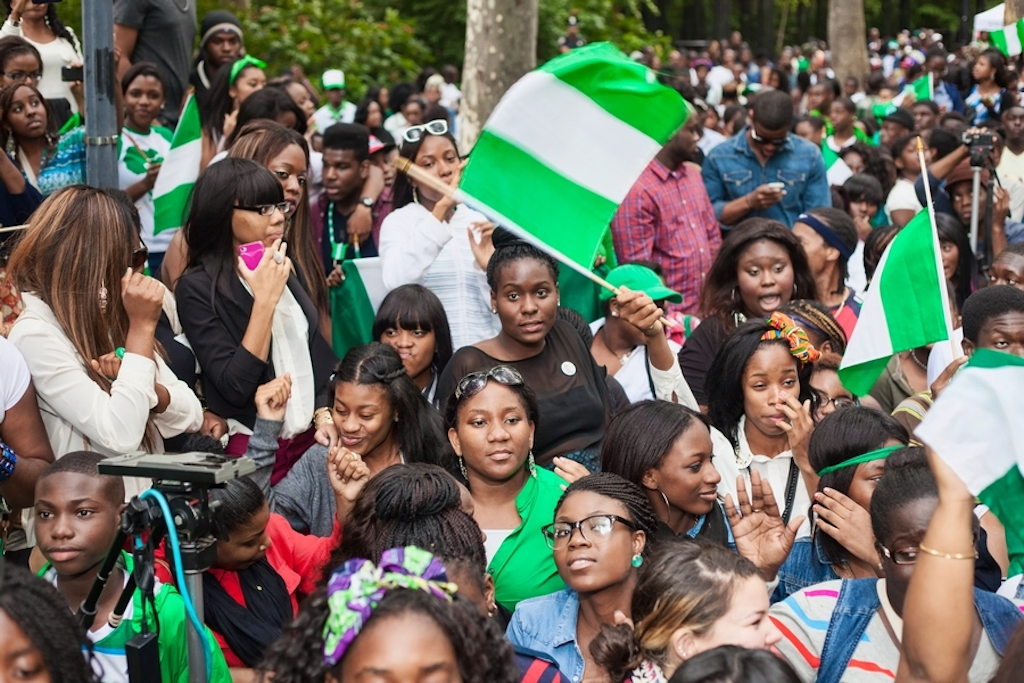
Recently, I watched an interview asking people in the diaspora about the laziest African flags, and some chose Nigeria, does our tendency to take our nation’s issues with a grain of salt and not take them seriously as a people have any thing to do with their choice? Should that be the case? They forgot that our flag’s colors represent something meaningful: the two green stripes symbolize natural wealth, and the white symbolizes peace and unity. We should be proud of our flag because it is our symbol that truth and justice reign. Let us strive to improve on truth and justice for our nation’s growth so that we can hand over a banner without stain to the next generation.

There is a saying that a river that forgets its source will dry up. Let us be hopeful that going back to our source anthem will be a turning point for Nigeria. We should continue to pray with this saying: “Oh God of creation, grant this our request, by helping us to build a nation where no man is oppressed, and so with peace and plenty, Nigeria may be blessed.”

Let us hope that in this era of renewed hope, we are on the path to greatness and prosperity in our dear country. Promoting togetherness, avoiding tribalism and religious nepotism, and coming together as one nation are essential. There is a glimpse of hope that Nigeria will be great again, but it starts with each of us doing our part, not by condemning others. The NYSC scheme fosters this spirit of togetherness and national pride, reinforcing that change begins with us at the individual level. 

Nigeria’s journey to greatness begins with every citizen committing to unity, peace, and justice. By working together and supporting each other, we can ensure that the labor of our heroes past was not in vain and build a prosperous future for generations to come. May Nigeria be blessed!!

Haroon Aremu Abiodun is a youth corp member with PRNigeria center, Abuja and wrote in via exponentumera@gmail.com.

OPEC Sec Gen: Peak oil demand not on the horizon

By Haitham Al Ghais 

In the 1990s and 2000s, the world regularly saw column inches devoted to the theory of peak oil supply, amplified by voices like Colin Campbell and Matthew Simmons. Decades later, however, it has still not come to pass, as enhanced economics and constant improvement in technology have helped lower costs and open up new frontiers to expand the resource base.

The past decade or so has witnessed a shift to talk of peak oil demand, with some forecasters increasingly pushing theoretical scenarios that have decided before any data is analysed that oil should not be part of a sustainable energy future.

This is evident in some net zero scenarios, with suggestions that oil demand will peak before 2030 or, more dramatically, that oil demand will drop by more than 25% by 2030 and calls to stop investing in new oil projects. 

This narrative was repeated only yesterday when the IEA published its Oil 2024 report, which once again stated that oil demand would peak before 2030. It is a dangerous commentary, especially for consumers, and will only lead to energy volatility on a potentially unprecedented scale.

We have also heard similar narratives before, ones that have proven to be wrong. The IEA suggested that gasoline demand had peaked in 2019, but gasoline consumption hit record levels in 2023 and continues to rise this year. It also stated that coal demand had peaked in 2014, but today, coal consumption continues to hit record levels. 

Many net zero futures focus almost exclusively on replacing hydrocarbons, which make up more than 80% of the global energy mix today. Rather than adding new energy sources to the mix, the focus is on substituting energy sources, which flies in the face of the history of supplying energy to the world. The emphasis is on rhetoric over reality and constraint over consumer choice.

Today, wind and solar supply around 4% of global energy, with electric vehicles (EVs) having a total global penetration rate of between 2% and 3%, even though the world has invested over $9.5 trillion in ‘transitioning’ over the past two decades. OPEC welcomes all the progress made in renewables and EVs, but it is nowhere near close enough to replace 80% of the energy mix. Furthermore, electricity grids, battery manufacturing capacity and access to critical minerals remain major challenges. 

We should also remember that the development of renewables and EVs requires some oil-related products. Their future expansion will increase oil demand.

Of course, we all want to lower emissions, but at the same time, we all need ample, reliable and affordable supplies of energy. The two cannot be decoupled. Instead, our energy futures must focus on the full picture and not on a partial, incomplete one. In this respect, three key facts are worth bearing in mind. 

Firstly, future energy and oil demand growth primarily lies within the non-OECD developing world, driven by increasing populations, an expanding middle class and growing economies. From now until 2045, non-OECD oil demand is set to expand by over 25 million barrels a day (mb/d), with China and India contributing over 10 mb/d alone.

We should also remember that billions of people in the developing world still lack access to modern energy services. For these people, their energy future is not about net zero, deciding on the purchase of an electric vehicle, or ruminating over the costs and benefits of energy sources. Instead, it is about achieving the energy basics that the developed world takes for granted, such as being able to turn on a light, cook on a clean stove or have motorised transport to move to and from work or school.

Secondly, oil demand continues to increase. At OPEC, we see oil demand growth of 4 mb/d over the two years of 2024 and 2025, with other forecasters also seeing an expansion of over 3 mb/d. Even the IEA sees growth of 2 mb/d over this period, followed by growth of 0.8 mb/d in 2026. It then dramatically drops off a cliff to almost no growth in the next four years through 2030. 

This is an unrealistic scenario, one that would negatively impact economies across the world. It is simply a continuation of the IEA’s anti-oil narrative. Given the real trends we see today, we do not see peak oil demand by the end of the decade.

Thirdly, many parts of the world are witnessing consumer pushback as populations comprehend the implications of ambitious and unrealistic net zero policy agendas. This, in turn, is prompting policymakers to re-evaluate their approaches to future energy pathways, for example, in the UK, with the government recently supporting new oil and gas licenses. 

These shifts, alongside developments in the economic landscape, have seen OPEC revise its oil demand expectations upwards to 116 mb/d by 2045, and there is potential for this level to be even higher. We do not foresee a peak in oil demand in our long-term forecast.

On the supply side, technological improvements are allowing us to continually add resources to the base to help meet demand growth. There are clearly enough resources for this century and beyond, with the world’s proven crude oil reserves standing at over 1.55 trillion barrels. Moreover, technologies are also enabling us to take huge strides in reducing emissions, as exemplified by the availability of cleaner fuels, much-improved efficiencies and technologies such as carbon capture, utilisation and storage, carbon dioxide removal and direct air capture.

Everyone is free to have an opinion, but it is important that this is based on the realities we see before us today. There is a clear need to prioritise energy security, utilise all available energies, deliver energy affordability, enhance sustainability, reduce emissions, and not limit our energy options in the face of expanding demand.

Oil can deliver on all those fronts, and as we look to the future, its versatility ensures that we do not see peak oil demand on the horizon. Just as peak oil supply has never transpired, predictions of peak oil demand are following a similar trend.

Against this backdrop, stakeholders need to recognise the need for continued oil industry investment today, tomorrow, and many decades into the future, given the products derived from crude oil are essential for our daily lives. Those who dismiss this reality are sowing the seeds for future energy shortfalls and increased volatility and opening the door to a world where the gap between the ‘energy haves’ and ‘energy have-nots’ grows even further. 

Haitham Al Ghais became OPEC Secretary General in 2022. He served as Kuwait’s OPEC governor from 2017–21 and was the inaugural chairman of the OPEC+ Joint Technical Committee in 2017. Al Ghais was already an oil and gas industry veteran, having held senior positions in key OPEC and OPEC+ bodies and committees, as well as at the Kuwait Petroleum Corporation.

Private school teachers and poverty: An insider’s view

By Ishaka Mohammed

I discussed in my last article why I don’t generally consider private school teachers victims of proprietors’ inhumanity. Many factors could be responsible for the seeming wickedness of some school owners. However, these teachers are mostly underpaid.

I understand that some private school teachers earn good salaries, but such usually come at the expense of their dignity and peace of mind. This is due to the presence of unruly students who are highly protected against reasonable corrective measures. A teacher must either tolerate their misbehaviour or be ready to quit.

In addition, schools that pay competitive salaries and have standard facilities often overlook other factors that might hinder learning aside from the teachers’ incompetence. Teachers’ efforts are hardly appreciated, as parents and proprietors judge everything based on the students’ scores in internal and external exams. As a result, teachers are usually under pressure to deliver near-perfect performance, hence sacrificing extra time and energy. 

Teachers in the above category are very few compared to those with meagre salaries. Based on my personal experience and interactions with colleagues and other stakeholders, a privileged private school teacher in Nigeria is one whose annual salary is enough to cover feeding, accommodation, clothing, toiletries, and transport expenses without attracting debts. I am talking about a person with perfect health conditions and no dependents.

I have seen instances where a teacher has to rely heavily on contributions (susu or adashi) for several months to be able to buy a new Android phone. 

Some people have questioned why anyone would choose to depend on such a job instead of finding additional sources of income.

Well, I don’t think anyone would decide to subject themselves to the life of penury that the job promises. 

Most private school teachers wish to have “side hustles,” but certain factors, such as time, location, information, capital, etc., block them.

We might think they should be able to access relevant information since they’re adults and educators, but life isn’t always like that. So, I believe that every individual, including you, the reader, can assist one or two teachers by occasionally sharing valuable information concerning alternative sources of income.

And if you own a school or are positioned to influence teachers’ well-being, I urge you to do your best to improve their economic status.

First, I appeal that you frequently review salaries based on economic realities and teachers’ efforts. Although salary increases largely depend on the organisation’s revenues, you must remember that a teacher’s failure to meet basic needs would adversely affect your organisation and education in general. 

Second, as much as possible, reveal dates on which your employees should expect salaries. This would allow them to plan how to use their money correctly. 

Lastly, strive to grant them access to interest-free business loans with flexible repayment terms. You can also organise workshops (for them) on managing multiple income streams.

I believe the implementation of the above suggestions would lead to win-win situations.

Nigeria: Is Democracy Day worth celebrating amidst the Japa wave?

By Abdul Sale

The perception of an average young man in Nigerian life is to have a good-paying job, own a house and settle down with his wife. After that, nothing more or less, while in foreign lands, the reverse is the case as struggles to have different means of income usually start after marriage. However, on the other hand, gathered a handful of Nigerians who have zeal and set their minds on travelling abroad looking for greener pastures, which, to them, is the only way to make it to the promised land.

In 2019 alone, during the Buhari administration, over twelve thousand Nigerians, especially professionals like doctors, nurses, medical lab scientists, engineers, and care workers, travelled to Canada as a result of low remuneration and bad conditions of the working environment. They alleged that the Federal Government refuses to address this. At the time, Nigeria fell into recession, which devastated the economy; then, the Japa trend (jakpa Yoruba word meaning “to flee or run”) became an anthem in Nigeria, especially in the southern part.

Thousands of Nigerians have fled to oversee countries like the USA, UK, Canada, Australia, and other European countries to better their lives and families. In the northern part of Nigeria, the trend was not popular then, even though there were hundreds of northerners who had travelled abroad.

Moreover, I have noticed a wave of japa in the northern part of Nigeria lately, especially in the core north; the emergence of travel agencies and travel agents helped. Hundreds of Arewa youths have fled to countries like Saudi Arabia, Qatar, UAE, Oman, Jordan, and Kuwait, spending around 2 to 3 million Naira.

In some cases, Nigerians embark on the journey through land borders en route to Niger, Libya, Algeria and Morocco, which mostly ends in tragedy. For instance, Aljazeera reported that at least 61 refugees and asylum seekers, including women and children, have drowned following a “tragic” shipwreck off Libya, the International Organization for Migration (IOM) says.

On June 14, 2023, the Adriana, a fishing boat loaded with 750 people en route from Libya to Italy, went down in international waters off southwest Greece. There was a series of similar tragic stories as Flavio Di Giacomo, an IOM spokesperson, wrote on X, formerly Twitter, that more than 2,250 people died in 2023 on the central Mediterranean migrant route.

More than 153,000 refugees and asylum seekers arrived in Italy in 2023 from Tunisia and Libya, according to the United Nations refugee agency. One would wonder what triggers this massive wave of migration, especially among youths who are perceived to be the backbone and the future leaders of society.

The country’s economic situation is one of the driving forces that pushed some Nigerians to make that decision. Our leaders should, as a matter of urgency, create policies and bring ways to improve the country’s economic situation, thereby creating an enabling environment for the people to flourish their businesses.

Federal and state governments should invite foreign investors to come and invest in Nigeria to employ the thousands of unemployed graduates in the country. Moreso, the military and other security agencies should always respect the fundamental human rights of the citizens, as Nigeria is labelled as a country with high cases of human rights violations.

As we are reaching the second quarter of 2024, many Nigerians, especially youths, are ecstatic and happy about 2024 democracy day, full of hope and dreams that they wish to accomplish this year. Therefore, the government in power should redouble its efforts in helping these ambitious youths to realise their dreams.

Abdul Sale wrote via abutalatu72@gmail.com.

NIGERIA: It’s the impunity, actually

By Dr Raji Bello

Our high-maintenance and strangely imaginative federal legislators have embarked on another fancy idea for solving our country’s problems – a single six-year term for federal and state chief executives. I have since realised that Nigerians would suggest anything as a way out of our problems other than the most pertinent one: defeating impunity. At the current rate that our National Assembly is moving, we will wake up one day to hear a motion to return the country to using miles instead of kilometres as a way to improve efficiency. 

Although I advocate for replacing our current system with a more centralised one, I have never doubted that the country’s most important problem is that its citizens can conduct themselves without any fear of consequences.

The fear of consequences has always moderated human behaviour and has brought peace, order, stability and prosperity to human societies. Even the most sophisticated countries in the world today have never thought of lifting the threat of consequences for law-breaking on their citizens. But Nigeria has decided that applying consequences for breaking the law is unkind and should be done away with. 

We are always unwilling to punish wrongdoing while also being unable to do so. As a result, we keep moving from chaos to dysfunction and back to chaos again. And each time we sit and ponder over potential solutions, we always look away from impunity – we feel that some cosmetic changes could rescue us while we allow our personally profitable culture of impunity to remain.

When our electoral system is not working, we think of changing electoral laws but without punishing those who broke the existing laws. Hardly anyone is in jail at the moment in Nigeria for sponsoring or perpetrating electoral violence, and the infamous former Adamawa INEC commissioner has still not been punished one year after he wilfully infused chaos into the state’s governorship election. 

We are incapable of punishing corruption by our VIPs; our most celebrated cases—Abacha loot, Alamieyeseigha, and Ibori—only happened because foreign countries assisted us. The Halliburton and Siemens bribery scandals were never punished in Nigeria, although both companies were prosecuted in their home countries for the crimes that they committed in Nigeria. 

It took the determination of the UAE and the US, not Nigeria, to finally put scammer Hushpuppi away. We have managed to convict kidnapper Evans after several years of trial, but there are now fresh attempts to arrange a plea bargain for him. As big as the problem of oil theft is in our country, only foreigners and other minor individuals have ever been convicted of the offence. 

A notorious bandit, who could not be arrested in Nigeria, was intercepted recently when he crossed the border into the Republic of Niger. If not for the help from the same Niger, we would also not have Abdulrashid Maina in prison by now. Nnamdi Kanu jumped bail and left Nigeria while our security looked the other way and it took the cooperation of Kenya to get him back. 

In the Boko Haram theatre, terrorist kingpins only die from infighting among their factions, not by getting killed by the authorities. Any terrorists that we actually capture are given a pardon and ‘rehabilitated’ in camps in our towns, where they end up living side-by-side with their terrified former victims. Over a dozen soldiers were killed on active duty in Delta State without any accountability by the culprits in that act, but we were surprised when five were killed yet again in Abia State. 

The few VIPs that we have managed to jail for corruption after long trials were given official pardons by the former president of Nigeria, whose pardon list also included ‘common criminals’ jailed for offences like the 419 scam. Donald Trump and Hunter Biden have just been convicted of, guess what, lying, but Nigeria could not as much as arrest and arraign Yahaya Bello for looting public funds and the famous case of our former Accountant-General Ahmed Idris has not taken off yet. 

Senator Omo-Agege was fingered by the police for the theft of the Senate’s mace but he got promoted to deputy senate president soon after. Ahmed Lawan has regained his senate seat without really participating in a valid electoral contest. He did not contest in the original primary but got his party to stage another one for him after he had decided that he wanted to be a senator again, not president. With his ‘victory’ in the arranged primary, he got the Supreme Court to support him via a 3-2 split decision. The same individual spoke to the BBC Hausa a few days ago as an elder statesman, where he proffered solutions to the problems of Nigerian democracy. There is no way that a country with such brazen industrial-scale duplicity would make any headway.

Open incitement is largely consequence-free in the country, and the perpetrators know that. Our Islamic clerics who went to foreign countries to study must have seen how public preaching is highly regulated in these countries. All Friday sermons are written by the state, and Imams get fired for merely letting substitute Imams deliver their government-authored sermons. But the same clerics return to Nigeria to assert their freedom to speak publicly in any way that they choose. For Nigerians, democracy is the same thing as lawlessness.

Well, there are no new laws or new political systems that could work side-by-side with impunity. We must defeat impunity first before anything else would work. Impunity begets even more impunity, unleashing a catastrophic loop. As long as the average Nigerian does not fear possible consequences for their actions, we will never be a normal country.

The Kano throne dilemma

By Ibrahim El-mu’azzam 

Four years ago, we witnessed the removal of Mallam Muhammadu Sunusi II as the Emir of Kano and the splitting of the Kano emirate a few months earlier. As they say, what goes around comes around.

Since then, many people have prayed, predicted, and foreseen that the action would be reversed. Thanks to time and destiny, we are now witnessing the return of the Emirates to one and the reinstatement of Muhammadu Sunusi II to Gidan Rumfa and the throne of Dabo. People forget too soon; if not for that, this wouldn’t have made these trends and surprises.

Muhammadu Sanusi II was legally appointed as the 14th Emir of Kano by Gov. Rabi’u Kwankwaso in 2014, following the passing of Alhaji Ado Bayero, the 13th Emir of Kano. Although he initially faced the usual opposition from some people, his appointment was eventually accepted by all, including the family of his predecessor, the Emirate council, the people of Kano, and the global community.

After about six years, a personal-political misunderstanding arose between him and the then-government of Dr Abdullahi Ganduje. This personal-political interest had no adverse effect on the Emirate or the good people of Kano state. However, despite calls from respected individuals and institutions worldwide, as well as a court order, Ganduje, in a display of power, divided the ancient Kano kingdom into five different kingdoms and proceeded to dethrone Sunusi on groundless grounds.

Ganduje didn’t stop there. He took the former CBN governor, the 14th Emir of Kano, an Imam, and the chartered Economist to Loko and later to Awe villages in Nasarawa state, where there was reportedly no stable electricity and water supply. His actions were only halted by the intervention of Malam Nasiru El-Rufa’i, the then-governor of Kaduna state.

You see, I’m not a big fan of SLS. I disagree with some of his takes, but this is an apparent disrespect and damage not only to him but also to the Kano Emirate, the people of Kano, and the entire Kingdoms of Shehu Usmanu Ɗanfodiyo. It pained me more to divide the Kingdom into pieces than to even dethrone the King.

Alhaji Aminu Ado succeeded the central Kano Emirate and performed admirably. I admire his personal qualities, demeanour, lifestyle, and effective handling of the throne. I often tell people that Sarki Aminu Ado embodies more of the traditional King’s character than Sarki Sunusi II. But sad, Aminu Ado was alive and well when his father, Bayero, the 13th Emir, passed away, and Sunusi was appointed. Despite Aminu’s charisma, love of the people, and competence, Sarki Sunusi was chosen by the Almighty to ascend to the Kano throne.

Ever since the campaign of the current governor of Kano state, Engr. Abba Kabir Yusuf, there have been suggestions to reinstate Sunusi and restore the Kingdom to its previous state. I supported this idea, but I didn’t fully agree with the decision to remove the Kano Emir again. I wanted the Kingdoms to be returned, with Aminu continuing as the King. I hoped Sunusi would oversee and move forward, especially with the furtherance that occurred and continue to befall him, like the Khilafa of Tijjaniya and more. I strongly oppose the idea of our honourable Kings to be played like toys by democratically elected governments. I even think of how unaware people were when the law of dethroning a King was made like this.

Although I have some doubts, I wanted everything to be very amicable, especially since all the parties are descendants of Malam Ibrahim Dabo—the same family, living in the same house and sharing the same bloodline. However, Sunusi’s return and acceptance of the reinstatement should not be blamed.

Firstly, for Emir Sanusi, it’s a repetition of history. The same thing happened to the King whose name he bears, Muhammadu Sunusi I. So, to cleanse their lineage of misfortune and bad luck, he can take this as a starting point.

Secondly, he was the last occupant of the undivided Kano throne. It is suggested that the five created kingdoms should be dissolved. Sarki Aminu has not been sworn in for the undivided Kano kingdom. If he is the one to continue, there must be an elevation that extends the continuity of the process. With this, reinstating Sunusi is more legal and straightforward. 

Furthermore, if Aminu is to continue, it will likely be forever prohibited for Sarki Sunusi to visit his origin, the Gidan Dabo. This is a hardly bearable consequence with the opportunity at Sarki Sunusi’s disposal. More importantly, everything is believed to be done on baseless grounds.

We should be reminded that the ultimate desire of every heir to a throne is to be crowned. In addition, Sarki Sunusi’s got the government at hand, the similar power that dethroned him before. Therefore, I don’t view this action as wrongful but rather corrective. The criticisms of Sarki Aminu’s supporters are expected and accepted.

Dr. Ganduje, the prior architect of the dilemma, is currently in a position where he has to watch everything unfold. He is even facing challenges in his current role. Whether he initiated this with a positive or negative mind, it’s up to him to reap. The important lesson to remember is that power is transient. If you have it now, use it wisely; it may turn against you in the future.

In conclusion, it is very significant to call on the Sultan, the high-ranking Emirs, and other stakeholders to address the law that allows Governors to singlehandedly dethrone their Emirs. It doesn’t make sense at all. These Emirs were the foundation. They founded these communities and controlled them for centuries. Then why on earth should a borrowed phenomenon dominate the founding one? Why should an Emir be selected or dethroned without the consent, not even the approval, of the Sultan or his Emirate council? This is the major issue that needs to be addressed.

For Gidan Dabo. Sarki Sunusi, Sarki Aminu, and Sarki Nasiru, you all come from that house. It’s your base and heritage. Why would you allow the government or any external party to distort your peace and relationships?

Sarki Sunusi and Sarki Nasiru lived in the same room for over a decade. Sarki Sunusi’s first wife, Sadiya Ado Bayero, is a biological sister to Sarki Aminu and Sarki Nasiru. Sarki Ado Bayero was on good terms with Sarki Sunusi I. It’s your family. Why would you let an outsider tear you apart? Assume the government dethroned Sarki Sunusi II in the first place, and you all disagree with it; none of you accepted it. Can Ganduje give it to an outsider? “Sai bango ya tsage ƙadangare ke shiga” – “It’s when the wall cracks that a lizard gets a passage,” as Malam Bahaushe says. Please give this a concerned look.

I believe it’s high time for the Emirs and Kings of our respective Kingdoms in Nigeria to stand firm in upholding their dignity and that of their kingdoms. It’s hard to believe that an Emir needs the consent of his local government chairman for his outings and some of his activities. I understand the importance of the position of a local government chairman, but when compared to that of an Emir or a King, there’s a clear distinction. Let’s face reality, set aside selfishness and personal interests, and work together for the betterment of our lands.

A person’s power is his greatest enemy. He either uses it well, or it uses him well.

Sarki Muhammadu Sunusi II (the 14th and 16th Emir of Kano), may Allah protect and guide you. Sarki Aminu Ado, Sarki Nasiru Ado, and the others, may the Almighty accept the right you have done and overlook the wrong. May the blessings of the Almighty be upon all of you for eternity.

Ibrahim El-mu’azzam wrote via elmuazzammail@gmail.com.

Hypertension: The hidden epidemic affecting millions

By Mujahid Nasir Hussain

Hypertension, commonly known as high blood pressure, is characterized by persistent rising blood pressure levels in the arteries. It is often referred to as the “silent killer” because it presents no symptoms until significant damage to the cardiovascular system is achieved. This menace is a paramount health concern, affecting millions of people worldwide and contributing to a high risk of premature mortality. Therefore, as we marked World Hypertension Day on 17th May, raising awareness about this epidemic is very important. Raising awareness about hypertension is essential in combating this global concern as it will go a long way in educating the public about its dangers and causes and the importance of regular monitoring and early intervention.

Blood pressure is the force exerted by circulating blood against the walls of the arteries. It is measured in millimetres of mercury (mm Hg) and recorded with two numbers: systolic pressure (the pressure when the heart contracts) and diastolic pressure (the pressure when the heart relaxes). According to a lot of literature, normal systolic blood pressure in young adults is within the 90- 120 mmHg range, and diastolic blood pressure is within the 60- 90 mmHg range. Thus, it’s important to note that this value increases beyond the normal limit and consequently results in hypertension.

Hypertension is of two types: Primary hypertension and secondary hypertension. Primary hypertension accounts for about 85-90% of hypertension cases and develops gradually over many years. While other complications do not cause primary hypertension, the secondary type is always associated with underlying health conditions such as Kidney disease, Toxemia during pregnancy, etc.

The World Health Organization (WHO) reported hypertension as a global health issue, estimating that over 1.13 billion people worldwide suffer from it currently. Consequently, it is responsible for an estimated 7.5 million deaths annually, accounting for about 12.8% of all deaths. Its prevalence is increasing, particularly in developing countries like Nigeria, where health systems often struggle to diagnose and manage the condition effectively. In high-income countries, phishing awareness regarding its treatment rates is generally higher. However, even with that, the condition remains a significant health concern as a result of lifestyle factors such as poor dietary intake, physical inactivity, and high rates of obesity among individuals.

Several factors contributing to the development of hypertension include Genetic factors, Dietary habits, obesity, alcohol and tobacco use, stress, etc.

*Genetic Factors: Family history plays a vital role in the risk of developing hypertension. This means that if one or both parents have high blood pressure, the percentage of their offspring developing the condition is high.

Dietary Habits: Diets high in sodium (salt) and saturated fats are strongly associated with high blood pressure. Excessive salt intake can cause the body to retain water, leading to increased blood pressure.

 Obesity: Individuals with body mass index above 30kg/m² are at high risk of developing hypertension. Obesity often results in increased resistance in the blood vessels, making it harder for the heart to pump blood efficiently, resulting in high blood pressure.

Alcohol and Tobacco Use: High alcohol consumption and tobacco use are also contributing towards the development of hypertension. Alcohol can raise blood pressure by several mechanisms, such as stimulating the sympathetic nervous system. At the same time, smoking is associated with causing damage to the vessel walls, leading to increased blood pressure.

Stress: Prolonged stress can also contribute to the development of hypertension. Stress-related behaviours, such as inappropriate lifestyle modification, further attenuate the risk.

Age and Gender: As age progresses, so does the risk of developing hypertension. Men are generally at higher risk at a younger age compared to women. Still, the risk for women increases and often surpasses that of men after menopause as a result of hormonal withdrawal.

Some of the consequences of uncontrolled hypertension include Heart failure, Stroke, Kidney damage, vision loss, aneurysms, etc. Therefore, managing and preventing it requires a multi-faceted approach, such as lifestyle modifications, regular monitoring, and medication when necessary.

Some of the lifestyle modifications that need to be adopted to mitigate the effects of hypertension include:

Healthy Diet: A diet rich in fruits, vegetables, whole grains, and lean proteins can help manage blood pressure.

Exercise: Regular physical activity, such as brisk walking, cycling, or swimming, can help lower blood pressure.

Weight Management: Maintaining a healthy weight is crucial for controlling blood pressure. A small amount of weight loss can profoundly reduce blood pressure levels in overweight or obese individuals.

Limitation of Alcohol Consumption and Tobacco Use: Reducing alcohol intake and quitting smoking can have a significant positive impact on blood pressure and overall body health.

Stress Reduction: Stress-reducing techniques such as mindfulness, meditation, and deep-breathing exercises can help manage blood pressure. Ensuring adequate sleeping hours and managing work-life balance are also important.

Regular Monitoring: Regular blood pressure checks are crucial, especially for individuals with risk factors for hypertension. Home blood pressure monitors can help people keep track of their levels and detect any changes early.

Even with all the lifestyle modifications mentioned above, those changes alone may not be enough to control blood pressure for some individuals. In such cases, healthcare providers may prescribe antihypertensive medications. However, following the prescribed treatment strategies and attending regular follow-up appointments is essential.

Mujahid Nasir Hussain wrote via mujahidhnasir@gmail.com.

Nigeria’s economic revival: Drawing inspiration from the Asian Tigers

By Haruna Yusuf Abba

Nigeria, Africa’s largest economy, is grappling with severe economic challenges, including a debilitating recession, widespread poverty, and stagnant growth. Meanwhile, the Asian Tigers – Hong Kong, Singapore, South Korea, and Taiwan – have transformed their economies into high-tech, high-income powerhouses. This article explores the secrets behind the Asian Tigers’ success and how Nigeria can draw inspiration from their model to revitalise its economy.

I. Introduction

Nigeria’s economic woes are well-documented. With a shrinking GDP, rising inflation, and a volatile political climate, the country urgently needs a new economic direction. The Asian Tigers, on the other hand, have achieved remarkable economic growth and development, becoming global leaders in innovation, trade, and investment. By examining their strategies and policies, Nigeria can identify valuable lessons to overcome its current economic hardships.

II. The Asian Tigers’ Success Factors

A. Export-Led Growth

The Asian Tigers focused on export-oriented industrialisation, leveraging their competitive advantage in manufacturing and trade. Nigeria can similarly develop its export sector, particularly in areas like agriculture, textiles, and mineral processing.

B. Human Capital Development

Investing in education and training, the Asian Tigers built a skilled workforce, driving innovation and productivity. Nigeria must prioritise education, vocational training, and capacity building to enhance its human capital.

C. Infrastructure Development

The Asian Tigers invested heavily in modern infrastructure – transportation networks, energy systems, and telecommunications – creating a conducive business environment. Nigeria must upgrade its infrastructure to facilitate economic growth.

D. Economic Diversification

The Asian Tigers diversified their economies, reducing dependence on a single sector. Nigeria, too, must diversify its economy, exploring opportunities in services, manufacturing, and renewable energy.

E. Strong Institutions and Governance

Effective governance, rule of law, and institutional frameworks underpinned the Asian Tigers’ success. Nigeria must strengthen its institutions, combat corruption, and ensure transparency and accountability.

III. Nigeria’s Way Forward

A. Diversify the Economy

Nigeria must reduce its reliance on oil exports and develop other sectors, such as agriculture, manufacturing, and services.

B. Invest in Human Capital

Nigeria needs to prioritize education, vocational training, and capacity building to enhance its workforce’s skills and productivity.

C. Infrastructure Upgrade

Nigeria must invest in modern infrastructure, including transportation networks, energy systems, and telecommunications, to facilitate economic growth.

D. Export-Led Growth

Nigeria should focus on export-oriented industrialisation, leveraging its competitive advantage in areas like agriculture and mineral processing.

E. Strengthen Institutions and Governance

Nigeria must strengthen its institutions, combat corruption, and ensure transparency and accountability to create a conducive business environment.

IV. Conclusion

Nigeria’s economic revival requires a comprehensive approach, drawing inspiration from the Asian Tigers’ success factors. By diversifying its economy, investing in human capital, upgrading infrastructure, promoting export-led growth, and strengthening institutions and governance, Nigeria can overcome its current economic hardships and embark on a path of sustainable growth and development. The time for action is now.

Haruna Yusuf Abba wrote via ealistharoonyusufabba@gmail.com.