Opinion

Shettima, Ribadu, et al., and Tinubu’s eroding goodwill in Northern Nigeria

By Zayyad I. Muhammad

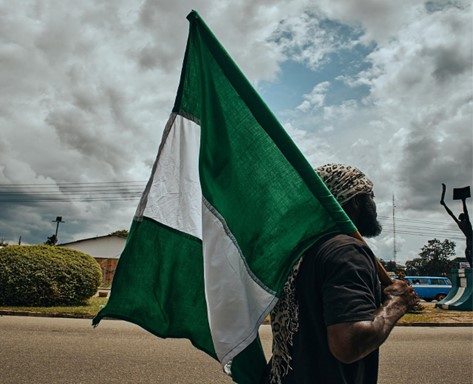
The aftermath of the ten-day “End Bad Governance” protests has conveyed three clear messages: two to President Asiwaju Bola Ahmed Tinubu, and one to the senior members of his administration from the North—notably Vice President Kashim Shettima, National Security Adviser Mallam Nuhu Ribadu, Secretary to the Government of the Federation George Akume, Deputy Senate President Barau Jibrin, Speaker of the House of Representatives Tajudden Abbas, and others.

Firstly, despite the protests in the North escalating into widespread looting, arson, underage participation, and political exploitation and hijacking, they have sent a clear message to President Tinubu. His two key policies—the removal of fuel subsidies and the floating of the naira—are deeply unpopular and have sent many people into prison poverty.

Secondly, the Tinubu administration has squandered crucial political goodwill in the North. Beyond the economic hardships, this loss of political support in the region is significant, as it could impact Tinubu’s prospects for a second term. The Tinubu/Shettima ticket was built on this very foundation. Furthermore, the protests took place nationwide on three unique political faces: they were a form of revolt in the upper North, and the Southeast remained silent. At the same time, the Southwest found itself in a catch-22 situation.

The third message from the aftermath of the protests is directed at the senior members of the Tinubu administration who hail from the North. They now face the Herculean task of restoring the Tinubu government’s lost goodwill in the North. To do so, they must address two critical issues. A deep and unbiased look at the “End Bad Governance” protests in the North reveals not only a message to Abuja but a kind of internal revolt—an uprising against ‘oneself,’ so to speak. 

Furthermore, Yobe, Bauchi, Borno, Jigawa, Katsina, Kano, and Kaduna states experienced the worst violence during the protests. Interestingly, a 2024 report shows that these states are among the top northern states with the highest rates of out-of-school children: Yobe (62.9%), Bauchi (55.7%), Borno (54.2%), Jigawa (51.1%), Katsina (45.9%), Kano (41.6%), and Kaduna (40.6%).

Northerners who are senior members of the Tinubu government must find a way, before 2027, to not only convince but also help Tinubu implement policies that will lift people out of poverty. A quick approach is to leverage the Dangote Refinery and other private and state-owned refineries. Given that Nigeria’s daily fuel consumption hovers around 45–50 million litres, the government should step up its programme to boost crude production specifically for local refineries, allocating it to them in naira and at a lower cost. This would lead to more affordable fuel prices, eliminate the need for imports, and save foreign exchange. 

Furthermore, to be fair to the Tinubu government, it inherited Nigeria’s finances in the ‘red’. Tinubu has two options to get the books into the blue—the hard and the simple options. Tinubu chose the simple option: remove the fuel subsidy and float the naira. The hard way, which is the more sustainable one, involves fixing all the state-owned refineries, increasing crude production to at least 2 million litres per day, supplying local refineries with cheap crude to translate to affordable pump prices, and boosting food production by helping genuine farmers with farm implements, soft financing, and extension services.

The northern elites, both in government and outside, must read between the lines and comprehend them well. For example, the northern members of Tinubu’s government must understand that the government’s public relations (PR) efforts for Northern consumption are currently communicated in a ‘language’ that the masses do not understand. This approach requires not just a revitalisation of strategies but a complete overhaul of its managers and a redesign of its medium.

Zayyad I. Muhammad writes from Abuja via zaymohd@yahoo.com.

Nigerian predicament: In search for the headway

By Bilyamin Abdulmumin, PhD

Nigerians appeared to have tried several options without a glimmer, so the option to try the youth is now gathering momentum. This call comes at the heels of the ten days of the recent controversial protest. Two other options were weighed during this protest: military takeover and alliance with Russia.

 Nigeria’s (or even African) history didn’t support the clamour for a military takeover. In the 64 years since Nigerian independence, military rule (according to my arithmetic) lasted 31 years, but at best, the military—once seeming the panacea—didn’t proffer any solution.

In another desperation to find the nexus, some protesters fly Russian flags. One interpretation of this antics is that they want Nigeria to cut any ties with the U.S. and most of Europe by proposing a shift of alliance to Russia. According to this argument, Western economic policies haven’t benefited Nigeria, so perhaps a different geopolitical alignment will.

However, aligning with Russia, an equally extreme approach, is not guaranteed to yield better outcomes. Has this group of protesters heard about the Scandinavian Economic Model? This model seeks to strike a balance between the capitalist extremes of the U.S. and the state-centred economies of Russia, offering a suitable middle ground for us. Instead of Russian flags, these protestants might have flown those of Sweden, Finland, or Denmark.

The search for a better headway began in 2015 when Nigerians, for the first time, voted for a leader based on integrity and record antecedent, putting aside money, politics, and tribal loyalties to some extent. However, by the end of President Buhari’s first term, the public began to have second thoughts. After his two terms, something unthinkable happened: many staunch supporters turned critics, and now, a year into Tinubu’s presidency, the failure of seasonal veterans is sealed, hence fueling the growing clamour for young leaders.

This urge for youth takeover is a more realistic option. The youths have become tired of being used and “dumped.” given that most of those who vote are youths, they now want to take a leading role by floating a political party exclusive to the youth.

The youth proponents argue that the youth have energy, time, and health. To boot, youth leadership is characterized by pressing the button; their hands are always close to the button, just waiting for a slight opportunity to press it.

This argument came to the forefront during f-PMB leadership, when he appeared to be going too slow, hence nicknamed Baba go slow; one of my friends opined that Nigeria then was in dear need of young leaders’ vitality, speed, and urge to get us out of the mud. According to my friends, a young leader would have made several decisions faster in tune with the situation and public yearning.

However, there is a crack in the foundation; one problem with youth is unity and cooperation; we always find that we want to help fellow youths whenever the need arises. Several youths aspire to different positions in this country, but the first people to boycott them are fellow youths; it will be their fellow youths who begin to mock them. This is a similar dilemma the women face. Women worldwide decry exclusion, but when a fellow woman tries to compete with men, it would be the fellow women that bring them down. This internal counterproductivity must be addressed for the current movement to get hold.

In addition, those who side with veterans criticize youth leadership with haste, which often leads to regret; this category argues that sound decision-making comes from experience—something older leaders have in abundance. They believe leadership is a process, not an event, and that wisdom is forged through trial and error.

 By and large, if the current movement sees the light of day, to slow down the haste and reduce mistakes, please let the old guards deputize the new crops.

Mr President, adjust your economic policies

By Tajuddeen Ahmad Tijjani

On Tuesday, August 13, 2024, President Bola Ahmad Tinubu presided over a significant Council of State meeting. Former Presidents, Vice Presidents, a former Chief Justice of the Federation, and several key ministers were in attendance. The highlight of the meeting was the President’s stance that Nigeria’s democracy must not be undermined. “Any change of government must be through the ballot box, not through violence, insurrection, or any other unconstitutional means,” he asserted. This is a position I, along with all patriots, fully support.

However, while the President’s commitment to democracy is commendable, his economic policies must reflect the urgency and needs of the people. The excuse of “fixing the economy” cannot be used to justify slow progress. Nigerians expect the leadership to hit the ground running from day one. The Council of State must convey the truth to the President: the nation is in a precarious state, and decisive, people-centred action is required.

Today, wealth in Nigeria is increasingly concentrated in the hands of a select few. At the same time, the majority struggle without access to necessities like quality education, healthcare, housing, and employment. It’s not that Nigerians envy the success of the rich; instead, they want access to the essentials for a decent life.

Unfortunately, greedy leaders deliberately subject many ordinary citizens to hardship. Endemic corruption has become the norm, and the promise of equal opportunities seems like a distant dream despite the blessings of natural resources across the six geopolitical zones.

Poverty remains a pervasive issue. Nigeria is rich with potential—oil and gas in the South, commerce in the Southeast, and fertile land in the North. There is no excuse for hunger or deprivation. The government should prioritize modern farming systems, where a single machine can achieve in an hour what once took a thousand hands.

State governors must fully support federal initiatives, but these efforts must go beyond the token gestures like distributing rice, which too often ends up siphoned off by officials or recycled into the market. Nigerians are not beggars; we have the talent and drive to achieve greatness, but we need an enabling environment, affordable fertilizers, and access to reliable electricity.

The time for excuses is over. The government must adjust to the realities on the ground. Removing fuel subsidies and floating the naira has brought unbearable hardship to ordinary people. These policies need to be revisited. We elected this government to make Nigeria work for everyone, not just the privileged few. A stitch in time saves nine: adjust the policies before it’s too late.

Tajuddeen Ahmad Tijjani wrote from Galadima Mahmoud Street, Kasuwar Kaji Azare, Bauchi State.

Alleged support of bandits: Time to investigate Bello Matawalle

By Prof. Abdussamad Umar Jibia

On the 10th of June 2020 at about 5 pm, armed bandits stormed Kadisau village of Faskari Local Government Area of Katsina State. The bandits, who came on dozens of motorcycles, opened fire on the villagers, killing anyone unable to escape alive. Fifty-seven people, including men, women and children, were killed in the operation that lasted four hours with no intervention from Federal security forces, who were said to be on the highway 5 kilometres away. The criminals later moved to nearby villages, where they killed an additional 30 people.

Ado Aleru, a well-known bandit commander in Zamfara state, led the bandits. Katsina state police command later declared Ado Aleru wanted and put a price of five million Naira on his head.

Two years later, precisely on Saturday, 16th July 2022, Nigerians were shocked to hear that the man responsible for the murder of innocent Nigerian women and children was turbaned with a traditional title in Zamfara state. 

The turbaning of Aleru was a gathering of some of the most deadly criminals responsible for acts of terror in the Northwestern and North central geopolitical zones of Nigeria. On the ground to witness the ceremony were officials of the Zamfara State Government, including the state Commissioner of internal security. In other words, the turbaning was done with the knowledge and approval of the State Government under Governor Bello Matawalle. Surprisingly, some senior police officers graced the occasion without arresting the person they declared wanted two years earlier.

Soon after the ceremony, the Katsina State Government under Aminu Bello Masari indicated its disapproval of the chieftaincy title conferred on the criminal. It maintained that it was still looking for Ado Aleru.

Years later, nothing changed. The centre remained weak, and life continued. However, the people of Zamfara did what was needed by voting Matawalle out of power in the 2023 election.

If the only atrocity the former Governor of Zamfara State committed was facilitating the conferment of a traditional title to such a deadly criminal, he deserves retirement from Nigerian politics and prosecution after office. Alas! He was rewarded with a ministerial position in the ministry that is supposed to rid Nigeria of terrorists like Ado Aleru. Only in Nigeria. Allah Ya sauwake.

Recently, additional allegations have been made about how the then-governor of Zamfara state hobnobbed with bandits and supported them with the lean resources of the Zamfara people. I am referring to a viral video of a Sokoto-based Islamic Scholar, Sheikh Murtala Bello Asada. Asada, who claimed that he had incontrovertible evidence on all his claims against the former Governor, challenged Matawalle to take him to court. 

Among the allegations Sheikh Asada made against Matawalle is his support of one Haruna Dole. According to Asada, Haruna, a famous bandit kingpin with more than 500 rifles under him, was arrested and taken to Police Headquarters Abuja. Sheikh Asada added that Bello Matawalle, as the Governor of Zamfara state, made a phone call and asked for Dole’s release. The criminal was released to one Bashar, who signed and received the bandit on behalf of Governor Matawalle. He said the document carrying Bashar’s signature and picture would still be available at the Force Headquarters.

According to Sheikh Asada, Matawalle is also a friend of the dreaded bandit Bello Turji. Asada mentioned a visit Turji paid to Zamfara State Government House when Matawalle was Governor. Turji had lunch with the governor, who served him personally. Later, the governor gave him an undisclosed amount of cash and allowed him to return to the bush to continue his criminal activities.

Another bandit kingpin who was friends with Matawalle was Chedi. According to Asada, Matawalle bought a house for Chedi in the Gidan Dutse quarters of Gusau. Uncomfortable with it, residents of Gusau protested and made a mob attack on Chedi and ended his life. Matawalle then ordered the arrest of several people. On the day of their arraignment, overwhelming crowds of Gusau people stormed the court, and Matawalle had no choice but to order the release of the people. It ended there.

In addition to all these, Sheikh Asada listed some criminals who allegedly received Hilux operational vehicles from Matawalle when he was Governor. They include Turji, Aleru and Halilu Sububu.

The allegations are weighty and sum up to one thing: the current Minister of State of Defence deployed to the North West by President Bola Ahmed Tinubu to fight banditry, an alleged friend of bandits who supports them financially.

The position of anybody interested in protecting the lives and property of Nigerians would be clear. Mr President should investigate these allegations and, if found true, prosecute the former Governor. Yes, allegations are allegations until they are investigated and found to be true. But if the Nigerian government refuses to conduct a transparent investigation, what would prevent Nigerians from believing them?

But even as investigations are carried out, Mr Matawalle has no business remaining in the Ministry of Defence. Maybe another ministry.

If the executive branch is not ready to take action, where is our National Assembly? Do they believe these allegations against a government official in charge of fighting security are not serious? Go figure!

Professor Abdussamad Umar Jibia wrote from Kano via aujibia@gmail.com.

NNPCL and Dangote refinery: whom will Nigerians trust?

By Ibrahim El-Caleel

This press release shows that Dangote Refinery is also enjoying the whole petroleum industry ruse and elongating it. NNPC said they bought your petrol at N898. Instead of this press statement to deny it, you simply tell the public the actual price you sold it to them.

For example, “We didn’t sell petrol at N898 to NNPC. We sold it to them at N619”. Is this too difficult to do or unethical?

When you do this, then let the NNPC come and deny it; then you take the next step by publicly sharing a sample of the invoice where they bought it at N619 from Dangote Refinery. This is what transparency means.

But how do you expect people to believe this? Why should people trust Dangote Refinery and not NNPC? Both DR and NNPC are only making statements; they go explain taya, no evidence. Where is the invoice?

The petroleum industry in Nigeria lacks transparency. Nobody wants to let Nigerians understand what is going on so that they can start asking the right questions. They are leaving everyone in the dark so that immediately you say anything, they will mock you that you don’t understand anything; you are a layman who doesn’t understand anything about the oil business! Yet, you are the same layman buying the petrol which fuels the industry.

What Dangote Refinery is doing at the moment is just a glorified, or let me say corporate “DM for price”. It’s the same “DM for price” that BUA Cement did one time saying it has reduced the price of cement without giving any details on how much was the initial price before they “reduced” it.

Hello DR, NNPC,

Price is not a trade secret, geniuses! If you are hiding the price of your product, then there is something shady you are doing. How can you be doing a “DM for price” strategy for a global commodity like petrol? It takes me just a click to know the price of a barrel of crude oil in the global market, same thing for an ounce of gold. What is so special about the price of the Nigerian refined petrol that you need to keep it a secret?

Anyway, lemme mind my business. You know over the last few weeks I decided to give up on my self-assigned goal of understanding the petroleum industry. I only drive into a filling station and buy petrol according to what I can afford at the time. How the petrol got there ain’t really any of my business any longer. I don’t care. When we all become tired of the nonsense going on in Nigeria one day, I am sure we will come and agree on the way forward. I am very sure this nonsense cannot continue to happen forever. It will end one day.

Self-love/Self-care or capitalism in Santa Claus costume?

By Sa’adatu Aliyu

After many years, I’m regaining confidence and enthusiasm for writing. I’m rediscovering my passion for writing about international politics and exploring social issues. I’m also relearning to recognise the value of my voice, which was silenced by a relationship that eroded my self-esteem and stole my confidence.

During this time, I developed a crippling writing paralysis. I stopped writing four years ago due to the negative feedback from people I respected, who made me feel small and unworthy for holding unconventional views.

Among other things, I questioned the prevalent notion that Self-love/Self-care is a wholesome psychological practice essential for a progressive society. I’ve been sceptical, as this idea profoundly focuses on the self, and I refused to be swayed by ostracism or criticism for holding this view. Instead, I dug deeper, unwilling to be uprooted from my stance, not because it was comfortable, but because I believed, to a large extent, that the concept of self-love/self-care, or whatever name it’s given, is fundamentally flawed.

Over the past six years or so, it’s become common to scroll through social media and come across numerous ads, write-ups in the form of poetry, self-help books, blog posts and tweets promoting the idea that people should prioritise their own needs above others, essentially encouraging selfishness. While this concept isn’t harmful when practised in moderation, the self-love movement is being exploited by many today.

Originally intended to bring balance to our fast-paced world, particularly for individuals who find joy in the act of servitude or serving others and often go the extra mile in caring for them (who, in my opinion, should be the primary target of this concept if at all it must be used), self-love has been hijacked by some individuals who use it as an excuse for their irresponsibility, lack of basic manners, and refusal to take responsibility for their egregious behaviour, all under the guise of ‘protecting their mental health’.

This trend has become so pervasive that it’s flooding every media feed and being injected into our books and movies. The idea that we should prioritise our desires above others is promoted as a societal necessity for progress and individual self-satisfaction. However, I strongly disagree. I believe our existence is inherently linked to others—there is no ‘us’ without ‘them’ and no ‘me’ without ‘you’. 

There’s a saying that goes:

“Nothing in nature exists solely for itself. Rivers don’t drink their own water, trees don’t eat their own fruits, and the sun doesn’t shine just for itself. A flower’s fragrance isn’t just for itself. Living for each other is the rule of nature. And to this, I firmly subscribe. 

When I first encountered this campaign to normalise selfishness to achieve happiness and fulfilment, I found it strange, as it contradicted my values. Initially, I didn’t think much of it, but later, I realised the severity of its implications. While many agree that self-love is the key to growth and a happy, fulfilling life, I believe this idea is not only counterproductive but also leads us down a destructive path. And I’d like to explain why.

Allah says, ‘Nothing satisfies the son of Adam except dust.’ This verse highlights humans’ inherently selfish and sometimes greedy nature, suggesting that without the compulsion of religious commands to care for one another through charitable obligations—which can include both monetary and non-monetary assistance—humans would hoard everything for themselves.

Prophet Muhammed  (SAW) also said: feel the pain of the Ummah. The parable of a believer in their love, compassion, and mercy for one another is like a body – when one limb aches, the whole body reacts with sleeplessness. Whoever wants to be in Allah’s shade should help their brother in difficulty or waive a loan. (Sunan Ibn Majah 2414, Sahih Hadith according to Albani)

Similarly, Prophet Muhammad (S.A.W) said, “Allah says the people most beloved to Allah are those beneficial to people. And the most beloved deed to Allah is to make a Muslim happy, remove one of his troubles, forgive his debt, or feed his hunger.”

I know it’s easy to get caught up in the trend and challenging to stand alone in a room where everyone shares the same opinion, especially when I hold a vastly different view. However, after facing social anxiety and fear of being the sole dissenting voice, I’m proud to say that I was brave enough to resist the pressure to conform.

From the outset, I recognised capitalism, even when disguised in a radiant and well-packaged costume, as the destructive force it is to our society. Moreover, I believe that the global campaign for Self-love/ self-care has become a conduit for capitalism to spread its influence into our lives, eroding the foundation of the family unit and community. In a recent post by Joan Westernberg, writer of the article, When Does Self-care Become Narcissism? Says: 

“You can’t pour from an empty cup.”

“Put your own oxygen mask on first.”

“Self-care isn’t selfish.”

These platitudes have become the mantras of our age, repeated ad nauseam in Instagram posts, motivational posters, and countless self-help books. They sound wise, compassionate, even revolutionary. After all, who could argue against taking care of yourself?

What started as a well-intentioned movement to promote mental health and work-life balance has morphed into something far more insidious — the narcissistic pursuit of the self, a socially acceptable excuse for selfishness, wrapped in the guise of wellness.”

We’ve become so self-absorbed that rendering help to others is seen as too costly to our mental health, even when it won’t harm us. We’re extremely calculative about who we give our time and energy to an unreasonable extent. Recently, someone tweeted, “I can’t be friends with a sickle cell individual because being with them is so draining.” This is what capitalism entails – monetising everything, making us prioritise only what fetches us money in the short or long run while abandoning opportunities to be human.

Capitalism, masked as self-love/self-care, teaches us that caring for others is okay only if it comes with a paycheck. But when we render the same service for free, it’s seen as draining, misplacing our energy, and dishonest. How can one possibly care for others for free?! There must be a hidden motive. Capitalism has reduced us to mere machines, making us robots and labelling any display of humanness as fake just because it doesn’t come with a price tag:

If we must spend time with a friend, the first question is not whether they’re a good person, wise, or make us happy but what monetary value they add to our lives. If none, the relationship isn’t worth having. Capitalism is making us less compassionate under the guise of stoicism and “self-care/self-love.” We’re told we don’t need people; if people need us, they’re weak or too emotional.

Mark you, I’m not condemning psychology as entirely flawed, but I contest the aspect of modern psychology that promotes selfishness as the solution to saving the world. How can increasing selfishness create a better world? Despite my differing beliefs leading to isolation by friends who easily embraced this concept, I’ve always asked for a convincing answer. If I received one, I’d be willing to conform, but I’m reluctant because this idea contradicts my values and the fundamental principle of human creation – sacrifice, not selfishness.

I’ve struggled to reconcile this concept of selfishness with my religion, Islam. Consider the sacrifice of Prophet Jesus (AS), who faced persecution while trying to spread God’s word. Similarly, Prophet Muhammad (SAW) was insulted, spat at, and stoned for spreading Islam worldwide.

A notable account is that of Caliph Ali and his wife Fatima, who had only a date to break their fast after enduring long hours of fasting. However, when a beggar cried outside their gate, they gave up their last piece of date fruit despite their hunger. As a result, they received praise and honour from God Almighty. If this isn’t selflessness, I don’t know what is.

Dr A’id al-Qarni’s book You Can Be the Happiest Woman in the World tells the story of a woman who searched for her lost son for years. While waiting for his return, she prayed constantly. However, years passed, and her son never came back.

But one fateful day, the woman had just cut a piece of bread from a loaf when a beggar cried out. Disturbed, she quickly removed the piece from her mouth, reattached it to the loaf, and then handed it over to the beggar. Consequently, God returned her son home to her.

Another account tells of a man travelling to visit his Muslim brother in another city. Along the way, he met an angel who asked about his quest. The man explained that he was visiting his brother, and the angel asked if he owed his brother money or if his brother needed help. The man replied that he was simply visiting his brother out of love. The angel was amazed and told the man that he would be granted heaven for his selfless act.

These anecdotes illustrate selflessness. In contrast, I’ve never heard of anyone in history being praised or immortalised for being selfish, prioritising themselves at the expense of others. Selfishness has been labelled a bad trait in both my religion and historical records of human achievements. 

So, just because selfishness is part of modern psychological teachings doesn’t make it entirely wholesome. Consider how often scientific discoveries, initially hailed as breakthroughs, are later withdrawn from the market due to unforeseen risks to human life. This highlights the importance of reevaluating our values and questioning the promotion of selfishness as a virtue.

As previously stated, this is not to condemn psychology as a whole but rather to encourage self-reflection on the ideas presented to us. We should conclude instead of unquestioningly accepting everything we’re told simply because it’s labelled as “wholesome” or endorsed by a group of people or high-profile individuals like celebrities we admire.

The concept of self-love being marketed to us like Santa Claus may not be what it seems. Perhaps it’s an agenda driven by a group of people seeking to gain trillions of dollars by promoting this ideology, which aims to create a world of divided, isolated individuals on a quest for ultimate happiness. Once they’ve succeeded in cutting people off from non-monetary or transactional relationships with family and friends, they can easily sell their products to those who have bought into this ideology.

In conclusion, let’s note that the idea of Self-love, however glamorous, revolutionary, or empowering it may seem, is like Santa Claus on Christmas night – a tempting treat that can ultimately harm us. Just as too much sugar can harm our bodies, excessive Self-love can damage our relationships and society. Capitalism may appear glossy, offering wealth and material possessions.

Still, it comes at the cost of meaningful relationships, leading to severe loneliness in our societies, as seen in the West and South Korea. As author Leila Aboulela aptly says, “Loneliness is Europe’s malaria.” Thus, individualism has never brought genuine progress to society, only hurt, mass psychosis, and depression. We need a balanced approach that prioritises self-love/self-care and caring for others rather than neglecting others to satisfy our desires, which can lead to greed and narcissism.

So, as an African who rejects the alien idea of Western capitalism and favours communal living, I’ll leave you with this wisdom from Mandela: Ubuntu means that one caters to one’s own needs while striving to meet the needs of others. It’s about balance, not neglect or excess. And I hope that before we wake up to capitalism’s impact, it has not already done irreparable damage to our world.

Sa’adatu Aliyu is a writer from Zaria. She is pursuing an M.A. in Literature at Ahmadu Bello University, where she also works as a lecturer at the Distance Learning Centre. Her writing interests include prose fiction and international politics. She can be reached at Saadatualiyu36@gmail.com.

Tribute to Malam Ahmad Garba Amin Kofar Naisa

By Dr. Aliyu Dahiru Muhammad

The late Malam Ahmad Garba Amin (1962-2024) was a remarkable individual I first met in the 1990s as my secondary school Islamic Studies teacher. Subsequently, he rose to the post of Vice Principal before being transferred to the Kano State Welfare Pilgrims Board as a Director of Operations, a position he held for almost a decade. He later moved to the Kano State Sharia Commission, where he finally retired. 

I became close to Malam Ahmad during school and after graduation. He used to ask about my progress in Quranic education even years after my bachelor’s degree. I introduced him to my parents, and we became a family. Gratefully, he made a significant impact on my life to the extent that he was behind some of my achievements – Alhamdulillah. 

When the news of his death broke out to me on Thursday, 5th September 2024 (2nd Rabiul Awal, 1446), I reacted by saying, “Innalillahi wa inna Ilaihi Rajiun” as it is the only action that can relieve me of that material time. After confirmation, I shared it on my platforms, where I received many condolence messages and prayers. What also consoled me was the kind of lovely comments I have received from many who knew him and those who did not know him. Alhamdulillah. 

Imams Al-Bukhari and Muslim reported, on the authority of Anas ibn Malik, that a group of the Prophet (SAW)’s companions were sitting with him when some people came and passed by them carrying a corpse. Some of the people sitting around the Prophet (SAW) made nice comments about the dead person, and the Prophet (SAW) promptly reacted, saying, “Confirmed” (wajib). A similar scenario happened, but on the contrary, the comments were nasty, and the Prophet (SAW) reacted by saying, “Confirmed” (wajib). Wondering why the Prophet said so, the companions asked him for an explanation. 

In the case of the first corpse, the Prophet said what it meant was that their comments about him thus confirmed his entry to Paradise (al-Jannah). The same thing applied to the second person for whom Hellfire was confirmed similarly. The Prophet further explained to them the significance/implications of the comments that people usually make about the dead by either extolling their virtues or otherwise saying bad things about them. He said, “You are the witnesses of Allah on earth (against His servants).”

Allahu Akbar! Whoever knew Mal. Ahmad could testify that he was deeply involved in promoting social welfare and peace in the community. This earned him respect among the youths, women, and elderly, as I noticed every time I visited him, especially during his daily teaching of Islamic books (taalim) outside their family house. 

He was the former Chairman of Safinatul Khair Foundation, which, to my knowledge, is one of the few community-based organisations that have contributed to the socio-economic development of his community. The foundation has a special scheme for education for children through scholarships, extramural classes for candidates who intend to sit for WAEC and NECO examinations, and job opportunities for youths, among others. In the aspects of social development, especially for widows and orphans, the Foundation, at a time, conducted a census of all widows in the area it covered and supported them. During my PhD studies, I interviewed him about their achievement, and I was so excited about it. 

On the aspect of health, the Foundation and Late Mal. Ahmad, in particular, was instrumental in setting up a clinic serving the people, especially the needy patients of Kofar Naisa and beyond. The clinic named after the foundation is the Safinatul Khair Foundation (Kofar Naisa PHC). Thanks to Dr Hassan Sulaiman Kofar Naisa, a resident of the area who worked under the office of the then Senior Special Assistant to former President Muhammad Buhari on Sustainable Development Goals (SDGs), brought this project. 

According to my close associate Mal. Usman Muhammad (Dr. Shehu), the clinic is grade-A in primary health care. It is well equipped with an ambulance, solar system, and water system that serves patients 24/7 uninterruptedly. They invite medical personnel from neighbouring general and specialised hospitals like Aminu Kano Teaching Hospital for weekly medical outreach and to settle the bills for the less privileged patients. 

As we mourn the loss of Mal. Ahmad, we pray that Allah accepts his legacies, forgives his shortcomings, and grants him entry into paradise. “Indeed, we belong to Allah and to Him we shall return. Indeed, only Allah is the place of return. O Allah, record (the deceased) among the righteous, and place the record in the highest place. Replace the goodness for the family left behind. Do not make the reward forbidden, and do not test us after their departure.”

Dr. Aliyu Dahiru Muhammad is an associate professor in the Department of Economics at Bayero University Kano and a Visiting Scholar at the National University of Malaysia (UKM). He can be reached via alitahir797@gmail.com.

The conditions of primary health care centres in Nigeria

By Abdullahi D. Hassan

Yelwa Zangam is a gridlocked, rural area located in Jos North Local Government, Plateau State, North-Central, Nigeria. It has an estimated population of over 10,000 inhabitants and its nearest villages. The hinterland is just 21 minutes’ drive from the University of Jos, main campus. Most of the people are agrarian farmers and living below a minimal income.

Nigeria operates a three tier system of government, consist the federal, the state and the local government. Similarly, the Nigerian health system functions along such relations. Primary health care is at the local government stage, Secondary health care is managed by the state and the tertiary health system by maintained by the Federal.

Primary Health care is known for intervening, caring and controlling communicable diseases and non-communicable diseases, taking care of antenatal and post-natal, observing child growth, dispensing vaccines to children and Health Education and Community Mobilization.

According to the National Primary Health Care Development Agency (NPHCDA), a body oversees, coordinates and regulates the standard of Primary Health Care in Nigeria. The minimum infrastructural requirements for such a health centre; are as follows; a least 13 rooms in good condition with functional doors and netted windows, separated female and male words toilets, water supply (borehole), electricity (or alternative source of power), sanitary waste collection spot, waste disposal site and staff accommodation. However, it has a staff station, two consulting rooms, two delivery rooms (labour rooms), maternity sections, and a laboratory and the building must be fenced.

The United Nations, Refugee Agency (UNCHR) stated in its ‘Emergency Handbook the primary healthcare workforce is composed of a wide range of health professionals, including medical doctors, nurses, midwives, clinical officers or physician assistants, laboratory technicians, pharmacists, community health workers, managerial and supporting staff.

Yelwan Zangam’s Primary Health care began 31 years ago and was built by the local government in 2001 through direct allocations from federation funds. Global Alliance for Vaccine and Immunization, an international organisation under a sub-body ‘GAVI FUNDS’ partnered with the National Primary Health Care Development Agency (NPHCDA) for the renovating the centre in 2011.

Now, the unfenced facility faced a series of challenges; a leak roofing with only 6 rooms apart from the labour room, unkempt rooms in shambles conditions, single working toilets, no water supply, shortage of mattresses, obsolete medical equipment, dearth of medical personnel and constants insufficiency of drugs supply problems. Since its existence, the hospital has not been connected to an electric power source.

Fali Emmanuel John is a Health Officer in primary health care. He narrates a dire condition “We are facing a lot of problems in maintaining the hospital. Firstly, non-availability of electricity and solar systems for the storage of children’s vaccines, even if there is electricity. It’s compulsory to have a solar system. Due to power instability in Nigeria, so that we can render vaccination daily. Lack of electricity is a big setback to the community and the hospital. Secondly, our personnel need staff quarters. Primary health care is established for 24-hour services. Definitely, staff accommodation should be within the vicinity”.

He reiterates “The community starts building a staff quarters. But they are overstrained. The building is uncompleted”.

Mr. John lamented “The hospital is supposed to have 10 to 20 medical staff. According to medical ethics, working hours range from three shifts; morning, afternoon and evening (night). The deficiency of personnel here is too bad. We only have 3 medical doctors. Sometimes 1 medical doctor works for 24 hours, which is unprofessional and painful to us”.

“Issues concerning drugs, the government are making a little effort. We urged for more. Before the community donated money for drugs and other essentials”, he added.

Fauziya Musa Abdullahi is a nursing mother, who visits the hospital often for antenatal services and delivers her 6-month son to primary health care. She expresses “The most difficulty, women encounter is during night hours. For example, if a woman came to give birth. On certain occasions, there is no doctor available”.

She added “Sometimes, drugs are not available. It’s for patients to buy from the city. During, my last admission here. I wait for a long moment. Before drugs, injections and intravenous drips were bought. If authorities get involved and provide drugs in a hospital. It will be good for the patient to have treatment in any given situation”.

Usman Garba Danladi, an assistant sectary to the community and for years among the people work in progress of Yelwa Zangam community, says “For now, a local agency, Plateau State Contributory Health Care Management Agency (PLASCHEMA), supplies drugs”.

He shared “30 years ago, local government authority grants a fund under a scheme ‘REVOLVING FUNDS’, it was used to supply drugs and other necessary items. The drugs were sold to patients at affordable prices”.

“Financial challenges for buying drugs. Some patients run away with complicated health issues”, he cried out.

Nigeria’s highest court, on 11 July passed a judgement for local government to have full autonomy. Henceforth, the allocation from the federation account is to be funded directly into the local government, not through the state government ‘Joint account’. Mr. Danladi chip in “I am dreamt for local government to be independent. In the past, primary health care was managed from local government funds, not state government. Certainly, with this development electricity will be installed, more workforce and enough drugs to the patients and the facility will be improved”.

Mr John remarks “I am grateful to Almighty God for the Supreme Court’s verdict to allow local government to use their money for local affairs. Local government autonomy is a great success to health sectors”.

Abdullahi D. Hassan writes from Jos in Plateau State and can be reached via +234 803 323 7977.

Humility Personified: The exit of Malam Gausu Ahmad from Bayero University

By Prof. Abdalla Uba Adamu

Those with a deep knowledge of my biography will always remember me in the Faculty of Education’s Department of Education, which I joined in July 1980 at the relatively young age of 24. With a professorship in 1997, I felt I had enough of Education: I was talking loud and saying nothing. So, I shifted my research focus to media and cultural communication. 

I never thought the shift would lead to another professorship in 2012, giving an academically glamorous status of being ‘dambu mai hawa biyu’ (up till now, I don’t know exactly what this epithet means!), or double professor – in Science Education and Media and Cultural Communication. Three people were responsible for this, one from Edo State and another two from Zaria. How did it all start?

In 1992, I had just returned from a Fulbright African Senior Research Scholar residency at the University of California, Berkely, when I was visited in my office by the late Prof. Mike Egbon (from Benin), then the Head of the Department of Mass Communication, Bayero University Kano. It was our first meeting, and it instantly created a deep bond of friendship between us. He wants me to work with a student of his in supervising a PhD project on the Mass Communication curriculum in Nigerian universities. I was happy to oblige, especially when I learnt that the student is another highly respected colleague, now Prof. Umar Faruk Jibril, the Dean of Communication at BUK. 

Thus began my first footsteps in Mass Communication. Before long, I was drafted to teach Advanced Research Methods for PhD students (while still in the Department of Education). This put me in contact with virtually all the current staff of the Faculty of Communication. I felt so happy and so comfortable with them, as well as their tutors in other areas of the Department. One tutor stood out. He was Mal. Gausu Ahmad (from Zaria, if you are keeping track!).

My relationship with Mal. Gausu was incredible and often amusing. For some reason, we were both mesmerised by each other. I had followed his column in New Nigeria years earlier. I was fascinated by his incredible take on Bayero University in his essay “Looking Beyond the Badala”, a critique of the lack of synthesis between Bayero University and its host community. That article drew my attention to Mal. Gausu and I became an avid follower. So, when Mike drafted me into supervision duties in Mass Comm, I met Gausu Ahmad for the first time. 

I saw a neoclassical Hausa gentleman in Malam Gausu. His cheerful mien reminds one of an older Uncle or a grandfather but with contemporary perspectives—for instance, Mal. Gausu is the only person I know who has commissioned a traditional barber (wanzami) to come to his office and cut his hair in molo style. No barbing salons for him! We became instantly drawn to each other. 

In 2003, I was the Chairman of the defunct Center for Hausa Cultural Studies Kano, a think tank on interfaces between media and society. We organised an international conference on Hausa films—the first of its kind in the country. Virtually all the staff of Mass Communication, including Mal. Gausu, was wholly involved in the conference. Mal. Gausu was the HOD of Mass Communication then. It was at the conference that he consolidated his relationship with me. 

I was then also asked to teach a course on Online Communication in the Department, introducing new ideas that departed from the straight-up Mass Communication scholarship of the Department in print and broadcast media. By then, I had well-established online communities on the defunct Yahoo! Groups (since 2001), which became the first gathering places for future social media citizens. So, I was excited to be asked to teach Online Communication – even more excited were junior colleagues who wanted to be part of the course. 

This went on for a while, with me being an adjunct member of the Mass Communication Department, a position I relish far more than my education position at the university. In 2004, my break-out media year, I was a visiting professor at the University of Cologne, Germany. The paper was “Enter the Dragon: Shari’a, Popular Culture and Film Censorship in Northern Nigeria.” When I returned, Mal. Gausu expressed dismay that I presented a paper about events in Kano at a foreign university. He insisted that the paper must be represented in the Department of Mass Communication, which I did later in the year – thus opening up new vistas of media anthropology. To cement this position, I invited Brian Larkin to come to the Department and present his book “Signal and Noise” about media anthropology in July 2008. It is the first public presentation of this ground-breaking book.  

Unknown to me, Mal. Gausu has submitted my name to the Registrar of the University, then Mal. Sani Aminu (Zaria!) for appointment as Part-Time Lecturer in the Department of Mass Communication. This was instantly approved, and I was only aware of it when I got the letter in November 2005. From then on, I became part of the Mass Communication ecosystem. Not only did I have more classes, but I also had more students. The number of postgraduate students I supervised in a few years in Mass Comm was far more than the number of students in all the 25 years I had been in Education. 

Under his leadership of the department, a wonderful atmosphere of camaraderie and brotherhood was fostered. His elegant, calm demeanour does not brook any disagreement with any policy because policies and decisions in the Department were collectively arrived at and implemented together. 

His biggest trait, however, was his humility. He was indeed a knowledge seeker. He was never shy or hesitant in asking questions about what he did not know. Our offices were always close together, and in the evenings after Asr prayer, when the building was quieter, we spent moments exchanging ideas and concepts. He became a sort of student to me. He would ALWAYS insist on carrying my rucksack to my car. ALWAYS. He fiercely resists anyone attempting to take the rucksack from him, insisting it is his duty and honour. On the other hand, I always felt uncomfortable with an older person taking my rucksack to the car! But he always insisted. 

From January to March 2012, I was a European Union visiting professor at the University of Warsaw. When I returned in April, informed my Vice-Chancellor, and submitted my report, the next thing I knew was that I was caught up in the whirlwind of being appointed as professor of Media and Cultural Communication and already a professor of Science Education since 1997. I was surprised as I thought it was not done. However, the vice chancellor who did it, Prof. Abubakar Adamu Rasheed, was another bold and innovative person. And from Zaria! After all the due process, I was eventually announced as a Media and Cultural Communication professor in January 2013, effective October 2012. 

The icing on the cake was the clause that I was to move from the Department of Education to the Department of Mass Communication. After 32 years in Education and having served as HOD for nine years, I was delighted to leave. Thanks to Mal. Gausu Ahmad, I felt more comfortable, personally, emotionally and intellectually, in Mass Communication. I felt blessed. Imagine doing research in an area I am deeply interested in and making contributions to knowledge. Currently, in 2024, as a staff member of the Department of Information and Media Studies, I am under the administrative leadership of Prof. Nura Ibrahim. Do I need to say it? Ok. From Zaria!

The biggest lessons I learned from Malam Gausu were humility and patience. He faced many challenges during his time in Mass Comm, but he stoically endured them and eventually triumphed. 

Mal. Gausu retired at the age of 70 on 12 September 2024. He retired as a professor, but his humility and salute to scholarship will always root him in the superior ‘Malam’ category. Anyone can be a professor, but it takes a special kind of person to be appreciated and applauded as a Malam. Mal. Gausu Ahmad is genuinely a first-class Malam, embodying all the qualities of such a position. 

I congratulate him on his successful and honourable retirement from the University. He was one of the few academicians who brought real-life print journalism to academia and brought out the true application of the theory of Political Economy. His doctoral thesis, “The Rise and Fall of the New Nigerian Newspaper”, in 2014, followed by publication by ABU Press in 2016 under the same title, is an excellent slice of northern Nigerian media history, as only possible from an insider. If you really want to know print media history in northern Nigeria, get the book. 

I pray to Allah (SWT) to continue to endow him with humility, kindness, gentleness, health and prosperity as he charts the next course of his life. 

Oh, and my prayers and gratitude to Zage-zagi for being ‘iyanyen gidana’ in scholarship (but not iyayen gidan Kanawa)!

The harangue of the taciturn

By Mukhtar Jarmajo

Indeed, when people begin to do things in such a way as to defy their rules or behaviours, it is only proper for scientific research to be conducted to discover the reason(s) behind such behavioural change. In fact, for leaders, it is essential to continuously study the people’s behaviour to decode their actions and inactions in response to government decisions for the sake of the government’s sustainability and continued law and order in the polity. If, however, this is not done accordingly, there is every tendency that, in time, a government may not know it has lost the people’s confidence.

An example of such a situation is that of the present Nigeria, where its people, who in their usual antecedents are most unlikely to protest against hardship and pain, went to the streets to express dissatisfaction with how things are happening in the country. 

Just as the haranguing of the taciturn is altogether a surprise and definitely attention seeking, Nigerians, in unison, going out to the streets to express anger is astonishing and thus a clear message to the government that all is not well in the country. And true to it, most Nigerians are in untold hardship, increasingly perceiving the miasma of hopelessness with each passing day.

The people cannot be well and happy in an economy, with its currency becoming valueless at the end of every business day. This implies that at every sunrise, the Naira in the hands of Nigerians can buy less than what it could have on the previous day. And with the government’s refusal to subsidise fuel and electricity, the economy, which is already unproductive, has nosedived the more, leaving entrepreneurs at the receiving end. The nation’s economy now has no middle class. Poverty is in every corner of Nigeria, with illiteracy buttressing it.

This economic downturn has had a ripple effect on the social fabric of the nation. Crime rates have skyrocketed as young people, desperate for survival, resort to illegal activities. The once vibrant and bustling cities are now ghost towns as businesses close down and unemployment soars. The health sector is already deplorable and is now on the brink of collapse. Hospitals lack basic amenities, forcing patients to purchase essential drugs and supplies. The educational sector is not spared either. Public schools are dilapidated, and teachers are poorly remunerated, leading to a decline in the quality of education.

The political landscape is equally fraught with challenges. The ruling class is more concerned with self-enrichment than the welfare of the people. Corruption is endemic, and public funds are siphoned into private pockets. Irregularities mar the electoral process, and the voices of the people are often ignored. The lack of accountability and transparency has eroded the trust between the government and the governed.

The security situation in the country is also a major concern. Banditry and kidnapping have become commonplace in most parts of the country. The people live in fear and uncertainty, as their lives and property are not safe.

It is evident that Nigeria is at a crossroads. The government must take urgent steps to address the myriad problems facing the nation. This includes revamping the economy, improving the standard of living, providing adequate security, and promoting good governance. The government must also listen to the people and implement policies that are in their best interest.

The time for empty promises and rhetoric is over. The people are demanding action. The government must deliver on its promises or risk losing the trust and confidence of the people. The future of Nigeria depends on the choices made today.

Jarmajo can be reached via dattuwamanga@gmail.com.