Opinion

CIPS approves new membership fee structure for Nigeria, allowing payments in Naira

By Dr Salisu Uba FCIPS

The Chartered Institute of Procurement and Supply (CIPS) has approved a new membership fee structure for Nigeria, allowing procurement professionals to pay in Naira from 1 December 2025. The decision includes a reduction in fees, marking a significant shift for one of the largest professional communities within the institute.

The change follows years of rising financial pressure linked to foreign currency payments, which many practitioners said had limited access to professional qualifications and continuous development.

Local Currency Move Seen as Major Relief

Nigerian members have long argued that payment in foreign currency placed an unnecessary strain on practitioners working in an economy affected by inflation and exchange rate volatility. The shift to Naira is expected to broaden access to certification and support career progression for early and mid-level professionals.

The announcement was delivered by the CIPS Nigeria Country Director, Chukwudi Uche, at the institute’s Port Harcourt symposium in late November. The event brought together industry leaders to discuss supply chain collaboration and tax policy.

A Step with Wider Professional Consequences

CIPS, regarded as the global benchmark for procurement standards, plays a central role in shaping skills, ethics, and governance across the profession. Its qualifications are commonly required for senior roles across the public and private sectors, and its code of conduct is widely used to guide responsible practice.

In Nigeria, CIPS has been instrumental in supporting capacity building, improving transparency, and raising the overall standard of procurement governance. The institute has worked with government agencies, private sector organisations, and development partners to improve processes and strengthen accountability.

Industry experts say the latest decision could encourage greater participation in formal training programmes and increase the number of qualified professionals available to organisations that rely on strong procurement governance.

Procurement’s Role in National Development

Procurement plays a direct role in national development by shaping how public funds are spent and how essential goods and services are delivered. Poor procurement decisions can delay infrastructure, inflate project costs, and weaken accountability. Strong procurement systems support industrial growth, improve public services, and help build competitive local supply chains.

A more accessible professional pathway through CIPS is expected to expand the pool of trained experts who can support national development goals. This includes improved contract management, better risk control, and more effective engagement with local suppliers.

Integrity and Expertise Seen as Priorities

With the revised fee structure now in place, I hope to see more organisations and individual practitioners in Nigeria work closely with qualified experts to protect the integrity of procurement systems. Both public and private sector projects rely heavily on competent professionals who understand governance, ethics, and value-for-money. Strengthening professional capability is essential if Nigeria is to reduce waste, improve transparency, and support long-term development.

A Community Achievement

The fee revision is the result of extensive engagement across the Nigerian membership base. The leadership of Ben Farrell and Sam Achampong has been widely acknowledged, along with the contributions of members who have advocated for reform through various channels. The CIPS Nigeria Country Office has also played a central role in pushing for the change.

More information on the revised fees is expected to be released by CIPS in the coming days.

Dr Salisu Uba is a Fellow of the Chartered Institute of Procurement and Supply and the Chief Executive Officer of NatQuest, a leading technology-enabled supply chain company.

A letter to peer-reviewed Facebook scholars

By Abubakar Idris

For those whose businesses do not sell within and around the spectrum of the academia, most probably, the term “peer review” never ring a bell; and for that, we start with that. Often used within the scientific community, an article, or any piece of work is said to be peer reviewed when it is subjected to scrutiny of experts in the same field of study before getting published. Thus, experts in the field are the peer(s), while their scrutiny of the work is the review. 1 + 1 = 2. The purposes – as put simply by Kelly et al. (2014) in their ‘Peer Review in Scientific Publication: Benefits, Critiques, & A Survival Guide’ published by The Journal of the International Federation of Clinical Chemistry and Laboratory Medicine (JIFCC) and cited in more than 800 works – are to: check for relevance / importance / contribution in the area, validity of methodology, and novelty / originality of the work; and ensure improvement in the quality of manuscripts worthy of publication. In any case, in this context, the argument is this: anybody who passed through this celebrated academic writing process, if really conducted as should be done, [can] considers themselves as Odogwu of some sort. Uhm, you know… even as I claim to be a [forest] scientist, with a lot of my written works [mainly published under pseudonyms] appearing in both local and international dailies and magazines, to set the record straight, I must, here, confess that, to my credit, there exists NOT a single peer-reviewed publication! Except perhaps if the bar is to be lowered in respect of the few articles I was able to have got published by the International Society of Tropical Foresters (ISTF)– which I know say you no go gree do even as you know the editors are professional foresters.

Anyway, I know that’s unfortunate on my part. Really unfortunate even. And to borrow from the American-sounding accent speaking Ugandan MP, Mr. Atkins Katusabe, whose video recently circulated on social media, “Mr. Speaker, I think this is a disaster.” That said, why is Abubakar writing an article about ‘This Peer Review of a Thing’? Certainly not just to mock himself as having not published any scientific work. A curios mind is already pounding on this thought. Truth is, this write-up is a protest. The background: As is well known, recently, the POTUS, Mr. TACO, and his like-him arrogant ignorant drum beaters told the world a fat lie that paints Nigeria ugly – the accusation of Christian Genocide. Whatever the motive behind the unsubstantiated and impossible claim, while a clear fabrication on all fronts, the powerful man’s words (that include instructing the Pentagon to come with a plan for military intervention to save their created victims in the most populous black nation) threw the big house into a sensational chaos. Mr. K believes 131, Mrs. Ropines 629, Dr. M dreams 450, Miss N thinks 347, and all. As this fire rages, confusion at its fouls-play, as though in response by the insurgents, more organized more intensified attacks and kidnappings were unveiled – dealing some serious blows not just to the national security architecture, but also the country’s very sovereignty. And, no doubt, these troubles are much
more prevalent in the lower-literate, poorer, hotter climate… Northern region (Arewa).
It’s therefore seriously concerning that instead of guiding their younger ones on how to
consciously navigate the complex terrain, some “Arewa intellectuals” chose the path of
misguiding them. Namely, keeping them busy with cheap arguments that are squarely based on
their own personal glory – or lack of it – focused in toto on massaging their egos. Some pseudo
intellectuals, one is tempted to say.
I genuinely don’t understand why a conscious people whose very existence is threatened by all
kinds of terrorist groups and their families receiving a hell-style of beating by the harshest of
known economic realities allow themselves to be consumed by debates around what credential
qualifies one’s social media posts to be read and responded to, or whose comments are too raw,
shallow, extreme, disrespectful, gullible, and intolerant enough for them to “chop block”. I don’t
know what is, if this isn’t, a clear case of reckless joke.
In the seventh scene of Act II of William Shakespeare’s play ‘As You Like It’, a character Jaques
says, “All the world’s a stage, And all the men and women merely players; They have their exits
and their entrances, And one man in his time plays many parts” – then goes on to describe the
seven ages of a man’s life, comparing them to the roles an actor plays in a play. True to nature, in
man’s lifecycle, there is an age for play, there is another for recklessness. Truth is almost all the
Arewa intellectuals are supposed to be done with the said phases. Instead of play and
recklessness, we expect wisdom from them.
When the story of Mazi Kanu’s sentence surfaced and dominated the headlines, I wasn’t as
concerned when most of us were distracted – even if not majorly of Arewa, it is such a serious
[in]security issue itself. But the credentials of our “espat”, oh h*ll no, I don’t get it, and I don’t
want to get it. I thought our so called intellectuals know better, but, well, what do I know?!
Quickly, if you don’t mind my obsession with history, allow me to add this: Elsevier’s Publishing
Guideline notes that, as a method of evaluating written work, this practice, fear (sorry, peer)
review, has been in use since ancient Greece. And, it was first explained by a Syrian physician,
Is’haq Ibn Ali Al-Rahwi (854-931 CE), in his book titled The Ethics of Physician. You gerrit? I
don’t gerrit…
May this article be peer reviewed before it got published, amen!

Abubakar Idris, a scientist without any peer reviewed article, is a graduate of Forestry and
Wildlife from University of Maiduguri. He writes from Auchi, Edo State, and can be reached
via email at abubakaridrismisau@gmail.com or on phone through +2349030178211.

[OPINION]: 45 years on the throne of Gumel: Alhaji Ahmad Muhammad Sani (II)

By Abdulmajid Abubakar

I often reflect on my earliest memories, and I realize something profound; for those of us under 50 years, there has only ever been one Emir, His Royal Highness, Ahmad Muhammad Sani II. Sa Maza gudu…

His name was not introduced to us; we grew up inside its echo. His presence was not explained; it was part of the air we breathed, part of the identity we inherited as children of Gumel.

I still remember the traditional songs, the Khakaki, Algaita of his praise-singers that rhythmic chant carrying his name through the streets, floating on the harmattan breeze, around Lautai.

We didn’t grasp every word, but we felt the respect in every tone, the pride in every syllable, the joy that rose in our hearts when his name was sung.

Even at that young age, we knew his name meant something noble.Sallar Ghani was our festival of wonder. I still remember how we would rush out during Sallar Ghani, hearts pounding with excitement and anticipation, just to catch a glimpse of, our beloved leader.

And when HRH finally approached us with yan bindiga and lifidi, mounted on his royal horse, adorned in shimmering regalia, surrounded by yan Silke and giant riders from left-right called Giwa, Mai Martaba is more than a leader.

He is the living face of our heritage. A symbol of our home. A reminder that Gumel had a story older than our own memories.To us young boys, it wasn’t “just hawan sallah. It was magical, it was royalty in motion, it was a vision that shaped our dreams and planted in us the desire to grow into worthy sons of the emirate.

As children, whenever someone mentioned “Gumel,” our faces lit up with pride and joy.That name carried warmth; the warmth of belonging. It carried dignity; the dignity of being tied to a people of honor. It carried pride; the kind that sits quietly in the chest but rises whenever someone calls your hometown.We counted down the days to school holidays, not because we wanted to play, but because it meant we were going home, to Gumel, our haven of peace and heritage.

Home to the stories, the elders, the palace aura, and the living history that surrounded his throne, a constant reminder of our rich legacy. Home to the land where his leadership quietly shaped our values and our identity, molding us into compassionate and responsible individuals.

As the years passed, we began to understand what we had only felt as children.His humility, his patience, his devotion to unity and peace, all the qualities we observed from afar became clearer as we grew older.

His leadership has been like a tall, steady tree rooted in the centre of the emirate, never loud, never seeking applause, yet always offering shade, always offering stability, always offering wisdom.Gumel grew under his watch, and so did we.

His reign is not merely part of history; it is part of our childhood, part of our upbringing, part of who we are.He taught us, even without speaking directly to us, that true leadership is service, a selfless devotion to the greater good.

Through his example, we learned that dignity is quiet, that respect is earned, and that honor is lived, not declared.

May Allah continue to strengthen HRH and bless his stewardship over the land we love.

May He grant Mai Martaba long life, peaceful years, and the fulfillment that comes from a life of service.

And may Gumel remain a haven, a place children still long to return to, a place filled with tradition, unity, and grace, just as it was in my teenage years.

Long live the Emir of Gumel. Allah Ya Ja zamani Mai Martaba Sarkin Gumel, Alhaji (Dr.) Ahmad Muhammad Sani II, (CON)A leader I adored as a child, and honor deeply as a man.

A guardian of our heritage, a symbol of our pride, a presence etched into the memory of every son and daughter who grew up under his gentle shade.

The thin line between zeal and extremism

By Mallam Shamsuddeen Suleiman Kibiya

In the long and complex story of Islam in Nigeria, the tension between Salafi reformists and Sufi traditionalists has never been merely a clash of doctrines. It is, more often than we care to admit, a clash of tempers—of the tone one uses, the suspicion one bears, and the verdict one passes on those who practice religion a bit differently. What should have remained a quiet intellectual disagreement has, over time, metamorphosed into an extremism that thrives not on knowledge but on rhetoric.

When Dr Idris Abdulaziz Dutsen Tanshi passed on, the reaction from certain Salafi circles betrayed this peculiar tendency. His admirers saw his death as the painful exit of a righteous man who had lived his life fighting against innovation in religion and straightening the Umma along the path of Tawhid. On the other side, some Sufi-leaning critics responded not with mercy but with long-stored resentment—reminding the public of his “harshness,” his “excessive criticisms,” and his uncompromising, even combative sermons. The atmosphere felt less like the departure of a scholar and more like the settling of old, bitter scores.

And when Shaikh Dahiru Bauchi passed a few days ago, the pattern repeated itself, but this time in reverse. Sufi adherents elevated him beyond scholarship—into sainthood, into miracle, into myth. The outpouring was understandable, but in some corners it crossed into something else: a triumphalism that painted all those who disagreed with his spiritual path as misguided, cold, or spiritually weak. Some Salafi commentators, instead of exercising solemnity, used the moment to revisit old doctrinal disputes—reminding audiences of “bid’ah,” “ghuluw,” and “un-Islamic practices.” Even in death, the walls between both camps seemed eager to echo old hostilities.

What is common to both episodes is that the extremists on either side were saying the same thing without even realising it: that Allah’s mercy is exclusive to their camp; that the Ummah is too big to be shared, but too small to contain disagreement. And this, in its essence, is the extremism of our time—not the extremism of bombs and guns, but the extremism of the tongue.

The Salafi hardliner tends to imagine himself as the last defender of pristine Islam, wielding a vocabulary of denunciation: shirk, bid’ah, dalala, and ghaflah ad infinitum. Every disagreement becomes a deviation, every deviation a threat, and every Sufi becomes a suspect. Meanwhile, the Sufi extremist believes himself to be the custodian of spiritual truth, seeing the Salafi as spiritually blind, stone-hearted literalist, deprived of the inner sweetness of faith and to stretch it even further, an enemy of the beloved prophet SAW himself. Each side constructs a convenient caricature of the other —and then fights that caricature as if it were real.

The danger, however, is that rhetorical extremism does not remain rhetorical over the long run. It shapes communities. It hardens hearts. It turns mosques into enclaves, scholars into partisans and differences into hostilities. What begins as doctrinal rigidity becomes social fragmentation. And what should have been an Ummah becomes a map of feuding camps.

Yet, there is something instructive about how both Dr Idris Abdulaziz and Shaikh Dahiru Bauchi were remembered by their true students—not those who fight for them online, but those who actually sat with them. I mean, their real students, across divides, spoke about their scholarship, humility, discipline, and service. They remembered their knowledge—not their polemics. They recalled their character—not their controversies. This is a reminder that the extremists on both sides, loud as they are, do not represent the whole story.

Nigeria’s Muslim community must now decide what it wishes to inherit from its scholars: the softness of their manners or the sharpness of their debates; their mercy or their anger; their wisdom or their polemics.

To insist that disagreement must lead to division is itself an extremist position. To insist that every scholar must resemble one’s preferred tradition is another. And to pretend that Islam is too fragile to survive multiple approaches is perhaps the greatest of all.

In the end, the Ummah does not collapse because its members disagree. It collapses when disagreement becomes hatred, and hatred finds a pulpit.

May Nigeria’s Muslims learn to argue with knowledge, to differ with dignity, and to remember that Allah, in His infinite mercy, did not create only one path to Him—and certainly not only one temperament.

Kannywood: Reflections on director Salisu T. Balarabe

By Garba Sidi

Kannywood, like other film industries worldwide, depends on the emergence of new talent who capture audiences’ hearts and help transform the industry into a powerhouse. These actors often deliver exactly what is needed because of their talent and fame. However, relying solely on a few well-known stars can threaten the industry’s sustainability. If these actors age or fade away, will the industry collapse with them?

Among those challenging this pattern is filmmaker Salisu T. Balarabe, whose vision goes beyond just telling stories—he is committed to discovering and promoting new actors to grow the industry and create job opportunities.

A VISIONARY PERSPECTIVE ON KANNYWOOD

Salisu T. Balarabe is a key figure among AREWA 24’s directors and plays a major role in giving aspiring talents a platform to shine in Kannywood. His work on the long-running series Kwana Casa’in is a clear example of his commitment to this goal. Rather than relying solely on already-famous actors, Balarabe introduces fresh faces to the audience by integrating them into the show’s narrative. Before Kwana Casa’in, no one knew Safiya Yusuf, now popularly known as Safara’u Kwana Casa’in. The show brought her to prominence, and she has since launched a music career as well.

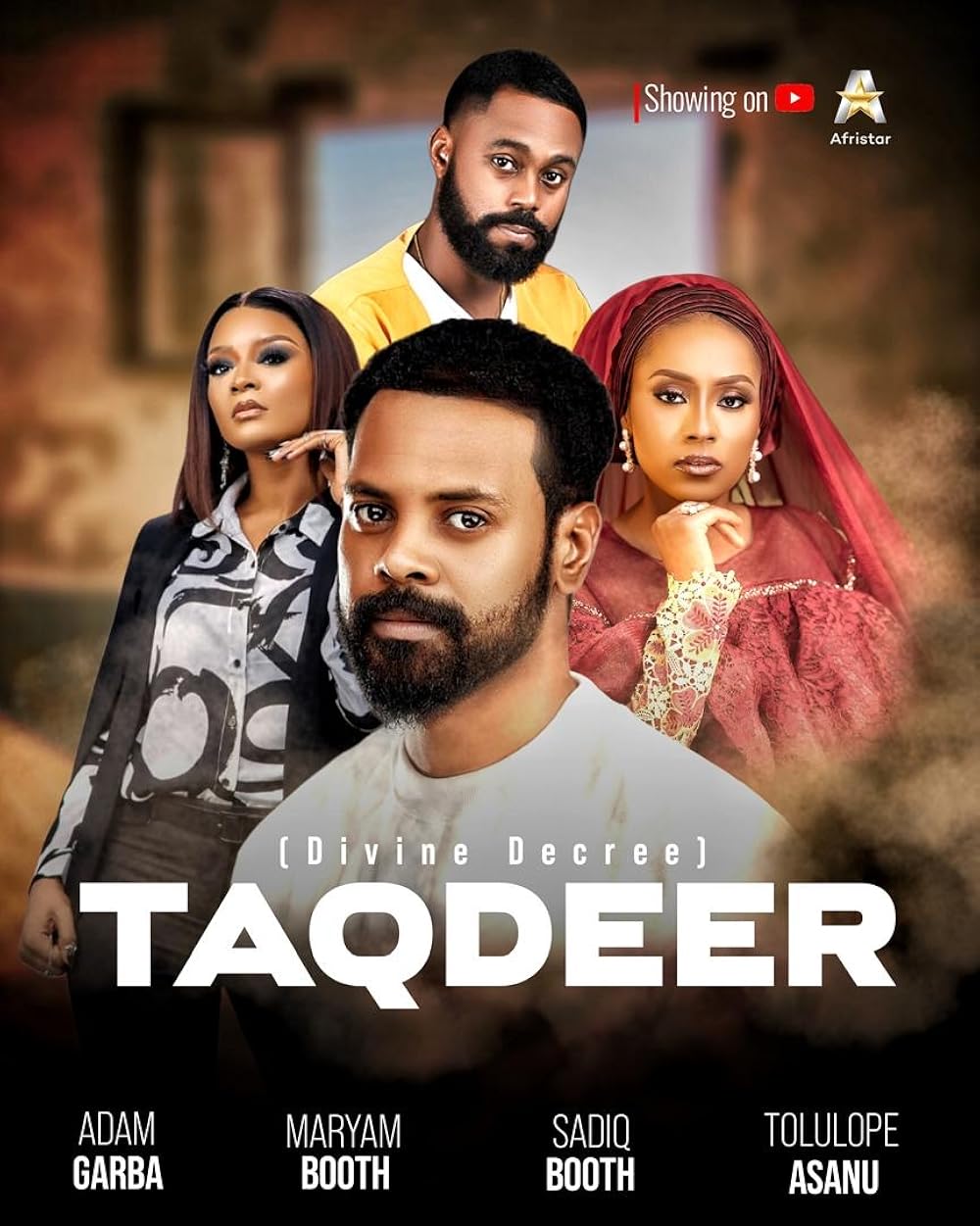
Now, as he produces another long-running series, Zaɓi Biyu, Balarabe is sticking to his principle of working with new talents, giving them a platform to show their skills to the audience. This strategy is evident when compared to other popular Kannywood productions like GarwashiLabarinaJamilun JiddanManyan Mata and Allurar Ruwa, which mostly rely on a small circle of already-famous actors such as Sadik Sani Sadi, Abubakar Waziri (Baba Rabe), Adam Garba (Raba Gardama), Amal Umar, Momy Gombe, Minal Ahmad (Ya Kaka), Ruky Alim, Hadiza Saima (Maman Saima) and Rabi’u Rikadawa.

There’s no denying the talent, skill, and fame of these actors. Their appearances often guarantee high viewership and profits for any film or series they’re part of. Still, Salisu T. Balarabe has chosen a different route—one that takes longer to become profitable but is ultimately more sustainable.

PERSEVERANCE DESPITE AUDIENCE PRESSURE.

In an industry where producers and directors often prioritise famous faces to ensure quick financial returns, Balarabe deserves praise for his dedication. He understands that for Kannywood to grow and flourish truly, it must constantly introduce new talent and provide them with training and opportunities. This approach is not just about development; it’s a crucial long-term investment in the industry’s future.

Balarabe’s work is reminiscent of internationally acclaimed filmmakers who have taken similar paths in other parts of the world. In Bollywood, directors like Anurag Kashyap, Zoya Akhtar and Karan Johar have introduced fresh talents such as Vicky Kaushal, Siddhant Chaturvedi and Alia Bhatt. Likewise, in Hollywood, directors such as Steven Spielberg, Martin Scorsese and Greta Gerwig have played key roles in discovering actors who went on to achieve global fame.

These directors are celebrated not just for their storytelling abilities but for their impact in nurturing talent. Salisu T. Balarabe is doing something similar in Kannywood—showing great courage and commitment despite the pressure he faces from audiences who demand familiar faces. His vision of discovering gifted individuals and helping them reach their potential through AREWA 24’s productions is commendable.

COMMITMENT TO QUALITY AND MEANINGFUL STORYTELLING.

Beyond introducing new faces, Balarabe also ensures that these actors deliver performances that resonate with audiences. His long-running series, Kwana Casa’in and Zaɓi Biyu, are not small projects. They are rich in culture, politics, and the real-life struggles of Hausa society. This provides new actors the chance to shine while also educating and entertaining the audience.

This approach enriches the stories and gives the new actors a strong foundation to grow. These emerging talents often give their absolute best, using all their abilities to tell stories that leave a lasting impact. Balarabe’s consistent effort to showcase new faces in his films reflects his dedication to prioritising art over fame—a trait that distinguishes true filmmakers from mere trend-followers.

A NEW ERA FOR THE KANNYWOOD INDUSTRY.

Salisu T. Balarabe is showing the Kannywood industry that growth is possible when directors aim higher and embrace innovation. By doing so, they not only enrich the industry with talented and committed actors but also ensure that more talented people can benefit from the opportunities it offers.

If Kannywood were to follow this model, it would continue to progress—not just by elevating individual stars, but by fostering a culture of talent discovery, hard work, and quality production that will earn it global respect. Just like Nollywood in southern Nigeria has proven, an industry does not have to rely solely on a handful of celebrities to grow. When talent becomes the main focus, true and lasting success follows.

CONCLUSION.

At a time when fame dominates the storytelling landscape, Salisu T. Balarabe stands out as a beacon of hope for sustainable development in the Kannywood film industry. His commitment to nurturing and promoting new talent, as seen in series like Kwana Casa’in and Zaɓi Biyu, reflects his deep passion and long-term vision.

OPINION: Reconsidering the debate: Ibn Taymiyyah and HumAngle’s interpretation

By Abdullahi Adam Usman

I recently read an exposé on the life of the late Boko Haram leader, Abubakar Shekau, published by HumAngle.

The report, titled “The Making and Unmaking of Abubakar Shekau,” attributed the rise of Boko Haram partly to what it described as the influence of the teachings of the medieval Sunni scholar and jurist, Ibn Taymiyyah. HumAngle wrote that his ideas influenced Islamic reform movements such as Salafism and Wahhabism, and suggested that his thoughts on governance and rebellion helped shape extremist ideology in Maiduguri.

While HumAngle is widely respected for its investigative reporting, this conclusion is deeply problematic and requires more nuance. Whether due to insufficient historical context or oversimplified interpretation, such a claim risks misleading readers by forcefully linking terrorism with Wahhabism and, by extension, Ibn Taymiyyah (a narrative that has long been promoted in sectarian discourse).

During his lifetime, Ibn Taymiyyah was imprisoned multiple times by different rulers. However, none of these imprisonments were due to armed rebellion or terrorism; rather, they resulted from theological and intellectual disputes. In fact, several of his critics even described him as a scholar who emphasized obedience to authority to preserve social order. Portraying him centuries later as a direct ideological architect of terrorism therefore presents a historical contradiction.

It is true that some extremist groups have selectively misused or misinterpreted Ibn Taymiyyah’s writings to support their actions. However, this does not make his teachings their true foundation. In reality, many of Boko Haram’s earliest and most prominent victims were Salafi scholars who openly opposed the group.

One such figure was Sheikh Ja’afar Mahmud Adam, a respected Salafi cleric who was assassinated in 2007 while leading the Subh prayer in Kano. He had openly criticized Boko Haram during its formative years. Similarly, in 2014, Sheikh Albani Zaria, another Salafi scholar, was killed by Boko Haram while returning from a lecture. If Boko Haram truly shared the same ideological roots as Salafi scholars inspired by Ibn Taymiyyah, these assassinations would not have occurred.

Furthermore, in mourning the late Bauchi-based Salafi scholar Dr Idriss Abdulaziz Dutsen Tanshi, the Nigerian President described him as someone who played a significant role in countering violent extremism during the early stages of the Boko Haram crisis. This official recognition underscores the clear distinction between Salafi scholarship and terrorist ideology.

Journalism demands more than merely repeating how a group defines itself. As the saying goes: “If one person says it’s raining and another says it’s dry, it’s not your job to quote them both; your job is to look outside and find out which is true.” Responsible reporting requires context, depth, and historical accuracy.

We acknowledge HumAngle’s important contributions to terrorism reporting and public awareness. However, greater care is needed when making sensitive historical and religious attributions that could further inflame misunderstanding and division.

Abdullahi Adam Usman is a student of International Studies at Ahmadu Bello University, Zaria. He can be reached via abdallahnangere@gmail.com.

Zohran Mamdani and the triumph of inclusion: A lesson for Nigeria

By Abdulhamid Abdullahi Aliyu

When Zohran Mamdani, an Ugandan-born politician of Indian descent who migrated to the United States, emerged victorious as the new Mayor of New York, it became more than just another electoral story from America. His triumph resonated across continents, sparking global conversations on representation, inclusion, and the reawakening of civic trust in politics. For many, Mamdani’s victory symbolised a powerful statement that character, vision, and authenticity still matter in the age of polarisation.

Mamdani’s path to City Hall was anything but easy. As an immigrant, a Muslim, and a progressive voice, he faced a storm of hostility from powerful circles. President Donald Trump and billionaire Elon Musk, among others, were said to have thrown their weight behind his opponents, amplifying fears that his immigrant roots and socialist ideals made him unfit for leadership. Yet, against all odds, Mamdani not only survived the onslaught but emerged stronger, armed with nothing but a clear message of hope, justice, and inclusiveness.

What made Mamdani’s campaign remarkable was not just his defiance of elite power, but his connection with ordinary people. His grassroots outreach, his emphasis on social housing, education, climate action, and racial justice found resonance among New York’s diverse electorate. He spoke to their realities, not to their fears. In doing so, he rekindled faith in participatory democracy, the belief that leadership should reflect the people’s shared struggles and aspirations, not the privilege of a few.

It is no coincidence that Mamdani’s rise echoes that of other reform-minded figures who emerged from outside political establishments. His campaign defied the dominance of corporate funding and media bias, relying instead on volunteerism, small donations, and community-based mobilisation. That model reminded the world that authenticity, not affluence, is what truly earns public trust.

Back home in Nigeria, Mamdani’s story holds profound lessons. Our political system remains heavily tilted in favour of the wealthy and the well-connected. Elections are often a contest of money, not merit. The idea of a young, visionary leader without financial backing or godfather support ascending to power still sounds utopian. Yet his victory invites reflection. What if Nigerian politics began to reward credibility over connections? What if the masses recognised their collective power to shape outcomes beyond inducements and ethnic sentiments?

Mamdani’s triumph also reinforces the value of civic enlightenment. His message cut through misinformation because citizens were engaged and aware. In Nigeria, the recurring crisis of leadership is not only about corrupt elites but also about the disempowered electorate that allows manipulation to thrive. Real change begins when citizens see themselves as active participants in governance, not passive observers of elite bargains.

Beyond politics, his story underscores the beauty of diversity as a source of strength. America, despite its contradictions, remains a land where the son of immigrants can become a city’s chief executive. In Nigeria, where diversity often fuels division, Mamdani’s ascent serves as a reminder that inclusion is not a weakness but a path to unity. The more our institutions reflect the country’s social mosaic, the more legitimacy they command.

The lesson from New York’s new Mayor is therefore clear: leadership that listens, represents, and uplifts will always triumph over propaganda, money, and prejudice. For Nigeria, it is not enough to envy its victory; we must internalise the principles that made it possible: sincerity, civic participation, and justice. Mamdani’s win is not just a political event; it is a mirror reflecting what genuine democracy could look like when people, not power, decide.

Abdulhamid Abdullahi Aliyu is a journalist and syndicate writer based in Abuja.

When being a girl becomes a risk in Nigeria

By Ummi Umar

I write with a broken heart. A heart so bruised it feels shattered. There is no day I open Instagram, X, or WhatsApp without stumbling on another story that tears at the soul, another reminder that insecurity, banditry, and sheer lawlessness have become a constant shadow over this country. It almost never gets better for us.

For weeks now, it has been one tragedy after another. One kidnapping case replaced by the next. Little girls are taken from their schools. Families plunged into fear. We have reached a point where people whisper painful prayers like “may Nigeria never happen to me”, because we have watched the nation turn against its own.

Only last week, schoolgirls in Kebbi were abducted. And even though news has just broken that they have been freed, the joy of their return cannot erase the trauma of their ordeal or the deeper truth it exposes about our country. In that same week, more than three hundred students were taken from a Catholic school. These were girls who simply wanted to learn, to grow, to dream, to build a life. Their only “fault” was the desire to be educated. And then Nigeria happened to them.

There is no way to describe the agony of sending your child to school and then seeing on the news that she has been taken by ruthless, faceless men. You do not know whether she has eaten, whether she is being harmed, what fears she is battling, or what pain she is enduring. Is it a crime to be a girl child in this country? Why must she carry so much suffering on her small shoulders?

The rate of insecurity in Nigeria today is beyond alarming. And our leaders, what exactly are they doing? Must it be your daughter, your niece, your cousin, your wife before you feel any urgency? Must tragedy knock at your own door before you remember the weight of responsibility?

Those who lead us, those who hold authority, are meant to use every tool within their reach to protect citizens of the Federal Republic of Nigeria. Yet what do we see? Are they asleep? Is ordering schools to vacate the answer? When there is even a whisper of protest, government mobilises soldiers with unbelievable speed. But when children are carried away by bandits, the same urgency disappears as though the nation cannot see what is happening.

If you want to understand misplaced priorities, look no further than Nigerian leadership.

Sending students home is not a solution. It strips these girls of their fundamental right to education. And then what happens when they resume? Will the cycle of fear, evacuation and abduction continue? What truly is the way forward?

Our leaders must seek real, practical solutions to these recurring horrors. They must rise to their duties and be held accountable. Our girls are suffering. They are far too young to bear this kind of trauma. No girl, no child, no human being deserves this. No parent deserves the torment of knowing that their daughter is in the hands of men who may do only God knows what to her.

Our love, our prayers and our support remain with these girls and with their families. We thank God for the safe return of the abducted Kebbi schoolgirls, but we refuse to let that relief distract us from the painful truth that no child should ever have been taken in the first place. 

We continue to pray for every child still in captivity, and for the strength of the families waiting for their return. May our leaders finally be held accountable. May our girls be protected, truly and consistently. And may Nigeria never happen to any of us.

Rabi Ummi Umar is an intern at IMPR and can be reached via: rabiumar058@gmail.com.

Art Xplosion 4.0 makes history in Zaria

By Salim Yunusa

Art Xplosion 4.0, the youth-focused art and mental health festival organised by Friends Advocacy for Mental Health Initiative (FAM Initiative), concluded in Zaria after a week-long celebration of creativity, resilience, and cultural identity. The event, the first of its kind in the city, marked a major step toward exposing young people to art as a tool for emotional expression, cultural grounding, and mental well-being.

Over 100 children and adolescents participated in the program, which featured bead-making, painting, mosaic art, upcycled crafts, gypsum art, traditional performances, cultural showcases, storytelling, and an art exhibition. Participants were drawn from different communities across Sabon Gari Local Government and beyond, including young people with invisible disabilities and those from underserved socio-economic backgrounds.

For the organisers, Art Xplosion 4.0 was more than an event. It was a statement about the role of creativity in strengthening mental resilience among young people navigating social pressure, identity struggles, and emotional challenges.

Program Manager and Lead Artist Aisha Ahmad Ibrahim said the week-long festival reaffirmed her conviction that art remains one of the most accessible and transformative tools for youth mental health. She said, “Art Xplosion 4.0 was truly a wholesome event for me that reaffirmed that what I do is worthy,” she said. “Despite the hassles and rigorous work I handled as Programs Manager and Lead Artist, I genuinely enjoyed every part of the experience, from preparation and procurement to organising and leading my team. The diversity of participants initially made me sceptical about coordination, but art once again proved to be a natural medium of expression. Healthy children, children and youth with neurological and non-visible disabilities, and those from low academic and socio-economic communities all expressed their artistic abilities beautifully. My team and I moved easily between groups to guide and support them. With about 100 participants from almost all parts of Sabon Gari and beyond, Art Xplosion 4.0 was a deeply fulfilling success.”

Curator Jecinta Egbim described the edition as a powerful testing ground for the resilience strategies she teaches adolescents during mental health outreaches. “This year’s Art Xplosion 4.0 was an entire experience, not just for our participants but for me,” she said. “Going through some of the tests of my own resilience strategies, I have seen that resilience is truly the key. Tools like art, effective communication, emotional regulation, support systems and outlets helped us push through.”

She added that the implementation process itself came with emotional and logistical challenges. “We faced hard times, tough ‘no’s, shut doors, and some interesting stakeholder management issues, but we emerged stronger. One of our biggest successes was simply seeing the week through from start to finish. We received multiple reports from adolescents, parents, school owners, community leaders, and caregivers. Even two days after the event, a mother visited our office with her daughter to thank us. It was humbling to see the impact extend into homes. That was the essence of this year’s edition: Art Xplosion should not just be immersive on-site, but a holistic experience that follows participants into their houses, schools, and workplaces.”

She noted that even with less than 20 sponsors supporting 100 participants, the team stayed committed to impact. “Fundraising was tight and discouraging, but our successes outweighed every challenge. It reminded us of what we are really made of.”

One of the program’s partners, NEST AI, highlighted the deeper emotional significance of art for young people. Its founder, Yazid S. Mika’il, said the initiative reflected how creativity can help youths build confidence and shape their futures. “Art speaks to one’s emotions and the core of being… it helps young people realise that they matter, and can determine what a beautiful and healthy future looks like,” he said.

Poetic Wednesdays Initiative, also a partner, expressed satisfaction with the program’s impact. Founder Salim Yunusa said the organisation was proud to support an initiative that brings creativity and healing into the lives of young people in Northern Nigeria. “We are pleased with what this initiative achieved, especially in Zaria,” he said. “We hope to see more of this replicated across Zaria and northern Nigeria at large.”

The Art Xplosion model uses creative expression to help children and adolescents communicate feelings, build confidence, improve emotional regulation, and reconnect with cultural identity. Many of the participants came from families dealing with psychosocial stressors, developmental challenges, or limited access to creative opportunities.

FAM Initiative reported that participants showed improvements in communication, empathy, and artistic expression. Parents and community leaders also noted that the activities helped their children feel calmer, more expressive, and more connected to their heritage.

This year’s edition introduced an expanded cultural showcase, featuring participants who displayed traditional attire, shared cultural stories, and performed dances. The art exhibition and auction also allowed the public to appreciate the creative output of the young participants.

With Art Xplosion 4.0, Zaria has now hosted its first large-scale festival that blends art, cultural pride, inclusion, and mental health advocacy. Organisers say the program’s success has opened a new chapter for community-driven youth development initiatives in Kaduna State.

FAM Initiative announced that future editions will expand mentorship opportunities, deepen community outreach, and strengthen support structures for children and adolescents dealing with emotional and developmental challenges.

As the dust settles on this year’s event, the organisers say their biggest hope is that the young participants, many of whom are experiencing structured art therapy for the first time, will carry their newfound confidence, skills, and cultural pride into the next chapters of their lives. Art Xplosion, they say, is not just an event. It is becoming a movement for healing, expression, and resilience across Northern Nigeria.

Boluwatife Balogun: The rise of a young artiste

By Nazirah Muhammed,

Before the first note of his debut single, My Time, hit any speaker, Boluwatife Balogun lived in a world deliberately shielded from the glare of celebrity, a rare reality for the firstborn son of Afrobeats icon Ayodeji Ibrahim Balogun, popularly known as Wizkid. To understand his entry into music, you must first appreciate the calm, structured upbringing that shaped him.

Born in 2011, the same year Wizkid’s Superstar album launched him into global recognition, Boluwatife arrived at a moment that reshaped his father’s life. Unlike the public drama that often surrounds celebrity births, his early years were quietly protected. His mother, Shola Ogudu, Wizkid’s former partner and one-time manager, built a bubble of normalcy around him, ensuring that despite his father’s fame, his childhood remained grounded.

Privacy defined Boluwatife’s early life. While fans saw only occasional birthday photos or short videos, Bolu lived what many would consider a normal Lagos childhood. He attended regular schools, played basketball, hung out with friends, and focused on his education. Photos shared over the years showed a cheerful, well-adjusted boy enjoying vacations, milestones, and hobbies far from the spotlight. It was a deliberate effort to let him grow into himself, not into the expectations attached to his surname.

As he got older, one truth became impossible to ignore: Boluwatife is the spitting image of his father. From his eyes to his smile and lean frame, the resemblance earned him the nickname “Wizkid’s twin” among fans. And while Wizkid rarely posts about his children, the love is unmistakable. In a 2020 birthday message, he called Bolu his “twin” and expressed heartfelt affection, a glimpse into a quiet but strong father-son bond.

But beyond the looks, Boluwatife was absorbing another inheritance: music. Growing up around one of the most successful African musicians meant witnessing the creative process up close. The first public hint of his musical journey came in 2023, when his mother shared a video that quickly went viral. It didn’t just show a teenager singing along; it showed Boluwatife in a home studio, headphones on, confidently recording original material.

That clip changed everything. His voice, youthful but melodic and steady, revealed a natural ease with music. It was the moment “Boluwatife the artiste” shifted from speculation to reality.

My Time didn’t appear out of nowhere. It is the product of years spent watching, listening, learning, and quietly preparing. The same boy who hustled on the basketball court and completed assignments is now stepping into the booth with intention. His sheltered upbringing gave him self-awareness; his environment gave him artistry.

His debut marks not just a career launch but the beginning of a new chapter for a young man raised with care, balance, and an understanding of the legacy he represents. The world may just be hearing him now, but Boluwatife Balogun has been getting ready all along.

Nazirah Muhammed is an intern with PRNigeria. She can be reached at nazirahmuhammed01@gmail.com.