Opinion

Lionel Andrés Messi: the end of an era

By Abdulrazak Iliyasu Sansani

As the most followed game in the world, football has moments that its fans don’t envision. Sometimes they do but keenly wish it never comes to pass. For Football Club Barcelona fanatics, that day came three days ago. 

For quite some years, Messi has been embroiled in a crisis with the Bartomeu led board. So naturally, this has affected the Argentine, who has come to identify and be identified with everything Barcelona. For someone who came as a child with growth deficiency, signed on a napkin, only to defy all odds, and cement his status as one of the greatest players of all time, arguably, the greatest player of all time. 

I first got to watch Messi play in FIFA under 20 World Cup, Netherland 2005, where he went on to score two penalties in the final and win the Cup against my dear country, Nigeria. From there, I knew a generational talent had emerged. Still, little did I know that that young man from Rosario would go on to win all competitions he has contested, except the FIFA World Cup, which he could still win in a trophy-laden career that has made only the great Brazilian utility player, Dani Alves to have won more titles in the history of the round leather game. 

There is every reason not to doubt this phenomenal player. If I ever had any doubts about the magical Messi, all were quelled when on March 10th 2007, aged just 19-years-old, the youngster was the star of the show in El Clasico, outshining his illustrious teammates Samuel Eto’o and Ronaldinho, to win a vital point for his team by scoring a hat-trick in club football most prominent feature, against the greatest football club in history, Real Madrid. On that day, for me, Messi proved beyond any iota of doubt that he would be one of the greats. 

With everything going on well from that point: with all his abundant talent, the right atmosphere, and everything in place. Still, Lionel Messi’s transformation from football prodigy to become one of the few players that deserve a place in the debate of the greatest players of all time, with so many claiming he is the outright GOAT, is impressive. Irrespective of your opinion in this debate: there are so many facts that concur with such views. 

Rarely has the world seen a better all-round football player who could function as a midfielder as well as a striker flawlessly. A player who often competes with the most clinical strikers for golden boots while struggling it out with the best midfield maestros for the most assists in so many seasons. Lionel Messi is out of this world. 

While you might not support him, you cannot deny the fact that what Messi does on the pitch, season in season out, for more than a decade, at the highest level, is the dream of every young footballer from my remote village of Sansani, to Jalingo, Bali, Arochukwu,  Ogbomosho, Freetown, Lome, London, Paris, New Jersey, and to all the nooks and crannies of the world. 

The home training I got abhor hatred. It absolutely doesn’t permit it. This has influenced all my activities. This is why some would be astonished to know that I am a Real Madrid football fan and writing all this for the greatest player of our biggest rivals, FC Barcelona. But I cannot hate greatness. If any player has made the difference for Barcelona in El Clasico, it is Leo. This had often been the difference between success and failure for Barcelona and Real Madrid too. 

To some, it should be a significant factor in making me antagonistic towards anything Messi. But I don’t think so. Of course, I cannot hate the defence-splitting passes, the vision, the offensive nous of bringing something out of nothing, the breathtaking dribbling, which once produced a physics-defying goal. No, I don’t do my things this way. 

I cherish greatness; I bow before the best in awe; I celebrate the mercurial Messi knowing this genius has entertained the football world to stupor. Wherever he goes, I wish him the very best. All things being equal, whichever club he goes will naturally have the edge to achieve their lofty ambitions. 

For those who will always view Messi’s greatness through warped lenses, I say to them don’t waste your precious time, the six-time Ballon d’Or winner has nothing to prove in this beautiful game that he has already broken almost every record breakable and set new ones, which for want of space I won’t list them here. However, they are well known by football supporters worldwide. 

Yes, he can’t break all the records; none can. But, of course, you are allowed to continue to raise the bar for him, and this football living legend will have a little problem proving you wrong while effortlessly doing what he loves best, playing football and winning trophies. 

Abdulrazak Iliyasu Sansani, a Real Madrid fan, wrote from Jalingo, Taraba State. He can be reached via abdulrazaksansani93@gmail.com.

Pantami: Should we worry about the current situation or the Minister’s past?

By Bilyaminu Abdulmumin

Perspective is what makes any matter arising be two way. Hiding behind this aegis, everyone will prefer to go with the view that suits them. This is similar to what I learned from a Nigerian saying, mind the message, not the messenger. Those who the message favours would go with it; otherwise, they would instead focus on the messenger.

Similar to this phenomenon in court proceedings is the aspects of either substance to the case or technicalities. So, all evidence would be presented in a case; you will think that’s the end for the accused, only for him to turn around and rely on technicalities. 

Before the historic 2015 general election, the then ruling party, PDP, sought to cling to General Muhammadu Buhari’s WAEC certificate. The attempt was to take on the person of Buhari instead of what he stood for, but it failed. I doubt he had written the exam, but he possibly rode on the back of official consent to progress. So the allegations could be valid, just like the claims he stood for. It depends on what favours who.

However, the Tsunami of change at the time was too strong to allow taking on the Buhari’s past. This is the kind of force required to douse the rising dust against Dr Ali Isa Pantami, the Communication and Digital Economy minister.

There are emerging signs of commitments from the Minister Pantami to revamp the sector. It is easy to understand how this will go a long way to better the nation’s insecurity.

The abuse of SIM cards in Nigeria has been very rampant, lamented by many. Bandits increasingly go on rampage, kidnapping and negotiating for ransoms undetected. Getting the SIM in Nigeria is as easy as anything effortless. Therefore, heinous activities by the underworld men continue in perpetuity. So the Minister wants to bring sanity to the ministry.

For auditing purposes, a directive was issued to halt the sale, activation, and registration of new SIM cards on December 9, 2020. Without reference to any conspiracy theories, those who are not happy with the development instead chose to descend on the Minister’s previous affiliations and sympathies. The views that the Minister reportedly renounced.

In a desperate attempt to propagate this interest, to say the least, one news media ended up undoing itself by displaying timid journalism prowess in its inability to differentiate truth from myth. 

This media published the famous video of fierce debate between Dr Pantami and Muhammad Yusuf, using it as evidence for the latter’s terrorism tendency. If there is any evidence that could absolve Pantami from what they claim, it is that debate, not what the Pantami distractors want us to understand. However, we can still learn a lesson from the development.

Dr Pantami, a rare gem in the north, an authority on both Islamic and secular education, would display the human sign (weakness) by renouncing the views he held earlier in his life. It is an excellent reason to keep on any idea between iron fist and kid-glove; it is religiously and politically wise. A similar issue is currently hunting Governor Nasir El-Rufa’i.

A video recently shared by 21st-century chronicles El-Rufa’i taking full advantage of insecurity during the Jonathan administration to score points for himself and his party.  El-Rufa’i criticised everything about insecurity in the video that he is not doing today. No regard to the reasons he gave as to why he has changed his decision.

The current standoff between Pantami and his distractors is an attempt to look beyond the effort being made in the country’s communication sector. But as for those calling for secured Nigeria, let the audit for SIM subscribers and vision for the country’s database (linking the NIM and upcoming BVN) continues.

Bilyamin Abdulmumin is a Chemical engineering PhD student at Ahmadu Bello University, Zaria. He can be reached via bilal4riid13@gmail.com.

Let’s avoid reckless driving in wet weather

It is no longer news that ghastly car accidents have led to the death of innumerable people, which could be attributed to improper driving in the rainy season. However, you may find out that the primary factor that caused some accidents is driving in wet weather without abiding by safety precautions like exceeding the speed limit in the rain.

However, driving in the rain, whether a sprinkle or a heavy downpour, can be one of the most challenging driving situations which some, if not all, drivers encounter. Rainy conditions are directly associated with higher accidents rates. No matter what part of the country you live in, it is almost certain that you would be required to drive your vehicle in the rain at some point. Knowing how wet roads and reduced visibility affects how your vehicle handles will help you drive safely in rainy conditions.

More so, drivers should be reminded that reducing their speed limit and turning on their headlamps are two of the simplest and most effective ways of reducing the chances and prospects of an accident caused by wet weather. Likewise, maintaining a safe distance between your vehicle and the car in front of you. Stopping your vehicle will be more difficult when driving in the rain. Therefore, maintain a distance of several car lengths between your car and another.

Regarding car equipment, make sure that your car’s equipment is in working order before encountering rainy weather. For example, check your headlights, taillights, and windshield wipers to ensure that they will work well when needed. Also, check the tread of your vehicle’s tires. Balding tires can severely reduce traction on wet roadways.

Furthermore, most states require drivers to turn on their vehicles’ lights while driving in the rain. Even if it is only misting, turning on your vehicle’s headlights will increase both your visibility and other drivers’ ability to see your car on the road.

Conclusively, concerning the above driving etiquettes, while raining, private and commercial drivers should whack their possible best to meticulously ensure that they follow all driving instructions provided to them to prevent the risk of being crushed.

Staying safe while driving in the rain is simple if you make a conscious effort to employ these safety precautions.


Mallam Musbahu Magayaki writes from Sabon Fegi, Azare.Bauchi State. He can be contacted via musbahumuhammad258@gmail.com.

Tokyo 2020 Olympics: 5 lessons from the Men’s Football Tournament

By Aliyu Yakubu Yusuf


The curtains have fallen following yet another gripping edition of Olympic football games. Brazil has successfully defended the crown they won at home four years previously. The vanquished Spanish team fought back valiantly in the second half after going behind in the first. But with the game teetering towards a dreaded penalty shootout, Brazil’s substitute, Malcolm, delivered the decisive knockout blow that put paid to Spain’s quest for the gold medal. Here are the five things I learned from the tournament:

  • Brazil are worthy winners

Ever since the first ball was kicked about two weeks or so ago, it was apparent that barring any surprises that are characteristics of football games, the team that’s going all the way is either Brazil or anyone that overcomes them. Unlike most of the other big guns, Brazil takes this tournament seriously. After a disappointing ending at the Copa America, Brazil was keen to win this tournament to restore some sort of pride as the undisputed biggest footballing superpower. Brazil was, at times, irresistible in the group stages. Their triumphs over Germany and Saudi Arabia, which were sandwiched by a scoreless draw with plucky Ivory Coast, saw them play some scintillating football, with Everton striker Richarlison scoring five goals. Although the goals somewhat dried up in the knockout stages, the Selecao were never really troubled by any of their opponents en route to clinching the trophy.

  • The evergreen Daniel Alves still has it

It would be a crying shame to talk about Brazil without talking about the mercurial Dani Alves. Alves is the best right-back I have ever seen. And that’s a massive compliment because even Brazil alone had had the likes of Cafu and Maicon. The sight of Alves terrorising hapless opponents alongside Lionel Messi at Barcelona was a joy to behold for most football aficionados. So I wasn’t surprised at all when Brazil named him as one of their three overaged players. After all, this is a man who can do whatever it takes—fair or not—to win. Little wonder he’s the most decorated footballer in the whole history of football. This trophy is just another feather to his impressive cap. Even at the ripe age of 38, Alves is still one of the best players in his position. Brazil’s captain fantastic still has it.

  • Traditional heavyweights failed at the first hurdle

While Brazil sailed through the tournament, other traditional big countries badly underperformed. Argentina, Germany and France all failed to get past the group stages. For Argentina, it was just business as usual. For a country that won this very tournament consecutively at both 2004 and 2008 editions, it was a colossal failure not to have qualified for the knockouts for the second Olympics tournament running. The fact that they couldn’t qualify from a pool that contains Spain, Egypt and Australia tells you all you need to know about how bad this team had been. Like Argentina, France and Germany also failed to give a good account of themselves. Ever since a diabolical first half that saw them went 3-0 down in the first game against Brazil—and eventually lost the game 4-0—Germany never recovered. Although they defeated Saudi Arabia 3-2 in the next match, they huffed and puffed in their final group game but failed to see off the sturdy Ivory Coast. And that was their tournament done. As for France, the little said about them, the better.

  • The host country has so much to cheer about

Japan performed quite admirably in this tournament. Despite being drawn in a scary-looking group including France, Mexico, and South Africa, Japan qualified with maximum points. They scraped past New Zealand via penalty shootout in the quarter-finals before succumbing to Spain and Marco Asensio in the second half of the extra time in the semis. Although they went out in a cruel fashion, Japan can take courage from their outstanding performance. Despite being the host country, no one expected them to be the fourth-best team before the kick-off. However, in Takefuso Kubo, who is already at Real Madrid, Japan has a gem for whom they can dare to dream.

  • African countries flatter to deceive… again

For African countries, it was a case of one step forward, two steps backwards. Apart from South Africa that conspired to lose all their group games, Africa’s other two representatives began the tournament on positive notes. Egypt’s defeat is somewhat understandable as they went out to the eventual winners Brazil by the narrowest of margins. That’s after qualifying from a pool featuring both Spain and Argentina. The ouster of Ivory Coast, however, is pretty much frustrating for any fan of African football. After qualifying from the group that contains both Brazil and Germany, they were within a hair’s breadth of knocking out Spain before they inexplicably bottled it. They scored what looked like a winning goal in the 91st minute of the quarter-finals only to manage somehow to give up an equaliser in the 93rd minute before shipping three further goals in the extra time. That was some way of going out of a tournament. For Africa, Nigeria’s 1996 and Cameroon’s 2000 victories are but fading memories.

Aliyu Yakubu Yusuf is a lecturer at the Department of English and Literary Studies, Bayero University, Kano. He can be reached via aliyuyy@gmail.com.

The North, the Media and the Way Out

By Ahmad Shehu, PhD.

In recent years, Nigeria, particularly the northern part of the country, has gone through a series of debilitating crises that have become existential threats to the region and the entire country and even the West African sub-region to some extent. The Boko Haram insurgency in the northeast, the herder/farmer crises in the north-central, the kidnapping and banditry in the northwest, the ethnic clashes in the middle-belt have all spilt over across other regions of the country, causing chaos, social instability and economic devastation.

Governments at all levels have tried hard to contain these menaces through conflicting policies, strategies and approaches. But, evidently, none of these has succeeded, yet, as these crises grow and engulf more Nigerian lives and properties daily. With the troubles raging, the regional economic and social fabrics go down the slope. Farmers have abandoned their farmlands; herders are on the run, business people are on a massive exodus to urban centres. Schools, hospitals, and other social services are no longer obtainable in many places across the region. These are serious but not insurmountable challenges.

Despite its effects on livelihoods, physical destruction can easily be reversed in a relatively short period. The political history around the world teaches us this basic fact, with Germany, Poland, Russia and even Rwanda as cases in point. Left in rumbles decades ago, these countries provide development models for the world to follow today.

On the contrary, a society whose social fabrics are destroyed is more difficult to rebuild, for a nation grows in and flourishes from the minds of its citizens – their beliefs, dispositions, attitudes, education, etc. Sadly, the proud, significant historical antecedents of northern Nigeria are maliciously challenged on all fronts, with destructive narratives, or what my friend Dr Samaila Yandaki calls “falsification of history” being pushed against the people, culture and sociopolitical freedom of the region. This, as far as statecraft is concerned, is more dangerous to the corporate existence of the area and indeed Nigeria in the long run than the physical challenges we are currently battling. Here is why.  

For many decades, northern Nigeria and its people have endured a consistent assault on their historiography, heritage and sociopolitical status. At the expense of sounding conspiratorial, I believe it is safe to state that the constant ethnic and regional profiling of the North and its people is a deliberate, well-planned assault aimed at breaking the very social fabric that held people together. The orchestrators fully understand the natural advantages and disadvantages of the region at equal proportions.

In today’s Nigeria, the North has been stereotyped in the most dangerous way. In the Nigerian sociopolitical scheme, northern leaders have been systematically stigmatised, with all the evils and ills of the country being falsely but persistently attributed to the failures of the North, even though history proves to the contrary. Some people propagate this antagonism without equal acknowledgement of the good tidings, sacrifices, patriotism and contributions of northern leaders and northerners in the Nigerian project. The bitter, unbiased truth is that the problems and prospects of the Nigerian state are Nigerian, with all regions, ethnicities and religious identities contribute their fair share in making or marring the country.

Similarly, the Nigerian media has worked hard to regionalise or ethnicise all kinds of human criminalities against the North. The media ascribe all sorts of criminal acts to northern folks or, precisely, Fulani, without recourse to the dangers these kinds of ethnic and regional profiling pose to the ordinary northerner. Conversely, criminal gangs, armed robbers in all southern states, notorious kidnappers, internet fraudsters and corrupt public officials would pass as mere criminals if, at all, they get reported. There won’t be a mention of the regional, ethnic or religious identities of those criminals. Unlike the former, we all share the criminal’s misdemeanour as humans and Nigerians. They are now “Nigerians”, not southerners, Igbo, Yoruba, Ijaw, etc. The hypocrisy is stinking.

Furthermore, today’s public discourse in, about and on Nigeria is a mere comparison between a supposedly ‘wealthy, educated’ south versus a supposedly ‘poor, illiterate’ north. This narrative gained traction by consistent and persistent reportage, which went unchallenged for too long. It is indeed true that all you need to validate a narrative is to keep saying it. While the ills caused by the utterly disgusting failure of the Nigerian leadership obtained in the North are reported or tagged as northern, the similar or worse scenarios obtained in the south will not belong to the southern region but the Nigerian federation. For the common audience, this kind of deliberate misrepresentation of information has caused deep-rooted mischief and hatred against northerners.

The dangers this stereotyping portend for the region’s future is, in the long run, worse than its current physical challenges. For one, the political leadership required to solve the physical problems will be entirely messed up in ways never seen before. Secondly, the communal consensus that gave the region the upper hand in the political scheme of the country will be dismantled, leading to distrust, disharmony and possible internal disintegration. Thirdly, young Nigerians constantly fed these venomous, hate-filled narratives are prepared to antagonise their northern counterparts, a situation that will affect their participation in the Nigerian project. The tail end of this debacle is not a story I would like to predict. We have seen examples in Nazi Germany and Rwanda.

The good news, however, is that the solutions to this seemingly intractable problem are not farfetched. It has been said that if you want to use a mirror, buy your own. People are made by their history; their minds are shaped by their stories; while their future is dependent on their world views, their dignity and respect depend on how others view them.

Indeed, the animosity and distrust between the major ethnic and religious groups in Nigeria are as old as the country itself. Among the major culprits in fanning the embers of this powerful but devilish attempt to demonise the North is the Nigerian media which has deliberately and consistently pushed stereotypical narratives against the region.

However, one of the reasons the campaign is succeeding is the total lack of counter-narratives that would eventually challenge the misinformation churned out by the Nigerian media against the region. If this is the case, then the only way out for the North is to speak out, provide content and information, counter-narratives and reliable, factual evidence that will eventually challenge the calculated attempts to demonise its history and hamper its progress. To do this, the region’s intelligentsia, political and economic leaders must be dedicated to and invest heavily in the media. It is only then that the North and its people will be fairly represented.

PS:

I celebrate the courage and dedication of the young men and women who started this medium, The Daily Reality. It is indeed one of the success stories of the North in 2021. Congratulations.

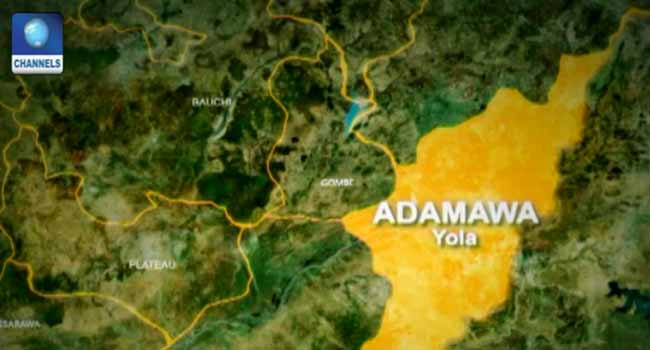
Ahmadu Shehu is an Assistant Professor at the American University of Nigeria, Yola. He writes from Yola, the capital of Adamawa State.

Dear Netflix Naija, there are films and filmmakers in northern Nigeria

By Muhsin Ibrahim

Nigeria’s diversity cuts across many things, chiefly cultures, ethnicities, religions and regions. Although several commentators consider the northern part more Islamic and the southern one more Christian, Muslims and Christians, followers of traditional belief systems and non-religious folks may be seen everywhere. Due to these complexities, the country is home to two significant film industries – Kannywood and Nollywood – with many smaller ones operating under these brands.

Kannywood, the name given to the “local” Hausa film industry with Kano State as its epicentre, is a distinct and autonomous film industry in northern Nigeria. Nollywood has its roots in the South, has mainly Christianity and Western-influenced motifs as themes and produces films primarily in English or other southern Nigerian languages. For Kannywood, however, Islam is arguably the trademark, and the East remains their vital source of influence and inspiration. Nonetheless, many people and institutions, including Netflix, see Nollywood as “the default” Nigerian film industry.

Lumping Kannywood and Nollywood or seeing the former as merely a Hausa branch of the latter is problematic. Hence, a prominent Kannywood scholar, Carmen McCain, points out that “In most scholarly discussions of Nollywood, Hausa films are footnoted as an ‘other’ to Nollywood.” The implication of this is enormous. It, among other things, leads audiences and potential investors like Netflix into failing to see and understand Kannywood films in their peculiar socio-cultural and religious contexts. But, yes, Kannywood operates differently from and is independent of Nollywood.

On the one hand, Nollywood, now the second-biggest film industry globally, succeeds because it faces little or no challenge from its audience or any censorship board. On the other hand, despite being arguably older than Nollywood, Kannywood struggles a lot. Kannywood was inaugurated in 1990 with a film entitled Turmin Danya(dir. Salisu Galadanci). Two years later, in 1992, Living in Bondage (dir. Chris Obi Rapu) began what became known as Nollywood.

Subsequently, the editor of Tauraruwamagazine, Sunusi Shehu, coined the name ‘Kanywood’ [with a single “n” before several authors later on added the second “n”, the version that is more recognised globally today]. It appeared in the magazine’s August 1999 issue. “Nollywood” appeared for the first time in a New York Timesarticle titled “Step aside, Los Angeles and Bombay, for Nollywood” by Norimitsu Onishi in September 2002. The Nigerian newspaper, The Guardian, republished the article a few days later. The rest, they say, is history.

Moreover, the “local” Hausa language has more users than any other West African language. The possible shortage of professionals in Kannywood is due to a lack of support from the government, other stakeholders, and investors. Despite all these and more challenges, the film industry stands on its feet, and I believe a little more push will catapult it to the promised land.

Delineating the glaring yet ignored differences between Kannywood and Nollywood is only part of the aim here. The primary objective is to remind Netflix Naija that for “Africans [to] take charge of African stories”, the message its parent Netflix emphasised when launching the local franchise, all Africans – and, of course, all Nigerians – deserve to be carried along.

Nigeria’s entertainment industry is a lot like India’s. Mumbai-originated Bollywood does not represent all films produced in the vast country. Netflix India understands this truth early on and thus accommodates that diversity so beautifully in its rich library collection of Indian films. There are arguably several exciting films from all India’s nooks and crannies on Netflix today. We earnestly wish the same to happen in Nigeria.

Of course, Netflix Naija may argue that Kannywood’s films are generally below their standard. No one can dispute that adequately. However, there are exceptions. Thus, they should get in touch with those exceptional productions. An anonymous top-notch Kannywood director told me some producers have already approached Netflix Naija. Quite regrettably, they have been, at best, told to go and fix this and that, which they did and, at worst, summarily snubbed.

Another way to embrace all is via commissioning movies. Netflix Naija can engage Kannywood filmmakers to see if it is possible to sponsor films or series. Northern Nigeria is rich with stories, perhaps more than other parts of Nigeria, thanks to its fantastic mixture and, admittedly, unfortunate incidents like the Boko Haram insurgency. The famous films Voiceless and The Milk Maid are only two examples based on a single event – Boko Haram’s abduction of Chibok schoolchildren in the northeast. Netflix can and should have originals from northern Nigeria. I bet that will be a commercial success.

Filming in the North is different from telling Northern stories. Thus, having films set in that region is not the same as having filmmakers from the area telling their stories. I am not an agent of division, not at all. Instead, I advocate fairness and inclusion of all, regardless of their culture, ethnicity, region, or religion, among other diversities. Therefore, northern Nigerian filmmakers and their films should equally be aboard the ship Netflix captains in Nigeria.

Muhsin Ibrahim is a PhD student and staff at the University of Cologne, Germany. He can be reached via muhsin2008@gmail.com.

Messi: He came, he saw and he conquered

When former Barcelona Director of Football, Carles Rexach, signed Lionel Messi on a napkin paper at the turn of the current millennium, little did he know that he had just unearthed possibly the greatest ever footballer. Barcelona have just announced the departure of their boy wonder, the messiah and the plea, after 17 years of joy and anguish, highs and lows, successes and failures. Countless goalscoring records have tumbled at the majestic feet of the boy from Rosario in Argentina. He holds the records for playing more games for Barça in La Liga, UCL and El Clasico.

To even attempt to list Messi’s accomplishments in this short thread would be foolhardy. Nevertheless, many accomplished pundits, coaches and players mesmerised and enchanted by his magic wand have showered plaudits to the little genius. After trouncing Arsenal in 2010, the then Arsenal coach famously remarked that “Messi is a PlayStation player”, effectively testifying to the impossibility of being Lionel Messi. Similarly, Pep Guardiola, who is the coach that helped nurture the talents of Messi, once said that “To compare Lionel Messi with any other player is unfair… on them”. Jorge Valdano, a Maradona teammate in the victorious 1986 World Cup-winning Argentina side, added that “Messi is Maradona every day and even Maradona wasn’t Maradona every day”.

Rodrigo De Paul, Messi’s teammate in the Argentina national team, said, “If Messi is your captain, you would want to go to war for him”. The recently departed ex-Real Madrid captain Sergio Ramos also confessed that “Messi will always have a place in my team”. This is just off the top of my head. The list of current and retired players who idolise Messi contains the creme-de-la-creme of the footballing world.

A longstanding mantra has it that ‘records are meant to be broken.’ If these Messi’s records are ever to be broken, it will take an exceptional player.

1. Winning four consecutive Ballon Dors.

2. Winning 6 European golden shoes.

3. Scoring 91 goals in a calendar year.

4. Scoring 75 goals in a league season.

5. Scoring in 21 consecutive league games.

6. Scoring 50 league goals in a single season.

7. Winning three player of the tournaments in international tournaments.

8. Scoring 40 or more goals for nine consecutive seasons.

9. Scoring/Assisting 50 or more goals for 13 consecutive seasons.

10. Winning four man of the match awards in a single World Cup.

As for Barcelona fans all over the world, the dreaded day has finally come. Most of them can still remember the scrawny, shy 17-year old Messi who scored his first-ever professional goal against Albacete via Ronaldinho’s assist. Very few people thought that that watershed moment was passing the baton from one generational talent to another. However, the future isn’t that bleak for Barça. For one, young, exciting talents are emerging from the academy. The likes of Fati, Collado, Trincao, Gavi, Pedri, Puig, Mingueza, Araujo and Dest have shown great promise. Together with the old guards such as Pique, Griezmann, Alba, Busquets and Aguero, they may just paper the gaping cracks that Messi’s sudden departure will inevitably leave.

Messi alone is capable of covering a multitude of sins for coaches and fellow players. Good luck trying to replace such a player.

As for the man himself, this is a perfect opportunity to silence his diminishing number of detractors that he can cut it away from his comfort zone — whatever that means. Of course, Messi isn’t getting any younger, but I would bet my bottom kobo for him to fare well at any league in the world.

Aliyu Yakubu Yusuf is a lecturer at the English and Literary Studies Department, Bayero University, Kano. He can be reached via aliyuyy@gmail.com.

Arewa Today: Shari’ah for the masses, democracy for the elite

By Ibrahiym A. El-Caleel

Northern Nigeria, Arewa launched her Shari’a project on the eve of the third millennium, precisely in 1999. The project was cheered by Muslims, who are the larger share of the Arewa population. But, on the other hand, the project became a thorn in the flesh of liberal Muslims as well as Islamophobes. Therefore, this generated heated discussions within the Arewa intelligentsia, from the mosques’ pulpits to traditional media pages.

Immediately Shari’a was launched, additives were added to strengthen its influence over the years. The Shari’a courts appeared visibly effective and powerful in their jurisdictions. On the other hand, they were feared due to their initial charisma. Shari’a hudud (penalties) were unapologetically executed in states that subscribed to the project. In 2003, Kano State impressively established the Kano State Hisbah Corps to deepen Shari’a application further. All these were efforts that every conscious Muslim found impressive. Nigerian Muslims were able to leverage democracy to re-establish their lost treasure of Islamic Law. It was a sort of blessing in the eyes of conscious Muslims. Today, however, things are beginning to fall apart.

In recent years, we see rather poor management of the Shari’a project. Convicts in Shari’a courts now find a way to evade justice, leveraging the weak points in the project. More problematic is the visible selective application of Shari’a among Arewa Muslims. Concerning the Shari’a application, Arewa currently operates a caste system. Masses are prosecuted under Shari’a for the slightest offences, but the elites commit big offences and get away with impunity. The Shari’a practised by the earliest Muslim generations was egalitarianism, where everyone was equal before the Islamic Law. But in Arewa today, Shari’a is an elitism that only applies to the nobodies in the society, while the elites break the code and fingers are not raised at them.  

Kano Hisbah is famous for coming into the spotlight with all sorts of amazing arrests and “Shari’a law enforcements”. There are pictures of them randomly stopping youths and cutting their hair because they have kept bushy and unkempt hair. To me, this should be a minor thing that should bother Kano Hisbah, when every week, men and scantily dressed women converge at costly-rented event centres, dancing and freely mixing in the name of celebrating weddings. Kano Hisbah never shows up in such Shari’a noncompliant events because they might be meeting the last son of a commissioner, the wife of a minister or even the nation’s First Lady herself. Apologists of this caste system might say perhaps Kano Hisbah never comes across these numerous events that happen frequently and simultaneously. But the answer is, after concluding the events, these “untouchables” audaciously flaunt the immoral pictures and videos on social media to the public glare. And nothing still happens.

Shari’a in Arewa will continue to be feeble because Arewa leaders are not genuinely committed to executing it. Only Allah knows the hearts of men, but the body language we are seeing is that these leaders use Shari’a in the spirit of populism; to woo political fandom. If we have Shari’a, then everyone must come equal before it. In a sane society, everyone comes equal before the law. This is called “the rule of law”.

It was narrated that during the reign of Caliph Umar bnul Khattab, Amr bnul Aas was the governor of Egypt. This governor had a son who entered a horserace with an Egyptian man, and the Egyptian man won the race. This defeat angered the governor’s son, so he decided to flog the Egyptian man. The man left Egypt and travelled to Madinah to complain to Caliph Umar. Umar summoned Governor Amr bnul Aas and the son to appear before him. When they showed up, Umar asked the Egyptian man to flog the Governor’s son as he had flogged him. Then he said to the governor, “when did you start to enslave people when they were born free?”. This incident indicates that Caliph Umar, as one of the most influential leaders in history, never allowed impunity and elitism to prosper in the land.

Secondly, when a lady from Bani Makhzum committed theft, the people of Quraysh requested Usama bn Zayd to intercede for her with Prophet Muhammad (Peace be Upon Him). When Usama spoke about it to the Prophet (Peace be Upon Him), the Prophet said, “Do you try to intercede for somebody in a case connected with Allah’s Prescribed Punishments?” Then he got up and delivered a sermon saying, “What destroyed the nations preceding you, was that if a noble amongst them stole, they would forgive him, and if a poor person amongst them stole, they would inflict Allah’s Legal punishment on him. By Allah, if Fatimah, the daughter of Muhammad stole, I would cut off her hand.”

Prophet Muhammad (Peace be Upon Him) is the grand patron of all leaders executing the Shari’a. This is him (Peace be Upon Him) saying if his own most beloved daughter were found guilty, he would apply the laws on her with no regard to her exalted status. May Allah’s salutations be upon him. He indeed is our ultimate role model worthy of emulation.

Until Arewa leaders take the Prophet (Peace be Upon Him) as a role model in the Shari’a project, we will continue to be a laughingstock. It is quite shameful that daughters of Arewa governors and emirs dress immodestly at their weddings. We have seen the daughter of former Kano Emir Mallam Muhammadu Sanusi II taking a handshake from the Vice President, an ajnabi (strange man), in front of her father. The daughter of Kano State Governor Khadimul Islam, Dr Abdullahi Ganduje, dressed immodestly on her wedding day. She wore a sleeveless wide-necked gown that almost revealed her chest. As if that was not enough of breaking the Shari’a code, she danced in this outfit to the visuality of strange men. The daughter of former EFCC Czar Mallam Nuhu Ribadu also made a similar appearance some months back.

This week, the trending topic on Arewa Facebook centres around another Kano princess, Zahra Nasir Ado Bayero, who is getting married to the President’s son, Yusuf Muhammadu Buhari. In her bridal shower event in Abuja, the princess appeared in a tight wedding gown, exposing the upper part of her torso. Of course, her hair was styled and opened to the public like her fellow sisters in the Shari’a code-breaking. People are wondering how Kano Hisbah is not seeing all this and issuing a press release.

The amoralism is getting institutionalised by the children of Arewa leaders. It speaks volumes to why Shari’a is still a baby in Arewa despite spending more than 20 years in the system. People who could give us a formidable Sharia are issuing licenses to their children to abuse the code and go scot-free. This is why even convicted blasphemers these days do not end up suffering the penalties. Anyone with some copper coins in their pockets and a little political network can find a way out. Only the poor and the unconnected can be convicted and be eventually punished. This is the caste system we have awaken to in Arewa today. Unfortunately, leaders are not ready to walk the talk. We need a leveller to be able to have an effective Shari’a system. What is good for the goose has to be good for the gander. Else, we are all joking around.

Ibrahiym A. El-Caleel is a Civil Engineer by training with an interest in public and social commentary. He writes from Zaria and can be reached via caleel2009@gmail.com.

Abba Kyari: The Super Cop on the Fall – Muhd El-Bonga Ibraheem

By Muhammad El-Bonga Ibraheem 


The damning and weighty allegations against DCP Abba Kyari, who many consider a cult hero within the Nigerian security system, is confoundingly infelicitous. The FBI indicted the fine police officer for being in cahoot with the internationally recognised fraudster known as Hushpuppi, who has been in US custody since July 2020 for multiple crimes perpetrated in and outside America. 


DCP Abba Kyari is an officer I so much respect. In fact, in him, I see a bright future for the police force given his expertise and tenacity in arraigning criminals and finding a way out where there is seemingly none. This development, however, evidently leaves me very sad that the person we hold in high regard isn’t what we really think he is, at least from what he portrays to the public and from what the FBI concludes from their thorough investigations. 

Over the years, the Deputy Commissioner of Police has attracted quite a myriad of attention that transcends across the nooks and crannies of the country. There is this general belief that whenever the police want to fish out criminals or swiftly achieve some desired results, Abba Kyari, nicknamed “Jack Bauer”, is the man for the job. He led many successful operations that culminated in the arrest of some criminals at the top of the Nigerian kidnapping echelon, notably Evans, the billionaire kidnapper. That singular arrest catapulted his reputation and made him a cult hero amongst the ranks and files of the police force and within the psyche of the Nigerian masses, who are usually downtrodden. Not very long ago, his men hunted the killers of the late APC chieftain Ahmed Gulak who was iniquitously murdered by IPOB terrorists masquerading as “unknown gunmen” in Imo State. 


Despite his unrivalled excellence as a super cop, nonetheless, that doesn’t mean Abba Kyari isn’t infallible. The FBI said Abba Kyari received orders from Hushpuppi to arrest and detain a criminal “colleague” after their falling out having scammed a Qatari national of more than $1m. The report added that Abba Kyari allegedly supplied an account of which a “thank you” message, which the FBI alludes could be from the proceeds of the crime, was sent to him by Hushpuppi.


At this juncture, no matter how much you want to twist the issue, Kyari shot himself on foot by cavorting with people of dodgy characters. The fact that an internationally known criminal in the mould of Hushpuppi— with criminal networks spanning from Nigeria to America, Britain, Korea etc.— can make one call to a police officer to have someone arrested for scuppering a “job” is indeed shocking and also speaks volumes about the influence he exerts in the force. The duo chatted many times where Kyari was egregiously revealed to have received direct orders from Hushpuppi regarding how the police should treat the arrested person. DCP Abba Kyari’s relationship with Hushpuppi also involved buying clothes for the fraudster to the extent that the latter would come and get them from the former’s office. While a police officer remains everyone’s friend, Kyari’s frolicking with Hushpuppi is too difficult to be whitewashed unless the investigations are finalised to determine his innocence if indeed he is. 

Although Abba Kyari had already responded to the weighty allegation, his explanations don’t hold any water, for he needs to prove to everyone keenly fixated on the issue, beyond any reasonable doubt, that he’s indeed not guilty. Much to his chagrin, Kyari edited the Facebook post conveying his initial response many times and subsequently deleted it. The various chats where Hushpuppi ordered Kyari and his men to arrest his so-called colleague and be dealt with like an armed robber without any form of investigation is an indication that they could have been frolicking for a long time. The “arrest” of Hushpuppi’s colleague for weeks is a preemptive move to prevent him from scuppering an ongoing “job” of scamming a Qatari national where the fraud money was later laundered in the US. This is where the FBI fingered Kyari as a possible co-conspirator in the whole issue. 


 The FBI is reputedly known for being painstakingly meticulous regarding their investigations. If they’re really on your case, nothing is usually left untouched, for they do back up their reports with undeniable, substantiated facts and documents. I have read an analysis from a lawyer friend who argued that the US has no jurisdiction to request Kyari’s extradition to be questioned in the US since he committed the alleged crime in Nigeria. The US— and by extension, the developed nations— always fear that justice may not be served, knowing full well how our system here in Nigeria operates. Is it not in this same Nigeria that James Ibori got cleared of any wrongdoing by Nigerian courts, having committed one of the greatest corruption in our history? But later on, James Ibori finally met his waterloo when he was arrested in the UK and forced to serve many years in a UK prison. 


Some of our northern people have started defending Kyari, painting the whole thing an ethnic colouration. I read a post where someone said the Igbos support Kanu and his proscribed IPOB group at all costs; the Yorubas support Igboho against all odds; therefore, he asks: why shouldn’t we, as northerners support our own? You see, this habit of shielding glaring depravities is one of the reasons why Nigeria continues to lag in all facets of development; it is also the reason why we continue to grope for exemplary leadership to lead us to the promised land within our fold. What is wrong should be dismissed by all and sundry regardless of religious and ethnic ties. Besides, the duo of Igboho and Kanu have openly declared their rebellion against the Nigerian nation. As for Abba Kyari, he is a civil servant in our most crucial agency whose responsibility is to serve and protect the interest of all Nigerians regardless of their ethnic disposition or religious affiliation, which explains why his issue is huge. Unfortunately, he got himself soiled in a huge mess that has the propensity to obliterate all his outstanding brilliance records.

The police suspension of the super cop to pave a berth for an investigation into the matter is a commendable move. Whatever sprouts out of from the investigation, Kyari should blame himself for it’s the offshoot of his actions, having chosen to dine and wine with criminals. When you rise to fame through something magnificent, you shouldn’t do anything to bring it down, for posterity will always forget your good days but will loudly judge and label you with your few bad instances. Sadly, such is the case of Kyari today. 

Muhammad El-Bonga Ibrahim writes from Abuja. He can be reached via bonga2004@icloud.com.

Prof Maqari vs Dr Abdallah: A diversion from Abduljabbar’s heretic teachings?

By Dr Muhammad Sulaiman Abdullahi

Tension grew as Prof. Ibrahim Maqari intends to sue Dr Abdalla Usman Gadon-Kaya based on what he (or his lawyers) called defamation of his character. It may be recalled that the main point of divergence between the two was their different religious affiliations, where Prof. Maqari subscribes to Tijjaniya Sufism, and Dr Abdalla is an Izala/Sunni scholar who preaches mostly against the teachings of Prof. Maqari and Tijjaniyya order in general.

Initially, the blasphemous and heretic teachings of Abduljabbar Kabara were the genesis of their misunderstanding, where Dr Abdallah erroneously cited a wrong reference when referring to an Abuja Imam. It was clear that the coalition of Kano Ulama, under the chairmanship of Dr Sa’idu Dukawa, lodged their complaint against what they found to be lies and concoctions against Bukhari, Muslim, some Sahabas, which in turn, ridicule and subject the sanctity of the Prophet’s household into questioning. These immoral teachings have negatively impacted some irate and ignorant youth, where they mockingly copy and paste anything from the sacred books and ridiculously call it a lie.

In response to this unprecedented religious turmoil, the scholars in Kano unanimously agreed to form a coalition to defend Islam’s sanctity. Abduljabbar directly targets Dr Abdalla and other prominent Sunni scholars in Kano as his reference point and as one of those at the forefront of exposing his evil antics. These altercations have taken a long time without Prof. Maqari featuring in the scene with either support or opposition to what Kano Ulamas have been doing.

After the debate session, the Muslims were happy as Abduljabbar failed to defend his heretical teachings. However, while everyone was happy and waiting for a verdict from the government, suddenly Prof. Maqari used his position from the Abuja Central Mosque and said that he perceived a form of propaganda in all that has been happening in Kano concerning Abduljabbar’s case. Thus, Prof. Maqari breathed life to all the supporters of Abdujabbar who died and buried their heads in shame.

Maqari’s submission made Dr Abdalla go berserk and even erroneously, out of emotions, mentioned many instances where an Imam in Abuja, which may be Prof. Maqari, used his position to delve into this – what no Imam in the history of Abuja Mosque ever delved into before. He cited instances where such an Imam said many things and even went to the extent of claiming to own classified audios of phone calls where that Imam, who may be Prof. Maqari, wanted to intervene in cases related to blasphemy.

In response, Prof. Maqari, in what shows his humility and humbleness, as usual, posted a video where he debunked all that Dr Abdalla said and called for peace. Later, Dr Abdalla also posted another video, clearly apologizing and calling for peace. Most poor innocent followers of these famous sheikhs were happy that the matter was settled amicably, only to wake up with another fresh video of Prof. Maqari saying he would go to court. I think this will be one of the first court cases that will generate high tension, cause a lot of damage, and divert people’s attention from the real cause of the trouble. It will indeed cause more harm than expected.

The decision may not ordinarily be  Prof Maqari’s. It may be that some people who are angry with Dr Abdallah may feel that this is the right time for them to score their cheap religious point by dragging Prof. Maqari and Dr Abdalla into the ring. How I wish it were done differently. How I wish it were not for Prof. Maqari and Dr Abdalla. Whoever knows Prof. Maqari knows a humble, soft-spoken, modest and religious personality. The way he doffs his Dara on his head can make everyone think of the kindest people of Magrib who devote their lives to the services of Islam.

On the one hand, Prof. Maqari is a Professor of the Arabic language, an Islamic scholar who triples as an Imam in the national mosque in Nigeria. He maintains a very cordial relationship with many people to whom he subscribes to their ways of religiosity and those he differs with. However, Prof. Maqari is tactically but unmistakably anti-Izali with a complete Tijjaniya Sufi disposition. These, he has never hidden and is found in many of his teachings. There are so many instances where he displayed anti-Izala inferences in his teachings, and this is not in any way bad as much as he is sure of his contrary opinions. Such disagreements and oppositions have been there among scholars since an immemorial time.

On the other hand, Dr Abdalla Gadon Qaya is a vocal, vibrant and versatile Islamic scholar who is also an Imam in an Izala mosque; he also triples as a lecturer of Islamic Studies at Bayero University, Kano. He has been known to talk during his Friday sermons fiercely against anybody who blasphemes, jokes, maligns or tries to tarnish the image of Islam. In addition, he has been known as a social media influencer, where he uses his position to viciously flatten his rude opponents, most of whom are not well-versed in Islamic studies, but trying to change the religious narratives, in the name of modernity or what they call modern Islam.

Looking at the delicate situation we are in now, I, therefore, call on these two gladiators in the ring to not allow their followers to use them to divide the Ummah further. We have many problems ahead of us, and that of Abduljabbar is not yet settled. Against whom are we to set our faces now? This may lead to another sectarian violence.

To me, both are good people. They are religious scholars; they are role models in their own rights. They are not infallible. Both have erred. Prof. Maqari emotionally chose the wrong time for his submission, while Dr Abdallah emotionally said something which Prof. Maqari didn’t say. All these are not supposed to come from Islamic scholars. Don’t allow those you call ‘YanBoko to play with your intelligence.

Your respected position will be trampled upon if you allow that. Both of you have lawyers who can give the last drop of their blood in protecting each of you; let these lawyers go and defend the sanctity of the Prophet. What will you gain if you see another person’s downfall just because you feel he wrongs you or he belongs to a different sect? What if the table turns? It isn’t socio-morally a welcome development for Islamic scholars to go to court. And who even initiated the idea of going to court? Who wants to use these reputable Malamai as his case study?

Finally, I am not in any way against going to court to look for justice. On the contrary, I support it. But, I won’t support scholars who are the mirrors to the Ummah to do that. What if one of your disciples learns from you that taking matters to court is the last good thing? Whether we like it or not, this will have sectarian colouration, and it will sow more rift than ever. Therefore, I kindly advise Malam Maqari to stop the court procession for good silently. I also kindly remind Malam Abdalla, Prof Maqari and all other Islamic scholars to guard and weigh their utterances and actions before uttering or doing anything.

Both clerics should silently sit, own the issue, discuss it and shame the detractors. Both Prof. Maqari and Malam Abdalla emotionally erred, and they apologised. That should have been enough reason to close the case. Why turning around and going to court? Otherwise, this will lead to digging more and more resolved issues by those rude supporters who don’t have much love for the religion, and it will lead to further disunity. Don’t we have other vital problems to deal with, please? And if both parties are doing it for the sake of Allah, then why court? Only the evil FOLLOWERS may propel their teachers to court cases just for them to laugh and continue to enjoy their ignorance.

Muhammad Sulaiman Abdullahi, PhD., is a lecturer at the Department of Nigerian Languages, Bayero University, Kano. He can be contacted via +234 80 65846225.