Security

Suspected gunmen murder soldier, cart away bags of money

By Muhammadu Sabiu 

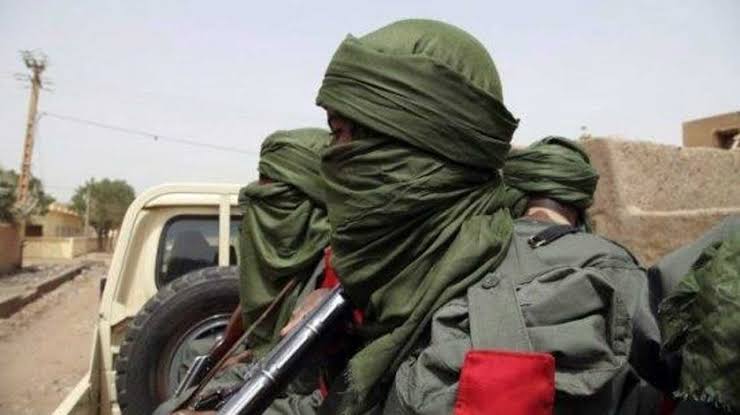
Suspected gunmen launched a daring attack on an Army patrol van in Edo State, resulting in the tragic death of a soldier and the successful theft of cash-laden sacks. 

The incident occurred on Wednesday as the military vehicle was en route to Ikpoba Hill. 

At about 2:10 p.m., the assailants ambushed the patrol unit at a traffic light along Akpakpava Road by First Junction. 

The attackers executed their plan with precision, employing an unmarked Toyota Camry to confront the military vehicle head-on.  

Two of the four occupants of the Camry disembarked and unleashed a hail of gunfire upon the soldiers, causing them to flee their patrol vehicle and the sacks they were transporting.

Witnesses on the scene recounted the soldiers’ hasty retreat and shared that the gunmen brazenly seized the bags from the abandoned van. 

A witness who owns a nearby shop described a poignant moment, revealing that one of the soldiers had been wounded in the chaos while his colleagues were unable to provide assistance. 

The injured soldier’s condition prevented him from standing up, and his companions were left helpless. 

Authorities were alerted to the situation, prompting inquiries from both the Nigerian Army and the Edo State Police Command. 

Captain Yusuf Sokoya, the Public Relations Officer of the 4 Brigade Nigerian Army Headquarters in Benin City, initially responded that he would investigate the matter. 

However, he failed to follow up on his commitment at the time of the press’s inquiries. 

In contrast, the state police public relations officer, SP Chidi Nwabuzor, confirmed the distressing occurrence. 

He stated that a soldier lost his life during the attack in Benin City. Nwabuzor further explained that a vigilant citizen promptly reported the incident to the local police station, which serves the affected neighbourhood. 

The attackers managed to escape with bags believed to contain substantial sums of cash stored inside the targeted Army van. 

The incident highlights the audacity of the gunmen and the risks faced by security personnel in the line of duty. 

As investigations continue, the community remains on edge, awaiting further updates from both the Nigerian Army and the Edo State Police Command.

Bandits attack corps members, kill 11, abduct others for ransom

By Uzair Adam Imam

There was growing tension among the National Youth Service Corps (NYSC) members when bandits attacked them on their way to the orientation camp in Zamfara State, killing eleven persons among them.

The bandits also kidnapped no fewer than eight corps members to an unknown destination and reportedly demanded a ransom of over 4 million naira.

Our reporters learned that the corps members were travelling in Akwa Ibom Transport Company (AKTC) bus from Uyo, Akwa Ibom State, to Sokoto State, for the one-year mandatory national service, when their vehicle was intercepted by the bandits.

It was also gathered that their driver, who was among the persons abducted, almost lost his life during the atrocious killing by the bandits.

However, three of the corps members were reported to have escaped during the terrorist attack.

Emmanuel Esudue, a graduate in Agricultural and Environmental Engineering from Akwa Ibom State University and Victoria Udoka, a graduate in Mass Communication from the University of Uyo were among the young graduates that were kidnapped by the terrorists.

A source, who noted to be privy to the situation, revealed that the terrorists had contacted the family of one of the victims and demanded a ransom of N4 million.

He said, “Sad to hear that young graduates going for their National Service year in Sokoto have been kidnapped by bandits.

“Both the Federal Government and various State governments should do everything possible to rescue the eight NYSC members.

“Nothing must happen to them oh!!!Some of them included Emmanuel Esudue, a graduate of [sic] Agricultural and Environmental Engineering, Akwa Ibom State University and Victoria Udoka, a graduate of [sic] Mass Communication from University of Uyo.

“At the moment, one of the families, it was learnt have been contacted to pay N4m. Please, this is [a] Federal government matter not the family and should be taking [sic] seriously to save these children from been [sic] tormented further by the wicked kidnappers.

“This is another challenge to the federal government to review deployment of NYSC [members] to nearby states where they schooled due to insecurity rather than posting them across the country.

“May the Almighty God rescue them and let those wicked kidnappers be arrested and brought to book. Their crimes must not go unpunished.”

Attack by Army: Fish out killers of my aide for prosecution – Senator Adeola

By Uzair Adam Imam

Senator Olamilekan Adeola, the Chairman Senate Committee on Appropriations, raised alarm and demanded justice over the alleged atrocious killing of his senior aide, Adeniyi Oluwatosin Sanni, by the Nigerian Army on Saturday.

Senator Adeola alleged that the soldiers operating at checkpoints around Ikeja axis of Lagos State robbed and killed Mr. Sanni in the early hours of Saturday.

In a statement he personally signed yesterday, Adeola stated that information available to him on the circumstances indicates that Mr. Sanni was stopped at a checking point around Ojodu- Berger Area of Lagos on his way to his home at Isheri by ‘security agents’ who asked him to provide the documents of the car he was driving, which he did through a call to his wife who sent all the documents to his phone WhatsApp.

He added, ”It was gathered that the wife called a while later and the late Mr. Sanni told him that soldiers are still checking the vehicle’s paper. That was the last she heard from her husband and the body of Mr. Sanni, ridden with bullets, was later discovered at Toyota Bus Stop area of Oshodi, close to a military barrack.

“In an update about the investigation of the murder and armed robbery by the Nigerian Police Force, through a statement issued in Abuja, Senator Adeola stated that he is of the firm believe, based on available facts at the disposal of the Police, that his aide was killed by a syndicate of soldiers operating under the newly deployed Commander of 9 Brigade, Ikeja Cantonment of the Nigeria Army, Brigadier General Nsikan John Edet, through mounting of checkpoints and robbing of lone occupants of cars.”

Senator Adeola called on the Chief of Army Staff, Major General Taoreed Lagbaja, to direct the fishing out of the killers of his aide for further investigation, prosecution and justice for the deceased as a pattern of killings and armed robbery has been established against soldiers mounting late night checkpoints around Ikeja with similar unreported incidences in recent times.

“Till date, the black Toyota Camry of Mr. Sanni, his phones and other valuables are yet to be recovered,” he added.

Nigerian troops rescue another Chibok girl 9 years after abduction

By Muhammadu Sabiu 

The Nigerian Army said Monday that it had rescued Mary Nkeki, a 27-year-old Chibok girl, in the Dikwa Local Government Area of Borno. 

Recall that insurgents of Boko Haram kidnapped Nkeki and more than 200 other students from the Government Girls Secondary School in Chibok in 2014. 

The Operation Hadin Kai Theatre Commander, Maj.-Gen. Gold Chibuisi, made this statement on Monday in Maiduguri upon the delivery of the girl to the Borno Ministry of Women Affairs. 

He noted that on August 14 in Dikwa, soldiers from the 81 Task Force Battalion freed Nkeki, who had serial number 55 on the list of the kidnapped Chibok girls. 

“While in captivity, she was forcefully married to one Adam, a Boko Haram terrorist fighter. 

“Since her rescue, she has undergone thorough medical examination in our medical facility. 

“Equally, she has been adequately resuscitated and would be handed over to Borno State Government for further administration,” he said. 

Chibuisi reaffirmed the military’s commitment to maintaining security in the region’s north and east while bringing about sustainable peace. 

Nkeki described her experience since being kidnapped in 2014 to reporters as being filled with pain, recounting that she and her husband managed to flee throughout the night and were found by a military patrol squad. She said she had left behind two other Chibok girls. 

Nigerien coup amidst ECOWAS diplomatic impotence

By Muhammad Muzdaleefa

The resurgence of military coups is thwarting Africa’s democratic journey. The recent coup d’état in Niger, which saw the ousting of President Mohamed Bazoum by the military, has not only shaken the stability of the country but has also laid bare the divisions and weaknesses within the Economic Community of West African States (ECOWAS). It has also exposed a wide cleavage between citizens of member countries and their governments on ECOWAS policy on Niger. 

As far as one can read the mood without the aid of a proper poll, support for military action against Niger would probably be less than 10 per cent across the region. In Niger, news footage suggests that the public is more solidly against ECOWAS military intervention. Somewhat or otherwise, the mainstream media and social media comments show deep scepticism about ECOWAS’ direction and intentions. Many, if not most, commentators believe that the West, especially France and the US, are behind the ECOWAS drive towards a military solution in Niger.

This has led to resentment, especially in the Francophone countries, where the citizens point out that ECOWAS has been silent at draconian French exploitation of their resources continuing long after independence.

One of the glaring weaknesses exhibited by ECOWAS in response to the Niger coup is its lack of unity and consistency among member states.

While some countries strongly condemned the coup and called for a swift return to civilian rule, others remained relatively silent, seemingly hesitant to take a decisive stance. This lack of a united front weakens the regional body’s influence and diminishes its ability to address such crises effectively.

Another aspect that has been brought to the forefront is ECOWAS’s flawed diplomatic approach. Despite constituting a mediation committee to engage with the coup leaders and negotiate a resolution, ECOWAS failed to halt the coup or achieve a viable solution. The committee’s lack of leverage and the limited consequences the perpetrator’s face have raised questions about the efficacy of diplomatic efforts and the regional body’s influence over military leaders.

ECOWAS has often resorted to imposing economic sanctions to exert pressure and resolve political crises. However, the effectiveness of such measures in addressing coups has been questionable. The reliance on economic sanctions has a limited impact, particularly in countries with weak economies and high poverty levels like Niger. 

The recent example of Mali, where sanctions failed to bring about meaningful change after a military coup, highlights the need a more comprehensive and proactive approach by ECOWAS. The situation has become even grimmer, with Russia increasingly stepping in to provide short-term assistance to cushion the effects of the sanctions against coup countries, which appear to have exchanged the influence of France with that of Russia.

What is worse is the fact that the Niger crisis has also highlighted ECOWAS’s inability to identify and address underlying issues that lead to political instability. This failure to take pre-emptive measures further exposes weaknesses within the organisation. Since ECOWAS gave an ultimatum to Niger, citizens in ECOWAS countries have voiced their disapproval against any military action, mainly because ECOWAS lacks the moral authority to send troops into Niger.

Many commentators have pointed out failure within member countries as a significant contributing factor undermining ECOWAS’s intentions. Some West African governments are dynasties, flawed elections taint others, while some have repressed their countries’ media and opposition parties. 

What principles does an ECOWAS military intervention in Niger seek to establish, and are they all practised in the countries that will impose them by force of arms in Niger? If democracy is essential to ECOWAS, it has to ensure that the complete panoply of democratic principles is firmly in place in all member countries. It cannot pick and choose. Therefore, to safeguard democracy, ECOWAS should invest more proactively in conflict prevention mechanisms, addressing socio-economic disparities, and promoting good governance across member states. 

Timely intervention in electoral processes, strengthening democratic institutions, and promoting dialogue are crucial steps towards avoiding crises before they occur. In addition, ECOWAS must develop a robust apparatus to communicate with citizens across the entire subcontinent and carry out programmes that promote dialogue between citizens and between citizens and governments. 

Does public opposition to military action signal a higher tolerance for military coups in West Africa? That is a difficult question, but there is no doubt that people have generally become disenchanted with the Western democratic model, given that poverty and lack of opportunity continue to be entrenched. At the same time, politicians are seen as opportunists who are in it for themselves. However, none of this can be interpreted to mean that people in West Africa prefer military regimes.

Significantly, however, the coup in Niger has exposed the leadership vacuum within ECOWAS. While the organisation has made progress in promoting regional integration and economic development, its political leadership role has been less pronounced. ECOWAS needs robust leadership capable of decisive action in times of crisis, backed by a clear framework and mechanisms that discourage power grabs and protect democratic systems.

The coup in Niger has exposed the weaknesses, divisions, and inconsistencies within ECOWAS. The regional body’s lack of unity, ineffective diplomacy, reliance on economic sanctions, inadequate pre-emptive measures, and leadership vacuum have hindered its ability to respond effectively to political instability. The regional body’s response to the coup has showcased its challenges in effectively addressing political crises, highlighting the need for a more cohesive and proactive approach to preserving democracy in the region.

To strengthen ECOWAS and protect democracy in the region, there is an urgent need for member states to forge a unified front, strengthen conflict prevention mechanisms, explore diplomatic alternatives, and foster strong leadership committed to preserving democratic values. Without addressing these fundamental issues, the fragile democratic gains achieved in West Africa may remain at risk, allowing further regional divisions and challenges to promote peace and stability.

Muzdaleefa wrote from Kaduna via mohammedadamu736@gmail.com.

Can Tinubu do like Abacha?

By Malam MB

On May 25th, 1997, the democratically elected of Sierra Leon, President Ahmad Tejan Kabbah, was toppled by Major Johnny Paul Koroma. The development in Sierra Leone disrupted the plans of the Economic Community of West African States (ECOWAS) under the leadership of Nigerian Head of State, General Sani Abacha.

ECOWAS pleaded with the Koroma junta to step down but it didn’t budge. General Abacha didn’t shilly-shally, he directed the Nigerian troops under the Economic Community of West African States’ Ceasefire Monitoring Group (ECOMOG) to station themselves in and around Freetown (the Sierra Leone’s capital).

Major Johnny Koroma instantly became scared and sought dialogue which gave birth to Conakry Peace Accord on October 23rd, 1997. This Accord called for reinstatement of the legitimate government of President Tejan Kabbah within a period of 6 months.

Major Koroma who expressed his commitment to the Conakry Peace Accord dilly-dallied and that prompted General Abacha to oust him on February 6th, 1998 and reinstate President Tejan Kabbah.

When General Sani Abacha ousted Major Koroma, Nigeria didn’t experience collateral damage or negative implication because it doesn’t share any border with Sierra Leone and it didn’t have Boko Haram and Banditry then.

Today, Nigeria shares border with Niger Republic and our Nigeria that grapples with Boko Haram, Banditry and so much corruption, wants to militarily oust the Nigerien Dictator Abdurramane Omar Tchiani and reinstate the democratically elected President Mohammed Bazoum. Yes! Nigeria has the military strength to defeat Niger, Mali and Burkina Faso but how can President Tinubu contend with collateral damages and proliferation of Boko Haram and Bandits’ activities? I advise that Niger Republic should be sanctioned until the Nigerien people ask Dictator Tchiani to step down. Ah! I ought to ask again, can Tinubu do it like Abacha did?

Malam MB is a Senior Advocate of the Commoners (SAC) and can be reached via: malammb16@gmail.com

FUYODA condemns attacks on innocent Fulani commuters by Birom terrorists in Heipang

By Muhammad Idris

The attention of the Association of Fulbe Youths Development Association, Plateau State, under the leadership of AY Umar has been drawn to an unfortunate incident that took place at Heipang Village (located at Plateau State Airport) Barikin Ladi Local Government Area on Sunday 06/08/2023 between the hours of 7pm and 8pm.

Facts at our disposal reveals that some criminals gangs strongly believed to be from Birom Armed Militias groups attacked and killed the innocent FULANI Citizens while they were returning home from the popular cattle market in Bukuru, Jos South, LGA, Plateau state.

Victims of the incident were Umar (adult ‘m’ from Barikin ladi) who was killed and Yakubu (adult ‘m’) from Bokkos sustained gun shot injury and currently receiving treatment in hospital.

Moreso, Yusuf Bibbi (20yrs) and Abdulrahman Bibbi were also ambushed around KwallDistrict of Bassa LGA, when they were going to fetch water for domestic use about 7:00Pm, on Monday 7th August 2023. Both of them sustained enjury and they are receiving medical treatment.

Similarly, another attack was carried out on innocent fulani commuters while returning from the same cattle sometimes in June 2023, involved in the incident were Muazu Aliyu (adult from Barkin), Aminu Goma from Barkin were wounded and one other killed.

Few days later another Fulani commuters were attacked in the same area while coming back from the same market.

Furthermore, one Alhaji Auwalu Shanono of Barkin Ladi was murdered on his way to inspect his herds on Sunday 16th April 2023 by the same armed men suspected to be Berom militias in between Plateau State Polytechnic and Airport, Barkin Ladi, Plateau state. His dead body was recovered with about 10 bullets wounds on it and his bike stolen away. All these were reported to security agencies including the Police and Operation Safe Heaven and all promised were make to take serious action but nothing was done to date while the trend continued not mitigated.

This Association has noticed that, this unprovoked act of criminality has been in practiced for decades although was tackled by former Commader Sector Seven Barkin Ladi when he took necessary security measures around the area sometimes in 2018.

While drawing the attention of all stakeholders, The President Federal Republic of Nigeria, Plateau state Government, the media, international organisations and observers, civil society organisations, religious leaders, Christians Association of Nigeria,(CAN) Jamaatul Nasrul Islam (JNI), Miyetti Allah Kautal Hore, Miyetti Cattle Breeders Association of Nigeria (MACBAN), TABITAL PULAAKU International, FUDECO, that this incident has resurged and is going on unabated in a time when state Government and security agencies have told the world that all necessary measures have been taken to bring lasting peace on the Plateau state.

It is in view of the above we urged the above mentioned stakeholders and any other interested party to note this developments and further requests as a matter of urgency fetch out the killers in Hipang.

To share more light on the trend is that these Birom Militias gangs do used to pin down on the Federal road Junction of Hipang community fully armed and thereby shut on citing any car carrying Fulani men on the road.

We therefore called on the plateau state Government to act on the issues of security, so that peace shall return to the Plateau state.

We wish to reaffirm that pastoralists are bonafide citizens of Nigeria and Plateau state and hence deserve the protection of their lives and properties as enshrined in the constitution of the Federal Republic of Nigeria and International convention and treaties, United Nations and African Union and ECOWAS treaties for the protection of rights of persons and their properties.

We also wish to call on the Fulani youths to show calmness, resilience and eschew all forms of taking the law into their hands and as well have faith that the government will take necessary action in curtailing this trend.

We further wish to state that the enemies of peace should be aware that Fulanis are Nigerians and citizens of Plateau state and therefore, no amount of blackmail and intimidation will make them leave their homes. The ethnic cleansing and profiling that had been ongoing against the Fulanis in the cover story of terrorists to derail the truth in the Plateau must be stopped as a matter of urgency to forestall further breakdown of law and order across the state.

As an association, we reaffirm our unalloyed loyalty to the federal Republic of Nigeria.

Muhammad Idris
FOYUDA Publicity Secretary
08/08/2023.

Senate rejects Tinubu’s request for military intervention in Niger Republic

By Ahmad Deedat Zakari

The Nigerian Senate has turned down the request of President Bola Ahmad Tinubu, to send Nigerian troops to Niger Republic.

President Tinubu, who also doubled as the Chairman of the Economic Community of West African State (ECOWAS), had sought the approval of the Nigerian Senate for military intervention in Niger Republic.

The Senate condemned the coup d’etat in Niger, but advised the President and ECOWAS to explore other options in bringing peace to the country.

The Senate while condemning the Niger coup in totality, commended President Bola Tinubu and other Heads of State of the other States of ECOWAS for their prompt response and the positions taken on the unfortunate development in Niger Republic.

While turning down the request of the president after the meeting, the President of the Senate, Godswill Akpabio, said that.

“The Senate recognises that President Tinubu via his correspondence has not asked for the approval of the parliament of this Senate to go to war as erroneously suggested in some quarters.

“Rather Mr President has expressed a wish to respectfully solicit the support of the National Assembly in the successful implementation of the resolutions of the ECOWAS as outlined in the said communication.


The Senate calls on the president of the Federal Republic of Nigeria as the chairman of ECOWAS to further encourage other leaders of ECOWAS to strengthen political and diplomatic options and other means intending to resolve the political compass in Niger Republic.”

Nigerian Islamic scholars ‘strongly’ oppose use of force in resolving Niger unrest 

By Muhammad Sabiu

In response to the recent political developments in the Republic of Niger, the National Council of Ulama, comprising Islamic scholars from Nigeria, has issued a crucial statement calling for peace and diplomacy in the region.
 
In a communiqué signed by Aminu Inuwa Muhammad and Engr. Basheer Adamu Aliyu, the council expressed deep concern over the coup d’état in Niger and its potential implications for regional stability.
 
The Ulama emphasised the importance of denouncing such actions and protecting democracy and peace in the Sahel region.
 
They asserted that the restoration of democracy in Niger is the right of its people, and any external interference undermines this democratic process.
 
Furthermore, the Council voiced opposition to the use of military force by ECOWAS in resolving the crisis, fearing that armed conflict could exacerbate existing security challenges and lead to devastating consequences for the people of both nations.
 
They called for a peaceful and civilised approach, urging the Nigerian government and ECOWAS to support Niger in returning to the path of democracy through diplomatic means.
 
The Ulama also called on religious groups to promote peace and respect between Nigeria and Niger, emphasising the importance of maintaining strong neighbourly relations.
 
They urged the Muslim community to seek divine intervention through prayer, seeking guidance for the leaders to heed wise counsel and avoid falling into enemy traps.
 
The Council also applauded diplomatic measures and called for continued dialogue with the military leaders in Niger to find a peaceful solution.
 

Vladimir Putin blames West over death of Russian journalist in Ukraine

By Uzair Adam Imam

The Russian President, Vladimir Putin, has blamed the Western powers over the death of Russian journalist in Ukraine.

Putin described the death of the journalist as “a heinous, premeditated crime” committed by Western powers and Kyiv.The Russia’s foreign ministry on Saturday vowed a decisive “response” against the perpetrators.

The Daily Reality reports that Russian military announced that Rostislav Zhuravlev, a war correspondent working for the state RIA Novosti news agency, had been killed. He died as a result of a Ukrainian strike in the southern Zaporizhzhia region on Saturday.

“As a result of a strike by the Ukrainian army using cluster munitions, four journalists were wounded in various levels of severity,” the Russian army said in a statement.

“During an evacuation, the RIA Novosti journalist Rostislav Zhuravlev died from his wounds that resulted from the cluster munitions exploding.

“Everything indicates that the attack on the group of journalists was not carried out by chance,” the Russian foreign ministry said.

“The competent international organisations prefer, as before in such cases, to turn a blind eye to this heinous crime”, it added.

According to the ministry, “the journalists were gathering material for a report on the bombing by the Kyiv regime militants of settlements in the Zaporizhzhia region using cluster munitions banned in many countries around the world.”