News

Iranian drone strike in Kuwait kiIIs six US troops, dozens injured

By Sabiu Abdullahi

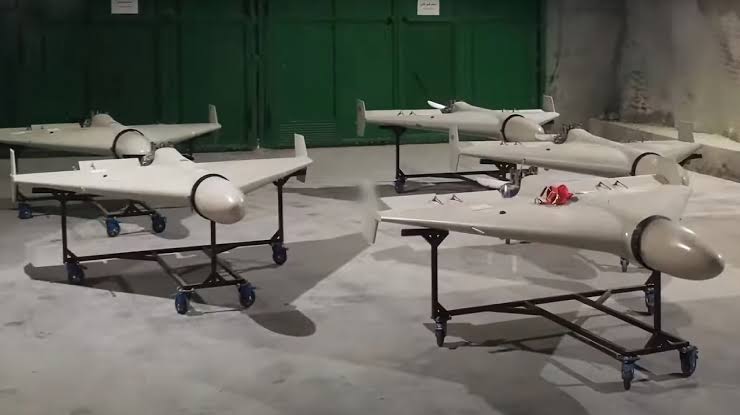
An Iranian drone strike on a United States military facility in Kuwait during the early stage of the war between Washington and Tehran has killed six American service members and left dozens of others seriously injured.

The attack targeted a tactical operations centre at Shuaiba port near Kuwait City on March 1, according to multiple sources cited by CBS News.

The strike occurred in the early hours of the conflict. It triggered a difficult rescue operation after thick smoke filled the building and trapped several personnel inside.

Sources said the situation at the scene was severe. Rescuers struggled to reach the wounded soldiers due to heavy smoke and scattered debris.

More than 30 American military personnel remained hospitalised as of Tuesday night after the attack.

One injured service member is receiving treatment at Brooke Army Medical Centre in San Antonio. Twelve others are being treated at Walter Reed National Military Medical Centre near Washington, D.C. About 25 additional troops are undergoing treatment at Landstuhl Regional Medical Centre in Germany.

Sources said about 20 wounded soldiers were transported to Germany on Tuesday aboard a C-17 military aircraft after their conditions were classified as urgent. Many of them reportedly suffered traumatic brain injuries, memory loss and severe concussions.

Military authorities also deployed over 100 additional medical personnel to the Landstuhl facility to support treatment for the wounded.

Two service members who were initially listed as missing after the strike were later discovered trapped under rubble, according to the sources.

The Pentagon earlier played down the scale of the casualties. On March 1, it stated that five troops had suffered serious injuries while several others sustained minor wounds such as shrapnel injuries and concussions.

Under United States military classification, a serious injury refers to a condition that requires medical attention where doctors believe death is possible but unlikely within 72 hours.

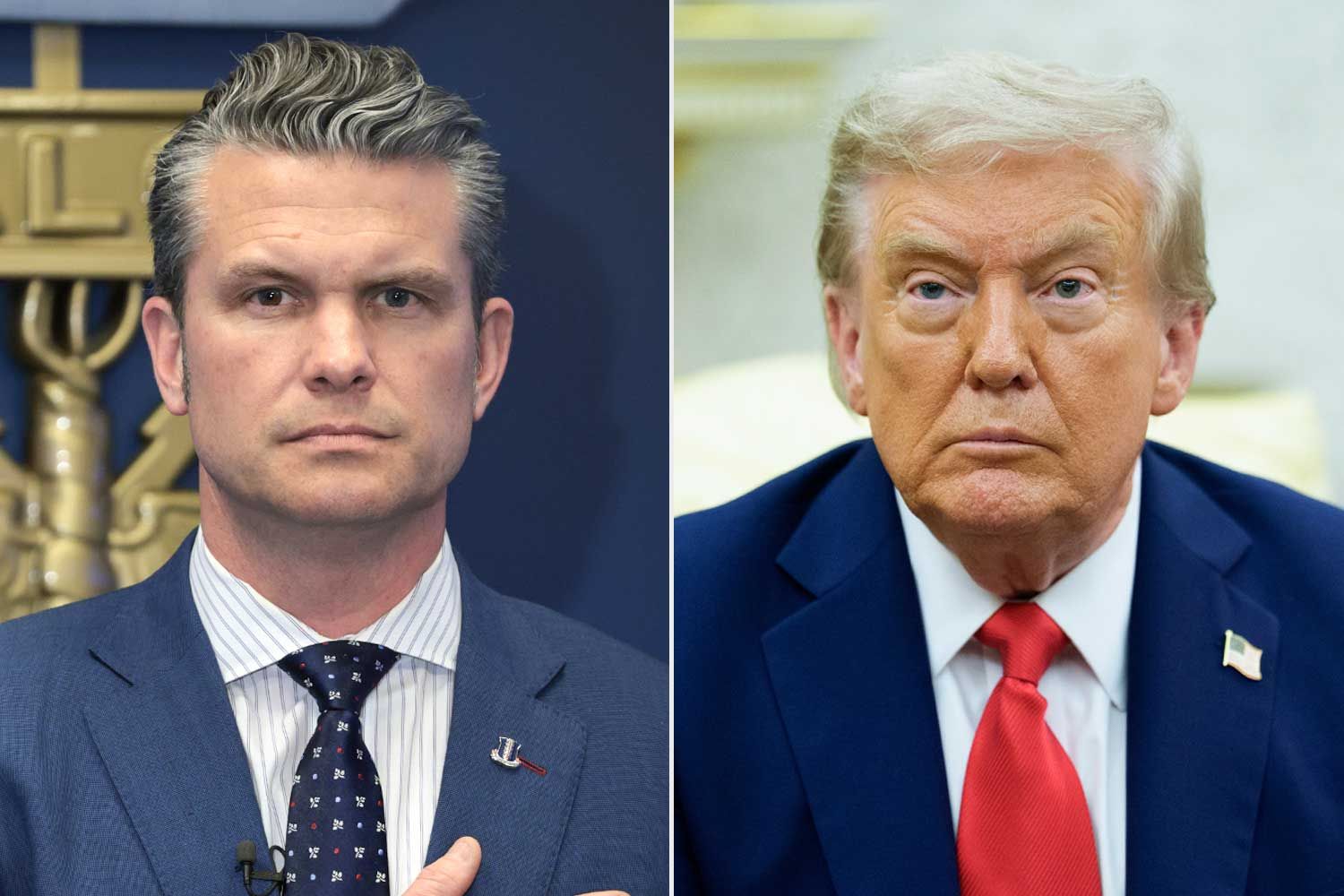
US Defence Secretary Pete Hegseth acknowledged the strike last week while speaking at the Pentagon. He said American air defence systems intercepted most of the incoming projectiles, although one drone managed to penetrate the defences.

“You have air defences, and a lot’s coming in, and you hit most of it. Every once in a while, you might have one, unfortunately, we call it a squirter, that makes its way through. And in that particular case, it happened to hit a tactical operations center that was fortified, but these are powerful weapons,” he said.

Hegseth noted that the drone struck a fortified tactical operations centre and emphasised the destructive power of the weapons used in the attack.

The Kuwait incident formed part of several Iranian strikes on American positions across the region after hostilities began.

At least one US service member was also killed in a separate attack in Saudi Arabia on the same day, although officials have not confirmed how many others were injured in that incident.

On Tuesday, Pentagon spokesman Sean Parnell said around 140 American troops had sustained injuries since the start of the conflict. He did not specify the locations where the injuries occurred.

Parnell said most of the casualties were minor and confirmed that 108 service members had already returned to duty.

However, the Pentagon reported that eight troops remain severely injured and are currently receiving intensive medical care.

The United States military said its bases across the region are protected by extensive air defence systems designed to intercept Iranian missiles and drones. The March 1 attack, however, showed that some projectiles can still evade those defences and cause significant casualties.
Military airstrikes, ground troops repel ISWAP attack in Yobe


By Abdullahi Mukhtar Algasgaini

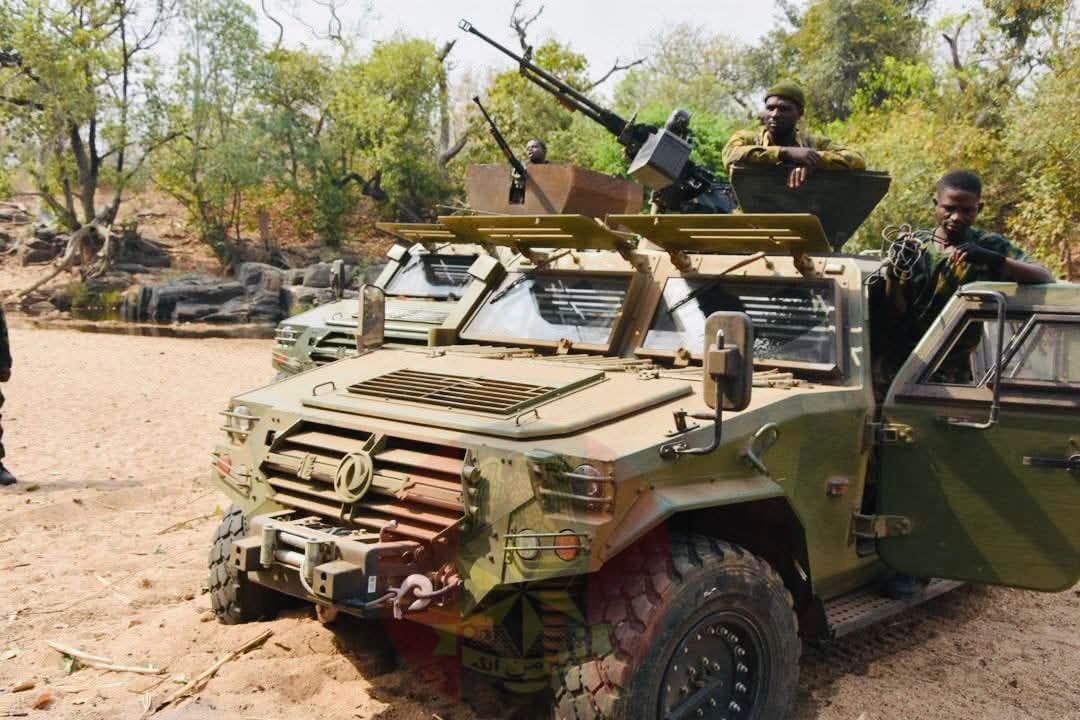
Troops of Operation HADIN KAI (OPHK) have successfully repelled a coordinated attack by the Islamic State West Africa Province (ISWAP) on a military base in Goniri, Gujba Local Government Area of Yobe State, inflicting heavy casualties on the terrorists.

The attack, which unfolded from the night of March 9 into the early hours of March 10, saw ISWAP fighters attempt to overrun the location of the 120 Task Force Battalion. Military sources stated that the terrorists launched the assault from multiple directions, specifically from Goniri village and the Ngamdu junction, in an attempt to encircle the base.

According to a statement released on Wednesday by the media information officer for the Joint Task Force, Lt. Col. Sani Uba, the troops’ surveillance assets detected the advancing threat early, allowing for a coordinated defensive response.

“The gallant troops responded with exceptional manoeuvre and firepower, coordinating their defensive actions while reinforcements and the Air Component of Operation HADIN KAI provided timely and decisive air support,” Lt. Col. Uba said.

The combination of ground firepower and aerial bombardment proved decisive, forcing the militants to retreat in disarray. At least 20 terrorists were confirmed killed during the firefight, including a senior commander identified as Abu Yusu, who served as the Munzir (commander) of the Dursula area.

“Several terrorist bodies were left behind, while troops recovered weapons and equipment abandoned during the retreat, including machine guns, AK-47 rifles, bombs and assorted ammunition of various calibre,” the statement read.

A follow-up patrol conducted in the Gwaigomari area, within the notorious Timbuktu Triangle, led to the recovery of additional bodies of the fighters early on March 11.

While confirming that the troops successfully defended the base, Lt. Col. Uba noted that the intensity of the attack caused damage to some structures and vehicles within the camp. He also confirmed that some troops were injured in the battle. They have since been evacuated and are reportedly in stable condition receiving medical treatment.

The military spokesman emphasized that the location remains firmly under the control of Operation HADIN KAI. Ground forces, still supported by air assets, are currently conducting follow-up operations and search missions in neighbouring communities where some wounded terrorists are believed to be hiding. The military reaffirmed its commitment to the total defeat of terrorist groups operating in the North-East region.

Iran warns no oil will pass through Strait of Hormuz amid war

By Sabiu Abdullahi

Iran’s Islamic Revolutionary Guard Corps (IRGC) has warned that no oil shipments will pass through the Strait of Hormuz as the conflict involving the United States and Israel continues to shake global energy markets.

A spokesperson for the IRGC’s Khatam al-Anbiya Headquarters said on Wednesday that the waterway would remain effectively closed. The official warned that vessels linked to the United States, Israel or their allies could face attack.

“You will not be able to artificially lower the price of oil. Expect oil at $200 per barrel,” the spokesperson said. “The price of oil depends on regional security, and you are the main source of insecurity in the region.”

The warning came as the war, which began on February 28, entered its second week with no sign of easing. The conflict has already caused major fluctuations in global oil prices.

Iran has launched missiles and drones at targets across the Middle East in response to continued attacks by the United States and Israel. The situation has raised fears of deeper disruption to global energy supplies.

The Strait of Hormuz is a vital maritime route for global energy trade. About one-fifth of the world’s oil passes through the narrow waterway. The closure has already slowed oil shipments and affected production in some Gulf countries.

Maritime security firms also reported fresh attacks in the area on Wednesday. Three vessels were struck by projectiles in the Strait of Hormuz. One of them was a Thai-flagged cargo ship that came under attack about 11 nautical miles north of Oman.

Despite the security concerns, U.S. President Donald Trump encouraged commercial vessels to continue using the route.

“I think they should,” Trump said when asked whether ships should keep passing through the strait.

“I think you’re going to see great safety, and it’s going to be very, very quickly,” he added.

Meanwhile, the United Nations warned that the disruption is also affecting humanitarian operations. UN aid chief Tom Fletcher called for special arrangements to allow relief supplies to pass through the strait.

“We’re appealing to all the parties to try and secure those routes, including the Strait of Hormuz, for our humanitarian traffic … so we can reach anyone, anywhere, on the basis of greatest need,” Fletcher said.

“We’re living through a moment right now of grave peril,” he added.

The ongoing disruption has pushed world leaders to consider emergency measures. Members of the Group of Seven and the European Union are reviewing steps to reduce the economic impact of the war.

On Wednesday, the International Energy Agency (IEA) announced that its 32 member countries had agreed to release 400 million barrels of oil from emergency reserves to stabilise the market.

“This is a major action aiming to alleviate the immediate impacts of the disruption in markets,” IEA Executive Director Fatih Birol said.

“But to be clear, the most important thing for a return to stable flows of oil and gas is the resumption of transit through the Strait of Hormuz,” he added.

Energy analysts warn that if shipping through the strait does not resume soon, the global economy could face a serious supply crisis.

Christian Bueger, a professor of international relations at the University of Copenhagen, said the shipping sector is already struggling to operate in the area.

“For the shipping industry right now, it’s impossible to go through the Strait of Hormuz,” he said.

“And if there are not stronger signals in the near future that they can at least try to go through the strait, then we are looking at a major shipping crisis, which can last weeks if not months.”

Several countries have already begun preparing for the disruption. Japan announced plans to release about 80 million barrels of oil from its national and private reserves. Germany and Austria also signalled that they would make part of their emergency reserves available.

Japanese Prime Minister Sanae Takaichi said the country would begin releasing the oil from Monday, noting that about 70 percent of Japan’s oil imports pass through the Strait of Hormuz.

Lawmakers amend Electoral Act, impose N10 million fine, two-year jail for dual party membership

By Sabiu Abdullahi

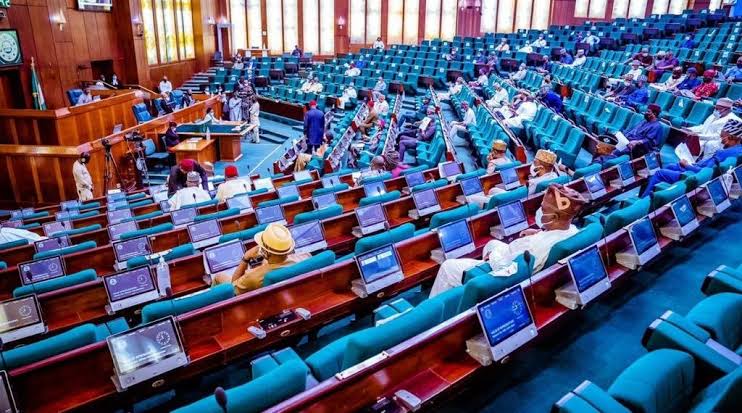
The House of Representatives has approved an amendment to the Electoral Act 2026 that criminalises holding membership in more than one political party.

Under the newly passed provision, any individual found to belong to multiple political parties simultaneously will face a fine of N10 million or a prison term of up to two years.

The lower legislative chamber passed the amendment during Wednesday’s plenary session. It adds three new subsections to section 77 of the Electoral Act 2026, which governs political party membership.

The amendment specifies that anyone registered with more than one party will have such membership nullified.

“A person shall not be registered as a member of more than one political party at the same time,” the provision states.

“Where it is established that a person is registered as a member of more than one political party at the same time, such dual membership shall be void, and the person shall cease to be recognised as a valid member of any political party pending regularisation in accordance with the provisions of this Act and the constitution of the political party concerned.

“A person who knowingly registers or maintains membership in more than one political party at the same time commits an offence and is liable on conviction to a fine of N10,000,000 or to imprisonment for a term of two years, or both.”

If the amendment is signed into law, it is expected to reinforce the rules governing party affiliation and reduce instances of multiple party memberships.

PANIC?: U.S. Navy says it cannot escort ships through Strait of Hormuz for now

By Sabiu Abdullahi

The United States Navy has informed shipping companies that it cannot currently provide military escorts for vessels passing through the Strait of Hormuz because of security risks linked to the ongoing war involving Iran.

According to sources familiar with the discussions, the Navy has declined frequent requests from the shipping industry for protection along the strategic waterway since the conflict began. The sources said the threat of attacks remains too high.

The situation threatens to prolong disruptions to oil shipments from the Middle East. It also contrasts with statements made by U.S. President Donald Trump, who has repeatedly said Washington is ready to protect tankers moving through the strait if necessary.

Shipping activity through the narrow channel has dropped sharply since the United States and Israel launched military operations against Iran more than a week ago. The disruption has halted exports that normally account for nearly one-fifth of global oil supply. As a result, oil prices have climbed to levels last seen in 2022.

Iran has also issued warnings about the waterway. Iranian media reported last week that a senior official of the Revolutionary Guards said the strait had been closed and that Iran would target any vessel attempting to pass. Several ships have already suffered damage during the crisis.

Three shipping industry sources told Reuters that the U.S. Navy has held regular briefings with representatives of the maritime and oil sectors. During those meetings, the Navy explained that it is not able to escort commercial ships at the moment.

The sources, who requested anonymity because of the sensitive nature of the issue, said shipping companies continue to request escorts during nearly every briefing.

One of the sources said the Navy repeated the same position during a briefing on Tuesday. Escorts could only be considered if the threat level drops.

The Pentagon did not immediately respond to requests for comment.

President Trump has nonetheless maintained that the United States is prepared to assist shipping if the situation requires it.

“When the time comes, the U.S. Navy and its partners will escort tankers through the strait, if needed. I hope it’s not going to be needed, but if it’s needed, we’ll escort them right through,” he said on Monday during a press conference at his Mar-a-Lago resort in Florida.

Military officials say planning is under way in case such orders are given. The chairman of the Joint Chiefs of Staff, General Dan Caine, told reporters that the Pentagon is reviewing possible strategies.

“We’re looking at a range of options there,” Caine told reporters at the Pentagon.

A U.S. official also told Reuters that American forces have not yet escorted any commercial vessel through the strait. Earlier on Tuesday, U.S. Energy Secretary Chris Wright removed a post on X in which he had claimed that the Navy had successfully escorted a tanker.

Although a small number of ships have passed through the strait in recent days, most vessels remain anchored nearby as operators wait for improved security conditions.

Energy companies and analysts have warned that a prolonged disruption could have serious consequences for global oil markets. Saudi Aramco, the world’s largest oil exporter, said on Tuesday that continued shipping problems could trigger severe effects.

Experts say protecting the Strait of Hormuz presents major security challenges. Iran has the ability to deploy naval mines and low-cost attack drones that could threaten passing vessels.

“Neither France, the United States, an international coalition or anybody is in a position to secure the ⁠Strait of Hormuz,” said Adel Bakawan, director of the European Institute for Studies on the Middle East and North Africa.

Security incidents have already occurred during the conflict. Two Iraqi port security sources said Iran last week used a remote-controlled explosive boat to damage a crude oil tanker anchored in Iraqi waters.

Another maritime security source said ensuring safe passage could even require control of Iran’s extensive coastline.

“There are not enough naval vessels to do that and the risks remain high even with an escort. One or two vessels can be overwhelmed by a swarm (of fast boats or drones),” the source said.

The Pentagon on Tuesday warned that it could intensify military action against Iran if shipping through the strait does not resume. U.S. officials also said American forces have targeted Iranian vessels suspected of laying mines as well as facilities used to store them.

Israel accuses Iran of hacking security cameras amid Middle East war

By Sabiu Abdullahi

Israel’s cybersecurity directorate has reported “dozens of Iranian breaches into security cameras for espionage purposes” since the outbreak of war in the Middle East, urging the public to remain alert.

“The directorate is working to alert hundreds of camera owners and calls on the public to change their passwords and update their software to prevent any security risk, whether national or personal,” Cyber Israel wrote on X on Monday.

Cyberattacks have been a recurring feature of the tense relationship between Iran and Israel, with both sides engaging in a shadow war that escalated into open conflict last June and again on February 28.

In December 2025, former Israeli prime minister Naftali Bennett — who plans to challenge incumbent Benjamin Netanyahu in this year’s general election — reported a cyberattack on his Telegram account, claiming hackers had accessed his phone.

Private messages, videos, and photographs allegedly taken from Bennett’s phone were later posted on a hacker site named after “Handala,” a character symbolizing the Palestinian cause, and on a related X account.

AFP quoted a cybersecurity expert noting that Iran-linked hackers intensified their activities in the region following attacks on the country.

Israeli cybersecurity firm Check Point highlighted in a report that since the start of the US-Israeli offensive on February 28, hackers have frequently accessed surveillance cameras, which are widely deployed but often poorly secured.

The images were reportedly used to evaluate damage from attacks and to “gather the necessary information” on “the habits (of targeted individuals) or locations to hit,” Gil Messing, head of cyberintelligence at Check Point, told AFP.

Messing added that the hackers “are part of (Iran’s) army” and “are largely supported by the state,” particularly by the Revolutionary Guards and the ministry of intelligence and security.

Last week, the Financial Times reported that Israel had monitored nearly all of Tehran’s traffic cameras for years in preparation for the operation that killed Iran’s supreme leader, Ali Khamenei, on the first day of the offensive.

Pentagon chief Hegseth promises ‘most intense day’ of US strikes as Iran war escalates

United States Secretary of Defence Pete Hegseth has said American forces are preparing for what he described as the most intense round of strikes against Iran since the conflict began.

Hegseth made the remark during a briefing with reporters on Tuesday. He stated that the United States believes it is gaining the upper hand in the war. However, he declined to give a timeline for when the fighting might end. He said President Donald Trump will determine the pace of the campaign.

According to the Pentagon chief, Washington’s military operations are focused on weakening Iran’s missile capacity, destroying its naval forces and ensuring that Tehran can never obtain nuclear weapons.

“We will not relent until the enemy is totally and decisively defeated,” Hegseth said.

“We do so on our timeline and at our choosing. For example, today will be yet again, our most intense day of strikes inside Iran – the most fighters, the most bombers, the most strikes.”

Despite the claims from Washington, Iranian leaders have projected defiance. They have promised that the country will continue to resist the attacks.

“Those mightier than you have not been able to eliminate our nation. Those who have tried have become eradicated themselves,” Iranian official Ali Larijani wrote in a social media post on Tuesday.

Iran has repeatedly denied that it is pursuing nuclear weapons. Authorities in Tehran insist the country’s nuclear programme is peaceful. The denial comes despite earlier claims by President Trump that US strikes in June 2025 had “obliterated” Iran’s nuclear programme.

The conflict has already led to heavy casualties. US and Israeli strikes have killed Iran’s Supreme Leader Ali Khamenei along with more than 1,250 other people. Iran has responded with missile and drone attacks against Israel and other targets across the region.

Iranian forces have also targeted oil facilities in several Gulf countries. The military campaign has disrupted shipping through the Strait of Hormuz, which is one of the world’s most important energy routes. The disruption has pushed global fuel prices higher.

President Trump warned Iran on Monday that it would face “death, fire, and fury” if it continued to block oil shipments through the strategic waterway.

Larijani responded with a warning of his own. He said the strait “will either be a Strait of peace and prosperity for all or will be a Strait of defeat and suffering for warmongers”.

Top US General Dan Caine said American forces are still tracking and striking vessels suspected of laying naval mines in the Gulf. He noted that Washington has not yet decided whether the US Navy will escort oil tankers through the strait.

“If tasked to escort, we’ll look at the range of options to set the military conditions to be able to do that,” Caine said.

The war has also revealed differences in military priorities between the United States and Israel. Last week, Israeli forces struck oil depots in Tehran. The attack triggered large fires and thick smoke across the Iranian capital. The move attracted criticism from some supporters of the war.

Hegseth acknowledged that Israel has its own objectives in the conflict. He indicated that attacks on Iran’s energy infrastructure were not a primary US goal.

“Israel has been a really strong partner in this effort. Where they have different objectives, they pursued them. Ultimately, we’ve stayed focused on ours,” he said.

Questions remain about the long-term aim of the war. President Trump has offered different explanations in recent weeks. His statements have ranged from promoting “freedom” for Iranians to suggesting that a new Iranian leader from within the country’s political system could emerge and cooperate with US and Israeli demands.

When asked how long the conflict might last, Hegseth said the final decision rests with the president.

“The president has set a very specific mission to accomplish, and our job is to unrelentingly deliver that. Now, he gets to control the throttle. He’s the one deciding.”

Sirens heard in Jerusalem after Israel warns of Iranian missiles

By Sabiu Abdullahi

Air raid sirens sounded across Jerusalem and parts of central Israel on Tuesday after the Israeli military alerted residents about missiles launched from Iran. The development came on the 11th day of the ongoing conflict involving the United States, Israel, and the Islamic Republic.

The Israeli military confirmed that its air defence units had been activated in response to the incoming threat. In a statement, the military said, “Defensive systems are operating to intercept the threat.” Shortly after the warning, journalists from AFP reported hearing at least one explosion in Jerusalem.

Emergency service provider Magen David Adom said it had not recorded immediate casualties from the missile attack. However, the agency disclosed that some individuals were hurt while trying to reach shelters. It also stated that several others required medical attention due to shock. According to the service, its teams were attending to “a small number of people who were injured on their way to protected areas, as well as individuals suffering from anxiety.”

Officials said the latest missile strike followed a series of attacks that began after Iran responded to joint military actions carried out by the United States and Israel. First responders reported that at least 11 people have died in Israel since Iran started launching missiles in retaliation. Dozens of others have also sustained injuries.

On Monday, emergency workers reported that shrapnel killed one man and critically injured another in central Israel. Explosions were heard in the area after the Israeli military announced that missiles had been fired from Iran.

Meanwhile, Israeli Prime Minister Benjamin Netanyahu stated that the country’s military campaign against Iran would continue. In a statement issued on Tuesday, he said the operation was “not done yet.” His remarks came after US President Donald Trump suggested that the conflict could end “soon.”

Criticism trails Peoples Gazette for tagging Adamu Garba “extremist” over pro-Iran posts

By Sabiu Abdullahi

Peoples Gazette has faced criticism from some readers after describing former Nigerian presidential aspirant Adamu Garba as an “extremist” over social media posts in which he appeared to support Iran during the ongoing war involving the United States and Israel.

In a report published Monday, the online newspaper claimed Mr Garba had joined “northern Nigerian extremists” circulating pro-Iran narratives online.

The publication said checks on the politician’s X account revealed several posts portraying Iran as gaining the upper hand in the conflict. It also alleged that some videos shared by the former senator were old clips presented as recent developments.

One of the posts cited in the report involved a short video which Mr Garba said showed Iranian strikes affecting power supply in Tel Aviv.

“Tel Aviv is total darkness after Iranian strikes destroyed their electricity grid,” the former Nigerian senator claimed.

Peoples Gazette argued that the footage dates back to 2023 when Israel cut electricity to Gaza during its military response to an attack on a music festival.

The report also mentioned another video which it said was originally recorded in 2024 but was presented as a recent development.

However, several readers pushed back against the publication’s description of the politician as an extremist. Some commenters questioned the use of the label and accused the outlet of applying double standards.

One commenter, Ibrahim Muhammed Abubakar, wrote: “So, how about Southerners backing Trump and Netanyahu?”

Another reader, Sanusi Isa Dan-Ada, also questioned the framing of the report, asking: “He should have joined southerners in amplifying Israel’s war propaganda?”

Salis Aliyu raised a similar concern in the comment section. He wrote: “so what of Extremists Southerners those Pro Israel? Would you also bring them into your news?”

Some readers defended Iran’s position in the conflict.

Nigerian Dan Arewa wrote: “We are Pro- oppressed !”

Another commenter, Ibraheem Majidadi, added: “We are all pro-Iran.”

Others argued that supporting a country in an international conflict should not automatically attract extremist labels.

New Nigerian Order wrote: “I don’t think they are extremists. US & Israel have no right to attack.”

Another commenter, Mohammad Bello, questioned the broader geopolitical context, writing: “And so what Is not a big deal is Nigeria under colonial regime of America/ Israel ? However which year and during which government Nigeria restored its foreign relationship with Israel? Is just like yesterday.”

Despite the criticism, some readers supported the position taken by Peoples Gazette. One commenter, Ehimen Osolease, wrote: “HE’S ALWAYS BEEN A TERRORISTS SYMPATHIZER.”

The debate reflects growing divisions on social media as the conflict involving Iran, the United States and Israel continues to attract strong reactions from Nigerians online.

Iran rejects foreign interference in leadership, envoy replies Trump

By Sabiu Abdullahi

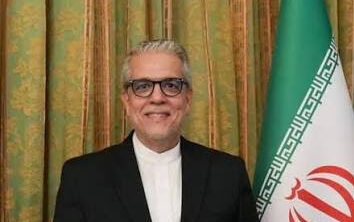
The Iranian Ambassador to Nigeria, Mahdavi Raja, has declared that Iran will not permit any foreign country to dictate its internal political affairs.

The envoy made the remarks in response to comments attributed to United States President Donald Trump about Iran’s leadership.

During an interview on Trust TV, Raja said decisions about the country’s political leadership belong solely to the Iranian people. He stressed that no external power would influence such matters.

His comments come at a time of rising tensions in the Middle East involving Iran, the United States and Israel. Recent reports of attacks on Iranian facilities have raised fears about the stability of the region. The three countries have recorded casualties amid the hostilities.

The ambassador said the situation inside Iran remains stable despite what he described as aggression by the United States and Israel. He stated that security agencies continue to operate effectively while government activities are proceeding as usual.

Raja said the country’s leadership structure had already been settled following the election of Ayatollah Seyyed Mojtaba Hosseini Khamenei as the new Supreme Leader.

“With these decisions, the country’s leadership structure has been clearly determined and we are confident that the administration of the country will continue smoothly and more effectively,” the ambassador said.

He also said the Iranian population remains united in defence of the country. According to him, Iran has faced external pressure in the past and has always shown resilience.

The envoy acknowledged that some facilities and infrastructure had been affected during recent hostilities. However, he maintained that major national institutions remain operational.

“The reality is that such attacks cannot break the will of the Iranian people. On the contrary, they have strengthened our unity and determination to defend our sovereignty and territorial integrity,” he said.

Raja also rejected Trump’s reported suggestion that the United States should play a role in determining Iran’s leadership. He described such a proposal as interference in the country’s domestic matters.

“This is an internal issue of Iran and we do not allow anybody or any country to interfere in our domestic affairs,” he said.

He added: “Iran is an independent country. We make our own decisions and our people will not allow foreigners to determine our internal affairs.”

The ambassador insisted that despite the current tensions in the region, Iran’s institutions remain stable and the government continues to function effectively.