News

Nigerian Senate rejects bill to mandate electronic transmission of election results

By Sabiu Abdullahi

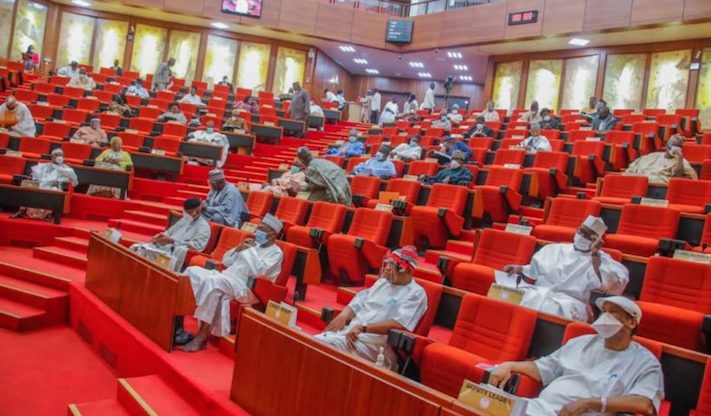
The Nigerian Senate has voted down a proposal seeking to amend the Electoral Act to make the electronic transmission of election results compulsory.

The decision was taken on Wednesday when lawmakers rejected an amendment to Clause 60, Subsection 3, of the Electoral Amendment Bill. The proposal aimed to remove the Independent National Electoral Commission’s (INEC) discretion over how election results are transmitted.

If approved, the amendment would have legally required INEC presiding officers to electronically upload results from every polling unit directly to the Result Viewing Portal (IREV) in real time. This process was to occur immediately after Form EC8A had been duly signed and stamped by the presiding officer, with party agents countersigning the document.

However, the Senate chose to maintain the existing and widely debated provision of the Electoral Act.

Under the current law, “the presiding officer shall transfer the results, including the total number of accredited voters and the results of the ballot, in a manner as prescribed by the Commission.”

By retaining this clause, lawmakers have allowed INEC to continue determining whether electronic transmission will be used. Critics insist that this flexibility created gaps that were allegedly exploited during the 2023 general elections.

The Senate’s decision has sparked strong reactions across the country, with many Nigerians and civil society organisations expressing disappointment. These groups had backed the amendment, describing it as a vital safeguard against manual manipulation of results at collation centres.

Analysts described the move as a setback for democratic development in Nigeria.

“We thought the National Assembly would learn from the failures of 2023 where the IREV portal became a source of national embarrassment,” Gerald Ede said. “By rejecting mandatory transmission, the Senate has essentially given a green light for the status quo of ‘manual miracles’ and result manipulation to continue.”

Supporters of the amendment had viewed mandatory real-time transmission as a crucial measure to rebuild public trust in elections.

The rejection comes at a time when calls for comprehensive electoral reforms are growing, particularly reforms designed to reduce human interference in the electoral process.

Opponents of the Senate’s position argue that leaving the “manner” of transmission to INEC’s discretion, especially given its past record of “technical glitches” during key stages of result collation, could fuel further electoral disputes and weaken the legitimacy of elected officials.
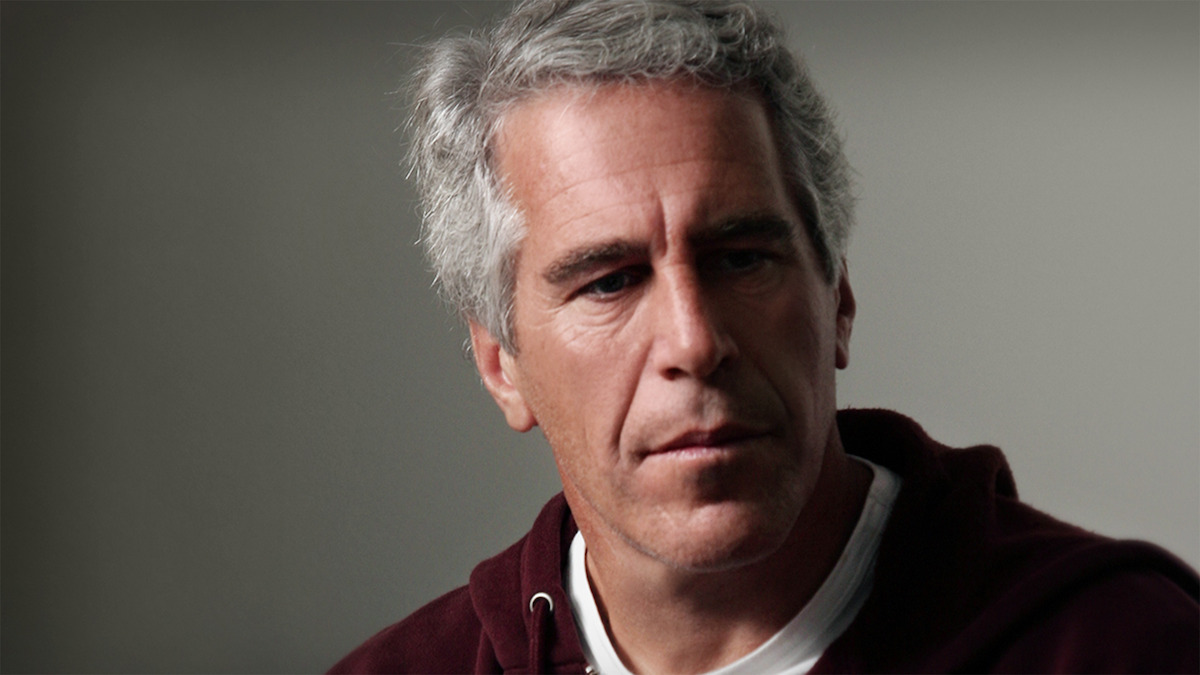
Despite his evil notoriety, Epstein was afraid of Nigerian scammers

By Ibrahym El-Caleel

Jeffery Epstein, despite being a MOSSAD agent who successfully lured high profile individuals and world leaders into his web to obtain their dirty secrets, was afraid of Nigerians scamming him in oil deal.

Epstein is afraid of Nigerians. Hehe.

Ladies and gentlemen, I want to officially tell you that I am also afraid of Nigerians from now going forward.

But jokes aside, Nigerians are a special breed. If a Nigerian decides to settle for anything, he ensures that he masters it to the best of his or her ability.

In the wake of the US’s disregard for Nigeria’s sovereignty in December last year, I read a post on X made by a security analyst. The handle is @GallantDaletian, and he opined that yes, the US military might have the tech, air power, and naval dominance, but when it comes to guerrilla and asymmetric warfare, the Nigerian military is a force to be reckoned with!

He said, the US may have advanced technology, drones, and aircraft carriers, but Nigeria’s military has mastered the art of unconventional warfare, leveraging local knowledge and intelligence to outmaneuver adversaries.

It’s not about comparing strengths, but acknowledging different areas of expertise. Nigeria’s focus on regional security, counter terrorism, and peacekeeping has earned it respect, while the US excels in global reach and high tech warfare.

Clearly Jeffery Epstein, despite his notoriety, believes that the fear of Nigerians is the beginning of wisdom. Sharp guy.

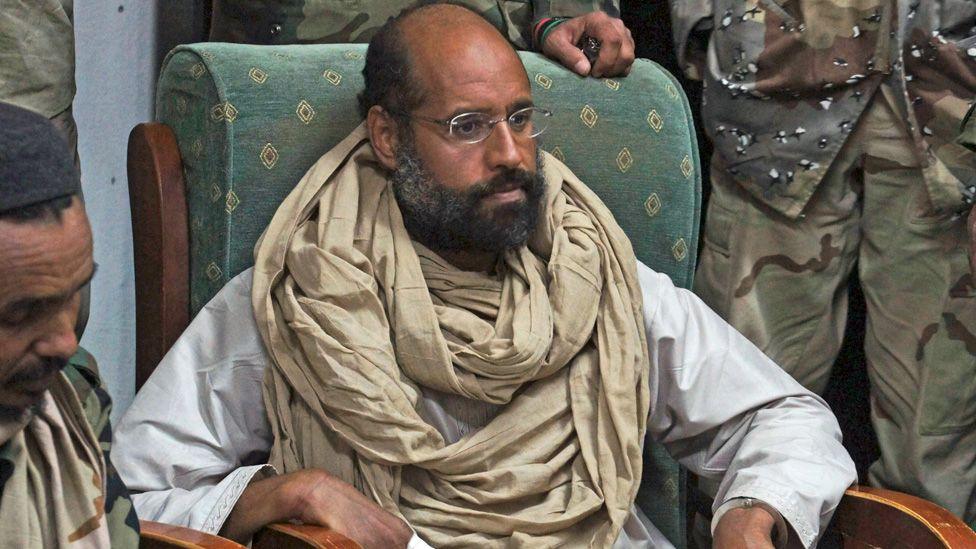
Saif al-Islam Gaddafi, son of former Libyan leader, killed in Zintan

By Hadiza Abdulkadir

Saif al-Islam Gaddafi, the son of Libya’s former leader Muammar Gaddafi, has been killed in the western Libyan town of Zintan, according to local authorities and sources close to the family.

He was reportedly shot after armed men stormed his residence, disabling security cameras before opening fire. The circumstances surrounding the attack remain unclear, and no group has claimed responsibility so far.

Once seen as his father’s political heir, Saif al-Islam became a central and controversial figure following the 2011 uprising that ended the Gaddafi regime. He was captured that year, later sentenced to death in absentia for war crimes, and released in 2017 under an amnesty law.

In recent years, he had sought a return to politics, including an unsuccessful attempt to run in Libya’s postponed presidential election.

Libya’s Attorney General has announced an investigation into the killing. Analysts say his death could have political implications in a country still struggling with deep divisions and instability more than a decade after the revolution.

US sends military team to Nigeria as attacks by insurgent groups escalate

By Anas Abbas

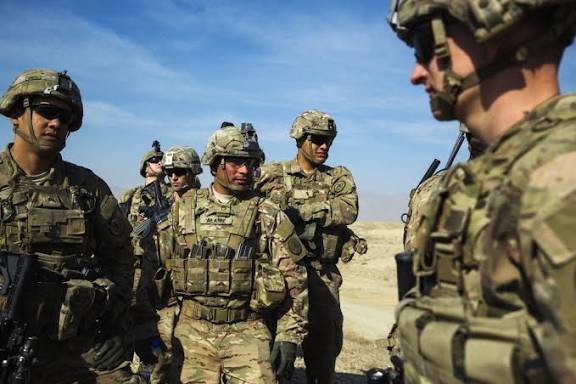
The United States has deployed a small contingent of military personnel to Nigeria in a move officials say is intended to strengthen cooperation against extremist violence in the West African country.

Gen. Dagvin R.M. Anderson, commander of the U.S. Africa Command (AFRICOM), confirmed the deployment on Tuesday, saying the team arrived after discussions between U.S. and Nigerian authorities on intensifying efforts to counter threats from Boko Haram, the Islamic State West Africa Province (ISWAP) and other armed groups.

The deployment is the first acknowledgment of U.S. forces on the ground in Nigeria since America carried out airstrikes there on Christmas Day, targeting fighters linked to the Islamic State. While details about the size, exact mission and location of the U.S. team have not been released, military officials describe their role as focused on intelligence support, coordination and enhancing Nigerian capabilities rather than leading combat operations.

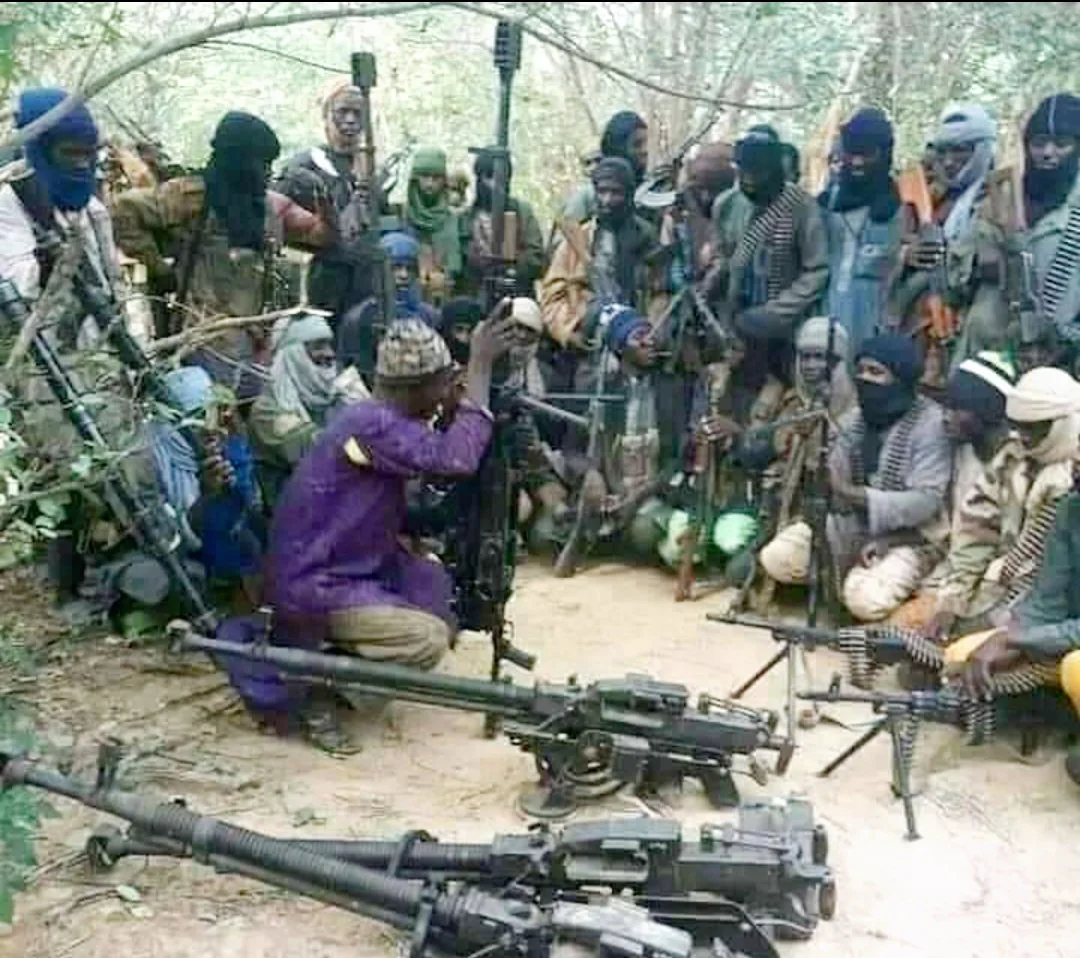
Nigeria faces persistent insecurity across its north and northwest, where Boko Haram and ISWAP factions have intensified attacks on military convoys and civilian communities. These groups have waged an insurgency for nearly two decades, displacing millions and forcing the government to seek varied forms of assistance to suppress the violence.

The move follows growing diplomatic engagement between Abuja and Washington. In recent months, U.S. officials have reportedly urged Nigeria to take stronger action against extremist violence, even as the Nigerian government rejects accusations that it is failing to protect vulnerable populations. Nigerian authorities emphasize that operations target all armed groups that threaten security, irrespective of the victims’ religious identities.

The U.S. has also conducted surveillance flights over Nigeria from bases in neighboring countries, a precursor to the December airstrikes. Those strikes reportedly killed multiple militants in Sokoto State, conducted in coordination with Nigerian forces.

While the current deployment is limited in scope, it marks a notable shift toward deeper military cooperation between the two countries at a time when Nigeria’s security challenges remain acute.

Nigeria is now global reference for credible reform leadership—World Bank

By Sabiu Abdullahi

The World Bank has described Nigeria as a country increasingly cited around the world as a model of steady and credible reform leadership.

This is contained in a statement signed by Bayo Onanuga, Special Adviser to the President on Information and Strategy, dated February 3, 2026.

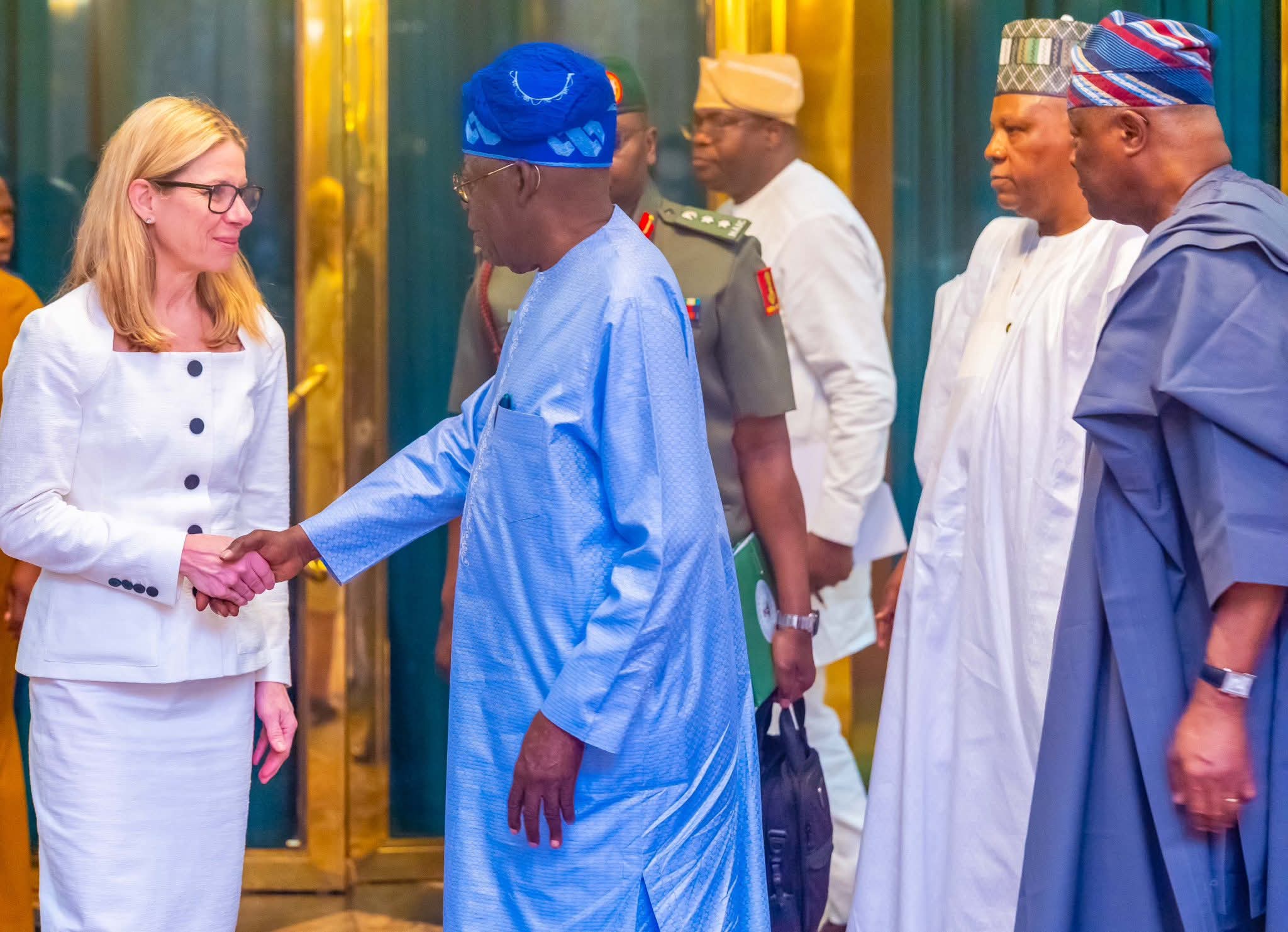
The remark came from the World Bank’s Managing Director of Operations, Anna Bjerde, during a meeting with President Bola Ahmed Tinubu and Vice President Kashim Shettima at the State House in Abuja on Tuesday. Other officials of the Bank accompanied her to the meeting.

Bjerde praised Nigeria’s reform efforts over the past two years, with emphasis on the government’s determination to remain consistent despite economic pressures. She said the approach and the visible outcomes had strengthened confidence among investors, policymakers and players in the private sector.

She also drew attention to the upcoming Country Partnership Framework, which she said aligns closely with Nigeria’s own development agenda, especially the target of achieving a $1 trillion Gross Domestic Product and 7 per cent economic growth.

President Tinubu reaffirmed his administration’s commitment to the reform agenda and acknowledged the difficulties that accompanied the process. He said “there will be no turning back.”

The President explained that although the removal of fuel subsidy and the unification of exchange rates initially pushed inflation upward, the situation has improved, with inflation easing and the naira showing signs of stability. He added that the developments have helped to boost investor confidence and improve the business environment.

According to President Tinubu, the reforms are built on transparency, accountability and policy stability.

He identified agriculture as a major focus of his administration and said investments have been directed toward the sector through the establishment of zonal mechanisation centres, improved seed development and better access to fertilisers. He noted that support from the expanding petrochemical industry has also helped to improve output and encourage farmers to form strong cooperatives.

“Nigeria is the heart of the continent, and we must do what’s necessary to strengthen the economy, particularly looking at the young population of this country, looking at the vast area of arable lands.

“How do we employ mechanisation and make agriculture easier? I have embarked upon that. We have created zonal mechanisation centres to help the farmers,” he said.

President Tinubu urged the World Bank to strengthen its partnership with Nigeria through faster financing, reduced bureaucracy, shared development models, effective risk management and improved capacity building to support inclusive growth.

In her remarks, Bjerde stressed the need to improve access to finance for small, medium and large enterprises, with special attention to mid-sized businesses, which she described as critical to job creation.

She also commended Nigeria’s emphasis on early childhood development and described it as vital to long-term productivity. She assured the country of the Bank’s continued support in that area.

“Many countries around the world, even middle-income and upper-middle-income countries, are suffering again with rising levels of stunting. And here, we’ve identified early childhood development as a strong entry point. So, all of this, to say we’re looking forward to a new country partnership framework,” she said.

Bjerde restated the World Bank Group’s commitment to a programme that reflects Nigeria’s priorities and combines public and private sector support. She added that the Bank, through the International Development Association, the International Bank for Reconstruction and Development and the International Finance Corporation, stands ready to sustain support for Nigeria’s reform agenda.

The Minister of Finance and Coordinating Minister of the Economy, Wale Edun, as well as the Deputy Chief of Staff to the President, Ibrahim Hassan Hadejia, attended the meeting.

Troops destroy ISWAP detention facilities in Timbuktu Triangle

By Sabiu Abdullahi

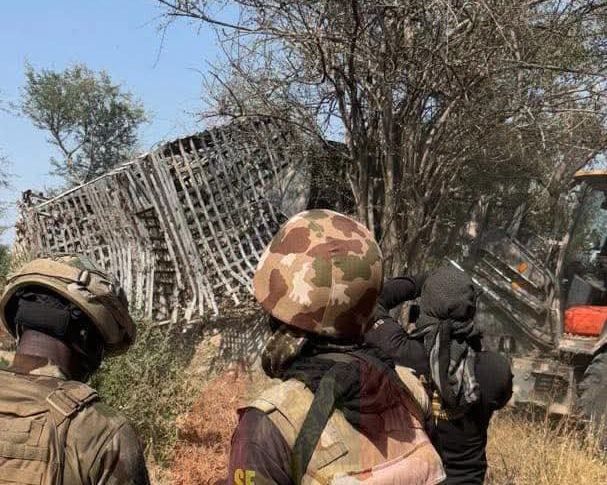
Troops of the Joint Task Force, North East, Operation HADIN KAI (OPHK), have recorded a major operational success with the discovery and destruction of ISWAP terrorist detention facilities deep inside the Timbuktu Triangle in Gujba Local Government Area of Yobe State.

The disclosure was contained in a statement signed by Sani Uba, Lieutenant Colonel, Media Information Officer, Headquarters Joint Task Force, North East Operation HADIN KAI, dated 3 February 2026.

The breakthrough followed coordinated military actions carried out over the last two weeks. The development signals a steady push by security forces into territories once regarded as inaccessible and reflects the growing strength of ongoing counter-insurgency efforts in the North East.

The operation took place under Operation DESERT SANITY V. Sustained military pressure, supported by actionable intelligence, compelled the terrorists to abandon key installations within their strongholds. Military sources said the outcome showed that OPHK troops had penetrated inner hideouts of ISWAP, which reduced both the group’s operational space and morale.

Between 21 January 2026 and the present date, troops uncovered and destroyed three major detention facilities hidden within the Timbuktu Triangle forest, an area that spans parts of Borno and Yobe states. Initial assessments revealed that the facilities could hold as many as 300 detainees, which pointed to their importance within ISWAP’s structure. Security findings also linked the offensive to the escape of more than 70 captives who had been held by the terrorists. Several of the escapees later resurfaced in communities such as Goniri, Buratai and Mandaragirau.

One of the freed captives, Malam Jidda Ba Jidda, from Kufi village near Buratai in Biu Local Government Area, said he was abducted on 22 December 2025. He disclosed that he escaped during a gun duel between the terrorists and advancing troops in the Timbuktu Triangle.

Military encounters in the area led to heavy losses for ISWAP. No fewer than 32 fighters were neutralised, including two Qaids and three Munzirs. Several others sustained serious injuries during confrontations with troops.

After troops cleared the area, the three detention facilities were demolished to prevent any future use by the terrorists. The military described the mission as successful and incident-free, citing the discipline and combat efficiency of OPHK personnel.

Security officials said the destruction of the camps went beyond a tactical gain. The action weakened ISWAP’s internal control system, disrupted its ability to detain civilians and demand ransom, and further limited its freedom of movement. They added that the escape of many detainees reduced a major source of funding for the group and could provide useful intelligence for ongoing operations.

While the overall security situation across the theatre remains calm but unpredictable, the military said troop morale and operational effectiveness remain satisfactory. The Armed Forces reaffirmed their commitment to sustained pressure on terrorist elements, denial of safe havens, and the restoration of lasting peace and security across the North East.

BUK hosts NERDC executive secretary, scholars on curriculum, prospects of history’s return to schools

By Uzair Adam

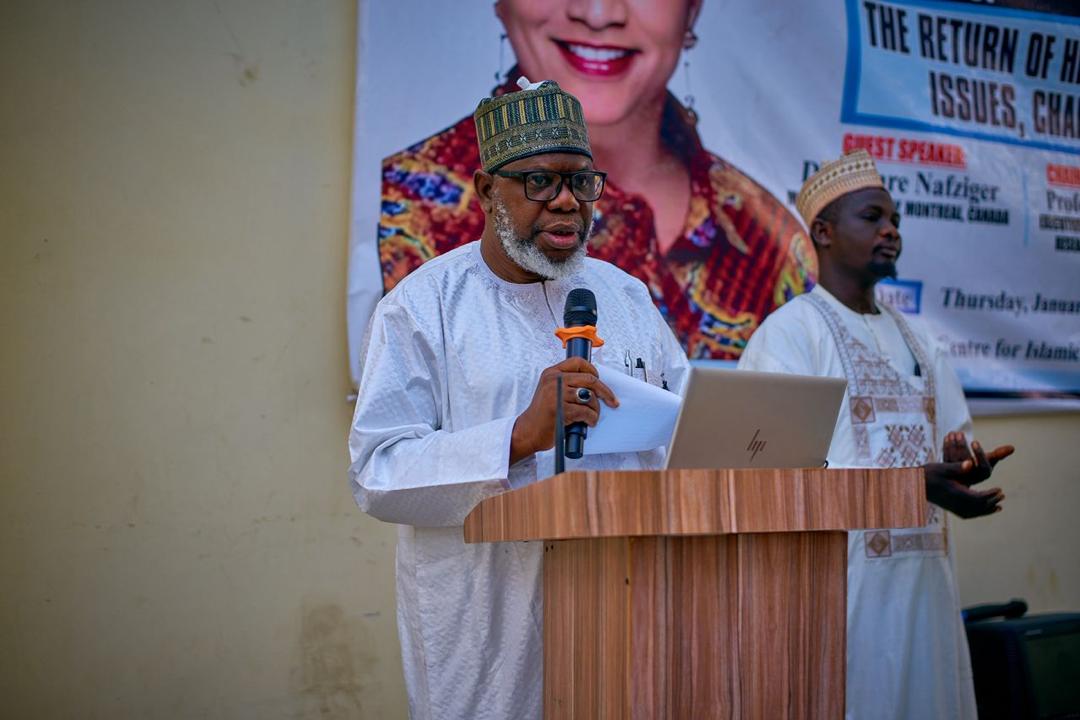
Bayero University, Kano (BUK), on Thursday hosted a public lecture on the reintroduction of History into Nigerian schools, highlighting the issues, challenges and prospects associated with the subject’s return to the national curriculum.

The Daily Reality reports that the Executive Secretary of the Nigerian Educational Research and Development Council (NERDC), Professor Salisu Shehu, served as Chairman of the Occasion.

The lecture, titled “The Return of History in Nigerian Schools: Issues, Challenges and Prospects,” was organised by the Department of History under the Faculty of History and Development Studies.

Dr. Nanre Nafziger, an Assistant Professor of Black and African Studies at McGill University, Canada, delivered the lecture, offering a conceptual explanation of History and its relevance to human and societal development.

In her presentation, Nafziger said History extends beyond common assumptions that limit it to the narration of events, wars or prominent individuals, stressing that it examines how the past shapes the present and how the present influences the future.

She explained that historical knowledge is grounded in patterns and processes that emerge from human and societal evolution, adding that History addresses causation, time, space, consequences and the impact of both human and natural phenomena.

According to her, the discipline also encompasses peoples, communities, societies, geopolitical territories, empires, states and nationhood, as well as norms, values, cultures, traditions and civilizations.

Nafziger noted that History is closely connected to institutions such as politics, the economy, education and technological development, arguing that this interconnectedness makes it a fundamental component of educational content at designated levels.

She said the renewed emphasis on History in Nigerian schools was informed by these considerations, alongside the need to transform and update educational curricula.

Under the revised curriculum, Nafziger explained, History will be taught as a stand-alone subject at the primary level from Primary One to Six, as well as at Junior Secondary School levels One to Three.

At the senior secondary level, she added, History will be infused into compulsory subjects, including Citizenship and Heritage Studies.

She further stated that the new History curricula were developed using new approaches and feature elements that are development-focused, context-sensitive, competency- and outcome-based, thematic and spiral in structure, as well as aligned with 21st-century educational standards.

The public lecture attracted academics, students and other stakeholders, and formed part of ongoing discussions within the academic community on the role of History in national education and development.

Despite peace agreement, bandits raid Katsina community, burn down homes, vehicles

By Sabiu Abdullahi

Residents of Doma community in Faskari Local Government Area of Katsina State have been thrown into renewed fear after armed bandits carried out a fresh attack on the area, despite a peace and surrender agreement earlier reached between local authorities and armed groups operating there.

It was gathered on Tuesday that the attackers arrived in Doma in large numbers, opened fire on residents, and set several houses and vehicles on fire.

According to a report by an online Nigerian newspaper, SaharaReporters, the incident has unsettled the community, especially as it came after a reported peace agreement between stakeholders in Faskari Local Government Area and bandit leaders. The deal was expected to end hostilities and encourage displaced residents to return to their homes.

A Katsina-based security expert, Bakatsine, confirmed the development and warned that the attack was still ongoing in Doma and nearby communities within Faskari LGA.

Bakatsine raised concerns over the safety of civilians and appealed for immediate security intervention in the area.

“Urgent deployment of security forces is needed to Doma and surrounding communities in Faskari LGA to protect civilians, stop the ongoing violence, and prevent further loss of lives and property,” the alert stated. “Immediate action could save lives.”

At the time of filing this report, there were concerns that casualties may have been recorded. However, the exact number of those killed or injured could not be independently verified.

Faskari Local Government Area remains one of the areas most affected by insecurity in Katsina State, with years of persistent bandit attacks, kidnappings, cattle rustling, and large-scale displacement of residents.

On September 17, 2025, SaharaReporters reported that a known bandit commander, Isya Akwashi Garwa, who was armed with an AK-47 and ammunition, released 28 abducted persons in the local government area after a peace arrangement.

Those released were mostly residents of Mairua, Kanen-haki, and Yar Dabaru communities, who had spent weeks in captivity.

Local authorities later confirmed that the release followed reconciliation efforts aimed at restoring peace and reducing violence in the area.

A security source, Zagazola Makama, also revealed on X that community leaders in Faskari welcomed the development and described it as a positive step. They urged all parties involved to sustain the “peace process.”

The leaders also appealed to the bandit commander to persuade other armed groups still carrying out attacks in the area to lay down their arms and embrace peace.

DSS arraigns ex-AGF Malami, son over terrorism financing, illegal firearms possession

By Sabiu Abdullahi

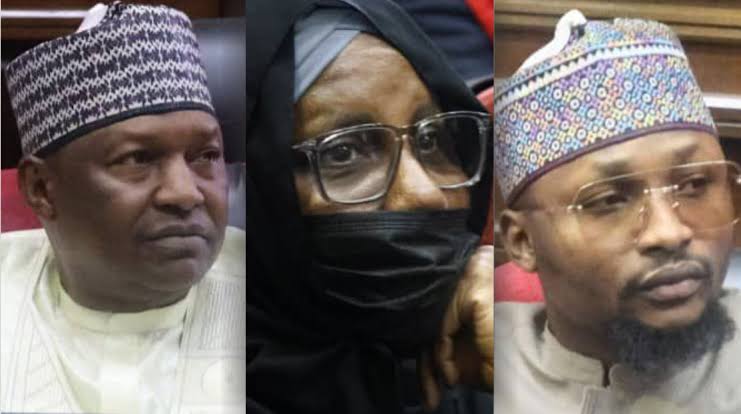
The Department of State Services (DSS) on Tuesday arraigned former Attorney General of the Federation and Minister of Justice, Abubakar Malami (SAN), alongside his son, Abdulaziz Abubakar Malami, at the Federal High Court in Abuja. They face allegations of terrorism financing, aiding and abetting terrorism, and unlawful possession of firearms and ammunition.

The defendants appeared before Justice Joyce Abdulmalik, who was presented with a five-count criminal charge filed by the DSS under the Terrorism (Prevention and Prohibition) Act, 2022, and the Firearms Act, 2004.

Court documents revealed that Malami, Nigeria’s chief law officer until 2023, was charged solely under Count One, while both he and his son were jointly charged under Counts Two to Five, all relating to illegal possession of firearms and ammunition.

Count One alleges that in November 2022, at the Federal Ministry of Justice in Abuja, Malami knowingly abetted terrorism financing by refusing to prosecute suspected terrorism financiers whose case files had been submitted to his office. The offence is said to violate Section 26(2) of the Terrorism (Prevention and Prohibition) Act, 2022.

Counts Two to Five accuse the father and son of preparatory acts of terrorism and illegal possession of firearms and ammunition without a licence. According to the DSS, in December 2025, at their residence in Gesse Phase II, Birnin Kebbi Local Government Area of Kebbi State, the defendants were found with a Sturm Magnum 17-0101 firearm, sixteen live Redstar AAA 5’20 cartridges, and twenty-seven expended Redstar AAA 5’20 cartridges.

Count Two states that the possession of the firearm and ammunition without a licence was preparatory to committing an act of terrorism, contrary to Section 29 of the Terrorism (Prevention and Prohibition) Act, 2022. Count Three alleges unlawful possession of the Sturm Magnum firearm without a licence, contrary to Section 3 of the Firearms Act, 2004. Counts Four and Five charge the defendants with illegal possession of sixteen live rounds and twenty-seven expended cartridges respectively, contrary to Section 8(1) of the Firearms Act, 2004.

When the charges were read in court, both Malami and his son pleaded not guilty to all five counts.

Following the plea, DSS counsel Dr. C.S. Eze requested that the defendants be remanded in DSS custody pending trial, citing the seriousness of the offences and the provisions of the relevant laws. Lead defence counsel S.A. Alua, SAN, applied orally for bail, arguing that the defendants were entitled to it pending trial.

Justice Abdulmalik declined the oral application, noting that the Federal High Court can only consider a properly filed written application for bail. The trial judge adjourned the matter to February 20 for hearing on the bail application and possible commencement of the trial.

The charges, as read in court, include:

“That you, Abubakar Malami of Gesse Phase II Area, Birnin Kebbi LGA, Kebbi State, Adult, male, sometime in November, 2022 at Federal Ministry of Justice, Maitama, Abuja, within the jurisdiction of this honourable court, did knowingly abet terrorism financing by refusing to prosecute terrorism financiers whose casefiles were brought to your office as the Attorney-General of the Federation, for prosecution, and thereby committed an offence contrary to and punishable under Section 26 (2) of Terrorism (Prevention and Prohibition) Act, 2022.”

“That you Abubakar Malami and Abdulaziz Abubakar Malami… did engage in a conduct in preparation to commit act of terrorism by having in your possession and without licence, a Sturm Magnum 17-0101 firearm, Sixteen (16) Redstar AAA 5°20 live rounds of Cartridges and Twenty-Seven (27) expended Redstar AAA 5’20 Cartridges, and thereby committed an offence contrary to and punishable under Section 29 of Terrorism (Prevention and Prohibition) Act, 2022.”

“That you… did have in your possession a Sturm Magnum 17-0101 firearm, sixteen (16) Redstar AAA 5’20 live rounds of cartridges, and twenty-seven (27) expended Redstar AAA 5’20 cartridges, all without licence, contrary to the Firearms Act, 2004, and punishable under Section 27 (1) of the same Act.”

US Congressman Riley meets Plateau governor, thanks him for “protecting Christians, other vulnerable population in Middle Belt”

By Sabiu Abdullahi

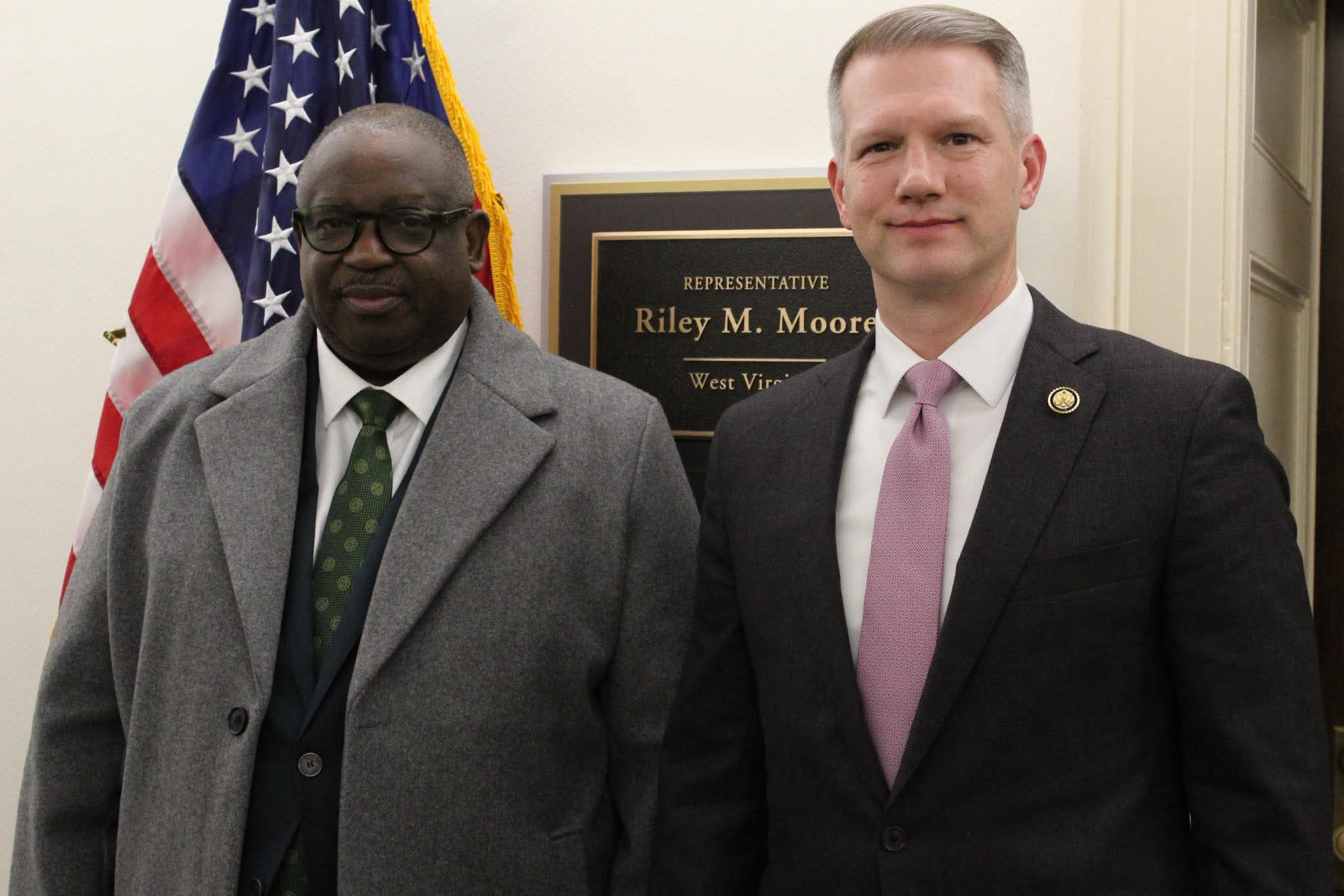
US Congressman Riley M. Moore on Wednesday expressed his honor at meeting with the Governor of Plateau State, Caleb Mutfwang, during a visit.

This is contained in a Facebook post by the congressman today Tuesday.

Moore described the meeting as “meaningful and productive,” highlighting discussions on strengthening the relationship between the United States and Nigeria.

The Congressman reiterated his commitment to collaborating with the Nigerian government to tackle security and economic challenges.

He specifically addressed the plight of Christian communities facing persecution in the region, saying, “God bless you, Governor, for what you do to protect Christians and other vulnerable populations in the Middle Belt.”

The visit comes amid recent debates in Nigeria over claims of a so-called “Christian genocide.” Critics of the term have pointed out that attacks in the country affect people of all religious backgrounds, and that the notion of genocide against Christians is misleading.

Analysts argue that violence in Nigeria’s Middle Belt is often driven by banditry, herder-farmer conflicts, and other socio-economic factors, rather than targeting any single religious group.

Moore’s engagement shows ongoing diplomatic interest in supporting communities facing violence, while navigating the complex realities of Nigeria’s multi-religious society.