News

Tinubu heads to United States Tuesday for talks as Trump threatens military action over alleged Christian killings

By Sabiu Abdullahi

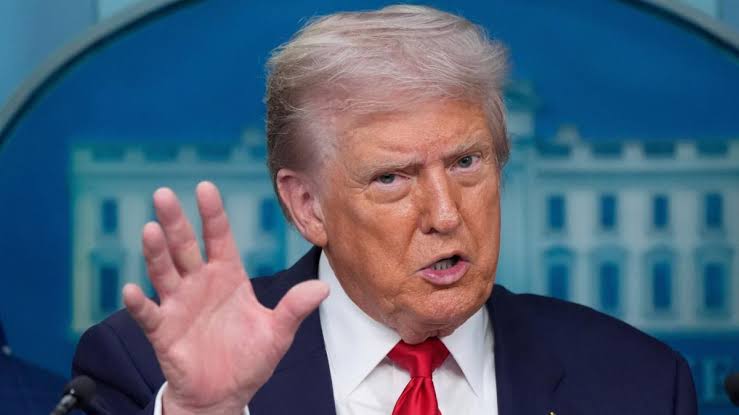
President Bola Tinubu is expected to travel to the United States on Tuesday for diplomatic discussions with top American officials amid escalating tensions following U.S. President Donald Trump’s threat to deploy military force in Nigeria over alleged attacks on Christians.

Presidential sources told newsmen that Tinubu’s trip would focus on strengthening bilateral relations and addressing recent concerns raised by the U.S. government.

The source added that Trump has “delegated his Vice, James David Vance, to meet with Tinubu during the visit,” unless there are last-minute changes.

The planned meeting comes days after Trump claimed that Christians in Nigeria were facing “genocide” and warned that the U.S. might intervene militarily if the killings did not stop.

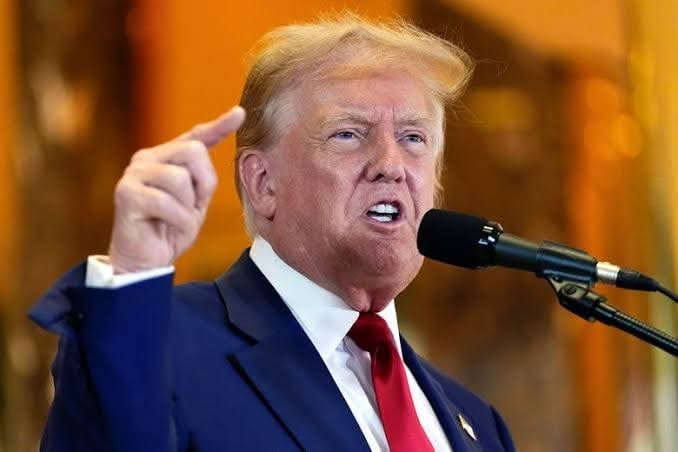
Trump stated, “If the Nigerian Government continues to allow the killing of Christians, the U.S.A. will immediately stop all aid and assistance to Nigeria, and may very well go into that now disgraced country, ‘guns-a-blazing,’ to completely wipe out the Islamic terrorists who are committing these horrible atrocities.”

“I am hereby instructing our Department of War to prepare for possible action. If we attack, it will be fast, vicious, and sweet, just like the terrorist thugs attack our cherished Christians,” he added.

In response, President Tinubu denied the allegations of religious persecution, insisting that Nigeria remains committed to protecting the rights of all faiths.

“Nigeria stands firmly as a democracy governed by constitutional guarantees of religious liberty,” Tinubu said in a statement released on Saturday.

He added that since assuming office in 2023, his administration “has maintained an open and active engagement with Christian and Muslim leaders alike and continues to address security challenges which affect citizens across faiths and regions.”

The President dismissed claims of religious intolerance as false and misleading.

“The characterisation of Nigeria as religiously intolerant does not reflect our national reality, nor does it take into consideration the consistent and sincere efforts of the government to safeguard freedom of religion and beliefs for all Nigerians,” he declared.

He reiterated that “religious freedom and tolerance have been a core tenet of our collective identity and shall always remain so. Nigeria opposes religious persecution and does not encourage it.”

Meanwhile, presidential aide Daniel Bwala said the forthcoming visit aims to strengthen cooperation between both nations on counterterrorism and regional stability.

“Both President @officialABAT and President @realDonaldTrump have shared interest in the fight against insurgency and all forms of terrorism against humanity,” Bwala said.

He noted that the Trump administration had “assisted Nigeria a lot by authorising the sale of arms,” adding that Tinubu’s government has “adequately utilised the opportunity in the fight against terrorism for which we have massive results to show for it.”

Bwala also disclosed that any differences in perception regarding the nature of terrorist activities in Nigeria “would be discussed and resolved by the two leaders when they meet in the coming days, either in State House or White House.”

Tinubu further emphasized that his administration remains committed to working with the U.S. and other international partners “to deepen understanding and cooperation on protection of communities of all faiths.”

“Nigeria is a country with constitutional guarantees to protect citizens of all faiths,” he said.

“Our administration is committed to working with the United States government and the international community to deepen understanding and cooperation on protection of communities of all faiths,” Tinubu added.

Kano State Council approves ₦4.9bn for education projects

By Hadiza Abdulkadir

The Kano State Executive Council has approved ₦4,931,962,184.11 for key projects aimed at revitalizing the education sector across the state. The approvals, made during the Council’s 33rd meeting chaired by Governor Abba Kabir Yusuf on Saturday, November 1, 2025, cover initiatives under both the Ministry of Education and the Ministry for Higher Education.

According to a statement signed by the Commissioner for Information and Internal Affairs, Comrade Ibrahim Abdullahi Waiya, the funds will be used to settle outstanding liabilities, enhance infrastructure, and improve learning facilities at all levels.

Among the major allocations is ₦1.49 billion for settling debts owed to boarding school feeding suppliers and ₦2.54 billion for the renovation of Government Technical College, Ungogo (Phase II). The Council also approved ₦270.9 million for the completion and furnishing of the E-Library at the Kano State College of Education and Preliminary Studies (KASCEPS), and ₦400 million for the procurement of office furniture and fittings at Northwest University, Kano.

Other approved expenditures include ₦308.9 million to clear liabilities owed to the National Board for Arabic and Islamic Studies (NBAIS), ₦139 million for instructional materials production by Kano Printing Press, and ₦140.7 million for accreditation exercises at Kano State Polytechnic.

The approvals, the statement noted, reflect Governor Yusuf’s commitment to revamping the education system through enhanced infrastructure, accountability, and effective resource utilization.

“These interventions demonstrate the administration’s dedication to ensuring quality education and conducive learning environments for students across Kano State,” Waiya said.

Help Nigeria with technology, not threats—Kwankwaso tells Trump

By Uzair Adam

Senator Rabiu Musa Kwankwaso, the presidential candidate of the New Nigerian Peoples Party (NNPP) in the 2023 general elections, has called on U.S. President Donald Trump to assist Nigeria with modern technology to combat insecurity rather than issue threats of military intervention.

Kwankwaso made the appeal in a statement on Sunday while reacting to Trump’s recent remarks accusing the Nigerian government of failing to protect Christians and threatening military action against terrorist groups in the country.

Trump’s statement followed Nigeria’s endorsement of a two-state solution to the Middle East crisis and its condemnation of killings in Gaza—a position that reportedly sparked renewed allegations of “Christian genocide” against the country.

Kwankwaso noted that Nigeria remains a sovereign nation grappling with multifaceted security challenges affecting people of all religions and ethnic backgrounds.

“It is important to emphasise that our country is a sovereign nation whose people face different threats from outlaws across the country.

“The insecurity we face does not distinguish based on religious, ethnic, or political beliefs,” he said.

The former defence minister advised the U.S. government to deploy its influence and resources to help Nigeria address insecurity rather than make divisive statements.

“The United States should assist Nigerian authorities with advanced technology to confront these challenges, rather than issue threats that could further polarise our country,” he stated.

Kwankwaso also urged the Nigerian government to strengthen diplomatic engagement with Washington by appointing special envoys and ambassadors to protect and project Nigeria’s interests globally.

“The Nigerian government should consider appointing special envoys from among its seasoned diplomats to engage the American government.

“It is also necessary to appoint permanent ambassadors to represent our national interests on the global stage,” he advised.

He further appealed to Nigerians to remain united amid increasing international tensions, stressing that this was a time to promote unity over division.

“God bless Nigeria,” he concluded.

Trump warns Nigeria over alleged persecution of Christians, threatens military action

By Uzair Adam

US President Donald Trump has directed the United States Department of War to prepare for what he described as a “possible action” to eliminate Islamic terrorists in Nigeria.

In a post on his Truth Social account on Saturday, Trump cautioned the Nigerian government to urgently address the continued killings of Christians in the country or risk losing all forms of American aid and assistance.

“If the Nigerian Government continues to allow the killing of Christians, the U.S.A. will immediately stop all aid and assistance to Nigeria, and may very well go into that now disgraced country, ‘guns-a-blazing,’ to completely wipe out the Islamic terrorists who are committing these horrible atrocities,” Trump wrote.

He added that he had instructed the Department of War to be ready for immediate action, warning that any attack “will be fast, vicious, and sweet, just like the terrorist thugs attack our cherished Christians.”

The statement came barely a day after Trump redesignated Nigeria as a “country of particular concern,” citing what he called a Christian genocide allegedly perpetrated by radical Islamists.

Responding to the development, President Bola Tinubu rejected Trump’s decision, insisting that Nigeria remains a democracy that guarantees freedom of religion and belief as enshrined in its constitution.

Senator Ndume blasts Nigerian government over U.S. religious persecution listing

By Abdullahi Mukhtar Algasgaini

Senator Ali Ndume, representing Borno South, has accused the administration of President Bola Ahmed Tinubu and the Senate of negligence, which he claims led to the United States placing Nigeria on its list of “Countries of Particular Concern” for alleged religious persecution.

In a statement issued on Saturday in Abuja, Senator Ndume stated that both the executive and legislative arms failed to act with urgency in addressing the U.S. government’s accusations, ultimately resulting in the designation.

The senator recalled that he had previously sponsored a motion in the Senate calling for an investigation into what he termed the “baseless allegations of Christian genocide,” which later led to a resolution advising the federal government to engage the U.S. government with factual data.

The designation was announced on Friday by former U.S. President Donald Trump via his Truth Social platform, a move subsequently published on the White House’s X account.

The Nigerian government has swiftly denied the allegations, asserting that Trump’s claims do not reflect the reality within the country.

However, Senator Ndume blamed the Tinubu administration and the Senate for failing to take appropriate action since U.S. Representative Riley Moore first raised the issue, before Trump reiterated it.

He advised the government to take immediate steps to confront the U.S. administration with credible evidence that terrorists are killing people without religious discrimination.

“I have told the government before, I even sponsored a motion. Nigeria is a free country; this is not something America should do for us, but a misunderstanding and its political implications are what led to us being placed on this list,” Ndume said.

“We should confront the U.S. government with the true data and statistics. We must get them to listen to the views of the Nigerian government and the Muslim community. Muslims are also being killed. This is not a genocide of Christians; this is a killing of Nigerians in general.”

Guinea-Bissau honours Kano governor with highest medal

By Maryam Ahmad

President Umaro Sissoco Embaló of Guinea-Bissau has honoured Kano State Governor, Alhaji Abba Kabir Yusuf, with the Gold Medal of the Republic, his country’s highest national award, for promoting education and African unity.

The medal was presented on behalf of President Embaló by Guinea-Bissau’s Minister of Defence, Mr. Donisio Cabi, at a ceremony held at the Kano Government House.

Mr. Cabi praised Governor Yusuf for offering fifty scholarships to students from Guinea-Bissau, describing the gesture as visionary and consistent with the Kwankwasiyya ideals of empowerment and justice.

Governor Yusuf thanked President Embaló and reaffirmed his commitment to fostering education and African solidarity for peace and progress.

Nigerian academic dismisses Trump’s claim of Christian persecution in Nigeria

By Sabiu Abdullahi

A Nigerian academic, Dr Muhsin Ibrahim, a lecturer at the University of Cologne, Germany, has refuted claims made by United States President Donald Trump that Christians are being persecuted in Nigeria.

In an article published recently on his Facebook handle, Dr Ibrahim said that framing Nigeria’s insecurity as a case of religious persecution is “a very simplistic narrative” that ignores the complex realities behind the country’s crises.

He expressed satisfaction that several Christian leaders, associations, and public figures had publicly rejected Trump’s claim.

He also commended Nigerian activist Omoyele Sowore for putting aside his opposition to the current administration and “saying the truth” about the issue.

According to Dr Ibrahim, terrorist groups such as Boko Haram and violent bandits do not discriminate between Muslims and Christians in their attacks.

“Boko Haram’s bullets do not differentiate between Muslims and Christians,” he wrote, noting that the extremist group has “killed more Muslims than non-Muslims,” including during their deadly assault on the Kano Central Mosque.

He further pointed out that victims of banditry in states such as Zamfara, Katsina, and Niger are mostly Muslims and that many mosques and worshippers have been attacked without anyone framing it as religious persecution.

Regarding the recurring clashes between farmers and herders in parts of the Middle Belt, Dr Ibrahim argued that the conflicts are primarily driven by territorial, ethnic, and resource-based disputes, rather than religion.

Dr Ibrahim also warned that any sanctions the U.S. might impose on Nigeria over Trump’s claims would likely worsen the country’s situation.

“The sanctions, or some aid withdrawal, will eventually impact everyone, just as the violence does not spare anyone,” he said.

He urged Nigerians not to celebrate Trump’s statements, describing them as politically motivated rather than a genuine concern for human rights.

“It’s about politics, not genuine concern for humanity,” he wrote, questioning Trump’s silence on humanitarian crises in Gaza, South Sudan, Congo, and Haiti.

The academic concluded by expressing hope for peace in Nigeria and across the world, writing: “May there be more peace in our fatherland, Nigeria, and everywhere else, amin.”

ADC condemns Tinubu’s new fuel tax, warns of worsening hardship

By Abdullahi Mukhtar Algasgaini

The African Democratic Congress (ADC) has vehemently opposed President Bola Tinubu’s approval of a new 15% import duty on petrol and diesel, labelling it an “insensitive and misguided” move that will deepen the economic crisis for Nigerians.

In a statement released by its National Publicity Secretary, Mallam Bolaji Abdullahi, the party warned the administration against “pushing the people to the wall” with policies that exacerbate suffering.

The ADC cautioned that the new levy could force the pump price of petrol beyond ₦1,000 per litre, making life “even more unbearable” for families, commuters, and businesses already struggling with the removal of fuel subsidies and currency devaluation.

The party also questioned the government’s rationale for the tax, which is purportedly to protect domestic refining investments.

It pointed to the recent collapse of the rehabilitated Port Harcourt refinery just five months after a $1.5 billion overhaul as evidence of a flawed strategy.

“While we support private investments in the energy sector, policies meant to protect such investments must also protect the people and put their interests first,” the statement read.

The ADC demanded the immediate reversal of the import duty, asserting that a government unable to run its own refineries has no business taxing those who rely on imported fuel.

“Nigerians deserve a government that plans, not one that panics,” the party stated. “Economic growth that condemns the majority to a life of hardship and misery is ultimately destructive.”

False claim of killing Christians: Nigerian government rejects Trump’s designation of Nigeria as ‘Country Of Particular Concern’

By Sabiu Abdullahi

The Federal Government has rejected recent claims by United States President Donald Trump, who alleged widespread killings of Christians in Nigeria and announced the country’s designation as a “Country of Particular Concern.”

In a statement issued on Saturday by the spokesperson of the Ministry of Foreign Affairs, Kimiebi Ebienfa, the government described the claims as false and not reflective of the reality in the country.

“The Federal Government of Nigeria notes the recent remarks by US President Donald Trump alleging large-scale killings of Christians in Nigeria and calling for the country’s designation as a ‘Country of Particular Concern.’

“These claims do not reflect the situation on the ground. Nigerians of all faiths have long lived, worked, and worshipped together peacefully,” the statement read.

The ministry noted that while Nigeria appreciates global concern for human rights and religious freedom, the allegations were inaccurate. It added that under President Bola Tinubu, the government remains focused on combating terrorism, promoting interfaith harmony, and protecting the rights of all citizens.

It further stated that Nigeria “will continue to engage constructively with the Government of the United States to deepen mutual understanding of regional dynamics and the country’s ongoing peace and security efforts.”

Trump, in a post shared on his Truth Social platform and later on the White House’s X account on Friday night, had claimed that “Christianity is facing an existential threat in Nigeria. Thousands of Christians are being killed. Radical Islamists are responsible for this mass slaughter.”

He added, “I am hereby making Nigeria a ‘Country of particular concern’ — But that is the least of it.”Trump also called on US lawmakers, including Congressman Riley Moore and House Appropriations Committee Chairman Tom Cole, to “immediately look into this matter, and report back.”

“The United States cannot stand by while such atrocities are happening in Nigeria, and numerous other countries. We stand ready, willing, and able to save our Great Christian population around the world!” he declared.

Last month, Congressman Moore urged US Secretary of State Marco Rubio to impose diplomatic measures against what he called the “systematic persecution and slaughter of Christians” in Nigeria, describing the country as “the deadliest place in the world to be a Christian.”

He also called for a suspension of arms sales to Nigeria until the government takes concrete steps to end the violence.

Meanwhile, the Minister of Information and National Orientation, Mohammed Idris, speaking to CNN earlier in the week, dismissed the allegations, saying they were based on inaccurate data.

“Some of the claims made by some officials of the United States are based on faulty data and some assumptions that the victims of this violence are largely Christians,” he said.

“Yes, there are Christians being attacked, but these criminals do not just target one religion. They target Christians. They also target Muslims. We have seen that especially in the northern part of the country,” Idris added.

In a related development, the European Parliament’s Committee on Foreign Affairs, during a press briefing in Abuja on Tuesday, called for stronger protection for vulnerable communities and greater accountability in addressing violence across Nigeria.

US Embassy clarifies Soyinka’s visa revocation, says visas are privileges, not rights

By Sabiu Abdullahi

The United States Embassy in Lagos has clarified that the issuance of visas to foreign nationals is a privilege granted by the country, not a right.

The statement came following reports that the US had revoked the B1/B2 visa of Nobel laureate, Prof. Wole Soyinka.

Responding to an inquiry from The PUNCH on Thursday, the US Consulate in Lagos explained that it could not provide details about Soyinka’s visa due to confidentiality laws.

“Under U.S. law, visa records are generally confidential. We will not discuss the details of this individual visa case,” the US Nigeria Mission spokesperson stated.

The Mission further noted that visas could be withdrawn at any time, depending on the circumstances.

“Visas are a privilege, not a right. Every country, including the United States, can determine who enters its borders. Visas may be revoked at any time, at the discretion of the U.S. government, whenever circumstances warrant,” it added.

Soyinka had revealed during a press briefing in Lagos on Tuesday that his visa had been cancelled by the US authorities.

Speaking at the event titled “Unending Saga: Idi Amin in Whiteface” at Kongi’s Harvest, Freedom Park, the 91-year-old writer announced that he currently had no valid visa to the United States.

“It is necessary for me to hold this press conference so that people in the United States who are expecting me for this event or that event do not waste their time. I have no visa; I am banned, obviously, from the United States. And if you want to see me, you know where to find me,” Soyinka told journalists.

The Nobel laureate said he received the revocation notice in a letter from the US Consulate General in Lagos, dated October 23, 2025. He expressed confusion about the reason behind the decision, noting that he had never committed any offence against the United States.

“I’ve started looking back—have I ever misbehaved towards the United States of America? Do I have a history? Have I been convicted? Have I gone against the law anywhere?” he wondered.

While reflecting, Soyinka recalled two incidents that occurred decades ago, though he doubted they were linked to the current situation.

“I remember pleading guilty at the airport one day. I was landing in Chicago. It was my first major production in the United States. … I had gone to an Indian restaurant in London … I forgot to declare those chilies. … I think I remember paying about $25 or so. So, that’s one possible crime that could have been dug up,” he explained.

He continued, “Two, the American Society of African Culture had an international conference some years ago … I had a confrontation with the police (over) some racist conduct by the receptionist, which led to the police being called. … So, I could be convicted, if you like, for, shall we say, disobeying orders from law officers of the US. This was at least 30 years ago.”

According to Soyinka, the revocation letter stated that his non-immigrant visa “has been revoked pursuant to the authority contained in the U.S. Department of State regulations 22 CFR 41.122 and is no longer valid for application for entry into the United States.”

It also mentioned that “additional information became available after the visa below was issued.”

The Consulate requested that Soyinka submit the document to the embassy for “physical cancellation,” a request he described humorously. “If you have plans to travel to the United States, you must apply again to re-establish your qualifications for a new non-immigrant visa,” the letter added.

Soyinka’s visa had been issued on April 2, 2024, in Lagos.

Renowned globally as a playwright and activist, Soyinka became Africa’s first Nobel Prize winner in Literature in 1986. He has taught at several American universities over the years.

The visa cancellation has stirred public debate about the tightening of US immigration policies, particularly regarding African visitors.