Muhammad Yusuf was never formally or informally considered Ja’afar’s heir – Dr Ismail Hashim Abubakar
By Muhammad Abdurrahman
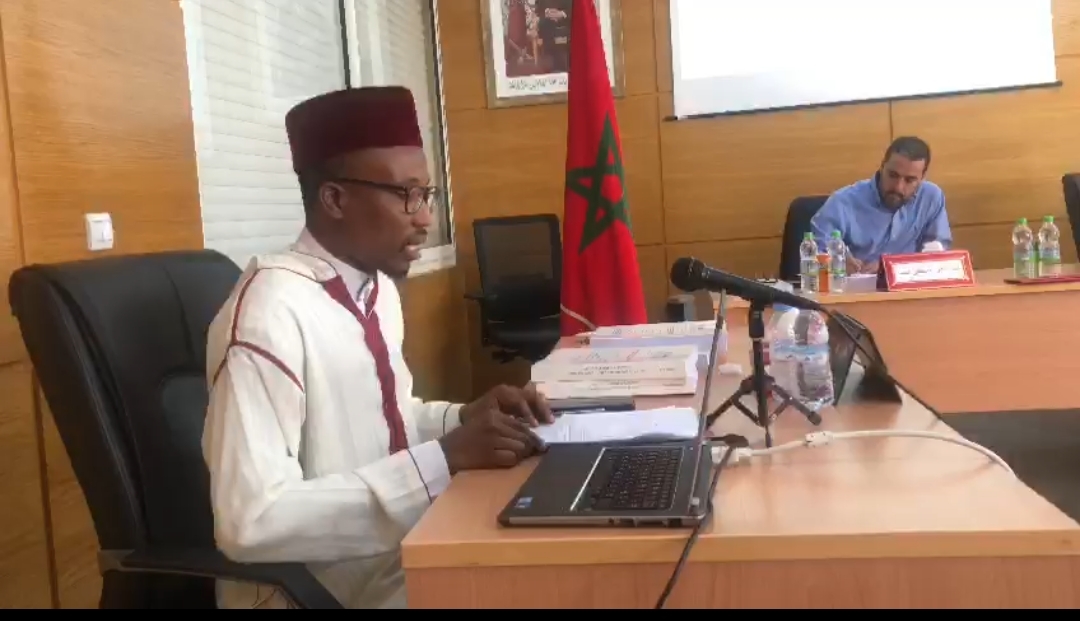
In this interview with The Daily Reality, Ismail Hashim Abubakar, who finished his doctoral program at Mohammed V University, Rabat, in the Kingdom of Morocco, gives a synoptic picture of his PhD thesis titled “Contemporary Islamic Thought in Northern Nigeria: Shaykh Ja’far Mahmud Adam as a Case Study”. The thesis, which appears in 4 volumes, was written in both Arabic and English. Enjoy:
At the beginning and as a background, the reader would like to know what propelled you to embark on academic research in this area and to select this topic with the personality of Shaykh Ja’afar as your case study.
I was propelled to undertake this research by many factors. Perhaps the most current and academically engaging factor was the aftermath of the 2009 Boko Haram uprisings when documentation of the saga started outflowing in different forms, including academic studies and media reportage. I observed that the Boko Haram saga was used by many writers – local and international – to, in the process of researching the evolution, growth, ideological base and all other issues associated with the insurgency, direct their attention on the late Shaykh Ja’afar Mahmud Adam and devote some portions in their works on the relationship between Shaykh Ja’afar and the founder of Boko Haram, Muhammad Yusuf.
While I acknowledge that these writers have relevant information and facts regarding this dynamic, I can confidently assert that many facts have been twisted, distorted and misrepresented. In fact, too much attention on Ja’far’s interaction with the leader of Boko Haram would certainly swerve readers’ attention to the grand reform mission Ja’afar had carried out in his career that spanned about two decades.
Furthermore, some writers made absurd and explicit allegations that should not be allowed to pass without a solid, verifiably intellectual response. Besides, the career of Shaykh Ja’afar was full of captivating and interesting episodes that would add up to the history of postcolonial Islam, contemporary religious movements, the interplay of Ulama with civil society and authorities in northern Nigeria and the Hausa-speaking world in general. In other words, if you like, confining the career of Shaykh Ja’afar to an engagement with an estranged disciple is an act of cruelty and tyranny to history.
If this is the case, how does your work differ from the previous works on Boko Haram, and what do you particularly object in them?
In my thesis, I review the representation of Ja’afar and his engagement with Boko Haram as cited in studies and reportages. I endorse what appears to be true and verifiable, while I counter what is a distortion of facts. For example, I tackle the question of Muhammad Yusuf’s studentship and mentorship under Ja’afar; here, there are two visible opinions. One opinion suggests that Yusuf was the mentee, star, protege and possible successor of Ja’afar, while the other view objects to the point of almost debunking any teacher-student relationship between the two men. I seek to stand in between these positions. Based on fieldwork I carried out in Maiduguri in 2019 and in addition to the literature I consulted, I draw a conclusion that Yusuf had, of course, studied under Ja’afar.
Nonetheless, as confirmed by several informants, Yusuf was never punctual during Ja’afar’s lessons; in fact, he did not study a complete book under Ja’afar. Consequently, I re-examined the assertion of the closeness of the two men; it manifested to me that Yusuf was never formally or informally considered Ja’afar’s heir, nor was he considered intellectually capable of taking over from Ja’afar.
Meanwhile, I make reference to Yusuf’s ideological trajectories and terminals of religious activism, starting as an ambitious young man looking for fame. As such, he took a leading position in Muslim Brotherhood, Jama’atu Tajdid al-Islam, before finally joining the Izala, which he would also break from within a couple of years. Finally, on this point, I compare Ja’afar and Yusuf, what the two figures represent to Nigerians and the legacies each one has left behind.
What else do you address besides the Boko Haram phenomenon in your project?
Hmmm. Like I said initially, Boko Haram is a small (though most popularised) aspect of Ja’far’s career. I set a background where I give a snapshot of the state of Islam and Muslims in postcolonial Northern Nigeria, highlighting the engagement of Muslims in politics and governance while appraising the debates of Shari’ah implementation and discourse on secularism which characterised the Nigerian public sphere after the turn of the 21st century.
I also look at the relations between Muslims and Christians, pointing to the areas of divergence, which are quite many, but also the few areas where Muslims and Christians united in pursuit of a common goal. I also survey the fragmentation of Islamic society along sectarian lines by first tracing the emergence of major and minor religious sects, groups and movements and their major views and arguments. I also illuminate the interplays between these two groups and what brings/brought them together to speak in one voice. All these are meant to give much insight into the religious and landscape sociopolitical contexts in which the figure of my study lived and conducted his mission. This represents the first significant section of the work, which, as you can see, represents the first epithet in the thesis title.
I supply a relatively detailed biography of Ja’afar, focusing on his family background, the phases of his knowledge acquisition and the factors that contributed to his public visibility as a young man, all before his sojourn to the Islamic University of Madina.
The work dwells on Ja’afar’s reunion with the Da’awah arena after his study at Madina and how unlike before, he concentrated on the transmission of knowledge and cultivation of disciples while minimising open-air preaching. In this regard, I supply comprehensive information on the major sites and centres of Da’wah, which used to host and coordinate Ja’far’s public engagement and private study circles.
In Kano, for instance, I reserve sections in which I discuss in detail the majalis of Ja’afar, such as the Triumph Mosque in Fagge, the Beirut Road Mosque, Usman Bin Affan Mosque, Gadon Kaya, Almuntada Mosque in Dorayi and the majlis in Ungogo Road. I explicate all the activities Ja’afar conducted, such as leading prayer, teaching for open and private audiences and presentations of sermons, lectures and seminars.
In Bauchi, I make reference to sites that hosted Ja’far’s mission, such as Gwallaga Jumaat mosque, Shaykh Awaq mosque at Old GRA, Baban Godi Mosque in Mallam Goje Street and Women Centre of Bauchi located at Gombe Road. Moreover, in about thirty pages, the thesis unpacks the mission of Ja’afar in Maiduguri, with a particular reference to the activities he conducted within the Indimi Mosque, hinting at the challenges Ja’afar confronted at the beginning and the strategies he adopted in the process of consolidating his Da’wah. The work here emphasises the Qur’anic interpretation exercise Ja’afar led during Ramadan at the mosque and how it became an annual conference that attracted audiences from different parts of northern Nigeria.
But Ja’far’s mission was also characterised by other features: teaching, presenting lectures and seminars and rigorous engagements in civil and political issues. Does your work take a look at this also?
Yeah, of course. I dedicate a full and lengthy chapter that surveys and appraises Ja’far’s interactions and engagements with some events that affected Nigerian contemporary developments, Islam and Muslims, and Ja’afar’s relations with various government and public figures, religious groups and individuals. It focuses on Ja’afar’s role in the return of Shari’ah in northern Nigeria, how he collaborated with religious leaders of other groups, and how this resulted in the implementation of Shari’ah in some northern states. It also refers to Ja’far’s participation in the implementation of the Shari’ah process in Kano.
The chapter further lays bare Ja’far’s engagement with Nigerian politics, governance, politicians and public figures, taking a look at his criticism of General Obasanjo’s administration and different political and government institutions, including Kano state, his base, but also figures such as Muhammadu Buhari, Atiku Abubakar, Ahmed Yarima, Ibrahim Shekarau, Rabi’u Musa Kwankwaso, Ahmed Adamu Muazu, Ahmed Makarfi, Abubakar Habu Hashidu, Sanusi Lamido Sanusi, Baba Impossible, among others.
The work also relates Ja’afar’s interplay with traditional institutions, which connects to his position on the royal fathers of the northern emirates and how they disagreed with some and collaborated and had cordial relationships with others. Still in the chapter, Ja’afar’s engagement with religious groups is narrated, beginning with Salafi networks to which he belonged, the Sufi brotherhoods with whom he disagreed most of the time and the peripheral groups like the Shia, Boko Haram and others.
As a complement to a cleric biography, the chapter categorises Ja’far’s disciples and followers into four tabaqat, just as it mentions some of his colleagues, teachers and role models. It also provides insightful information relating to Ja’afar’s assassination, including the events that preceded the tragedy and what followed it, such as the posthumous attraction of the Muslim public toward the legacy and mission of the murdered cleric.
The final chapter in the thesis extracts the thoughts, ideas and philosophical views and visions of Ja’afar on a plethora of issues such as education, economy, sociocultural topics, marriage and women issues, politics, global politics and international affairs, relations between Muslims and non-Muslims and the prospects of peaceful coexistence. The chapter presents at the end what the researcher believes is the central position of Ja’afar on Jihad, which further unravels the extent to which he conceived violent extremism in a world and time when Islamophobia was rising high.
But how have you encountered all this stuff, which appears to involve huge materials you had to engage?
Yes, I gathered my data through multiple sources. First, I laid my hands on the available recordings of Shaykh Ja’afar, including cassettes and online content. I listened to his entire Tafsir tapes, available Friday sermons, and many of his lectures and public and private lessons on Islamic texts. I also conducted fieldwork where I travelled to many states in Northern Nigeria and met about a hundred informants. Needless to say, I consulted a great deal of literature that ranged from published books, journals, newspapers and magazines, and reliable internet pages.
What challenges did you face while undertaking this research?
A lot of daunting challenges, but a researcher must always be ready to confront them. It suffices to say that one has to be away from family to a distant land to carry out this task. But before then, I faced challenges as regards accessing some informants. For example, although the work discusses Boko Haram, I could not interview any Boko Haram members to hear some things from him directly. But the most appalling of all the challenges was the lack of positive cooperation from some of Ja’afar’s colleagues and disciples. While some of them delayed, procrastinated and even cancelled my appointments with them, some of them even avoided me and refused to give me any audience at all. Paradoxically, I got positive responses and warm accommodation from personalities who might be well counted among Ja’afar’s rivals and competitors, including Sufis and Shiites.
Which plan do you have now for this work after you have been awarded a doctoral degree?
I just remembered that the work is bilingual and in four volumes, or if you like, two volumes in Arabic and two in English. My ambition is to publish it as a book or as two books. I will be glad to edit the Arabic version and publish it in a press in an Arab world like Egypt, Lebanon, Qatar or any other country, while the English version is to be hopefully published by a Western (preferably university) press.
Is there any point you disagree with Shaykh Ja’afar in your work?
Of course, there are. I can count almost ten.
Can you give an example?
Certainly! During one of his lessons to women at Gadon Kaya, a woman asked if it was permissible for her to make a supplication – a prayer – to ask God to prevent her husband from marrying a second wife. Shaykh Ja’afar answered that it was not permissible since marriage is lawful, and no one has the power to make unlawful something that was made lawful by God. My argument here is that in a situation where women have turned adding a second wife into their earthly hell, so much so that they go to any extent, including dangerously deadly means to thwart their husbands from the second marriage, giving a fatwa with the permissibility of praying against this wish seems to be safer for all the parties involved. If God wishes, he would answer, and if He doesn’t answer, the woman would accept fate like that.
Are there journal articles that have been published out of this thesis?
Yes, two articles have been published so far. One was published in a journal at an Islamic University in Uganda. I examined the thoughts and ideas of Shaykh Ja’afar on education. It is available here.
The second one was published in an Indonesian journal, and it talks about Ja’far’s views on women, marriage and family institutions. It can be accessed via this link.
I expect to publish two more before the end of the year, in sha Allah. One of them presents a contextual analysis of a sermon that Ja’afar delivered at Almuntada Mosque in Kano in the aftermath of the OPC massacre of northerners in Southwestern Nigeria. In the essay, I argue that the sermon, despite its strident nature and use of highly harsh language, served as one of the rhetorical instruments that calmed frayed nerves and tensions amid the possibility of reprisal attacks. The second essay examines Ja’afar’s engagement with Boko Haram and violent extremism.
What are your concluding remarks?
I will conclude by stressing that the clerical career of Shaykh Ja’afar has provided one of the most interesting and attractive pages in the history of Islamic activism in contemporary Nigeria and Hausa speaking world. With millions of followers and his ideas circulating within public domains, Ja’afar’s mission is worth reading and researching. I proposed in my work what I call “Jafarology”, which refers to the process of studying the legacies of Ja’afar in different dimensions and from different perspectives.
I will close by expressing my immense gratitude to all the people who supported me in one way or the other. I must thank my parents for putting me through this path early. I thank my mentor Professor Salisu Shehu, to whom I dedicate this work. I still recall his visit to Morocco in June 2022 and consider it a fatherly concern that gave some moral comfort to a son away from home. In the same vein, I thank Professor Alexander Thurston, who read my chapters and offered me invaluable suggestions and recommendations. My success in this work owes greatly to his mentorship. The same gratitude goes to Dr Abdullahi Abubakar Lamido, whose mentorship and frank counsel encouraged and motivated me to delve into this research area. I also thank a colleague of mine here, Osho Iskil Kehinde, who has greatly supported me.
I also use the medium to appreciate the Federal University Gusau management for releasing me to undergo this program. In this vein, I must thank Dr Abubakar Masama, the Dean, Faculty of Arts; Dr Qasim Badamasi, the former HOD, Islamic Studies; Malam Abdallah Bashir Bakori, Dr Ja’far Agaji, the present HOD, and all the colleagues within the Department of Islamic Studies and Faculty of Arts of the University.
Last, I must reiterate my thanks to Dr Anas al-Shaykh Ali, the Director of the IIIT London Office. Sister Shiraz Khan, a coordinator at the Office, the Director of the Institute of Epistemological Studies Europe (IESE) in Brussels, Dr Beddy Ebnou al-Murabity and Dr Naima Daoudi for being of great help to me. It was these institutions that sponsored my entire studies here in Morocco.