News

KNCDC urges collaboration with influencers, content creators for outbreak communication

By Sabiu Abdullahi

The Kano State Centre for Disease Control (KNCDC) has called for stronger collaboration with social media influencers and content creators to improve the dissemination of health information during disease outbreaks and public health emergencies.

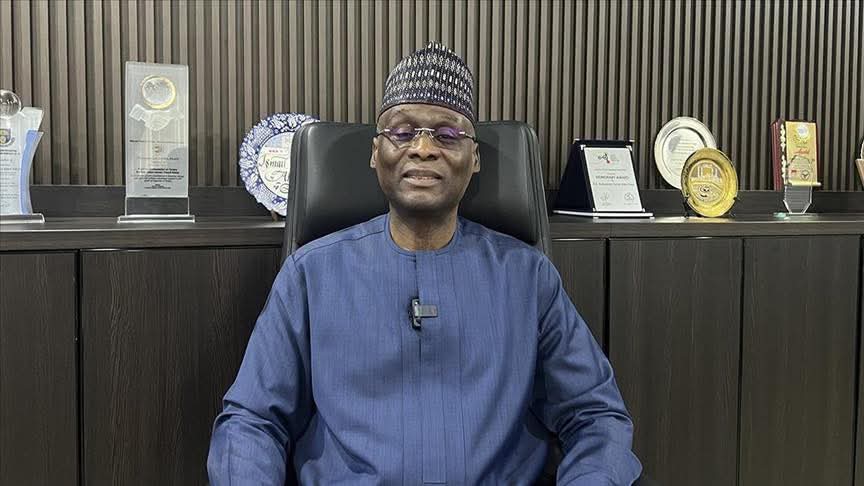
This was made known by the Director General of the KNCDC, Professor Muhammad Abbas, during the second day of a three-day workshop on developing an Outbreak Communication Framework and Media Standard Operating Procedure (SOP).

Professor Abbas explained that influencers and digital content creators have the capacity to make health messages spread rapidly across different audiences through social media platforms. He added that this strategy aligns with modern audience segmentation, noting that Generation Z are more exposed to digital media than their parents, and can help convey accurate information to older populations who mainly rely on traditional media such as radio.

“The impact of influencers and content creators on social media should not be underrated. They can help amplify health messages and bridge communication gaps between institutions and communities. However, when choosing the influencers, we should consider those who value our norms, culture and religion and the message too should be culturally sensitive,” he said.

Also speaking, a media expert and editor of The Daily Reality newspaper, Aisar Fagge, backed the idea, emphasizing the need for a multi-dimensional communication strategy in public health campaigns, especially during emergencies.

Fagge pointed out that while the content of a message is vital, the identity of the messenger greatly influences public acceptance. He recalled past experiences where mistrust toward government-led health programs affected public response.

“People sometimes react negatively to health campaigns not because of the message itself, but because of who delivers it. Remember what happens during polio immunization and COVID-19. Therefore, engaging trusted influencers and content creators will make the communication more relatable and credible,” he stated.

The workshop, which gathered communication specialists, journalists, and health officials, was designed to strengthen Kano State’s capacity for effective risk communication and community engagement during health emergencies.

Mainz lose court appeal over Anwar El Ghazi’s dismissal

By Maryam Ahmad

Bundesliga club Mainz 05 have lost their appeal against the unfair dismissal ruling in favour of Dutch winger Anwar El Ghazi, who has been awarded €1.7 million in compensation.

A German labour court had earlier found that the club acted unlawfully when it terminated El Ghazi’s contract in November 2023 following social-media posts he made during the Gaza–Israel crisis. The arbitration panel upheld that decision, rejecting Mainz’s argument that the posts constituted grounds for immediate dismissal.

In a statement, Mainz said it accepted the ruling but stressed its commitment to maintaining its internal code of conduct. El Ghazi welcomed the outcome, describing it as a vindication of his right to express his views.

Dangoro landowners decry poor representation in meeting with govt officials

By Uzair Adam

Landowners in Dangoro community of Kumbotso Local Government Area, Kano State, have expressed disappointment over what they described as poor representation and lack of transparency during a meeting between government officials and community leaders on the ongoing land dispute in the area.

The meeting, which took place at the Kumbotso Secretariat, was attended by representatives of the police, the Department of State Services (DSS), officials from the Ministry of Land and Physical Planning, and traditional rulers from the area.

The landowners alleged that they were deliberately left out of the meeting by their district head, Ishaq Yusuf Ishaq, despite prior attempts to engage him on the matter. They accused him of siding with the government instead of protecting the interests of his subjects.

Speaking on behalf of the landowners, Vice Chairman of the group, Sunusi Haruna, said they only learned about the meeting through unofficial sources after it had already begun.

He stated that, “When he was informed about the meeting, he kept mute. He thinks what we are doing for our lands is wrong and sees us as his enemies. When we heard about the meeting, we rushed to the disputed land, only to be told it was at the village head’s palace.

“By the time we got there and later moved to the secretariat, the meeting was already over, and we didn’t know what was discussed,” Haruna added.

The landowners described the situation as a calculated attempt to exclude them from crucial discussions that could determine the fate of their farmlands and plots. They maintained that the district head’s decision not to inform them was unfair and contrary to his duty as a community leader.

They further argued that showing empathy and ensuring fair representation for his people would not amount to defying the government but rather demonstrate good leadership.

It will be recalled that residents of Dangoro community recently held a special prayer session, seeking divine intervention over what they described as the continuous takeover of their farmlands and plots by the state government.

The residents said they were thrown into panic following the government’s plan to relocate the Yan Lemo Fruit Market and Yankaba Vegetables Market to their area — an action they fear could result in another round of land seizures and displacement.

Also Speaking during the latest meeting, another landowner, Haruna Muhammad, who represented a group of individuals with inherited lands in the area, warned that the planned relocation could cause serious hardship.

He stated that, “There are many people whose plots are under my care. Some of them inherited these lands from their parents. It will be a great problem if the government takes them away.”

Also speaking, a respected community elder, Alhaji Gambo Saminu Adamu, appealed to Governor Abba Kabir Yusuf to personally intervene in the matter.

“We are pleading for your intervention. We know you are just and compassionate. We want you to come to our rescue and choose what is best for us, and we will accept it,” he said.

When contacted, the Secretary of Kumbotso Local Government, Abubakar Bala Sheka, urged residents to remain calm, assuring them that the government had no intention of forcefully taking over their lands.

He expressed surprise that the district head failed to inform the landowners about the meeting but noted that the government’s plan was purely developmental.

She added that, “There is a need for understanding. Governor Yusuf bears no ill will. The market is going to be modern and standard. As explained by the Chief Surveyor, if there are ten shops on your land, the government will take five and you will retain five.”

Despite the assurances, the landowners vowed to continue advocating for fair treatment and transparent engagement, insisting that their voices must be heard in any discussion affecting their lands and livelihoods.

The dangers of social media

By Wathrayel Bassi Amos‎‎‎

Social media was once celebrated as a force for empowerment, creativity, and free expression. Yet beneath that promise lies a sophisticated system—the algorithm—engineered to keep users endlessly engaged. This unseen mechanism values attention over awareness, pushing content that evokes the strongest emotions: anger, envy, or desire. In today’s digital landscape, shock value has become the new form of currency. The more sensational the content, the greater its reach.‎‎

The algorithm, devoid of moral judgment, amplifies whatever sustains attention the longest—even when it undermines social values. From sexually suggestive dance trends to prank videos glorifying deceit, the boundary between entertainment and immorality grows increasingly faint.

Traditional moral guides—parents, teachers, and religious leaders—now struggle to rival platforms that reward sensationalism over substance. Never has indecency been so readily available, flooding timelines without consent. Some entertainers even release explicit material intentionally, using controversy as a marketing tool. In this new age, modesty has lost its worth, while moral decay is repackaged as strategy.

‎‎Cultural and religious voices continue to warn against this decline. They decry how virtues like humility, discipline, and community spirit are being replaced by an obsession with digital recognition. Success is now measured not by integrity but by influence—the size of one’s following. This transformation goes beyond behavior; it is reshaping the psyche of the youth, cutting them off from the moral and cultural foundations that once defined Nigerian identity.‎‎

The dominance of globalized online content represents a quieter form of cultural colonization. Though Nigeria is politically free, its digital life remains governed by algorithms designed abroad—systems detached from local values. These digital gatekeepers decide what trends, what sells, and what the public sees. Some nations, like China, have moved to restrict foreign platforms to safeguard their moral and cultural integrity.‎‎

Nigeria’s youth—the nation’s largest population segment—now grow up in virtual spaces where moral responsibility is optional and validation is everything. Many define themselves not by character, empathy, or contribution, but by the currency of likes, followers, and views. Digital popularity has replaced moral virtue as the new standard of worth.

‎‎To secure its future, Nigeria must reshape its digital culture around responsibility rather than recklessness. Social media should serve as a platform for enlightenment, not erosion—a space that uplifts intellect instead of promoting indecency. The internet must return to its true purpose: a marketplace of ideas, not a stage for moral decline.‎‎

Wathrayel Bassi Amos wrote from the Department of Mass Communication, University of Maiduguri. ‎

The Wike/Yerima confrontation: A tale of two wrongs‎‎

By Wathrayel Bassi Amos

‎The recent altercation between Minister Nyesom Wike and a young Naval officer exposes the deeper structural flaws troubling Nigeria’s democracy. This was not an isolated incident, but a symptom of a long-standing decay—marked by the misuse of law enforcement agencies and the erosion of democratic principles.

Nigerians have watched security operatives act in ways that raise doubts about where their true loyalty lies: to the nation, the law, or to those in positions of power.‎‎In present-day Nigeria, it often takes only a minor disagreement for an influential figure to unleash security agents to pursue personal interests.

From Lagos to Kogi, Rivers, and Abuja, we have witnessed operatives carrying out unlawful instructions for political or private gain. This impunity thrives on the weakening of democratic institutions and the deepening divisions within the political system.‎‎

Regardless of the situation, Minister Wike had no justification for personally confronting military officers executing a lawful directive from their command. As a senior government official, he was expected to act with restraint and pursue the proper channels.

If he believed that the land in question was unlawfully acquired by a former Naval Chief, the appropriate step would have been to compile evidence and submit it to relevant authorities or the courts.‎‎

Ideally, Wike could have written formally to the Minister of Defence to request an investigation, or sought redress through legal means—if the matter was not already under litigation. However, by storming the site with armed escorts and verbally abusing a commissioned officer, even calling him a “fool,” the Minister displayed poor judgment and conduct unbecoming of his office.‎‎

This episode underscores the fragility of Nigeria’s democracy and the rising public resentment toward the political class. While the government has a legitimate duty to demolish illegal structures in the Federal Capital Territory and beyond, such actions must always respect due process and human rights.

‎‎Beyond Wike’s behavior, the incident also exposes the equally troubling misuse of state resources by powerful figures. It was wrong for a former Chief of Naval Staff to deploy serving officers—funded by taxpayers—to secure a private property under dispute. Such acts represent the growing trend of elites using national security assets for personal protection and gain.‎‎

No serious nation should condone the disgraceful scene that unfolded between Wike and the Naval officer. It tarnishes Nigeria’s image and erodes public trust in governance. The President must act decisively to end this culture of impunity.

True leadership demands composure, adherence to due process, and respect for democratic values. When public officials behave as masters rather than servants of the people, the very foundations of governance begin to collapse.

‎‎Wathrayel Bassi Amos wrote from the Department of Mass Communication, University of Maiduguri. ‎

German police arrest 16 over ‘Grandchild Scam’

By Maryam Ahmad

German police have arrested 16 people in a major operation against an international network behind a telephone fraud known as the “grandchild scam.”

The Berlin State Criminal Police Office stated that the operation involved officers from all German states, as well as Europol and police forces in Austria, Poland, Switzerland, Slovakia, and the Czech Republic.

Several call centres linked to the scam were shut down, and 44 planned fraud attempts — worth about €2 million (₦3.9 billion) — were prevented.

In the scheme, fraudsters call elderly victims pretending to be relatives in urgent need of money. In some cases, they claim to have caused a fatal road accident and are followed by fake police officers demanding cash to avoid prosecution.

The suspects, aged between 22 and 63, included callers and money collectors. Among them is a 26-year-old Slovakian woman accused of similar crimes in her country.

Police said the coordinated raids took place between mid-September and late October.

Group rejects US threats, urges national unity on security crisis

By Muhammad Sulaiman

A group of prominent Nigerian citizens has condemned recent threats by U.S. President Donald Trump to relist Nigeria as a “Country of Particular Concern (CPC)” and possibly take military action to protect Christians, describing the move as an affront to Nigeria’s sovereignty.

In a statement issued in Kaduna, the group — comprising Dr Bilkisu Oniyangi, Professor Usman Yusuf, Dr Ahmed Shehu, Dr Aliyu Tilde, Dr Hakeem Baba-Ahmed, and Barrister Kalli Ghazali — warned that such rhetoric from Washington could inflame religious tensions and “turn Nigeria into a pawn in global geopolitics.”

The signatories emphasised that while the concerns of friendly nations such as the U.S., China, the U.K., and Russia are welcome, threats and external pressure are counterproductive. “This is our problem as Nigerians, and it will be solved by us,” the statement read.

The group urged President Bola Tinubu to directly address Nigerians, prioritise national security, and suspend foreign travels until the crisis is resolved. They also called on the U.S. to withdraw its threats and instead assist Nigeria through strategic cooperation and capacity building against terrorism and banditry.

They further appealed for unity among Nigerians, noting that “every life taken, every kidnapping or assault anywhere in Nigeria matters equally.”

Reaffirming faith in Nigeria’s resilience, the statement concluded: “Our independence and unity have been tested many times, and this too shall pass — but only if we act together as one people.”

Kano CDC, FCDO-Lafiya move to fix Nigeria’s outbreak communication gaps

By Sabiu Abdullahi

Nigeria’s long struggle with disease outbreaks has repeatedly shown how weak communication systems can worsen health emergencies.

In recent years, states have battled diphtheria, malaria, meningitis, Lassa fever, cholera and measles, often without clear public guidance at the peak of outbreaks.

In many cases, rumors travelled faster than official updates. Fear spread before facts reached the public. Misinformation filled the gaps left by delayed or poorly coordinated communication.

With memories of these challenges still fresh, the Kano State Centre for Disease Control (KNCDC) has launched a major step meant to strengthen outbreak communication.

This comes through a three-day workshop in Zaria, supported by the Foreign, Commonwealth & Development Office (FCDO) Lafiya Programme.

The initiative seeks to unite health agencies, media professionals, risk communication experts and government institutions to create a stronger, faster and more reliable information system ahead of future outbreaks.

Officials say the programme will help states avoid the costly lessons of the past. During Nigeria’s diphtheria crisis, many communities were unaware of symptoms before outbreaks escalated.

During meningitis outbreaks, myths overshadowed medical guidance in some states. During the COVID-19 pandemic, conflicting messages damaged public trust.

These experiences, experts say, prove that communication failures can be as deadly as the diseases themselves.

The Director-General of KNCDC, Prof. Muhammad Adamu Abbas, declared the workshop open. He said the goal is no longer just to respond to outbreaks, but to communicate with clarity, speed and authority.

“This workshop is about building a united front — where health officials, journalists, and communication experts speak with one voice, guided by facts and science,” Prof. Abbas stated.

He described the partnership with FCDO-Lafiya as strategic, timely and necessary. He commended the organisation for sustained support in improving Nigeria’s health emergency systems.

He added that communication must stand alongside testing, vaccination and treatment in outbreak control.

Participants were drawn from health institutions, media organisations, government agencies and civil society groups.

They are expected to co-design a communication framework that prioritises rapid information flow, public engagement, rumor control and stakeholder alignment.

Facilitators will lead sessions on crisis media handling, digital risk communication, misinformation control, emergency coordination and broadcast-ready public messaging for disease outbreaks.

The workshop will also include group simulations, panel discussions and field scenarios aimed at turning knowledge into practice.

Public health analysts have strongly welcomed the initiative. They say outbreak preparedness in Nigeria must go beyond medical response. They argue that a well-informed public remains one of the strongest defenses during a health emergency.

Observers say Kano is taking a rare but necessary lead. Many states, they note, still lack structured outbreak information systems. Some states depend solely on federal communication during epidemics, leaving gaps in local response messaging.

Some wait until outbreaks are full-blown before launching public awareness efforts. Health experts warn that this delay has repeatedly cost lives.

By moving toward a structured communication plan, Kano is now positioning itself as one of the best prepared subnational systems in outbreak information management.

The workshop continues throughout the week, with officials stating that the final outcome will be a deployable outbreak communication model meant to guide real-time response within Kano and potentially across other Nigerian states.

Senate approves Tinubu’s N1.15tn domestic loan fill 2025 budget deficit

By Anwar Usman

The Senate on Wednesday, has approved President Bola Tinubu’s request to collect N1.15 trillion from the domestic debt market to cover part of the 2025 budget deficit.

The approval followed the adoption of a report by the Senate Committee on Local and Foreign Debt during plenary.

The committee noted that the 2025 Appropriation Act provides for a total expenditure of N59.99 trillion, an increase of N5.25 trillion over the initial N54.74 trillion proposed by the Executive.

This expansion created a total budget deficit of N14.10 trillion, of which N12.95 trillion had already been approved for borrowing, leaving an unfunded deficit of approximately N1.15 trillion.

Recall that, on November 4, Tinubu formally requested the fresh N1.15 trillion borrowing.

He stated that it would bridge the funding gap and ensure full implementation of government programs and projects under the 2025 fiscal plan.

In a related development, a motion by Senator Abdul Ningi was adopted, directing the Senate Committee on Appropriations to intensify oversight to ensure that the borrowed funds are properly implemented and used strictly for their intended purposes.

DHQ backs officer in standoff with minister Wike

By Abdullahi Mukhtar Algasgaini

The Nigerian Defence Headquarters (DHQ) has thrown its weight behind a naval officer who stood his ground against the Minister of the Federal Capital Territory (FCT), Nyesom Wike, during a recent confrontation in the Gudu district of Abuja.

The incident, which was captured on video, showed the minister engaged in a heated argument with the officer, who was preventing the FCT team from accessing a disputed piece of land.

In a statement released on Wednesday by the Director of Defence Information, Brigadier General Tukur Gusau, the military high command commended the officer’s conduct.

The statement emphasized the importance of serving the nation with “honesty, integrity, and honour,” while adhering to orders with discipline and respect.

“It is a virtue to serve the nation with honesty and integrity. The military encourages any officer who stands to protect the dignity of the nation and its laws with honour,” the DHQ stated.

The land in question is reportedly owned by the immediate-past Chief of Naval Staff, Vice Admiral Awwal Zubairu Gambo (rtd).

The confrontation has highlighted ongoing tensions over land disputes in the capital city.

Security and government authorities are said to be investigating the incident to establish the full facts and prevent any further friction between civil ministries and the armed forces.