News

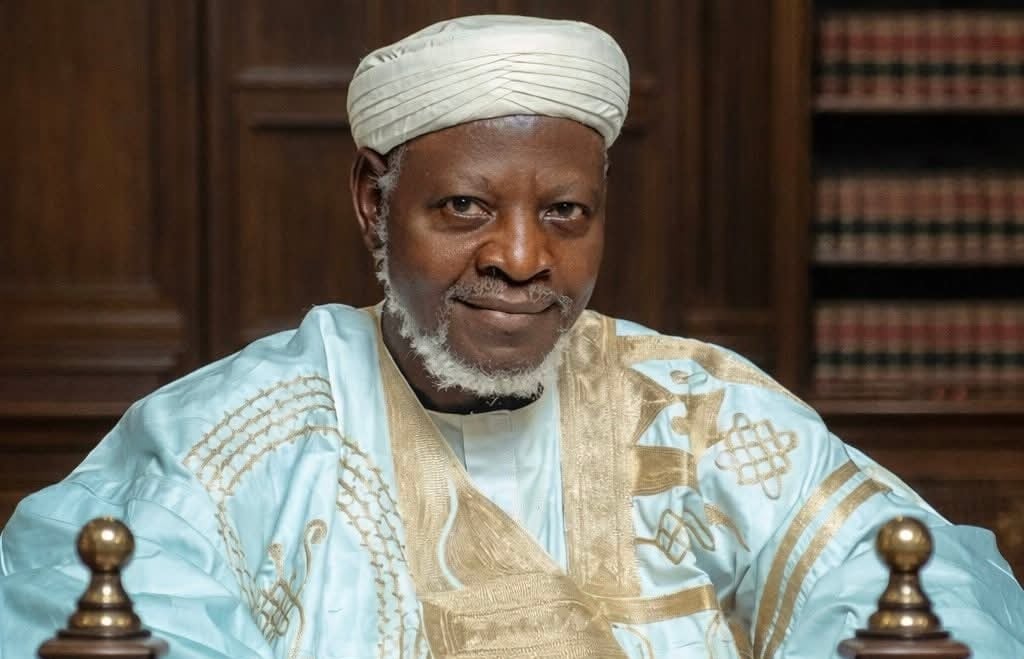
Katsina State Government summons controversial cleric, Yahaya Masussuka, amid divisive preaching

By Ibrahim Mukhtar

The Katsina State Government has formally invited the Quranist preacher, Yahaya Ibrahim Masussuka, who has recently become well-known, especially on Social Media, to appear before an Ulamas’ committee following complaints that his teachings allegedly breach “the general principles of Islamic law.”

The preacher debunks all prophetic sayings (Hadith) and calls the famous Hadith reporters liars. He later adjusted his stance, saying he agrees with three forms of Hadith and refutes all others. According to Masussuka’s new stand, he agrees with any Hadith on three conditions: 1) If the Hadith didn’t violate anything from the Qur’an; 2) If the Hadith didn’t say anything bad against the Holy Prophet, and or 3) If the Hadith preaches peace. However, some scholars have already labelled his current stance as clever bait to catch gullible, ignorant followers.

Masussuka has preached and discussed controversial issues and dismissed some fundamental issues of the Islamic religion as heresy and disowned all the revered Hadith books of Islam as mere concocted lies.

According to the Katsina State’s Secretary to the State Government, Alhaji Abdullahi Faskari, the government has received petitions from some scholars and concerned citizens regarding the nature and manner in which Masussuka’s preachings and sermons do not align with orthodox interpretations of Islamic jurisprudence.

At the same time, Masussuka himself has filed a complaint, claiming that some members of Jama’atu Izalatul Bid’ah (also known as Izala) have insulted and threatened him.

Although Masussuka has great backing and massive support from some Darika disciples, his heretic preaching still continues to stir controversy as many scholars, even among the Darika, see his teachings, which are based on debunking all prophetic sayings, as being completely un-Islamic.

In a bid to resolve the tension, the matter was referred to the Katsina Emirate Council, where both parties were invited to engage in dialogue. After the discussions, Emir Abdulmuminu Kabir Usman reportedly admonished that no one must preach in a way that offends fellow Muslims.

Following the Emir’s intervention, Governor Dikko Umaru Radda directed that Masussuka defend himself “before a Committee of Ulamas.” The SSG’s office also announced that standards and guidelines for preaching would be developed; anyone found to contravene them may face “appropriate action.”

Authorities have called on the public to remain calm, noting that the process will be handled “judiciously.”

The summoning has drawn mixed reactions from several groups, while many others, especially from the Dariqah and other rights and religious-freedom groups, vow to support the preacher. ICADAR (Impactive Centre for Accountability, Democracy, and Rights) warned that targeting Masussuka, whom they describe as “a preacher known for his peaceful teachings,” could undermine Nigerians’ religious expression.

Similarly, Amnesty International has raised concern over what it describes as a coordinated attempt to silence Masussuka. The group cautioned that shutting down his religious activities might violate his constitutional right to freedom of religion.

Another rights organisation, Ettrah: Voice for Freedom and Human Rights, called on both state and federal governments to protect Masussuka, arguing that calls to question his preaching risk “deepening misunderstanding” and threatening national unity.

On the other hand, some social analysts see the current development as worth pursuing, as many scholars were invited to defend their stands, which were deemed contrary to the general teachings of Islam. Some others view it as sectarian tensions, which, if not managed carefully, could inflame existing tensions between different Islamic groups in Katsina and beyond, particularly between Masussuka’s following and the Izala movement.

Sheikh Masussuka’s invitation by the Katsina State Government to defend his teachings marks a critical moment in northern Nigeria’s debate over religious freedom, state intervention, and sectarian balance. With vocal responses from rights groups and religious leaders alike, the outcome of this committee could resonate far beyond Katsina, touching on broader issues of governance, faith, and coexistence in Nigeria.

Kebbi LG chairman rejects U.S. Congressman’s comment on abducted Maga school girls, says claim is false

By Sabiu Abdullahi

The Chairman of Danko/Wasagu Local Government Area in Kebbi State, Hussaini Aliyu, has refuted a statement attributed to U.S. lawmaker Riley Moore, who alleged that the abduction of the Maga school girls occurred in a Christian community.

Aliyu stated that every one of the abducted students is Muslim.

He described the lawmaker’s remark as misleading and harmful, warning that such comments could stir needless religious tension at a period when authorities are concentrating on securing the girls’ release.

He explained that the Maga community falls under the Zuru Emirate, a district known for its long record of religious harmony. According to him, the area has never witnessed faith-related crises.

He urged the U.S. congressman to avoid issuing unverified claims that cast Nigeria in a negative light or threaten national cohesion.

The names of the abducted students released by the chairman are listed below:

Senior Secondary School 2A

1. Fatima Sani Zimri

2. Hafsat Ibrahim

3. Nana Firdausi Jibril

4. Masauda Yakubu Romo

Senior Secondary School 2B

5. Hauwa Saleh

6. Hauwa’u Umar Imam

Senior Secondary School 3A & 3B

7. Salima Garba Umar

8. Salima Sani Zimri

9. Amina G. Umar

10. Rashida Muhammad Dingu

11. Saliha Umar

12. Aisha Usman

13. Jamila Iliyasu

14. Maryam Illiyasu

15. Najaatu Abdullahi

16. Zainab Kolo

Junior Secondary School 3A

17. Surraya Tukur

18. Hafsat Umar Yalmo

19. Maryam Usman

20. Amina Illiyasu

21. Ikilima Suleman

Junior Secondary School

22. Khadija Nazifi

23. Hauwa’u Iliyasu

24. Hauwa’u Lawali

25. Ummu Kulsum Abdulkarim

ASUU threatens nationwide university shutdown over unmet demands

By Abdullahi Mukhtar Algasgaini

Public universities across Nigeria face an indefinite closure starting Friday, November 21, 2025, following a strike notice issued by the Academic Staff Union of Universities (ASUU).

The union made the announcement via its official X (formerly Twitter) handle on Tuesday, November 18, giving the Federal Government a three-day ultimatum to meet its demands.

According to the statement, the industrial action will proceed if the government fails to address key issues, including fair remuneration and improved working conditions for lecturers.

ASUU also explicitly rejected the government’s proposed 35% salary increase, deeming it inadequate.

“All universities will be closed nationwide till further notice on Friday,” ASUU declared.

This development threatens to disrupt academic activities across the country, potentially throwing millions of students and their families into uncertainty.

Bashir Ahmad confronts US Congressman for ‘twisting facts’ about Kebbi school abductions

By Sabiu Abdullahi

Former presidential aide, Bashir Ahmad, has challenged a statement by a United States congressman who described the Kebbi school attack as an assault on a “Christian enclave.”

Rep. Riley M. Moore had posted on X, calling for prayers for “the 25 girls who have been kidnapped and for the repose of the soul of their vice principal who was killed.”

He also wrote that “the attack occurred in a Christian enclave in Northern Nigeria,” and urged the Nigerian government to do more to curb rising violence.

Ahmad responded directly to the congressman in a post of his own. He expressed appreciation for the concern but stressed that the lawmaker’s account was incorrect.

He wrote: “While appreciating your concern and praying for our sisters, @RepRileyMoore, it is important to correct a crucial detail here, the attack did not occur in a Christian enclave. It happened within a Muslim community and the victims themselves were Muslims.”

Ahmad said the error highlighted a recurring problem. He stated that incidents like this show why Nigerians often complain that outsiders “either do not understand the complexity of Nigeria’s insecurity challenges, or you are deliberately pushing unholy narratives that risk worsening our already fragile unity.”

His reaction has sparked renewed discussion around how international figures describe security incidents in Nigeria and the sensitivity required when addressing religious identity in conflict-affected communities.

PDP faction expels Makinde, two other governors in major purge

By Abdullahi Mukhtar Algasgaini

A faction of the Peoples Democratic Party (PDP) National Executive Committee (NEC), led by the Minister of the Federal Capital Territory, Nyesom Wike, has taken drastic disciplinary actions against several high-profile members.

At its 103rd NEC meeting held at the party’s national secretariat in Abuja, the faction announced the expulsion of Oyo State Governor, Seyi Makinde; Bauchi State Governor, Bala Mohammed; and Zamfara State Governor, Dauda Lawal.

Prominent chieftain, Chief Bode George, was also expelled.Furthermore, the committee ratified the suspension of several other leaders, including former Board of Trustees Chairman, Senator Adolphus Wabara; Senator Kabiru Tanimu Turaki; and the Deputy National Chairman (South), Ambassador Taofeek Arapaja.

In a sweeping move, the NEC also ratified the dissolution of the State Executive Councils in Bauchi, Oyo, Zamfara, Yobe, Lagos, Edo, and Ekiti States.

Presenting the memo for the expulsion, the Acting National Chairman of the PDP, Alhaji Mohammed Abdulrahman, stated that the action was a consequence of the affected members’ disregard for court judgements.

He argued that their actions had brought the party into disrepute.These decisions mark a significant escalation in the internal crisis rocking the main opposition party.

Nigeria’s border checkpoints plagued by extortion, not security — Witness

By Muhammad Sulaiman

Security experts have long warned that Nigeria’s porous borders are a major threat to national stability. This concern was echoed again when Dr Bulama Bukarti, a security researcher, lamented how almost anything can be smuggled into the country due to ineffective border control.

In reaction to Bukarti’s remarks, Dr Aliyu Yakubu Yusuf of Bayero University, Kano, shared a firsthand account that underscores the depth of the problem.

Dr Yusuf narrated that on a trip from Damagaran in the Niger Republic to Kano earlier this week, he sat in the front seat of a commercial bus and witnessed what he described as “a chain of extortion masquerading as security.”

According to him, as the bus approached the Babban Mutum border on the way to Ɓaɓura, he observed “so many annoying checkpoints,” sometimes only a few meters apart. Police officers, soldiers, immigration officials, road safety personnel, and customs operatives were all stationed along the route. Yet, none conducted any meaningful inspection.

“Each time we reached a checkpoint, the driver would simply pull out a one-thousand-naira note and hand it to an officer, then we would move on,” he said. Some officers even addressed the driver by name, apparently familiar with him as a regular traveller.

Dr Yusuf said the driver disclosed that there are 35 checkpoints between Damagaran and Kano, and at each one, he must part with between ₦500 and ₦2000, depending on the officials present. He estimated that drivers spend at least ₦30,000 during a single trip.

“Throughout the four-hour journey, not a single officer asked the driver to open his boot,” he added, expressing disbelief that such laxity exists despite Nigeria’s ongoing fight against insecurity.

His account reinforces concerns that many checkpoints serve as avenues for bribe collection rather than effective security screening—leaving the country vulnerable while motorists bear the financial burden.

“We are jokers, wallahi,” Dr. Yusuf concluded.

Gunfire disrupts activities at PDP national secretariat

By Anas Abbas

Heavy tension gripped the Peoples Democratic Party (PDP) headquarters in Abuja today, after gunshots reportedly rang out as rival factions attempted to stage simultaneous meetings.

According to reports, an eyewitness says the incident occurred at the party’s Wadata Plaza secretariat, where competing groups are vying for control of the National Working Committee.

The shots triggered panic and prompted a security response, although the exact number of persons involved remains unclear.

At the moment, there has been no official confirmation of fatalities or injuries. The situation remains fluid as party operatives and security agencies assess what led to the outbreak of violence.

This escalation underscores lingering fractures within the PDP, following recent reports of parallel leadership claims and protests at the same venue.

As of now, neither the party’s national leadership nor the relevant security authorities have issued a comprehensive statement on the gunfire incident.

Army chief orders all-out effort to rescue abducted Kebbi schoolgirls

By Abdullahi Mukhtar Algasgaini

The Chief of Army Staff (COAS), Lieutenant General Waidi Shaibu, has issued a direct order for troops to intensify the operation aimed at rescuing the students abducted from the Government Girls Comprehensive Senior Secondary School (GGCSS) in Maga.

During an operational visit to Kebbi State on Monday, November 17, 2025, Gen. Shaibu addressed troops of Operation FANSAN YANMA, instructing them to conduct relentless, intelligence-driven operations to secure the girls’ release.

“We must find these children. Act decisively and professionally on all intelligence. Success is not optional,” the Army Chief told frontline commanders and soldiers, urging a day-and-night pursuit of the kidnappers.

Emphasizing a collaborative approach, Gen. Shaibu also met with local vigilantes and hunters, identifying them as critical partners.

He encouraged them to use their knowledge of the local terrain to help troops locate and neutralize the criminal elements responsible.

“Together, we will restore peace and ensure children can attend school safely,” he stated.

The COAS began his tour with a condolence visit to the Traditional Ruler of Danko, Alhaji Abubakar Ibrahim Allaje, and the school’s Principal, Hajiya Rabi Musa Magaji, assuring them of the military’s unwavering commitment to returning the students unharmed.

He further enjoined the troops to remain resilient, disciplined, and to operate strictly within the rules of engagement while working to restore peace to Kebbi State and the surrounding region.

Governor Yusuf inaugurates reconstituted Kano council of emirs

By Uzair Adam

Governor Abba Kabir Yusuf of Kano State has inaugurated the reconstituted Kano Council of Emirs, led by Emir Muhammadu Sanusi II, alongside the Emirs of Gaya, Karaye, and Rano as council members.

The announcement was made in a statement issued by the Governor’s spokesperson, Sanusi Bature Dawakin Tofa, in Kano on Monday.

The inauguration follows the signing of the Kano Emirates Council Law (Repeal Bill) 2024 into law by Governor Yusuf.

The law abolished the five emirate councils established by former Governor Abdullahi Umar Ganduje, effectively restoring a unified structure under the Kano Emirate.

Speaking at the ceremony held at the Coronation Hall, Government House, Governor Abba Kabir Yusuf said the reconstituted Council was aimed at enabling the traditional institution to function more effectively in promoting peace, stability, and development across the state.

“The traditional institution is a pillar of history, a guardian of people’s values, a custodian of heritage, and an engine of social stability.

“It remains an indispensable partner in governance. The inauguration of the Council of Emirs today reaffirms our administration’s commitment to preserving Kano’s cultural legacy, strengthening good governance, and deepening the partnership between the Government and the Emirates,” Governor Yusuf said.

He added, “This Council is envisioned to serve as a central forum where our Royal Fathers can meet, deliberate, and offer far-reaching counsel on matters affecting the well-being of our people.

”Deputy Governor Comrade Aminu Abdulsalam Gwarzo expressed optimism that the Council, once operational, would play a crucial role in the overall development of Kano State.

Earlier, Professor Tijjani Muhammad Naniya, Special Adviser to the Governor on Chieftaincy Affairs, gave a detailed presentation on the history of the Kano Emirate and its relations with the Rano, Gaya, and Karaye Emirates.

Prof. Naniya highlighted that Governor Yusuf had restored a historical legacy spanning over 700 years, in which the Kano Emirs operated in unity, with the Emir of Kano as head.

Emir Muhammadu Sanusi II, speaking on behalf of the other member Emirs, described the revival and inauguration of the Council as timely and consistent with historical tradition.

He commended Governor Abba Kabir Yusuf for his unprecedented achievements in the state and assured the Emirates’ commitment to contributing their best toward Kano’s progress.

Despite appeal to Governor Yusuf, officials storm disputed Dangoro land

By Uzair Adam

Tension heightened on Monday in Dangoro community of Kumbotso Local Government Area, Kano State, after officials from the Ministry of Land and Physical Planning moved onto disputed farmlands to commence work despite an unresolved petition before Governor Abba Kabir Yusuf.

The landowners, who said they had written a letter to the governor appealing for immediate intervention, rushed to the site and pleaded with the officials to halt the operation until the government responds.

Their appeal, however, was turned down as the officials insisted they were acting strictly on orders.

What followed was a prolonged exchange that prompted the officials to request that the discussion be moved to the Department of State Services (DSS) office in Kumbotso to avoid misunderstanding and ensure security.

At the DSS office, the landowners narrated how they attempted to draw the governor’s attention last Friday when they saw him coming out from Government House.

They carried placards as he passed, but he did not stop because he was in a hurry. Instead, they were attended to by the Chief of Staff, Dr. Suleiman Wali Sani, who said he was not aware of the ongoing exercise.

According to them, an aide to the Chief of Staff advised that they should call on Wednesday for the governor’s response, assuring them that their letter would be delivered directly for his attention.

Dangoro community has for years faced disputes over land ownership, with residents accusing government agencies of trying to take over farmlands without proper consultation.

The latest tensions arose after the state announced plans to relocate the Yan Lemo Fruit Market and Yankaba Vegetables Market to the area, raising fears among landowners that their lands could be seized.

Residents say they have made repeated appeals to the government to protect their properties and prevent displacement, but past efforts have yielded limited results.

Speaking after the meeting, one of the landowners, Abubakar Mustapha, said the arrival of the ministry officials caused panic among residents, prompting them to quickly intervene and appeal for a temporary suspension until the governor speaks on the matter.

He added that many of the affected plots belong to orphans and vulnerable families.He said they do not seek confrontation with the government and remain confident that Governor Yusuf, known for fairness, will not allow injustice.

Another landowner, Murtala Rayyanu, warned that this would be the fifth time such an incident is happening in the community, stressing that repeated takeover of their lands threatens to wipe out the history and existence of the people of Dangoro.

He explained that several families acquired their lands through debts and years of savings, and losing them again would be devastating.

Also speaking, Usman Idris said residents believe Governor Yusuf may not be fully aware of the ongoing activity and called for his urgent intervention to calm rising tension in the area.

Meanwhile, one of the officials from the Ministry and Deputy Surveyor General, Ibrahim Mu’azu, declined comments, stating that they were not authorised to speak on the development.

Residents now await the governor’s response amid deepening fear over the future of their lands and homes.