News

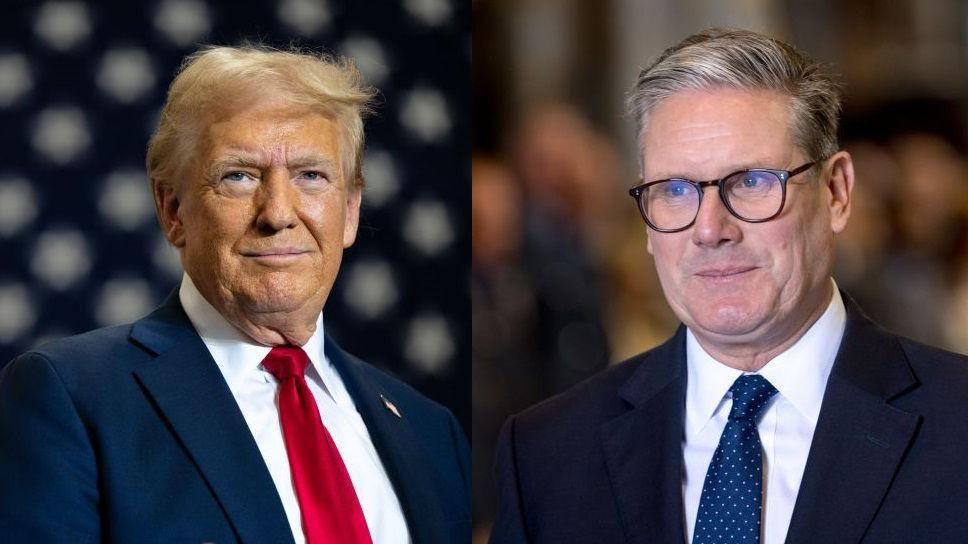
UK government blocks Trump from using British bases to strike Iran

By Sabiu Abdullahi

The United Kingdom government has refused to grant permission for the United States to use British military facilities for any potential strike on Iran, amid escalating tensions over Tehran’s nuclear programme.

The decision places London in a cautious diplomatic position as indications emerge that US President Donald Trump is considering military options that could involve installations located on British territory.

Reports indicate that American officials are preparing operational strategies that would depend on the joint US-UK military base at Diego Garcia in the Chagos Archipelago, as well as RAF Fairford in Gloucestershire. RAF Fairford functions as a major centre for the deployment of US heavy bombers across Europe.

Under existing defence agreements between both countries, American forces require prior approval from the British government before launching operations from UK soil. However, reports state that such authorisation has not been granted should Washington proceed with military action against Iran.

Sources within government circles attribute the hesitation to legal concerns. British authorities fear violating international law, which holds both direct actors and supporting states accountable if a military strike is later judged unlawful.

The matter reportedly featured in a telephone discussion between President Trump and UK Prime Minister Rishi Sunak on Tuesday night. Trump’s ultimatum to Iran regarding its nuclear ambitions formed a key part of the conversation.

A day later, the US president criticised the UK government’s stance on the Chagos Islands agreement. He also referenced Iran in a post on his Truth Social platform, where he suggested American forces might need access to the bases if Tehran refuses negotiations.

“Should Iran decide not to make a Deal, it may be necessary for the United States to use Diego Garcia, and the Airfield located in Fairford, in order to eradicate a potential attack by a highly unstable and dangerous Regime,” Mr Trump wrote.

He added that such a move would aim to prevent “an attack that would potentially be made on the United Kingdom, as well as other friendly countries,” suggesting that British involvement could fall under self-defence if Iran poses a direct threat.

Meanwhile, the UK government has reaffirmed its commitment to moving forward with the Chagos Islands agreement despite signals of unease from Washington.

Justice Minister Alex Davies-Jones confirmed that the necessary legislation will return to Parliament once scheduling allows. The proposed bill had earlier been withdrawn from debate in the House of Lords after a Conservative-backed amendment called for a pause, citing “changing geopolitical circumstances.” Fresh delays were also reported as a possibility.

The situation highlights growing diplomatic strain as Britain attempts to preserve its strategic alliance with the United States while addressing legal and political sensitivities tied to any direct role in a potential conflict with Iran.
Kaduna governor Uba Sani vows  compensation for every demolition

By Sabiu Abdullahi

Governor of Kaduna State, Uba Sani, has assured residents that his administration will not demolish any structure or dispossess citizens of their properties without paying fair and adequate compensation.

He also pledged that the state government would not rely on the excuse of “overriding public interest” to remove property owners in the course of executing development projects.

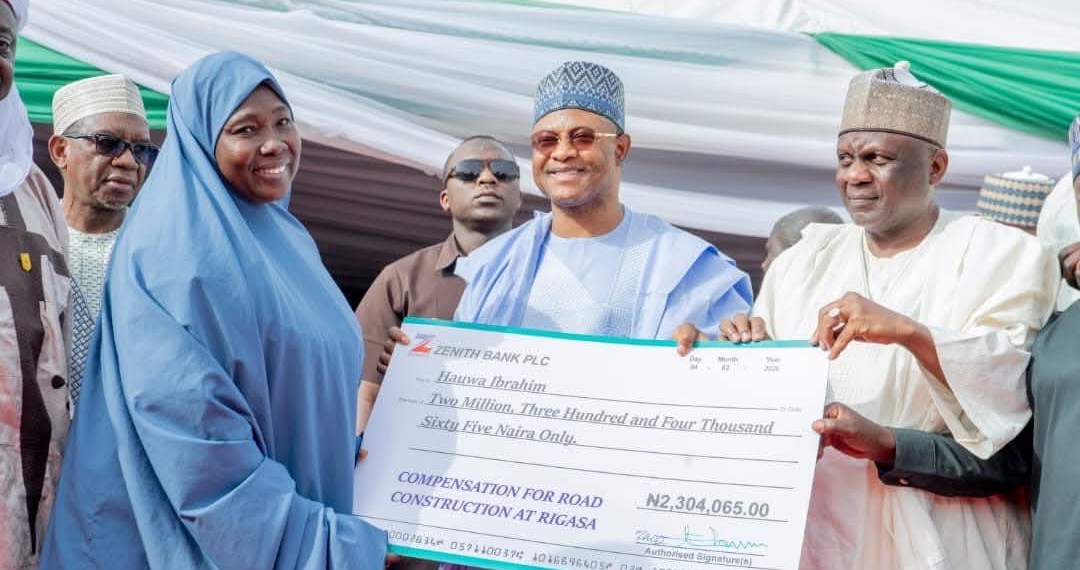
The governor made this known during the flag-off ceremony for the distribution of compensation cheques to 189 households affected by the Rigasa township road project. The event took place in Rigasa on Wednesday.

Uba Sani recalled that the groundbreaking for the Makera Road, Lokoja Road, Ado Gwaram Road, and Asmau Makarfi Spur projects was carried out on 12 September 2025. He explained that work has moved forward steadily. According to him, “drainage systems and hydraulic structures were constructed. Earthworks advanced appreciably along key sections.”

He noted, however, that the government encountered a moral concern because residential buildings, businesses, and key service facilities were located within the project’s right-of-way.

The governor stated that he directed that “construction be temporarily slowed to allow for a thorough, transparent, and equitable assessment of all affected properties and utilities.”

He added that his administration has “resolved that no citizen would be made to suffer unjustly in the name of development.”

Reaffirming his stance, he said, “we will not cloak expediency in the language of ‘Overriding Public Interest.’ Public interest must never eclipse private rights without restitution.”

The governor stressed that fairness has guided his leadership since he assumed office. He said, “Since 29th May 2023, when we took the oath of office, our guiding principle has been clear: governance must be anchored in justice, tempered by compassion, and executed with integrity.

“Roads, bridges, and public works may define the physical landscape of a state, but it is fairness and empathy that define its moral landscape.”

During the event, cheques were presented to affected homeowners to enable them “to relocate, rebuild, or reorganize their lives with dignity.”

He expressed appreciation for their patience and cooperation. He emphasized that “this is not charity; it is justice fulfilled.”

Uba Sani further explained that the exercise reflects a consistent policy across the state. He disclosed that “across Kaduna State, we have compensated approximately 120 households in Mahuta on the Rabah Road project.”

He added that the government had also paid compensation to “282 households from Magajiya to Albarkawa in Zaria; 14 households from Audi to Kako.”

The governor continued that 86 households along the Dogon Bauchi to Kakiyeyi link and 33 households on the Kabala Costain corridor had received payments. He concluded that “in total, we have disbursed about N2.85 billion in compensation.”

Nigerian soldiers arrest Boko Haram drone supplier, neutralise commander in Zamfara

By Sabiu Abdullahi

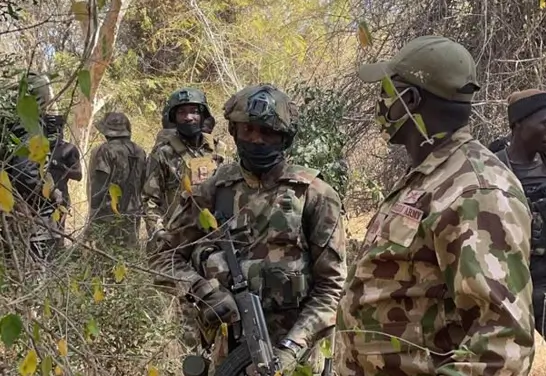
Troops of Operation HADIN KAI, working alongside local vigilantes and hunters, have neutralised a senior Boko Haram figure identified as Abdullahi Mafa in the Madagali axis of Zamfara State.

Security sources disclosed that Mafa, described as a former hybrid commander of the terrorist group, was killed during a coordinated operation in the area.

In a separate development, troops also apprehended a suspected logistics and drone supplier to the insurgents, Dauda Usman Gubula, during another mission in Madagali Local Government Area.

According to security analyst, Zagazola Makama, the encounter took place on Thursday. He said troops came in contact with suspected Boko Haram fighters during an ambush along the Visik River corridor.

The confrontation led to the death of the terrorist commander after an exchange of fire.

Makama further revealed that the alleged collaborator was arrested in a different operation. He said the suspect was picked up during a raid carried out at Madagali Motor Park.

Quoting officials, he stated that security operatives recovered several items from the suspect. These included two aerial drones and 20 solar power banks believed to be meant for terrorist operations.

The suspect remains in custody as investigations continue.

Meanwhile, troops have sustained offensive actions across the region. The ongoing operations are targeted at dismantling Boko Haram cells and restoring normalcy in affected communities.

Tinubu seeks used helicopters from Germany to strengthen Sahel security

By Sabiu Abdullahi

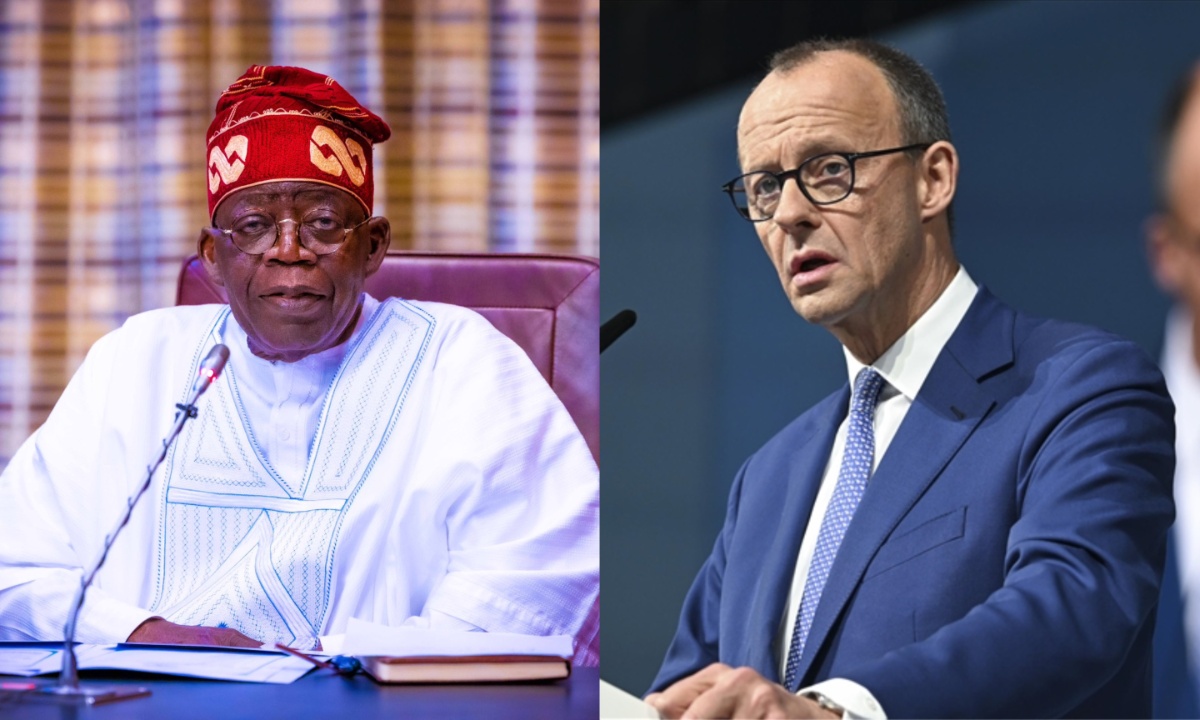
President Bola Ahmed Tinubu has asked the German government to provide used helicopters to support intelligence and reconnaissance operations in the Sahel region.

The request came during a telephone conversation with German Chancellor Friedrich Merz on Wednesday. This was disclosed in a statement issued by Bayo Onanuga, Special Adviser to the President on Information and Strategy. The discussion centered on ways to deepen security collaboration between Nigeria and Germany.

Onanuga said both leaders showed concern about the deteriorating security situation across the Sahel corridor. He stated, “The two leaders also expressed worry over the situation in the Sahel region. President Tinubu called for the supply of used helicopters to help in intelligence reconnaissance in the region.”

Quoting the President further, he added, “The Sahel corridor is bad and needs our support. Intelligence support reconnaissance is needed.”

Security was not the only issue addressed. Talks also covered Nigeria’s electricity sector, with emphasis on the Presidential Power Initiative. Tinubu stressed the country’s need for support in power transmission.

In response, Chancellor Merz assured that Siemens would offer technical assistance, while Deutsche Bank would show readiness to finance the project.

Onanuga noted that both sides also discussed partnerships in other sectors. According to him, “the two leaders also expressed their willingness to cooperate in creative arts and skill development”.

Railway cooperation also formed part of the conversation, alongside collaboration in arts and vocational development.

Merz spoke about diplomatic relations as well. He said, “Germany is eagerly awaiting the arrival of Nigeria’s new ambassador to Germany.”

Onanuga added that the German leader highlighted cultural cooperation. “He also spoke about the importance of the arts and called for the establishment of the Great Museum of African Arts,” he said.

The phone call started at 2:01 p.m. and ended at about 2:10 p.m., the statement concluded.

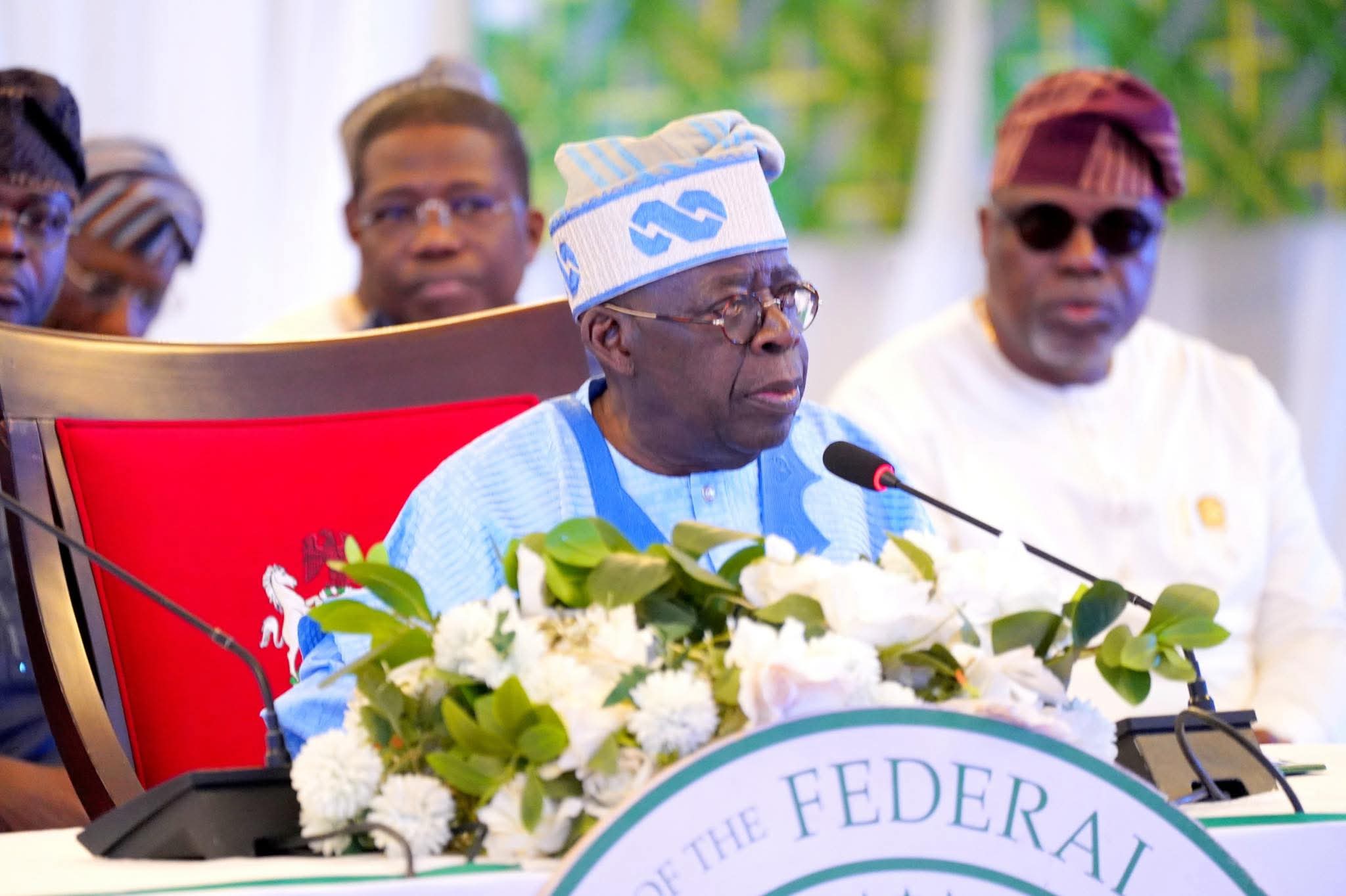
Tinubu appeals for forgiveness as Ramadan begins, urges unity, prayers for Nigeria

By Sabiu Abdullahi

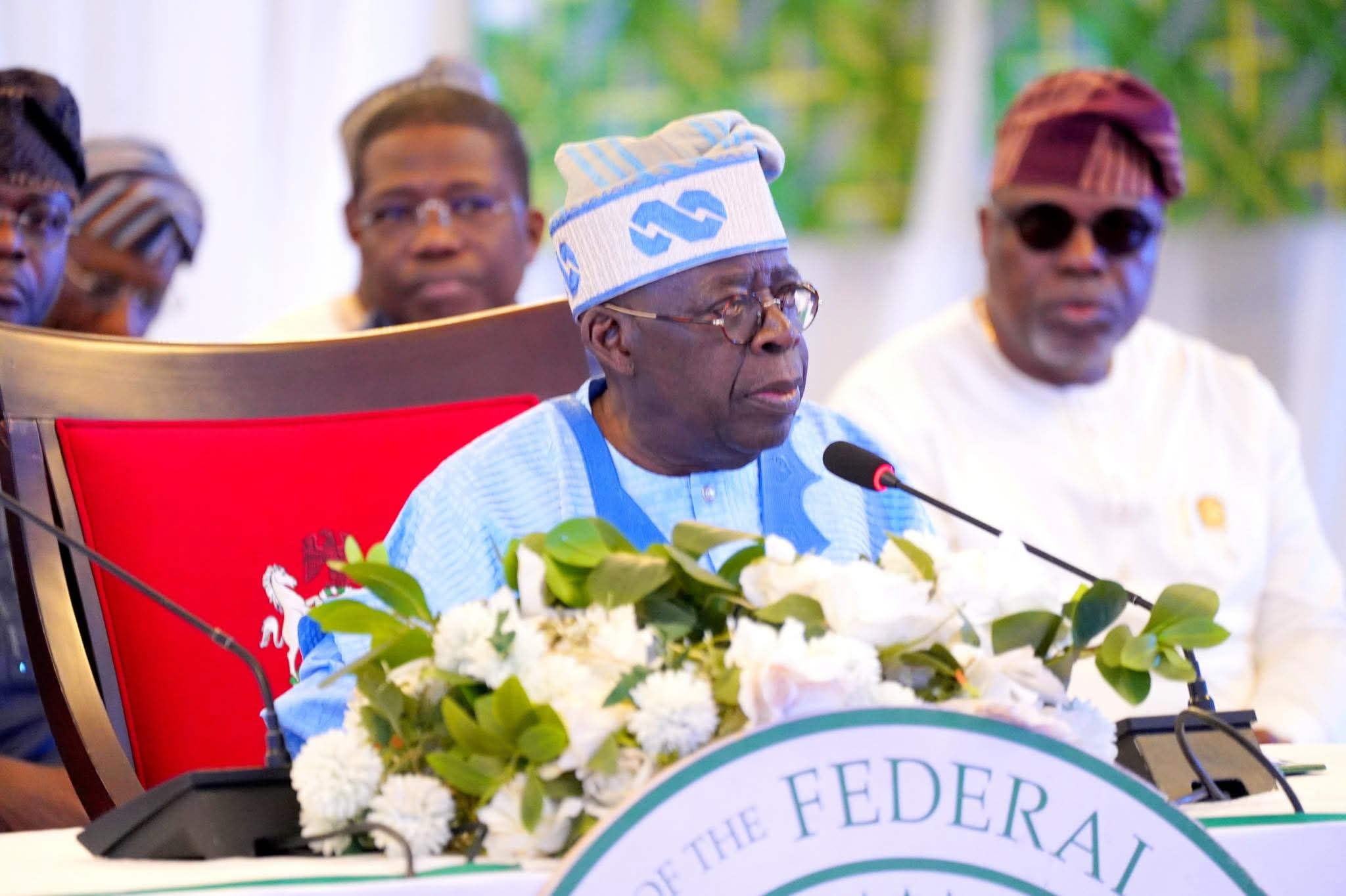
President Bola Tinubu has called on Nigerians to forgive him for any wrong he may have done to them, as Muslims commence the holy month of Ramadan. He also urged citizens to embrace peace, unity, and moral rebirth during the sacred period.

The president made the appeal on Wednesday at the opening session of this year’s Tafsir held at the State House mosque in Abuja.

In his remarks, Tinubu drew attention to the simultaneous observance of Ramadan and the Christian Lenten season. He described the overlap as a reflection of shared spiritual values among Nigerians of different faiths.

“Ramadan coincides with Lent, reminding us of our common commitment to sacrifice, discipline, prayer, and self-denial,” he said.

He stressed that the lessons of Ramadan should shape human conduct and relationships. According to him, the period should promote compassion, love, and forgiveness among citizens.

“We start this Ramadan with all the teaching that it brings to us all. But the main principle is to do good to people, to share love and faith, and to forgive sins. I say, if I have sinned, forgive me as Nigerians.”

Tinubu further noted that fasting should not be limited to abstaining from food and drink. He explained that it should reflect kindness, good deeds, forgiveness, and love for humanity.

The president also appealed to Nigerians, regardless of religious background, to offer prayers for national peace. He asked citizens to support government efforts aimed at tackling terrorism, banditry, and other security challenges facing the country.

Speaking at the event, Abdulwahid Suleiman, the Chief Imam of the State House mosque, expressed gratitude to Allah for granting Muslims the opportunity to witness another Ramadan.

He commended Tinubu’s leadership and offered prayers for divine guidance, sound health, and strength for the president and members of his administration. He also prayed for peace, stability, and prosperity across Nigeria.

BREAKING: DSS arrests El-Rufai moments after EFCC grants him bail

By Sabiu Abdullahi

The State Security Service (SSS) on Wednesday night took former Kaduna State Governor, Nasir El-Rufai, into custody shortly after his release from the Economic and Financial Crimes Commission (EFCC).

El-Rufai had been held by the anti-graft agency since Monday over allegations of corruption. He was granted bail around 8 p.m. on Wednesday. Witnesses said armed SSS operatives were already stationed at the EFCC headquarters and moved in immediately after his release.

Security agents then transported him to the SSS headquarters located in the Asokoro District of Abuja. As of the time of filing this report, authorities had not indicated when he might regain freedom.

His latest arrest is tied to allegations that he illegally intercepted the phone communications of the National Security Adviser (NSA), Nuhu Ribadu.

Earlier on Monday, the SSS filed cybercrime charges against him before the Federal High Court in Abuja. The case, marked FHC/ABJ/CR/99/2026, followed comments he made during a live interview on Arise Television last Friday.

During the programme, El-Rufai alleged that the NSA’s telephone line had been tapped. He claimed he overheard instructions directing security operatives to detain him. He linked those alleged directives to an incident at the Nnamdi Azikiwe International Airport, Abuja, where security personnel attempted to arrest him upon his return from Cairo, Egypt, last Thursday.

Eyewitnesses recalled that the encounter at the airport became heated. Officials briefly seized his international passport and later escorted him out while supporters chanted nearby.

Following the television interview, prosecutors from the SSS filed charges, accusing him of admitting to intercepting the NSA’s communications. The prosecution also alleged that he failed to report others involved in unlawful interceptions. Authorities further claimed his actions endangered public safety and national security through the use of technical systems to monitor the NSA’s phone.

Investigators said the alleged offences contravene provisions of the Cybercrimes (Prohibition, Prevention, etc.) (Amendment) Act, 2024, as well as the Nigerian Communications Act, 2003. A date for arraignment has not yet been announced, and El-Rufai has not issued a public response to the charges.

Developments Leading To Arrest

Recent events began unfolding after his return to Nigeria from Cairo. Security operatives first attempted to detain him at the Abuja airport shortly after arrival.

Video clips that circulated online showed a confrontation between security officials and members of his entourage. Reports indicated that his passport was confiscated during that episode.

El-Rufai later accused the NSA of ordering the attempted arrest through the SSS. He repeated the allegation during his Arise Television appearance, insisting he had knowledge of the directive through intercepted communication.

His lawyer, Ubong Akpan, criticised the airport incident. He described the attempted arrest as arbitrary and a breach of constitutional rights. The lawyer explained that an EFCC invitation had been delivered to his client’s residence while he was outside the country. He said immediate compliance was not possible under those circumstances.

Akpan added that his client formally notified the EFCC of his readiness to honour the invitation voluntarily upon return, scheduled for 10 a.m. on Monday. He also demanded the return of El-Rufai’s passport. He argued that its seizure violated his client’s dignity, movement rights, and constitutional protections. He warned that legal steps would follow any unlawful detention.

Court revokes bail for suspect in Kano housing estate attack

By Abdullahi Mukhtar Algasgaini

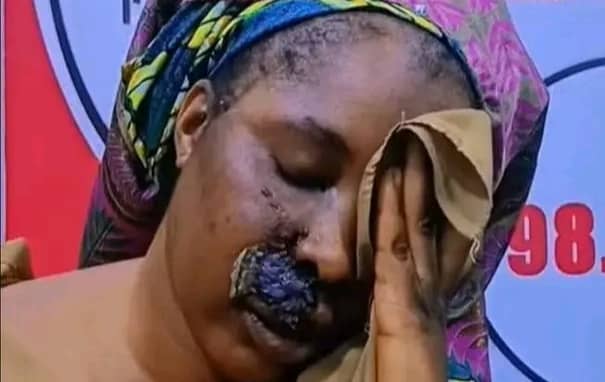
A Kano State High Court has revoked the bail previously granted to a man accused of a violent assault at the Danladi Nasidi Housing Estate.

Justice Aisha Yau of High Court No. 10, Bompai Road, ordered on Wednesday that Kabiru Aminu be remanded in prison custody pending the continuation of his trial. The accused is facing charges including Criminal Trespass, Armed Robbery, and Causing Hurt.

The decision followed an application by the prosecution, led by state counsel Basiru Kabiru Aliyu, who argued for the revocation based on the gravity of the offences and in the interest of justice. The accused had initially been granted bail by a magistrate’s court, a decision that had sparked public concern given the serious nature of the allegations.

The case, officially titled State v. Kabiru Aminu, stems from a violent incident at the housing estate located in the Kumbotso Local Government Area.

The Kano State Ministry of Justice confirmed the court’s ruling in a statement. The Ministry, acting under the directive of Governor Abba Kabir Yusuf and led by Attorney-General Abdulkarim Kabiru Maude, SAN, hailed the outcome as a major legal breakthrough.

The state government has assured the public that it will diligently prosecute the case to its conclusion, pledging to pursue justice “without fear or favour” in line with principles of fairness and transparency.

Electoral act amendment: Tinubu signs seven key changes into law ahead of 2027 polls

By Abdullahi Mukhtar Algasgaini

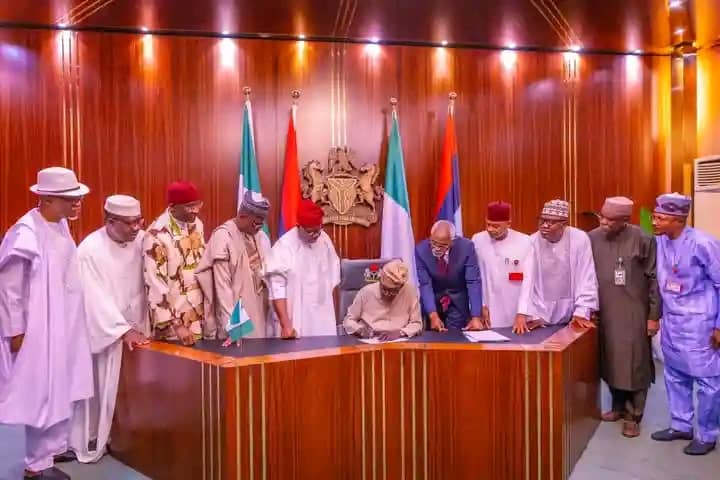
President Bola Ahmed Tinubu has officially signed the amended Electoral Act into law, enacting significant changes to Nigeria’s electoral process ahead of the 2027 general elections.

The new legislation introduces seven major modifications designed to streamline voter registration, candidate nomination, and result management.

Here are the key changes now in effect:

1. Voter Registration: INEC will now only require three identification documents for registration: a birth certificate, Nigerian passport, or National Identification Number (NIN). Previously accepted forms like traditional ID cards and driver’s licenses have been removed.

2. Digital PVCs: Registered voters will be able to download their Permanent Voter’s Cards directly from the Independent National Electoral Commission (INEC) website.

3. Revised Result Transmission: Election results will be uploaded in real-time to the IREV portal. In the event of network failure, electoral officers are authorized to revert to the manual Form EC8A for result collation.

4. Primary Elections: The controversial indirect primaries have been abolished. Political parties must now adopt either direct primaries or consensus candidacy to select their flagbearers.

5. Funding Timeline: The timeframe for the release of funds to INEC for election preparations has been halved, moving from 12 months to just six months before election day.

6. Candidate Nomination: Political parties are now required to submit the names of their candidates 120 days before the election, a reduction from the previous 180-day window.

7. Final Candidate List: INEC will publish the final, comprehensive list of all nominated candidates 60 days prior to the election, significantly later than the previous 150-day deadline.

This newly amended law will govern all electoral preparations and activities leading up to the 2027 elections.

Tinubu signs order mandating direct remittance of oil, gas revenues to federation account

By Sabiu Abdullahi

President Bola Tinubu has signed a new executive order directing the direct remittance of oil and gas revenues into the Federation Account, in a move aimed at protecting national earnings and improving fiscal transparency.

This is contained in a statement signed by Bayo Onanuga, Special Adviser to the President on Information and Strategy, today.

According to Onanuga, the directive, issued under Section 5 of the Constitution of the Federal Republic of Nigeria (as amended), is designed to block revenue leakages, cut wasteful spending, and dismantle overlapping structures within the petroleum sector. The administration said the policy will channel more resources toward national development priorities.

The order draws authority from Section 44(3) of the Constitution, which places ownership and control of all minerals, mineral oils, and natural gas in Nigeria under the Federal Government, including resources located in territorial waters and the Exclusive Economic Zone.

According to the State House, the measure seeks to restore constitutional revenue allocations due to federal, state, and local governments. Officials argued that the Petroleum Industry Act (PIA) of 2021 created fiscal and structural channels that reduced remittances through multiple deductions and charges.

Under the existing framework, NNPC Limited retains 30 percent of Federation oil revenue as a management fee from Profit Oil and Profit Gas derived from Production Sharing Contracts, Profit Sharing Contracts, and Risk Service Contracts. The company also keeps 20 percent of its profits for working capital and future investments.

Government officials maintained that the additional 30 percent management retention is unjustified because the 20 percent profit retention already supports operational needs.

The statement further explained that NNPC Limited deducts another 30 percent of profit oil and gas as the Frontier Exploration Fund under Sections 9(4) and (5) of the PIA. Authorities expressed concern that such a large allocation to exploratory activities could create idle cash reserves and encourage inefficient spending, especially when public funds are required for security, education, healthcare, and energy transition programmes.

The government also reviewed the Midstream and Downstream Gas Infrastructure Fund (MDGIF), financed through gas flaring penalties under Section 104 of the PIA. It noted that Section 103 of the same law had already established an Environmental Remediation Fund for host communities affected by petroleum operations. Officials described the dual funding structure as duplicative.

Authorities said these deductions collectively divert more than two-thirds of potential oil revenue away from the Federation Account. They linked declining net oil inflows to the present deduction regime and fragmented oversight system.

The executive order introduces reforms to remove overlapping deductions, particularly the 30 percent allocations tied to profit-sharing arrangements. The goal is to ensure that revenues due to the Federation are fully remitted to support national obligations across all tiers of government.

President Tinubu also raised structural concerns about NNPC Limited’s role as a concessionaire in Production Sharing Contracts. The government believes the present arrangement allows the company to influence operating costs while functioning as a commercial entity. Officials said this dual role creates competitive imbalances and weakens its transition into a fully commercial operator under the PIA.

The order therefore establishes measures to curb financial leakages, improve transparency, and reposition NNPC Limited strictly along commercial lines while protecting public revenue.

The President described the reforms as urgent due to their implications for national budgeting, debt management, economic stability, and citizens’ welfare. He added that his administration will conduct a comprehensive review of the Petroleum Industry Act in consultation with stakeholders to address fiscal and structural gaps.

Under the gazetted order, NNPC Limited will no longer manage the 30 percent Frontier Exploration Fund. All profit allocations previously assigned to the fund from production sharing and related contracts will now be transferred directly to the Federation Account.

The company will also cease collecting the 30 percent management fee on profit oil and gas meant for the Federation.

In addition, all oil and gas operators under production sharing arrangements must remit Royalty Oil, Tax Oil, Profit Oil, Profit Gas, and all other government-due revenues straight to the Federation Account with effect from February 13, 2026.

The President has also halted payments of gas flaring penalties into the MDGIF. Going forward, proceeds from such penalties will be paid into the Federation Account. Any spending from the MDGIF must comply with existing public procurement regulations.

Tinubu approved the creation of a joint project team to coordinate integrated petroleum operations. The designated commission will interface with license holders where upstream and midstream activities are combined.

An Implementation Committee has also been constituted to supervise execution of the order. Members include the Minister of Finance and Coordinating Minister of the Economy, the Attorney-General of the Federation and Minister of Justice, the Minister of Budget and National Planning, and the Minister of State for Petroleum Resources (Oil).

Other members are the Chairman of the Nigeria Revenue Service, a representative of the Ministry of Justice, the President’s Special Adviser on Energy, and the Director-General of the Budget Office of the Federation, who will serve as committee secretariat.

Ghana activates INTERPOL action against Russian man over alleged secret recordings

By Sabiu Abdullahi

Authorities in Ghana have initiated international legal steps through INTERPOL against a Russian national accused of secretly filming intimate encounters with Ghanaian women without their consent.

The action was taken by the Ghana Police Criminal Investigations Department (CID). Officials said the measure is intended to ensure the suspect can face prosecution under Ghanaian law if he travels outside the Russian Federation.

They described the step as part of a wider diplomatic and law-enforcement push to secure accountability.

The Minister for Communication, Digital Technology and Innovations, Samuel Nartey George, disclosed this on Wednesday after a joint ministerial engagement with the Russian Ambassador to Ghana. He stressed that the government is committed to pursuing the matter through all lawful means.

“Working with the Ghana Police CID, we have activated international legal action through INTERPOL to ensure that once the individual sets foot outside Russia, we have a legal route to make him answer for his actions within Ghana,” he stated.

The suspect, identified as Vladislav Luilkov, allegedly recorded Ghanaian women without permission and circulated the videos online.

Authorities said early findings suggest that parts of the content may have generated revenue on digital platforms.
“This is not a matter of morality or private relationships,” the Minister emphasised. “It is a clear criminal offence under Section 67 of the Cybersecurity Act, 2020 (Act 1038), which prohibits the non-consensual recording and dissemination of intimate images.”

Government sources said the investigation carries international implications. This development prompted diplomatic communication with Russian officials.

Mr. George, alongside the Minister for Gender, Children and Social Protection, Dr. Agnes Naa Momo Lartey, held formal discussions with the Russian Ambassador, H.E. Sergei Berdnikov. The meeting focused on briefing him about the case and the progress of investigations.

“We had very fruitful deliberations where we presented information available to us in relation to the Russian national alleged to have engaged in non-consensual recording of ladies,” Mr. George said. “We reiterate our commitment to using all legal means at our disposal to ensure that the law is upheld and the protections of Ghanaian citizens are enforced at all times.”

In his response, the Russian envoy confirmed receipt of Ghana’s official communication. He assured the ministers that the brief would be forwarded to authorities in Moscow.

He noted that Ghana and Russia do not have an extradition agreement. He, however, said the alleged acts could also amount to offences under Russian law. He pledged ongoing diplomatic collaboration.
Officials said investigations are still in progress. Cybersecurity experts and law-enforcement operatives are examining digital trails and financial transactions connected to the allegations.

Authorities also cautioned members of the public against circulating the alleged footage. They warned that redistribution constitutes a criminal violation under Ghanaian statutes.

“The public is urged to refrain from sharing or redistributing the illegal material,” the statement said. “Anyone found culpable will face the full rigours of the law.”
The administration of President John Dramani Mahama, according to the ministers, remains resolute in protecting citizens’ privacy and dignity.
“We will pursue all lawful avenues to ensure justice is served,” Mr. George affirmed.

Meanwhile, the Ministry of Gender, Children and Social Protection has created a victim support desk. Clinical specialists have been assigned to provide psychological and emotional care to affected persons. Officials assured that all interventions will remain strictly confidential.