News

Report warns half of Nigerian hospitals cannot adequately treat snakebite victims

By Sabiu Abdullahi

A new global report has revealed that at least half of health facilities in Nigeria lack the capacity to properly treat snakebite envenoming, raising concerns over avoidable deaths and long-term disabilities across the country.

The report was released by the Strike Out Snakebite (SOS) initiative to mark World Neglected Tropical Diseases (NTDs) Day 2026, observed annually on January 30. It identified weak health systems, poor infrastructure and persistent shortages of life-saving antivenom as major drivers of snakebite deaths, particularly in high-burden countries such as Nigeria.

The findings were drawn from a survey involving 904 frontline healthcare workers in Nigeria, Brazil, India, Indonesia and Kenya, countries that account for a significant share of the global snakebite burden.

According to the report, 50 per cent of health workers said their facilities lack full capacity to manage snakebite cases, while 99 per cent reported difficulties administering antivenom, which the World Health Organisation recognises as the only essential treatment for snakebite care.

Nigeria’s situation was described as especially severe, with 98 per cent of surveyed healthcare workers reporting challenges in administering antivenom.

“Nigeria is home to 29 species of snakes, nearly 41 per cent of which are venomous, yet many victims still struggle to access timely medical care,” the report stated.

Healthcare workers surveyed identified urgent needs that include improved access to care, higher-quality antivenom, stronger regulation, expanded training and wider community education to reduce risky behaviour.

The report highlighted “delays in patients arriving at health facilities (57 per cent), poor infrastructure and inadequate equipment (56 per cent), and lack of training and clinical guidelines (42 per cent) as key factors contributing to avoidable deaths and disabilities.”

The findings come amid public outrage over the death of Abuja-based music talent, Ifunanya Nwangene, who reportedly visited two hospitals that could not administer antivenom before she died.

The report further showed that 35 per cent of healthcare workers experience daily shortages of antivenom, while more than 77 per cent reported life-threatening delays in treatment because victims often seek traditional remedies first.

In addition, 44 per cent of respondents said avoidable delays have led to amputations or major surgeries, outcomes that frequently push affected families into deeper poverty.

Snakebite envenoming was described as a disease of inequality, with rural communities, children and agricultural workers most affected due to long distances from well-equipped health facilities.

“Snakebite envenoming kills roughly one person every five minutes worldwide, yet remains severely underreported and underfunded despite being preventable and treatable,” the report said.

Commenting on the findings, Co-Chair of the Global Snakebite Taskforce and Chancellor of the London School of Hygiene and Tropical Medicine, Elhadj As Sy, said the data point to a global emergency.

“Snakebite envenoming causes up to 138,000 deaths every year — one person every five minutes — and leaves a further 400,000 with permanent disabilities,” he said.

He questioned why one of the deadliest neglected tropical diseases remains largely ignored by global decision-makers and donors.

“No one should be dying from snakebite envenoming,” he added, while calling for urgent action to end preventable deaths in Nigeria and other vulnerable regions.

Elhadj As Sy also said frontline health workers are fighting the disease within fragile and under-resourced systems.

“Too often, conversations on global health overlook those who shoulder the greatest burden — frontline healthcare workers. This report shines a light on the severe challenges they face. Many solutions exist, but political will and bold commitments from governments, partners and investors are needed to turn the tide on this preventable yet devastating disease,” he said.

The report noted that victims often face long journeys to care, limited infrastructure and scarce, costly antivenom, factors that turn a treatable condition into a medical emergency.

It also pointed to preventive measures such as wearing protective footwear, using mosquito nets, carrying torches at night and avoiding snake habitats as steps that could significantly reduce risk in rural areas.

Elhadj urged governments to act decisively.

“As Co-Chair of the GST, my mission is simple: to bring snakebite out of the shadows and demand the attention, action, and resources from the international community. The solutions exist. The deaths are preventable. Frontline healthcare workers have spoken. I invite you to listen. Stand with them,” he said.

Executive Secretary of the African Leaders Malaria Alliance, Joy Phumaphi, also stressed the urgency of action.

“Snakebite envenoming continues to take the lives of vulnerable people despite being preventable. On World NTD Day, ALMA reaffirms our commitment to strengthen prevention and control through advocacy and country-led solutions. Unite. Act. Eliminate NTDs,” she said.

The report called on governments, philanthropists, multilateral agencies and industry stakeholders to increase investment in research, expand access to affordable and quality antivenom, upgrade health infrastructure and integrate snakebite prevention and treatment into national health plans.

SOS warned that snakebite envenoming still receives only a small fraction of the funding required, despite causing up to 138,000 deaths and 400,000 permanent disabilities worldwide each year.

Petro heads to Washington for high-stakes meeting with Trump after months of tensions

By Sabiu Abdullahi

After months of sharp exchanges marked by insults, threats, tariffs and sanctions, United States President Donald Trump and Colombian President Gustavo Petro are set to meet in Washington on Tuesday in what appears to be an effort to ease a strained relationship.

Petro confirmed his attendance after accepting an invitation from Trump last month. The decision followed what both sides described as a cordial phone call that brought an abrupt end to a prolonged public feud.

The talks come at a critical time for the Colombian leader. His administration is seeking to convince Washington that it remains committed to fighting drug trafficking. This follows a recent US military operation in neighbouring Venezuela that led to the arrest of President Nicolás Maduro, whom Washington accused of links to drug cartels. Petro is also pushing for the lifting of US sanctions imposed on him.

Trump said on Monday that he was looking forward to a “good meeting” with his Colombian counterpart.

Petro arrived in Washington on Monday on a special visa. His previous visa had been revoked in September after a speech delivered to a pro-Palestinian audience, during which he urged American soldiers to disobey Trump.

The deterioration in relations began early in Trump’s second term in January 2025, despite Colombia’s reputation as one of Washington’s most reliable partners in the region, especially on security and defence matters.

Tensions flared after the Trump administration launched a mass deportation campaign that involved the use of military aircraft. Some deportees arrived in restraints, a move that angered Petro. He initially blocked two deportation flights and said he would “never allow Colombians to be brought back in handcuffs on flights.”

Later the same day, Petro reversed his decision after Washington threatened tariffs and sanctions. Colombian authorities announced that the country would accept “all” of Trump’s conditions, including the “unrestricted acceptance of undocumented immigrants” who entered the US.

The dispute deepened in March 2025 after US Homeland Security Secretary Kristi Noem claimed that Petro had described members of the Venezuelan criminal gang Tren de Aragua as “his friends” who only needed “more love and more understanding.” Petro denied the claim and blamed a possible misunderstanding on his limited English.

The Trump administration escalated matters in September by decertifying Colombia as a counternarcotics partner. US officials accused Bogotá of failing to meet its obligations, though they said funding would continue. Petro rejected the claim and argued that Colombia was doing its part, while drug consumption remained a US social problem.

“The US decertified us after dozens of deaths among police officers, soldiers, and civilians who were trying to disrupt cocaine trafficking,” Petro said.

Relations worsened further after Petro publicly called on American soldiers to disobey Trump during a visit to New York for the UN General Assembly. He also described Trump as an “accomplice to genocide” in Gaza. In response, the US revoked his visa, citing “reckless and incendiary actions.”

In October, Trump stepped up his criticism and described Petro as a “thug,” while blaming him for drugs reaching the United States. Soon after, the US Treasury imposed sanctions on Petro and several members of his family and cabinet.

“Since President Gustavo Petro came to power, cocaine production in Colombia has exploded to the highest rate in decades, flooding the United States and poisoning Americans,” Treasury Secretary Scott Bessent said.

Petro denied the allegations and vowed to challenge the sanctions. “On the contrary, my government has seized more cocaine than in the entire history of the world,” he said. In November, he made his bank accounts public to demonstrate, according to him, that he had no links to drug trafficking.

The standoff intensified again in December after Trump warned that countries involved in drug trafficking could be “subject to attack.” Petro responded by cautioning Trump against threatening Colombia’s sovereignty and invited him to visit the country.

A turning point came on January 3, 2026, when US forces carried out an operation in Venezuela that resulted in Maduro’s capture. Trump renewed his attacks on Petro soon after.

“He’s making cocaine and they’re sending it into the United States,” Trump said. “So, he does have to watch his ass.”

Trump later added that Petro was “a sick man who likes making cocaine and selling it to the United States, and he’s not going to be doing it very long.”

Petro rejected the remarks and spoke of “taking up arms” if necessary to defend Colombia’s sovereignty. Days later, Colombia’s foreign minister signalled readiness for dialogue with US officials.

On January 7, the two leaders held an unexpected phone call that eased tensions. Petro said the conversation helped calm relations, though he maintained that the US operation in Venezuela was “illegal.” Trump welcomed the exchange and invited Petro to the White House.

Ahead of the meeting, Trump said Petro’s attitude had changed in recent weeks. “He was certainly critical before that. But somehow after the Venezuelan raid he became very nice. He changed his attitude very much,” Trump told reporters.

Colombia’s presidency said the meeting would “define strategic priorities and strengthen lines of cooperation,” while describing Petro’s visit as a “milestone in bilateral relations.”

In addition to the White House talks, Petro’s schedule includes meetings with political, academic and business figures, as well as engagements with members of the Colombian diaspora in the United States.

Trump threatens legal action against Trevor Noah over Epstein joke at Grammys

By Sabiu Abdullahi

U.S. President Donald Trump has threatened to sue comedian Trevor Noah following a joke he made at the Grammy Awards that referenced Trump and the late financier Jeffrey Epstein.

Trevor Noah, a South African-born comedian, hosted the music awards ceremony. During his presentation, he made a remark while introducing the Song of the Year category. He said: “Song of the Year – that is a Grammy that every artist wants almost as much as Trump wants Greenland, which makes sense because Epstein’s island is gone, he needs a new one to hang out with Bill Clinton.”

Trump reacted strongly to the comment and said he would take legal steps against the comedian. Writing on his Truth Social platform, the president stated that he would be “sending my lawyers to sue”.

In a series of posts, Trump accused Noah of spreading false information. He wrote: “Noah said, INCORRECTLY about me, that Donald Trump and Bill Clinton spent time on Epstein Island. WRONG!!!”

Trump went further to deny any connection to Epstein’s private island. He added: “I can’t speak for Bill, but I have never been to Epstein Island, nor anywhere close, and until tonight’s false and defamatory statement, have never been accused of being there, not even by the Fake News Media.”

He also criticised the comedian directly, saying: “Noah, a total loser, better get his facts straight, and get them straight fast.” Trump concluded his response with the words: “Get ready Noah, I’m going to have some fun with you!”

Trump has acknowledged that he knew Epstein in the past but insists that he had no knowledge of Epstein’s criminal activities. He has said their relationship ended around 2004. Authorities have stated that there is no evidence linking Trump to Epstein’s crimes. The U.S. Justice Department has described allegations against him as unfounded and false. Trump has not been accused of any crime by Epstein’s victims, and there are no claims that he ever visited Epstein’s island.

In 2020, a spokesperson for former U.S. President Bill Clinton said Clinton had “never been” to Epstein’s private island, Little St James. Clinton has also not been accused of wrongdoing.

Jeffrey Epstein was found dead in his New York prison cell in 2019 while awaiting trial on sex trafficking charges. His death came more than a decade after he was convicted of soliciting prostitution from a minor. Epstein bought his private island in 1998, and several survivors later accused him of trafficking and abusing them there.

Trump has pursued legal cases against several media organisations in recent years. These include actions involving the New York Times and the Wall Street Journal. In December, he filed a multi-billion-dollar lawsuit in a Florida court, accusing the BBC of defamation and of breaching trade practices laws over the editing of a Panorama programme.

Trevor Noah previously hosted The Daily Show on Comedy Central in the United States for seven years and remains one of the most prominent comedians on the global stage.

Onitsha traders reopen shops after Soludo’s Warning

By Sabiu Abdullahi


Traders at the Onitsha Main Market have resumed commercial activities after a one-week shutdown, following directives issued by the Anambra State Governor, Chukwuma Soludo.

The reopening took place amid heightened security presence and fresh warnings by the state government against adherence to sit-at-home orders issued by non-state actors, particularly the proscribed Indigenous People of Biafra.

Governor Soludo had earlier ordered the closure of the market after reports indicated that some traders were observing a Monday sit-at-home directive linked to IPOB. He also warned that continued closure of shops could attract further sanctions from the state government.

Confirming the development, Channels Television reported on Monday that traders had complied with the governor’s directive and reopened their shops.

“Traders of the Onitsha Main Market have reopened their shops in compliance with a directive by the Anambra State Governor, Chukwuma Soludo,” the report stated.

A visit to the market by Channels Television showed that many traders returned as early as 8:45 a.m. Shops were seen opening across major sections of the market, including Egerton Road, Ose Foodstuff Market, and The Young Park, which serves as a key entrance to the Main Market. Other busy areas included Emeka Offor Plaza, Sokoto Road, Lagos Line, and Marine, as customers gradually returned to patronize traders.

“It is clear that the traders are complying with government directives to ignore the sit-at-home order,” the report added.

Meanwhile, IPOB had announced a lockdown across the South-East, citing solidarity with Onitsha traders. Through its spokesman, Emma Powerful, the group called on traders, transport operators, banks, schools, and civil servants to observe the action peacefully.

However, IPOB’s lawyer, Ifeanyi Ejiofor, dismissed the directive, describing it as “a fake” and “a calculated falsehood.” He urged members of the public to disregard it and stressed that the group had repeatedly disassociated itself from sit-at-home orders.

The Anambra State Police Command also issued a statement on Sunday, warning residents against threats posed by non-state actors on social media.

“Following the security assessment of the implications, or otherwise, of full resumption of all social, commercial, and official activities in Anambra State on Monday, the Police Command has identified a deliberate, recurring pattern of coordinated social media posts by some non-state actors aimed at spreading fear, misinformation, and bigotry among the public,” the statement said.

According to the police, such narratives were intended “to cause panic, undermine public confidence, and disrupt the peace currently enjoyed in the State.”

“The resilience, cooperation, and timely sharing of credible information by residents continues to play a critical role in sustaining public order and safety,” the statement added.

The police further announced intensified intelligence-led patrols, increased surveillance, and proactive security operations across the state to prevent threats to lives and property. Residents were also advised to ignore unverified social media messages and report suspicious activities.

“Members of the public are advised to disregard unverified social media content being propagated by non-state actors and to report any suspicious movements or activities to the nearest Police formation or through established emergency channels,” the statement said.

The police reaffirmed their commitment to maintaining peace and public safety, while the state government assured traders of adequate security as business activities return to normal across Onitsha.

SIMDA confirms fire outbreak at Singer market

By Anas Abbas

The Singer Market Development Association (SIMDA) has reported a major fire outbreak at Singer Market, which began at about 3:00 a.m. and is still ongoing as of the time of this report. The incident has caused panic among traders and residents in the area.

In a statement shared by the chairman of the association, Barrister Muhammad Zakari called on members of the public and the business community to offer prayers for divine intervention as efforts continue to contain the fire. The association described the situation as serious and distressing.

The chairman urged everyone to remember the affected traders in their prayers, asking Allah to protect lives and minimize losses resulting from the inferno. He emphasized the importance of unity and support during this difficult moment for the market community.

The statement concluded with prayers for Allah’s mercy and protection, asking Him to bring the fire under control and restore calm to the market. “May Allah save us from this calamity,” the chairman prayed

Updates on how the fire started and the level of damage recorded will be communicated in due course.

Prominent Zaria Islamic cleric Sheikh Usman Kusfa passes away

By Abdullahi Mukhtar Algasgaini

The Islamic scholarly community in Northern Nigeria is in mourning following the death of the renowned Zaria-based cleric, Sheikh Usman Kusfa, popularly known as Sheikh Rigi-Rigi.

The scholar passed away after a prolonged illness. He was widely respected for his teachings and influence within the Muslim community of Zaria and beyond.

His funeral prayers (Jana’iza) have been scheduled for 4:30 PM today at the Babban Filin Low-Cost in Zaria.

Condolence messages have begun pouring in, with many expressing their grief and praying for divine mercy for the departed. A common prayer among the faithful is: “May God grant him paradise, forgive him, and may his illness serve as an atonement for his sins.”

Nigerian military gives bandits bloody nose, eliminates scores in Zamfara

By Sabiu Abdullahi


Troops of the 8 Division of the Nigerian Army, operating under Sector 2 of Operation FANSAN YAMMA, have overrun the stronghold of a notorious bandit leader, Gwaska Dan Karmi, in Maru Local Government Area of Zamfara State, killing scores of bandits during a fierce gun battle.

This is contained in a statement signed by Lolaniyi Osoba, Lieutenant Colonel, Acting Deputy Director, Army Public Relations, 8 Division Nigerian Army/Sector 2 Operation FANSAN YAMMA, on February 1, 2026.

The military operation followed credible intelligence which revealed that more than 100 armed bandits had converged at the camp to plan coordinated attacks on surrounding communities and military supply routes. Troops placed the location under close surveillance for several days before launching the assault with support from the Nigerian Air Force.

The troops engaged the bandits on January 31, 2026. Heavy exchanges of gunfire broke out after the terrorists attempted to flank and encircle the advancing forces. The soldiers, backed by superior firepower, repelled the attempt and gained control of the camp. Many of the bandits were killed during the clash, while others escaped with gunshot wounds.

After securing the area, the troops set the camp ablaze and withdrew in an organised manner. The Nigerian Air Force has continued interdiction missions to track and eliminate fleeing bandits, while ground forces retain control of the area.

The Nigerian Army confirmed that some soldiers lost their lives during the encounter. One combat enabler vehicle was also struck by an enemy Rocket Propelled Grenade and caught fire. The Army paid tribute to the fallen personnel and reaffirmed its resolve to sustain the fight against banditry.

According to the military, troop morale and combat effectiveness remain high as operations continue to dismantle criminal networks and disrupt their logistics across the region.

Iran’s Supreme Leader Ayatollah Khamenei issues stern warning to US amid tension

By Sabiu Abdullahi

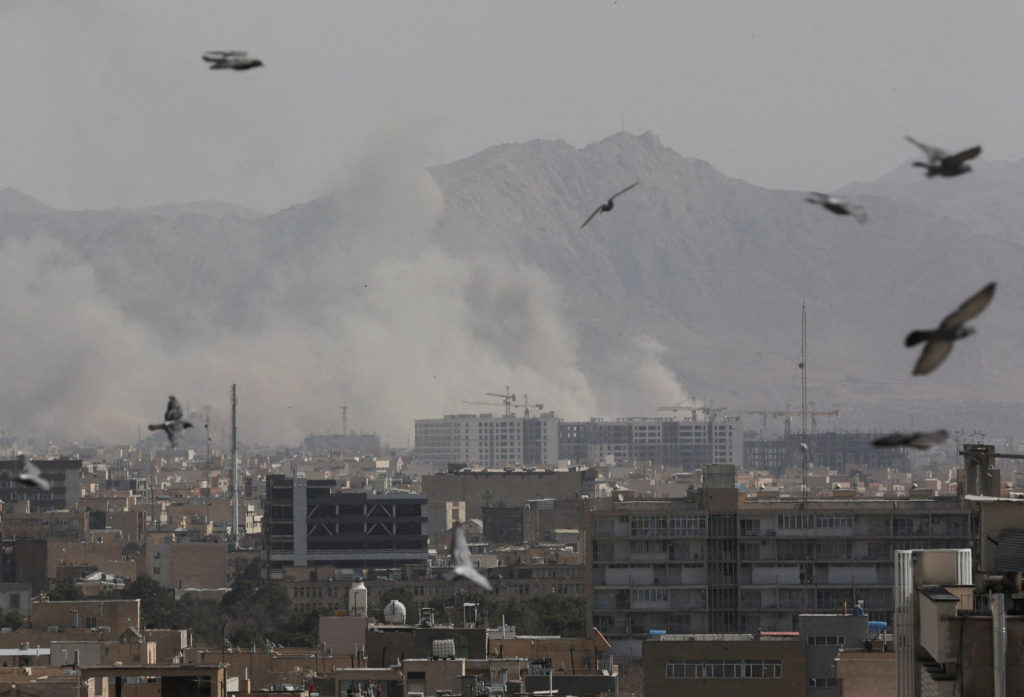
Iran’s Supreme Leader, Ayatollah Ali Khamenei, has warned that any military attack by the United States would lead to a “regional war” in the Middle East, as tensions continue to rise between Tehran and Washington.

Khamenei issued the warning on Sunday amid the presence of the US aircraft carrier USS Abraham Lincoln and other American warships in the Arabian Sea. The deployment followed President Donald Trump’s decision to send the vessels after Iran’s violent crackdown on nationwide protests.

Iranian state television reported Khamenei’s remarks online before broadcasting any video of his speech.

“The Americans should know that if they start a war, this time it will be a regional war,” Khamenei was quoted as saying.

He also insisted that Iran had no intention of attacking other countries but would respond forcefully to any provocation. “We are not the instigators and we do not seek to attack any country. But the Iranian nation will deliver a firm blow to anyone who attacks or harasses it,” he said.

Khamenei further described the ongoing protests across Iran as an attempted coup, adopting a tougher stance after earlier acknowledging that economic hardship had contributed to public anger. The protests began on December 28 after the collapse of Iran’s currency and later turned into a direct challenge to his leadership.

“The recent sedition was similar to a coup. Of course, the coup was suppressed,” he said. “Their goal was to destroy sensitive and effective centers involved in running the country, and for this reason they attacked the police, government centers, (Revolutionary Guard) facilities, banks and mosques — and burned copies of the Quran. They targeted centers that run the country.”

Reports indicate that tens of thousands of people have been detained since the demonstrations began. In Iran, charges related to sedition can carry the death penalty, a development that has drawn concern from the United States. Trump has previously described the killing of peaceful protesters or mass executions as red lines for possible military action.

Meanwhile, Iran also scheduled live-fire military drills for Sunday and Monday in the Strait of Hormuz, a key oil shipping route through which about one-fifth of the world’s traded oil passes. The US military’s Central Command warned against any threat to American forces or disruption of commercial shipping during the exercise.

In a related development, the Speaker of Iran’s Parliament, Mohammad Bagher Qalibaf, announced that Tehran now considers all European Union militaries to be terrorist groups. The statement followed the EU’s decision to designate Iran’s Revolutionary Guard as a terrorist organization over its role in the crackdown on protests.

Qalibaf, a former Revolutionary Guard commander, made the declaration as lawmakers appeared in Guard uniforms in parliament.

“By seeking to strike at the (Guard), which itself has been the greatest barrier to the spread of terrorism to Europe, Europeans have in fact shot themselves in the foot and, once again, through blind obedience to the Americans, decided against the interests of their own people,” Qalibaf said.

Lawmakers later chanted “Death to America!” and “Death to Israel!” during the session.

Trump, for his part, has said Iran is engaged in talks with the United States, even as he declined to confirm whether he had decided on military action.

“I don’t know that they will. But they are talking to us. Seriously talking to us,” Trump said, while stressing the need for a “satisfactory” deal to prevent Iran from acquiring nuclear weapons.

However, Iran’s Supreme Leader has repeatedly ruled out direct negotiations with Washington. Despite that, Ali Larijani, a senior Iranian security official, wrote on social media that “structural arrangements for negotiations are progressing,” although no public evidence of direct talks has emerged.

Nigerian soldiers eliminate top BH commander, 10 others in Sambisa night operation


By Sabiu Abdullahi

Troops of the Joint Task Force, North East, under Operation HADIN KAI (OPHK), have recorded a major operational success with the killing of a senior Boko Haram commander, Abu Khalid, alongside 10 other terrorists during a night operation in Borno State.

This is contained in a statement signed by Sani Uba, Lieutenant Colonel and Media Information Officer, Headquarters Joint Task Force (North East), Operation HADIN KAI, and dated February 1, 2026.

Abu Khalid was identified as the second-in-command of Boko Haram in the Sambisa Forest. He was also described as a key figure within the terrorist hierarchy who coordinated operations and logistics across the Sambisa axis.

The development came less than 24 hours after troops neutralised another notorious Boko Haram/ISWAP commander, Julaibib, who operated within the Gujba axis of the Timbuktu Triangle.

According to the military, troops of Sector 1, working with members of the Civilian Joint Task Force (CJTF) under Operation DESERT SANITY, engaged the terrorists at the Komala general area of Konduga Local Government Area at about 11:00 p.m. during a night offensive.

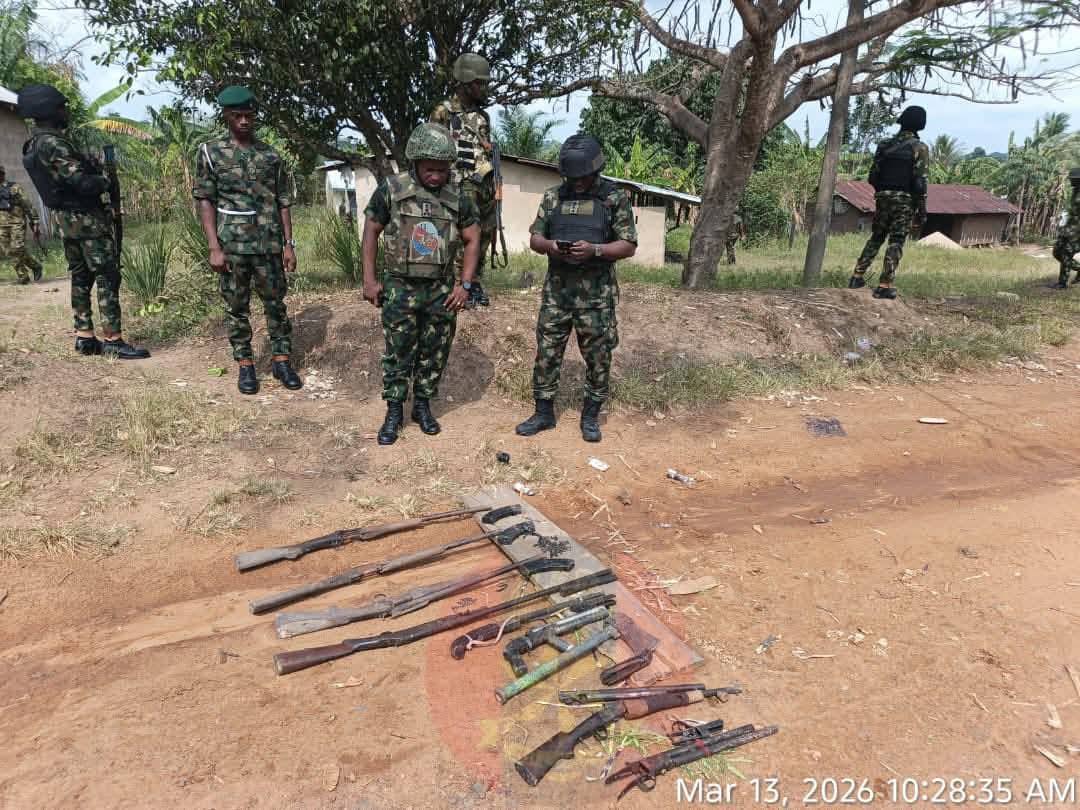
Following the encounter, the troops recovered five AK-47 rifles, magazines, several bicycles, assorted logistics and food supplies, as well as a large quantity of medical consumables.

The military confirmed that no casualty was recorded among the troops during the operation. It added that the morale of personnel remains high as clearance operations continue across the Sambisa Forest, Mandara Mountains, Timbuktu Triangle and other known Boko Haram and ISWAP hideouts in the North East.

The Joint Task Force, North East, reaffirmed its commitment to sustaining the tempo of operations until all terrorist elements are neutralised and lasting peace and economic stability are restored to the region.

The Military High Command also commended the troops for their sacrifices and dedication in the fight against terrorism and other criminal activities in the North East, while urging them to maintain the current operational momentum.

Iran labels European militaries ‘terrorist groups’

By Anwar Usman

Iran has labelled European countries’ armies “terrorist groups”, its parliament speaker said Sunday, following the EU’s decision to apply the same designation to the Islamic Revolutionary Guard Corps.

Lawmakers wore the green uniform of the Guards in a display of solidarity at the legislative session, where they chanted “Death to America”, “Death to Israel,” and “Shame on you, Europe”, state television footage showed.

Slamming the bloc’s “irresponsible action”, speaker Mohammad Bagher Ghalibaf said that under “Article 7 of the Law on Countermeasures Against the Declaration of the IRGC as a Terrorist Organisation, the armies of European countries are considered terrorist groups”.

Recalled that, the law was first passed in 2019, when the United States classified the Guards as a terrorist organisation.

The Sunday’s session was held on the 47th anniversary of the return from exile of the late Ayatollah Ruhollah Khomeini, who founded the Islamic Republic in 1979.

The Guards are the ideological arm of Iran’s military, tasked with safeguarding the Islamic revolution from external and internal threats.

They have been accused by Western governments of orchestrating a crackdown on a recent protest movement that left thousands dead.

Tehran has attributed the violence to “terrorist acts” fomented by the United States and Israel.

The European Union agreed on Thursday to list the body as a “terrorist organisation” over the response to the protests.

The step matched similar classifications enacted by the United States, Canada, and Australia.

The legislative session came as Iran and the United States have traded warnings and threats of potential military action.

Tehran’s response to the protests prompted US President Donald Trump to threaten to intervene, dispatching an aircraft carrier group to the region.

In recent days, however, both sides have insisted they remain willing to talk.

“Contrary to the hype of the contrived media war, structural arrangements for negotiations are progressing,” Ali Larijani, head of Iran’s Supreme National Security Council, said on Saturday.

Trump later confirmed that dialogue was taking place, but without withdrawing his earlier threats. He told Fox News that Iran was “talking to us, and we’ll see if we can do something, otherwise we’ll see what happens… we have a big fleet heading out there”.

Iranian President Masoud Pezeshkian said Saturday that “a war would be in the interest of neither Iran, nor the United States, nor the region”, during a call with his Egyptian counterpart Abdel Fattah al-Sisi, according to Pezeshkian’s office.

AFP