News

Kaduna church kidnap victims regain freedom after weeks in captivity

By Sabiu Abdullahi

Worshippers who were abducted from churches in Kurmin Wali community, along the Kufana axis of Kajuru Local Government Area in Kaduna State, have regained their freedom after spending weeks in captivity.

The incident occurred on January 18, 2026. Gunmen invaded the community during church service and took away many worshippers into a nearby forest.

Reports indicated that no fewer than 177 persons were kidnapped in the attack. The development triggered outrage and anxiety among residents and across the state.

Sources said the victims were released late Wednesday night. Heavy-duty vehicles were sighted moving in and out of a forest close to Maro town between 11 p.m. and 2 a.m., raising suspicion that the captives were being transported out of the area.

According to a report, community leaders disclosed that the abducted worshippers were brought out of the forest in the early hours of Friday. However, details surrounding their freedom remain uncertain. It is not clear who secured their release or if any ransom was paid.

The village head of Kurmin Wali, Ishaku Dan’azumi, confirmed the development. He said the victims, made up of children, women, and men, are now in government custody.

A security source also verified that the abducted persons had been freed.

The victims were subsequently moved to the Government House in Kaduna, where they are expected to undergo debriefing.

As of the time this report was filed, the Kaduna State Government had not released any official statement on the incident.

Nigerian woman arrested for allegedly burning teenage domestic worker with hot iron


By Sabiu Abdullahi

The Anambra State Police Command has taken into custody a 29-year-old woman, Mrs. Edeh Osinachi, over the alleged physical abuse of a 17-year-old domestic worker in Awka, the state capital.

The Command’s Public Relations Officer, SP Tochukwu Ikenga, disclosed this in a statement issued on Wednesday. He said officials of the Anambra State Ministry of Education handed the suspect over to the police on February 4, 2026.

Ikenga explained that the transfer of Osinachi to the police formed part of measures aimed at protecting the welfare and safety of students and pupils across the state.

Police said the victim worked as a domestic help under the supervision of the suspect.

According to the statement, the case came to light after school authorities observed serious injuries on the girl’s body during a teaching session. The discovery raised concern among staff members, which prompted further inquiries.

Subsequent findings revealed that the injuries were allegedly inflicted at home.

Ikenga said the teenager accused the suspect of attacking her after alleging that she used a mobile phone without permission. She claimed the suspect became angry and subjected her to severe punishment.

“She alleged that Osinachi, enraged by her action, punished her by pressing a heated electric iron against parts of her body, inflicting serious injuries.”

“During interrogation by the Police, the suspect reportedly confessed to the act,” the statement read.

The Police Command praised the alertness and swift response of the school authorities. It noted that their intervention prevented further harm to the victim.

Ikenga assured the public that the matter would be thoroughly investigated and that the suspect would face prosecution in accordance with the law.

He also urged parents and guardians to accept only responsibilities they can properly manage.

While investigations continue, the police warned that negligence can expose children to abuse when they are placed in the care of others.

Bill Gates regrets ties with Jeffrey Epstein as new files renew scrutiny

By Sabiu Abdullahi

Microsoft co-founder Bill Gates has expressed regret over his past association with convicted sex offender Jeffrey Epstein, as renewed attention surrounding recently released Epstein files stirs fresh controversy.

The latest disclosures have revived public and political interest in Epstein’s network of high-profile contacts. Among those facing renewed scrutiny are former US President Bill Clinton and former Secretary of State Hillary Clinton, who have both been named in the documents and have agreed to testify before a House committee examining Epstein’s activities.

Gates addressed the issue publicly after allegations surfaced in newly released records. Reports claimed he concealed a sexually transmitted disease from his former wife, Melinda French Gates, following alleged encounters with “Russian girls.” Epstein was also alleged to have suggested that Gates attempted to secretly administer antibiotics to his wife.

Gates’ office rejected the accusations, describing them as “absolutely absurd and completely false.” Speaking during an interview with Australia’s Channel 9News, the billionaire dismissed the claims and accused Epstein of attempting to damage his reputation or pressure him.

“Apparently, Jeffrey wrote an email to himself. That email was never sent. The email is false,” Gates said.

“I don’t know what his thinking was there. Was he trying to attack me in some way? Every minute I spent with him, I regret, and I apologise that I did that.”

Melinda French Gates also spoke about the renewed attention during an appearance on NPR’s Wild Card podcast. She said the resurfacing details had reopened painful memories from their 27-year marriage, which ended in divorce in 2021.

“For me, it’s personally hard whenever those details come up, right? Because it brings back memories of some very, very painful times in my marriage,” French Gates told the radio network’s Wild.

She continued: “Whatever questions remain there of what – I can’t even begin to know all of it – those questions are for those people and for even my ex-husband. They need to answer to those things, not me.”

Gates confirmed that he met Epstein in 2011 and shared dinners with him on several occasions. He said the meetings centred on efforts to mobilise wealthy donors for global health projects. He denied visiting Epstein’s private Caribbean island and rejected claims of sexual relations with women linked to the financier.

“The focus was always, he knew a lot of very rich people, and he was saying he could get them to give money to global health. In retrospect, that was a dead end,” Gates said.

“I was foolish to spend time with him. I was one of many people who regret ever knowing him. The more that comes out, the more clear it will be that, although the time was a mistake, it has nothing to do with that kind of behaviour.”

Reflecting on the broader scandal, Melinda French Gates described the situation as a societal reckoning and lamented the trauma suffered by victims.

“No girl should ever be put in the situation they were put in by Epstein and whatever was going on with all of the various people around him. It’s beyond heartbreaking,” she said.

“I remember being those ages the girls were, I remember my daughters being those ages.”

She added that learning about allegations connected to her former husband left her with “just unbelievable sadness,” though she emphasised that her concern remains with those directly affected. “What they went through is unimaginable,” she said.

Political reaction has also emerged. Republican congresswoman Nancy Mace of South Carolina disclosed that she had requested House Oversight Committee chair James Comer to subpoena Gates.

“Mace wrote on X, that she has questions for Bill Gates about Epstein, saying she supported Melinda French Gates’s assertion that her ex-husband must answer lingering questions.

Epstein died by suicide in August 2019 while awaiting trial on federal sex trafficking charges. Despite his death, investigations and document releases tied to his activities continue to generate global attention and draw prominent figures back into public focus.

‘What is meant for you will not miss you’: Nigerian man returns ₦120,000 mistaken transfer

By Sabiu Abdullahi

A Nigerian man, identified as Abdulrashid Elsa, has returned ₦120,000 that was mistakenly transferred into his OPay account, an act that has drawn praise for honesty at a time when cases of online fraud remain widespread.

He took the story of all that transpired to his Facebook page today Wednesday.

The incident occurred around midnight when the money was sent from a company’s account. Several hours later, at about 3:00 p.m., a woman contacted the recipient, explaining calmly that she had mistakenly transferred the funds to his account and appealed for his understanding.

Initially, the recipient said he could not find any record of the transaction after checking his regular OPay account. Despite receiving a transfer receipt from the caller, the money was still not visible, which raised suspicion.

“I thought she might be a scammer and even warned her to stop contacting me,” he explained.

However, the situation became clearer when the caller mentioned the phone number used for the transfer. It was then discovered that the funds had been sent to another OPay account linked to his MTN line, not the account he regularly checks.

After confirming the error, the recipient requested the sender’s account details and immediately refunded the full ₦120,000.

The woman reportedly called back shortly after to express her gratitude, even before receiving the refund receipt. Moments later, one of her colleagues, identified as a Muslim, also took the phone to thank him repeatedly, expressing visible relief and happiness.

The recipient said the incident reminded him of the importance of integrity and faith, adding that what is destined for a person will never pass them by.

The story has since resonated with many Nigerians, highlighting honesty and empathy in an era marked by financial pressure and increasing digital transactions.

Nigerian Senate rejects bill to mandate electronic transmission of election results

By Sabiu Abdullahi

The Nigerian Senate has voted down a proposal seeking to amend the Electoral Act to make the electronic transmission of election results compulsory.

The decision was taken on Wednesday when lawmakers rejected an amendment to Clause 60, Subsection 3, of the Electoral Amendment Bill. The proposal aimed to remove the Independent National Electoral Commission’s (INEC) discretion over how election results are transmitted.

If approved, the amendment would have legally required INEC presiding officers to electronically upload results from every polling unit directly to the Result Viewing Portal (IREV) in real time. This process was to occur immediately after Form EC8A had been duly signed and stamped by the presiding officer, with party agents countersigning the document.

However, the Senate chose to maintain the existing and widely debated provision of the Electoral Act.

Under the current law, “the presiding officer shall transfer the results, including the total number of accredited voters and the results of the ballot, in a manner as prescribed by the Commission.”

By retaining this clause, lawmakers have allowed INEC to continue determining whether electronic transmission will be used. Critics insist that this flexibility created gaps that were allegedly exploited during the 2023 general elections.

The Senate’s decision has sparked strong reactions across the country, with many Nigerians and civil society organisations expressing disappointment. These groups had backed the amendment, describing it as a vital safeguard against manual manipulation of results at collation centres.

Analysts described the move as a setback for democratic development in Nigeria.

“We thought the National Assembly would learn from the failures of 2023 where the IREV portal became a source of national embarrassment,” Gerald Ede said. “By rejecting mandatory transmission, the Senate has essentially given a green light for the status quo of ‘manual miracles’ and result manipulation to continue.”

Supporters of the amendment had viewed mandatory real-time transmission as a crucial measure to rebuild public trust in elections.

The rejection comes at a time when calls for comprehensive electoral reforms are growing, particularly reforms designed to reduce human interference in the electoral process.

Opponents of the Senate’s position argue that leaving the “manner” of transmission to INEC’s discretion, especially given its past record of “technical glitches” during key stages of result collation, could fuel further electoral disputes and weaken the legitimacy of elected officials.

Despite his evil notoriety, Epstein was afraid of Nigerian scammers

By Ibrahym El-Caleel

Jeffery Epstein, despite being a MOSSAD agent who successfully lured high profile individuals and world leaders into his web to obtain their dirty secrets, was afraid of Nigerians scamming him in oil deal.

Epstein is afraid of Nigerians. Hehe.

Ladies and gentlemen, I want to officially tell you that I am also afraid of Nigerians from now going forward.

But jokes aside, Nigerians are a special breed. If a Nigerian decides to settle for anything, he ensures that he masters it to the best of his or her ability.

In the wake of the US’s disregard for Nigeria’s sovereignty in December last year, I read a post on X made by a security analyst. The handle is @GallantDaletian, and he opined that yes, the US military might have the tech, air power, and naval dominance, but when it comes to guerrilla and asymmetric warfare, the Nigerian military is a force to be reckoned with!

He said, the US may have advanced technology, drones, and aircraft carriers, but Nigeria’s military has mastered the art of unconventional warfare, leveraging local knowledge and intelligence to outmaneuver adversaries.

It’s not about comparing strengths, but acknowledging different areas of expertise. Nigeria’s focus on regional security, counter terrorism, and peacekeeping has earned it respect, while the US excels in global reach and high tech warfare.

Clearly Jeffery Epstein, despite his notoriety, believes that the fear of Nigerians is the beginning of wisdom. Sharp guy.

Saif al-Islam Gaddafi, son of former Libyan leader, killed in Zintan

By Hadiza Abdulkadir

Saif al-Islam Gaddafi, the son of Libya’s former leader Muammar Gaddafi, has been killed in the western Libyan town of Zintan, according to local authorities and sources close to the family.

He was reportedly shot after armed men stormed his residence, disabling security cameras before opening fire. The circumstances surrounding the attack remain unclear, and no group has claimed responsibility so far.

Once seen as his father’s political heir, Saif al-Islam became a central and controversial figure following the 2011 uprising that ended the Gaddafi regime. He was captured that year, later sentenced to death in absentia for war crimes, and released in 2017 under an amnesty law.

In recent years, he had sought a return to politics, including an unsuccessful attempt to run in Libya’s postponed presidential election.

Libya’s Attorney General has announced an investigation into the killing. Analysts say his death could have political implications in a country still struggling with deep divisions and instability more than a decade after the revolution.

US sends military team to Nigeria as attacks by insurgent groups escalate

By Anas Abbas

The United States has deployed a small contingent of military personnel to Nigeria in a move officials say is intended to strengthen cooperation against extremist violence in the West African country.

Gen. Dagvin R.M. Anderson, commander of the U.S. Africa Command (AFRICOM), confirmed the deployment on Tuesday, saying the team arrived after discussions between U.S. and Nigerian authorities on intensifying efforts to counter threats from Boko Haram, the Islamic State West Africa Province (ISWAP) and other armed groups.

The deployment is the first acknowledgment of U.S. forces on the ground in Nigeria since America carried out airstrikes there on Christmas Day, targeting fighters linked to the Islamic State. While details about the size, exact mission and location of the U.S. team have not been released, military officials describe their role as focused on intelligence support, coordination and enhancing Nigerian capabilities rather than leading combat operations.

Nigeria faces persistent insecurity across its north and northwest, where Boko Haram and ISWAP factions have intensified attacks on military convoys and civilian communities. These groups have waged an insurgency for nearly two decades, displacing millions and forcing the government to seek varied forms of assistance to suppress the violence.

The move follows growing diplomatic engagement between Abuja and Washington. In recent months, U.S. officials have reportedly urged Nigeria to take stronger action against extremist violence, even as the Nigerian government rejects accusations that it is failing to protect vulnerable populations. Nigerian authorities emphasize that operations target all armed groups that threaten security, irrespective of the victims’ religious identities.

The U.S. has also conducted surveillance flights over Nigeria from bases in neighboring countries, a precursor to the December airstrikes. Those strikes reportedly killed multiple militants in Sokoto State, conducted in coordination with Nigerian forces.

While the current deployment is limited in scope, it marks a notable shift toward deeper military cooperation between the two countries at a time when Nigeria’s security challenges remain acute.

Nigeria is now global reference for credible reform leadership—World Bank

By Sabiu Abdullahi

The World Bank has described Nigeria as a country increasingly cited around the world as a model of steady and credible reform leadership.

This is contained in a statement signed by Bayo Onanuga, Special Adviser to the President on Information and Strategy, dated February 3, 2026.

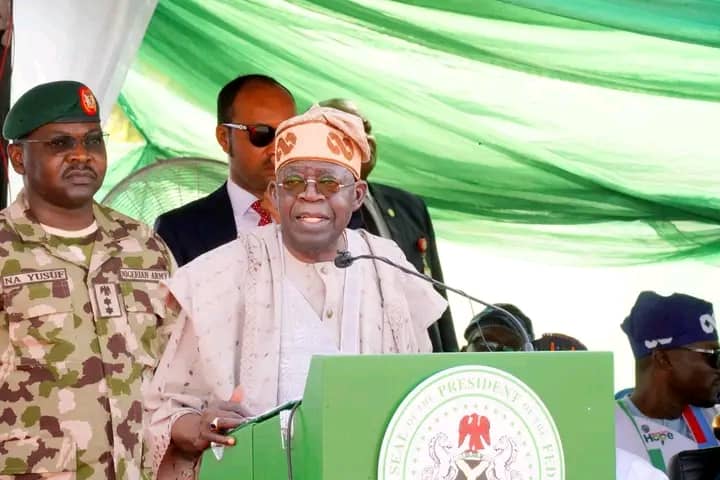
The remark came from the World Bank’s Managing Director of Operations, Anna Bjerde, during a meeting with President Bola Ahmed Tinubu and Vice President Kashim Shettima at the State House in Abuja on Tuesday. Other officials of the Bank accompanied her to the meeting.

Bjerde praised Nigeria’s reform efforts over the past two years, with emphasis on the government’s determination to remain consistent despite economic pressures. She said the approach and the visible outcomes had strengthened confidence among investors, policymakers and players in the private sector.

She also drew attention to the upcoming Country Partnership Framework, which she said aligns closely with Nigeria’s own development agenda, especially the target of achieving a $1 trillion Gross Domestic Product and 7 per cent economic growth.

President Tinubu reaffirmed his administration’s commitment to the reform agenda and acknowledged the difficulties that accompanied the process. He said “there will be no turning back.”

The President explained that although the removal of fuel subsidy and the unification of exchange rates initially pushed inflation upward, the situation has improved, with inflation easing and the naira showing signs of stability. He added that the developments have helped to boost investor confidence and improve the business environment.

According to President Tinubu, the reforms are built on transparency, accountability and policy stability.

He identified agriculture as a major focus of his administration and said investments have been directed toward the sector through the establishment of zonal mechanisation centres, improved seed development and better access to fertilisers. He noted that support from the expanding petrochemical industry has also helped to improve output and encourage farmers to form strong cooperatives.

“Nigeria is the heart of the continent, and we must do what’s necessary to strengthen the economy, particularly looking at the young population of this country, looking at the vast area of arable lands.

“How do we employ mechanisation and make agriculture easier? I have embarked upon that. We have created zonal mechanisation centres to help the farmers,” he said.

President Tinubu urged the World Bank to strengthen its partnership with Nigeria through faster financing, reduced bureaucracy, shared development models, effective risk management and improved capacity building to support inclusive growth.

In her remarks, Bjerde stressed the need to improve access to finance for small, medium and large enterprises, with special attention to mid-sized businesses, which she described as critical to job creation.

She also commended Nigeria’s emphasis on early childhood development and described it as vital to long-term productivity. She assured the country of the Bank’s continued support in that area.

“Many countries around the world, even middle-income and upper-middle-income countries, are suffering again with rising levels of stunting. And here, we’ve identified early childhood development as a strong entry point. So, all of this, to say we’re looking forward to a new country partnership framework,” she said.

Bjerde restated the World Bank Group’s commitment to a programme that reflects Nigeria’s priorities and combines public and private sector support. She added that the Bank, through the International Development Association, the International Bank for Reconstruction and Development and the International Finance Corporation, stands ready to sustain support for Nigeria’s reform agenda.

The Minister of Finance and Coordinating Minister of the Economy, Wale Edun, as well as the Deputy Chief of Staff to the President, Ibrahim Hassan Hadejia, attended the meeting.

Troops destroy ISWAP detention facilities in Timbuktu Triangle

By Sabiu Abdullahi

Troops of the Joint Task Force, North East, Operation HADIN KAI (OPHK), have recorded a major operational success with the discovery and destruction of ISWAP terrorist detention facilities deep inside the Timbuktu Triangle in Gujba Local Government Area of Yobe State.

The disclosure was contained in a statement signed by Sani Uba, Lieutenant Colonel, Media Information Officer, Headquarters Joint Task Force, North East Operation HADIN KAI, dated 3 February 2026.

The breakthrough followed coordinated military actions carried out over the last two weeks. The development signals a steady push by security forces into territories once regarded as inaccessible and reflects the growing strength of ongoing counter-insurgency efforts in the North East.

The operation took place under Operation DESERT SANITY V. Sustained military pressure, supported by actionable intelligence, compelled the terrorists to abandon key installations within their strongholds. Military sources said the outcome showed that OPHK troops had penetrated inner hideouts of ISWAP, which reduced both the group’s operational space and morale.

Between 21 January 2026 and the present date, troops uncovered and destroyed three major detention facilities hidden within the Timbuktu Triangle forest, an area that spans parts of Borno and Yobe states. Initial assessments revealed that the facilities could hold as many as 300 detainees, which pointed to their importance within ISWAP’s structure. Security findings also linked the offensive to the escape of more than 70 captives who had been held by the terrorists. Several of the escapees later resurfaced in communities such as Goniri, Buratai and Mandaragirau.

One of the freed captives, Malam Jidda Ba Jidda, from Kufi village near Buratai in Biu Local Government Area, said he was abducted on 22 December 2025. He disclosed that he escaped during a gun duel between the terrorists and advancing troops in the Timbuktu Triangle.

Military encounters in the area led to heavy losses for ISWAP. No fewer than 32 fighters were neutralised, including two Qaids and three Munzirs. Several others sustained serious injuries during confrontations with troops.

After troops cleared the area, the three detention facilities were demolished to prevent any future use by the terrorists. The military described the mission as successful and incident-free, citing the discipline and combat efficiency of OPHK personnel.

Security officials said the destruction of the camps went beyond a tactical gain. The action weakened ISWAP’s internal control system, disrupted its ability to detain civilians and demand ransom, and further limited its freedom of movement. They added that the escape of many detainees reduced a major source of funding for the group and could provide useful intelligence for ongoing operations.

While the overall security situation across the theatre remains calm but unpredictable, the military said troop morale and operational effectiveness remain satisfactory. The Armed Forces reaffirmed their commitment to sustained pressure on terrorist elements, denial of safe havens, and the restoration of lasting peace and security across the North East.