News

NAHCON chairman resigns, cites personal reasons

By Abdullahi Mukhtar Algasgaini

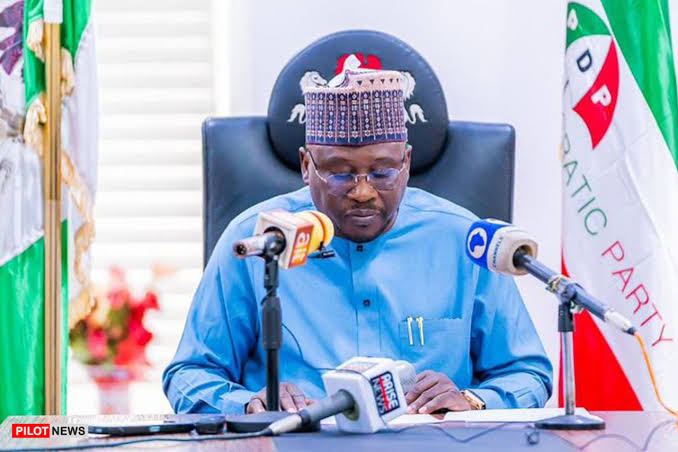
The Chairman and Chief Executive Officer of the National Hajj Commission of Nigeria (NAHCON), Professor Abdullahi Saleh Usman, has resigned from his position.

In a personally signed statement on Wednesday, Usman announced his resignation, effective Monday, 9th February 2026, attributing the decision solely to personal reasons.

“I wish to state unequivocally that this decision is taken entirely for personal reasons. After prayerful contemplation and consultation with my family, I have made this choice in good conscience,” he stated.

The former chairman confirmed he has submitted his formal resignation letter to President Bola Ahmed Tinubu, in line with Section 3(6) of the NAHCON Act, 2006.

He expressed gratitude to President Tinubu for the appointment and to Vice President Kashim Shettima for his “unwavering guidance.” He also thanked the NAHCON Board, management, staff, State Pilgrims Welfare Agencies, tour operators, service providers, and Saudi Arabian counterparts for their collaboration.

Professor Usman emphasised that his departure “reflected no dissatisfaction with the Commission, the government, or the noble mandate they have collectively pursued.”

He concluded with prayers for the President, the new leadership of NAHCON, and for all future pilgrims to be granted a successful Hajj (Hajj Mabrur).

Tinubu announces key appointments in science, energy,  revenue sectors

By Abdullahi Mukhtar Algasgaini

President Bola Tinubu has approved a series of new appointments across federal agencies overseeing energy, scientific research, and fiscal policy.

In a major move for Nigeria’s science and technology sector, Hon. Magaji Da’u Aliyu has been appointed as the Managing Director of the Sheda Science and Technology Complex (SHESTCO) in Abuja. The complex is a critical national asset, responsible for advanced technological research and operating a nuclear research facility.

Simultaneously, the President reconstituted the leadership of the Nigerian Electricity Management Services Agency (NEMSA). Engr. Adesayo Olusegun Michael was appointed as the agency’s Managing Director/Chief Executive Officer.

A new board for NEMSA was also unveiled. The members include Engr. Aliyu Abdulazeez as Executive Director (Technical), Ikechi Clara Nwosu (Chairman, South East), and zonal representatives from across the nation: Zubair Abdur’rauf Idris, Igba Elizabeth (North Central), Sani Alhaji Shehu (North East), Adeyemi Adetunji (South West), Engr. Emmanuel Eneji Nkpe (South South), and Engr. Charles Ogbonna Asogwa (South East).

In a separate development, President Tinubu has nominated two individuals as Commissioners for the Revenue Mobilisation Allocation and Fiscal Commission (RMAFC). The nominees are Amina Gamawa (representing Bauchi State) and Abdullahi Muktar (representing Kaduna State). Their names have been forwarded to the Senate for confirmation.

Leadership crisis rocks Hajj commission as second boss exits amid scandals

By Abdullahi Mukhtar Algasgaini

The National Hajj Commission of Nigeria (NAHCON) is engulfed in a deepening governance crisis following the abrupt exit of its second substantive head in less than two years, throwing the pivotal agency into turmoil.

The commission’s recent history of instability starkly contrasts with the stable tenures of its earlier leaders. Muhammad Musa Bello (2006-2015) completed his term before moving to a ministerial role, succeeded by Abdullahi Mukhtar Muhammad (2015-2019) who also served a full term. Zikrullah Kunle Hassan (2019-2023) exited on pre-retirement leave.

However, the pattern of orderly transitions shattered in October 2023. Acting Chairman Jalal Ahmad Arabi was appointed but lasted only until August 2024, when President Bola Tinubu sacked him. His removal followed investigations into alleged corruption and financial mismanagement related to the controversial 2024 Hajj subsidy.

Prof. Abdullahi Saleh Usman was then appointed to steady the ship, but his tenure proved even more short-lived and tumultuous. Facing intense internal pressure, a board vote of no confidence, and petitions to the Presidency alleging financial irregularities and leadership failures, Prof. Usman resigned in February 2026.

His departure marks a low point for NAHCON, exposing severe internal fractures and allegations of malpractice that threaten to undermine public confidence in the commission’s ability to manage the vital Hajj pilgrimage. With two chairmen ousted in quick succession, questions are mounting over governance, accountability, and the future stability of the agency.

Borno police officer returns N2.6 million mistakenly transferred into his account

By Sabiu Abdullahi

A police officer serving in the Borno State Police Command has returned N2.6 million that was accidentally credited to his bank account.

Mohammad Alhaji Muhammad was praised for his honesty and integrity after voluntarily returning the funds. Nahum Daso, the state police spokesperson, shared a post by Bello Jafar on Facebook commending the officer.

“I would like to formally express my appreciation for Mohammad Alhaji Muhammad, a loyal customer of United Bank for Africa (UBA) and a police officer of exceptional integrity,” Daso wrote.

Jafar also highlighted the significance of Mohammad’s action, stating: “His conduct reflects the true values expected of a police officer and serves as an example worthy of recognition and commendation. Acts like this strengthen public trust and highlight the importance of integrity in both professional and personal life.”

Daso told TheCable that the accidental transfer occurred around 6 p.m. on Thursday. “The officer saw the money and was surprised because he was not expecting that money. So he reached out to his account manager who asked him to go to the bank. When he got to the bank he was asked to fill a form for the reversal,” he said.

“The bank officials expressed surprise because what they usually experience in such cases is that the recipients will use the money for their own personal gain. What the officer did shows integrity.”

Mohammad’s action has been widely lauded as a rare display of honesty and responsibility, reinforcing public confidence in the police and in the values of ethical conduct.

Army chief deploys special forces to crisis-hit Plateau

By Abdullahi Mukhtar Algasgaini

The Chief of Army Staff, Lieutenant General Waidi Shaibu, has ordered the immediate deployment of a special forces battalion to Plateau State. This follows a recent surge in deadly bandit attacks across the region.

The elite unit, known as the Chief of Army Staff Intervention Battalion, has already arrived. Military commanders say their mission is to “aggressively and decisively” end the violence and will be a “game changer” in restoring security.

At a reception at the Headquarters of 3 Division in Jos, the troops were briefed by the theatre command. Major General Folusho Oyinlola, the General Officer Commanding, urged the soldiers to be “decisive and ruthless” in their offensive operations against the bandits. He was represented by Brigadier General Senlong Sule.

Oyinlola praised the Army Chief’s “proactive leadership” in providing the necessary weapons and logistics for the mission.

He also appealed to residents not to be alarmed by the sudden increase in troop movements and heavy military equipment. The General further called on the public to support the operation by providing timely and actionable intelligence on the whereabouts of criminal elements, to ensure lasting peace in the state.

A few days before Ramadan, Sokoto residents brace for economic hardships

By Balkisu Aminu Aliyu

Ramadan is the ninth month of the Islamic Calendar, a sacred month during which the Quran was revealed, a time of spiritual reflection, purification, and heightened devotion.

A month of abundant blessings, forgiveness, and a strengthening of faith. Across the Muslim world, Ramadan is marked by fasting from dawn to sunset, intensified prayers, and acts of charity. It is a pillar of Islam that teaches patience, gratitude, and empathy. 

It is a time to purify the heart, practice self-discipline and strengthen one’s relationship with the Almighty. However, conversation is less about spiritual abundance and more about stark scarcity and low income.

2026 Ramadan is one of the upcoming Ramadans, while the prices of some essential commodities are falling in some parts of the country; however, many less privileged people are struggling to manage Ramadan due to low income.

“Some people can no longer take full responsibility for their families,” confides a 45-year-old woman in Gidan Sanda area of Sokoto, who asked to remain anonymous, her voice tinged with worry. “Most husbands are struggling financially because of the high level of poverty. This could stop them from providing enough food, especially during sahur and iftar.”

Her lament echoes in the words of Abu Musa, a motorcycle rider whose concern stretches beyond the fast itself to the Eid al-Fitr celebration that follows. “I don’t think I can feed my children properly, even though food prices have dropped from last year. I have no resources to meet their needs. How can I buy them new clothes for Eid?” he asks, his question hanging heavily in the air.

For families like his, Ramadan’s twin pressures, sufficient nourishment for fasting and the social expectations of Eid, feel like an immense weight.

The crisis is both urban and rural. Aliyu Kabir, a young man from the area, expressed, “People all over the town and villages are battling extreme poverty.”

This deprivation carries a deep social sting. Community reports suggest that countless parents cannot afford proper clothing for their children. In a season of communal gatherings and celebration, this need can lead to shame and embarrassment for young ones, who may mistakenly feel neglected by their parents, not understanding that poverty itself is the barrier.

At his roadside mechanic workshop along Abdullahi Fodiyo road, Malam Husaini watches the traffic of life go by, his hope pinned on a simple prayer. “It’s tradition for food prices to shoot up during Ramadan,” he observes, “We are praying to Allah to ease the condition for us.” His fear is common: that any market gains will be erased by the annual Ramadan price surge, pushing basic staples out of reach.

Amid this apprehension, the timeless teachings of Islam offer both a critique and a solution. A Hadith narrated by Abu Huraira is profoundly relevant: the Prophet Muhammad (SAW) said, “Whoever feeds a fasting person will have a reward like that of the person who observed the fast, without decreasing the reward of the latter.”

This principle transforms Ramadan from a private act of worship into a powerful societal covenant. It is a sacred month in which the fortunate’s empathy must translate into sustenance for the struggling. Assisting the needy is not just charity; it is a spiritual investment, a purification of wealth, and a direct conduit to divine mercy.

Therefore, as the 2026 Ramadan approaches, the call from Sokoto’s backstreets is clear. It is a call for the wealthy, business owners, and those in positions of power, including government and political office holders, to remember the core communal spirit of this holy time. To do more. To support the vulnerable not as an afterthought, but as a central, highly recommended act of faith.

For in the end, the true test of this Ramadan may not only be in the stomachs that remain empty but in the hands that remain closed. The blessings of the month are abundant, but they are meant to be shared, ensuring that every believer, rich or poor, can turn their heart toward the divine without the crushing distraction of hunger or shame.

Sheikh Jingir says INEC chair Amupitan’s appointment stands rejected

By Sabiu Abdullahi

The National Chairman Council of Ulama of Jama’atu Izalatil Bid’ah Wa’ikamatis Sunnah (JIBWIS), Sheikh Sani Yahaya Jingir, has faulted the appointment of Professor Joash Ojo Amupitan as Chairman of the Independent National Electoral Commission, describing it as highly risky.

He said Nigerian Muslims have rejected the appointment because of the sensitive role of INEC as the nation’s electoral body.

Sheikh Jingir spoke at the end of a three-day 33rd annual national seminar organised by JIBWIS at Saddeqa Event Center in Jos.

Professor Amupitan has faced criticism over a legal brief he authored years ago. The document allegedly attempted to justify claims of Christian genocide in Nigeria. The Tinubu administration has repeatedly denied the allegation. However, the government has remained silent on calls demanding his removal.

According to the cleric, the INEC chairman had accused Muslims of carrying out genocide against Christians. He argued that such a person should not occupy a sensitive national office.

“Why is it that someone that had abused Sheikh Usman Danfodio and Muslims was appointed INEC chairman, “ Sheik Jingir asked.

He also questioned the silence of members of the National Assembly on the matter. He urged lawmakers to take action and ensure that a fair individual heads the electoral commission.

The Islamic scholar further stated that Muslims oppose the appointment of anyone he alleged had invited foreign intervention against Nigeria to lead a critical institution.

He said, “I disagree with the person that went aboard to call for an attack on Nigeria, and the government of Muslim-Muslim, take the risk of appointing him as the head of electoral umpire, it is an extremely a risk of the highest order.”

How we arrested China-bound trader with 95 cocaine pellets at Kano airport—NDLEA

By Uzair Adam

Operatives of the National Drug Law Enforcement Agency have arrested a 62-year-old businessman, Nwabueze Nicholas Izueke, at the Mallam Aminu Kano International Airport, Kano, for attempting to smuggle cocaine to China.

Izueke, who is based in Lagos, was arrested on Saturday, January 31, 2026, during the outbound clearance of Ethiopian Airlines flight ET940 to China via Addis Ababa.

The NDLEA said the suspect was subjected to a body scan after exhibiting suspicious behaviour, which confirmed that he had ingested illicit drugs.

“In the course of excretion observation, he expelled 95 wraps of cocaine in seven separate excretions,” the agency disclosed, adding that the total weight of the drugs was 1.589 kilograms.

The suspect, who claimed to be involved in clothing and auto parts trading in Lagos, reportedly confessed that he engaged in the trafficking to raise funds to complete the construction of his country home in Iwollo, Enugu State.

Meanwhile, the agency recorded several other major seizures across the country. In the Federal Capital Territory, NDLEA operatives uncovered a makeshift warehouse in Kubwa where 627.7 kilograms of skunk, a strain of cannabis, was recovered.

The agency also arrested Ebube Okeke, Evans Ugwu, Mohammed Eze Arinze and Friday Michael for attempting to traffic methamphetamine concealed in MP3 speakers from Enugu to Abuja and Kaduna between February 6 and 7.

On February 6, officers intercepted 1.8 kilograms of methamphetamine hidden inside Hollandia yoghurt packs along the Lagos–Mubi route, leading to the arrest of a 32-year-old suspect, Yusuf Abubakar.

In Oyo State, Shuaibu Abdulrahman, 29, was arrested with 149.6 kilograms of skunk, while Adeniyi Adeola, also known as Prince, was apprehended in Ibadan with more than 128,000 tablets of tramadol and pentazocine.

Drug kingpin Jimoh Nurudeen, 40, was equally arrested in Ibadan alongside his accomplice, Ogundipe Yusuf, 27.

Items recovered from them included eight litres of precursor chemicals, cannabis, cash and vehicles allegedly used in the production of synthetic cannabis.

In Kwara State, NDLEA operatives recovered 395,400 capsules of tramadol concealed inside a fuel tanker travelling from Lagos to Maiduguri. Additional seizures were recorded in Imo and Ondo states, where 203 kilograms and 420 kilograms of skunk were intercepted respectively.

The Marine Command of the agency also intercepted 31 wraps of cocaine from a suspect arriving from Côte d’Ivoire in Badagry, Lagos.

Further operations in Lagos and Enugu led to the recovery of Canadian Loud and Colorado cannabis from Adekunle Oluwatosin Olajide, as well as assorted illicit drugs from Emeka Okeke.

ATM Gwarzo Organization appreciates support ahead of 2027 Kano North senatorial race

By Ibrahim Yunusa

The ATM Gwarzo Organization has expressed appreciation to well-wishers across the Kano North Senatorial Zone for the growing goodwill and support surrounding the 2027 senatorial contest involving His Excellency, Abdullahi Tijjani Gwarzo.

In a statement issued on Sunday, the organization said His Excellency is deeply humbled by the confidence and encouragement shown by stakeholders, elders, youths, and various community groups across the zone, describing the gestures as a call to greater responsibility and selfless service to the people.

The statement urged supporters to remain positive, calm, and united, noting that consultations are already being planned to engage widely with stakeholders across the senatorial district and Kano State at large.

According to the organization, His Excellency has committed all his affairs to Allah (SWT) and seeks divine guidance in his continued efforts to serve the people. The group added that further updates would be communicated in due course.

The statement was signed by Mansur Umar Man’ash, Special Adviser on Digital Media, for the ATM Gwarzo Organization, and dated February 8, 2026.

Top Islamic body, JNI, backs calls for INEC chief’s removal over alleged bias


By Abdullahi Mukhtar Algasgaini

The Jama’atu Nasril Islam (JNI), a prominent Islamic organization in Nigeria, has urgently called on President Bola Ahmed Tinubu to immediately dismiss the Chairman of the Independent National Electoral Commission (INEC), Professor Joash Amupitan.

The call was made by the JNI’s Secretary-General, Professor Khalid Abubakar Aliyu, during the group’s annual programme marking the commencement of the 2026 Ramadan fasting month. The event was attended by traditional rulers and clerics from across the nation, including the Shehu of Borno and the Emir of Dutse.

Speaking on behalf of the organization, Professor Aliyu stated that the demand was necessitated by allegations of Professor Amupitan’s role in demonstrating hostility towards Islam and Muslims. The JNI cited a text purportedly authored by Amupitan which claimed that Christians are facing genocide in Nigeria.

The JNI warned that such statements and actions are capable of provoking division and unrest within the country. Consequently, the body has urged the government to take swift action to safeguard national peace and unity.

This development places fresh scrutiny on the head of the nation’s electoral body and underscores ongoing tensions along religious lines in Nigeria’s public discourse.