News

Nigerians to pay extra as government imposes 7.5% VAT on banking charges

By Sabiu Abdullahi

Nigerian bank and fintech users are bracing for a sudden increase in everyday banking costs as the government mandates a 7.5% Value Added Tax (VAT) on certain financial services starting Monday, 19 January 2026.

In a notice to its customers, Moniepoint, one of the country’s leading fintech platforms, revealed that the tax will apply to services such as POS transactions, mobile banking transfers, USSD fees, card issuance, loan processing fees, and Moniebook subscriptions.

The company reassured customers that the change is not a price hike by Moniepoint, but a government requirement to remit VAT to the Nigerian Revenue Service (NRS), formerly known as the Federal Inland Revenue Service.

“The NRS has communicated a deadline of 19th January for all financial institutions – including commercial banks, microfinance banks, and electronic money operators – to start collecting and remitting VAT,” Moniepoint said in its announcement.

Services such as interest on loans and deposits, however, will remain exempt from the tax.

For the average Nigerian, this seemingly small tax could add up. A ₦50 transfer fee, for example, will now attract an additional ₦3.75, which will go straight to the government rather than the bank.

Analysts say the VAT could stir public frustration as Nigerians grapple with rising costs, especially for digital financial services which have become a lifeline for many in the country.

Financial experts warn that the new rule is just the beginning, urging citizens to review all banking charges carefully to avoid being caught off guard by the added government levy.

El-Rufai’s business associate charged in ₦311bn fraud case

By Abdullahi Mukhtar Algasgaini

The Independent Corrupt Practices Commission (ICPC) has brought a senior associate of former Kaduna State governor Nasir el-Rufai before a Federal High Court over an alleged ₦311 billion money laundering scheme.

Amadu Sule, Managing Director of TMDK Terminal Limited, was arraigned in Kaduna on a five-count charge.

The charges, signed by the Head of ICPC’s High-Profile Prosecution Department, Dr. Osuobeni Ekoi Akponimisingha, include unlawful retention of proceeds of fraud and money laundering, contrary to the 2022 Money Laundering Act.

The case centers on over ₦311 billion traced to company accounts in Fidelity Bank, Stanbic IBTC, and Providus Bank. ICPC alleges the funds, received from companies including INT Towers Limited and IHS Nigeria Ltd for purported petroleum product supplies, are proceeds of crime.

The commission asserts Sule “reasonably ought to have known” the money was illicit.

ICPC further accuses Sule and his company of illegally retaining hundreds of billions in tax components from the disputed deals, despite alleged awareness of fraud in the underlying transactions.

These actions, described as direct handling of illicit proceeds, could attract enhanced penalties under anti-money laundering laws.

The case has garnered significant attention due to TMDK Terminal Limited’s known long-term business and political ties to the el-Rufai family, including the former governor and his elder brother, Bashir.

The court has adjourned the matter until January 15 for the hearing of Sule’s bail application.

Kwankwaso softens stance to supporters on APC defection

By Uzair Adam

Former Kano State Governor and leader of the Kwankwasiyya Movement, Senator Rabiu Musa Kwankwaso, has said mounting political tension and pressure on grassroots officials informed his decision to allow some of his supporters in the state to align with the All Progressives Congress (APC).

Kwankwaso made the disclosure in a video message that went viral on Tuesday evening, where he described the political climate in Kano as increasingly tense and emotionally draining for local government officials following the political dominance of former Governor Abdullahi Ganduje and President Bola Ahmed Tinubu.

He said the situation had taken a serious toll on several chairmen, councillors and other political appointees, many of whom reached out to him in distress.

According to Kwankwaso, some of the officials were experiencing sleepless nights and deep confusion, while others reportedly required medical attention due to the pressure they were under.

“Many chairmen and councillors called me to explain what they were going through. Some could not sleep, some were deeply confused, and some were even placed on hospital drips,” he said.

The former governor explained that the rising tension compelled him to consult widely in order to reduce the hardship being faced by his loyalists, noting that many of their legitimate expectations from government were yet to be met.

He said maintaining a rigid political position under such circumstances could have worsened the suffering of the affected officials, which led to the decision to allow them to take steps that would bring relief.

“We agreed that all chairmen, councillors, supervisory councillors and anyone who was asked to sign should go ahead and do so. We have no issue with that,” Kwankwaso said.

He dismissed suggestions that the move was linked to early preparations for the 2027 general elections, stressing that the time for such political battles had not yet arrived.

“2027 is still far away. We pray that Allah spares our lives to reach that time. Our supporters are everywhere; we know them and they know themselves,” he added.

Kwankwaso expressed hope that the decision would help calm political tension in Kano State, particularly among those he said were being subjected to pressure, while thanking residents of the state for their patience and understanding.

He also praised Governor Abba Kabir Yusuf, noting that the governor had recently acknowledged the achievements of the Kwankwasiyya administration and highlighted actions of the immediate past government which, according to him, hindered progress in the state.

In the video, Kwankwaso further alleged that the state government had introduced measures aimed at intimidating local government officials and political appointees.

He claimed that chairmen, councillors, secretaries and other office holders were allegedly compelled to write their names on lists indicating whether they supported the Kwankwasiyya movement or the Ganduje political camp.

Describing the practice as unacceptable, Kwankwaso said such actions would discomfort any well-meaning resident of Kano State, regardless of political affiliation.

He also reflected on the 2015 political transition, alleging that acts of betrayal at the time resulted in years of hardship for his supporters.

“We looked back at history and remembered what happened in 2015, when our supporters suffered for eight years because of political disloyalty,” he said.

The video has continued to generate reactions within and outside Kano State, with supporters and critics offering differing interpretations of Kwankwaso’s remarks and the broader political implications.

Kano hospitals board probes alleged negligence in death of housewife at urology centre

By Uzair Adam

The Kano State Hospitals Management Board has ordered a comprehensive investigation into the death of a Kano-based housewife, Aishatu Umar, following allegations of medical negligence linked to a surgical procedure carried out at the Abubakar Imam Urology Centre.

The Daily Reality recalls that the incident first came to public attention through a Facebook post by a family member, who alleged that Aishatu died as a result of negligence after undergoing surgery at the specialist hospital.

Aishatu Umar, a mother of five, reportedly died around 1:00 a.m. on Tuesday. In the Facebook post, her brother-in-law, Abubakar Mohammed, said she had fallen ill several months earlier and underwent surgery at the Abubakar Imam Urology Centre in September.

According to him, Aishatu began experiencing persistent and severe abdominal pain shortly after the operation.

He alleged that she returned to the hospital several times to complain about her worsening condition but was repeatedly given pain-relief medication without a clear diagnosis.

Mohammed claimed that it was only two days before her death that medical tests and scans were eventually conducted. The results, he alleged, revealed that a pair of scissors had been left inside her body during the September surgery.

“The woman you see here is Aishatu Umar. She was my sister-in-law. She passed away around 1:00 a.m. She is survived by her husband and five children,” Mohammed wrote in the post.

He added that preparations were underway for a corrective surgery on Tuesday, but Aishatu died before the procedure could be carried out.

Describing the incident as “pure negligence,” he questioned how surgical instruments could be forgotten inside a patient and called on the authorities to investigate the matter.

The family has also appealed to the Kano State Government and relevant health regulatory bodies to probe the circumstances surrounding Aishatu’s death and ensure justice for the deceased.

Reacting to the development, the Public Relations Officer of the Kano State Hospitals Management Board, Samira Suleiman, said the Board’s Executive Secretary, Dr. Mansur Mudi Nagoda, has ordered an immediate and thorough investigation into the alleged incident.

In a statement issued on Tuesday, the Board expressed sympathy with the family and assured the public that the investigation would be transparent, impartial, and professional.

“The Management of the Kano State Hospitals Management Board, under the authority of the Executive Secretary, Dr. Mansur Mudi Nagoda, has taken note of the distressing report concerning the late Aishatu Umar. We extend our deepest condolences to her family and loved ones,” the statement added.

It added that appropriate action would be taken in line with established regulations if any negligence is established, stressing that patient safety remains a top priority and that the Board is committed to upholding high standards of healthcare delivery in Kano State.

Family alleges Kano woman died after doctors forgot surgical scissors in her body

By Sabiu Abdullahi

A Kano resident, Aishatu Umar, has reportedly died after what her family described as suspected medical negligence following a surgical procedure carried out at the Abubakar Imam Urology Center in Kano State.

Aishatu, who was married with five children, passed away around 1:00 a.m. on Tuesday, according to a Facebook post by a family member, Abubakar Mohammed.

In the post, Mohammed said Aishatu had fallen ill several months ago and underwent surgery at the specialist hospital in September.

He stated that after the operation, she began to experience persistent and severe abdominal pain.

According to the account, Aishatu reportedly returned to the hospital on several occasions to complain about her condition. Mohammed claimed that during these visits, she was given only pain-relief medication, while the cause of her suffering remained undiagnosed.

He further alleged that medical tests and scans were eventually conducted just two days before her death. The results, he said, revealed that a pair of scissors had been left inside her body during the September surgery.

“The woman you see here is Aishatu Umar. She was a sister in-law to me, She passed away yesterday around 1:00 AM. She is survived by her husband and five children,” Mohammed wrote.

He added: “Just two days ago, tests and scans were finally conducted, revealing that a pair of scissors had been left inside her body during the September operation.”

Mohammed said preparations were being made to carry out a corrective surgery on Tuesday, but Aishatu died before the procedure could take place.

He described the incident as “pure negligence” and called on relevant authorities to investigate the matter.

“Is this not pure negligence? Truly, every soul has its appointed time, but how can professional doctors forget scissors inside a patient?” he wrote.

The family has called on the Kano State Government and health regulatory bodies to investigate the circumstances surrounding the death and take appropriate action, while also demanding justice for the deceased.

As of the time of filing this report, the management of the Abubakar Imam Urology Center and the Kano State Ministry of Health had not issued an official statement on the allegation.

Trump threatens 25 percent tariff on countries trading with Iran

By Sabiu Abdullahi

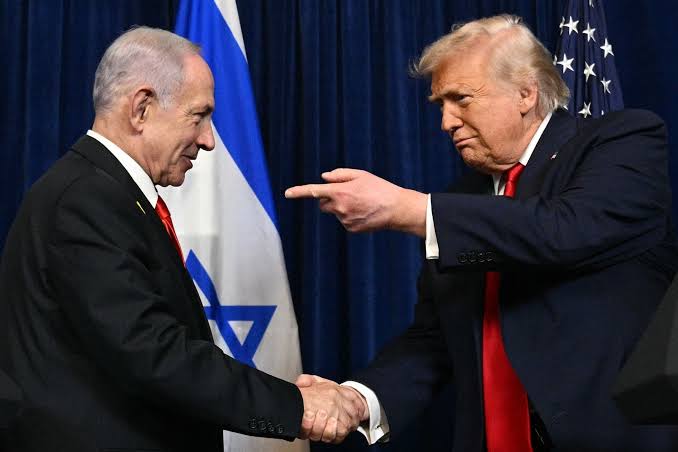
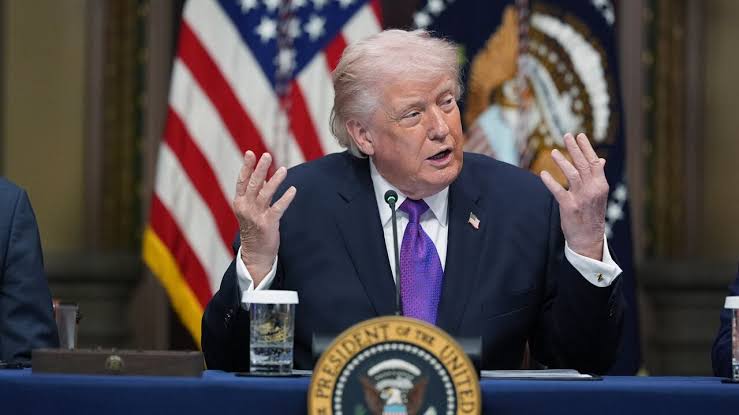
United States President Donald Trump has announced that any country maintaining commercial ties with Iran will face a 25 percent tariff on all business conducted with the United States.

The declaration came on Monday through a post on Trump’s social media platform, Truth Social, where he described the decision as “final and conclusive”, without providing further clarification on how the measure would be implemented.

“Effective immediately, any Country doing business with the Islamic Republic of Iran will pay a Tariff of 25% on any and all business being done with the United States of America,” Trump said in the post.

The statement did not specify the nations that would be affected. However, several major economies maintain active trade relations with Iran. These include Russia, China, Brazil and Turkiye. Iraq and the United Arab Emirates also rank among Iran’s key trading partners, according to data from Trading Economics.

The announcement comes at a time when Iran is experiencing widespread antigovernment protests and violent unrest across the country.

Reports from rights groups suggest that hundreds of people may have been killed, although an internet shutdown has limited independent verification of events on the ground.

In recent weeks, Trump has increased pressure on Tehran while issuing warnings of possible military action if Iran does not reduce its nuclear and military programmes.

“Now, I hear that Iran is trying to build up again, and if they are, we’re going to have to knock them down,” Trump told reporters in December.

“We’ll knock them down. We’ll knock the hell out of them. But, hopefully, that’s not happening.”

Earlier in June, the United States carried out air attacks on three Iranian nuclear facilities during a 12-day conflict that followed military action by Israel.

Legal experts have argued that the US strikes may have breached international law.

Xabi Alonso leaves Real Madrid after Super Cup defeat

By Muhammad Abubakar

Xabi Alonso has left his role as head coach of Real Madrid by mutual agreement, the club confirmed on Tuesday, following a defeat to Barcelona in the Spanish Super Cup final.

The decision came shortly after Madrid’s loss in the high-profile clash, a result that intensified pressure on the former midfielder, who had taken charge amid high expectations.

Sources close to the club said both parties agreed that a change was necessary as Madrid look to reset their season.

Real Madrid thanked Alonso for his commitment and professionalism during his tenure, while Alonso expressed gratitude to the club and supporters, wishing the team success in the future.

The club is expected to announce an interim coach in the coming days as it considers long-term options for the role.

Trump parades himself ‘Acting President Of Venezuela’

By Sabiu Abdullahi

A social media post shared by United States President Donald Trump has stirred controversy across diplomatic and political circles worldwide.

Trump uploaded an image on his Truth Social account in which he was portrayed as the “Acting President of Venezuela.”

The post surfaced only days after he signed an Executive Order that declared a national emergency concerning Venezuelan oil proceeds kept in United States Treasury accounts.

The White House said the Executive Order was introduced to advance U.S. foreign policy and national security priorities.

According to official explanations, the order prevents any attachment, judgment, lien, execution, garnishment or other legal action against Venezuelan oil revenues and diluent sales deposited in U.S. Treasury accounts.

The monies, described as “Foreign Government Deposit Funds,” are to remain frozen except where specific authorisation is granted under the new directive.

The order further bans any form of transfer or commercial dealing in the funds. It also nullifies previous instructions that had guided or limited such transactions.

Authorities maintained that the revenues remain the sovereign property of Venezuela but are held in U.S. custody for governmental and diplomatic purposes only and cannot be accessed by private individuals or companies.

The U.S. Embassy has also raised concerns about Venezuela’s security climate. It advised American citizens not to travel to the country and called on those currently there to leave immediately.

In a security advisory dated January 10, 2026, the embassy restated warnings that have been in effect since 2019, when the United States withdrew its diplomatic staff from Caracas and halted consular services.

On January 3, 2026, U.S. military forces carried out a targeted mission in Venezuela which resulted in the capture of President Nicolás Maduro and his wife, Cilia Flores.

More than 200 U.S. Special Operations troops carried out a pre-dawn raid in Caracas. The mission, named Operation Absolute Resolve, focused on several sites, including the Fort Tiuna military complex.

Reports indicated that U.S. forces “dragged” Maduro and Flores from their residence inside the complex. They were transported to the USS Iwo Jima and later flown to New York City.

No American casualties were reported. However, reports said that dozens of Venezuelan security officers and Cuban special forces members acting as bodyguards to Maduro were killed.

Following the operation, Venezuela’s Vice President, Delcy Rodríguez, took the oath of office as acting president through the National Assembly.

She described the raid as a “kidnapping” and accused the United States of breaching Venezuela’s sovereignty.

American authorities described the mission as a law enforcement action. After Maduro and Flores arrived in New York, prosecutors unsealed an indictment.

The charges included narco-terrorism conspiracy, cocaine importation conspiracy and weapons-related offences.

The U.S. Department of Justice alleged that Maduro had presided over what it called a “cocaine-fueled” administration for decades.

Atiku accuses Tinubu of abandoning 1,600 Nigerian scholars abroad

By Uzair Adam

Former Vice President Atiku Abubakar has accused President Bola Tinubu’s administration of breaching the Bilateral Education Agreement (BEA) scholarship scheme, alleging that the decision has left about 1,600 Nigerian students studying overseas stranded and without support.

In a statement issued yesterday, Atiku said the BEA scheme was discontinued under the Tinubu administration without prior notice to parents or beneficiaries and without regard for students who were already in the middle of their academic programmes abroad.

He explained that the BEA, introduced in 1993 and revived in 1999, was created to enable Nigerians pursue undergraduate and postgraduate studies through bilateral agreements with partner countries, describing the programme as a vital diplomatic and educational bridge that had now been abandoned.

Atiku said what was initially presented as a temporary five-year suspension of the scholarship eventually turned into total neglect, leaving students without stipends and basic support.

According to him, unpaid allowances have accumulated to thousands of dollars per student.

“Their pleas are simple and desperate: pay the stipends owed, now more than $6,000 per student. Instead, they were told that public funds were scarce and that money meant to keep these students alive abroad should be redirected elsewhere.”

He noted that the situation worsened between September and December 2023 when stipends were not paid, while allowances were reportedly slashed by 56 per cent in 2024, dropping from $500 to $220 per month, before payments were eventually stopped altogether.

He added that no stipends were paid throughout 2025.

According to Atiku, the consequences have been severe, with students facing hunger, rent arrears and growing emotional distress in foreign countries.

He cited the death of a Nigerian student in Morocco in November last year, which he said turned years of quiet suffering into public grief.

The former vice president also referenced protests by affected students and parents in Abuja, where they reportedly visited the Ministries of Education and Finance to demand explanations, but said their concerns were largely ignored.

He criticised comments attributed to the Minister of Education suggesting that students who were “fed up” could be funded to return home, describing the remark as dismissive and insensitive to years of academic sacrifice.

“To anxious parents, it sounded like expulsion by neglect,” Atiku said, adding that Nigerian scholars scattered across foreign universities were waiting not only for their stipends, but also for reassurance that their country had not abandoned them.

Troops, terrorists exchange gunfire In Obajana, Kogi

By Sabiu Abdullahi

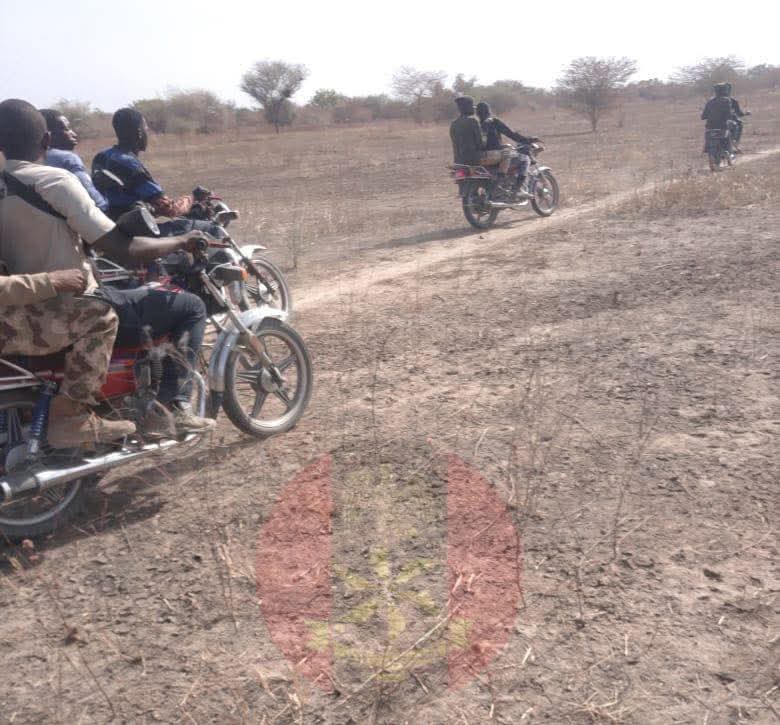
Nigerian troops and suspected terrorists were involved in a gun duel in Obajana town, Kogi State, where the Dangote Cement plant, reputed as Africa’s largest cement factory with a capacity of 16.25 million metric tonnes per annum, is located.

The incident was said to have occurred on Saturday night.Security analyst Zagazola Makama disclosed the development on Sunday through his X handle.

He stated that the exchange of fire followed an attempt by suspected terrorists to gain access into the community.

“There was an exchange of gunfire between Nigerian troops and suspected terrorists in Obajana town, Kogi State, on Saturday night, as security forces sustained ongoing clearance operations in the area.

“Troops are engaging the terrorists who were reportedly attempting to infiltrate the community,” he wrote on X.

As at the time of filing this report, the Defence Headquarters had yet to issue an official statement on the incident.

It will be recalled that scores of terrorists were recently neutralised during a joint operation carried out by the Nigeria Police and the military in Kogi forests.