National

You can add some category description here.

Beyond the riverbanks: Exploring the historic heart of Argungu ahead of the 2026 festival

By Dahiru Kasimu Adamu

Ahead of Argungu International fishing and cultural festival which was scheduled to hold from 11 February to 14 February 2025 we take a look of some tourist centers to visit in the ancient town of Kabawan Kanta.

Argungu International fishing and cultural festival is a unique  global event previously celebrates annually, it rooted in the pursuit of peace and unity. This extraordinary event showcases the rich historical legacy of the Kabawan Kanta and preserves the invaluable cultural heritage of the Kabawa people.

More than a festival, Argungu is a world-renowned tourism destination, significantly contributing to the socio-economic development of the town, Kebbi State and Nigeria as a whole.

Most people don’t know that, beside the famous fishing festival, there are so many colorful cultural and traditional activities, which are observed concurrently, during the same period. Some of  these activities which are attached to the festival include, 

  1. Traditional Boxing, 
  2. Durbar, Horse Racing,
  3. Motor Rally,
  4. Kabanci Display,
  5. The Grand Fishing Competition and many more.

Apart from the series activities of the festival, visitors also would have opportunities to visit historical and tourist centers of the town such as; the famous Kanta Museum.

Kanta Museum, is a Historical and cultural Center, which was the Emirs palace between 1831 and 1940, but it was converted to a Museum in 1942 after the European colonialists built the new Emir Palace in Tudun Wada Area of the ancient town of Argungu during the reign of Muhammed Sani.

Since then, the place has been a tourist center for many years. It showcases the true meaning of diversity with different cultures and histories of the Kabawan Kanta on display. It was named after Muhammed Kanta, who founded the Kebbi Kingdom in 1515. The Museum boasts a collation of historical artifacts and a testament to the ancient architectural beauty of the people.

It has eleven sections and contains historical and cultural elements related to the Kabawa and their history, which include the Royal Palace, then the Cultural section, the people and their religion section, the traditional crafts and the music section, the antiques section, a section dedicated to Surame, the first settlement of the Kabi Kingdom, war equipment, (such as spears, swords, woods, stones, bows and arrows and even drums on display) fishing tools section, amongst others.

Many people, including students from different schools and neighboring countries visit the museum at all times, for different purposes including educational and cultural research, although during the festive season about five to seven hundred people visit the Museum a day.

The Matanfada River

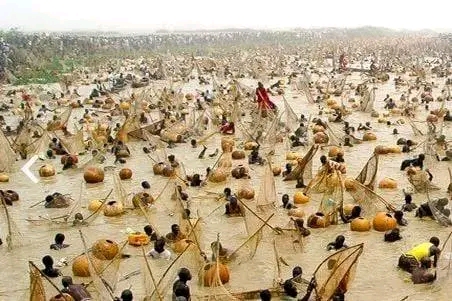
Matanfada river is a very special stage of the famous Argungu Fishing Festival competition. Over five hundreds fishermen storm the river for fishing competition. Visiting the river and the scenario give a deeper appreciation of its cultural and historical importance.

Another river site is the Mala River, which is another significant tributary in the Argungu. It forms part of the fertile river system that feeds the farmlands and fishing grounds of Argungu and its stage of Kabanci display.

The Argungu Bridge:

It is a prominent bridge that crosses the river connecting local governments of Argungu Emirate and also a route to Niger republic. It is a central landmark and a prime viewing spot for spectators during the fishing festival, offering a vantage point over the competitions. If you have a chance to be there during the event, try and climb the bridge!

The Argungu Fadama Land is a vast fadama land, which is nourished by the rivers. It is exceptionally fertile and crucial for agricultural activities, producing crops like rice, vegetables and many others, supporting the local economy of the residents.

The Emir’s Palace: Argungu Emir palace which is also known as Kanta Palace is located at Tudun wada Area of Argungu. The palace is the seat of the Emir of Argungu, the overall constituted authority of the Emirate. The palace also showcases historical and administrative system of government of the Kabawa, and it’s many sections reflecting living heritage of the Kabawan Kanta.

For equestrian culture, the Horse Racing Course roars to life during the festival and NSK Polo Ranch hosts the Polo tournaments and fates illustrating the horse sporting in the region.

There are 7 historical gates in Argungu and all are connected to the history and culture of the town, this gates are; Kofar Maicibi, Sagware, Kofar Tudu, Kofar Mala, Kofar Marina, Kofar Dankoji and Kofar tsohi.

Some of the gates such as Kofar Maichibi, Kofar Tudu had been rehabilitated and they serve as a symbolic of Argungu’s past history, marking and signifying old boundaries and stories of the community, its trade, strength and defense.

All these locations are interconnected elements of Argungu’s geography and culture and they are stages for a major cultural event contributing greatly to the socio-cultural development of Kebbi State and Nigeria at large.

See you there, and you will surely thank me for what you get.
Nigerian soldiers eliminate top BH commander, 10 others in Sambisa night operation


By Sabiu Abdullahi

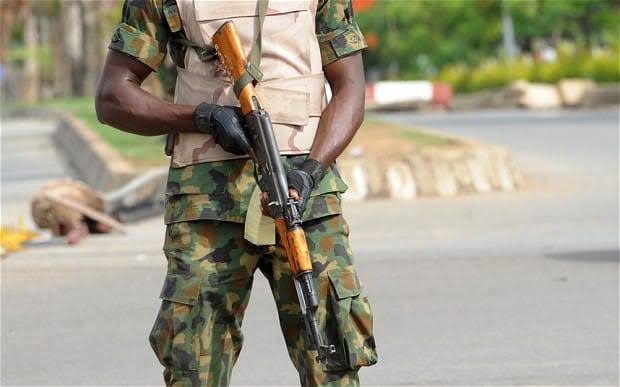
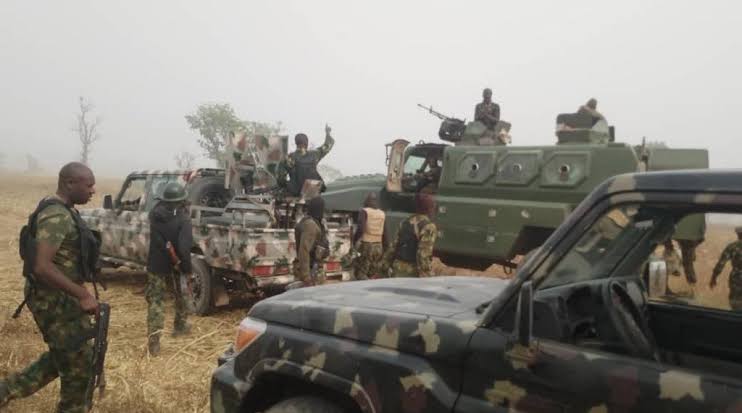
Troops of the Joint Task Force, North East, under Operation HADIN KAI (OPHK), have recorded a major operational success with the killing of a senior Boko Haram commander, Abu Khalid, alongside 10 other terrorists during a night operation in Borno State.

This is contained in a statement signed by Sani Uba, Lieutenant Colonel and Media Information Officer, Headquarters Joint Task Force (North East), Operation HADIN KAI, and dated February 1, 2026.

Abu Khalid was identified as the second-in-command of Boko Haram in the Sambisa Forest. He was also described as a key figure within the terrorist hierarchy who coordinated operations and logistics across the Sambisa axis.

The development came less than 24 hours after troops neutralised another notorious Boko Haram/ISWAP commander, Julaibib, who operated within the Gujba axis of the Timbuktu Triangle.

According to the military, troops of Sector 1, working with members of the Civilian Joint Task Force (CJTF) under Operation DESERT SANITY, engaged the terrorists at the Komala general area of Konduga Local Government Area at about 11:00 p.m. during a night offensive.

Following the encounter, the troops recovered five AK-47 rifles, magazines, several bicycles, assorted logistics and food supplies, as well as a large quantity of medical consumables.

The military confirmed that no casualty was recorded among the troops during the operation. It added that the morale of personnel remains high as clearance operations continue across the Sambisa Forest, Mandara Mountains, Timbuktu Triangle and other known Boko Haram and ISWAP hideouts in the North East.

The Joint Task Force, North East, reaffirmed its commitment to sustaining the tempo of operations until all terrorist elements are neutralised and lasting peace and economic stability are restored to the region.

The Military High Command also commended the troops for their sacrifices and dedication in the fight against terrorism and other criminal activities in the North East, while urging them to maintain the current operational momentum.

ICYMI: Nigeria to integrate global Islamic finance standards into financial reporting

By Sabiu Abdullahi

The Financial Reporting Council of Nigeria (FRC) has announced plans to incorporate international Islamic finance standards into the Nigerian Financial Reporting Framework (NFRF).

Executive Secretary of the FRC, Dr. Rabiu Olowo, disclosed this development in Abuja on Wednesday, explaining that the initiative seeks to strengthen regulatory clarity, protect investors, and position Nigeria as a leading hub for Islamic finance in Africa.

Dr. Olowo stated that the engagement with stakeholders follows last year’s decision to adopt the Accounting and Auditing Organisation for Islamic Financial Institutions (AAOIFI) standards for both Islamic and non-interest financial institutions operating in Nigeria.

He emphasized the differences between Islamic and conventional finance systems, particularly in areas such as interest prohibition, risk-sharing, asset-backed financing, and ethical investment. According to Olowo:
“These differences make it important for us to coordinate closely with stakeholders to effectively integrate the standards and innovations of Islamic finance institutions.”

He added that the updated framework will ensure that financial reports accurately reflect the substance of non-interest transactions, including governance and disclosure requirements. Olowo said:
“Adopting the AAOIFI standards will enhance transparency, accountability, comparability and consistency in financial reporting across Nigeria’s non-interest finance sector, while strengthening market discipline and boosting investor confidence.”

Citing the global growth of Islamic finance, Olowo noted examples such as the issuance of Sukuk and other non-interest instruments in countries like the United Kingdom, highlighting the expanding acceptance of these financial models beyond traditional markets.

He clarified that the adoption of these standards is not intended to disrupt existing financial operations, but rather to improve clarity, credibility, and regulatory certainty for institutions offering non-interest financial products.

Dr. Basheer Oshodi, representing the Non-Interest Finance Institutions of Nigeria, explained that the initiative aims to build Islamic finance deliberately and set clear guidelines. He added:
“More importantly we won’t disrupt the financial reporting framework, but we will enhance it and give it more potency so that by Q1 this year we should start implementing.”

This move is expected to strengthen Nigeria’s non-interest finance sector and provide investors with greater confidence in the country’s financial reporting standards.

Police in Nigeria arrest pastor over alleged plot to murder rival prophet

By Sabiu Abdullahi

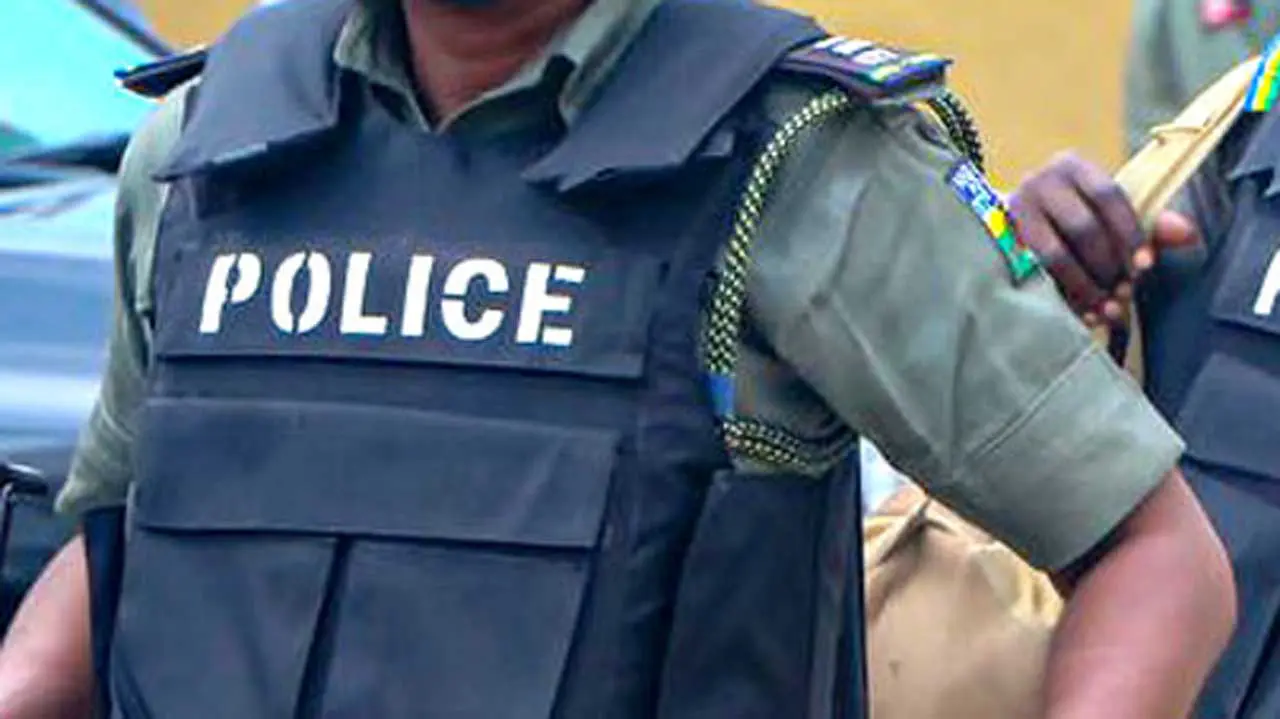
Operatives of the Special Weapons and Tactics (SWAT) Unit of the Bayelsa State Police Command have taken into custody a pastor, Elijah Oro, over an alleged plan to assassinate a rival prophet in the state.

Police sources disclosed that Oro, who hails from Delta State, is accused of contracting a 21-year-old man, Samuel Daniel, to carry out the attack. Daniel is suspected to be a member of a cult group known as the Greenlanders.

The alleged plan was said to have stemmed from a disagreement related to church membership and property ownership.

In a statement issued on Thursday, the Police Public Relations Officer in Bayelsa State, DSP Musa Mohammed, said the arrests followed actionable intelligence received by the command. He noted that the suspects were apprehended in connection with a plot to kill a prophet, whose identity was not disclosed, and that investigations remain in progress.

“On 28th January, 2026, at about 1035 hours, operatives attached to the Special Weapons and Tactics (SWAT) Unit, acting on credible intelligence, swung into action and arrested two suspects namely; Samuel Daniel ‘m’ 21 years old, from Nembe Ogbolomabiri Community, Nembe Local Government Area of Bayelsa State and Pastor Elijah Oro ‘m’, 59 years old, from Ozoro Community, Delta State both involved with an alleged plot to kill prophet name [withheld],” the statement read.

The police spokesman further revealed that initial findings pointed to a direct link between the two suspects and the alleged assassination attempt.

“Preliminary investigation revealed that one of the suspects, Samuel Daniel ‘m’ 21 year was arrested in the premises of the prophet and have confessed to being a member of the Greenlanders Confraternity and was allegedly hired by Pastor Elijah Oro ‘m’ to assassinate prophet (name withheld). Investigation is ongoing to unravel the motive behind the alleged plot.”

DSP Mohammed reassured residents of the state of the command’s resolve to ensure public safety and called on citizens to cooperate with the police.

“The Bayelsa State Police Command assures members of the public of its unwavering commitment to the protection of lives and property and urges citizens to continue to support the Police with timely and credible information,” the statement added.

Army major killed in ISWAP attack on military patrol in Borno

By Sabiu Abdullahi

A major in the Nigerian Army has died following an attack by fighters of the Islamic State West Africa Province (ISWAP) on a military patrol in Damasak, the headquarters of Mobbar Local Government Area in Borno State.

Sources said that the officer, who commanded the Damasak military base, was leading a foot patrol of approximately 30 soldiers early on Friday when the team came under explosives and gunfire from the insurgents.

“From what I gathered the commander of the Damasak base led a foot patrol of 30 troops early on Friday. They came under explosives and gun attack from ISWAP, forcing them to disperse. Only eight soldiers returned to base while 22 are unaccounted for, including the commander, a major,” a source said.

Reports indicated that attempts to reach the major by phone were answered by an unknown individual, leading to speculation that he might have been captured. “Someone answers his phone each time his base tries to reach him, indicating he is in the hands of ISWAP,” the source added.

However, another security source disputed the claim of abduction, asserting that the officer was killed during the ambush.

The incident follows a similar attack last year when Brigadier General M. Uba was killed by ISWAP fighters after they ambushed a convoy of soldiers and Civilian Joint Task Force (CJTF) operatives along Damboa Road in Borno while transporting military equipment.

This attack shows the ongoing threat posed by ISWAP in the region and the continuing risks faced by Nigerian military personnel in the northeast.

Soldiers at checkpoint in Bauchi accuse commander of enforcing ‘₦500,000 weekly returns’

By TDR

Soldiers attached to the 133 Special Forces Battalion in Azare, Katagum Local Government Area of Bauchi State, have accused their Commanding Officer, Lt. Col. A.K. Kachalla, of compelling troops stationed at checkpoints to remit weekly financial “returns” of as much as ₦500,000, with the threat of redeployment for those who fail to comply.

The allegations were disclosed by several military sources who spoke with newsmen on condition of anonymity on Wednesday.

According to SaharaReporters, one of the sources said soldiers are frequently posted to checkpoints on major routes such as Kano Road, Maiduguri Road, Dambam, and Jama’are, where they are allegedly expected to collect money from motorists and passengers.

“Soldiers will be deployed to a checkpoint to be collecting money from passengers and a commanding officer will be waiting for return of ₦500,000 every week,” the source alleged. “If the soldiers didn’t meet up with the demands, they will change them immediately from the checkpoint and bring new soldiers.”

Another source described the alleged practice as entrenched, adding that it started shortly after Lt. Col. Kachalla assumed command of the battalion.

“Since this CO took over, things have gone from bad to worse,” the source said.

The same source complained about deteriorating living conditions within the barracks, particularly irregular power supply.

“Apart from the extortion at checkpoints, we don’t have regular electricity supply anymore. We only have light for about four hours out of 24 hours.”

The soldiers also alleged that water supply in the barracks has broken down, which they said has created serious hardship for their families.

“There is no water in the barracks. Women are suffering seriously just to get water for daily use,” one soldier said.

They compared the current situation with conditions under a former commander, Lt. Col. P.O. Mukoro, who is now a colonel.

“We remember during Lt. Col. P.O. Mukoro, now Col. P.O. Mukoro, we enjoyed 24 hours light and water everywhere,” a source said. “He is one of the best commanding officers the unit has ever had, and we are still missing him till now.”

The soldiers called on the military authorities to step in without delay.

“We are calling on the Chief of Defence Staff, General Olufemi Olatubosun Oluyede, and the Chief of Army Staff, Lt. Gen. Waidi Shaibu, for the removal of Lt. Col. A.K. Kachalla as the Commanding Officer of 133 SF BN,” one source said.

They also urged the military high command to order an independent investigation into the alleged extortion linked to checkpoint postings.

“The issue of checkpoint deployment return must be properly investigated,” another source said. “This is damaging the image of the Army and destroying morale among soldiers.”

Presidency: Tinubu fit, continues Türkiye state visit despite minor stumble

By Uzair Adam

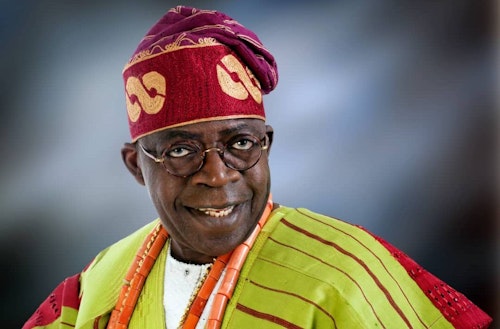
The Presidency has dismissed concerns about President Bola Tinubu’s health, saying he remains fit and is carrying on with his state visit to Türkiye as scheduled.

The assurance was given on Tuesday by the Special Adviser to the President on Media and Public Communication, Sunday Dare, who said the President moved from the ceremonial welcome in Ankara straight into planned bilateral engagements with President Recep Tayyip Erdoğan and other top Turkish officials.

According to Dare, the meetings are focused on strengthening diplomatic ties and widening cooperation between Nigeria and Türkiye in key areas such as defence and security, trade and investment, energy and overall economic development.

He noted that the seamless flow of activities reflects the growing relationship between both countries and Nigeria’s renewed diplomatic drive under the Tinubu administration.

Addressing enquiries about a brief incident involving the President, Presidential Spokesperson Bayo Onanuga clarified that Tinubu only lost his balance momentarily after stepping on an object.

He explained that the President stepped on a metal on the floor, which caused a slight loss of balance, stressing that it was “not a big deal” and should not be exaggerated.

Onanuga added that it was “a mere stumble, not a fall,” and urged the public to ignore attempts to sensationalise what he described as a fleeting incident.

The Presidency maintained that President Tinubu remains in good health and fully engaged in all official activities during the visit.

16 Officers indicted in alleged coup to face special military court-martial — DHQ

By Anwar Usman

The Defence headquarters revealed on Monday that the Investigative Panel established to investigate 16 officers of the armed forces, alleged to have been indicted for acts of indiscipline, acts contrary to service regulations, and other breaches, has concluded its investigations, adding that the officers will face a military Court Martial.

Director of Defence Information, Major General Samaila Uba, made this known  in a statement in Abuja.

Recall that the Defence Headquarters (DHQ) had, in October 2025, announced the arrest and detaintion of the officers, saying that the investigations had now been completed in line with established military procedures and extant regulations.

Major Gen Uba said the investigation examined all circumstances surrounding the conduct of the affected personnel and identified a number of officers with cases to answer, including allegations bordering on plotting to overthrow the government.

He said such actions were inconsistent with the ethics, values and professional standards expected of members of the Armed Forces of Nigeria.

He reiterated that the measures being taken were “purely disciplinary and part of internal institutional mechanisms to preserve discipline, cohesion and operational effectiveness within the ranks”.

Uba further noted that, “the commitment of the Armed Forces to professionalism, loyalty and respect for constitutional authority, assuring the public that due process and fairness would be strictly observed throughout the proceedings”.

Reports revealed that the detained officers included a Brigadier-General, a Colonel, four Lieutenant Colonels, five Majors, two Captains, a Lieutenant, a Lieutenant Commander from the Nigerian Navy and a Squadron Leader from the Nigerian Air Force.

Sources familiar with the development said most of the officers belong to the Infantry Corps, Signals Corps, and Ordnance Corps.

Abdul Samad Rabiu pledges massive cash for Super Eagles after Algeria victory

By Muhammad Sulaiman

Nigerian businessman and philanthropist Abdul Samad Rabiu has announced substantial financial incentives for the Super Eagles following their impressive victory over Algeria, a win that has lifted national morale and secured Nigeria a place in the semi-finals.

In a congratulatory message released on Friday, Rabiu praised the team for making the nation proud and pledged USD $500,000 to the players should they win the semi-final, with an additional USD $50,000 for every goal scored in that match.

He further stated that if the Super Eagles go on to win the final, he would reward the team with USD $1,000,000, alongside a bonus of USD $100,000 per goal scored in the final.

Rabiu described the players as symbols of national pride and unity, expressing confidence in their ability to carry Nigeria forward in the tournament.

He ended his message with a call for continued excellence, reaffirming his pride in the team and the country.

The announcement has been widely welcomed by fans, adding extra motivation as the Super Eagles prepare for the decisive stages of the competition.

In defence of Kwankwaso and the scholars who stand with him

By Muhammad Sani Ilyasu

I woke up to a video circulating on social media by a former Kano State anti-corruption czar, giving his opinion about scholarship beneficiaries on why they had no moral right to identify with Kwankwasiyya. It is important to clear the air. Much of what is being said comes from people who were never inside the scheme and never lived the consequences.

Let me state this clearly and upfront: I do not identify with Kwankwasiyya. I disengaged from the movement in 2020. What follows is not partisan advocacy. It is testimony.

Criticism of Rabiu Musa Kwankwaso and scholars associated either rightly or wrongly with his ideology has become fashionable. But much of that criticism is detached from the lived realities that shaped those associations, especially the horrible experience of Kano State scholarship beneficiaries. I write as one of them.

Yes, the scholarships were funded with Kano State resources. But at no point—none that I can recall—were beneficiaries compelled to support Kwankwaso politically. There was no loyalty test, no ideological oath, no expectation of political repayment. In fact, many scholars openly opposed him. I personally recall frequent debates with colleagues who were supporters of Ibrahim Shekarau, many of whom never gave Kwankwaso any credit for the scholarship. Most of us were indifferent, credit was never the issue.

The lesson however came in 2015. That was when Abdullahi Ganduje assumed office—and when all of us, including Kwankwaso’s fiercest critics among the scholars, learned the brutal difference between right and privilege. Tuition payments were halted. Upkeep allowances disappeared. Return-ticket funds were withheld. Scholars were stranded and pushed into destitution in foreign countries.

Some waited over eight years to receive their certificates after the scheme was abruptly terminated. In some cases, parents died without ever seeing the academic fruits of sacrifices they had made.

As if that were not enough, scholars were publicly discredited—labeled products of “substandard universities,” their academic legitimacy questioned to justify administrative neglect. Throughout this period, Kano State went silent.

Religious leaders. Business elites. Civil society organizations. The same voices that now moralize and gaslight scholars looked away. The only “crime” of the scholars was that Kwankwaso started the program.

If, as some critics claim, the scheme was merely a vehicle for siphoning public funds, a simple question remains unanswered: why was Kwankwaso never prosecuted—and why were scholars punished instead? Why were entitlements withheld if the beneficiaries were not the accused?

What makes the silence more damning is that this neglect extended beyond foreign scholars. Until the return of a Kwankwasiyya-led government, even undergraduate scholars sent to private universities within Nigeria—and to Egypt and Cyprus—were denied certificates. For postgraduate students, the delay was damaging. For undergraduates, it was life-shattering: no certificate meant no employment, no future.

In all those years, only one political current consistently raised the issue and demanded settlement: Kwankwasiyya. This is the context critics conveniently ignore.

What they now describe as “indoctrination” or “blind loyalty” was, in reality, a rational response to abandonment. You cannot withdraw education, dignity, and future—then later shame people for gravitating toward the only structure that acknowledged their suffering.

That is not principled criticism. It is double standard. Scholars were not pushed toward Kwankwaso by manipulation. They were pushed there by neglect and even for those of us who have long moved on, that historical truth remains intact—uncomfortable, inconvenient, and undeniable.

Gaslighting scholars for the choices they made under abandonment is not moral courage.
It is hypocrisy.

Muhammad writes from Baltimore Maryland and can be reached at msaniiliyasu@gmail.com.