National

You can add some category description here.

HUP: Beneficiaries stranded as officials abandon posts

By Uzair Adam Imam

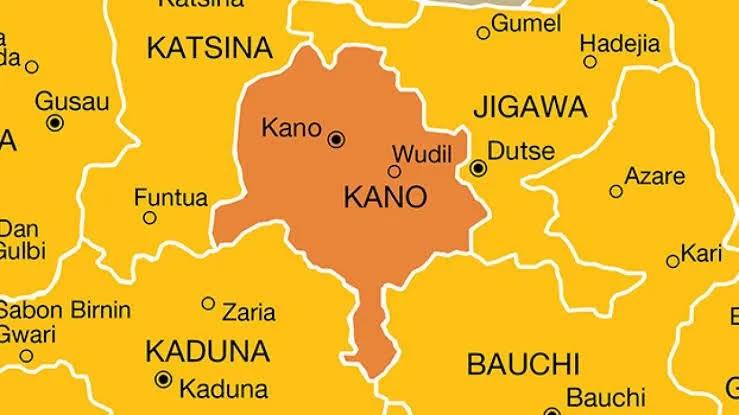
The beneficiaries of the Household Upliftment Programme in Nassarawa Local Government of Kano State are stranded as officials abandon posts without explanations.

The Federal Government had in May 2022 commenced the distribution of debit cards to the beneficiaries of the scheme.

Household Upliftment Programme aims to provide access to targeted cash transfers to poor and vulnerable households as captured from the National Social Register (NSR) based on standard eligibility criteria.

However, some of the beneficiaries expressed worries over how they spent three days going to the distribution centre located at Jigirya in the local government without being attended to.

Our reporter, who visited the Kano State Hisbah Office, Gigirya, where the beneficiaries trooped in hundreds to collect their automated debit cards to withdraw their cash, observed how disappointed they looked.

However, despite arriving at the place early in the morning, the beneficiaries bitterly complained that the officials did not come until around 1 pm.

The Daily Realityreporter gathered that the slowdown in attending to the beneficiaries was due to the failure of the officials to deploy enough staff to handle the issue smoothly.

Zenith Bank, which was in charge of distributing the debit cards to the verified beneficiaries, deployed only six of its staff to handle the people of the local government.

Tension as infant suffocates, paints

An elderly woman at the venue narrated to The Daily Reality how a newly born baby almost died because of the heat and congestion.

She said, “yesterday, we witnessed how a newly born baby of one of us that has been coming here for three days suffocated because of heat and painted.

“We all gathered to see for our eyes the fate of that baby. But at long last, God saved,” she said.

‘Our agent abandons us’

A household, Malam Ibrahim (not real name), who said he was from Tudun Murtala, said today (Friday) was his fourth time at the place, saying he was not attended to.

He said, “It is almost one o’clock, but the agent assigned to our ward has not arrived. Therefore, I think none of us will complete their verification and collect their ATM.”

The Daily Reality learned that a man, identified as Malam Aminu, was said to have caused the delay in attending to the people of Tudun Murtala as he was their agent.

Another household said, “We would have collected our ATM if our agent was around, but he has not arrived yet.”

However, when contacted, Malam Aminu said he was not authorized to speak to journalists.

Discrepancies in benefits noticeable

Efforts by The Daily Reality to know the exact amount of money from one household to another were unsuccessful as the officials refused to speak on the matter.

The officials have kept it a secret to themselves that even the beneficiaries are confused, as they don’t know how much they will get until they pay them.

Some of the beneficiaries have received N70,000, N57,000 and some others N40,000.

One of the households told our reporter, “My sister received N70,000 naira yesterday. What you get depends on the information you give them during registration.”

Another woman said her friend received a sum of N57,000 Friday.

However, when our reporter contacted the woman in charge of the program to comment on the matter, she said she was not allowed to speak on it as they were busy making arrangements to fast-track the distribution.  

An official, who does not want his name in print, said the discrepancies were a result of what he called “old and new systems.”

He said those on the old system were paid a sum in the past. Therefore they will not receive the same amount as those on the new system.

Zamfara banditry: Police rescued 27 kidnapped victims

By Uzair Adam Imam

Reports from Zamfara indicated that no fewer than 27 people abducted in Bukkuyum and Anka local government areas of the state were reportedly rescued by police.

This is coming after the suspected bandits stormed the named areas and abducted a yet-to-be-identified number of people.

The spokesman of the police command in the state, SP Muhammad Shehu, disclosed this to journalists in the state.

He said the 27 rescued victims were abducted by an armed group in Akawa, Gwashi, Tungar Rogo and some villages in Anka local government.

He also stated that, after their abduction, the victims were taken to camps at Gando/Bagega and Sunke forests in Bukkuyum and Anka local government areas.

She added the rescue of the victims was a sequel to the report received by the Command that a group of bandits had invaded the named villages.

“On receiving the report, the Commissioner of Police, Mr. Kolo Yusuf, deployed additional Police Tactical Operatives to reinforce DPOs in Anka and Bukkuyum local government areas and vigilantes to rescue the abducted victims.

“Luckily enough, a well-coordinated search and rescue operation was carried out with the full support and partnership of the two local governments’ sole administrators.

“At the moment, 17 out of 27 were brought to the Police Command Headquarters while the 10 other victims are in the hospital receiving medical attention following the trauma they passed through while in captivity,” he added.

We’ve completed selling Polaris Bank to SCIL—CBN

By Muhammadu Sabiu

A new core investor, Strategic Capital Investment Limited (SCIL), has finished the processes involved in purchasing or acquiring Polaris Bank from the Central Bank of Nigeria (CBN).

In a statement, Osita Nwanisobi, the CBN’s director of corporate communications, said that the investment business received 100% stock holdings in Polaris Bank.

SCIL reportedly paid N50 billion upfront to purchase the shares, according to the statement released on Thursday. 

Since the apex bank intervened to suspend the former Skye Bank Plc’s licence in 2018 and established a bridge bank to take over its assets and some of its liabilities, the bank has been operating as a bridge bank.

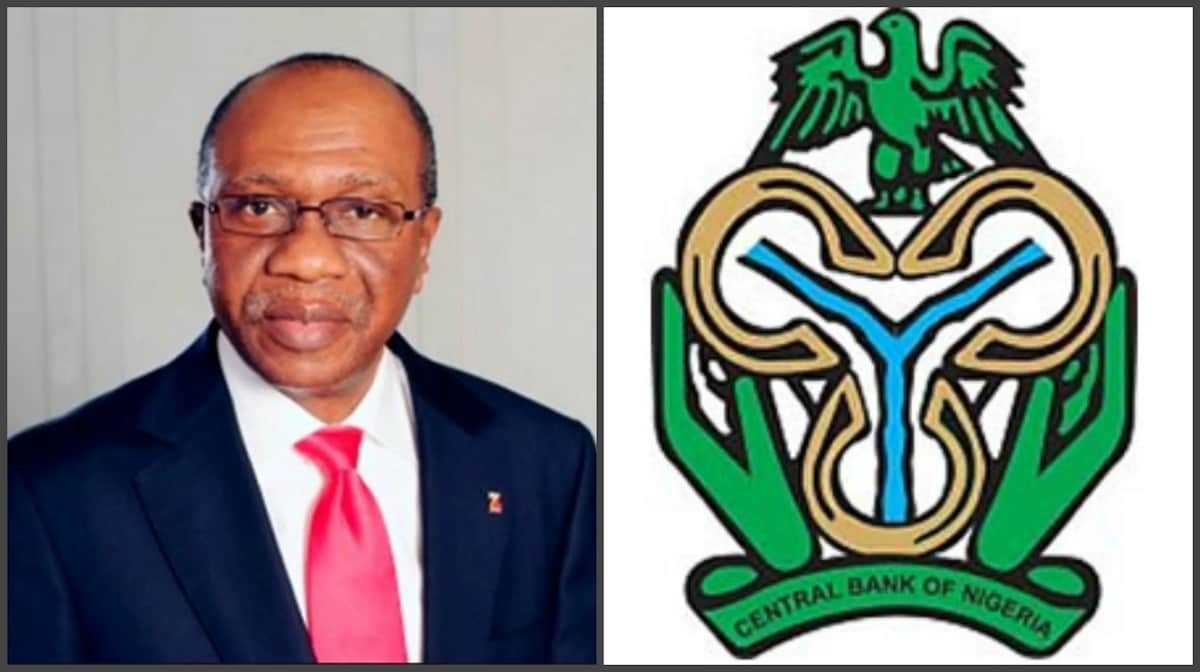
CBN Governor Mr Godwin Emefiele was quoted as saying, “This sale marks the completion of a landmark intervention in a strategic institution in the Nigerian banking sector by the CBN and AMCON. We commend the outgoing board and management for their vital role since the bridge bank was established; in stabilising the Bank’s operations and its balance sheet and implementing strong governance structures to address the issues that led to the intervention.

“This process has provided the CBN with an unprecedented opportunity to recover its intervention funds in full and promote financial stability and inclusive growth. We wish SCIL well as they implement growth plans to build the bank from the strong foundations that have been established.”

Meanwhile, it can be recalled that Polaris Bank was recently enmeshed in a controversial drama characterised by a viral screenshot of an email allegedly from a supervisor of the bank, in which some Muslim employees were queried for attending a Juma’at service.

The email provoked an uproar from the Muslim faithful and forced a number of them to withdraw their money from the bank.

Telecommunications: FG orders service providers to reverse tariff hike

By Muhammadu Sabiu

The Nigerian Communications Commission (NCC) has directed that all providers of telecommunications services roll back the increased pricing adjustments for a select number of voice and data services.

This was revealed in a statement released on Wednesday by Reuben Muoka, head of public affairs at NCC.

The commission instructed the involved Mobile Network Operators (MNOs) to reverse the increased price adjustment in a letter dated October 12, 2022, adding that the service providers’ networks’ unilateral 10 per cent upward price increases for some phone and data services had been approved and put into effect.

It noted that the order was issued in order to allow for further consultation for the good of both the service providers and consumers.

“The consideration for 10 per cent approval for tariff adjustments for different voice and data packages was in line with the mandates of the commission as provided by the Nigerian Communications Act, 2003, and other extant Regulations and Guidelines, as this was within the provisions of the existing price floor and price cap as determined for the industry,” the commission said.

“The decision was also taken after a critical and realistic review and analysis of the operational environment and the current business climate in Nigeria, as it affects all sectors of the economy.

“Furthermore, even though the tariff adjustment was proposed and provisionally approved by the management, pending the final approval of the board of the commission, in the end, it did not have the approval of the board of the commission. As a result, it is reversed.

“The honourable minister of communications and digital economy, Isa Ali Ibrahim Pantami, has maintained that his priority is to protect the citizens and ensure justice to all stakeholders involved. As such, anything that will bring more hardship at this critical time will not be accepted.  

“This was also why he obtained the approval of President Muhammadu Buhari for the suspension of the proposed 5 per cent excise duty in order to maintain a conducive enabling environment for the telecom operators. Much as there is an increase in the cost of production, the provision of telecom services is still very profitable, and the subscribers mustn’t be subjected to a hike in charges.”

Nigeria of my dream

By Anas Abdullahi

The Nigeria of my dream—and arguably every patriotic Nigerian’s dream—revolves around the vision of a ‘thriving’ country; a country where the living condition of its citizens matches its natural endowments; a country where everyone, irrespective of background, has a sustainable source of livelihood, a secure environment to enjoy it and is able to attain the pinnacle of his/her potential. While there are divergent views of how this dream can be realised, everyone agrees that it is just a dream in the face of a dark mirror of an undeniable fact of life. The second part of the essay promptly asks an even more important question: how do we transform this dream into reality? From the onset, it appears that this question will be more accurately disserted by policy and strategy experts—two fields beyond the full grasp of my expertise. Nevertheless, in my own very limited way, I will give some ideas that may steer us towards the realisation of this vital dream.

Our problems are complex and multi-dimensional but traceable to a few independent variables; our deficient education system is chief among those variables. Education is the bedrock of every ‘elite’ society, but our government has gotten the basics of ours completely wrong. Basic education, which ought to be, according to the global standard, the level of education that must be free and accessible, is the most neglected by our government. The level of degradation in our public primary and secondary schools is such that many parents would rather their kids stay at home than attend such schools. Surprisingly, Nigeria spends three times more on tertiary education than it does on basic education. In a country with a high percentage of out-of-school children, this is not only a gross misplacement of priority but doesn’t also reflect our national priority. It becomes imperative then, as a matter of national agenda, that different tiers of government embrace and focus on basic education in addition to whatever they might be pursuing. This is viable via increased funding and robust teacher training to meet the challenge of providing quality basic education for all. Secondly, there’s a need for increased supervision; in most cases, private schools perform better than public schools because of stricter consequences management.

There is also a need for us to re-adjust our position on the payment of tuition for tertiary education. Is it not ironic that basic education, which is supposed to be free, has become more expensive than tertiary education? Most parents no longer have confidence in our public primary and secondary schools and prefer high-paying private schools. The bigger irony is that even those parents expect tertiary education to be free. To be honest with ourselves, researching innovation—the hallmark of tertiary institutions—requires a lot of funding, and government cannot do it alone. If we truly want to have a world-class education, then we must be ready to do what it takes to have it. Nigerians squander billions of Naira in pursuit of quality education abroad, and while this is not inherently bad, why are they then disinclined to

pay tuition in Nigeria? Meanwhile, the fact that students pay tuition does not mean the government should discontinue funding our tertiary institutions; tuition is only meant to increase the revenue of tertiary institutions, which in turn expands infrastructure and research capability. Students who can afford it should pay, while exceptional students whose parents are poor should receive scholarships and student grants. This will induce healthy competition for academic excellence and make parents demand more from teachers and institutions.

The restructuring requires our post-secondary education to be expanded. The glamour attached to university education at the expense of polytechnics and colleges of education conflicts with Nigeria’s contemporary and future needs. What a country bedevilled by high unemployment needs is high-level, hands-on manpower, which comes from polytechnics; as a matter of urgency, there is a need for our education at all levels to be solidified along vocational, technical and academic lines. There are many opportunities in ICT, construction, manufacturing, services, etc., that do not even require a university degree but some specific skills and certifications. Government can even go as high as liaising with companies to offer internships and apprenticeships, and the companies get reduced taxes. The one-year mandatory national service scheme NYSC has outlived its relevance and should also go in that direction. The government must realise that its politically-motivated attempts to expand university access without increased investment will only increase the amount of ‘unemployable’ graduates, which remains a major issue in the labour market. Fixing our education remains the key to fixing our country. It is necessary that we get the basics and the structure absolutely ‘spot-on.’

The proportion of youths in our population is probably our greatest cause for optimism, but only if we are able to groom a generation that is more preoccupied with “what can I do?” rather than “what certificate do I have?” As youths, we must be ready to understand how today’s labour market works and outgrow the comfort zone where a university certificate is tantamount to a government job. Albert Einstein famously said: “Problems cannot be solved by the same level of thinking that created them.” We must learn the skills that are needed by today’s highly demanding market and if the job doesn’t come, be ready to look within our environment and find opportunities; we must see education as a tool that helps us navigate the high-competitiveness of today’s job market and a mirror through which opportunities are seen; we must desist from excessive and often pointless use of mobile phones but instead leverage on the formidable power of the internet as a learning tool; we must be ready to accept that unemployment is not the inability to get a job, but rather the inability to see opportunities and utilise them; we must not be discouraged by our situations and remember that all the things we admire in the world today were not the product of people that complained about their

situation, but products of those who changed their situations. Poverty, it is said, is passing over opportunities repeatedly.

Parents have a crucial role in grooming this new generation of Nigerians. In addition to quality education, parents should teach their children resilience, discipline and the ruthless art of ‘living’ right from childhood. We must recalibrate our thinking to align with our reality and environment; parents must be willing to let go of the obsolete notion that learning a trade or handwork is detrimental to the pursuit of academic excellence. To achieve the Nigeria of our dreams, we must throw away a fundamental misconception about the role of government: the job of the government is not to create jobs but to create an enabling environment for businesses and the private sector to thrive and, in return, the government gets revenue through taxation. The misconception of the role of government has led to people demanding the government create jobs, and because the government wants to please people, what does the government do? Create endless and often unnecessary agencies and roles so that they can create jobs. The result is an exponential rise in recurrent expenditure that the government cannot simply afford. And because the government cannot afford it, they try to find ways to supplement their revenue. The government has been increasing taxes and VAT to pay salaries, and who is the innocent victim? Nigerian citizens and businesses are the very groups the government ought to protect.

Don’t get me wrong: I am not, in any way, asserting that the Nigerian government has done its part or that government should not be giving people jobs, but this sustained pressure has led to the over-saturation and, ultimately, the inefficiency of our civil service. The gross redundancy and inefficiency are nothing compared to the massive corruption that is going on in this place; civil service is simply the epicentre of evil in Nigeria. During the COVID-19 pandemic, low-ranking civil servants were asked to stay at home for two years; given the fact that these cadres constitute the majority ranks in the service, it is safe to say that most civil servants sat at home. One would have expected things to stagnate especially given the huge amount of money that is spent on salaries every month; quite the contrary, everything moved seamlessly. The country, both the government and the public, did not feel the effects whatsoever; there was simply no vacuum created by this absence. Think about this very carefully: the civil service executes the economic and social function of any government; it is the medium through which the impact of government is felt. In Nigeria, it is more of a curse than a blessing because it consumes a chunk of our revenue without performing its vital function. Nigeria will not change unless the institutions of government are changed and corruption is drastically reduced. Unless civil service is reformed, the dividends of government will never be truly felt in Nigeria.

Public institutions must be streamlined, professionalised, and realistically incentivised; government must block fiscal leakages and let off redundant agencies and roles while

concentrating on having an efficient civil service department that will contribute towards solving the socio-economic problems of this country. The government should be bold enough to take the next step, which is, of course, privatisation. The government must, simply and plainly, back off. Every sector that seems to work effectively in Nigeria is because of less government, not more. Government, economists say, has no business running businesses. Many sceptics of privatisation argue that privatisation is a mixed fortune in Nigeria. While this is true, is it not better to embrace something that partially works rather than something that doesn’t work at all? The commercialisation and planned privatisation of NNPC is laudable. More state-owned assets like airports, railways, power plants, etc., should follow. We are sentimentally attached to these things, but when we look critically, it is easy, as Nigerians, to see why privatisation is the way forward. For example, our four refineries have a combined monthly operational cost of N10 billion despite not refining anything; no businessman, in his right senses, will accept this. In addition to greater efficiency, privatisation will free up government responsibilities and allow the government to concentrate on social sectors like education, health, roads, etc.

Privatisation, though, will be met with strong resistance. To begin with, privatisation of NNPC means petroleum subsidies will be scrapped, adding to the economic situation that is already looking gloomy; half of the population already lives in poverty; the unemployment rate has, according to the latest statistics by the National of Bureau of Statistics (NBS), rising to 33%; and inflation is high, which means the prices of commodities in the markets are not affordable to the poor. Secondly, despite the incessant call by the government that Nigeria is broke, many people simply couldn’t believe the government, and sometimes, for good reasons. This assertion doesn’t align with the larger-than-life lifestyle of politicians and top government officials, nor has it been helped by a stereotype propagated especially among the lower class that if this country’s wealth were to be divided among its citizens, everyone, even an unborn child, would never experience poverty. It becomes necessary, therefore, that the government show transparency and carry Nigerians along the way. The first place to begin is our expenditure; the governments must re-prioritise by spending only on very essential items and reducing the cost of governance. A radical idea, albeit difficult, is to cut down the size of the national assembly. Again, the government must explain things to Nigerians in a matter that they would understand. Continued subsidy payment means N6 trillion will be borrowed next year, adding to the cost of servicing our debt, which according to the finance minister, exceeds our revenue. We are not even talking about the principal yet.

Why does this matter? CBN will be forced to keep covering financial gaps through means and ways that may have severe inflationary consequences. Furthermore, exploiters of financial leakages offered by the scheme and their networks will keep getting returns until the scheme is terminated. Privatisation will set the tone for our economic revival. The next economic reform

will be to increase our revenue through proper taxation. This is achievable through efficient tax generation and collection processes, strengthened tax laws and demands more compliance (by individuals and corporations). Tax collection agencies should also collate data on businesses and individuals in the informal sector and facilitate easy compliance, and more tax should be imposed on harmful products. The caveat is low economic growth; when individuals and companies are not making money, you can’t effectively tax them. One very important question that everyone at this juncture may be desperate to ask is: will this increased revenue translate to the prosperity of the people? Will it give us the Nigeria of our dream? Increased revenue means increased capacity of the government to carry out developmental projects, but it certainly doesn’t solve all our problems because even when the economy blossomed, many Nigerians wallowed in poverty—the Nigerian economic paradox. This is further illustrated by the fact that Nigeria is the largest economy in Africa but ranks below many other African countries in human developmental indexes. To address all the problems, we need to go back to the fundamental of growth.

Nigeria typically exports primarily raw materials and imports finished consumer goods. While this may increase GDP, it has negative effects on other developmental areas as a result of the low participation of citizens in this model. What we need is to fully maximise the entire value chain of our raw materials; manufacturing touches all parts of development and is much more resistant to external economic factors that can bring sudden cracks to the economy. Economic diversification is a worn-out narrative in Nigeria, but we need to see it happen. Our policymakers took this too far and tried to achieve forced industrialisation by restricting imports. The result was counterproductive. We do not need to produce ‘everything’ we consume; we should instead play to our strength by exploring areas of production and trade where we have a comparative and competitive advantage and by dominating value chains in which we have factor endowments. This will cater to our domestic demands and, at the same time, give us a strong export push given the free trade platform that the African Free Trade Area (AfCFTA) provides. We must be intentional about this: we should select a few industries that we desire to compete in, focus on them and assist them for the next few years. What is the sense, for example, in having timber and importing paper? Our internal disparity should also be taken into consideration. For example, the northern part of Nigeria produces greater agricultural output and has a greater proportion of semi-skilled and unskilled labourers. By extension, this means that agro-processing factories will be suited to this region.

Restoration of the ‘enabling environment’ for this structural transformation is necessary to attract local and foreign investors. To this effect, the government should clearly define and make accessible its policies, regulations, and tax laws to remove the issues of multiple and duplicate regulations, which often emanate from the excessive drive for tax revenues. Secondly, foreign exchange currency should be made easily available and accessible to

manufacturers to purchase raw materials and equipment from foreign countries. Thirdly, infrastructural challenges posed by dilapidated transport networks and insufficient power supply should be eliminated. Government should rehabilitate major roads leading to industrial areas, improve access to ports and continue the ongoing development of the rail system; these will drastically reduce the operating cost associated with transportation. Another constraint that must be overcome is electricity fluctuations. The bill recently supported by our lawmakers to allow the state governments to generate and transmit electricity is recommendable. This will allow private investors to take part in the Nigerian energy market. Another alternative is using abundant renewable energy sources (hydro, solar, wind) to supplement the national energy mix, which will be particularly instrumental in remote areas where the distribution of electricity is difficult.

Finally, we need a ‘meritocratic’ environment for anything to work; an environment where hard work, excellence and discipline are rewarded and corruption bastardised; an environment where achievement becomes a function of merit and not sentiment; an environment where everyone will be given what is due for them at the right time; an environment where accountability and transparency are institutionalised in government. For us to achieve the Nigeria of our dream, we must grant full and complete independence to our judicial system; whoever is found guilty must be punished according to the rule of law. No amount of ideas will work in Nigeria with selective justice and wasteful expenditures by the ruling class. I dream of Nigeria with selfless leaders who are not afraid of ‘one big man’ and who put the national interest above their interests. I dream of Nigeria, where everyone does what ought to be done to the best of their ability. I dream of a country where corrupt officials become ‘outcasts’ in society. I dream of a country where politicians will be unable to mortgage the conscience of the people with bread and butter.

Endowed with 923,768km² of land mass (80% arable), 37 billion barrels of crude oil deposit (estimated), huge deposits of solid minerals, an 853km long coastline, and a youthful demographic—Nigeria is a country that oozes ‘greatness.’ What remains is for us to collectively put our hands together right now to achieve the Nigeria of our dream.

Anas Abdullahi sent this via anaschemical2008@gmail.com.

Atiku visits Emir of Zazzau, to dialogue with Arewa Joint Committee

By Uzair Adam Imam

The Presidential Candidate of the Peoples Democratic Party (PDP), Atiku Abubakar, on Saturday, visited the Emir of Zazzau, Mallam Ahmed Nuhu Bamali, in Kaduna.

Abubakar also planned to visit Kaduna city and Kafanchan as well as attend an interactive session with presidential candidates which has been organized by Arewa joint committee in the state.

He described the purpose of his visit as seeking the royal blessings and intimate him on his outing.

“My visit here is a homecoming, but it has been a tradition of our campaign programmes to seek the blessings, advice and guidance of our royal fathers.

“I’m also here to congratulate and rejoice with you on the conferment of national honour given to you by the president.

“With this visit, we hope to boost and strengthen our campaign activities geared towards national unity and development,” he said.

“By this, we hope to receive guidance and prayers to enable us succeed in our campaign activities.” He stated.

The Emir, while responding, called on politicians to play by the rule of the game and avoid comments and utterances that may jeopardize the national unity.

Apologize to Muslims or face boycott – MURIC tells Polaris

By Ahmad Deedat Zakari

Muslim Rights Concern, MURIC, a Muslim rights organization, has asked Polaris Bank to apologize to Muslims or face a boycott.

MURIC, in a statement released on Friday signed by its Director, Professor Ishaq Akintola, issued an ultimatum demanding an unreserved apology to Muslims from the management of Polaris Bank.

The rights group said the refusal of the bank to tender an apology within seven days would make Muslim customers of the bank boycott the bank’s financial services.

Recall that The Daily Reality reported that in a leaked email to the bank’s members of staff, a supervisor at the bank, Damilola Adebara, had ordered the workers not to leave their duty post to attend Jumu’ah prayers on Friday.

Although the management had issued a statement stating that the supervisor acted in ignorance, MURIC is convinced and argued that it was a deliberate attempt to make the policies of the bank unfavourable to the Muslim staffers in the bank.

Part of MURIC statement reads: “Damilola Adebara’s mail is a flagrant contravention of Section 38 (i)&ii) of the 1999 Constitution of the Federal Republic of Nigeria which says, ‘Every person shall be entitled to freedom of thought, conscience and religion, including the freedom to change his religion or belief, and freedom (either alone or in community with others, and in public or in private) to manifest and propagate his religion or belief in worship, teaching, practice and observance. The leaked mail was greeted with outrage, bewilderment and nausea among Nigerian Muslims. Unfortunately, the bank’s response to the concern of Muslims was not good enough. It was mild, vague, escapist and deceitful. Polaris Bank had said, ‘The said staff had acted in ignorance, and we have since addressed the issue internally.”

MURIC also said an unpretentious apology to Muslims and the suspension of the erring supervisor is the only thing that can remedy the situation and assuage the pains and trauma the leaked email caused Muslims.

“That apology should be tendered within seven days from today, Friday, 14th October 2022, failing which Muslim customers may start boycotting the bank. Nigerian Muslims deserve dignified treatment as homo sapiens compos mentis.

Secondly, the first offender, Damilola Adebara, must go on a few days’ suspension. There must be consequences for unprofessional behaviour. On her return from suspension, she must withdraw the memo sent to all Muslim staff,” the statement adds.

We suspended the strike despite our demands not met – ASUU

By Ahmad Deedat Zakari

The Academic Staff Union of Universities, ASUU, has suspended its eight-months-old strike.

The union disclosed this in a press statement signed by its president, Emmanuel Osodeke, on Friday.

Speaking on the reasons for the strike suspension, ASUU said the intervention of President Muhammadu Buhari and the Speaker of the House of Representatives, Femi Gbajabiamila were imperative for the suspension of the strike action. The union argues that their demands were not satisfactorily addressed .

The statement partly reads: “While appreciating the commendable efforts of the leadership of the House of Representatives and other patriotic Nigerians who waded into the matter, NEC noted with regrets that the issues in dispute are yet to be satisfactorily addressed.

However, as a law-abiding Union and in deference to appeals by the President and Commander in Chief of the Armed Forces of Nigeria. His Excellency, President Muhammadu Buhari, and in recognition of the efforts of the Speaker of the House of Representatives, Rt. Hon. Femi Gbajabiamila, and other well-meaning Nigerians, ASUU NEC resolved to suspend the strike action embarked upon on 14th February 2022.

Consequently, all members of ASUU are hereby directed to resume all services hitherto withdrawn with effect from 12:01 on Friday, 14th October 2022.”

Ban on Prayer: Polaris Bank under fire as customers threaten money withdrawal

By Uzair Adam Imam

Many people were outraged by the Polaris Bank Ltd directive, Tuesday that laid a strong warning against its Muslim staff to desist going to Friday prayer.

The Daily Reality reported that there had been growing anxiety among the Muslim employees as the order did not sit well with them.

The management of the bank, in an email to its Muslim employees, said going to the mosque for Friday prayer contradicts the policy of the bank.

However, a statement issued and signed by the Group Head, Strategic Brand Management, Nduneche Ezurike, said the incident involved one staff and her supervisor and has already been addressed.

Customers’ rage

The management of the bank was under fire as the concerned citizens, who couldn’t make sense of the directive, threatened to stop using the bank.

Abdallah Aliyu Uba said, “We’re doing all the needful to successfully withdraw all our money from the bank.”

Idrees Omar stated, “Polaris bank beats the drum and definitely, our Muslim brothers, will teach them lessons. This carries strong messages to the bank that Islam in Nigeria is beyond intimidation.”

Shehu Bello said, “Polaris bank will receive our strong messages that, Islam in Nigeria is beyond intimidation by any means.”

Ayuba Musa Garba stated, “By God’s grace as of now I decided to stop using this bank”

Mas’udu Musa said, ‘By God’s grace as of now I decided to stop using this bank.”

I resigned from my work over the ban on prayer

One of the employees of the Dimond Bank, Yusuf Shehu, has recounted how he resigned from his job over a ban on prayers by the bank.

Shehu said, “This applies to all banks in Nigeria except Zenith and Union Bank.

“This happened to me during my days in Diamond Bank. I had to beg, kneeling for my supervisor before She could allow me to go and pray.

“One of my colleagues was issued a Memo like this too. In the Banking industry, you have to worship your Supervisor like a god. God forbid. It’s my reason I left too,” he said.

Polaris Bank cautions Muslim staff to avoid Friday prayer

By Uzair Adam Imam

There was a growing anxiety in Polaris Bank LTD as Muslim employees were cautioned against attending Friday prayer.

The strong warning by the bank management was via an email sent by one Damilola I. Adebara to the Muslim employees on Tuesday, saying going to the mosque contradicts the policy of the bank.

The development, putting in mind that any citizen is entitled to a right to religion, does not sit well with many of the Muslim employees whose eyes gloated through the email in dismay.

One of the employees who spoke to The Daily Reality through a phone call said the same issue happened just recently with one female employee who was warned against going for the prayer by her Christian supervisor.

The email that goes viral reads: “It has been observed that on Friday, you leave your work desks to attend Juma’at service bearing in mind the impact of your absence on workflow and productivity of Yes Center.

“Kindly note that there is no provision made anywhere in the bank policy for employees to attend any religious activity during work hours.

“Going forward such permissions would not be granted on the Yes Center platform and any infrastructure of this directive would be dealt with accordingly,” the bank instructed.

A legal practitioner in Kano, Barrister Abubakar Saleh, told our reporter that the bank’s directive is against the constitutional provision of the right to religion.

He said, “The constitution of the Federal Republic of Nigeria has entitled any citizen the right to religion. For that, it is wrong for the bank to rob the employees of their rights and freedom of religion.”

Also, Sheikh Abubakar Ayuba Tangimi, lambasted the bank’s directive, saying Jumu’ah prayer is obligatory to any male Muslim.

He quoted, “Ibn Qayyum in his book Zadul Ma’ad said Juma’at prayer is compulsory to any Muslim adult. He was of the opinion that if anyone misses a single Juma’a prayer has wronged his creator.”