National

You can add some category description here.

Aftermath of ASUU strike and the hike of university fees

By Safiyanu Ladan

The Academic Staff Union of the Universities (ASUU) embarked on an indefinite strike on the 14th February 2022, following years of unresolved issues with the federal government. During the period of the strike, the union had on several occasions met with the federal government representatives headed by the labor and employment minister Chris Ngige with a clear mandate to find a long and lasting solution to the lingering problems but to no avail as the meetings have always ended in deadlock.

Tired and frustrated with that, In September last year, the federal government through the ministry of labor and employment took the union to an industrial court, praying to the court among other things to order the varsity teachers to resume classes with immediate effect. The outcome of the court’s judgement favored the federal government. Paradoxically, the appellant court refused to entertain ASUU’s appeal, saying that until and unless they obey the lower court’s judgement of going back to classes.

The intervention of the speaker, house of representatives Right Hon. Femi Gbajabiamila has paved the way for the varsity workers to get a soft landing in what seems like an unending fracas with the Federal government.

Prolonged and incessant ASUU strikes were this time around followed by a heavy price as the federal government reiterated that, the no work no pay policy has been duly applied to the striking workers. The federal government decision to withhold their salary has generated heated debates and threats from ASUU, but the government remains adamant. Closing down of Universities is at the detriment of students because they are always at the receiving end.

Having been tried but failed to convince the FG to pay the arrears of the past eight months of ASUU members, the management of some universities have decided to compensate that with an increment of students’ school fees. It’s no longer news that some universities have deliberately increased their fees to more than 100%.

It’s now crystal clear that this increment will affect many students because their parents cannot afford to pay such whopping amount of money as school fees. In the meantime, the mass exodus of students dropping out of the universities most especially in the North is imminent. Leaders and everyone should know this. Many students have expressed their worries on the trend and their final resolve to quit.

Safiyanu Ladan wrote from Zariya City and can be reached via uncledoctor24@gmail.com.

2023 election: Soludu receives Kwankwaso in Anambra

By Ahmad Deedat Zakari

The Governor of Anambra State, Charles Soludo, hosted the presidential candidate of the New Nigeria Peoples Party (NNPP), Rabiu Musa Kwankwaso on Thursday.

Kwankwaso was accompanied by Buba Galadima and other key members of his campaign team to Anambra’s State Government House in Awka. 

Explaining the reason for the visit, Kwankwaso said he was in the state to open the campaign office of his party and decided to pay the governor a courtesy visit. 

Receiving Kwankwaso’s entourage, Soludo commended him for his tenacity and belief in Nigeria. He described Kwankwaso as a man with exemplary public service history, which he called the greatest philanthropy.

Soludo said, “I want to commend your tenacity and belief in the country, your exemplary public service and commitment to our nation. I have always said that those who have something to offer should offer it through public service. Public Service is the biggest philanthropy”

Cashless policy is too early for corrupt nations

By Lawan Bukar Maigana

I keep telling people that it is too early for us in Nigeria as a whole to adopt a cashless policy. It is just obviously too early. Yesterday, I read a post by Prof. Abdelghaffar Amoka of the Ahmadu Bello University, Zaria, in Kaduna State, about his experience with a Point of Sale, PoS, agent.

He had gone to refill his gas cylinders at the cost of 19k+ and he used a PoS machine to pay for it. Though he was debited, the money wasn’t credited to the PoS agent’s account. Rather than waste his time there, he transferred another money to someone’s account to pay for refilling. He would have become helpless if he was moneyless.

Some weeks back, I experienced a similar thing in Abuja. I went to withdraw 5k using a PoS from a woman at the NYSC parade ground. I was debited but she didn’t receive the money. She then told me that she won’t give me the money until she receives an alert. Luckily, I had a paltry sum left in my account. I then withdrew the money using a different PoS. It took my bank nearly ten days to refund me.

Before then, and about three years ago, I had the same experience with UBA. I used my father’s card to withdraw N100,000. I tried six times, but all of the transactions didn’t dispense cash, and he was debited five times. My dad only knew it after a week. He complained to the bank but they denied it, without carefully checking whether the transactions were successful or not.

They had to call me to come from school. I quickly got to the bank because it involved my father. I had to help them understand that the transactions failed. Only then they rechecked and discovered that I was right. That was indeed an issue bordering on unprofessionalism.

If not because of my father I would have sued the bank, because they threatened me with a police arrest, saying it was a criminal case. My father asked me to accept their apology else I would have sought compensation for making me look like a criminal, while they were at fault.

Before going ahead with its cashless policy, another factual and excusable factor the Apex Bank should consider is the fact that most of our businesses are done in cash, especially those trading in rural communities and towns and other remote areas where there are no banks, no network, no internet, no electricity, no education, and these people form a large portion of the Nigerian populace.

The questions I keep asking myself regarding this policy are: Did the Central Bank of Nigeria build banks in those areas? Would the people be traveling from their various villages to cities to transfer, withdraw or deposit money? What did the government do in place of these challenges? Does CBN have enough manpower to do this job even if they have built banks? Did CBN mistake Abuja, Kano, Lagos, Port Harcourt, and a few cities for Nigeria?

These, among other reasons, are the factors I want the CBN Governor to consider. Before they present this policy, they need to put all these things in place and educate people about it so that people will evaluate its strengths and weaknesses, and decide to either oppose or support it. The CBN didn’t do that. It just woke up from its slumber and served it to the Nigerians a la carte. Time will however tell if Nigerians will embrace it, warts and all.

Lawan Bukar Maigana is a social analyst. He writes from Abuja and can be reached via email: lawanbukarmaigana@gmail.com

FG closes 7 petrol depots for selling above government price

By Muhammadu Sabiu 

Seven private depots were closed by the Nigerian Midstream and Downstream Petroleum Regulatory Authority (NMDPRA) for selling gasoline above the N148 per litre permitted by the federal government.

Independent petroleum marketers had complained in recent months that they were purchasing the product from private depots for more than N200 per litre, making it impossible for them to sell the commodity at the government-approved price.

The Authority’s Chief Executive, Engr. Farouk Ahmed, said the depots would be closed until a decision was made on how to proceed while speaking to journalists on New Year’s Eve in Abuja.

Among the companies, he identified were Ardova, Rainoil, TCL, Bluefin, and NEPAL.

According to Engr. Ahmed, two of the depots are in Lagos, two are in Warri, one is each in Oghara, Port Harcourt, and Calabar.

He reassured customers that the closure would not affect the availability of petrol around the nation, stating that there would be enough fuel for about 30 days.

He said that in an effort to lessen fuel shortages, the authority had many discussions with marketers on how to address supply issues that operators were having.

He also noted that certain privately operated depots were found to continue loading the commodity above the government-approved price, despite having obtained the cargo under favourable circumstances.

NIGCOMSAT gets new Managing Director

By Muhammad Auwal

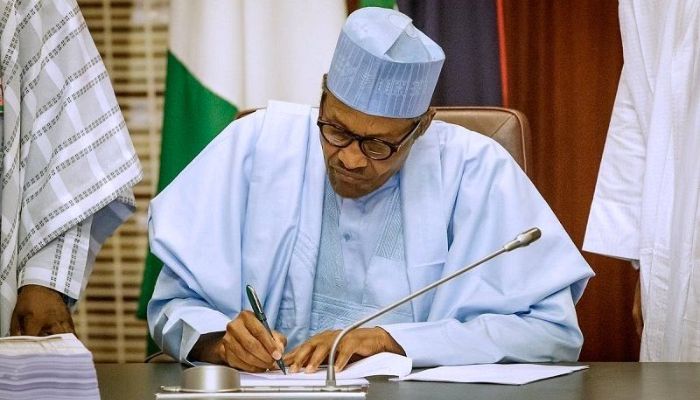
President Muhammadu Buhari has approved, with immediate effect, the appointment of Engineer Tukur Mohammed Lawal Funtua, as the new Managing Director of Nigeria Communications Satellite (NIGCOMSAT), following the retirement of the erstwhile Managing Director, Dr Abimbola Alale, after two terms of 10 years in office.

Engineer Tukur Mohammed Lawal Funtua, an indigene of Funtua Local Government Area of Katsina State, Northwest Nigeria, was born on 24th November 1966.

He holds a Bachelor’s Degree in Chemical Engineering, PGDM, MBA, a Professional Diploma in Education and a PhD in Environmental and Sustainable Development Management in view, at the University of Port Harcourt.

He was, before his appointment, Director, health community affairs, safety and environment with BUA Cement Plc, and served in various capacities, including Health and Safety Manager, Country HSE Manager and Regional Manager for Communications, Public Affairs and Sustainable Development at Lafarge Africa Plc and Group Head, Environment and Community Affairs at  Dangote Cement Plc among others.

Engineer Tukur, who has thirty years of professional experience in manufacturing, process engineering, health, production, safety and environmental management, communications and various other fields, is a Chartered Environmentalist at the Society for Environmental Toxicology and Pollution Mitigation, a Fellow of the Nigerian Society of Chemical Engineers, and the Professional Leadership Practitioners Institute.

He is a Registered Engineer with the Council for the Regulation of Engineering in Nigeria (COREN), a member of numerous professional bodies and institutes.

I know the problems affecting our police, armed forces—Buhari

By Muhammadu Sabiu

President Muhammadu Buhari has stated that improving the well-being of police and military personnel is a priority of his administration.

Buhari spoke at the Police Service Commission’s 2023 budget proposal on Thursday in Abuja.

The Nigerian president noted that reforms were a sacred obligation and that his administration gave top importance to the well-being of police officers.

The morale of the operators will be good, according to Buhari, if they are posted on duty or missions and they are aware that their families are well-cared for.

He was quoted as saying, “I am pretty aware of the problems and challenges confronting the Nigeria Police Force and the Armed Forces.

“The problem is relative to time and resources and this administration has done a lot with the limitations.”

Confusion as CBN does not know quantities of new naira notes

By Uzair Adam Imam

The Central Bank of Nigeria (CBN) says it does not know the quantities of the new naira notes it printed and released for circulation in the country.

The CBN Deputy Governor, Aisha Ahmad, made this disclosure when she appeared before the House of Representative on Thursday.

Ahmad, who represented the CBN Governor, Godwin Emefiele, was before the lawmakers to brief them on the apex bank’s cashless policy and cash withdrawal limits.

The Daily Reality gathered that the lawmakers had on Wednesday requested that Ahmad should appear before the House since Emefiele was outside the country for health issues.

Ahmad was asked by a lawmaker, Sada Soli, about the quantities of the new notes printed due reason to non-availability of the notes days after they were released to the public.

But Ahmad, while responding to his question, said she does not know the quantities of notes printed by the apex bank.

JUST IN: Okupe resigns position over money laundering charges

By Uzair Adam Imam

There has been tension in Labour Party (LP) as Dr. Doyin Okupe, the Director General of the party, resigned his position.

The Daily Reality gathered that Okupe resigned following his conviction over money laundering charges.

The disclosure was made Tuesday in a later Okupe wrote to Peter Obi, the Presidential Candidate of the party.

He argued that he had rather invested so much in the party’s campaign.Details later….

NDLEA seizes drugs, cash valued at N450 billion in 22 months

By Muhammadu Sabiu

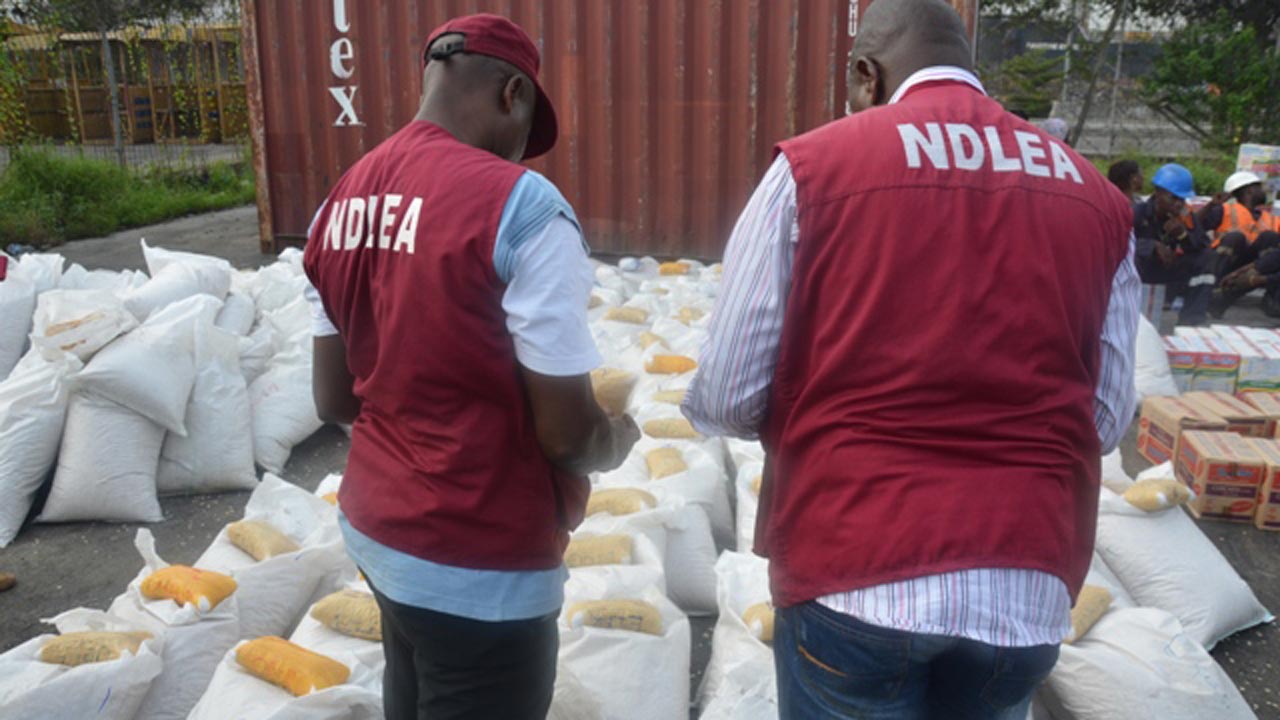
The National Drug Law Enforcement Agency (NDLEA) states that it has seized 100 million pills of the prescription painkiller Tramadol in just 22 months.

The agency estimated the combined value of the cash and illegal narcotics to be about N450 billion. In addition, the agency detained 29 drug lords, while detaining 23,907 drug traffickers.

Brig. Gen. Mohamed Buba Marwa (Retd), Chairman of the NDLEA, said this in a statement released on Tuesday through the Director of Media and Advocacy, Femi Babafemi.

Marwa said the confiscated Tramadol may have had a negative influence on the youth population and the nation’s productivity.

He said this during the Commands’ Awards/Commendations and Decoration of newly promoted officers at the Agency’s National Headquarters, Abuja.

Marwa said, “Within the period under review, the Agency arrested 23, 907 drug traffickers including 29 barons.

“Our seizure was over 5,500 tons or 5.5 million kilograms of assorted illicit drugs, which together with cash seized are worth over N450 billion.

“In the same period, we have taken the fight to the doorsteps of cannabis growers by destroying 772. 5 hectares of cannabis farms. In these 22 months, we have record convictions of 3, 434 offenders. We have equally made good strides in our drug demand reduction efforts where the number of those counselled and rehabilitated is 16, 114.

“The figures are mere statistics until you view them through the lens of human impact and the good or harm that could have come to society, the impact on public health, security as well as law and order if those dangerous drugs had gone to the street. Take, for instance, the one hundred million pills of tramadol seized in the past 22 months.

“If those pills had gone into circulation and ended up in the hands of young people, it would take a heavy toll on lives, families, productivity and, ultimately, the GDP of the country because it will affect these young people who are the engine room of productivity.

“We usually calculate our performance as monthly, quarterly or yearly appraisals. But drug law enforcement is generally a continuum, hence, I am wont to always appraise our efforts from January 2021, when we began far-reaching reforms, reviewed our strategies and rejigged the existing systems to accommodate innovations.

“From then till now, we have been on an upward trajectory. And indeed, what we have done in the last 22 months, from January 2021 to October 2022, based on the available statistics, is cause for celebration.”

MAYE seeks youth involvement in politics

By Ahmad Deedat Zakari

Nigeria Meaningful Adolescent and Youth Engagement Working Group (Naija MAYE) has called for the involvement of youths in politics and urged political parties to ensure health and development agenda in political parties manifestos in the country.

The call is an aftermath of a one-day summit organized by MAYE and held at Belmont Hotel in Abuja on Wednesday.

In a press statement signed by the Chairman of MAYE, Olympus Ade Banjo and other leaders of the group, the group charged the Nigeria political class to ensure the involvement of youths in politics and prioritize health and development in their party manifestos

The group also lamented the slow implementation of the Sustainable Development Goals (SDGs). They noted that many Nigerians are yet to experience the economic and political dividend of the SDGs.

At the end of the summit, Naija MAYE was quoted to have made the following suggestions:

1:- “Ensure inclusivity of youth health and development agenda in all 2023 party manifestoes blueprints, and campaign messages.


2:- Review the Basic Health Care Provision Fund (BHCPF) to recognize adolescent and youths as part of vulnerable population by improving access to quality youth friendly health care services.

3:- Adopt innovative and diverse approaches in financing social health insurance for young people taking into consideration that they are about 70 percent of Nigeria’s population and the high rate of unemployment which is about 40 percent.


4:- Ensure National Council on Health should approve reduction of age of independent access to sexual and reproductive health services including HIV testing from 18 to 14years.

5:- Ensure a comprehensive range of sexual and reproductive health services required by diverse groups of young people is integrated into training curriculums of healthcare providers at all levels of training
Ensure that policies supporting youth and female engagement in governance is actively implemented. Ordinary people should be given opportunity to serve from the local government to the Federal level.
Strengthen Micro Finance to give reduced interest rates to young people’s mini and small scale businesses.

6:- Create meaningful occupational counselling structures for young people in secondary schools and institutions.”