National

You can add some category description here.

Stop incessant falling of tankers and containers on Lagos roads – MURIC

  • News Desk

The Lagos State Chapter of the Muslim Rights Concern (MURIC) has bemoaned the death of seven innocent passengers who fell victim to a 20ft container which fell on a commercial minibus at Ojuelegba, Lagos on Sunday, January 29, 2023. The group urged the Lagos State Government (LASG) to formulate a sustainable and enforceable policy that will regulate the operation and movement of tankers and heavy-duty lorries on major roads.

The statement was signed by the chairman of the Lagos Chapter of MURIC, Dr Busari Muhammad Jamiu.

He said: On Sunday, 29th January 2023, a tragedy occurred in Lagos where seven (7) innocent lives were lost. According to the report, a  truck conveying a 20ft container fell on a commercial minibus at Ojuelegba and killed the occupants.

“We are sad that innocent lives are taken by heavy-duty lorries and fuel-laden tankers unabatedly on Lagos roads. The Ojuelegba incident, which happened two days ago, was not the first as Lagosians do witness myriads of tanker explosions and the falling of containers on innocent road users. We are asking the LASG when such calamities would be curtailed.

“It will be recalled that barely two weeks ago, one life was lost when a  diesel-laden tanker fell on a stationary towing van at Otto Wharf, along Apapa – Oshodi Expressway, Mile 2, in Lagos. This incident is just another example of innumerable calamities that Lagosians have experienced.  Are we safe again as road users? What are the authorities doing in curbing and averting the re-occurrence of these avoidable man-made tragedies?

To this end, MURIC urges LASG to formulate a sustainable policy that will regulate the operation and movement of tankers and heavy-duty lorries on our major roads. The enforcement of such policies has become overdue if they already exist.  

“This could be done in conjunction with all relevant authorities such as the Federal Road Safety Commission (FRSC), the Police, Lagos State Ministries of Transportation and  Justice, as well as the tankers’ owners and drivers associations.

“There must be a framework on how, where and when these trucks and lorries are loaded,  parked and moved around in Lagos to avert incessant loss of lives and properties of Lagosians. It is believed that a stitch in time saves nine. Therefore, LASG must not wait until such tragedy is recorded again before taking a proactive step. The time to act is now!”

Emeritus Professor I.H Umar passes on

By Kabiru Isma’il

The renowned Nigerian Professor of Physics, Ibrahim Khalil Umar, aka I.H. Umar, died a few hours ago today.

I.H Umar was a Nigerian scientist of repute, and he had once been a University administrator. Wikipedia sources described that he was a Vice Chancellor of Bayero University, Kano, Nigeria, from 1979 to 1986. He held a B.Sc. in Physics and Mathematics from Ahmadu Bello University, Zaria, Nigeria, an M.Sc. in Physics from Northern Illinois University, USA and a PhD in Physics at the University of East Anglia, United Kingdom. In 1976 he became the first Nigerian academic in Physics to teach at Bayero University, Kano. In 1978 he served on the national constitutional assembly that drafted the Constitution of the 2nd Republic.

Between 1994 and 1997, the late I.H. Umar served as a Sole Administrator of the Federal University of Technology, Minna.

He also represented Nigeria at the Executive Assembly of the World Energy Council in 1990. He was a member of the Nigerian delegation to the International Atomic Energy Agency (IAEA) General Conference from 1989 and was appointed Director-General of the Energy Commission of Nigeria in 1989. He served as Chairman of the Board of Governors of the IAEA from 2000-2001. In 2004 he was the Director of the Centre for Energy Research and Training, where the first Nigerian research nuclear reactor is located.

In 2007, he was on the international advisory committee for the international workshop on Renewable Energy for Sustainable Development in Africa, held at the University of Nigeria, Nsukka in Nigeria.

I.H Umar was among the first five Professors in Nigeria to attain the Chair of an Emeritus Professorship from Bayero University, Kano, Nigeria.

May the Almighty Allah have mercy on him, amin.

2023 elections: CDD trains journalists, media influencers on combating fake news

By Aisar Fagge

As part of the preventive measures, the Center for Democratic and Development (CDD) trained journalists and social media influencers on how to combat fake news ahead of the 2023 general elections.

The training Wednesday in Lagos was in collaboration with the National Endowment for Democracy (NED), a nonprofit organisation based in the United States of America.

Participants of the workshop, who are mostly journalists, influencers, media experts and members of Civil Society Organizations (CSOs), were drawn from different parts of the country in order to have a wider impact on the objective of the event.

The CDD Director, Idayat Hassan, stated that the participants were trained with vital skills on how to identify and prevent the propagation of fake, misleading and incendiary reports sent to them to share on their channels, handles and timelines.

The participants were also cautioned on the dangers of fake news and the implications of misinformation, and how the duo can terrorise the peace in Nigeria.

It was gathered that the training was given on how to use tools forensically, such as Geolocate, Google image search and Tineye, to detect fake videos, tweets, pictures and news.

Politicians use social media to spread fake news

The director also decried the way some politicians avoid media gatekeeping and use social media to spread fake narratives to the public, thus necessitating measures to address the issue.

She further said, “While the phenomenon of political players intentionally disseminating false information is well-known and discussed, the role of digital media influencers who are meant to be the bearers of truth and factual accuracy and in combating misinformation and disinformation has not received as much attention.”

There are many crises online

The CDD Communications Lead, Armsfree Ajanaku, said there are many crises online as people commit violence without consequence.

He stated, “Online gender-based violence exists within a context similar to what happens in real life, which is just as destructive as offline violence.

“We now live in a virtual society, where offline violence has extended to online, which makes it easier for people to commit violence without consequences.

“Women are the main targets of online violence, especially the ones with voices, like female politicians, service personnel, women’s rights activists, journalists, women leaders, etc. As it is globally, Nigeria faces a worse case due to our culturally sensitive environment,” he added.

In his presentation, Introduction to Fake News Ecosystems and Techniques of Spotting and Countering Fake News, CDD Project Manager, Abiodun Banjoko, noted that the 21st Century had seen the weaponisation of information on an unprecedented scale. According to him, disinformation, misinformation and malinformation are the greatest threats to the Information age, especially in a multi-ethnic and religious country like Nigeria. He, therefore, urged the participants to use the skills and knowledge they acquired in combating fake news in their endeavours.

Tinubu told me he has nothing to offer to North, says Naja’atu Muhammad

By Ahmad Deedat Zakari

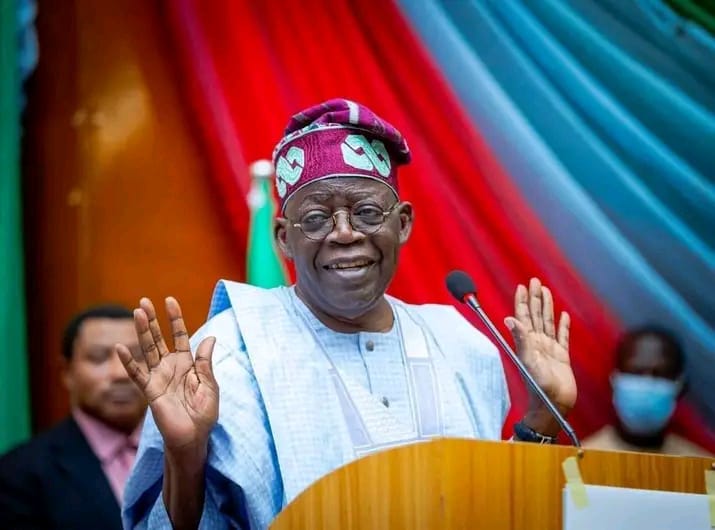
A former Director in the Presidential Campaign Council (PCC) of the ruling All Progressives Congress (APC), Hajia Naja’atu Muhammad has disclosed that Tinubu told her he has nothing to offer the North if elected Nigerian President.

Mrs Muhammad said that Tinubu told her he had no blueprint for tackling insecurity in the North during a meeting in London.

She disclosed this while giving reasons for her resignation from the APC and partisan politics.

On Arise Television’s programme, Morning Show, Naja’atu said: “I met with Tinubu in London and he told me “I don’t have a blueprint for tackling insecurity in the North; if I have I might be killed.”

“Having a blueprint for tackling insecurity in the North would mean I will be stepping on so many toes “

“He has been urging me to take the appointment and I refused.”

The Daily Reality had reported the resignation of Mrs Muhammad from the APC and Tinubu’s campaign team. She had resigned after claims that the APC lacks political ideology and is not any different from other political parties

However, Tinubu’s campaign team said she is incompetent and was fired for being a spy.

Kano-based lawyer drags CBN, Gov to court over currency swap deadline

By Muhammad Aminu

A Kano-based lawyer, Sanusi Umar Sadiq has dragged the Central Bank of Nigeria (CBN) alongside its governor, Godwin Emefele, to a Federal High Court in Kano over currency swap deadline of 31st January, 2023.

Barr Sadiq is asking the Court of his fundamental human rights in line with sections 44 and 46 of the 1999 Constitution, Article14 of the African Charter on Human and Peoples’ Right Act, Laws of the Feederation of Nigeria 2010 Order Rule 2 and 3 of the Fundamenmtal Rights Rule 2009.

He asked the Court to declare that the cessation of the existing N200, N500 and 1000 from being used as legal tender from 31st January 2023 as unlawful and unconstitutional.

The legal luminary contended that the arbitrary stoppage of the existing notes which are largely in circulation will cripple the econmony and further entrench poverty among Nigerians.

“An order of this Honorable Court enforcing the Fundamental Rights of the Applicant as enshrined under and guaranteed by the 1999 Constitution of the Federal Republic of Nigeria (As Altered) and the African Charter on Human and Peoples’ Rights (Ratification and Enforcement) Act Cap. A9, Laws of the Federation of Nigeria 2010.

“…that it is unlawful and unconstitutional for the Respondents to declare the existing N200, N500 and N1, 000 currency notes, which are currently largely in circulation, as no longer the legal tender of Nigeria by 31st January, 2023.

“…that the abrupt and arbitrary policy adopted by the Respondents to make the existing N200, N500 and N1, 000 currency notes that are widely in circulation now is a threat to national security and inimical to national interest as same will cripple the economy and throw many more innocent Nigerians into poverty.

“…this Honorable Court restraining the Respondents from making the existing N200, N500 and N1, 000 currency notes cease to be the legal tender in Nigeria by 31st January, 2023, which currency notes are the ones largely in circulation now, are the ones issued by the various commercial banks in the country, and are the ones dispensed by the various Automated Teller Machines (ATMs),” the originating motion states.

According to him, he wants the Court to compel the CBN and its governor “to follow and comply with the Global Best Standard Practices for changing currency whereby the old ones are gradually withdrawn from circulation by not releasing them to the public once they get deposited in banks within a reasonable time that shall not be less than six months.”

Barr Sadiq argued that the apex bank has not made adequate preparations or put in place appropriate measures to make the redesigned notes available to the public as the commercial banks across the country, both within the banking halls and via the Automated Teller Machines (ATMs) continue issuing and dispensing the currency notes intended to be replaced until few days to the deadline.

He urged the Court to restrain the Bank else “they will throw the country into an economic chaos and anomie.”

Refinery Commission: Dangote Group debunks rumour in circulation

By Aisar Fagge

There has been a remour in circulation that President Muhammadu Buhari will commission the Dangote Refinery during his visit to Lagos state.

However, the Management of Dangote Industries Limited debunked the widespread romour, noting that the information was entirely misleading.

The Chief of the Group, Anthony Chiejina, made this disclosure in a statement he signed and issued to journalists.

The statement reads; “Our attention has been drawn to some misleading reports regarding the commissioning of our Dangote Refinery during the present working visit of President Muhammadu Buhari GCFR to Lagos State.

“We want to state categorically that our 650,000 barrels per day (bpd) Refinery project was never part of the President’s programme on projects to be commissioned.

“For the record, the projects slated for commissioning in Lagos State by President Muhammadu Buhari GCFR include: Lekki Deep Sea Port; 32-Metric Tonnes Lagos Rice Mill, Imota; 18.75km Eleko to Epe T Junction Express road; John Randle Centre for Yoruba Culture and History, Onikan, Blue Line Rail (Phase 1) commissioning (Marina to Mile 2); Groundbreaking for the Blue Line Rail Phase 2 (Mile 2 to Okokomaiko), and MRS Lubricant, a private project in Apapa.

“However, our Refinery will be commissioned before President Muhammadu Buhari GCFR formally leaves office in May, 2023, and the public will be duly informed and invited to the epic event,” the statement concluded.

Senate asks CBN to extend old naira notes exchange deadline  

By Muhammad Sabiu

The Nigerian Senate has urged the Central Bank of Nigeria, CBN, to extend the window for exchanging old Naira bills from January 31 to May 31, 2023.
 
Sen. Sadiq Umar of the APC from Kwara North originally moved for an extension until July 31 because he was concerned about the apex bank’s insistence that there would be no such extension.
 
Recall that the CBN declared in October of last year that the old naira notes will no longer be accepted as legal money as of January 31.
 
However in December, the Senate approved a resolution asking the CBN to extend the deadline to June 30.
 
Umar introduced the motion, saying that the Senate had asked that the CBN extend the use of the old notes from January 31 to June 30, 2022, but the central bank had insisted on the January deadline.
 
Lamenting the situation, the lawmakers noted that there aren’t enough fresh naira notes in circulation.
 
He was quoted as saying: “Experiences around the world have shown that such abrupt decision if not controlled usually created chaos.
 
“The Senate should extend the use of the old notes to July 31,” he said.
 
Also lamenting is Sen. Biodun Olujimi (PDP-Ekiti) who urged the apex bank to “look away from the elections” after noting that 90% of people in her local government area have not even set their eyes on the new naira notes.

Advantages of foreign reserves: the case for Nigeria

By Aliyu Nuhu

Here is the use and advantages of foreign reserve currencies for nations that take their economy serious and have development and growth of their nations in mind.

First, countries use their foreign exchange reserves to keep the value of their currencies at a fixed rate. A good example is China, which pegs the value of its currency, the Yuan, to the dollar. When China stockpiles dollars, that raises its value when compared to the Yuan. That makes Chinese exports cheaper than American-made goods, increasing sales.

Second, those with a floating exchange rate system use reserves to keep the value of their currency lower than the dollar.

They do this for the same reasons as those with fixed rate systems. Even though Japan’s currency, the Yen, is a floating system, the Central Bank of Japan buys U.S. Treasuries to keep its value lower than the dollar. Like China, this keeps Japan’s exports relatively cheaper, boosting trade and economic growth.

A third, and critical, function is to maintain liquidity in case of an economic crisis. For example, a flood or volcano might temporarily suspend local exporters’ ability to produce goods. That cuts off their supply of foreign currency to pay for imports. In that case, the central bank can exchange its foreign currency for their local currency, allowing them to pay for and receive the imports.

Similarly, foreign investors will get spooked if a country has a war, military coup, or other blows to confidence. They withdraw their deposits from the country’s banks, creating a severe shortage in foreign currency. This pushes down the value of the local currency since fewer people want it. That makes imports more expensive, creating inflation. The central bank supplies foreign currency to keep markets steady. It also buys the local currency to support its value and prevent inflation. This reassures foreign investors, who return to the economy.

A fourth reason is to provide confidence. The central bank assures foreign investors that it is ready to take action to protect their investments. It will also prevent a sudden flight to safety and loss of capital for the country. In that way, a strong position in foreign currency reserves can prevent economic crises caused when an event triggers a flight to safety.

Fifth, reserves are always needed to make sure a country meets its external obligations. These include international payment obligations, including sovereign and commercial debts. They also include financing of imports and the ability to absorb any unexpected capital movements.

Sixth, some countries use their reserves to fund sectors, such as infrastructure. China, for instance, has used part of its forex reserves for recapitalizing some of its state-owned banks.

Seventh, most central banks want to boost returns without compromising safety. They know the best way to do that is to diversify their portfolios. That’s why they’ll often hold gold and other safe, interest-bearing investments. 

How much are enough reserves? 

At a minimum, countries have enough to pay for three to six months of imports. That prevents food shortages, for example. Another guideline is to have enough to cover the country’s debt payments and current account deficits for the next 12 months. In 2015, Greece was unable to do this. It then used its reserves with the IMF to make a debt payment to the European Central Bank.

If Nigeria had been a prudent nation we should be having $900bn as our foreign reserve by now, and according to world bank, a Naira will exchange Dollar one for one.

But look at us. We neither have robust national saving, nor an infrastructure to show for the money we earned. A wasted nation. Aliyu Nuhu is a renowned social commentator on African affairs. He writes from Abuja, Nigeria.

China’s poverty eradication campaign: lesson for Nigeria

By Muhammad Muzdaleefa

Being a student of diplomatic history, I have been following the poverty eradication campaign in China for years. It is a shame that Western media have decided to bash it as Chinese propaganda instead of looking at the take away lessons that can be applied globally with necessary adjustments for sustainable growth and development.

The way China has been going through this issue is very methodical and practical. They have a clear standard of living which they are working hard to ensure it is universally achieved. In other words, they create a world where everyone has a smooth path to realize their dreams and ensure no one is left behind. This is very different from the competitive capitalist system practiced in the West where everyone is obsessed with being ahead of the other.

The Chinese have used very simple ideas. These include the following;

  1. Housing – The Chinese model is ensuring everyone has adequate and decent housing. Those with poor housing have had their houses reconstructed or relocated to new houses.
  2. Income – The Chinese have ensured everyone has a sustained income source that elevates them above the poverty line. This has been through implementation of various income generating projects based on local needs and environment.

In one example, some farmlands where farming was ecologically harmful were turned into a forest. The former farmers were then employed as forest guards. Another example is where some villages were helped to establish solar power plants from which they earn incomes.

  1. Education – The Chinese model states that education is the best way to stop transmission of generational poverty. As a result they have implemented a system which has resulted in zero school dropout cases. Some 8 million youths who had dropped out of school at various levels have been taken through vocational training.
  2. Health – Unhealthy people can’t fight poverty. They are people who are consigned to poverty due to treatable health issues. China has worked to ensure affordable healthcare in order to ensure that no person falls back to poverty dues to illness. The response of the Chinese government sequel to the outbreak of Coronavirus pandemic was admired throughout the world.

To achieve the above the following foundational issues are critical;

  1. Household targeted poverty eradication – a census of poor people was conducted which identified every household defined as poor. This bottom up approach is key because you cannot eradicate poverty until every household has been lifted from poverty. The household is the epicentre of poverty.
  2. Planning and involving people – after the poor are identified, detailed planning is undertaken and the people are involved in coming up with solutions to eradicate poverty.
  3. Clear goals – the officials are expected to come up with practical goals and realistic timelines. In one case where officials had set lofty and unrealistic targets President Xi Jinping emphasized that for the battle against poverty to be won there should be no procrastination or impatience.
  4. Measurement and independent evaluation – countries that claim to have eradicated poverty have to apply for removal from a list of countries that still have people living in poverty. Such an application is followed by independent verification. Evaluators are sent to verify the claims and they are supposed to visit each household without being accompanied by the village officials. Countries that fail to pass the evaluation have to continue with poverty eradication work.

In conclusion, eradicating poverty is not rocket science. Simple, practical and realistic steps are needed. Most importantly, a visionary, selfless and committed leadership must be in place for this to work effectively. 2023 is a good opportunity for Nigerians to elect capable, dependable and reliable leaders that will not only address the critical needs of Nigerians but will put the country on the path of sustainable growth and development for the contemporary generation and posterity.

‘No more indecency on our campuses’: LASU bans indecent dressing 

By Muhammadu Sabiu 

The Lagos State University, LASU, has issued fifteen new guidelines for students’ on-campus dressing that are deemed inappropriate.

The university also instructs lecturers to make sure that no student is wearing inappropriate clothing when in class.

This was contained in a statement issued by Olaniyi Jeariogbe, the interim head of the Center for Information, who warns it is no longer condonable for the students’ continued disregard for its rules and regulations on the manner of dressing on campus. 

According to the statement, Prof. Ibiyemi Olatunji-Bello, Vice Chancellor, has notified the College Provost, Deans of Faculties, Heads of Departments, and faculty officials on both the main campus and satellite campuses to work together to implement the new dress codes.

The Institution’s list of fifteen indecent dress codes prohibits wearing transparent dresses, tattered clothing, “baggy,” “saggy,” “yansh,” “ass level,” and all other varieties of indecent trousers.

It also forbids wearing dirty jeans with holes or offensive subliminal messages.

Others include body piercing and tattoos, wearing necklaces and earrings by male students, wearing necklaces and nose rings by students, tight-fitting clothing, rolling sleeves or flying shirt collars, obnoxious or seductive writing, improperly buttoned dresses, shirts without buttons, completely covering faces (with very dark glasses), wearing face caps, and wearing necklaces and earrings.

The list of the banned dress codes also includes male students braiding, weaving, or glueing their hair or wearing distracting footwear like stiletto heels in the library and lecture halls. 

The rest include lousy footwear, untidy, vividly coloured eyelashes or eyebrows, highly fake or coloured artificial hair, artificial dreadlocks, and the extension of long fingernails or eyelashes.