National

You can add some category description here.

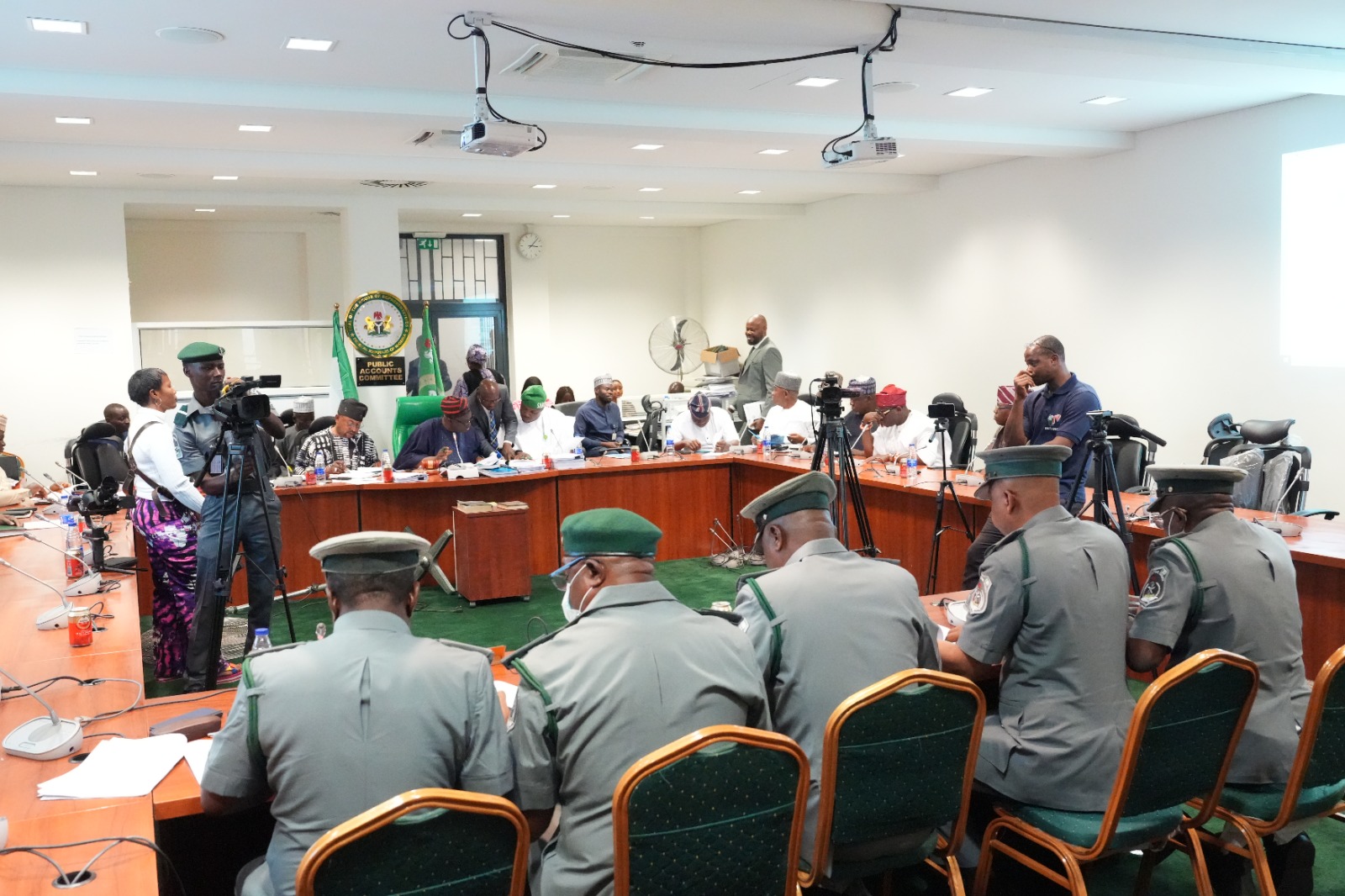
EFCC resurrects N772bn fraud cases against 13 Ex-governors, eyes billions more

By Sabiu Abdullahi 

The Economic and Financial Crimes Commission (EFCC) has dusted off long-dormant corruption cases against 13 former governors, with a staggering N772 billion hanging in the balance. 

This comes amidst investigations into an additional N81.6 billion allegedly looted from the Ministry of Humanitarian Affairs and Poverty Alleviation, revealing a renewed determination by the anti-graft agency to tackle high-profile financial crimes. 

Sources within the EFCC confirmed the agency’s renewed focus on these high-profile cases, some dating back over a decade. 

Among the ex-governors under scrutiny are prominent figures like Kayode Fayemi of Ekiti State, Ayo Fayose (also of Ekiti), Bello Matawalle (current Minister of State for Defence), and Chimaroke Nnamani of Enugu State. 

These cases involve a web of alleged financial misdeeds, including money laundering, fund diversion, and misappropriation of public funds. 

A senior EFCC official, who spoke on condition of anonymity, said, “I want to assure you that, as far as the commission is concerned, nobody is above the law. What the EFCC Chairman, Ola Olukoyede, has done since assuming office is that he has reviewed all the high-profile cases he inherited.”

The EFCC’s renewed drive extends beyond ex-governors. The agency is also investigating a separate $2.2 billion scandal involving individuals like former National Security Adviser Sambo Dasuki, the late media mogul Raymond Dokpesi, and ex-governor Attahiru Bafarawa. 

These individuals are accused of diverting and misappropriating funds meant for arms procurement during the fight against terrorism, raising concerns about national security and accountability. 

This aggressive anti-corruption push appears to be a marked shift under the new EFCC chairman, Abdulrasheed Bawa. Since taking office in 2021, Bawa has pledged to tackle corruption head-on, regardless of the individuals involved. 

The reopening of these high-profile cases is a potent signal of his intent, promising a potentially seismic shift in the fight against graft. 

Whether the EFCC can successfully navigate the legal complexities of these cases and secure convictions remains to be seen. 

However, the agency’s renewed focus on tackling high-level corruption offers a glimmer of hope for Nigerians yearning for accountability and a more transparent governance system. 

The coming months are likely to be pivotal, with close scrutiny on the progress of these investigations and the ultimate fate of the ex-governors and other individuals implicated in these multi-billion-naira scandals.

Tinubu appoints Ali Nuhu MD Nigerian Film Corporation

By Uzair Adam Imam

The appointment was disclosed in a statement Friday by the Special Adviser to the President ( Media & Publicity), Chief Ajuri Ngelale.

President Bola Tinubu has given his nod to the appointment of Ali Nuhu, aka the King of Kannywood, and ten other distinguished individuals to spearhead various agencies under the Federal Ministry of Art, Culture, and Creative Economy.

The appointments could be seen as a strategic move to foster growth and innovation in the arts, culture, and creative economy sector.

The recently appointed Chief Executive Officers are set to bring a fresh wave of leadership and expertise to their respective roles:

1. Tola Akerele: Takes the helm as the Director-General of the National Theatre.

2. Dr. Shaibu Husseini: Assumes the role of Director-General at the National Films and Censors Board.

3. Mr. Obi Asika: Appointed Director-General of the National Council for Arts and Culture.

4. Aisha Adamu Augie: Steps into the position of Director-General at the Centre for Black and African Arts and Culture.

5. Ekpolador-Ebi Koinyan: Appointed Chief Conservator of the National War Museum.

6. Ahmed Sodangi: Assumes the responsibility of Director-General at the National Gallery of Art.

7. Chaliya Shagaya: Takes on the role of Director-General at the National Institute of Archeology and Museums Studies.

8. Hajiya Khaltume Bulama Gana: Appointed Artistic Director of the National Troupe of Nigeria.

9. Otunba Biodun Ajiboye: Assumes the position of Director-General at the National Institute for Cultural Orientation.

10. Ali Nuhu: Takes charge as the Managing Director of the Nigerian Film Corporation.

11. Ramatu Abonbo Mohammed: Assumes the pivotal role of Director-General at the National Commission for Museums and Monuments.

Nigerian Army adopts new training to counter insecurity

By Uzair Adam Imam

The Nigerian Army has revealed ongoing efforts to revamp its training methods as part of a proactive strategy to curb the activities of insurgents, bandits, and other armed groups causing unrest in the country.

The Chief of Army Staff, Lt. Gen T. A. Lagbaja, conveyed this message through the Chief of Training, Army, Major Gen SG Mohammed, during a 5-Day Doctrine and Training Conference held at the Headquarters of the Training and Doctrine Command, Nigerian Army in Minna, Niger State.

Lt. Gen Lagbaja emphasized that the updated training approaches would specifically target contemporary security challenges within a Joint Environment.

He urged all commandants of Army Training Schools to actively engage in discussions at the conference and ensure the full implementation of the new strategies in their respective schools.

The Commander of Training and Doctrine Command, Nigerian Army, Maj. Gen. K. O. Aligbe, explained that the conference aimed to set an agenda for all Nigerian Army Schools and Divisional Training Schools.

The goal is to draw inspiration for courses and training activities throughout 2024 to effectively address the prevailing security challenges in the country.

Aligbe highlighted the importance of training, stating, “Without training, you cannot fight.” He emphasized the need for increased training to enhance operational effectiveness, ensuring that adversaries do not continue to threaten law-abiding citizens.

The conference will also focus on applying the Nigerian Army Doctrine 22 to enable effective training and operations, aligning with the goal of liberating the country from insecurity.

The commander acknowledged gaps in previous operations and stated that all training in 2024 would concentrate on addressing these gaps to achieve operational effectiveness.

Rampant culpable homicide in Kano: A case of confusion

By Salihi Adamu Takai

The case of culpable homicide has become a daily report case in Kano State. The crime is a rampant nuisance that disturbs the whole country today. This is horrible in a state like Kano, which is the most populous state in Nigeria.

The rampancy of the crime is not only confusing but also the human, physical, and emotional proximity of the parties that are involved in the commission of the crime. The case of the rampancy of the commission of the crime is abnormal considering how it has been in records in police stations and contained in many cases of laws.

Most of the reported culpable homicides in Kano show the relationship and social proximity of the parties involved in it. The accused persons of the reported cases had proximity to the dead persons. This started – (as I have noticed it) – from the Hanifa’s case. Hanifa was kidnapped and killed by her teacher. There was a human proximity between the dead person and the accused person.

The Chinese man who killed his girlfriend had human proximity to the dead person engaged in courtship, and he eventually killed her. The recent case of Hafsa is also a case that confuses lots of people in Kano. The accused person had proximity to the dead person, and she killed him. Yesterday, it was reported that a person raped and killed his sister in Kano.

Therefore, this rampant nuisance in the report of the cases of culpable homicide in Kano is not a mere thing of crime inconsistent with the Penal Code; it’s beyond human perspectives and avoidable. What a relationship that puts people into a dilemma! Son kills his mother, and mother kills her son!!

It’s a collective responsibility of the Kano State community to engage in the proper investigation of the causes of these crimes. Islamic scholars shall always deliver sermons to admonish people on such offences, and the life of the Prophet (SAW) shall be part of the sermon so Muslims can always remain in touch with it.

Mushroom Universities: Other Togo and Cotonou sisters

By Muhammad Sani Usman

It is not just in Togo or Cotonou; mushroom universities are widespread in Asia, especially in India, Thailand, Indonesia, Malaysia and even some parts of core Europe.

The incident with this Cotonou one-year degree made me curious to discuss the issue with a student in Germany. He told me about the presence of substandard schools even in Germany. If such universities can be found in Germany, I wonder, where is safe? Most often, our federal universities in Nigeria, in comparison, seem to offer a more reliable education.

The significance of university rankings becomes apparent, particularly in the West, during job hunting. Employers often emphasise the importance of your university’s ranking in their consideration for an interview.

That’s why you’ll see graduates from places like Sudan or Cyprus facing challenges in passing medical and dental council exams in Nigeria due to the issues associated with their questionable degrees and institutions.

The situation in India is the worst one, and our best Nigerian students are often directed to these quack private universities, which are not on the accreditation list globally.

You’ll be seeing celebrities flaunting their graduation pictures and certificates obtained from Cyprus private universities while we know they are here in Nigeria shooting “Izzar So” and whatnot. How and when they studied still remains a mystery to all.

While not intending to generalise, our thirst for foreign certificates poses these challenges. Until we go for the best, our education and leadership will go nowhere.

Our government did an excellent job on these Benin and Togo degrees/certificates, until a system is established to check and authenticate these universities, the proliferation of quack PhD holders, which can indeed be detrimental to our growth will surely be the order of the day. Investing in our own institutions and striving for excellence globally should be our main priority and concern.

Muhammad Sani Usman can be reached via muhdusman1999@gmail.com.

JUST IN: President Tinubu sacks FCCPC, BPE CEOs

By Sabiu Abdullahi

President Bola Tinubu has dismissed Mr Babatunde Irukera, Chief Executive Officer of the Federal Competition and Consumer Protection Commission (FCCPC), and Mr Alexander Ayoola Okoh, Director-General/CEO of the Bureau of Public Enterprises (BPE).

The move is part of a broader plan to restructure and revitalise critical agencies of the federal government. 

In a statement released on Monday by Ajuri Ngelale, the Special Adviser on Media and Publicity to the President, it was announced that the dismissed CEOs are instructed to hand over their duties to the next most senior officers in their respective agencies.

This transitional measure is in effect pending the appointment of new chief executive officers. 

The presidency affirmed that the removal of the chief executives takes immediate effect, signifying the swift implementation of President Tinubu’s directive.

The decision aligns with the government’s commitment to restructuring and repositioning key agencies, with a focus on safeguarding the rights of Nigerian consumers and fortifying the foundation for increased contributions to the nation’s economy by pivotal growth-enabling institutions. 

As the nation anticipates the appointment of new leadership for these agencies, the restructuring efforts shows some signs of the administration’s dedication to fostering efficiency.

JUST IN: Minister Edu suspended amidst allegations of financial irregularities

By Sabiu Abdullahi

President Bola Tinubu has suspended Dr. Betta Edu, the Minister of Humanitarian Affairs and Poverty Alleviation, in response to an ongoing investigation into allegations of financial irregularities. 

Previously announced by the Presidency, the investigation revolves around the transfer of N585.189 million by Minister Edu.

Bayo Onanuga, the President’s Special Adviser on Information and Strategy, assured the public that appropriate action would be taken pending the conclusion of the inquiry. 

The controversy unfolded as reports surfaced indicating that funds designated for vulnerable groups in Akwa Ibom, Cross River, Ogun, and Lagos states were diverted into a private account.

This revelation sparked widespread public outrage and fueled demands for Edu’s dismissal and subsequent prosecution. 

A leaked document bearing Edu’s signature detailed the direct disbursement of N585.189 million into the private account of Bridget Mojisola Oniyelu.

The veracity of this leaked document confirmed that the funds indeed found their way into Oniyelu’s account. 

Addressing the escalating situation, Edu, through her Special Assistant on Media and Publicity, Rasheed Zubair, stood firm, asserting that the payment strictly adhered to due process.

The suspension adds a new layer to the unfolding saga, raising further questions about the financial transactions under scrutiny.

Nigerians call for the sack of Betta Edu

By Ahmad Deedat Zakari

Following the allegations of corruption in the Ministry of Humanitarian Affairs and Poverty Alleviation, Nigerians on the micro blogging platform, X, are calling for the removal of its minister, Dr Betta Edu.

In a document which has now gone viral and purportedly signed by the minister, she wrote to the Office of the Accountant-General of the Federation and directed the disbursement of N585.189 million into one Bridget Mojisola Oniyelu’s private account.

The minister had made clarifications on the allegations, she explained in a statement released on Friday that the controversial payment followed due process.

However, many Nigerians are not convinced by her explanations and are demanding that President Tinubu should relieved her of her job.

According to Farooq Kperogi, the allegation presents an opportunity for the Tinubu government to do the right thing and not tolerate corruption like the previous administration.

“This is a momentous moment for Tinubu. If he does not fire Edu forthwith and bring her to justice, he has already lost the moral high ground to try Buhari’s corrupt honchos.”

A human right lawyer, Inibehe Effiong, said she ought to have resigned immediately.

“Has Betta Edu been interrogated by the EFCC yet? When is she tendering her resignation letter?” He wrote.

“If Betta Edu still has a job by tomorrow morning, then we will know that Bola Ahmed Tinubu is not ready to lead this country. You cannot be swift in suspending Halima Shehu while Edu Betta, who has suspicious academic records and serious allegations against her, still has a job. Suspend her now and allow @officialEFCC to invite her for interrogation” an X user, simply identified as Sarki, posted.

Thousands of Nigerians and civil rights organizations are calling for thorough investigation and her removal.

Beyond the essentials; leveraging personal growth for success

By Muhammad Muzzammil Bashir

While mastering essential skills and knowledge is crucial, true success today often hinges on going beyond the baseline and actively cultivating personal growth. It’s about unlocking your full potential and becoming the best version of yourself.

It’s common that in order to do your job effectively, you need to have the technical know-how, or more so, you need to earn a certificate and license in order to practice for professional careers. These are the essentials. The prerequisite for skill practice. They provided the foundation – the sturdy scaffolding upon which we built our lives. They equipped us with the knowledge and skills to navigate the complexities of the world and secure a foothold in the ever-churning tide of life.

In this constantly ever-changing world, with different definitions of success always emerging, from being prowess with hard work to earning academic accolades, or both, now to low-profile, nuanced skills that are embedded in our personal character, termed soft skills, personal growth skills, or more so abilities beyond the technical, that propel us toward success. The skills, degrees, and certificates we earn alone may not, by themselves, help us build the career path we aim to reach. We found ourselves in an era where the application of artificial intelligence is rampantly proliferating, where distance and space are no longer barriers, and where employers are looking for employees that have skills that show the warmth of empathy, active listening, imagination, time management, efficiency, and the spark of passion to ignite
self-discovery.

In his famous book, Skills Rather Than Just Degrees, Professor Isa Ali Pantami cited that the major unemployment challenges Nigeria faces are not, in part, the unavailability of jobs but rather, unemployability, where “positions cannot be filled because there are graduates and candidates without the requisite skills to take up such positions.” This is where personal growth steps in: having the dexterity to handle complex projects under pressure, to think critically outside the box, to prioritize tasks at hand, and to problem-solve effectively and efficiently. It’s about communication skills—the ability to organize your thoughts and communicate them in a clear, precise, and simple way without ambiguity while putting empathy and compassion into consideration. It’s about your interpersonal skills, how you relate to your peers, and your emotional intelligence—how you react to things that happen around you. Personal growth isn’t a linear path; it’s a winding journey punctuated by triumphs and stumbles, laughter and tears. It’s about embracing the detours—the unexpected turns that lead us to hidden treasures within ourselves. It’s about learning from our mistakes, not as failures but as stepping stones to a higher vantage point. Personal growth is about recognizing that the pursuit of knowledge is not confined to textbooks but blooms in the fertile ground of lived experiences. It’s the volunteer project that pulls us outside our comfort zones, revealing hidden depths of empathy and strength. It’s the heartbreak that cracks open our hearts, teaching us the profound dance of vulnerability and resilience.

In this era, what employers look for in candidates now is, mostly in part, what benefit you can bring to the table, how critical and quick you are in thinking and spotting opportunities, how open-minded you are in adapting to new ideas and environments, how broad-minded you are in project management, and how good you are in thinking about how those projects can be executed in a cheap and better way. So also, how analytical are you at predicting the future? Personal growth is about cultivating the habit of lifelong learning. A lifelong learning habit will give you an edge among your peers, make you important and relevant in your workplace, or give you a competitive edge in your business domain.

Great leaders, either in business or public organizations, tend to excel in their respective domains because they read books, update themselves regularly with the current trends in their domain, and choose to go out of their comfort zone to seek new knowledge and experience. You are better off succeeding at your job or business if you use your time to read books for personal and career growth that will change your thinking and broaden your imagination. You are better off succeeding if you use your time to learn soft skills from online learning platforms like Coursera, Udacity, Udemy, and LinkedIn online courses, among many others, to leverage the gap for the skills you lack that will give you a competitive advantage in your
domain or help you land a job in top-notch corporations. You are better off succeeding if you use your data subscription to watch Youtube videos, TedTalks, documentaries, and listen to postcards that will hone your skills, broaden your knowledge, and open your eyes to global trends in your career. You are better off succeeding if you can give yourself to volunteering and/or internships, especially at the beginning of your career, where you will have ample opportunity to gain lots of experience and mentorship and, at the same time, clinch a job whenever there is a vacancy in the organization or from a different organization through a referral from someone in the organization you are volunteering for.

You are better off succeeding if you seek out mentors that can offer valuable insights, shortcuts, and advice on navigating challenges you might face and share their expertise in your field, helping you develop new skills or refine existing ones and provide unbiased feedback on your work, performance and ideas. This can help you identify areas for improvement and make more informed decisions. Personal growth is a lifelong journey, not a destination. Embrace the process, enjoy the learning and witness how it transforms you into a more successful and fulfilled individual.

Muhammad Muzzammil Bashir can be reached via; mbashir199@yahoo.com

As bandits relocate to Taraba and the Plateau 

By Zayyad I. Muhammad

Recently, the media have been awash by the news of bandits’ attacks in Taraba and Plateau states. On November 24, 2023, it was reported that gunmen in their numbers attacked and killed 20 people in the Yangtu Development Area of the Ussa Local Government Area of Taraba State. In the early hours of Tuesday, December 19th, 2023, other gunmen attacked the Pupule community in Yoro Local Government Area of the same Taraba state, kidnapped Umaru Nyala, the chief of Yorro chiefdom, and also abducted 22 other people.

The Taraba State police command and other security operatives killed over 50 bandits terrorizing villages along the corridor of Bali Local Government Area on Tuesday, November 28th, 2023. On the other hand, on Wednesday, December 27, 2023, a group of bandits stormed the Gondon Maliki weekly market in Taraba State, kidnapped scores of people, and carted away food and wares using motorcycles.

The Sultan of Sokoto, Alhaji Sa’ad Abubakar III, while condemning the gruesome murder of over 100 people in the Plateau, said, “The bandits seem to be ahead of the government.”

To be fair to all the Nigerian security operatives, they’ve done an excellent job in the Northwest states of Zamfara, Kaduna and Katsina, in facing the menace of the bandits. These states have witnessed a visible improvement in security in areas being terrorized by the bandits, and the Abuja-Kaduna highway is secured while the Niger axis is a little bit silent.

It appears that the military onslaughts on the bandits and other terrorists have killed many of their leaders, and they have dispersed to the Northeast axis and some parts of the Plateau. Why did the bandits settle in these areas, especially the Northern parts of Taraba State – Yorro, Lau, Jalingo and Ardo Kola local government areas? Is it due to its topography, location or economy? Taraba State is among the poorest states in Nigeria but rich in agriculture and forestry. Probably the bandits found solace in Taraba due to its uniqueness in geography and agricultural activities. Furthermore, the Cameroonian mountains, which stretch almost to the entire Northern and Southern parts of Taraba, linking the state with the River Niger, will certainly provide a hiding place for criminals, bandits in particular.

The only way of this menace is for the state, federal and local communities to work together; collaboration is key to security management. For example, at its 8th and 9th meetings held in Maiduguri, the Borno State capital, on September 9th, 2023, and in Yola, the Adamawa State capital, on November 24th and 25th, 2023, the Northeast Governors’ Forum expressed its concern about the new dimension of the growing banditry in Bauchi, Gombe and Taraba states, and this may be as a result of the concerted efforts of the military on neutralizing the bandits from other parts of the country. The governors called on the federal government to intervene and promised to work with and support all security agencies.

Managing security in a vast country like Nigeria with inadequate modern technology for security management can be very difficult, and our security operatives cannot be everywhere and anywhere at the same time. So what is the solution?

The re-invigoration of the kinetic and non-kinetic security approaches by the Office of the National Security Adviser (ONSA) has resulted in many successes and breakthroughs; however, more intelligence gathering is needed; community engagement and direct communication with the bandits should be employed. In community engagement, the model being used by the Governor Ahmadu Umaru Fintiri-led Adamawa state government in tackling farmer-herder conflict should be adopted; the community should be made to feel part of the solution in security management, thus providing intelligence and also being a watchdog for security operatives without being endangered.

Secondly, the reported ongoing ‘soft approach’ should be sustained and, indirect communication with the bandits. Most of them now also use social media; thus, a kind of smooth operation should be launched by the ONSA and other relevant bodies to recruit people who speak the languages of bandits to send convincing messages to them on the ills, disadvantages and evils associated with their dangerous ‘trade’ while showing them the beauty and benefits being enjoyed by their ‘kind’ who adopt normal lives, go to school both western and religious, but still maintain their culture, beliefs and inherited legal trade.

Furthermore, radio and TV are also tools to reach the bandits, as satellite TV and solar power technology have now made it possible to watch or listen to the world, wherever one is – bandits, hiding in thick forests, use solar power and satellite technology to charge their phones, watch TV and listen to the radio. Above all, justice and fair play by those in power in providing the basics of life and alleviating poverty and ignorance away from these bandits will surely assist a lot in reforming them back to society.

Zayyad I. Muhammad writes from Abuja via zaymohd@yahoo.com.