National

You can add some category description here.

Calls over shoddy Hausa translations in Northern Nigeria

By Uzair Adam Imam

Translators, language experts, and advertising practitioners in Northern Nigeria are irritated by shoddy Hausa on billboards, TV and radio stations, with some calling for an end to the practice.

The role of translation is to communicate ideas and messages across the audience. However, as those concerned individuals opined, shoddy translation is doing the opposite.

Beyond the expert communities, poor translation, especially from English to Hausa, is generating outrages in many quarters, especially as native speakers of the Hausa language demand better translation of their language.

A report by The Daily Reality disclosed how the Three Crowns Milk, Taira, and Stanbic IBT, among others, came under attack over poorly translated advertisements from English to Hausa placed on their billboards.

Experts have associated the flagrant flaws of advertising agencies and personnel with unprofessionalism. They said that the practice has grown into a disease which has since been ravaging the translation business in Nigeria.

Authority to blame

There are outrages by the relevant authorities that feel very disappointed by the terrible things in the name translation that continue to unfold these days.

A lecturer at the Department of Nigerian Languages, Bayero University, Kano, Dr. Muhammad Sulaiman, described the situation as unfortunate.

He said the way some people bastardise the translation business, especially English-Hausa translation, despite making a fortune in the business is pathetic.

Dr. Muhammad said, “Some of these people mostly do not bother about such violations but rather the money they are tapping out from the business.

“Even though translation is a profitable business, its knowledge should be considered above the profit. If you don’t have the knowledge, learn it or allow people with the skill to do the business.”

Also, a Kano-based translator, Bello Sagir Imam, decried the menace of quack and unprofessional translation ravaging the translation business today in Nigeria as unfortunate.

Imam, the CEO of English Domain, a translation company, blamed the relevant stakeholders for merely lamenting the menace without taking bold action to address it.

He added that the lack of English-Hausa translation companies in the country exacerbates the menace.

He argued that the loopholes gave space to the quack companies and will continue to bring more and worse translators until the proper measures are taken.

Imam stated, “Failure of the Northern Nigerian relevant stakeholders is an easy and thriving business environment for the quack but well packaged and connected companies mainly based in Lagos and few others in Abuja, but amazingly not in Kano.

“For instance, in the North, with the entire daily complaining razzmatazz, there is no single English-Hausa-English translation company or one where such service is among their services.

“These loopholes birthed the quack companies and will continue to birth more and worse translators until the right measures are executed.”

We need support

Imam further lamented how the lack of support from relevant stakeholders discourages aspiring English-Hausa translators.

He said, “Most stakeholders do not help the aspiring English-Hausa translators despite being Hausa native speakers and linguists, Hausa or English graduates, simply because they don’t have a prior relationship with the helpers.

“For instance, if you are not their student, those in academia will not help you. The journalists will not help you if they don’t know you.

“I feel challenged as a relevant stakeholder to walk the talk, to mitigate the problems and inspire others to wake up from their deep sleep.”

What is the root cause of quack translation?

A communication scholar from the Mass Communication Department, Professor Mainasara Yakubu Kurfi, traced the root of quack translation, shedding light on the impact of a shoddy translation on advertising.

Professor Kurfi said, “If you look at what is happening in advertising industries, you can simply conclude that there is no professionalism – lack of professionalism in the sense that most of the advertising agencies and agents did not undergo practical formal education that will avail them the opportunity to understand what advertising is and what advertising is not, as well as understanding the techniques of advertising in appealing to the public without going into their religion, culture and even norms and practices.

“That is why you see several problems, particularly with billboards and adverts. I remember I did my master’s dissertation on billboards.

“Most of these translators, either from English to Hausa or Hausa to English, are not native speakers. They are generally from Lagos, probably Yoruba by tribe, and they do not really understand the nature of the language of reception – from English to Hausa or from Hausa to English.

“Some of the techniques that you consider in terms of translation they understand, they don’t have knowledge of that.

“Also, you find out that most of these translators are based in Lagos. They are not from Northern Nigeria. Therefore, they don’t understand the language itself.

“And we do not have many advertising agencies here in Kano that will now take cognisance of those traditions and norms. Therefore, it is not surprising to see this kind of problem.

Native speakers must key in the advertisement

Professor Kurfi said that to tame the menace of native speakers, in this sense, typical Hausa/Fulani must key into the advertisement business.

He said, “The only way forward is to allow our people to enter the advertising industry. I don’t know why our people, particularly typical Hausa Fulani, are running away from advertising. Let our people be into advertising.

“Let them understand the techniques and practice of advertising, the procedures, the rules and regulations governing advertising, in the print media, in the broadcast media, even on the online media platforms, as well as billboards and adverts.

“When they understand that, you discover these problems will undoubtedly be minimal. They will be contracted to translate from English to Hausa or From Hausa to English.

“Another way out is to let our people, particularly the graduates of mass communication, establish independent advertising agencies responsible for all this kind of advert placement in the media organisations. 

“But when our people are running away, the advertising agencies or the producers or manufacturers have no option but to contract the service of the people from the southern part of Nigeria – and this is why you see all these kinds of problems happening.”

It’s posing a serious challenge to us – APCON 

The President of the Advertising Practitioners of Northern Nigeria, Sammani Ishaq, lamented the rising number of cases of poor translation.

He said that Advertising Practitioners have been working to end the problem over the years.

Sammani Ishaq said shoddy Hausa translations usually affect the persuasive aspect known for advertising and that consumers patronise the product out of desperation, not because they are being persuaded.

He said, “This is a serious issue we have been trying to address over the years. In doing so, we held many meetings and organised different programs. We even formed a forum we named Advertising Practitioners of Northern Nigeria.

“The issue is beyond imagination because most advertisers are from the southern part of the country and are either Igbo or Yoruba. It was not for ten years that northerners started advertising businesses. And, up till now, the advertising agencies are not numbered to ten.

“And what they mostly do is to hire their friends from southern Kaduna, who do not fully understand the language, let alone translate it correctly, or people who have served or had been in the north for a while.

“For this reason, the translators are not even Hausa and don’t fully understand the language. So, they usually hire people from southern Kaduna or those who have served in the north for translation.

“And, sometimes, even in the north, people mostly hire Kannywood or Nollywood actors and actresses for advertising. These people are unprofessional and lack the basis of advertisement. Hence, people purchase products not because they are persuaded to but only because the product has become necessary for them to buy.

We will deal with unregistered advertising agencies

Sammani also threatened that any unregistered advertising agency caught would be dragged before the court to face the music.

He stated, “And for this reason, APCON provided a law signed by the former president of Nigeria, Muhammadu Buhari, before he left office on May 16, 2023. The law stated that any unregistered advertising practitioner caught practising advertising must be dealt with.”

Tinubu swears in 3 new ministers

 By Sabiu Abdullahi

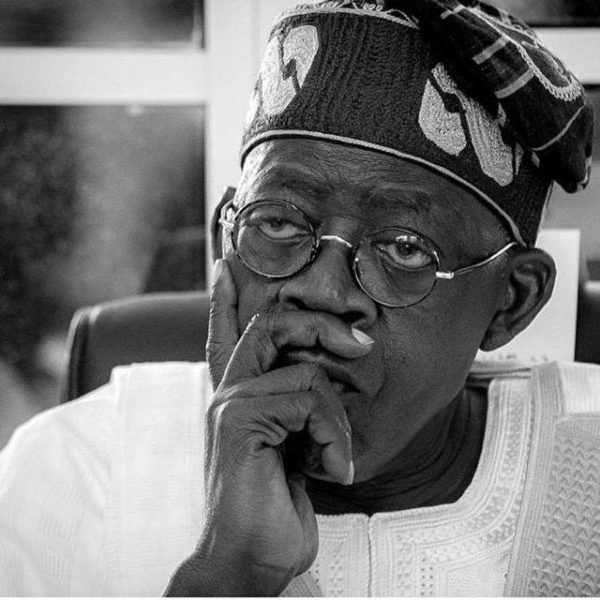
President Bola Tinubu is set to induct three new ministers into his 48-member cabinet today, marking the second Federal Executive Council (FEC) meeting since his May 29 inauguration.

Jamila Bio, Ayodele Olawande, and Balarabe Lawal from Kaduna State will assume key roles, emphasising the government’s commitment to strengthening its leadership.

The ceremony precedes the FEC meeting, symbolising a renewed focus on governance and policy-making under President Tinubu’s administration.  

Defending the Naira: A political perspective

By Ibrahim Isa Wada

When the current administration was advised by some economic experts to withdraw the subsidy on fuel and allow the Nigerian Naira to find its own value in the international arena, I got so much worried for fears of what would be the outcome. Being a nonexpert on economics, banking or finance, but only a bloody retired broadcast regulator with a fair understanding of day to day current issues, I decided to drop this piece and I hope it will be carefully considered by the experts. All I know is that, life is so hard for all of us since the Naira decided to take a flung and the fuel prices shoot up.

Sadly, some of the experts disappeared while others started to blame the past administration and/or their village people for making our lives so miserable.

Defending the value of the Naira amounts to defending the Tinubu/Kashim administration, and surely the interest of the Nigerian people.

How can any government, businesses or persons successfully plan and execute meaningful projects; how can Nigeria join economic groups, like the BRICS, with such a rickety currency?

I understand that the value of the Nigerian Naira is a function of her balance of trade. That is for the Naira to be strong and stable, the total value of goods and services Nigeria imports must be the same or less than the value of goods and services Nigeria exports over the period of time.

In the present circumstances, we tend to import almost everything including PMS, and even charcoal for smoking Shisha! While we export gold and dollars in cash etc, to safe havens. To be frank, any Nigerian leadership that wants to succeed must have a strong and stable Naira to begin with, which can be achieved by taking the following measures, among others:

1) Bring back the policy of Export Promotion and Import Substitution of the late 70’s.

This should be done with vigour. Any product that could be manufactured in Nigeria shall not be easily imported into the country, while all products that can be exported should receive a boost from the government.

There are means and ways to manuver around international trade politics, like the WTO, to achieve that.

2) Formalise all international transactions, including our transborder trade with ECOWAS and other African countries. Currently the Nigerian Central Bank serves as the unofficial African Central Bank, providing the foreign exchange requirements for many African countries that route their trade through Nigeria.

The trade formalization entails the systemic deployment of adequate personnel and infrastructure that would make international trade between Nigeria and other countries smooth, yet documented.

3) The CBN, Commercial Banks and Bureau De Change operations should have a joint universal forex transactions software that will ease, unify and speed up forex trading.

4) From 3 above, all foreign currency transfers including PTA above $250 must be in digital form.

5) Also from 3 above, the commercial banks and BDC Forex Operator window should capture a basket of about seven major foreign currencies that Nigeria transacts in, i.e Dollar, Yuan, Euro, Pound, CFA, Saudi Riyal and Dirham.

Therefore the BDC operators should have multiple currency accounts with their banks to receive and transfer funds in digital form.

6) The Nigerian government should be bold enough to block all foreign exchange leakages, in form of waivers and favours to individuals and institutions.

7) Develop key institutions targeted towards the elimination of Forex Guzzlers thus:

a) Establish more private universities to reduce students high foreign exchange remittances.

b) Establish more world class hospitals to save foreign exchange from medical tourism.

c) Establish companies for the local fabrication of low technology agricultural and industrial machinery to reduce foreign exchange outflow.

d) Fuel imports should stop at the shortest possible time, by developing more modular refineries, privatising existing ones and ensuring the early take up of the Dangote refinery.

8) In line with the Export Promotion and Import Substitution Strategy, invest heavily in agriculture to reduce food and dairy products import, as well as encourage the exports of cocoa, cashew nuts, sesame seeds, beef, etc.

This is my political perspective of the basic economic issue, because if the politicians fail to defend the value of the Naira and the poor, they will fail utterly in politics.

Ibrahim Isa Wada, writes from Kano, Nigeria. He can be reached via; ibrahimisawada@gmail.com

NCRRD aims to improve reading culture in Nigeria

By Muhammad Aliyu Gombe

The Centre for Reading, Research and Development (NCRRD) Bayero University Kano, Nigeria, has organized its Fourth National Conference on the promotion of reading culture among students and researchers. The event which took place at Ɗangote Business School, New Site, (BUK) was a 5 day even which included a Pre-Conference Workshop which aims at sensitizing the participants on the new methods of improving teaching especially from the basic level. The theme of the conference reads ‘Children’s Books and The Teaching of Early Grade Reading in Nigeria.’

The Director of the Centre Professor Talatu Musa Garba, during her speech, says that, as part of the mandate, of the Centre, it “had instituted the annual conference in 2019 to provide a platform for teachers, researchers and other educationists to share ideas on the best practices for the promotion of teaching of reading in Nigeria.” The Director, together with the Vice Chancellor of the University, Professor Sagir Adamu Abbas, commissioned the Centre’s resource room which is named Rebecca Rhodes Resource Room. The room has a modest collection of books and e-resources. It is open to researchers, teachers and students as a reference library.

It has been noted by various participants during the occasion that reading culture is past dying not only in Nigeria but across the globe. There is a huge need to revive it through practical methodologies which will guarantee and assist young readers to be taken right from the tender age.

Some of the participants, especially students and other invited guests, showed their appreciation and happiness with these gigantic efforts which the center is putting to revive reading culture in Nigeria.

Mohbad: Police declare Primeboy wanted, offer ₦1m for helpful info 

By Abdurrahman Muhammad

Following his failure to honour the police invitation successfully sent to him since the commencement of investigation into the circumstances leading to the death of Mr Ilerioluwa Aloba, aka Mohbad, the Lagos State Police Command, via its PRO, SP Benjamin Hundeyin, now declares wanted Owodunni Ibrahim aka Primeboy.

Ibrahim is approximately 1.64-m tall, dark-complexioned, with tribal marks and Yoruba by tribe. His last known address is 3rd Power, Oke Eletu, Ikorodu.

If seen, contact the nearest police station or call 0803 688 5727. The Commissioner of Police, Lagos State Command, CP Idowu Owohunwa, hereby offers a handsome reward of N1,000,000 (One Million Naira Only) to anyone with useful information leading to his arrest.

Kano Cancer Centre establishes Trust Fund to ease access to treatment

By Uzair Adam Imam

The Kano State Cancer Center has disclosed plan to establish Cancer Care Trust Fund to help the vulnerable indegene patients in the state with the cost of their health treatments.

The co-odinator of the Center, Dr. Aminu Magashi, stated this on Monday in a Facebook post sighted by The Daily Reality.

Magashi said the effort was in collaboration with some international development partners, NGOs and business community among others.

He added that it was also part of their plans to set up a Cancer Registry/Directory in collaboration with the Kano State Bureau of Statistics.

He further stated that also distinguished health committee members tasked them to establish the governing board and open the centre soon as well as be updating.

In the post, Magashi said, “In my humble capacity as the Coordinator of the Kano State Cancer Care Center, today, Tuesday 3rd October, I received in my office a powerful delegation of the Kano State House of Assembly Health Committee led by Hon. Zakariyya Alhassan Ishaq, Chairman Health Committee, Hon. Usman Abubakar Tasiu, Deputy Chair and other esteemed members of the committee and Clarks.

“It was a familiarisation visit. With me is our Legal Adviser/Secretary, Barrister Maryam Jibrin, from the Ministry of Justice.

“We updated them on our plans to commence work at the Cancer Centre with our ‘PPP’ partner H360 as well as our intention to establish the Cancer Care Trust Fund in collaboration with our international development partners, NGOs and business community to cater for indigent patients/vulnerable people’s cost of treatment, set up of Cancer Registry/Directory in collaboration with Kano State Bureau of Statistics.

“Distinguished health committee members tasked us to establish the governing board and open the centre soon as well as be updating,” he added.

As observed by The Daily Reality, many people who commented under the post have expressed their gratitude and prayed for the centre to succeed.

Tinubu names El-Rufa’i replacement

By Ahmad Deedat Zakari

President Bola Ahmad Tinubu yesterday, named Balarabe Abbas Lawal from Kaduna State as minister-nominee to replace former governor Nasir el-Rufai, who was rejected by the Senate in August.

This replacement was communicated through a letter read by the Senate President, GodsWill Akpabio, during the plenary session on Tuesday.

Balarabe’s nomination was announced alongside Dr. Jamila Ibrahaim and Ayodele Olawande, who were nominated by the President for the roles of Minister of Youths and Minister of State for Youths, respectively.

In August, El-Rufai’s name was conspicuously absent from the confirmed list of ministerial nominees presented to the Senate.

During the screening process, which took place about a month ago, the Senate approved and confirmed a total of 45 out of the 48 nominees sent by President Bola Tinubu.

Several petitions, including those from Senator Sunday Karimi (APC, Kogi West), were presented against the former governor during the screening.

Senator Sunday Karimi, representing Kogi West, voiced his opposition to the former Kaduna State governor during the ministerial screening.

Kano’s Abdulmalik emerges winner of 2023 Historian Competition

By Uzair Adam Imam

An indegine of Kano, Abdulmalik Abubakar has emerged winner of the 2023 Historian Competition.

Abdulmalik Abubakar parted with a sum of N500,000 prize and a week-long trip to Kenya for tourism.

The competition was sponsored by the Restored Heart Foundation based in Abuja to inspire young undergradute students in Nigeria and Africa about the value of African history.

Isa is law student from Bayero University, Kano (BUK) and his victory surprised many people including the participants who were mostly history students.

Upon his success, Isa engraved his name in the history of Nigeria and Africa and was crowned 2023 “Keeper of the African History.”

I struggle with taugh history questions

Isa recounted how he had struggled with toughest history questions before he could defeat other history students and emerged victorious.

He added that most of the questions he answered at the inter-regional stage were not about Nigeria.

He stated that he was initially afriaid, adding that, “My fears were that I am not a student of History and all the questions were questions that digged deep into history.

“Like at the inter-regional stage moving to the top 6, I was never asked a single question about Nigeria, my first question was “What was the first country to get independence from East Africa ?” Likewise all the other questions were outside Nigeria totally.

How I knock down a history student at the final stage

“My emergence is an amazing one, because my opponent is a final year student of History at UNILORIN, but despite being a Law student I dedicated my time to read wide and trained well to see I emerge winner, which God makes it happened.

“When we reached quoter-final to be the top six moving to Calabar, I was the only Muslim hausa-fulani from North, and they required each to wear his native attire, I felt like I would be redicule there because some of our leaders were not friendly with the southerners.

“And, also I was given a topic completely different from my field of study which was “Nigeria’s oil boom and resources curse”.

“However, God granted me the wisdom and strength to deliver a marvelous presentation which received huge rounds of applause from all over the auditorium.

I grab this opportunity when surfing on social media

Isa stated that he was surfing online media platforms as usual, then he came across the link of the competition.

He added that the competition was both online and physical and he was among the 3,000 applicants who were invited for a screening.

He said, “It started with about 3k applicants where we were screened down to 800 then to further stages that included the top 100, then we got to be the top 30 (5 participants representing the 6 zones of the federation).

“We then got to compete at the intra-regional stage, where only 2 participants qualified from each of the 6 geo-political zone to be among the top 12.

“After I emerged among the top 12. We then had our inter-regional stage, I competed aginst one lady from South-east, I knocked her out to be among the top 6.

“As top 6, we moved to quoter-final stage at the University of Calabar for Presentation stage, were I passed the stage and became among the top 4.

“As top 4, we then moved to semi-final in enugu, but IPOB’s sit at home order made them to reschedule it to Bayero University for the semi-final stage, which was a debate stage, where l defeated my opponent from Southwest at the debate stage in BUK and qualified to be the finalist, who were the top 2 for the final stage.

“We yesterday had the Grand-finale at the Nile University Abuja where I defeated my opponent from North-Central (UNILORIN) to be the Winner as well as the “Crowned Keeper of African History 2023”

Reward for excellence

Hardworking pays as Isa emerged winner with the following prizes:

  1. Cash prize of 500,000.
  2. I week trip to Kenya for tourism
  3. Crown Keeper of the African History 2023.
  4. One year free data subscription package.
  5. Ambassadorship.
  6. Special guest to be invited to the grand final next year.

Words of wisdom, encouragement

“I want to encourage my fellow students to read wide and also outside their field of study, every knowledge is valuable. I never thought history could be my eye opener and way to be outside Nigeria.

“But my passion to read History and commitment to other areas of knowledge has given me all these advantages.

I made it despite tight schedules

“I want to tell my fellow students that as at now, I’m the President of Law Students’ Association of Nigeria (LAWSAN) BUK Chapter and a final year Law student with project and all that, and also the President Kaura Goje Students’ Association (KAGSA) and so many other several students’ engagements, but that does not forestall me from excelling in other fields of endeavors.

“So just be determined and confident, God will assist you to achieve your dreams,” he stated.

Labour suspends nationwide strike as government agrees to key demands

By Sabiu Abdullahi 

The organised labour movement in Nigeria has opted to suspend the impending nationwide strike scheduled for October 3, 2023.

Following a crucial meeting chaired by Femi Gbajabiamila, Chief of Staff to President Bola Tinubu, both labour unions and the Federal Government reached an agreement. 

According to the joint communiqué, the Federal Government acceded to the demand for a wage award of N35,000 (thirty-five thousand Naira) for all Federal Government workers, effective in September.

This decision aims to offer immediate relief to the workers amidst the prevailing economic challenges.

Moreover, the Minister of Labour and Employment has been entrusted with resolving the issue of withheld salaries for university staff in federally owned educational institutions. 

The suspension of the strike signifies a temporary pause, allowing for a 30-day respite.

This period is expected to facilitate further discussions and engagements between the concerned parties, marking a positive step towards resolving the longstanding issues faced by the Nigerian workforce.

FG to meet labour again as yesterday’s meeting ended in deadlock

By Uzair Adam Imam 

The Federal Government will meet with the leadership of the organised labour movement today, as yesterday’s meeting to prevent the planned nationwide strike did not yield any fruitful results. 

It was gathered that the Nigeria Labour Congress (NLC) and the Trade Union Congress of Nigeria (TUC) rejected the federal government’s offers. 

They said they had also rejected the N25,000 provisional wage award for low-grade workers to cushion the effect of the removal of the petrol subsidy. 

Recall that President Tinubu, in his nationwide broadcast on the occasion of Nigeria’s 63rd Independence Anniversary, said the provisional wage was a result of talks with labour and other stakeholders in the country. 

He stated, “Based on our talks with labour, business and other stakeholders, we are introducing a provisional wage increment to enhance the federal minimum wage without causing undue inflation. ‘

’For the next six months, the average low-grade worker shall receive an additional Twenty-Five Thousand naira per month. 

“Commencing this month, the social safety net is being extended through the expansion of cash transfer programmes to an additional 15 million vulnerable households,” he added. 

However, labour insisted that the provisional wage increase should be for all workers, pending the enactment of a new Minimum Wage Act next year, and must not be limited to only six months. 

The labour leaders equally insisted that the conditional cash transfer for the poorest and most vulnerable people should be increased to N25,000 for 15 million vulnerable Nigerians, against the N5,000 the previous administration was paying. 

After many hours of horse-trading, the Chief of Staff, Femi Gbajabiamila, who is leading the government’s delegation, broke the meeting for the government team to consult with the President on the new demands. 

Other issues raised by the NLC and TUC leaders included tax rebates for low-income earners, the removal of value-added tax (VAT) on diesel for the next six months, and the provision of compressed natural gas (CNG) and buses within the next two months.