National

You can add some category description here.

NLC acknowledges economic realities, withdraws N200k minimum wage proposal

By Sabiu Abdullahi

The Nigerian Labour Congress (NLC), in response to the current economic challenges facing Nigeria, has reevaluated its stance on the proposed N200,000 minimum wage. 

The National Vice President of the NLC, Tommy Etim, clarified that the earlier proposed amount is no longer realistic, given the prevailing economic conditions in the country. 

Etim’s statement comes in the wake of the inauguration of the Minimum Wage Committee by Vice President Kashim Shettima on Tuesday.

The NLC had initially proposed the N200,000 minimum wage when economic challenges were less severe. 

According to Etim, the socio-economic landscape has significantly worsened since the N200,000 proposal, with the exchange rate and the devaluation of the naira playing crucial roles in the reconsideration.

He highlighted that the original proposal is no longer tenable, noting the need for a flexible approach in determining the new minimum wage. 

Etim stated, “We are not going there with a fixed amount, but definitely not N200,000. By the time we get there, we will decide based on the socio-economic situation. That’s what we are going to base our national minimum wage discussion and negotiation on.” 

The NLC’s acknowledgment of the evolving economic realities signals a pragmatic approach to the forthcoming discussions and negotiations regarding the national minimum wage.

Customs boss vows transparency, collaboration with PAC

By Sabiu Abdullahi 

The Comptroller General of Customs (CGC), Bashir Adewale Adeniyi MFR, pledged collaboration with the House of Representatives Public Accounts Committee (PAC) during an appearance on Tuesday, January 30, 2024, in Abuja. 

Addressing the committee, CGC Adeniyi highlighted the Nigeria Customs Service’s (NCS) longstanding use of integrated technology for revenue collection, involving over 20 commercial banks in a process spanning more than two decades. 

He noted the contractual agreements with these banks, granting access to a technology platform facilitating seamless payments, directly remitted to the federation accounts. 

Promising a commitment to transparency, CGC Adeniyi expressed readiness to collaborate closely with the Committee, stating, “Compliance is something we take seriously, and we will ensure that if there are any grey areas that need our service to foster efficiency, I am happy to mention that my team and I are prepared and will, in the most transparent manner, present statements to the committee.” 

Chairman of the Public Accounts Committee (PAC), Bamidele Salami, offered advice to NCS, urging the consistent provision of audited statements of accounts and adherence to all legal requirements.

The collaborative effort between the Customs and the Public Accounts Committee signifies a dedication to transparency and accountability in financial matters within the Nigeria Customs Service.

Nigeria Customs enhances trade facilitation with WCO-Led PCA, AEO Diagnostic Mission 

By Sabiu Abdullahi

The Comptroller-General of the Nigeria Customs Service (NCS), Bashir Adewale Adeniyi MFR, in a bid to fortify customs processes and mitigate risks, inaugurated a World Customs Organisation (WCO)-led Post Clearance Audit (PCA) and Authorised Economic Operators (AEO) Diagnostic Mission on Monday, January 29, 2024. 

This is contained in a statement released and made available to journalists Tuesday by the spokesperson of the Nigeria Customs Service, Abdullahi Aliyu Maiwadah.

According to Maiwadah, during a two-week retreat at the Wells Carlton Hotel Conference Room in Abuja, CGC Adeniyi outlined the NCS’s commitment to efficient supply chains and meticulous post-clearance audits.

The focus is on enabling Small and Medium Enterprises (SMEs) to qualify for AEO status through tailored training, support, and incentives. 

The initiative aligns with broader goals of inclusive growth, job creation, and poverty alleviation, ensuring societal segments benefit from trade facilitation and economic development opportunities.

The mission specifically addresses entry barriers for SMEs, considering Nigeria’s strategic position in the global trade framework and its role in the African Continental Free Trade Area (AfCFTA). 

CGC Adeniyi stressed the significance of PCA and AEO in the successful implementation of AfCFTA, citing their role in refining customs procedures, strengthening compliance mechanisms, and promoting transparency for regional integration and economic progress in Africa. 

Expressing gratitude to the World Customs Organisation and acknowledging the collaboration with stakeholders, including the WCO-led PCA, IMF, World Bank, and AEO Diagnostic Mission, CGC Adeniyi highlighted the dedication and expertise driving the initiative. 

The Deputy Comptroller-General of Customs (DCG), Abdullahi Musa, welcomed participants, noting Nigeria’s standing as a hub for trade and investment. DCG Musa underscored the mission’s aim to enhance compliance mechanisms, facilitate trade, and contribute to broader WCO objectives for global border security and sustainable economic development. 

DCG Musa extended appreciation to the World Bank Group and the International Monetary Fund for their support, displaying the dedication and expertise of all stakeholders involved in the two-week programme aimed at accelerating trade facilitation within the Nigeria Customs Service.

Dollar-Naira exchange rate and the life of Nigerian civil servants 

By Ismail Namadi 

In 2014, $1 was equivalent to ₦200. At that time, one bag of 50kg rice was around ₦8,000 ($40), and the minimum wage was N18,000 ($90). 

Comparably, in January 2024 (10 years apart), $1 is around ₦1,500. The Minimum wage is ₦30,000. A simple calculation is 18000/200 = $90; 30,000/1,500 = $20.

What does this simple calculation mean? In real terms, over the past ten years, despite the increase in the minimum wage from ₦18,000 to ₦30,000 per month, purchasing power has decreased by over 75%.

However, in 2014, the PMS pump price per litre was 87 Naira, while the current price in 2024 is ₦700 per litre. 

The Nigerian budget in 2014 was ₦4.962 trillion, while in 2024, the budget is ₦28.77 trillion. These variables are paramount when considering minimum wage simply because they directly affect the lives of people in the country. 

For example, the federal government removed the subsidy on petroleum products, which led to a skyrocketing price of general goods and services, making the lives of citizens, especially low-income earners, difficult to manage.

In addition, the dollar plays a significant role in our economy because we depend on foreign importation for consumable goods. The dollar is the only legal tender that we use to patronize foreign goods.

My advice to the federal government is that when it decides to review the minimum wage, it should consider the purchasing power of the naira so that the standard of living of Nigerian workers is improved.

Ismail Namadi wrote from Paderborn, Germany, via Ismailnamadi2006@gmail.com. 

Tinubu turns over a new leaf on anti-corruption stand

By Tajuddeen Ahmad Tijjani

It’s a new down in the history of the new administration of President Bola Ahmed Tinubu, who took over barely six months from May 29, 2023, till date. However, his administration has been awash with many debacles, ranging from bruises in the economic turbulence and pervasive insecurity to dividing citizens along religious and cultural differences. However, the latest is the alleged misappropriation of N585 million in the Ministry of Humanitarian Affairs and Poverty Alleviation, led by the former National Woman Leader of his party, the All Progressive Congress (APC).

It is in the public domain that the ministry and the NSIP have been mired in a controversy as the President recently suspended Halima Shehu as National Coordinator and CEO of the National Social Investment Programme Agency over an alleged financial misappropriation to the tune of N44 billion.

However, concerned Nigerians with an ear to the ground alleged a rivalry between the former minister’s camp and the suspended minister’s camp, who vows that “I won’t go alone; you exposed me; I will expose your conspiracy too”. However, in my perspective, if that’s the case, then it’s, after all, a welcome development for the general populace and for the system to be, of course, cleaned up.

In light of the recent events, the President’s and his administration’s integrity have been tested to see what action or inaction the President would take to send a strong message to his cabinet members and all other appointees that it is not business as usual. Would his avowed commitment to uphold the highest standards of integrity, transparency and accountability in the management of the Commonwealth of Nigerians be protected?

On the other hand, would every appointee be treated equally, no matter how close that person is to the corridors of power? Of course, the President, who has the mandate of all Nigerians, has not yet disappointed the general populace by suspending those involved in the allegations and ordering a thorough investigation into all aspects of the financial transactions of the ministry.

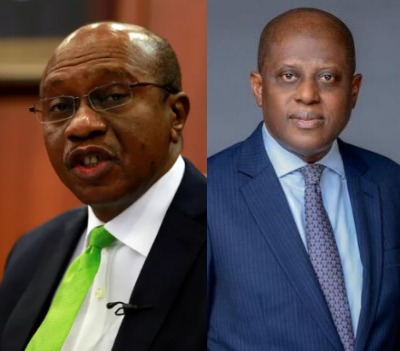
The President’s directives have raised hope in Nigerians that it won’t be business as usual, where looters’ cases are swept under the rug. We can boldly say that the last administration’s anti-corruption campaign was ineffective. For instance, in the case of the suspended CBN governor, whose committee was constituted by the former President, its findings fell on deaf ears as if nothing had happened; however, revelations afterwards shocked everyone interested in the well-being of the country’s socio-economic development.

If you look at governance in general, we need to change our approach. The simple fact is that corruption has stagnated the well-being and progress of this country. I feel the only viable way to address these corruption issues is to have a revolutionary transformation of society and improve the context of governance within the framework in which our governance system is predicated. We have to call a spade by its name. Until communities stop celebrating looters and negate the notion that our tribesmen or kinsmen are being witch-hunted, then we wholeheartedly support the government in its bid to eradicate corruption in the system, to which, of course, we will be the major beneficiaries.

Nigerians have a keen interest in every decision the President takes or intends to make regarding the overall interest of the lives of the general population. Certainly, the success of the fight against corruption is intricately tied to the actions of the key actors, not solely reliant on the outpouring of condemnation. The public is the major stockholder in holding the government accountable.

Suppose Tinubu turns over a new leaf in his efforts to stamp out corruption. In that case, Nigerians will stand tall to support his action and term him a foremost man fighting the menace confronting humanity, which retards Nigeria’s development. Despite his stand on the issue, Nigerians must never relent until the fight goes off to a spectacular success.

Honestly, anything short of that can’t be tolerated or accepted, even though it’s early in the day of the new government; there is no excuse. Since they swore to protect the lives and properties of Nigerians, turn our misfortune into fortune, transform our dilapidated infrastructure, and revive our economy, we can put them on the radar to see how they disengage us from all logjam.

I invite all Nigerians to join the challenge of fighting corruption in all its ramifications. After all, the war against corruption can only be decisively won if we all come on board to shun away and expose all corruption within our worldview. I commend his efforts in the recent events, and it’s indeed a patriotic call to support his move for the benefit and betterment of our country.

Tajuddeen Ahmad Tijjani writes from Galadima Mahmoud Street, Kasuwar Kaji Azare, Bauchi State.

Customs CG outlines strategies for achieving 2024 revenue target

By Sabiu Abdullahi 

Comptroller-General of Customs (CGC) Bashir Adewale Adeniyi MFR, in a comprehensive presentation at the Revenue Mobilisation and Fiscal Commission (RMFC) office in Abuja on Wednesday, January 24, 2024, shed light on the Nigeria Customs Service’s initiatives to boost revenue generation and fiscal efficiency. 

CGC Adeniyi stressed the importance of collaboration and trust-building with government agencies to meet shared objectives.

Seeking support from the commission and other entities, he highlighted the strides made since his 2023 appointment in revenue recovery and combating potential leakages. 

Acknowledging legal provisions for certain agencies at the port, CGC Adeniyi assured that the NCS is actively collaborating to streamline processes without impeding trade facilitation. 

He affirmed the collective responsibility to achieve the ambitious 5.1 trillion naira revenue target. 

The CGC also announced a Time Release Study in collaboration with the World Customs Organization (WCO) to scientifically evaluate cargo clearing processes at the port. 

Moreover, he unveiled plans for a revenue recovery exercise initiated in 2023, which successfully retrieved over 17 billion naira within four months. He assured the implementation of lessons learned in 2024, particularly strengthening the Post Clearance Audit (PCA) Unit. 

Assistant Comptroller-General of Customs in charge of Tariff and Trade, Caroline Niagwan, addressed challenges contributing to the 2023 shortfall.

Chief Superintendent of Customs (CSC) Ekanem Asuquo detailed NCS’s core functions, legal frameworks, and the necessity for accurate import duty calculations. 

Alhaji Bello Shehu, Chairman of the Revenue Mobilization Allocation and Fiscal Commission, underlined the Commission’s monitoring role and sought NCS support to recover funds, improve revenue mobilization, and advise on measures for increased revenue generation.

Customs boss impressed as officers collaborated with NDLEA to intercept narcotics, firearms worth N4.2b

By Sabiu Abdullahi

The Comptroller General of the Nigeria Customs Service (NCS), Bashir Adewale Adeniyi MFR, commended the joint efforts with the Nigerian Drug Law Enforcement Agency (NDLEA) resulting in the interception of illicit substances and arms at Tincan Island Port Command. 

Speaking at a press conference on Thursday, January 25, 2024, the CGC revealed that NCS officers intercepted contraband with a staggering street value of N4.279 billion.

According to a statement released by the customs public relations officer, Abdullahi Maiwadah, on Friday, the seized items included 56.39kg of cocaine valued at N2,368,380,000, 955kg of Colorado Indica with an estimated worth of N1,911,400,000, as well as 5 pistols, 445 rounds of live ammunition, and various empty pistol magazines. 

Stating the significance of collaboration in combating illicit activities, Maiwadah quoted CGC Adeniyi as saying, “Just as criminals find strength in collaboration, government agencies must equally appreciate the advantages of working collectively to fulfill their statutory responsibilities.” 

He noted the positive outcomes of the ongoing partnership between NCS and NDLEA, indicating the joint commitment to safeguarding the nation’s borders and protecting citizens from the threats posed by illegal substances. 

“The collaborative synergy exemplifies the effectiveness of pooling resources and intelligence,” he stressed.

The customs boss also handed over the seized items to Brigadier General Mohammed Buba Marwa, Chairman of NDLEA, represented by the agency’s Director of Media and Advocacy, Femi Babafemi. 

Commending the synergy between the two agencies, Brig. Gen. Marwa’s representative described the collaboration as a strong warning to drug cartels, signalling their continuous losses in the criminal trade.

He was quoted as saying, “The seizure is a testament that, just like the Airports, the Sea Ports are also secured.” 

As security agencies persist in securing the nation’s territory, successful interception sends a resounding message to those involved in illegal activities across ports.

Customs Senior Course 10, Junior 18 inaugurated at NCCSC Gwagwalada

By Sabiu Abdullahi 

The Nigeria Customs Command and Staff College (NCCSC) in Gwagwalada witnessed a significant event on January 23, 2024, as the Comptroller-General of Customs (CGC), Bashir Adewale Adeniyi MFR, inaugurated the Senior Course 10 and Junior Course 18.

This inauguration marks a crucial step in shaping the career trajectories of the participating officers. 

Represented by the Deputy Comptroller-General in charge of Training and Doctrine Command (TRADOC), Saidu Galadima, CGC Adeniyi encouraged the participants to seize the golden opportunity to enrich their careers within the Customs service.

He highlighted ongoing discussions with prestigious Nigerian universities for potential postgraduate degrees upon course completion, underscoring the importance of generating innovative ideas for the service’s transformation. 

“I encourage you to make positive impacts and view your facilitators as role models, aspiring to become like them in the future,” remarked the CG.

He further urged trainers to provide attentive support to participants in their studies and welfare matters, noting the importance of acquiring knowledge for propelling the service forward. 

DCG Saidu Galadima expressed confidence in the participants, assuring them of the CGC’s commitment to supporting any officer eager to enhance their capacity.

He stated that the participants would undoubtedly make the service proud as drivers of positive transformation. 

The Commandant of the Nigeria Customs Command and Staff College, Gwagwalada, Assistant Comptroller-General Kingsley Emeka, highlighted the critical role of the course in enabling participants to progress in their noble careers.

Emeka urged the officers to enhance their confidence and competence in areas such as revenue generation, trade facilitation, and national security. 

“The course is designed to develop your Command, leadership, and communication skills to effectively carry out your work in the service. These skills are essential to address challenges confronting modern Customs operations,” explained Emeka. 

He noted the College’s zero-tolerance policy for ineffectiveness and academic dishonesty, stating, “Only students found worthy in character, discipline, and learning are allowed to graduate, as the College strictly forbids academic dishonesty such as exam malpractice, misrepresentation of facts, and plagiarism.”

NCS collaborates with WCO, GIZ, others to improve officers’ knowledge on rules of origin

By Sabiu Abdullahi 

The Nigeria Customs Service has reaffirmed its dedication to bolstering border security and trade facilitation by engaging officers in comprehensive capacity-building workshops.

The announcement came from the Comptroller-General of Customs, CGC Bashir Adewale Adeniyi MFR, during the inauguration of a 5-day workshop on ‘Rules of Origin’ at the Nigeria Customs Command and Staff College Gwagwalada. 

In collaboration with the Alliance for Trade Facilitation, GIZ, and the World Customs Organisation (WCO), the workshop aims to equip 25 officers with in-depth expertise in trade facilitation, enabling their active participation in the Africa Continental Free Trade Area.

CGC Adeniyi, represented by DCG Abdullahi Musa, noted the importance of collaboration with development partners for capacity building, highlighting the workshop’s role in strengthening the Nigeria Customs Service. 

DCG Musa conveyed, “So far, the Nigeria Customs Service has been designated the competent authority for issuing Certificates of Origin. Over the next five days, 25 officers will undergo intensive training on the Rules of Origin.” 

Lead origin expert for the WCO, Mette Azzam, highlighted the collaboration’s significance and stressed the increasing global importance of understanding Rules of Origin, especially with the rise of Free Trade Agreements.

Azzam stated the potential consequences of incorrectly determining the value of goods, including inaccurate duty payments. 

Assistant Comptroller-General ACG Ibrahim Alfa urged participants to pay close attention to the workshop’s teachings, stating its vital role in enhancing the Service’s efficiency in revenue generation.

Alfa reiterated the focus on correctly determining the preferential value of goods to avoid erroneous duty payments, underlining the workshop’s relevance to the evolving landscape of international trade agreements. 

The 5-day workshop, a collaborative effort with international partners, is set to empower 25 officers from the Nigeria Customs Service through intensive training, discussions, and assessments on the Rules of Origin.

The overarching goal is to enhance officers’ expertise and contribute to the successful implementation of the Africa Continental Free Trade Area.

Three men accused of desecrating corpse, cutting off flesh appear before court

By Uzair Adam Imam

Three men, including a tailor, Tunde Adelakun (32), a herbalist, Saheed Oloyede (54), and Oluwasegun Akinlolu (23), have been accused of causing ‘indignity to a corpse’ by allegedly exhuming it and cutting off some flesh. 

The trio appeared before an Iyaganku Magistrate’s Court on Monday to face charges related to their actions.

The defendants, residents of Omi-Adio and Bakatari along the Ibadan/Abeokuta Expressway, were charged with conspiracy and causing indignity to a corpse.

 Adelakun and Akinlolu were allegedly arrested with human flesh on their way to Omi-Adio, heading to the herbalist’s house at Bakatari after exhuming a dead body on January 10.

The defendants pleaded not guilty to the charges, and Magistrate Mrs M. M. Olagbenro granted them bail at N200,000 each with one surety. The case has been adjourned until February 29 for a hearing.

According to the prosecution counsel, Inspector Olalekan Adegbite, the defendants conspired to commit the offences and improperly tampered with the corpse. 

The alleged actions violate sections 242 (1)(b) and 517 of the Criminal Code Laws of Oyo State 2000. 

The defendants could face up to two years of imprisonment if found guilty.