National

You can add some category description here.

Who will save Nigerians from road accidents?

By Isah Kamisu Madachi

On Thursday, 4th December 2025, my cousin Tajuddeen bade us farewell on his way to Lafia, Nasarawa State. They left early in the morning in a Hummer bus. Around 10 a.m., they had a terrible accident in a town near Bauchi metropolis. All the passengers in the vehicle were badly injured. Tajuddeen, along with the bus driver and two others, instantly slipped into coma.

Other passengers were either with more than one fracture or several wounds. On the evening of 6 December, the driver’s suffering came to an end as he passed away. The following day, another one of the passengers in the coma also died. On 8 December, the third victim in coma breathed his last, leaving my cousin still in the ICU section of the Abubakar Tafawa Balewa University Teaching Hospital, Bauchi.

The cause of the accident was tyre failure. While they were on the road hoping to reach Jos in the afternoon, their back tyre burst and the bus somersaulted several times. The primary cause of the tyre failure was actually overload. Coincidentally, as I was on a phone call with a friend, he narrated how another terrible accident occurred close to my hometown as a result of tyre issue which instantly claimed two lives and left others badly injured.

I was really shocked and worried because not long ago, on a trip to Lagos, our own bus was carrying two commercial vehicles in addition to overloaded luggage of passengers and waybills. Even before the vehicles were brought, one had to ask whether humans would still get a seat after such loads were mounted. Lo and behold, the vehicles were arranged in a way that you couldn’t even see them inside the boot.

Last month, on our way back home from Kano, we witnessed another accident around Shuwarin town in Jigawa State. It was a jam-packed hummer bus obviously heading to either Damaturu or Maiduguri. They also had a tyre failure which resulted in several deaths. By the time we arrived at the accident scene, out of more than 20 passengers including the driver, only two people were still alive. The rest appeared lifeless.

If I were to narrate all the road accidents I have witnessed, most of them caused by tyre failure, I would have to write a book of a hundred pages. Road accidents are too many across Nigeria. Less than one week ago, I saw a picture on social media that stirred wide reactions. A commercial bus was overloaded to the extent that if one wanted to go out at a transit point, they had to pass through the boot as the doorway was blocked by bags. Even in the case of an emergency, no one could use the door because luggage completely covered the entrance. Many people commented that this is common in Nigerian motor parks.

When we talk about things that claim the lives of Nigerians, I believe road accidents is of course one of the biggest culprits, even more than insecurity in some cases. Anyone who travels widely by road knows this fact. And most of these accidents are avoidable if only we take transport safety seriously.

To bring to an end or at least reduce the intensity of the problem, we need a comprehensive transport policy that tackles overload and the abuse of luggage space. Parks should be mandated to use dedicated cargo buses. If a passenger’s luggage is above 10kg, it should automatically be transferred to a cargo vehicle, not stuffed into a bus carrying humans. For waybills, there should be separate buses whose only function is to transport goods from one state to another; especially the popular routes between Northern and Southern Nigeria or even within the North along routes like Kano-Borno, Taraba-Kaduna, Abuja-Adamawa and others.

Another important solution is the deployment of safety personnel to every major park. Their only job should be to inspect buses and car tyres to ensure they are in good condition before departure. Once there is no compliance, the driver must not be allowed to go. Of course in Nigeria some people may try to offer bribes to bypass checkpoints. To address that, these safety officers should not be local staff. They should report directly to an independent transport safety unit with strict oversight, rotating officers frequently to reduce compromise.

Still, digital systems can be introduced. Each bus should be scanned and cleared through an electronic checklist linked to a central database. If a bus fails safety checks, it should not receive the clearance code required to leave the park. With this kind of structure, even bribery becomes difficult to offer because safety approval will depend on digital authentication, not an individual officer’s discretion.

Nigeria needs to take road safety as seriously as other deadliest national issues. The number of lives cut short on our roads is heartbreaking. Families are losing loved ones every day due to accidents that could be prevented if we enforce discipline, regulate overload, inspect tyres, and treat transport safety as a matter of policy, not luck. 

Isah Kamisu Madachi is a policy analyst and development practitioner. He wrote from Abuja, and can be reached via: isahkamisumadachi@gmail.com

Senator Natasha Akpoti tops Google’s 2025 list of most-searched Nigerians

By Hadiza Abdulkadir

Google Trends has released its Year in Search 2025 report, revealing the Nigerians who drew the most online attention throughout the year. Leading the list is Senator Natasha Akpoti, whose political activities and rising national profile kept her at the centre of public conversation.

Natasha Akpoti, the recently reinstated senator, has remained at the centre of national attention following a turbulent political year marked by her suspension after accusations from the Senate President, Godswill Akpabio, and an ongoing defamation suit he has filed against her.

Sen. Akpoti’s return to the Senate coincides with a period of renewed visibility at home, where she celebrated her 46th birthday and launched several constituency projects, including a new maternity hospital. In a gesture that drew widespread public reaction, she also gifted houses to some of her aides, further solidifying her image as a polarising yet impactful political figure.

The second most-searched Nigerian is Eberechi Eze, the England-based football star of Nigerian descent, whose impressive performances and debates over his international future fueled widespread interest. Siminalayi Fubara, Governor of Rivers State, ranks third as developments in the state continued to dominate headlines.

In fourth place is Chika Ike, the acclaimed actress and filmmaker whose resurgence in Nollywood and strong social media presence kept her trending. Closing the top five is Mr Eazi, the Afrobeats musician and entrepreneur whose creative and business ventures sustained considerable public curiosity.

The 2025 search trends show Nigerians’ keen engagement with politics, entertainment, and global sports. It also offers insight into the personalities who shaped national discourse over the past year.

Nigerian Youths: Beyond sycophancy to running for offices

Usman M Shehu

Do not wait until the conditions are perfect to begin. Beginning makes the conditions perfect.— Alan Cohen

It is unfortunate that Nigerian youths are preoccupied with PR and brown-nosing politicians on social media, mistaking sycophancy for loyalty or mentorship. Not only that, but we are comfortable scrolling TikTok, posting pictures on Instagram,and debating at what age we should start paying attention to the state of the nation, let alone running for office. Why are the youths indifferent to our sick polity that is rotten from the core? Why are they comfortable staying on the fence and serving as spectators instead of actors? Why do our youths somehow believe that they are the leaders of tomorrow and not of today?Though it is the norm that young people, while growing up, usually learn from the older generation, what is there to learn from our current crop of terrible politicians who hold our nation by the jugular? They hide under the guise of “politics is a dirty game.” The old guard have the money, the influence, and the networks; what is lacking or is in decline are vision, energy, and perhaps conscience and discipline—attributes that are essential for good leadership. Unfortunately, what they have will not be willingly given, and what the youths need often seems lacking or absent. The joy of the youths when the Not Too Young to Run Act was passed by the National Assembly and signed into law on 31 May 2018 by President Buhari quickly dissipated when they realised that reality is different from what is written on paper or in Senate resolutions. It does not surmount all the barriers. Money continues to dominate our polity. Only a few youths can afford party nomination forms; the cost of contesting is so enormous that even the smallest elective office is far beyond the reach of most young people. Political parties prefer candidates who can fund them. These challenges are reinforced by the illusion that youths are inexperienced, impatient, and unprepared for leadership.

But then I often ask myself: do we have what it takes to lead, especially now that we are bedevilled with so many crises? It is like a person afflicted with multiple diseases—these include an identity crisis, the collapse of leadership from top to bottom, and a sick civil society. Fixing these issues is daunting even for
experienced and seasoned leaders, let alone those still learning the ropes. It will only be possible through self-education, mentorship, and massive orientation and mobilisation. As Usman Sarki, Daily Trust columnist, rightly put it: “A new generation of rational leaders must arise from the ranks of men and women unafraid to confront entrenched interests, guided by data, driven by conscience and inspired by service.” A corrupt youth cannot be good for the health of our Federal Republic. Only youths of integrity can enhance the good health of our community.

Youths must acquire relevant skills such as adaptability and emotional intelligence, educate themselves, and build strong networks. For youths to be taken seriously, they must be sober, visionary, disciplined, and driven. Before we hold others accountable, we must start with ourselves. With the desire for change
and disillusionment with the status quo, youths can become actors, seize power, and replace some of the politicians who treat power as if it has no expiry date—which is why they often disappear from the spotlight without warning.

In a nation where political power is seen as conquest and humility as weakness rather than virtue, the youths must be brave and courageous in asking for power or running for office. We must sketch a realistic roadmap and hold a vision of rescuing our polity that is being dragged down the drain. With the election season only inches away, the time to act is now.

Usman M Shehu

Hausa butchers attacked at Enugu market following price dispute

By Muhammad Sulaiman

Tensions erupted at the Bariki Market in Enugu State when a group of Igbo butchers reportedly confronted and attacked their Hausa counterparts over a disagreement tied to meat prices.

According to eyewitnesses, the incident began when Hausa butchers allegedly sold their meat at lower prices, a move that some Igbo traders viewed as undercutting the market. The disagreement escalated into a physical altercation, resulting in injuries and disruption of business activities in the area.

Observers have noted that Igbo traders operate freely across markets in Kano and other parts of northern Nigeria, with no reports of similar incidents. Some commentators expressed concern that the Enugu clash had not received widespread media attention, suggesting that the coverage might have been more prominent had the situation been reversed. However, a video clip of the clashes has been widely shared on social media in Northern Nigeria.

There are also concerns that, in other contexts, such disputes risk being misrepresented as ethnic or communal violence, further heightening tensions.

Market authorities and local security agencies are yet to issue an official statement on the incident.

Rescue all remaining victims: Tinubu orders after 100 students regain freedom

By Abdullahi Mukhtar Algasgaini

President Bola Tinubu has welcomed the release of 100 students kidnapped from the Papiri Catholic School in Niger State, while ordering security agencies to swiftly secure the freedom of 115 students and their teachers still held captive.

The President commended security forces for their “steadfast work” in returning the first group of students to their families following the abduction on November 21.

In a statement, President Tinubu directed that the rescue of all remaining abducted Nigerians nationwide remains an absolute priority. “We must account for all the victims,” he said.

He assured parents that federal and Niger State authorities are collaborating closely to reunite all hostages with their families. Governor Umar Bago was also praised for his efforts.

Looking forward, the President issued a stern mandate to prevent further attacks on schools.

“Our security agencies, working with the governors, must prevent future kidnappings,” Tinubu stated. “Our children should no longer be sitting ducks for heartless terrorists intent on disrupting their education and subjecting them and their parents to unspeakable trauma.”

He reaffirmed the government’s commitment to working with all states to secure schools and ensure a safer, more conducive learning environment.

Nigeria secures release of 100 kidnapped schoolchildren

By Hadiza Abdulkadir

The Nigerian government has secured the release of 100 schoolchildren abducted last month from St. Mary’s School, a Catholic boarding institution in the Papiri community of Niger State.

The attack, which occurred on November 21, saw armed men take 303 students and 12 teachers hostage. In the days following the abduction, 50 pupils managed to escape and were reunited with their families.

According to officials, the rescued children are expected to be handed over to Niger State authorities for medical and psychological evaluation. Government sources confirmed the release but did not disclose whether it resulted from negotiations, military operations, or other interventions.

Despite the successful rescue, concerns remain high. More than 160 students and staff members are still unaccounted for, leaving many families anxiously awaiting news of their loved ones.

Child-protection advocates and community leaders have renewed calls for stronger security measures around schools, stressing that the safety of students must be a national priority as mass abductions continue to plague parts of the country.

Starting January 2026, PoS operators barred from operating without CAC certification

By Muhammad Abubakar

The Corporate Affairs Commission (CAC) has issued a public notice announcing a nationwide crackdown on unregistered Point of Sale (PoS) operators, with enforcement set to begin on 1 January 2026.

According to the statement, the Commission observed a rapid rise in PoS agents operating without proper registration—an act that violates the Companies and Allied Matters Act (CAMA) 2020 as well as Central Bank of Nigeria (CBN) Agent Banking Regulations. The CAC described the trend as a reckless practice that exposes Nigeria’s financial system and citizens’ investments to significant risks, allegedly aided by some fintech companies.

From the effective date, no PoS operator will be allowed to run without CAC certification. Security agencies have been directed to ensure full compliance, including seizing or shutting down unregistered PoS terminals. Fintech companies found enabling such illegal operations will be placed on a watchlist and reported to the CBN.

The Commission urged all PoS operators to regularize their business registrations immediately, stressing that compliance is mandatory. The notice was signed by CAC Management on 6 December 2025.

Shari’ah in Nigeria: A response to Ebenezer Obadare’s U.S. congressional testimony

Dr Ebenezer Obadare, a Senior Fellow for Africa Studies at the Council on Foreign Relations (CFR), recently testified before a joint briefing of the United States Congress on the security crisis in Nigeria. Given CFR’s extraordinary influence on U.S. foreign policy, as its analysts brief the Congress, the State Department, and the White House, the accuracy and balance of Dr Obadare’s testimony matter significantly.

At the briefing, U.S. lawmakers and witnesses made one demand that every responsible Nigerian, Muslim or Christian, would be happy with: that Nigeria must disarm armed militias and prosecute attackers. The renewed commitment we are now seeing from the Nigerian government, including airstrikes against armed militias, the planned police and military recruitment, and the declaration of a national security emergency are all a response to the mounting U.S. pressure. On this point, American engagement has been productive.

However, Dr Obadare went far beyond the reasonable. After acknowledging the recent steps taken by President Tinubu, he nevertheless insisted that “Washington must keep up the pressure.” To him, U.S. leverage should not only be used to combat Boko Haram but to pressure the Nigerian president to abolish Sharia criminal law in twelve northern states and disband Hisbah commissions across the northern region. This framing is problematic on several counts.

First, it portrays Nigeria not as a sovereign state but as a dependent client whose legal and cultural system must be restructured via external coercion. This is not only intellectually careless; it is politically reckless. Nigeria’s constitutional debates, including the place of Sharia within a federal arrangement, cannot be resolved through directives from Washington. These are matters rooted in decades of negotiation, legal precedent, historical realities, and democratic choice. Such complexity cannot be wished away by foreign pressure or reduced to simplistic talking points about religious persecution. Sharia was introduced between 1999 and 2001 through public consultation and mass popular demand by the local citizens in northern Nigeria, who are Muslims. Subsequently, it was formalised and enacted into law by the various State Houses of Assembly.

Second, Obadare’s argument misdiagnoses the root causes of violence in the north. Boko Haram and ISWAP do not derive their ideology from the Sharia systems implemented by northern states since 1999. In fact, Boko Haram explicitly rejects these systems as insufficient, impure, and corrupted by democracy. They consider northern governors apostates precisely because they operate within a secular constitution. The group’s origins lie in violent extremism, socio-economic marginalisation, and the 2009 extrajudicial killing of the group’s founder, Mohammed Yusuf. It has nothing to do with the Sharia framework implemented by the twelve northern states. In fact, Boko Haram rejects and condemns these state Sharia systems as illegitimate, and this is why the majority of their victims are Muslims themselves. 

It is therefore analytically false to imply that Sharia criminal law fuels this insurgency. This narrative does not withstand even a basic historical timeline. The Maitatsine insurgency of the 1970s, whose ideology and violence closely resemble Boko Haram, predated the introduction of Sharia in the early 2000s by decades. To frame Sharia as the catalyst of terrorism is therefore a misreading of history and to locate causality where it does not exist.

Third, the call to disband Hisbah groups ignores their actual function and constitution. Hisbah institutions are state-established moral enforcement agencies regulated by local laws. They are not terrorist actors, militias, or insurgent organisations. They are contrary to Dr Obadare’s claims that they “impose extremist ideology, enforce forced conversions, and operate with near-total impunity.” These assertions either misrepresent the facts to unfairly tarnish their reputation or reflect intellectual laziness that risks misleading American policymakers. In doing so, they also demonise millions of peaceful Nigerian Muslims who regard Sharia as a legitimate component of their cultural and moral identity.

Finally, Dr Obadare’s testimony, intentionally or not, reinforces a narrative in Washington that sees Nigeria’s crisis primarily through the lens of religious conflict rather than the multi-dimensional reality it is, that is, a mixture of terrorism, banditry, state failure, local grievances, arms proliferation, and climate-driven resource conflicts in the form of farmer-herder crisis. Oversimplification of this serious problem does not aid victims. It distorts U.S. policy and encourages punitive measures that could destabilise fragile communities further and restrict the fundamental rights of millions of Muslims to exercise their faith and adhere to the guidance of Shari’a in their personal and communal lives. 

Nigeria faces serious security challenges amid years of leadership neglect. We genuinely need pressure to put the leaders on their toes, but not the kind rooted in calculated distortion. There is a need for leadership accountability, but not at the expense of Nigeria’s sovereignty. And we need a partnership with the United States in the areas of intelligence gathering, military capabilities and a mutually beneficial partnership. 

The United States should not base its engagement on flawed analyses made by experts such as Dr Ebenezer Obadare, which risk misrepresenting Nigeria’s realities, undermining local institutions, and prescribing solutions that could exacerbate rather than resolve the country’s complex security challenges. Partnering with the Nigerian government enables a tailor-made approach to effectively address these challenges, rather than relying on experts who have long been out of touch with Nigerian realities beyond what they read in media reports.

The Nigerian state must do more, no doubt. But analysts like Dr Obadare must also do better. Nigeria deserves policy analysis grounded in accuracy, proportionality, and respect for the complexities of a plural society; not sweeping prescriptions that collapse constitutional debate into counterterrorism and treat millions of northern Muslims as collateral in the process.

Ibrahiym A. El-Caleel writes from Nigeria and can be reached at caleel2009@gmail.com.

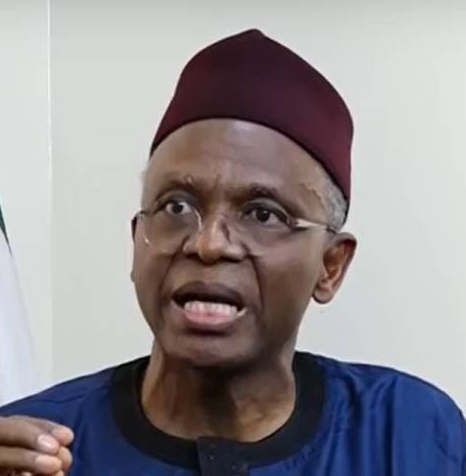
Kaduna govt gives El-Rufa’i one-week deadline to justify alleged N1bn bandit payment claim

By Uzair Adam

The Kaduna State Government has dismissed as false and politically driven the allegation that the current administration paid N1bn to bandits, describing the claim as unfounded and damaging.

In a statement issued on Sunday, the government gave the former governor a one-week ultimatum to present verifiable evidence or publicly withdraw the allegation, insisting that failure to comply would result in legal action.

The former governor had, during a recent appearance on Channels Television, alleged that the state paid bandits as part of its security engagements.

Responding to the claim, the Commissioner for Internal Security and Home Affairs described the allegation as reckless, baseless and deliberately misleading.

The statement criticised the former governor for weaponising a sensitive security matter for political purposes, adding that such action falls below the standard expected of someone who previously held the highest office in the state.

The government demanded that the allegation be retracted and an unreserved apology issued within one week, warning that the state would initiate legal proceedings to protect public order and institutional integrity should the ultimatum be ignored.

It stressed that the governor has never authorised, negotiated or paid any amount to criminal groups, a position repeatedly made clear in interviews, press briefings and engagements with stakeholders.

The statement also recalled that the Office of the National Security Adviser had earlier dismissed similar claims as unfounded and inconsistent with Nigeria’s security practices, reaffirming that neither the Federal Government nor state governments pay ransom to criminal elements.

Highlighting its security approach, the Kaduna State Government stated that it has adopted a community-focused strategy anchored on stronger military operations, deeper engagement with legitimate community leaders and improved access to education, healthcare and economic opportunities.

It emphasised that the state engages with communities—not bandits.Grassroots groups, including those from areas most affected by insecurity during the former governor’s tenure, have also rejected the allegation, describing it as misleading and untrue.

The statement further referenced past accusations made by senior officials of the former administration, suggesting that public funds were used to appease certain groups, making the current allegation particularly paradoxical.

Since taking office, the governor has prioritised stabilising vulnerable communities, reopening schools, markets and farmlands and rebuilding trust among previously divided groups.

The government urged former officials to exercise restraint and support ongoing efforts to sustain peace.

Challenging the former governor to present credible evidence—such as bank records, internal correspondence or security documents—the government noted that similar claims made in September 2025 were never backed with proof.

Reaffirming its commitment to transparency and responsible security management, the Kaduna State Government said it would not be distracted by bitterness, fear-mongering or deliberate misinformation.

Distinguished Professor Umar Sani Fagge: An upright scholar and Islamic jurist, shaping knowledge and society

By Habu Abdu Aminu

Professor Umar Sani Fagge is widely recognised as a leading figure in Islamic scholarship and Arabic studies in Nigeria. His name commands respect not only in academic circles but also among millions of Muslims who follow his lectures, sermons, and community teachings. His life’s journey from the traditional Qur’anic school in the Fagge community to the rank of Professor at Bayero University Kano (BUK) represents an inspiring narrative of humility, perseverance, and the pursuit of divine and worldly knowledge.

Born into a devout, intellectually rich family in the Fagge area of Kano State, Professor Fagge’s educational journey began under his mother’s loving care. Coming from a lineage of knowledgeable parents and grandparents, he was nurtured in an environment where Islamic learning, moral discipline, and respect for knowledge were fundamental values.

His earliest education took place in the Makarantar Allo (traditional Qur’anic school), where he learned to recite the Qur’an. He later advanced to an Islamiyyah school, which broadened his understanding of Arabic grammar, hadith (Prophetic traditions), and fiqh (Islamic jurisprudence). These formative experiences instilled in him a passion for knowledge and an unshakable spiritual foundation.

Subsequently, he transitioned into the modern educational system, completing his primary and secondary education in Kano State. Motivated by a desire to deepen his understanding of Islamic and Arabic studies, he proceeded to Bayero University, Kano, where he obtained a Diploma, a Bachelor of Arts (B.A.), a Master of Arts (M.A.), and ultimately a Doctor of Philosophy (PhD) in Arabic. This remarkable academic progression not only reflects his intellectual capacity but also his lifelong dedication to scholarship.

Professor Fagge’s professional career began at the Kano State Ministry of Education, where he served as a classroom teacher. His outstanding teaching skills and commitment to educational excellence soon drew attention from the academic community. In 1991, he joined Bayero University Kano as a Graduate Assistant in the Department of Arabic, marking the start of an illustrious academic journey.

Over the following three decades, Professor Fagge steadily rose through the ranks, from Assistant Lecturer, Lecturer II, Lecturer I, Senior Lecturer, and Associate Professor, culminating in his promotion to full Professor in 2023. His promotion was celebrated across the academic and religious landscape as recognition of his scholarly distinction, exemplary service, and mentorship of younger scholars.

Throughout his tenure at BUK, he has taught a wide range of undergraduate and postgraduate courses in Arabic language, literature, and Islamic jurisprudence. He has supervised numerous research projects and postgraduate theses, shaping a generation of students and educators who continue to uphold his academic legacy.

Professor Umar Sani Fagge’s influence extends far beyond the university walls. As an Islamic jurist (faqih) and public preacher (da’i), he has become a household name in Northern Nigeria and beyond. He actively participates in Makarantar Soro, Islamiyyah schools, and community-based Qur’anic centers, where he teaches and delivers sermons to diverse audiences.

His da’wah activities reflect a holistic understanding of Islam, addressing both ‘ibadat (acts of worship) and mu’amalat (social and economic interactions). Through his public lectures, radio and television programs, and digital platforms, he promotes moral reform, justice, and socio-economic development in line with Islamic principles. Thousands of people attend his lectures, and his teachings are widely shared on media outlets, where he reaches audiences across Nigeria, Niger, and other parts of West Africa.

Among Professor Fagge’s many contributions to Islamic thought, his interpretation of Zakat al-fitr stands out as a practical and socio-economically relevant concept. In his lectures, he emphasises that Zakat al-fitr, a mandatory form of almsgiving at the end of Ramadan, is a crucial instrument of infaq (voluntary or obligatory charity) that directly addresses food insecurity in Muslim societies.

According to him, Zakat al-fitr is not a mere ritual; it is a divinely ordained social safety net aimed at eradicating hunger among the poor during festive periods. When administered correctly, it ensures that every Muslim, regardless of social or economic status, partakes in the joy and blessings of Eid. He argues that if properly institutionalised, Zakat al-fitr can enhance the living standards of the poor and promote socio-economic balance within the ummah.

Professor Fagge further observes that the real purpose of its implementation goes beyond the spiritual cleansing of the fasting individual. It also reflects the economic justice promoted by Islam, where wealth flows and benefits all parts of society. In his opinion, the proper management of Zakat al-fitr by reputable charitable organisations could significantly reduce hunger, poverty, and inequality within Muslim communities.

Moreover, Professor Fagge’s intellectual reach is amplified through his numerous public lectures, Qur’anic tafsir sessions, and radio commentaries. He is known for simplifying complex religious concepts and applying them to contemporary social issues such as governance, family relations, business ethics, and community welfare. His style is calm, evidence-based, and deeply rooted in classical sources, making his teachings both authentic and accessible.

He has also published academic papers and presented at conferences on Arabic linguistics, Islamic jurisprudence, and ethics. His insights continue to influence scholars, students, and policymakers who seek to align Islamic principles with modern governance and development strategies.

Over the decades, Professor Umar Sani Fagge has mentored countless students, many of whom have become lecturers, jurists, judges, lawyers, politicians, administrators, businessmen, and community leaders. His balanced approach to Islamic jurisprudence, combining intellectual rigour with moral empathy, has earned him a reputation as a reformer who promotes unity, moderation, and social responsibility.

His enduring legacy lies not only in the degrees he earned and the lectures he delivered, but also in the transformative impact he has had on his community. Through his tireless service, he embodies the Qur’anic principle that “those who are given knowledge and act upon it are truly among the most honoured of people.”

Professor Umar Sani Fagge’s journey from the traditional Qur’anic school of Fagge to the professorial chair at Bayero University Kano is a story of resilience, dedication, and divine blessing. His life underscores the timeless value of education as both a spiritual and social enterprise. Through his scholarship and da’wah, he has contributed immensely to moral reform, academic growth, and socio-economic enlightenment in Nigeria.

In an age where many scholars are confined to either the mosque or the classroom, Professor Fagge stands as a rare bridge between both worlds. His teachings on zakat al-fitr and food security reaffirm Islam’s commitment to justice, compassion, and collective welfare. Indeed, his legacy will continue to inspire generations to come—an enduring reminder that knowledge, when guided by faith, is the greatest form of service to humanity.

Habu Abdu is a researcher and social analyst from the Department of Banking and Finance at Kano State Polytechnic, Nigeria. He can be contacted at +2348086252563.