National

You can add some category description here.

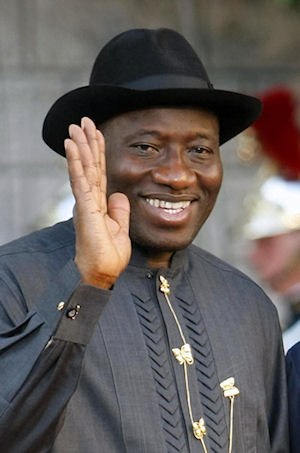
Jonathan pays heartfelt tribute to Yar’Adua, 15 years after his passing

By Hadiza Abdulkadir

It has been fifteen years since Nigeria lost one of its most respected and selfless leaders, President Umaru Musa Yar’Adua. 

Today, Nigerians across the nation reflect on the life and legacy of a man whose brief presidency profoundly impacted the nation’s democratic and developmental journey.

Former President Goodluck Ebele Jonathan, who served as Yar’Adua’s vice president and later succeeded him, paid a heartfelt tribute to his late friend and leader. 

In his message on social media, Jonathan described Yar’Adua as a patriot and a servant leader who was driven by a commitment to unity, justice, and national progress.

“President Yar’Adua’s life was defined by service and selflessness,” Jonathan stated. “Whether as a teacher, governor, or president, his stewardship was guided by hard work, patriotism, accountability, commitment to justice and adherence to the rule of law.”

Yar’Adua’s presidency was marked by his efforts to reconcile a divided nation, foster unity among its people, and mobilise collective action towards building a just and peaceful Nigeria. Though his time in office was cut short by illness, his administration is remembered for significant reforms and a leadership style rooted in humility and inclusion.

Jonathan praised Yar’Adua for his unwavering dedication to democratic ideals and for laying a foundation of peace and accountability. “Fifteen years after his passing, he continues to stand as a reference for good leadership and a legacy of impact,” Jonathan remarked.

As the nation remembers President Yar’Adua, many Nigerians continue to honour his contributions to building a better country and celebrate the enduring example he set in public service.

Kwankwaso’s move to APC: a Trojan horse that could destroy Tinubu’s 2027 dreams

By Abdurrahman Musa

As political fireworks ignite across Nigeria ahead of the 2027 general elections, one looming move threatens to shake the very foundations of the ruling All Progressives Congress (APC): the speculated defection of Senator Rabiu Musa Kwankwaso—former Kano State Governor and NNPP national leader.

To some within the APC ranks, welcoming Kwankwaso appears to be a masterstroke, but others are warning because, his entry could ignite a political inferno that burns the APC’s fragile peace in Kano, upends Tinubu’s re-election ambitions, and hands the opposition [which he might later join] a golden ticket to power.

Here is why:

Kano could explode as a factional earthquake looms

It is a known fact that Kwankwaso is no ordinary politician. He is a master strategist who always thinks for himself and what would favour him. Therefore, for him to join the APC, people should know that he will not just come with followers—he commands a powerful political cult – the fiery Kwankwasiyya movement that stands in direct confrontation with the Ganduje-led APC structure in Kano. Welcoming him is like inviting a hurricane into a house of cards. The party risks a full-blown internal war, splintering into rival factions, parallel commands, and electoral sabotage that could spell doom in 2027. APC’s strength in the North’s largest voting bloc may shatter into chaos.

Collapsing NNPP could be the PDP’s resurrection.

They said politics is a game of chess. When you think in a rush and make a wrong move, you woefully lose the game. Here’s the twist: dissolving the NNPP doesn’t automatically benefit the APC. In fact, it might just revive the PDP from the political coma. Kwankwaso’s defection could enrage his loyal base, pushing them straight into the waiting arms of Alhaji Atiku Abubakar and the PDP.

Mr President, do you remember 2023? The fragmented opposition in the North gifted Tinubu an edge. Destroy that balance and the pendulum swings possibly against you. Therefore, a fractured NNPP doesn’t guarantee APC victory—it may instead restore Atiku’s Northern stronghold.

A clash of presidential titans between President Tinubu vs. Senator Kwankwaso

Let us be honest—Kwankwaso isn’t joining to play a backup singer. His presidential ambition is loud, clear, and relentless. He might demand a Tinubu-Kwankwaso 2027 ticket or insist on a powerful stake in the party. If denied, he could turn against the APC from within—just like in 2019, when he was accused of deliberately undermining Atiku’s campaign in Kano while funneling resources into his gubernatorial candidate. If welcomed, Kwankwaso could shake the APC from the inside. If sidelined, he could sabotage it. History could repeat itself – this time inside the APC.

Kano youths might revolt against you

History has shown that youths are the vanguard of Kano politics. They are the ones that win you election. Currently, the streets of Kano pulse with the energy of Kwankwasiyya youth. Integrating them into the APC is not a handshake—it’s a negotiation with a volatile base. Mismanage it, and the backlash could be swift: boycotts, protests, or backing a rival candidate. The APC risks alienating the very people who once delivered it millions of votes. One misstep, the youth quake could be catastrophic.

Ganduje is the pillar—don’t shake it

In my own opinion, instead of importing instability, the APC should solidify Ganduje’s party leadership and Kano political camp. It guarantees a winning formula. Furthermore, consolidate strategic allies like Senator Barau Jibrin from Kano North and Senator Kawu Sumaila from Kano South, this offers a more convincing future and gradually win over NNPP supporters. With this, APC can present a united, formidable front—without the drama.

The ball is in your court, Mr President

Mr President, the choice is yours—so are the consequences This is no time for political gambling. The illusion of short-term gains from the Kwankwaso’s defection may cost you the presidency itself. The NNPP’s demise must not become PDP’s rebirth. The APC must learn from the PDP’s collapse—a tale of chaotic mergers and unchecked egos, in which Kwankwaso played a starring role. The hunger for Kwankwaso’s two million Kano votes is strong—but deceptive. It’s a honey trap. What looks like a prize could become a poison pill that wrecks the APC from within and opens the floodgates for a PDP resurgence.

Mr President, it’s your turn: “Emilokan“. But only if you don’t blow it. Listen to Kano. Consult the real stakeholders. Do not gamble away your second chance on a political wild card with a history of wrecking alliances from within. This is not just a political move—it’s a potential crisis in the making. Mr President don’t repeat PDP’s mistake. The voice of reason is calling. Will you listen?

Abdurrahman Musa writes from Kano. He’s a political analyst and APC stakeholder.

Workers’ Day Without Workers’ Wages!

By Dr. Muhammad Sulaiman Abdullahi

There are some few, effortless and simple things, which I have already assured myself that, if they are not confronted and solved squarely and completely in Nigeria, we should all continue to consider Nigeria as a joke. In other words, if the Nigerian rulers and the ruled are unable to solve these simple managerial crises, we should all forget about anything development and continue to wallow in our self deception mode. On these issues, I have assurance but I remain to be corrected. They are only four (4) simple things, among others;

1) Fixed date for the payment of salary: this doesn’t mean that, salaries should be paid on 24th, 25th… it should be paid on whichever day chose!n by the government. However, one thing must be considered, that’s FIXING a specific date for that purpose. Salary is something that must be paid, then, why this deceptive and unorganized approach? Right now that I am talking to you, many workers haven’t received their pay for April, and May is already on.

For Nigeria to even start thinking of development, workers must be truly and carefully considered. Their rights must be paid on time, because, as they say, it is not a privilege. If the government likes, let it pay it on 30th of each month, or even make every month to contain 31 days and pay it on the 31st. Let’s have a fixed date please. If not, let’s take the police for instance. A police may not know when to get his salary for risking his entire life to protect people; however, he is sure, he can be bribed by the poor through corrupt ways. How can you deny him something that he is certain about with an uncertain? This penetrates deeper into every sector.

2) Respecting time: one of the cantankerous evil that people abuse all the time. It comes to the extent that responsible people would call for a meeting and say 4pm, but deep down in their mind they know the meeting would start by 5pm. If you ask them why, they would say people would not come on time. I use to be confused on this. So in Nigeria we respect late comers more than how we respect punctual people! We give them extra time and we don’t mind those who come on time. They, their punctuality and the respect they give to time should all go to hell. Unless we change this attitude, we will never do it right.

If you want to fight with (responsible) Nigerians insist on punctuality. Many of us, including leaders fail in this respect.

When we are in Nigeria, we hardly do official things on their respective timing. But when we go elsewhere we keep to time. Therefore, it is obvious that the problem is from us and we can easily adjust if we know there is repercussions.

3) Scheduling the epileptic power supply: distribution must be scheduled and properly planned. We are not even talking about standard supply, we are talking standardizing the supply of the short one we get. The little we have must not be given at random. People are entitled to know when they should expect the little light. Let it be 10:20am-11:20am on Wednesdays? Saturdays and Sundays nights? Two hours every day? When? All these must be planned and relayed to the payers if we are not jokers! This electric power people switch on and off at their will and we pay for the rubbish.

4) The National Carrier: this is bigger than us due to corruption. We should have a National career at least for our internal development. There are so many countries around the world especially in Africa which Nigeria and Nigerians underrate and undervalue, however, they have their Sudan, Ethiopian, Mali, Malawi, airlines, but the so-called giant of looting rely on ants for its air transport survival. This is a mischief of the highest order.

5) The over dependence and over reliance on dollar. Mark what I say, overdependence! Nigeria can use dollar. This is one of the obvious weaknesses which many people have agreed to live with, especially the Nigerians. However, the overdependence is alarming! Almost every individual in Nigeria, big or small, knows about dollar. Nigeria should learn to uplift its currency and leave dollar alone. Even ordinary people now know how to hoard dollar at the expense of the economic development of the nation. The bigger you are the more detached you are from using Nigerian currency. Kobo, 1 Naira coin have all gone into extinction physically but they are still there in our calculations. Now Tinubu’s government has made 5, 10 and 20 naira notes valueless and meaningless. They look so ugly to be touched by a clean hand.

There are so many other simple things which you can help to count. In other countries they are not even remembered because they are subconsciously arranged for over hundred years. But in Nigeria, we are still battling with something which can be corrected in two months. In Nigeria we face price hikes, lack of infrastructures, no medicines, no qualitative education, no good roads and no nothing….. You can continue counting our lacks, they are so many. However, the above mentioned five things are very simple, they can be corrected with a simple verbal order, without putting much money and effort. May Nigeria be great soon!

Muhammad Kano
May day 2017

NB: This was written in 2017, with little correction now but nothing much has changed.

Workers demand action on killings, wages at May Day rally

By Uzair Adam 

At this year’s Workers’ Day celebration in Abuja, organised labour unions issued a strong 20-point demand to the Federal Government, calling for urgent measures to address Nigeria’s deepening socio-economic crisis, including rising insecurity and wage stagnation.

In a joint address, leaders of the Nigeria Labour Congress (NLC) and the Trade Union Congress (TUC) urged the government to end the widespread killings across the country and implement economic reforms that prioritise the well-being of citizens. 

They also advocated for justice, respect for democratic principles, and transparency in governance.

Themed “Reclaiming the Civic Space in the Midst of Economic Hardship,” the event saw the labour centres decry what they described as unconstitutional actions, particularly the suspension of the elected government of Rivers State through a declaration of emergency, which they argued lacked a legal basis.

Other demands included an immediate salary review aligned with the economic situation, clarity on the Pay-As-You-Earn (PAYE) taxation system, and the withdrawal of controversial tax bills before the National Assembly. 

Labour also called for more inclusive policymaking, emphasising that workers must have a seat at the table when critical decisions affecting their welfare are being made.

Details to follow…

Satirical Apology: A closer look at Senator Natasha’s letter

As I scrolled through the timeline of Senator Natasha H. Akpoti, her most recent post, titled “Satirical Apology Letter,” sparked confusion and elicited public reactions from her followers and various opinion leaders across Nigeria. Many are left questioning whether it constitutes a genuine apology or if it is merely another provocation in the ongoing feud between her and the President of the Nigerian Senate, Godswill Akpabio.

The senator representing Kogi Central wrote the letter in a manner that satirically questioned her adversary’s integrity and condemned the corrupt aspects of the Nigerian political system, describing it as a matter of mere compliance rather than merit.

Previously, if you can recall, the unrest between the two began in February this year, due to a minor disagreement over a change of seat, which was rejected by the female senator. This disagreement later escalated into allegations of sexual harassment against the Senate President, which Senator Akpabio and his family denied. The discord ultimately resulted in her suspension from the Senate for six months.

As I continued reading the letter, it felt like waking up from a brief slumber regarding the case. While the public believed it was over, Natasha returned with determination and strongly re-emphasized her stance on the issue. She not only criticized her suspension by the Senate under leadership of Akpabio but also offered a sarcastic condemnation of the current system that led to her situation.

Senator Natasha’s Apology Letter rebukes to the status quo. The second paragraph critiques the current happenings in the Senate chamber. Although the sentences are framed as an apology, they are laced with biting sarcasm. Some individuals perceive the letter as an attempt to remain relevant, as she was nearly forgotten after the case was silenced. This sentiment was expressed by several citizens in the comments on her Facebook post.

In my opinion, the letter exemplifies passive-aggressive diplomacy. Senator Akpoti Uduaghan claims to apologize for her “failure to recognize that legislative success… is apparently not earned through merit, but through the ancient art of compliance.” The implication is clear: the political arena, particularly in Nigeria, is not a space where competence and the will of the people necessarily dictate success. Instead, it is a realm governed by deference to the powerful and the perpetuation of unwritten rules that demand personal loyalty over professional integrity.

Some people believe that the female senator wants to settle the case, but she is concerned about how the public will react. A direct apology could raise questions from the public, especially from those who have supported her from the beginning. They may ask whether she was sincere in her allegations or if she intended to tarnish Akpabio’s reputation. Nevertheless, what is truly remarkable about this piece is how it is presented as a ‘satirical apology letter.’ Instead of directly admitting fault, it takes a different approach.

The senator ridicules the notion that her refusal to engage in patronage or political favoritism warrants an apology. She frames her decision to decline the “requests” of influential figures in the Senate not as a betrayal, but as a badge of honor—a testament to her commitment to her mandate and her constituents, rather than a subservient compliance with behind-the-scenes negotiations.

The letter’s central message is encapsulated in its bitter, mocking phrase: “Please find it in your magnanimous heart… to forgive this stubborn woman who mistakenly believed that her seat in the Senate was earned through elections, not erections.” The wordplay here is both clever and sarcastic, implying that political power in Nigeria is often not merely a matter of democratic legitimacy, but rather the outcome of personal ambition, ego, and, at times, quite literally, the ability to manipulate others through unseen means.

As stated in the letter, the bold assertion regarding the nature of power and politics is undeniably risky. However, it is this very willingness to challenge complacent norms that renders Senator Akpoti Uduaghan’s letter so impactful. In a world where political leaders often issue insincere apologies when faced with allegations of corruption or incompetence, her letter serves as a powerful reminder of the fierce independence and self-respect that are frequently compromised in the quest for political survival.

Moreover, the satire is not directed at a single individual; rather, it serves as a broader condemnation of the system that perpetuates this toxic political culture. Akpoti Uduaghan critiques not only Akpabio’s conduct but also the institutional framework that enables the manipulation of power, allowing it to be transferred based on personal alliances rather than merit. The reference to “quid pro quo” arrangements and the necessity for private, off-the-record negotiations highlights a system in which transparency and accountability are frequently overshadowed by more secretive and, at times, questionable practices.

The final line, “Unafraid, Unbought, and Unbroken,” serves as both a declaration of defiance and a reminder that some individuals in the political arena remain unyielding against the forces that seek to undermine genuine progress. It is a call for a return to integrity and for leaders who are willing to challenge the status quo, regardless of the cost.

I believe that Senator Natasha should not surrender; however, considering how the system operates in Nigeria, it is crucial to find ways to ensure that the conflict does not negatively impact her constituents. Given that she and Senator Godswill Akpabio were good friends in the past, it would be beneficial to seek reconciliation, even though the damage has already been inflicted on Akpabio’s part.

Naziru Muhammad writes from the Department of Mass Communication at Abubakar Tatari Ali Polytechnic in Bauchi.
ajiyanwaka@gmail.com

Jihadist resurgence in Northeastern Nigeria raises alarms

By Muhammad Abubakar

A recent surge in jihadist attacks in northeastern Nigeria has sparked concerns over a potential comeback of extremist groups in the region. Over the weekend, at least 48 individuals lost their lives in coordinated assaults across Adamawa and Borno states, marking one of the deadliest periods in recent months.

Security analysts attribute this uptick in violence to a reduction in infighting between Boko Haram and its splinter group, the Islamic State West Africa Province (ISWAP). The groups have reportedly adopted advanced tactics, including the use of armed drones and roadside explosives, indicating increased tactical support and funding from the Islamic State.

In Borno State, Governor Babagana Zulum has warned of militant regrouping in the Lake Chad and Sambisa Forest regions, noting a lack of strong military response. The Nigerian military has yet to comment on the situation.

The resurgence of these extremist groups poses a significant threat to the stability of northeastern Nigeria, a region that has endured over 15 years of insurgency.

Analysts caution that without a robust and coordinated response, the region may witness a return to the heightened levels of violence experienced in previous years.

NDLEA raids Lagos hotel, recovers ₦1.042 billion worth of drugs, arrests three

By Hadiza Abdulkadir

The National Drug Law Enforcement Agency (NDLEA) has raided an 80-room hotel in Victoria Island, Lagos, recovering illicit drugs valued at over one billion naira.

During the operation conducted between Friday, April 25 and Saturday, April 26, 2025, operatives combed through The Hook Hotel, also known as Caesar Hotel and Caesar Lounge, located at 16 Waziri Ibrahim Street, off Elsie Femi Pearse Street, Victoria Island. 

The operatives also recovered 589 bags of Canadian Loud — a potent strain of cannabis — weighing a total of 417.3 kilograms and valued at ₦1,042,500,000 in street price.

Three suspects — Eze Ayitu, Ofuokwu Samuel, and Emmanuel Ameh — were arrested during the operation, while two others, identified as Noble Philip and his partner Kenneth, are currently at large.

Items suspected to be proceeds from the drug trade, including five vehicles (Toyota Prado, Land Cruiser, Jeep, Toyota Sienna, Volkswagen Delivery Van, Kia Cerato, and a Grand Caravan Dodge), 74 new TV sets, 10 used TVs, and 13 refrigerators, were also recovered from the premises.

The chairman/Chief Executive Officer of NDLEA, Brig. Gen. Mohamed Buba Marwa (Rtd) commended the operatives for the successful operation and urged them to sustain the momentum in the ongoing War Against Drug Abuse (WADA).

Wike orders clampdown on illegal hospitals after pregnant woman’s death in Abuja

By Uzair Adam 

The Minister of the Federal Capital Territory (FCT), Nyesom Wike, has ordered a full crackdown on unregistered hospitals and quack medical personnel operating within the territory.

The minister’s media aide, Lere Olayinka, disclosed this in a statement on Saturday, following the death of a pregnant woman at a private facility in Durumi, Abuja, after undergoing a caesarean section.

According to the statement, Wike warned that anyone found operating an illegal health facility or working in an unregistered hospital would be arrested and prosecuted.

He described the incident as regrettable, especially given that vulnerable groups, including pregnant women, are eligible for free registration under the Federal Capital Territory Health Insurance Scheme (FHIS). 

He noted that despite this opportunity, many pregnant women were still patronising unlicensed and unsafe facilities.

“In the FCT, vulnerable persons, including pregnant women, enjoy free enrollment into the FHIS, granting them free access to services covered under the basic minimum health package through primary healthcare centres,” he said.

Olayinka added that, in support of the federal government’s ‘Renewed Hope Agenda’ and the FCT Administration’s zero tolerance for maternal mortality, several hospitals—including Gwarinpa, Nyanya, Abaji, and Kuje General Hospitals—have been designated as comprehensive emergency obstetric and neonatal care centres, offering free cesarean sections.

He urged pregnant women to utilise these government services instead of risking their lives by seeking care from quacks and unregistered facilities.

The statement also recalled that on Friday, 35-year-old Chekwube Chinagorom was brought dead to the Asokoro District Hospital after a caesarean section at the unregistered facility in Durumi. 

Although the baby survived and was referred for further care at the Asokoro hospital, the incident raised alarm over the activities of illegal operators.

The Private Health Establishments Registration and Monitoring Committee (PHERMC) investigated and confirmed that the hospital was unregistered. 

Only one staff member, Mr. Simon Godiya, a junior community health extension worker, was found on duty during an inspection.

Godiya informed officials that Murtala Jumma performed the surgery alongside another unidentified person. Efforts to reach Jumma have so far been unsuccessful.

The PHERMC team, accompanied by police officers from the Durumi Divisional Headquarters, subsequently handed over the case to the police for further investigation.

77K NYSC allowance and the future of youth in Nigeria

By Usman Mujtaba

When Brigadier General O.O. Nafiu, the Director-General of the National Youth Service Corps (NYSC), announced that corps members would receive their monthly allowance of ₦77,000 starting from March 2025, they thought it was business as usual. This is because they had been receiving similar announcements since last year. 

Moreover, the minister also gave multiple assurances recently when he was interviewed on Arise Television, Channels, and even on the MicOn Podcast hosted by Seun Okinbaloye, a host of Channels Television’s program Politics Tonight.Perhaps corps members are tired of the DG’s words; they only want action. As one Hausa adage goes, “An gaji da sa ba’a ga kaho ba.”

Unknown to them, this time is different, whether because it comes from the new DG or that the bureaucratic procedure was ripe, I couldn’t tell. But on Wednesday, March 26, 2025, corps members were thrilled to start receiving the ₦77,000 as their allowance, which they call “Allawee.” The jubilation was palpable across all regions of the country. Social media was full of jokes about the development, with one post reading, “NYSC DG for President 2027.” See how the allawee makes people go crazy

After the alert, what’s next? Minimum wage increment and inflation are familiar bedfellows; in fact, many economic pundits are against it, arguing that it won’t increase the value of products sold or services rendered. I was shocked when one of my friends told me that a corps member is tasked with responsibilities at home when they start serving. After a fixed amount, they will send monthly, so many requests will follow from such a home, probably from siblings.

The corps member who serves and the ghost corps member (who does the thumbprint) when the month ends are Tweedledee and Tweedledum in terms of expenses. Here’s why: while the serving corps member will have to budget for foodstuffs and transport, the ghost corps member plans for transport mainly from their hometown in a different state and the amount they’ll probably give to the PPA and/or the secretariat, given the agency’s corruption, nepotism, and favoritism. As such, the expenses become balanced. It’s better for a corps member to calmly settle at their place of primary assignment (PPA) and serve their fatherland.

Is it decisive to reform NYSC at this juncture? As the saying goes, “Eat when the food is ready. Speak when the time is right”? I recently came across an article, “Time to Reform NYSC,” in Daily Trust on April 23, 2025, in which Babakura Aninigi suggests some ways forward for the initiative. Though holistic, his take is realistic. 

Aningi wrote, and I quote, “The federal government should consider restructuring the scheme… to reflect current realities.” This is apt because many believe that all is well with the adoption of a minimum wage. It’s not. Corps members will undoubtedly adjust, but only in the short term because inflation and additional expectations are inevitable. The call for reform of policy and strategy is the appeal for the long term.

The bustle and energy of graduates are palpable in towns whenever the NYSC opens its portal for registration. The energy will be doubled now that every graduate moves with additional zeal to enjoy the new approved allowance.

I discussed with one of my friends the possible addition of allowance from his PPA (a private school in Kano). I told him that it would be easier for a camel to pass through the eye of a needle than for him to get that addition with his ₦77,000.

He informed me they originally gave ₦5,000. Imagine! It’s indeed another challenge many corps members will face. Some will even withdraw what they usually give. As one of my friends jokingly observed, a corps member’s allowance is more than the salary of some private school headmaster.

₦77,000 is a commendable development, but it shouldn’t douse the energy and kill the idea of reforming the NYSC scheme.

Usman Mujtaba wrote via usmanmujtabashehu@gmail.com.

ASUU-KASU embarks on total, indefinite strike

By Anas Abbas

The Academic Staff Union of Universities, Kaduna State University (ASUU-KASU), has officially commenced an industrial action today, marking the beginning of a total, comprehensive, and indefinite strike.

In a statement released by the Publicity Committee of ASUU-KASU, the union outlined a series of actions that must be observed during the strike. These include the suspension of all Senate, Faculty, and Department meetings, as well as the cessation of project supervision and both physical and online lectures.

Additionally, the Students Industrial Work Experience Scheme (SIWES) will not be subject to project defences, field studies, or supervision. 

The union has also prohibited online meetings and mandated that no Continuous Assessment (C.A.) or examination scripts be marked. The processing and submission of results are also on hold, alongside any standing committee meetings.

ASUU-KASU has urged all members to adhere strictly to these directives. The union emphasised that any non-compliance or attempts to infringe upon the strike actions should be reported immediately to the Strike Monitoring Committee (SMC) at the ASUU-KASU Secretariat on the Main Campus.