National

You can add some category description here.

Abdul Samad Rabiu pledges massive cash for Super Eagles after Algeria victory

By Muhammad Sulaiman

Nigerian businessman and philanthropist Abdul Samad Rabiu has announced substantial financial incentives for the Super Eagles following their impressive victory over Algeria, a win that has lifted national morale and secured Nigeria a place in the semi-finals.

In a congratulatory message released on Friday, Rabiu praised the team for making the nation proud and pledged USD $500,000 to the players should they win the semi-final, with an additional USD $50,000 for every goal scored in that match.

He further stated that if the Super Eagles go on to win the final, he would reward the team with USD $1,000,000, alongside a bonus of USD $100,000 per goal scored in the final.

Rabiu described the players as symbols of national pride and unity, expressing confidence in their ability to carry Nigeria forward in the tournament.

He ended his message with a call for continued excellence, reaffirming his pride in the team and the country.

The announcement has been widely welcomed by fans, adding extra motivation as the Super Eagles prepare for the decisive stages of the competition.

In defence of Kwankwaso and the scholars who stand with him

By Muhammad Sani Ilyasu

I woke up to a video circulating on social media by a former Kano State anti-corruption czar, giving his opinion about scholarship beneficiaries on why they had no moral right to identify with Kwankwasiyya. It is important to clear the air. Much of what is being said comes from people who were never inside the scheme and never lived the consequences.

Let me state this clearly and upfront: I do not identify with Kwankwasiyya. I disengaged from the movement in 2020. What follows is not partisan advocacy. It is testimony.

Criticism of Rabiu Musa Kwankwaso and scholars associated either rightly or wrongly with his ideology has become fashionable. But much of that criticism is detached from the lived realities that shaped those associations, especially the horrible experience of Kano State scholarship beneficiaries. I write as one of them.

Yes, the scholarships were funded with Kano State resources. But at no point—none that I can recall—were beneficiaries compelled to support Kwankwaso politically. There was no loyalty test, no ideological oath, no expectation of political repayment. In fact, many scholars openly opposed him. I personally recall frequent debates with colleagues who were supporters of Ibrahim Shekarau, many of whom never gave Kwankwaso any credit for the scholarship. Most of us were indifferent, credit was never the issue.

The lesson however came in 2015. That was when Abdullahi Ganduje assumed office—and when all of us, including Kwankwaso’s fiercest critics among the scholars, learned the brutal difference between right and privilege. Tuition payments were halted. Upkeep allowances disappeared. Return-ticket funds were withheld. Scholars were stranded and pushed into destitution in foreign countries.

Some waited over eight years to receive their certificates after the scheme was abruptly terminated. In some cases, parents died without ever seeing the academic fruits of sacrifices they had made.

As if that were not enough, scholars were publicly discredited—labeled products of “substandard universities,” their academic legitimacy questioned to justify administrative neglect. Throughout this period, Kano State went silent.

Religious leaders. Business elites. Civil society organizations. The same voices that now moralize and gaslight scholars looked away. The only “crime” of the scholars was that Kwankwaso started the program.

If, as some critics claim, the scheme was merely a vehicle for siphoning public funds, a simple question remains unanswered: why was Kwankwaso never prosecuted—and why were scholars punished instead? Why were entitlements withheld if the beneficiaries were not the accused?

What makes the silence more damning is that this neglect extended beyond foreign scholars. Until the return of a Kwankwasiyya-led government, even undergraduate scholars sent to private universities within Nigeria—and to Egypt and Cyprus—were denied certificates. For postgraduate students, the delay was damaging. For undergraduates, it was life-shattering: no certificate meant no employment, no future.

In all those years, only one political current consistently raised the issue and demanded settlement: Kwankwasiyya. This is the context critics conveniently ignore.

What they now describe as “indoctrination” or “blind loyalty” was, in reality, a rational response to abandonment. You cannot withdraw education, dignity, and future—then later shame people for gravitating toward the only structure that acknowledged their suffering.

That is not principled criticism. It is double standard. Scholars were not pushed toward Kwankwaso by manipulation. They were pushed there by neglect and even for those of us who have long moved on, that historical truth remains intact—uncomfortable, inconvenient, and undeniable.

Gaslighting scholars for the choices they made under abandonment is not moral courage.
It is hypocrisy.

Muhammad writes from Baltimore Maryland and can be reached at msaniiliyasu@gmail.com.

WAEC CBT Exams: A laudable initiative, but wait…

By Lawal Dahiru Mamman,

While the nation, parents, and income earners are still debating the legitimacy of the Tax Laws rolled out by the Federal Government due to “alterations” in some sections and their broader implications, final-year senior secondary school students have other things to worry about. A case of different strokes for different folks.

A student called and, after exchanging pleasantries, he said, “Is it true we’re going to write WAEC exams with computers? We have a computer lab at our school, but it can accommodate only about 30 students at a time, and not everyone offers computer studies. Some people I know don’t even have any in their schools.” He is familiar with how computers work, but was looking out for others, and his concerns are legitimate.

The Senior Secondary School Certificate exam, conducted by the West African Examinations Council (WAEC), is held in Ghana, Sierra Leone, Liberia, The Gambia, and Nigeria. WAEC announced plans to shift from traditional paper-and-pencil tests to Computer-Based Testing (CBT) for Nigeria’s 2026 West African Senior School Certificate Examination (WASSCE), affecting about 2 million students across 23,554 schools.

The rollout begins with this year’s edition, tentatively scheduled from 24 April to 20 June 2026, with the aim of improving integrity, reducing malpractice and ensuring results are released 45 days after the exam, with digital certificates available within 90 days. 

WAEC’s Head in Nigeria, Amos Dangut, revealed that 1,973,253 students (979,228 males and 994,025 females) will participate, covering 74 subjects and 196 papers. According to him, the digital exams will feature unique question papers for each of the 1,973,253 students as part of efforts to uphold academic integrity.

To support students, the examination body says it has introduced digital learning tools, such as the WAEC E-Study Portal, the E-Learning Portal, and WAEC Konnect. These platforms offer past questions, marking schemes, and performance analysis. 

Despite these promising statements, the young student’s apprehension is not an isolated case. It is the silent and loud cry of thousands of students across Nigeria. While the shift toward digitalisation is a progressive move intended to curb examination malpractice and speed up the release of results, the infrastructure on the ground tells a different story. 

In many suburban and rural schools, the “digital revolution” feels like an ancient myth. It was only last year that Nigeria crossed the 50% broadband penetration mark, according to data from the Nigerian Communications Commission (NCC) under the National Broadband Plan (NBP) 2020–2025.

We can also recall that, in May 2025, some students in Asaba, Delta State, took some of their exams using torchlights. The Minister of Education promised to “investigate” the situation, and Nigerians are still waiting for the outcome. But the substance of the matter is, can schools that lack the ability to purchase electric bulbs to light classrooms build rooms and stock them with computers before this year’s test commences?

Students in urban centres may not be affected; both at home and in school, they’re exposed to computers and the Internet. But introducing a computer-based exam to a student who has never used a mouse or sat in front of a steady power source creates an unfair playing field.

The House of Representatives learned of this development in early November and asked WAEC to halt it, citing concerns that it could lead to widespread failure and disadvantage students in rural areas with limited access to computers and the internet. Lawmakers suggest deferring it for at least three years to allow sufficient time for proper infrastructure and capacity building.

Interestingly, WAEC, through the Nigeria National Office Head, confirmed in the last week of the same month that “its plan to introduce a fully Computer-Based Test (CBT) system for the 2026 WASSCE for school candidates is firmly on track”, assuring the public that a key concern regarding travel has been addressed: “No candidate will have to travel more than 2km from their location to take the exam. This assurance is based on a new school mapping strategy.”

The transition to digital examinations cannot succeed through pronouncements alone. If the examination body insists, there must be clear communication to students through their schools and other stakeholders on a step-by-step strategy for this rollout, because students have registered and the examinations are underway.

Issues such as the delivery model must be addressed. Will the exam be fully digital across all subjects, or will it follow a hybrid model, with practical and essay-based subjects remaining on paper for now? Is it going to be JAMB-style? If essays are not retained, this well-intentioned effort could end up being a disaster for all parties involved.

What is the plan to equip public schools at 2km intervals with functional computer laboratories and consistent power solutions, such as solar energy? This must be considered carefully, as our reality shows that students across Nigeria study on bare floors and in other dilapidated conditions.

There must be a nationwide programme for “Mock CBT” exams to familiarise students in underserved areas with the software interface before the actual harvest of grades begins. In this case, even teachers in such areas must be trained to ensure adequate supervision.

In today’s world of artificial intelligence, big data, and other emerging technologies, digitalisation is inevitable, but it must be inclusive. If the goal is to improve the integrity of education, no student should be penalised for their geographical location or economic status.

Without adequate information, one may not be able to speak for The Gambia, Liberia, Sierra Leone, and Ghana, but here in Nigeria, WAEC and the Federal Government must speak clearly on how they want this to happen, because if the questions raised above cannot be answered with clarity, we should as well heed the advice of the lawmakers in the green chamber.

Lawal Dahiru Mamman writes from Abuja and can be reached at dahirulawal90@gmail.com.

Abia: Governor Alex Otti signs Senior Citizens Law

By Hadiza Abdulkadir

Governor Alex Otti has signed the Senior Citizens Bill into law to improve the welfare of elderly residents in Abia State. The legislation forms part of a broader set of executive bills recently assented to by the governor.

The new law establishes a framework to support senior citizens aged 60 and above, granting them access to monthly stipends, free medical care, and other social welfare benefits. The initiative is designed to enhance the quality of life of older persons and provide sustained social protection.

The policy has been widely commended by stakeholders and civil society groups, who describe it as a progressive step toward inclusive governance and social responsibility. Government officials say implementation modalities are being developed to ensure the effective and transparent delivery of benefits.

Governor Otti’s action reflects his administration’s commitment to social reforms and the strengthening of welfare systems for vulnerable groups in the state.

NRS unveils new logo, marks transition from FIRS

By Muhammad Abubakar

The Nigeria Revenue Service (NRS) has officially unveiled its new institutional logo, formally marking its transition from the Federal Inland Revenue Service (FIRS) to a newly established revenue authority.

The unveiling ceremony took place in Abuja on Wednesday and was announced in a statement by Dare Adekanmbi, special adviser to the chairman of the NRS.

Speaking at the event, Zacch Adedeji, executive chairman of the NRS, described the new brand identity as a major milestone in the ongoing reform of Nigeria’s revenue administration framework, reflecting a renewed mandate and institutional vision.

Adekanmbi noted that the service became operational after President Bola Tinubu signed the Nigeria Revenue Service Establishment Act 2025 in June, paving the way for the transition from FIRS to NRS.

The new logo, officials said, symbolises efficiency, accountability, and a modernised approach to revenue generation in Nigeria.

Blackout as national grid suffers fresh collapse

By Sabiu Abdullahi

Nigeria was thrown into darkness on Monday after the national electricity grid experienced another system failure following a sharp drop in power generation.

Findings showed that the disruption occurred at about 3 pm when major power stations supplying electricity to the grid suddenly lost generation, forcing the system to shut down.

Data obtained from industry sources indicated that electricity output earlier rose to about 4,800 megawatts on Monday. The figure later fell steeply to 139 megawatts as of 3 pm, which triggered the collapse of the grid.

The immediate cause of the failure was not confirmed at the time of reporting. However, the incident happened while the Nigerian Independent System Operator was working to increase electricity supply after recent gas shortages that followed cases of pipeline vandalism.

Checks further revealed that as of the time this report was filed, all 22 power plants connected to the national grid had dropped off from electricity generation.

The development left several parts of the country without power supply, as distribution companies struggled to restore electricity to affected areas.

More details are expected as authorities continue to assess the situation.

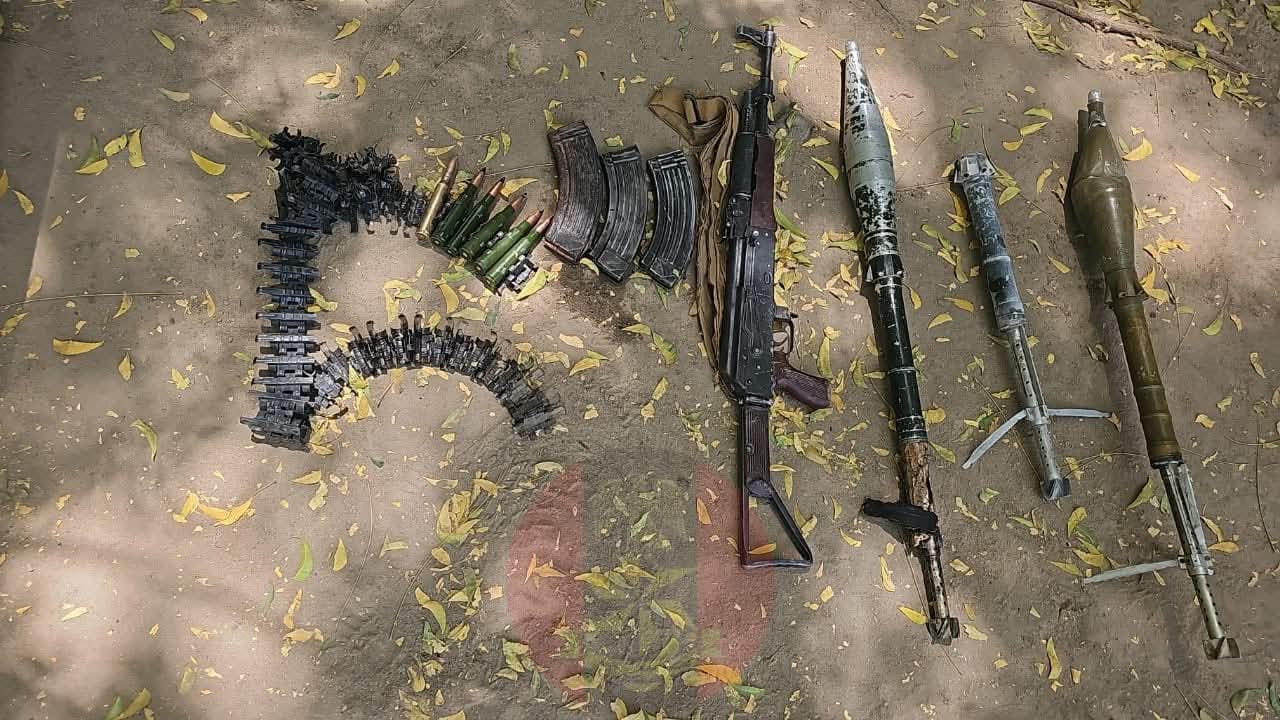
BREAKING: Trump claims US military strike on ISIS targets in Northwest Nigeria

U.S. President Donald J. Trump has claimed that the United States carried out a “powerful and deadly” military strike against ISIS targets in northwest Nigeria.

In a statement released on Thursday night, Trump said the operation was conducted under his direction as commander in chief and targeted ISIS fighters accused of killing civilians, particularly Christians. He described the strikes as highly successful and warned that further military action would follow if the violence continues.

There has been no independent confirmation of the operation from U.S. defense officials, and no details have been provided regarding the exact locations, casualties, or scope of the strikes.

As of the time of this report, the Nigerian government has not issued any official statement responding to or confirming the claims.

Backlash trails Channels TV over “Christmas Eve” headline on Maiduguri mosque bombing

By Sabiu Abdullahi

Channels Television has come under intense criticism following its headline on the Christmas Eve bomb blast in Maiduguri, Borno State, which many Nigerians have described as biased and insensitive.

The television station had reported the incident with the headline: “Many Feared Dead As Bomb Blast Rocks Maiduguri On Christmas Eve.”

The blast, however, occurred inside a mosque, with Muslim worshippers as the primary victims.

Critics argue that the omission of both the mosque and the victims’ religious identity from the headline distorted the gravity and context of the tragedy.

A journalism expert and Facebook user, Aisar Fagge, accused the station of deliberately reframing the narrative in a manner that downplayed the victims and their place of worship.

“The bomb blast occurred in a mosque but Channels TV chose to remove the mosque from the headline of the story and replaced it with ‘Christmas,’ showing a lack of sympathy for the people (Muslims) who were killed,” Fagge wrote.

He further alleged that such editorial decisions reflect deeper problems within sections of the Nigerian media.

“In Nigeria, we do not only fight Boko Haram; we also fight what I call ‘Truth Haram’ media outlets — the likes of Channels,” he added.

Another Facebook user, Abubakar Suleiman, also criticised the station, stating that the headline exemplified what he described as “the politics of headline framing.”

According to Suleiman, the editorial choice influenced how the public processed the information by shifting attention from the actual victims and location of the attack.

“The bomb blast happened in a mosque, and the victims were Muslims. However, Channels TV chose to headline the story by removing the place and the victims of the heinous attack, replacing them with ‘Christmas Eve,’” he stated.

He added that although the incident occurred on Christmas Eve, the wording of the headline effectively erased the victims’ identity and dignity.

“Yes, it is true that the bomb blast happened on Christmas Eve, but the presentation of the headline controlled the perception of the targeted audience and eroded the victims of any mention, identity, or dignity,” Suleiman wrote.

Suleiman further alleged that the omission of the mosque was linked to a broader narrative that does not align with the interests of certain ideological groups.

“The exact place where the bomb blast happened — a mosque — also does not matter, because it does not fit into the narrative of Reverend Dachomo, which advances the ‘Christian genocide’ propaganda,” he stated.

Drawing parallels with global media practices, Suleiman said skewed narratives in international media had forced other regions to establish their own independent broadcast platforms.

“When the Arab world grew tired of skewed and silenced narratives, massive propaganda, double standards, and hypocrisy from the likes of Fox News, the BBC, and CNN, they did not stop at complaining; they established competent and reliable broadcast media and employed credible journalists to present their stories,” he wrote.

Quoting Chinua Achebe, he added: “Until the goats learn to write their own history, the history of the hunt will always glorify the hunter.”

Suleiman also warned that sensational reporting encourages division in a multi-religious society such as Nigeria.

“Even if Nigerians choose to live in peace with one another regardless of religion, region, or ethnicity, the Nigerian media will always find a way to sow the seeds of hatred and discord. You know why? Because fear sells much faster and more easily than hope, or than the effort required to deliver a nuanced message,” he stated.

He concluded with a call for responsible journalism and urged Channels Television to exercise greater sensitivity in future reporting.

“Anyway, I hope Channels TV will do better next time because all we wanted is, to quote Ben Affleck: ‘We just want to eat our sandwiches, go about our lives, mind our own business, without being targeted, demonized, or expected to condemn things that have nothing to do with us,’” he said.

NIN to serve as tax ID for Nigerians from January 2026

By Muhammad Abubakar

The National Identification Number (NIN) issued by the National Identity Management Commission (NIMC) will automatically function as a Tax Identification Number (Tax ID) for Nigerians starting from January 2026, the Federal Inland Revenue Service (FIRS) has announced.

According to the FIRS, the policy is part of broader efforts to harmonise government databases, improve tax administration, and expand the country’s tax net. By linking tax records directly to the NIN, authorities aim to reduce duplication, enhance compliance, and make it easier for individuals and businesses to fulfil their tax obligations.

Officials said the integration would streamline identification across government services while strengthening transparency and efficiency in revenue collection.

Nigerians are therefore encouraged to ensure their NIN details are accurate and up to date ahead of the January 2026 implementation.

The move aligns with ongoing digital reforms by the Federal Government to modernise public administration and improve service delivery nationwide.

INEC cannot walk into 2027 with this crisis hanging over its Chairman

By Yakub Aliyu

Nigeria has entered dangerous territory. The country has appointed as Chairman of the Independent National Electoral Commission (INEC) a man whose most prominent public writing is an 80-page brief accusing whole communities of committing genocide. That document, published in 2020, framed national violence almost entirely through a Christian-victimhood narrative and presented sweeping, contested claims that many Nigerians find offensive, incomplete, or simply inaccurate.

Today, the author of that brief is the referee of our national elections. And yet, the political class, from the Presidency to the Senate to the parties, is maintaining a silence so absolute that it borders on negligence.

It is this silence, not the controversy itself, that is now the real danger.

The Integrity of Elections Is a National Security Issue
Every Nigerian knows elections in this country are not routine administrative events. They are national security operations involving millions of citizens, overstretched security agencies, and volatile political identities. The neutrality of INEC is therefore not optional. It is foundational.

When the person leading that institution has authored a highly divisive document, which is now weaponised against the country by some foreign powers, the question is no longer academic. It becomes a matter of national security.

If the chairman once wrote that a section of the country was engaged in “genocide,” how will those communities trust him? How will they interpret his decisions? How will they accept results in a tight contest? And what happens if the outcome of 2027 is close enough for suspicion to matter?

These are not theoretical questions. They are national security scenarios.

How Did This Appointment Pass Through Screening?
The more the issue is examined, the more troubling the answers become.

  1. The Executive Vetting Was Inadequate.
    It is difficult to believe that the Presidency did not know about the 2020 brief. It is publicly available and widely circulated among advocacy groups. If the government did not know, it raises questions about the quality of its due diligence. If it knew and ignored it, that is an even bigger problem.
  2. The Senate Screening Was Superficial
    A nomination of this magnitude requires hard questions about ideology, neutrality, and past publications. No such questions were asked. The Senate treated one of the most sensitive constitutional positions as a formality. This is a failure of oversight.
  3. Political Actors Fear Religious Backlash
    Many southern politicians do not want to appear to be “attacking a Christian advocate.” Many northern politicians do not want to inflame tensions by addressing a document they consider deeply inaccurate. And politicians on both sides fear being dragged into arguments that can harm their coalitions.

The easiest solution for them is silence.

  1. Some Actors Prefer a Weak INEC
    A chairman under suspicion is easier to pressure. A weakened INEC is more pliable. Some forces benefit from an institution whose credibility can be questioned but whose cooperation can be secured.

This is the cynical logic but it must be acknowledged.

Why the Silence Is Dangerous

The real risk is not that the chairman is personally biased. The risk is that millions of Nigerians may believe he is, especially when political temperature rises.

Nigeria’s democracy cannot run on suspicion. If a northern, Muslim candidate loses narrowly, the chairman’s own words from 2020 will be used immediately:
“How can the election be fair when the umpire once accused us of genocide?”

This single sentence is enough to delegitimise an election. In a fragile environment, it is also enough to trigger unrest.

Nation-states collapse not from the actions of one individual, but from the inability of institutions to command trust. INEC cannot afford this weakness. Nigeria cannot afford this gamble.

The Moral Issue Cannot Be Ignored
Beyond politics lies a moral question. Every section of Nigeria has suffered from violence. Christians in some regions have endured brutal attacks. Muslims in others have buried thousands. Any narrative that elevates one community’s pain while erasing another’s deepens division.

The brief published in 2020 was not balanced. It did not acknowledge the wide pattern of atrocities across faith and region. That lack of balance is precisely what raises concern today, not whether the author meant well or not.

Leadership of INEC must be above suspicion. It must be acceptable to all parts of the country. At present, that foundation has been shaken.

Why Is Everyone Silent?
The Presidency is silent because acknowledging the issue means admitting an error in judgment. The Senate is silent because speaking now exposes the weakness of its oversight. The political parties are silent because taking a position risks angering key religious blocs. Security agencies are silent because the moment they comment, the crisis appears larger.

But silence does not preserve stability. Silence delays conflict. Silence leaves the field open for extremists, propagandists, and opportunists.

Nigeria cannot enter 2027 with a question mark hanging over the referee.

What Needs to Happen

Three things are necessary.

  1. The INEC Chairman must address the Brief publicly. He does not need to renounce his past or apologise for advocacy, but he must clarify:
    —that INEC belongs to all Nigerians,
    —that all communities have suffered, and
    —that his role demands strict neutrality. Not making this clarification would mean he has lost the moral authority to remain in that office.
  2. The government must break the silence.
    Here, the Presidency must explain whether the brief was vetted, how it was evaluated, and why the appointment proceeded. Nigerians deserve transparency.
  3. Political leaders must safeguard the integrity of elections. If trust cannot be rebuilt, other constitutional options exist. The aim is not punishment but protection of national stability.

A Final Word

Nigeria stands at a crossroads. This issue will not disappear. It will resurface at the most dangerous moment: during the heat of the 2027 elections. The silence of today will become the crisis of tomorrow.

The country cannot sleepwalk into an avoidable disaster.

If INEC is weakened, Nigeria is weakened. If trust in the umpire collapses, no winner will have legitimacy. And if political leaders continue to pretend that this controversy is insignificant, the consequences will arrive at a cost far higher than the discomfort of speaking the truth today.

It is time to speak. It is time to act. And it is time to protect the Republic.