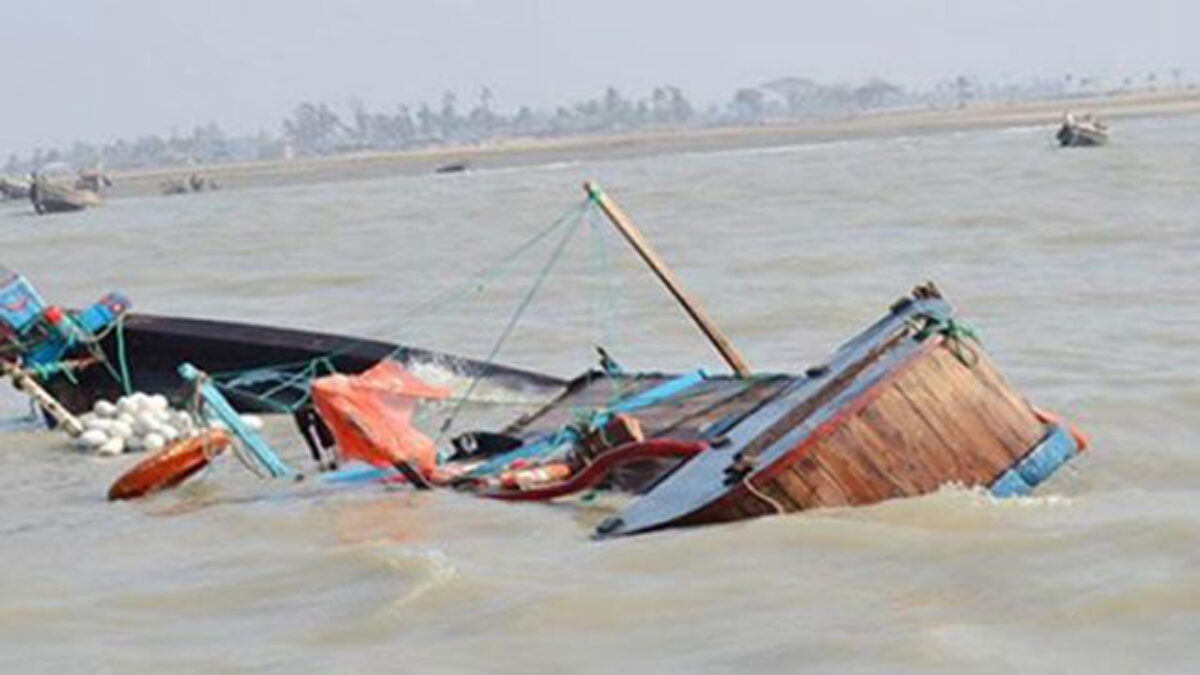
Following a boat tragedy on the Shagari River in the Shagari local government area of Sokoto state, 26 people have been confirmed deceased, with the search continuing.
Aliyu Dantani, Chairman of Shagari Council Area, told the News Agency of Nigeria (NAN) in Sokoto on Wednesday that the accident happened on Tuesday evening.
Dantani added that 21 of the 26 bodies retrieved were women, while five were children, and that a search and rescue attempt was still underway.
On the other hand, the chairman stated that the exact number of passengers on the boat could not be determined right away.
He said that local divers were currently in the river, trying to figure out how to recover dead or save lives.
Citizens in Kahiyal in Bugaje word of Jibia, Katsina State, have bravely stood up to bandits who invaded the village to collect tax from the innocent people.
The Daily Reality gathered that two armed bandits came into the village in broad daylight, asking people to give them money.
The villagers feigned to oblige but only for one of them to quickly grab the bandit’s rifle while dropping the money. Other locals, who also had their weapons, helped him.
A citizen, Professor Abdussamad Umar Jibia, narrated the incident on his Facebook wall.
He said the bandits “stayed in one place and asked the villagers to contribute money and bring it to them.
“The villagers did that. However, unfortunately for the criminals, the person who brought the money dropped it and quickly grasped the boy holding the rifle.
“Other villagers who were ready with their local weapons rushed on the criminals and finished them off as it should be,” he said.
Insecurity and banditry are the major security issues bedevilling the northwestern part of the country, leading to thousands of deaths while numerous others are forced to migrate.
The criminals impose unlawful taxes on countless farmers and others living in the affected areas.
Power brokers and political gladiators begin to fracture the peace and unity of Jigawa State and polarise its youths for their personal interests and idiosyncrasies. This challenge is further compounded by a misguided view of amalgamation by some segments of Jigawa as more of a historicized occurrence without any barefaced or hidden advantage to the state; a mindset that further promoted deliberate demonstration of impunity, as well as superiority by one group or zone against the other.
But to dramatize this superiority complex, the point people did forget is that never should one be so foolish to believe that you are stirring admiration by flaunting the qualities that raised you above others. By making them aware of their inferior positions, you are only sowing the seed of bitterness and envy that will hunt you back in ways you might not imagine.
Regardless of what others may say, it has plundered the socio-economic affairs of the nation to a sorry state; an occurrence that stems from an unknown leadership style described by analysts as neither ‘system nor method based’ without anything exemplary or impressive. While this appalling situation unfolds in our political space, the global leadership stage is littered with telling evidence about leaders that have demonstrated leadership sagacity and professional ingenuity that our leaders have refused to replicate their resourcefulness on our shores.
Having discovered the challenge threatening the continued existence of Jigawa State, it becomes imperative to say that whatever might be the failure, we must as a state begin to return to where we came from and what we were known for. But whatever measure we may want to use in tackling this challenge can only succeed if it probably puts in place steps that will guarantee leadership restructuring.
Catalyzing the process of building the Jigawa of our dreams that is laced with good leadership will among other demands require sincere and selfless leadership, a politically and economically restructured polity brought by the consciousness that can unleash the social, economic and political transformation of the state while rejecting the present system that has bred, inefficiency, a primitive capital accumulation that socially excluded the vast majority of our people.
Above all, to completely put things right, the state government must recognize our position, for Jigawa to be a society of equal citizens where opportunities are equal, a personal contribution is recognized and rewarded on merit regardless of town, zone or political affiliations. The best hope we have is to use the 2023 general elections to stop politicians that cannot draw a distinction between politics and leadership. And in its place, enthrone leaders that will align their aspirations with the people and compel leaders to stick to their campaign mandates, preventing them from reneging when elected into power.
Yes, politics and politicking are about the quest for power. Indeed, one of the major attributes of politics is the acquisition and devolution of power. In a democracy, one of the recognized processes of getting representation and power is through an election. The purpose of an election is to get power. Thus, any person or party desirous of electoral victory must carry the electorates along by effective stakeholders’ engagement which includes consultations, program exposition; interest aggregation and consensus building which among other things is for the purpose of ensuring equity and allaying fears of oppression and domination.
No doubt, the issue of power devolution has been a very knotty issue in Jigawa state politics. Similarly, zoning as a tool for power-sharing has been a very contentious one. The major advocates of zoning or rotational leadership are the people from Hedejia Emirate Zone. Thus, the canvassing for power shift should demonstrate and implement it in their zone.
For me, the concept of zoning or power rotation may sound mossy, and it may not be ideal for our situation fraught with fear of domination, distrust, apathy and immaturity.
Democracy is about people, their representation and not power-sharing. It may have many variants depending on the people, their culture, history and political ideology.
Clearly, adopting zoning practice may not eliminate the monolithic over-centralized system that brings tyranny, mediocrity, impunity and a winner-takes-all mentality among other things. Carrying everybody along will reduce apathy – something that has been identified as the bane of our local politics. I must advise that as a matter of necessity, we should eschew the if-not-my-zone-nobody-else-should-lead mentality and work for the success of Jigawa State.
Our people must shun disunity, disorganization, sentiment and politicians who once they get into office would bring unprecedented hardship, chaos and hopelessness. As I believe, we all want, hope and pray for one thing – a state where peace, stability, fairness, equity and love shall reign supreme.
May Almighty Allah Bless Jigawa state, ameen.
Umar writes from Jigawa, he can be reached via 08081058283.
The Lagos State Government, through the Health Facility Monitoring and Accreditation Agency (HEFAMAA) has shut down Medville Global Health Centre located in Okota area of the state over its illegal operation and low numbers of personnel working in the hospital.
This is contained in a statement signed by the Head Public Affairs of HEFAMAA, Mr Muyideen Ayokunle Uthman on Tuesday, 5th April, 2022.
According to the statement, the Executive Secretary of the Agency, Dr Abiola Idowu, says that the Medville Global Health Centre which is located at 1, Bashiru street, off Lateef Adegboyega street, Ago Palace Way, Okota is sealed for not complying with the set standards.
Reacting to the demise of one Mr Triplem C. Mchaty’s wife, she said the agency carried out preliminary investigations which revealed that the hospital was not registered with HEFAMAA, noting that this contravened the 2006 health sector reform law.
She stated, “It means the facility was operating illegally.” She added that the hospital had inadequate personnel.
Reiterating the allegation on social media, in a tweet, one Mr Triplem C. Mchaty @scantee stressed the sad moments on his Twitter account @scantee. The tweet reads thus:
“Good morning family, I am really heartbroken now. My wife died at MEADVILLE GLOBAL HEALTH CENTRE (HOSPITAL) NO. 1 Bashiru street,off Lateef Adegboyega Street, Ago Palace Way, Okota.
“We just got married 10 months ago, she took in, she was undergoing Antenatal in Onitsha, Anambra [state].”
However, Dr Idowu disclosed that the Chairman Dr Solanke Kayo Esq. has ordered the agency to carry out a full investigation to uncover the facts of her death.
Relating with the closure of the hospital, she maintained that the agency has taken the crucial decision in furtherance of public protection awaiting the final outcome of the ongoing investigations.
She finally urged all administrators of health facilities in the state to adhere strictly to the set standards and cooperate with the leadership of Governor Sanwo-Olu.
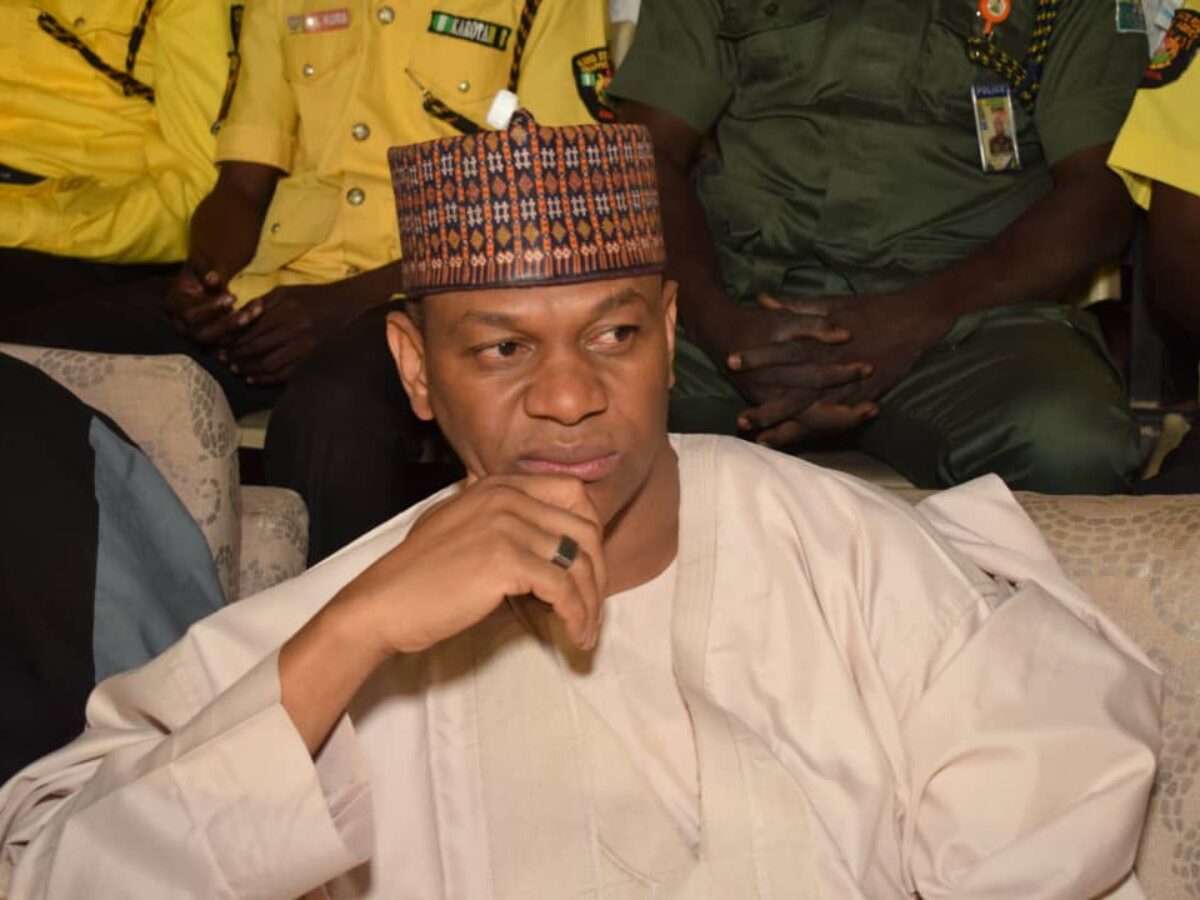
The Managing Director, Kano Road and Traffic Agency (KAROTA), Baffa Babba Danagundi, said he wished to resign, but Governor Abdullahi Umar Ganduje denied him the warrant.
Danagundi disclosed this in a chat with the Daily Trust on Monday.
He added that Ganduje, through the Acting Governor of the state, Nasiru Gawuna, refused to let him leave the job.
It was gathered that Gawuna rejected the resignation of Danagundi on the orders of the governor, who is currently in the United Arab Emirates.
Danagundi intended to resign to enable him to contest an elective position in the forthcoming election of 2023, as the Electoral Law requires.
Danagundi said, “it is true I tendered my resignation, but the governor rejected it. Hence, I have to take whatever he tells me.”
“The Governor has done a lot for me; he elevated me as Managing Director and did other things politically.
“Honestly, I will not go contrary to whatever decision the governor made on my resignation because he knows the best for me”, he said.
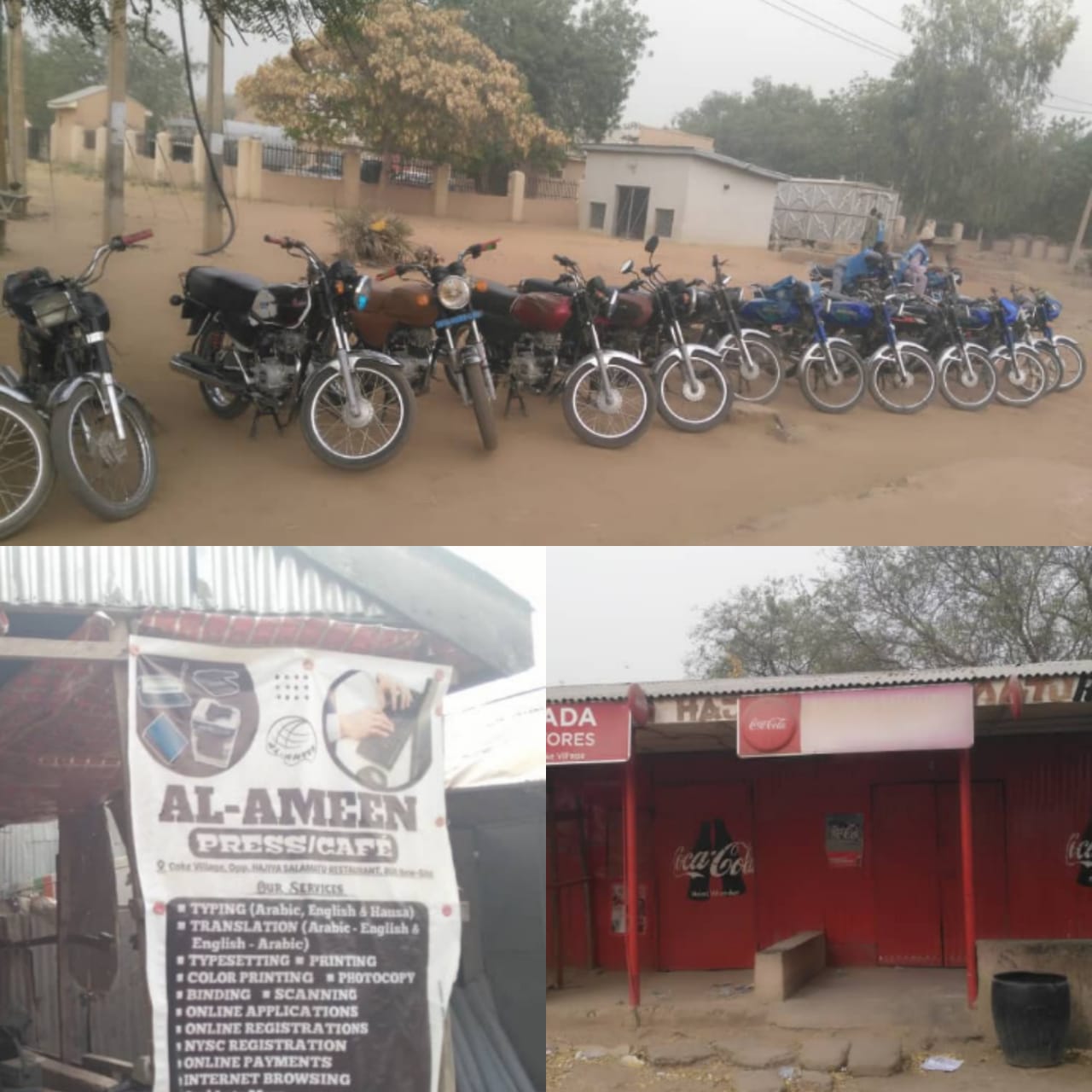
Campus-based businesses in and around Bayero University and Yusuf Maitama Sule University Kano have mostly closed following strike action by the Academic Staff Union of Universities (ASUU), leading to the loss of multiple jobs amid the harsh economic situation in the country.
The strike, apart from terminating academic activities across the campuses of the Universities, has left the institutions desolated as the absence of students grounded business activities to a halt.
A cross-section of petty traders, okada riders, restaurateurs, typesetters and other campus-based artisans have complained about how the strike is taking a toll on their businesses, scuttling their means of livelihood amid soaring inflation in Nigeria.
Nigerian public universities have been on industrial action since 14th February 2022 to pressure the government to fund the universities and settle some outstanding issues as contained in the 2009 Memorandum of Understanding (MoU) and 2020 Memorandum of Action (MoA) as negotiated by the Union of the University teachers and the Federal Government.
Why is ASUU on strike?
The university teachers signed an agreement with the Federal Government of Nigeria in 2009 for the revitalisation of public universities, which will enable the ivory towers to access 200bn annually for six consecutive years. The FG reneged as it only released once in 2013.
Government’s inability to implement other issues of 2009 MoU and 2020 MoA, such as salary upward review after three years relative to the strength of naira-dollar, payment of Earned Academic Allowance (EAA), etc.
The continued use of the controversial Integrated Payroll and Personnel Information System (IPPIS) did not capture university peculiarities and refusal to accept ASUU’s alternate payment system called University Transparency and Accountability Solution (UTAS).
Another point of concern by ASUU is the proliferation of universities by the federal government without adequate funding for the existing ones, which the union argues will further jeopardise the entire Nigerian public university system.
From warning strike to “extended” warning strike
The university dons have completed a 4-week long warning strike in an effort to press home their demands for the Government to honour the agreements. However, after a series of talks between government delegations and the leadership of ASUU, the union extended the warning strike by another eight weeks “to give the government enough time to implement the agreement”, according to ASUU President Prof. Osodeke.
Equally, meetings between the minister of education and the leadership of the National Association of Nigerian Students (NANS) did not yield the resolution of the bone of contentions.
Businesses disrupted, livelihood lost
As the industrial action continues, its effect is taking a toll on businesses and vocations on and around the campuses, with many business owners facing bankruptcy. Although most businesses, such as petty traders, cafés, restaurants, typesetting and photocopying centres, barbing shops etc., have closed down, the remaining few yet to close narrate their harrowing experiences at Bayero University Kano and Yusuf Maitama Sule University.
Ummi Abdulaziz, whose shop in BUK could not sell goods of N1000 a day due to the absence of students, described the ongoing ASUU strike as unfortunate, adding that “The strike affects us really seriously. There are no customers now. There are no people around. We open our shop, but there are no buyers. We are adversely affected. Sales have drastically reduced or even stopped. I can’t even make 1k a day now…”
Ummi, who called on the Federal Government to meet up with ASUU’s demands, said the plight of students and campus-based business people should not be allowed to suffer for long. She urged the two parties to have “A discussion and resolve this problem once and for all.”
Another business owner who identified himself as Sarkin Noma Maitireda BUK said the strike had brought misery and deprivation to their lives as his sole means of survival was being threatened. He was thinking of moving out of campus to find ways to feed his family.
Maitireda further lamented, “Honestly, we are not happy with the strike. We are pained because of our business. Everything on the campus isn’t functioning now. We only sit down by our stalls and shops sometimes to even nap. It badly affects our lives negatively.”
He recalled nostalgically how he survived past strikes partly by leaning onto his savings and ultimately on support from family and friends, saying, “We used to survive on our savings, then we borrowed from friends and family. When the strike ended, and businesses normalised once again we repay our debts”.
He decried that the current situation in the country makes it extremely difficult for him to obtain any support from friends and family, saying “everyone is battling with his challenge.”
“We call on the Federal Government to consider their demands so that they resume their activities and our university to reopen.” He appealed as he narrated how he naps by his stall due to no patronage.
Adamu Aliyu, who used to rake N30, 000 daily on average through his stationery stall but now less than N1000, argued that business people suffer the multiplier effects of the strike more than other members of the university community, including students.
Adamu called on the Federal Government to fulfil its promises to the academics and observed that “the situation in the country today is very terrible. So, I call on the FG to consider the situation of the country generally and consider the students and campus-based businesses specifically.”
Mohammed Kabir of Chiroma Business Centre in BUK, whose typesetting and stationery business vicinity remain desolate, said the strike alongside soaring inflation in the country makes his survival as a father and a husband very difficult.
Narrating his challenging sailing through the harsh reality of the economy compounded by the ongoing strike noted that “it has been difficult for me to survive because before now we were feeding from hand to mouth because of the economic situation. Most of the materials we were using have skyrocketed because of inflation…and now strike….”
Kabir lamented further that, unlike previous university strikes where few works were available, currently, “Probably due to the economic situation of the country, everything stopped. Nothing comes.”
Kabir pleaded that in the interests of students and the nation, even if business owners would not be considered, the two parties should resolve their differences to allow academic and business activities to return to universities as soon as possible.
”As a matter of urgency, the Federal Government and ASUU should come together and have a dialogue to resolve the issue. For the interests of the students’ even if they won’t recognise us, business owners… FG should fast track implementation of the issues so that at least the strike can be called off”, he further stressed.
It is no different at Yusuf Maitama Sule University (YMSU), as academic and business activities are grounded following the declaration of the strike. Unfortunately, like students, most businesses on the campus have closed due to poor patronage created by the vacuum left by students.
Abdussalam Adam was among a few business owners that come around to open their business for a few hours daily but now is considering total closure.
His business centre that provides Café services, typing, printing and photocopying to students has been badly hit by the ongoing strike. As a result, his average earning of N5000 has been depleted to around N500.
A stranded business centre
“Seriously isn’t easy for us that have business here on campus. The strike isn’t affecting students alone. It affects us. When the students were around, there was much work to do. I used to make 5k, 6k a day but now ….since morning I am just having 500 naira with me”, he complained.
He stated that “If I have the opportunity to talk to the federal government, I would advise them to consider ASUU’s demands and resolve the issue. They spend more than what ASUU is demanding on their personal issues. Why not on universities?”
“New World Cyber Café has already temporarily disengaged its staff because of the strike, but they will resume work when the university’s academic activities resume’’ said Bitrus Monday, who operates the biggest cyber café at BUK.
Bitrus Monday, who decried that strike is becoming habitual in Nigerian public universities, stated that there is an urgent need for the parties to have dialogue that will lead to settlement of the burning issues soonest.
“We are negatively affected. They should help us settle themselves. They should have a round table discussion and sort things out. It is obviously becoming a yearly habit in our universities.” He said.
Food and vegetable sellers worse hit
Food-related businesses that serve the universities and their communities are currently facing unique challenges that differ from their past experiences during varsity strikes in the past.
Alonelyvegetableseller
Shamsu Haruna, whose famous Gurasa Joint at BUK serves hundreds of students, staff and other university community members daily with this Kano delicacy, appeared visibly hapless due to the destructive effects of the strike on his business.
Shamsu soberly recalled how busy and deeply engaged his staff were when students were on campus. He noted that more than ten people were fully engaged in full-time jobs in his Gurasa Business but now are rendered jobless because of the strike.
He reminded the relevant authorities of the ephemerality of power and authority should they fail to discharge it for the public good, adding that “Other powerful, influential people have gone so also the current leaders will go. But what they do now is what they will be remembered for. They should try and leave a good legacy. They should consider the situation of the country and resolve the problem.”
He further noted that although members of non-teaching university staff are not on strike, his business has lost over 85% of its customers, expressing that “As we are in a very difficult situation because if you consider the market, we’ve already lost over 85% of our customers. This is not a small loss in business. We pray that God intervene in this situation… But Federal Government and ASUU should remember that life is transient.”
Restaurateur Fatima Ibrahim owns Al-Khairat Restaurant and has been in the campus-based food business for years, but the current strike is giving her a hard knock.
The strike is painfully touching for Fatima as her once-booming food business is struggling to recover after a near-death experience occasioned by the corona pandemic lockdown. “I used to go to the market to supply foodstuff on a daily basis, every blessed day, but now we go to market once a week. Unfortunately, after you prepared the food, there were no customers. Sometimes you sell, some other times you dispose of it.” she noted, adding that “FG and ASUU should please sympathise with the students and us to solve this conundrum so that they shouldn’t jeopardise the future of the students.”
Similarly, at Medinat Restaurant, the disturbance of the peace caused by the lingering university academics’ strike is making resilient Medinat Mohammed have sleepless nights. Her narration reverberated unpalatable experiences by other business community members of the university since the commencement of industrial action in public universities.
Adesertedrestaurant
”I used to cook 4-5 mudus of rice and prepare other varieties of meals, but now half mudu doesn’t finish a day. No students. No teachers”, she bemoaned
Determinedly tenacious, Medinat said of her over 20 years of experience in the business, this is the most devastating strike she experienced, alluding to the spillover effects of coronavirus pandemic lockdown “Sometimes we take a loan and after the cooking children will eat, and we (staff) too eat from it and pay transport…for over 20 years selling food, this strike is the worse because we did not recover fully from corona lockdown. It is only through the grace of God that we survive.”
She appealed to the Federal Government to settle critical issues it had earlier agreed on with ASUU so that normalcy return to the university campus.
Unlike other businesses, vegetables and fruit sellers are the most hit, languishing in their anguish due to the perishable nature of their supplies. Their harrowing experience cannot be understood entirely from the outside as they had already lost some quantity of their goods the very first week students deserted the university as explained by Alh Isah Gurgu Maikayan Miya, “With this strike, our business was completely put to a halt, completely grounded. Things have turned off. Our reliable customers, students, are no longer on campus. Academic staff no longer come. Some vegetables decomposed the week the student left because we brought them much and no buyers. So to get our daily meal now proves to be extremely difficult.”
He sadly revealed how he is now making an average of N1000 a day which is far below his average daily sale of N10000 before the strike, which according to him, “cannot cater for my family needs.”
He urged the Federal Government and ASUU to “please sympathise with students and we business owners”.
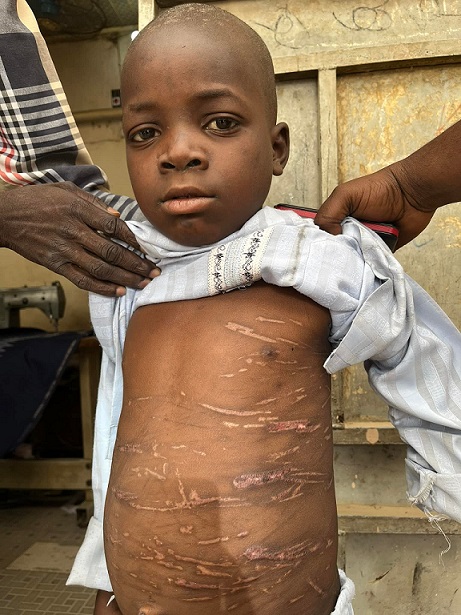
Many people reacted with shock over a viral video showing an eight-year-old Almajiri beaten mercilessly by his ‘Tsangaya’ Quranic teacher.
The Daily Reality gathered that punishment was due to the kid’s failure to bring food to the teacher, which is an age-old practice in many Tsangaya schools.
A source told our correspondent that the kid was found roaming the street after running away from the school.
The source added that a relative brought the victim to Kano from Magamar Gumau Local Government Area of Bauchi State for Qur’anic studies after his mother’s demise.
“I don’t want to go back to the school. The teacher will kill me. I want to return to my father,” said the kid.
Begging outlawed in Kano
Kano State is becoming a haven for beggars, despite the state government’s ban on street begging and subsequent measures the government to enforce the order.
In 2019, the Ganduje administration banned street begging, introducing new approaches to improving the education of the almajiri system.
In a statement, the Chief Press Secretary to Governor Abdullahi Umar Ganduje, Malam Abba Anwar, said the effort was to consolidate the free and compulsory primary and secondary education fully.
“If an Almijiri teacher thinks he cannot accept the new policy, he has to leave the state.
“When Almajiri are caught begging, it is not only that beggar is caught but also his parents or guardians. Such parents or guardians would be taken to court to face the wrath of the law,” the governor threatened,” the statement said.
But despite the ban, street begging has held to its position in the state, as beggars are still on the state’s streets.
Citizens blame government
Some people blame the government for not consolidating its position of improving the Almajiri education system to mitigate the menace of bagging in the state.
A former president of Foundation Against Child Abuse, Abdulmalik Shu’aibu Sani, blamed the government for playing politics with the menace.
Abdulmalik Shu’aibu said, “Government decides to play politics in handling this issue. If the government had actually banned or changed the Almajiri education system in the state, this boy wouldn’t have been beaten like a slave.”
“I believe this will surely be a joyous and celebratory idea if the government could implement the new system or at least tax parents to pay for school fees. With that money, their children will be fed.”
Amina Shu’aibu said, “I know the government will not do this. Anything about it is political.”
Some concerned citizens described the punishment as disheartening, stating that the system is not what it used to be.
Abdulmalik Shu’aibu Sani said such heartless people should be brought before the law to reap what they sow while calling on the government to take action.
He lamented that the kid was too small for that brutal beating, saying he could not take responsibility for himself and his teacher.
Adam Zahraddeen, one of the active members of the Almajiri Foundation in the state, said that in the past, Almajiri parents paid a certain amount of money and “that money will be used to feed his child by the Malam.
“It is heart-touching to see such forsaken small kids wandering on streets searching for what to eat.
“The government should by now end the Almajiri system of education and rethink how to reform the system.
Amina Adamu, who said she almost cried on watching the video, stated that she felt sorry for the boy.
She said, “Seeing the picture of this boy in this situation, I feel bad, sad, and sorry for the kid. He looks so pathetic. I feel like no matter what this boy has done, he doesn’t deserve to be beaten mercilessly like this.”
We are not heartless
Auwal Ilyas, one of the senior students at an Almajiri school in the state, said what happened was entirely contrary to what is obtainable in the system.
He stated, “The person who did this beating was very wrong. I believe a true teacher who answers his name will not do the same. So it must be a gardi (a senior Almajiri) that committed such a pathetic and regretful thing. I know gardi used to ask for food but not Malam.
“How will a teacher ask this very small kid to bring him food? In our school, our teacher, my father, take responsibility for any Almajiri. Malam provides two square meals for them, breakfast and lunch,” Auwalu added.
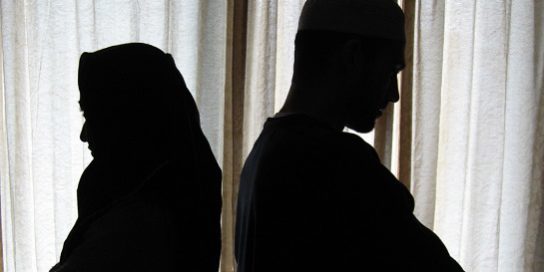
Marriage break-up is perceived as one of the major challenges bedevilling relationships in Kano State, a development that leaves a severe psychological impact on the windows. A report by the BBC Network African Programme in collaboration with the Kano State disclosed that there were over one million divorcées in the state.
The research disclosed that 32% of marriages in Kano State survives only a period of three to six months; and that many young people between the age of 20-25 years are said to have gone through three marriages at least.
The Executive Director National Association of Divorcees/Widows and Orphans, Hajiya Altine Abdullahi, decried the rate of divorce in the state. She had once threatened to protest the menace. This menacing issue of marriage break-up has continued to witness a steep increment in Kano State more recently, making it a serious problem needing mitigation.
The Daily Reality had reported materialism as one of the contributing factors militating against marriages these days.
Divorce, how abrupt it occurs
As though a competition, many husbands partake in the race for divorce. The issue has now graduated to a national problem in dire need of mitigation.
A photographer, Aminu A. Gambo, recounted the harrowing tale of how a one-week-old marriage crashed.
He said, “I once covered a wedding. The wedding took us almost a week, as they started the events from Tuesday throughout Thursday the following week and had a break on Friday.
“The events continued on Saturday and Sunday was wedding Fatiha, which concluded with conveyance of bride late evening that day.
“In the subsequent week, on a fateful Wednesday, the groom called me as early as 6 am and told me to calculate my balance and send my account number. As I did, he then transferred the amount to my account and told me that their marriage was no more,” he stated.
Also, Abubakar Umar confided in our reporter that he was rather perplexed on hearing that the marriage he attended just a week ago had broken up.
Umar said the marriage had broken up even before some relatives who attended the wedding from far places returned to their various destinations.
He added, “it came to me as a surprise that a week-old marriage had broken up just abruptly like this despite the bond between the couple.”
Understanding the root cause
Many concerned citizens argued that there are no tangible reasons behind the increased marriage dissolution.
Hashim Ibrahim described the menacing issue as a problematic phenomenon that defies every explanation.
He said, “The problem is that what triggers Mr A to divorce his wife might not be the same reason for Mr B to end his marriage.”
Muhammad Tasi’u stated that: “There are only two things that lead to the marriage breaking up; the exaltation of men and the ignorance of women.”
Aisha Mujitaba looked at the issue from a different angle, saying guys pretend to be rich in order to woo girls.
“Nowadays, both loves and marriages are based on materialism; that is how equivocation and deception have chipped in in the process of getting married.
“Guys pretend to be wealthy in order to win girls’ hearts. Consequently, when they are joined in matrimony, the true nature of what the person is will be revealed. This leads to the breakdown of relationships,” Aisha said.
Fatima Sha’aibu also believed that lying was one of the contributing factors leading to the marriage break up.
She said, “Mostly guys lie to win affections. Then after the marriage, when the truth was revealed, the girl might feel she can’t resist living with a life-faking husband.”
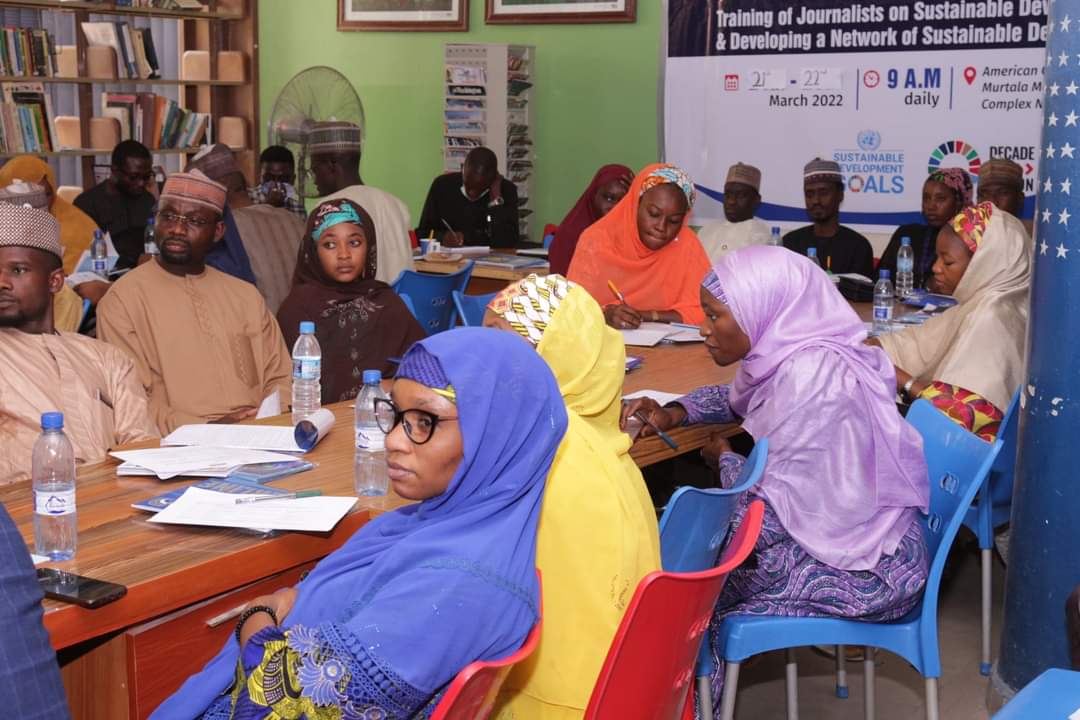
United Nations Information Centre (UNIC) Lagos, in collaboration with Media Awareness and Information for All Networks (MAIN), has organised a two-day workshop for journalists in Kano on mainstreaming Sustainable Development Goals (SDGs) into their routine journalistic activities.
The programme tagged “Training Journalists on Sustainable Development Goals (SDGs) and developing a Network of Sustainable Development Journalists” took place at the Kano State Library from Monday, March 21, to Tuesday, March 22, 2022. The event is a part of training for journalists across the six geopolitical zones of Nigeria on how to mainstream the SDGs into their professional engagements.
UNIC Director, Mr Ronald Kayanja, noted that the training was to expose the journalists to the key issues of the SDGs and how they can contribute their part toward achieving the 2030 sustainable development agenda.
Mr Kayanja, who was represented by Dr Oluseyi Soremekun, stressed the need for partnership and collaboration among all stakeholders toward achieving the SDGs at the stipulated time.
On his part, the Chairman of the occasion, Professor Lai Oso, said the objective of the training was to acquaint the participants with social, economic and environmental dimensions in reporting issues related to sustainable development.
He said sustainable journalism should be people-centred and geared toward proffering solutions to identified societal challenges.
Head Technical, Office of the Senior Special Assistant to the President on SDGs, Dr Bala Yunusa, who was represented by Dr Zakariyya Mohammed, explained Nigeria’s progress and challenges in implementing the SDGs in Nigeria and called on the media personnel to remain supportive to achieving the SDGs and Nigerian Agenda 2050.
Dr Yunusa noted that Nigeria has recorded successes in the previous MDGs and is now determined to achieve more with the SDGs.
At least 50 journalists drawn from traditional media of radio, television, newspaper, and online-based news media participated in the workshop.
The participants were decorated with emblems as champions of the SDGs.
The impact that teachers make on students vary in type, magnitude and degree. And as well, they differ in the way and manner they influence students. While to a great extent students unconsciously internalise/emulate certain manners, characters and styles of their teachers, in some cases that is done consciously and deliberately too. This is the fact that I am obliged to reveal as I pay tribute to my teacher and mentor all through my teaching career in the university. In other words, I am hereby proclaiming to the World that Professor Maiwada not only taught me, but he was in the top rank of my mentors and role models.
Professor Maiwada taught me Educational Psychology, Research Methods and Statistics in my second and third years of undergraduate studies and again he taught me the same courses at my master’s degree level. Indeed it was Professr Maiwada that made me love Educational Psychology and influenced me to eventually specialise in it.
I so much admired Professor Maiwada’s style of teaching. Once he enters the lecture room/theatre, after the usual greetings and courtesies between the lecturer and students, he would turn to the board (black as it was then) and write the topic and the outline of his lecture. He would then take students through the outline (sub-topics) to the end. His writing on the board and on paper was not only clear and legible but quite neat and beautiful. It would be difficult to hear students complaining that they did not understand Professor MAIWADA’S lecture. This is a style of instruction that I consciously and deliberately adopted up to this moment.
More importantly, my intellectual debut and voyage into the ISLAMIZATION OF KNOWLEDGE paradigm and school of thought were principally owed to the influence of Professor Maiwada. Two other teachers of mine that also influenced me in this regard are the late Dr. Musa Ahmed and Professor Aliyu Dauda. It was however, Professor Maiwada that really mentored me in this regard. When I wrote my M. ED Dissertation on: “A Study of the Islamic Perspective of Cognitive Development: Implications for Education”, supervised by the late Dr. Musa Ahmed, Professor Maiwada was indeed my defacto supervisor. He painstakingly read every single line of my work, meticulously corrected and advised me appropriately and where necessary.
Although, he surely had clear mastery of his subject matter of instruction, Professor Maiwada would never brag in the classroom or even try to make a show of it. He would, however, in his typical soft spoken manner, deliver his lecture with pedagogical effectiveness and mastery.
Professor Maiwada was not just a role model in the classroom. His entire teaching life presents an exemplary disposition of academic discipline, rigour and intellectual adeptness. Once he comes to the faculty he would either be in the class teaching or in the office going through students’ projects, dissertations and theses. He was never given to petty talks or sundry gossips. As he made his way to the office he would greet and answer greetings with a dint of politeness and humbleness. He was one of our older Professors that never sent their pens on leave. Not surprisingly, he was prolific up to the time of his retirement churning out papers and editing journal articles and book chapters and returning them within stipulated times. It was very rare if not impossible to hear any student complaining that Professor Maiwada had held his (project, dissertation or thesis) chapter beyond reasonable time without returning it read, improved, or corrected.
Though he was obviously apolitical, but destiny conferred on him the privilege of holding almost all academic/administrative positions of leadership in the university. Across three different universities (Bayero University, Kano, Al-Qalam University, Katsina and Northwest University – now Yusuf Maitama Sule University, Kano) the Katsina-born Professor was a Head of Department, a Dean, a Deputy Vice-Chancellor and a Vice-Chancellor without having to contest at any given time. For the records, he was the Pioneer Vice Chancellor of Al-Qalam University, Katsina. At two different times of leadership interregnum he acted as a Vice-Chancellor in both Bayero University, Kano and Yusuf Maitama Sule University respectively.
As the academic trail blazer that he was he presented, to my mind, the first ever valedictory lecture at the point of his retirement just last month before the commencement of the ASUU strike. Unknown to us all, he was only having barely a month and some weeks to his grave.
He purposely called to tell me about the lecture and the date that was scheduled. I missed it and out of respect and adoration I called to apologise. He told me that it did not hold but was postponed. When the second date was fixed he again called. I made it a point to attend. But as destiny would have it, I got an appointment of visa interview in Lagos on the same date. So I did miss it. I could not call to apologise again out of shyness.
It was only a few days ago I heard of his sickness. I could not even visit him in the hospital because I was out of Kano for a couple of weeks. I just got the shocking news of his death. It was such a tragic loss to the Ummah and indeed to the the academia and Bayero University, Kano.
May I use this medium to condole his immediate family, the Departments of Education and Special Education, the Faculty of Education and the Vice – Chancellor, Professor Sagir Adamu Abbas. Incidentally we were both his students, although not in the same class.
“Of the believers are men who are true to that which they covenanted with Allah. Some of them have paid their vow by death (in battle), and some of them still are waiting; and they have not altered in the least”. Suratul Ahzab, verse 23.
May Allah, al-Ghafur, al-Raheem forgive him and shower His Infinite Mercy on him. May He give us the fortitude to bear the loss.