Local

Sheikh Daurawa foundation releases 14 inmates in Kano

By Uzair Adam Imam

There was excitement on the faces of inmates and tears in their eyes when Darus-Sunnah Foundation Wednesday visited the Goron Dutse Correctional Center, Kano, to bail out some of the inmates.

The foundation, under the leadership of Sheikh Muhammad Aminu Ibrahim Daurawa, was able to secure the release of 14 inmates, who, amidst joy, departed to reunite with their families.

The development was contained in a statement issued and signed on Saturday by Malam Aisar Salihu Musa, the committee secretary.

Salihu said the foundation had bailed out the inmates charged with civil offences and debts, where N250,000 was spent in the process.

He added that the foundation also paid for medical treatment for some sick inmates.

Need for authority to intervene

The foundation also called on the authority to intervene in feeding and bailing some of these inmates, whose offences are not criminal.

“There is a need for our rich people and politicians to be taken their annual alms (zakka) to such correctional centres and bail out inmates.

“They need to know that these people suffer because of the little debt or fine they couldn’t afford to pay.

“We need to help them with food, water, clothes, shoes, etc. Some of these inmates will go down on their knees to thank you because of just one Maggi cube.”

Inmates jailed for minor offences

“There is also a need for lawyers and non-governmental organisations (NGOs) to visit such places because some inmates are jailed for minor offences.

“They need to interview them, review their warrants, and ensure their constitutional rights are not injured.

The leadership of this foundation also instructed Malam Anas Madabo and Malam Aisar Salihu Musa to preach to the freed inmates before they left.

Mammoth crowd receives Dauda Lawal as Zamfara PDP guber candidate

By Aisar Fagge

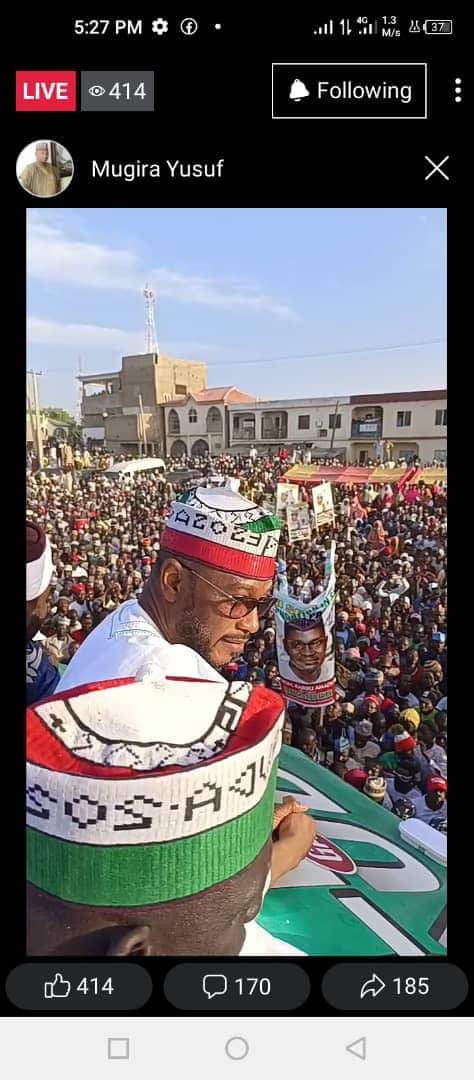
Dauda Lawal, a governorship candidate of Peoples Democratic Party, PDP, on Monday held Gusau, the capital of Zamfara state to a standstill as thousands of his supporters defied security threats to attend his mega rally.

Lawal held the maiden rally after an Appeal Court in Sokoto reinstated him as the PDP governorship candidate, following the nullification of his primary election by a High Court in Gusau.

Thousands of the PDP supporters, from virtually all the 14 Local Government areas of the APC controlled state thronged Gusau to express their support to the party’s flagbearer.

It was observed that Gusau wore a new look on Monday following the huge crowd of the PDP faithful that graced the rally.

Business activities had been paralysed in Gusau as the crowd caused traffic gridlock around the city, especially on the roads leading to the venue of the rally.

Addressing the mammoth crowd when he arrived at the venue on open van, the PDP candidate promised to restore peace in the state ravaged by the activities of bandits.

He also pledged to improve economy, education, health and agriculture in the state.

According to him, Zamfara needs a robust and effective leadership to be revived, especially with the current insecurity bidevelling the state, noting that only PDP has the wherewithal to achieve that.

“Today is a historic day. Today true democracy is being played. We are overwhelmed with this massive crowd. This show that people of Zamfara are ready and want change.

“We will not let you down. We will not disappoint you. You know we impacted your life even when we are out in power. If you elect us, we will do better.

“If you elect me as your governor, i will ensure security is restored in our dear state. We have mechanism and strategies to achieve that.

“I will improve security, health, economy and agriculture, the glory of our state. We will restore our farming activities by God’s grace,” Lawal said.

Some of the PDP faithful that spoke to journalists said they would vote for Lawal because of his resolve to help the poor and the vulnerable.

They said the candidate had impacted the life of many of the people of Zamfara, especially the downtrodden.

“This man, has never been in power but he is doing what even the government is not doing. He helps orphans, widows, physically challenge, executed many projects in communities.

“This man has offered scholarships to hundreds of students, offered empowerment to women and youths, no wonder you see this massive crowd,” said Adamu Nuhu, a PDP supporter.

Another party’s stalwart, Mairo Magaji, said she came from Shinkafi to witness the rally because of what Lawal is doing to people.

She said she has reserved her vote for him in order to support him attain power to continue serving the people of the state.

Gunmen raze down INEC office in Enugu, murder policeman

By Uzair Adam Imam

Unknown gunmen have stormed the Enugu state office of the National Electoral Commission (INEC) and set the place on fire.

The attack, which was coming few days to the country’s general elections, also lead to the murder of a policeman, who was shot by the gunmen and breathed his last on the spot.

Festus Okaye, the National Commissioner and Chairman Information and Voter Education Committee of INEC, delayed the news go journalists.

He said that the Resident Electoral Commissioner (REC) for Enugu State, Dr. Chukwuemeka J. Chukwu, reported the incident to the headquarters of the commission.

He added that, “The incident occurred around 9.12pm yesterday, Sunday 15th January 2023. The security gatehouse was razed. Of the two Policemen deployed to protect the facility, one of them lost his life while the other sustained injuries and is receiving treatment.”

“The commission prays for the repose of the soul of the deceased policeman and the speedy recovery of the injured. The attack is being investigated by the security agencies,” Okoye said.

He added that it was very fortunate that the attackers could not gain access to the main building as a result of responses from police and army personnel 82 Division.

FRSC admonishes motorists to drive at regulated speed

By Ukasha Rabiu Magama

Motorists have been admonished to drive at a regulated speed limit and observe the road and driving rules and regulations to prevent road traffic crashes along the major highways to save the lives and properties of the commuters.

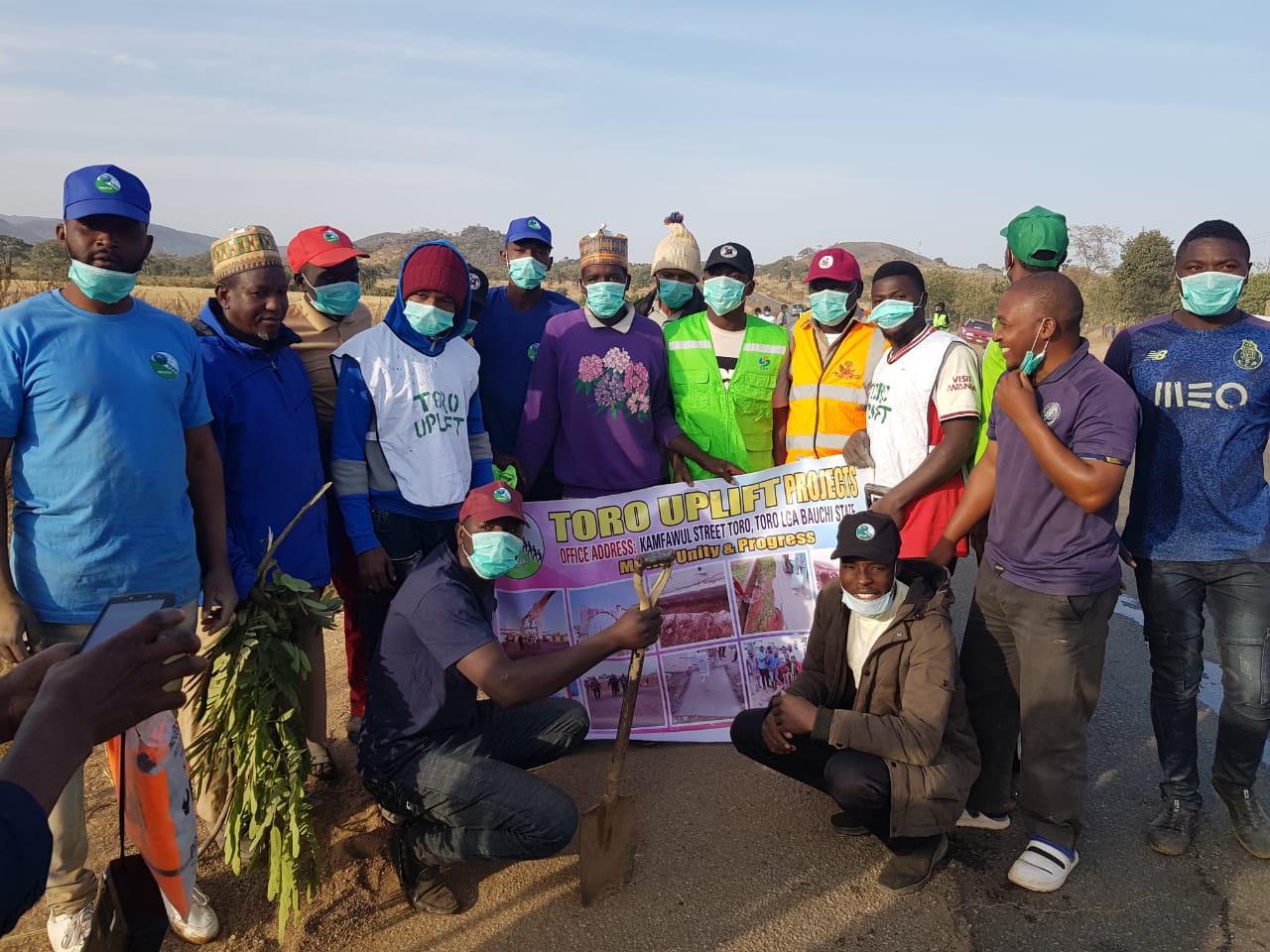
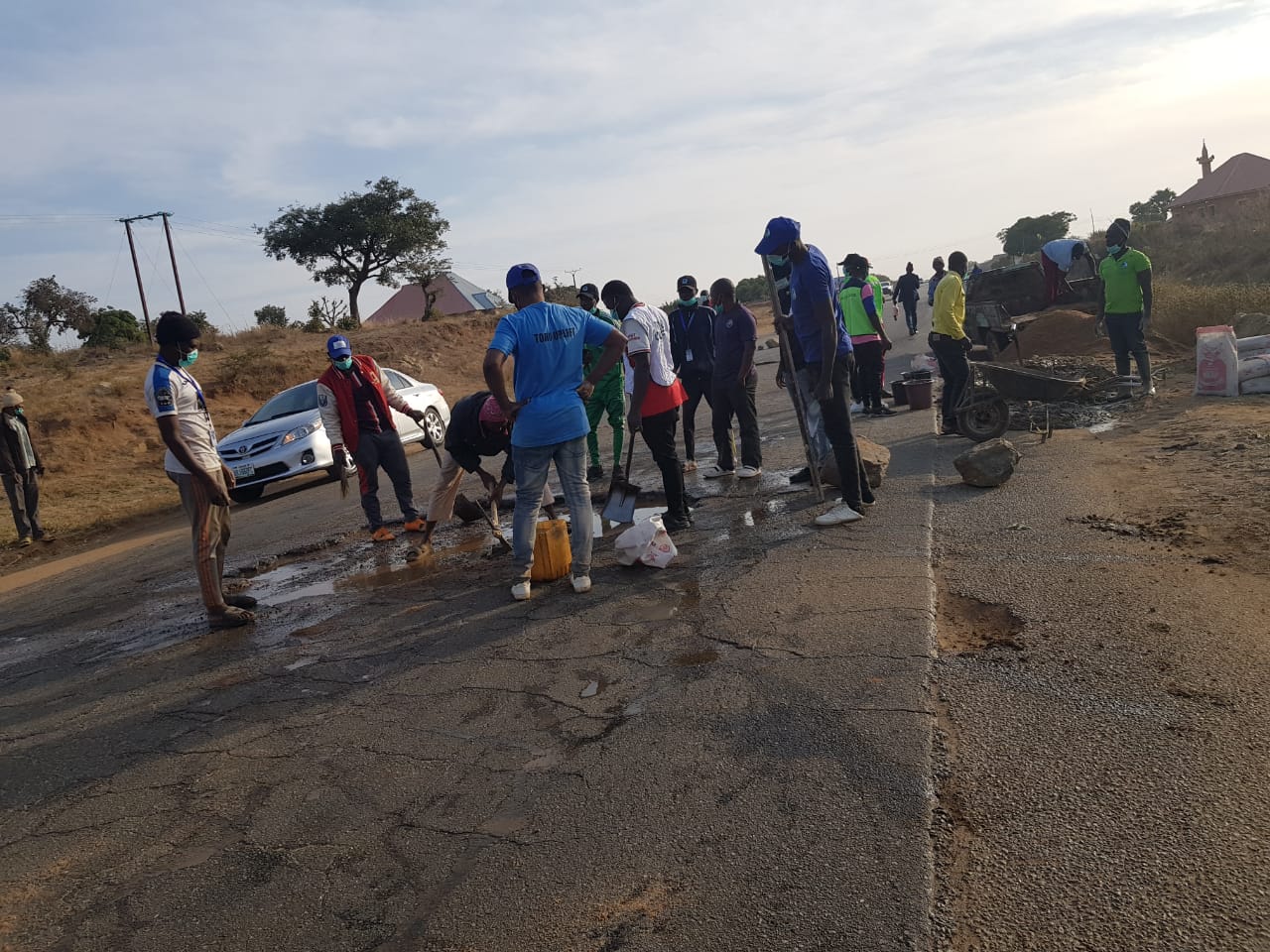
Officer Gibson Ogbeinama, the unit head of operations, acting for Toro Unit commander of the Federal Road Safety Corps FRSC, made the charge while supervising the potholes filling along Bauchi Jos road embarked by the Toro Uplift Association in Goljarendi Magama Gumau Toro local government Bauchi state.

Ogbeinama said three major factors contribute to road traffic crashes, among which are the environmental factor, the mechanical factor and the human factor. Therefore motorists should notice and adhere to driving guidelines by giving extra care to dangerous potholes to prevent frequent occurrences of road traffic crashes.

Toro Uplift Association youth at work

In his remark, the chairman of Toro Uplift Association, Abdulfath Mu’azu, expressed delight and appreciated the Road Safety Corps members’ support during the exercise. Added that Toro Uplift will continue working hand in hand with FRSC members when the need arises; hence the need is to save the lives and properties of the citizens.

Similarly, the chairman of Magama Youth Forum, Haruna Dan Maigoro, whom Jamilu Musa represented, the association secretary, thanked Toro Uplift for the gesture, adding that the fill-up exercise will go a long way in mitigating the risk of accidents along the road. He, however, relished youths for coming out in numbers to support the exercise.

Dangote cement trains 40 Kogi women on fashion design

By Aisar Fagge

There has been great excitement among women in Obajana community, Kogi State when no fewer than 40 women sponsored by Dangote Cement Plc. were graduated from skills acquisition training school on Thursday.

The women learnt fashion and design and were advised to be self-reliant on it.

The Daily Reality gathered that the training was meant to address the biting economic hardship prompted by job scarcity and unemployment in the country through job creation.

Mr JV Gungune, the Plant Director, of Dangote Cement Plc, Obajana, while speaking at the graduation ceremony, said, “even though the job creation scheme aptly fits into the company’s vision and mission, it cannot do it alone, nor can it employ everyone.”

He also pleaded with the beneficiaries to put the skills and equipment provided by the company into proper use, adding that the beneficiaries should count themselves lucky to have been selected and trained.

The women also expressed happiness and gratitude to the President of the Dangote Group, Alh. Aliko Dangote.

The traditional rulers of the various communities commended the company and described the development as a huge intervention.

Also speaking, his Royal Highness, the Olu-Apata, Oba Dr Frederick D.O. Balogun, expressed appreciation and pledged his community’s continuing support for the company.

Kano gov’t completes 10-megawatt hydropower plant

By Muhammadu Sabiu 

The 10-megawatt Tiga Dam hydroelectric project has been completed.

 This was announced by the Kano State Government through Hadiza Tukur, managing director of Kano Hydro and Energy Development Company (KHEDCO).

The power plant, according to Mrs Tukur, will supply power to the city’s street lights as well as the state’s water treatment facility in Tamburawa.

She said the Nigerian Electricity Management Services Agency has not yet certified the power facility (NEMSA).

“In the power plant, we have two generators, one is vertical, which will generate 8 megawatts of power capacity, and the other one is horizontal, which will generate two megawatts of power making ten megawatts. That is why it’s called Tiga ten megawatt power generation station.

“Everything is being completed pre-commission test is ongoing. What remains is the certification of the Nigerian Electricity Management Services Agency (NEMSA).

“Another thing waiting for is also automation when it’s completed, we are going to open the water and allow it to rotate the turbine. We have gotten permission from the Hadejia Jama’are River Basin Development Authority.

“The Eight megawatts are being tested without a load, but in the next two weeks, we are going to test them with a load. The same applied to the two megawatts,” she was quoted as saying.

Public schools resume Sunday, disciplinary action awaits defaulters – KSMOE

By Uzair Adam Imam

The Kano State Ministry of Education has announced Sunday, January 8th, 2023, as a resumption day for all boarding public and private primary schools for the commencement of the 2nd term academic session.

A statement by the Director Public Enlightenment Ministry of Education of the state, Aliyu Yusuf, disclosed this on Saturday.

The statement added, “While expressing appreciation for the cooperation and support been [sic] accorded to the ministry, Commissioner Rt. Hon. Ya’u Abdullahi Yan’shana urged Parents/Guardians of Pupils and Students of the schools to ensure compliance with the approved resumption dates.

“The Commissioner who also wished the students and pupils successful commencement of the 2nd term Academic session, however, warned that appropriate disciplinary action would be taken against defaulting students,” the statement added.

The Kano of my dream

By Suhaibu Safiyanu Bagwai

Indeed, one of the most important developmental aspects of modern Nigeria is the growth of public opinion, which, aided by universal education and the mass media, can today keep the government in check as has never happened before. We can still march on through our fastidious conscience and occasional rebellion or our constant prodding of society’s leaders for better things. Even in a perfect world, there will always be men who will dream of other worlds, of better things, since not everyone is likely to be enthused by their current world, let alone someone who lives in Kano, a state that is riddled with corruption, social insecurity and illiteracy, bloated by debts and battered by economic volatility, poorly planned buildings and poor refuse disposal and management, to mention but a few.

Kano is one of the seven ancient Hausa kingdoms, and the principal inhabitants of the state are the Hausa people. A commercial nerve centre of Northern Nigeria, the “Centre of Commerce”, with a population of about 20 million people. The large population of people and the ease of doing business in the state have added to the crowded nature of the state. Nevertheless, it has maintained its commercial status for centuries, although the economy is friable, despite the inconsistent government policies and sporadic electricity supply, which hamper the manufacturing industry. Kano’s economy relies primarily on trade, retail and services.

Over the years, Kano has encountered enormous urbanisation challenges, ranging from rapid population growth, overcrowding, increasing vehicular and industrial pollution, high rates of out-of-school children, and urban poverty resulting in many environmental issues. Compared to its neighbouring states, Kano is faring better; but when put on a realistic scale, it is devastatingly poorer! Thus, every Kano citizen dreams of seeing that the major problems bedevilling the state are properly checked, and I am not an exception.

Looking at the population of Kano, one will find how it grows at a hysterical height. Rural-urban migration is at its peak; the city is overpopulated with people who leave their hometowns for greener pastures. That makes the city dirtier and unhealthy to travel around. But why the rural-urban migration increases every day? This is the question we seldom ask.

Nigeria’s current economy is debilitating; the inflation rate is high. The recent statistics of multi-dimensionally poor Nigerians rise to 65%, and 75% (of this percentage) live in rural areas. This shows that the urban-rural poverty and unemployment margin is wider, hence the rise in rural-urban migration. However, this is something that is not uncontrollable. Job creation and providing basic social amenities will go a long way in solving this problem. Offering loans, fertiliser and seeds to our small-scale rural farmers and making sure they reach the target people and introducing government and private agencies aimed at educating the farmers on how to make a good harvest, storage and sale will boost our agricultural produce, create job opportunities, diversify our economy and reduce the rural-urban migration drastically.

Reading the statistics of the number of out-of-school children in Kano and seeing it myself in my hometown, Bagwai, scares me the most. A society that invests less in education is stagnant and hopeless, with little or no future. Over the years, our government’s educational policies could have been better planned and executed. For instance, the current government’s introduction of the “Free and Compulsory Education Scheme” has, owing to poor planning and execution, ruined the education system. Before the scheme’s introduction, students used to pay 700 naira per term, which was used for the management of the school and pay teachers, mostly volunteers, some tokens. Now that the fee is removed, teachers – that are primarily voluntary – become scarce, and the principals and the head teachers cannot raise the money to pay them or manage the schools. It is the government’s responsibility to look for a way out. Unfortunately, public schools have remained neglected since the law was passed.

Many students drop out of school due to dilapidated buildings, overcrowded classrooms, scarcely qualified teachers, and poor teaching and learning atmosphere and facilities. Therefore, the government should look deeper into this scheme and make immediate improvements. In addition, the sectoral allocation in the education ministry should be increased. We have thousands of well-trained, unemployed education graduates ready for recruitment.

Kano is notoriously known for political thuggery, and it is one issue that perversely mocks my hope of a better Kano. However, I learned that most are either unemployed or school dropouts. Thus the creation of rehabilitation centres, youth empowerment schemes, sporting activities and public enlightenment programs will help reduce it.

Although there has been some development in the road network of the Kano metropolis, the number of vehicles at some road injunctions exceeds the road’s designed capacity. The trading activities along the major roads and inadequate planning obstruct efficient road transportation in urban Kano. Poorly planned buildings in our major markets, mostly built on water passages, blocks the water passages causing water to flood when it rains, which leads to the loss of lives and properties worth billions of naira – as it happens yearly – and obstructs the easy passage of vehicles whenever there is an accident or a fire outbreak in the markets. I dream of seeing some of the major markets relocated from their present locations or their buildings re-planned and trading activities along the roads banned, providing them with space for their businesses. More bus stops and parking spaces should also be provided to prevent indiscriminate parking and to stop at prohibited places.

One of the most disturbing environmental problems we face is refuse dumping on the streets outside our homes and any unused space in our neighbourhood, including open sewers and ponds. We produce almost 2,000 tonnes of garbage daily, but the sanitation workers can only approximately dispose of 800 tonnes. The remaining 1,200 are piling up on the streets and alleyways of the city, posing severe health risks to the inhabitants and blocking water passages. That is why the city is always dirty! Therefore, through REMASAB, the government should provide sufficient equipment for refuse disposal and the general public, who mostly needs a culture of refuse disposal, be enlightened on the dangers of improper refuse disposal and how to control it.

Bringing traditional and religious leaders closer to the government will influence public adherence to some governmental policies since the citizens are religious. The leaders are also influential. There should also be an establishment of a law that will restrict religious leaders from using abusive or provocative language during their sermons and preaching.

The poor supply of electricity and acute dearth of pipe-borne water in Kano can also be reduced if the government were to utilise its resources accordingly. Kano is blessed with almost seven major dams that can generate hydroelectric power, like the ones done at Tiga and Watari dams, providing adequate electricity and water supply for public and industrial usage. The surroundings can also be used for hotels and tourism by building amusement parks which can generate revenue for the state and create jobs.

The agency responsible for revenue collection, KIRS, needs to be redressed and transparent. The government’s spending should also be transparent to the public to know where and how their taxes are spent.

If I were to advise the government and the budgetary committee, I would suggest they determine budget priorities so that resources can be directed to issues of higher priorities and the proposed plans to be in line with the projected range of resources for each government agency. That will also compel the government to make hard choices between using available resources to start new projects or completing the existing ones. For instance, this year’s priority is education; new teachers recruited, buildings renovated, wages increased, teaching and learning facilities provided and so on. Then, next year will be the health sector, followed by commerce, water, electricity, agriculture, and sports…in the subsequent years. This will go a long way in tackling our problems.

Finally, I believe that hopeless as she may seem, Kano is not beyond redemption. We just need the will to do that. This is my dream, and I believe it is everyone else’s!

Suhaibu Safiyanu Bagwai is among the winners of the 2022 “The Kano of my dream” writing competition jointly organised by Muhsin Ibrahim, PhD, and The Daily Reality online newspaper. He can be reached via bagwaisafwan@gmail.com.
The Kano of my dreams

By Ibrahim Abubakar

In the late 1890s, my great-grandfather narrowly escaped the evil claws of the Mahdi’s hostile and belligerent lieutenant, Rabeh Bn Fadlallah, who had invaded Borno to spread the Mahdist ideology. They sacked the empire’s capital of Kukawa, captured and executed Sheikh of Borno, and enslaved many people. This martial excess sent trembles across the land, and many thought it wise to migrate westward into the Sokoto Caliphate for safety. Among those who migrated to the Caliphate was my great-grandfather, Mamadou. Of its two dozen emirates, Mamadou chose Kano as his refuge.

Kano was the jewel of the Sahel, a centre of trade and commerce with walls 50 feet high and immensely thick, surrounded by a deep artificial gully making it an impenetrable fortress; a marvel to behold! It is this sense of security and opportunity, I believe, that made Kano a desirable place for my ancestors.

During colonial times, Kano increased in its majesty. The British administration modernised trade and industry, built hospitals, schools, and railways and improved the justice system by integrating and superbly implementing strategies that supported the rule of law and ameliorated the superficial old system. Kano’s commercial strategies were carefully designed to produce a positive net economic effect. For example, hide, skin, groundnut, animal feeds, meat and textile were exported to Britain. These export plans were supported by long-term government programmes that continued into post-independence Kano.

According to a World Bank report, Kano State’s mainstay is agriculture. It employs about 60% to 70% of the population producing rice, maize, millet, groundnut, beans, etc. Livestock production is another source of income for the farmers. The industrial output is from oil mills, textiles, tanneries, flour mills, and several others.

As the centre of commerce, Kano handles about 75% of finished goods from Lagos, Ogun, and Oyo industries. These are distributed to all the northern states and the neighbouring states of Niger, Cameroon, Chad, etc. From Kano, the following are exported: semi-finished leather, cotton lint, gum, hibiscus, sesame seeds and other minor items. All of the above have immensely contributed to enhancing Kano’s GDP as one of the highest in the country.

Unfortunately, the contemporary situation is rather bleak. Most of the factories have closed or have reduced their production capacity. Kano had about 30 tanneries producing over 45 million goats and sheep skins for export. In addition, over 7 million cattle hides were processed as finished leather for making shoes and other leather goods. However, there are only a dozen tanneries in production today. As for cattle hides, 90% of it is consumed in southwestern Nigeria as Ponmo or Ganda. In addition, cattle hides are imported from neighbouring countries and Mali, CAR, Sudan, and Saudi Arabia. The last textile to close was Angel Spinning and Dyeing Limited.

It is not a hidden fact that education has crumbled in recent years. Many children in Kano are poorly educated (the lucky ones?) and without a solution in sight. Although I am aware that education has exacerbated globally, for example, my father, 48 years older than me, is better educated in most branches of general learning. Kano is in the top five states in the country with substantial numbers of out-of-school children.

Healthcare facilities across the state are in a deplorable state. For example, the last time I visited the A&E department of a general hospital in Kano, I was sickened by the gruesome sight of accident victims on the floor, literally bleeding to death. In addition, there is an enormous disparity in the doctor-to-patient ratio, albeit not the worse in the country. It is, however, in the top ten states lacking doctors, with a ratio of 1 doctor for every 14,123 persons. To put it into perspective, the UN standard doctor-to-patient ratio is 1:600.

Kano used to be safe. Growing up, very few isolated incidences of theft were heard of in the city. Today, people get robbed in broad daylight. Thieves with sharp knives of all shapes and sizes attack people on the streets to rob them of their phones and other belongings; those who refuse to comply are fatally stabbed without remorse. Rape cases are rising exponentially. This year alone, over 1,300 cases of rape were reported. It is sad to see Kano vitiated.

The Kano of my dreams is the Kano my great-grandfather fell in love with. A Kano where there is opportunity and hope for everyone regardless of gender, ethnicity, or religion. A Kano where I feel safe walking any street at any hour of the day or night. A Kano where women can feel comfortable around men without fearing harassment or misogyny. A Kano with subsidised agricultural products such as fertilisers and an established avenue for creating liaisons with agencies that will be responsible for borrowing funds from the banks of industry and agriculture for the benefit of farmers, and this will increase productivity as well as employment.

Similarly, the Kano of my dreams will create an investment agency to secure funds from the Bank of Industry for the closed tanneries/factories and companies at low capacity. This will enhance business activity and employment. Furthermore, the Kano of my dreams will utilise Tiga Dam power generation to supply electricity to the industrial areas of the state and set a good precedence for the future supply of power to the entire state, either through hydroelectricity, solar energy, or thermal power.

The Kano of my dreams is a Kano where children are given quality education regardless of the social and economic status of the family they come from. A Kano where children do not go around begging for food on the streets. The Kano of my dreams is a Kano where hospitals are abundant, and doctors, nurses and other healthcare workers have all the needed equipment to make their jobs easier. A Kano where the large, proposed sports complex at Kofar Na’isa is turned into a colossal state-of-the-art medical centre to cater for the entire country. A Kano where neighbours assist one another.

I dream of a Kano where the rich invest more in local small-scale industries to boost production and employment rather than holidaying abroad and boosting the economy of the colonial order neglecting their brothers and sisters at home languishing in abject poverty. Lastly, the Kano of my dreams will have excellent and selfless leaders that genuinely care about the advancement of the state and will put in their utmost to see to it becoming the gem that it was, if not better than it was in days of yore. In sha Allah!

Ibrahim Abubakar won the 2nd position in the 2022 “The Kano of my dream” writing competition jointly organised by Muhsin Ibrahim, PhD, and The Daily Reality online newspaper. He can be reached via ibrahimabubakhr@gmail.com.

No Zazzau title holder arrested for sodomy – Zazzau Emirate

By Ahmad Deedat Zakari

Zazzau Emirate Council has debunked the rumours that a title holder of the Emirate was arrested on the ground of sodomy.

Spokeperson of the Emirate, Malam Abdullahi Aliyu Kwarbai, in a statement issued on Thursday, said the suspect is not a title holder of the Zazzau Emirate but one of the Emir’s servant.

According to him, Shehu Umar Ciroman Baraya, who was accused and arrested is one of the Emir’s servant (Bawan Sarki) and not a title holder of the Emirate as claimed.

He added that the media should always verify claims concerning the Emirate Before rushing to the press and that the misleading reports be corrected immediately.

He said: “The attention of Zazzau Emirate Council has been drawn to the News in the Media that a “TITLE HOLDER” of the Emirate has been arrested for Sodomy.

For the record, the Emirate Council would like the General Public to note that the arrested suspect (SHEHU UMAR CIROMAN BARAYA) is one of the Emir’s Servant (BAWAN SARKI) and NOT a TITLE HOLDER of the Emirate as claimed.”