Local

Ganduje Probe: Gov Yusuf debunks allegations, says he is not witch-hunting anyone

By Uzair Adam Imam

Governor Abba Yusuf of Kano State has debunked the allegation that he is using unsubstantiated claims against Dr. Abdullahi Umar Ganduje, the National Chairman of the All Progressives Congress (APC), as a sheild to conceal his own failure in meeting the explanations of the people.

The governor claimed that the public that the commissions of inquiry set up by his administration were not meant to target any specific group.

He explained that they were focused on ensuring transparency and tackling political violence in the state.

During a visit from the Emir of Kano, Alhaji Aminu Ado Bayero, Governor Yusuf reiterated the purpose of the panels.

He pledged to investigate and punish those involved in political violence, emphasizing that nobody would be spared, regardless of their political affiliations.

Governor Yusuf highlighted his administration’s efforts to combat political thuggery and empower youth and women through various schemes.

He also mentioned initiatives to improve healthcare, education, and infrastructure in the state.

Additionally, Governor Yusuf announced plans to investigate past administrations for any wrongdoing and recover misappropriated public funds.

The Emir of Kano commended Governor Yusuf’s commitment to development projects and urged parents to monitor their children to prevent social vices and political thuggery.

Taraba varsity students regain freedom two weeks after abduction

By Uzair Adam Imam

Two students from the Federal University Wukari, who were kidnapped two weeks ago, have been liberated from captivity.

Mrs. Ashu Agbu, the Head of the Information and Protocol Unit at the institution, relayed this development in a WhatsApp message to our correspondent on Friday.

“After enduring days in the grip of their abductors, the two students of the Federal University Wukari have regained their freedom,” she affirmed.

Agbu, however, refrained from divulging the specifics regarding the manner in which the students were set free.

Nevertheless, it was previously reported that the abductors had demanded a ransom of N50 million.

The pair, identified as Joshua Sardauna from the Economics Department and Obianu Elizabeth from the Microbiology Department, were seized on Wednesday, April 3, around 10:00 PM, near a shop adjacent to the university.

The students had returned to the campus to retake their examinations due to academic setbacks from the previous session when the unfortunate incident occurred.

Earlier accounts revealed that on Monday, April 3, 2024, gunmen suspected to be herdsmen had raided the Federal University Wukari in Taraba State, abducting two students.

Mr. Sule Gani, the Chief Security Officer of the university, corroborated the occurrence in a telephone conversation with journalists in Jalingo.

Gani confirmed that armed herdsmen, described as gunmen, infiltrated the school premises and abducted a male and a female former students who had returned to complete their carry-over papers.

The attack unfolded as the herdsmen stormed the campus and seized the two students while they were dining at a food vendor’s stall.

Employment scam in Gombe lands fraudsters into prison

By Uzair Adam Imam

In a recent verdict, the Gombe State High Court delivered justice to perpetrators of employment scams, sending a strong message against fraud.

Ibrahim Abdullahi and Umar Usman found themselves on the wrong side of the law, charged with obtaining N682,847 under false pretenses.

The Economic and Financial Crimes Commission (EFCC) disclosed that Abdullahi and Usman, separately arraigned, faced charges related to cheating and employment scams.

Abdullahi was accused of obtaining the Polaris ATM card of Aminu Adamu Idris and Muhammed Saidu Jibril under false employment promises, subsequently misusing it to secure a loan without consent.

Both defendants pleaded guilty upon arraignment. The prosecuting attorney, A.B. Kware, urged the court to consider appropriate sentencing, while the defendants’ attorney, R.A. Anthony, appealed for leniency, citing their regret and first-time offender status.

Judge Kereng, after finding them guilty, sentenced Abdullahi and Usman to one and two years in jail, respectively, alongside a N50,000 fine each.

In another case, Mohammed Soja faced six years imprisonment for similar fraud charges but was offered a chance for rehabilitation due to his father’s medical condition, with an option of a N150,000 fine.

Previously, Alhaji Abdullahi Usman received a 10-year sentence for obtaining goods under false pretenses.

The EFCC had arraigned Usman on one count in 2018 after he deceived a store owner in Gombe.

These verdicts underscore the judiciary’s commitment to combating fraud and protecting citizens from exploitation.

They serve as a reminder of the importance of due diligence in financial transactions and employment opportunities, emphasizing the need for vigilance against fraudulent schemes.

Campaign against deforestation and promotion of tree planting

By Alkasim Harisu

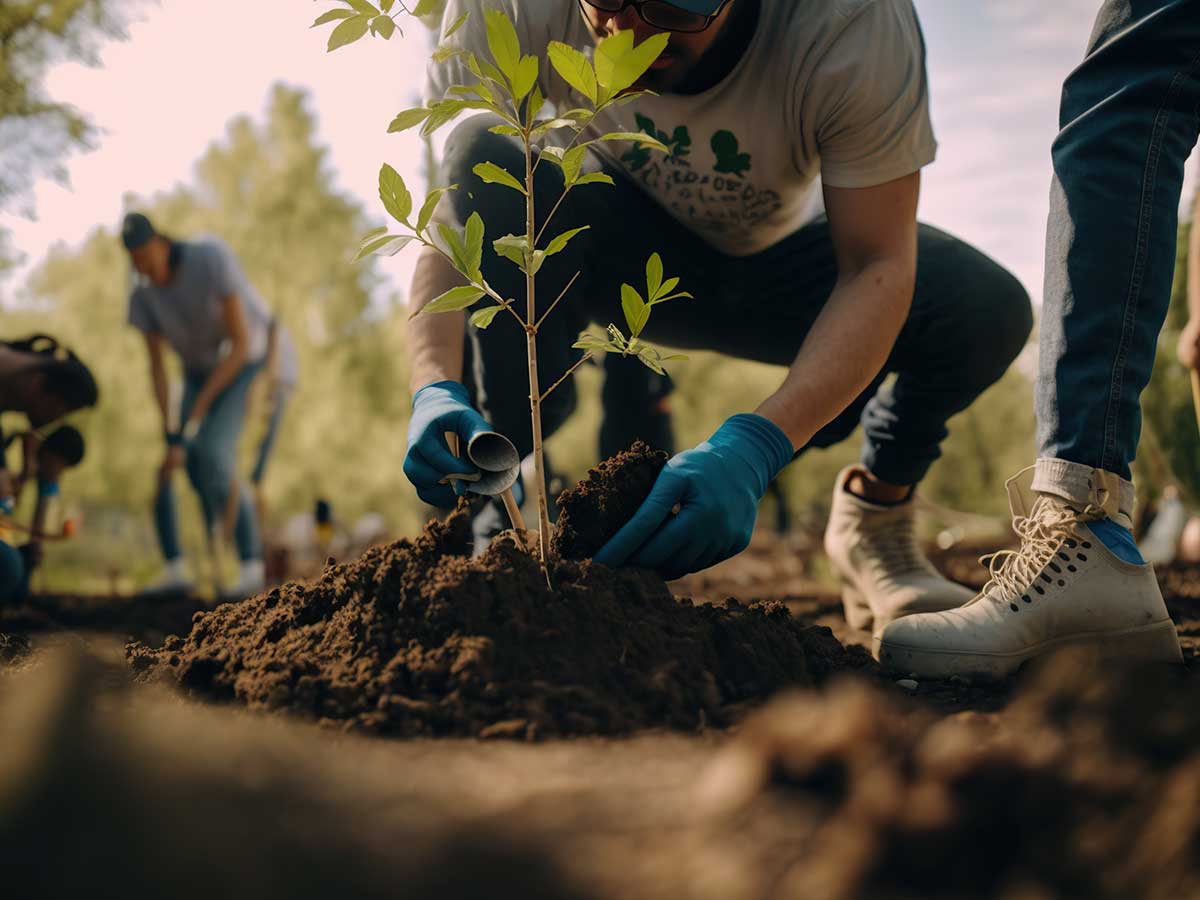
As a people, we need to consider afforestation to avoid global warming. Deforestation is a menace that a good Samaritan—Isma’il Auwal, a Facebook friend—is discouraging by embarking on a project of planting four thousand trees within Kano. Other good Samaritans, either inspired by him or not, are fast getting on the bandwagon by advocating for afforestation, which, if appropriately executed, will help reduce the scorching heat Kano is immensely experiencing. 

Deforestation and its effects need no introduction. This activity has spanned many decades. For different reasons, man fell trees to cook, make furniture, manufacture vehicles, or clean his environment. Deforestation engenders climate change and combines carbon dioxide with oxygen, eventually returning to its emitters (human beings), affecting them negatively. Deforestation is the removal of forests. It happens for several reasons, causing devastating consequences. It can be deliberate, natural or accidental. This unwelcoming act changes the climate, desertifies the land, erodes the soil, reduces crops, brings floods, and increases greenhouse gases in the atmosphere.

Battling the devastating effects of climate change requires a great effort from the government and non-governmental organisations, as well as the public. Climate change has caused a growing concern around the globe. As an end-product of vehicle exhaust and factory emissions, climate change is a global challenge enjoying little attention, especially in the Global South. To tell the truth, while a minority of the Global North pays much attention to reducing the effects of climate change, a majority, mainly comprising the Global South countries, do nothing to curb the problem. Some people, especially in developing nations, consider forests underdeveloped, not knowing that their lack poses a great challenge to life.

How people frequently fell trees defies explanation. With the rapid rural-urban migration, people become more interested in deforesting the world to build houses, companies, etc. Urbanisation is another reason for deforestation. With the current raging global warming debilitating the world, the earth will not only be in a jam but will also represent hell on earth. Worst comes to worst, the earth can become inhabitable. The current exceedingly hot weather in Kano and elsewhere is fast becoming a pain in the neck. 

Causes of Deforestation

The causes of deforestation are numerous, with agriculture ranking first. Since time immemorial, people have cultivated acres of land numbering in the thousands. As a result, forests are cleared and/or burnt for farming. The Industrial Revolution in the late 18th century, which continues to the present, is another significant cause for concern. The processing of raw materials necessitates the rampant cutting down of trees. In Africa, although large amounts of forests are cut down for burning at homes for food and sale, rendering communities prone to the obnoxious effects of climate change, little or no efforts are made to reforestation. 

Deforested for commercial or home use: Places are left to reforest themselves or waste away forever. Deforestation engenders the loss of habitat, which causes more and more animals and plants to die. A forest is home to countless animals and plants. Therefore, plants and animals lose their homes if a bush is deforested. Not only does deforestation affect the animals and plants we know, but also those we don’t know. 

Deforestation causes the greenhouse gases to be released into the atmosphere. The fact that trees absorb carbon dioxide and emit oxygen into the atmosphere is not less known. Trees control the water level in the atmosphere by regulating the water cycle. By working together, millions of trees refine the moisture obtainable in the air. While there is enough water in forested areas, there is less in deforested ones. This dries up the soil, making it grow less crops. 

Further, soil erosion and flooding count among the effects of deforestation. Trees provide nutrients and retain water. Without forests, like it or lump it, the soil erodes, losing nutrients and becoming barren and open to flooding. With the help of their roots, trees absorb and store a large amount of water when it rains. When they are felled, the flow of water stops, depriving the soil of its ability to retain water. While this brings floods in some areas, it causes droughts in others. 

Last, deforestation causes a lack of food, medicine and building materials. Many people, both within Nigeria and outside, consider forests the only source of food and medicine. However, with deforestation, they don’t only lose food and medicine but also their lives.

Toward Solving Deforestation

Deforestation occurs due to several reasons. While this cannot be more correct, there are solutions to the problem notwithstanding. Considering the threat climate change poses to the ozone layer and the heightening greenhouse effect, promoting afforestation is necessary. The fact that developed countries worldwide advocate tree planting needs no emphasis. Thus, tree planting should be encouraged, and campaigns against unnecessary felling of trees should be launched. 

We need to do the following:

1. Enlightening People about the Effects of Clear-cutting of Forests: Unless enlightened, people will continue to deforest communities for reasons better known to them. To discourage deforestation, we need to initiate campaigns and give lectures to awaken people to the devastating effects of deforestation before things go out of hand.

2. Reforestation of Clear-cut Lands: When deforested, we should consider planting young trees to replace the ones cut down. Around the world, every year, under several initiatives, trees are planted. Celebrating World Environmental Day 2022, in collaboration with UNESCO and Concordia College, Yola, a foundation whose name I have forgotten, gave, in June 2022, in the Concordia College hall a mesmerising public lecture on climate change and deforestation. 

3. Educating the Public: Although some people are informed about the global warming problem, many are not. We should be determined to educate the public about the causes and effects of deforestation. It is noteworthy that people have to either avoid unnecessary tree cutting down or risk damaging the ozone layer.

In conclusion, even though the campaign against deforestation is widespread, many people, especially in urban areas, fail to feel the urge to afforest their respective communities. This spells doom. Of course, a disaster is looming large. We will be doomed unless we come together to prevent it.

Alkasim Harisu wrote from Kano via alkasabba10@gmail.com.

Family feud turns fatal as brother stabbed to death in Bauchi

By Uzair Adam Imam

The Bauchi State Police Command apprehended Isyaku Babale, 30, following the tragic demise of his brother during a heated dispute.

In a statement released by SP Ahmed Wakil, the police disclosed that the arrest came after the victim succumbed to his injuries at Abubakar Tafawa Balewa University Teaching Hospital (ATBUTH) Bauchi.

“Isyaku Babale, a resident of Anguwan Dawaki, was detained by operatives from the township Police Divisional headquarters for an alleged culpable homicide,” stated SP Ahmed Wakil.

He continued, “Initial investigations unveiled that the suspect employed a knife, fatally stabbing his older sibling during an altercation that erupted between them on March 31st, 2024, around 04:00hrs.”

Reportedly, the dispute ignited when Babale urged his brother to cease consuming Cold Patch liquid, locally known as ‘Sholi,’ due to its foul odor.

The disagreement escalated into a physical confrontation, leading to the fatal stabbing. Further inquiries revealed a history of violent altercations involving dangerous weapons between the siblings.

Commissioner of Police, CP Auwal Musa Mohammed, has directed a comprehensive investigation to ascertain any underlying motives behind the incident, emphasizing the importance of bringing the perpetrator to justice through legal proceedings.

Revealing the unseen: How climate change fuels infectious diseases in Katsina State

By Ibrahim Adamu Ingawa

In the vast expanse of Nigeria’s Katsina State, beneath the scorching sun and amidst the sporadic rains, a silent predator lurks, imperiling the health and well-being of its inhabitants. Climate change, though often overlooked, poses a formidable threat to public health in Katsina State, catalyzing the emergence and spread of infectious diseases at an alarming rate.

In recent years, the fingerprints of climate change have become increasingly evident, leaving behind a trail of devastation in its wake. From the bustling streets of Dutsin-Ma to the tranquil valleys of Bakori, the impacts of rising temperatures and erratic rainfall patterns are unmistakable, reshaping the landscape of disease transmission in profound ways.

Take, for instance, the surge in malaria cases that swept through Dutsin-Ma Local Government Area in 2019. Heavy rainfall and flooding provided the perfect breeding grounds for disease-carrying mosquitoes, resulting in over 500 confirmed cases within a month. Similarly, the parched earth of Kankia Town bore witness to a cholera outbreak in 2017, fueled by drought conditions and inadequate sanitation infrastructure, claiming the lives of several hundred individuals.

But the toll of climate change extends beyond the realm of vector-borne diseases, reaching deep into the fabric of public health in Katsina State. The specter of Lassa fever loomed large over Bakori Local Government Area in 2016, as changing climatic conditions facilitated the spread of this deadly virus, leaving a trail of devastation in its wake. Meanwhile, in Funtua, rising temperatures and increased mosquito activity paved the way for a dengue fever outbreak in 2015, further exacerbating the burden of disease in the region.

Yet, perhaps the most poignant manifestation of climate change’s impact on public health lies in the floods that ravaged Jibia in 2018. As torrential rains inundated the town, turning streets into rivers and homes into islands, a silent menace took root. Stagnant floodwaters became breeding grounds for disease vectors, leading to a surge in malaria cases and exacerbating the plight of already vulnerable communities.

In addition to the visible impacts on infectious disease outbreaks, climate change is also facilitating antimicrobial resistance (AMR) in Katsina State, thereby exacerbating public health challenges. The rising temperatures and erratic rainfall patterns create favorable conditions for the proliferation of resistant bacteria, as well as the emergence of new strains which are resistant to the drugs that are meant to kill them. Increased use of antimicrobial agents in response to climate-related infectious disease outbreaks further contributes to the selection pressure driving AMR. This alarming synergy between climate change and AMR underscores the urgent need for comprehensive strategies to address both phenomena and safeguard the health of Katsina State’s population.

Despite the magnitude of these challenges, hope remains on the horizon. Armed with knowledge and skills I acquired in addressing the most pressing issues of public health over the past few years, I am committed to leveraging my expertise to develop innovative interventions aimed at tackling the consequences of climate change on infectious disease outbreaks in Katsina State. From outbreak preparedness and prevention to the implementation of robust control mechanisms, I am zealous in my determination to contribute in safeguarding the health and well-being of my fellow citizens at the Home of Hospitality. But my journey has not been without its obstacles.

Since my return from the United Kingdom after my internship at the world-leading genomics research institute (the Wellcome Sanger Institute, Cambridge), there has been interference from certain elements, which has impeded my ability to implement meaningful change. Yet, in the face of adversity, my resolve remains unshaken, fueled by a burning desire to make a tangible difference in the lives of those most affected by the ravages of climate change in my dear State.

The impacts of climate change on infectious disease outbreaks represent just one facet of the multifaceted challenges confronting the public health milieu of my beloved State. I remain resolute in my commitment to driving forward the positive transformation of Katsina State’s public health sector. Anticipating the opportunity to deploy my skills and expertise, I stand ready and poised to seize it at any moment.

As I look towards the future, I am filled with optimism, knowing that together, we can overcome the challenges posed by climate change on ever-increasing infectious disease outbreak and forge a path towards a healthier, more resilient Katsina State. I believe that through collaboration, innovation, and unwavering determination, we can turn the tide against this invisible threat and pave the way for a brighter, healthier tomorrow.

Ibrahim Adamu (Ingawa) writes from Katsina State. He’s a
Project Grantee at The Foundation to Prevent Antibiotic Resistance (Sweden). He can be reached via ibrahimassalafee@gmail.com/ +2348134386907

Fasting Ramadān in the university: A treasure for campus students

By Dr Zakariyya Shu’aib Adam

Last week, I had a pre-Ramadan lecture session with Muslim Health Students at Usmanu Danfodiyo University Teaching Hospital, Sokoto. I reiterated the merits of the four most important acts of ibadah in Ramadān: fasting, recitation of Qur’ān, night prayers, and feeding the needy. I also emphasized how, as students, we can make judicious use of our stay in the university during Ramadān.

Contrary to the mainstream notion, observing fasting in the university is scrupulously enchanting and divinely pleasing. In this piece, I want to write some of the points I mentioned in that session for the benefit of a larger audience. It is worth noting that I drew most of what I said from my experience as a former university student who stayed on campus.

Although fasting is physically exhausting, particularly for a university student who, in most cases, lacks sufficient foodstuff for suhoor (pre-dawn meal) and iftār, it can quietly serve as a pathway that provides students with immense opportunities to connect heartily with their Lord.

During Ramadān, affluent students often use to invite the indigents for suhoor and iftār. You mustn’t cook food before you eat. Moreover, the Muslim Students’ Society of Nigeria [MSSN] sometimes obtains funds from the Sokoto State Government and Muslim lecturers to purchase all that is needed for Iftār. In such circumstances, students usually gather in a hall and break their fasts in what was popularly known as “Tarāsoo” (the word was gotten from the state of closely and neatly joining legs in a congregational prayer).

I haven’t observed a more composed Tarāweeh that is full of tranquillity and serenity like the one we used to observe in school. Specifically, in Tora Bora Masjid, we used to read one page in each raka’ah of Tarāweeh and spend an average of an hour. The congregation was very large. Retrospectively, the Imāms there recited with melodious voices that would touch hearts. There were brief admonishments between every four raka’ah. We were always happy observing this prayer.

When it was the last ten days of Ramadān, many students would be in the mosque for Iʿtikāf (seclusion in the mosque for the purpose of worship, especially the last ten days of Ramadān). Those performing Iʿtikāf receive food from Tarāsoo and from their friends who aren’t staying in the mosque. They constantly recite the noble Qur’ān during that period. In a nutshell, they devote themselves to all kinds of ibadah for a period of ten days.

During Tahajjud (night prayers), we had more than enough Imāms because there were many memorizers of the Qur’ān among us. The ruku’uh and sujood were almost as lengthy as the qiyām (standing). We were given a chance to make prayers to Allāh in sujood because it’s the closest moment a servant is to his Lord. Most university dignitaries attended such ibadāt with us. They relate with us with humility and demureness. This played a role in reducing the imaginary hiatus between students and lecturers.

Females, too, were given special consideration. A portion of the mosque was dedicated to them to observe I’tikāf. Everything they needed was provided to make their stay delightful. When it was time for Tahajjud, they made rows in the mosque and observed prayers with males. There was a question-and-answer session every night, usually organized by experts in Islamic jurisprudence among the I’tikāf members.

I am neither trying to portray my stay in the university during Ramadān as Shangri-la nor am I being utopian. Notwithstanding the aforementioned, some students do not participate in these ibaadāts. They instead go to the female hostels and spend time with their inamoratas. It seems as though they prefer worldly pleasure to the everlasting one. In some instances, they often present what they call Ramadān baskets to these inamoratas, thereby engaging in prodigality.

Others spend much time in social gatherings. You mostly see them chitchatting about politics and entertainment. They burn calories in debating about football. Champions League matches used to be on the night at the exact time of Tarāweeh. Therefore, big boys won’t attend the night prayers. Females, too, weren’t left out. They commit themselves to watching Korean TV series and Indian love movies. Their role models used to be Lee Min-Ho, Lee Min-Jung and Aishwarya Rai.

I entreat you not to be like these students. Be steadfast in your ibādah. Remember that Ramadān is made up of either 29 or 30 days. If the month elapses, you may not necessarily live to witness another Ramadān. Stay in the circle of pious friends. Never befriend anyone that doesn’t help you in your studies or doesn’t add to your religiosity. Devoted servants in Ramadān are rewarded in multiple, so also the transgressors – their punishment is multiplied.

Lastly, I narrate this to settle the nerves of students who are unhappy with their stay in the university during Ramadān. I, admittedly, was unhappy in school in my first year. Subsequently, it became apparent to me that I could turn that cheerless moment to my advantage. I doubt if, in the nearest future, I can have enough time I dedicated to myself for ibadāh in Ramadān as I had in the school. So, make good use of your stay in school during Ramadān while you are still a student. You may not have much time if you graduate.

Dr Zakariyya Shu’aib Adam is a serving corp member with Area Veterinary Clinic, Argungu, Kebbi State. He graduated from Usmanu Danfodiyo University, Sokoto. He can be reached via: zakariyyashuaib2020@gmail.com.

Kano water scarcity: How long is Governor Abba’s ‘State of Emergency’?

By Misbahu El-Hamza

Kano State makes headlines almost every year, and coincidentally, during Ramadan, for water scarcity. The frequent headlines are often attributed to electricity system failures, which disrupt water pumping or equipment faults at water treatment plants, exacerbating the situation.

About ten months ago, upon taking office, Kano State Governor Alhaji Abba Kabir Yusuf declared a State of Emergency to address water scarcity across the state, urging for patience and maximum cooperation from residents. Although I haven’t seen or reviewed the governor’s plan during this emergency, I recall that resolving Kano’s water issues was one of his campaign promises.

I remember when the governor inspected the Challawa Water Treatment Plant in May 2023 and expressed dissatisfaction with its condition. At the time, only two of the six pumping machines were functioning.

Following that, the governor gave the Kano State Water Board a one-week ultimatum to submit its demands to end the state’s water shortage. The public breathed a sigh of relief. Personally, I had hoped that we’d finally overcome this hardship.

Unfortunately, for nearly a year now, the situation has been prevalent not only in urban areas but even worse in rural communities. We are not only seeing those trending headlines of water scarcity in Kano; we’re experiencing the brunt of it.

Recently, the price of a 25-litre jerrican of borehole water in Kano surged by ₦50 to ₦150. Someone told me that he bought one at ₦200 around Kurmi market. In areas like Hotoro, Nassarawa LGA, where I reside near Kumbotso LGA housing the Challawa water plant, prices rose from ₦40 to ₦70 or higher. The Chalawa water plant is believed to have the capacity to supply the whole of Kano with water. Still, we rely heavily on individual boreholes for water, with little to no infrastructure connecting us to the water plant.

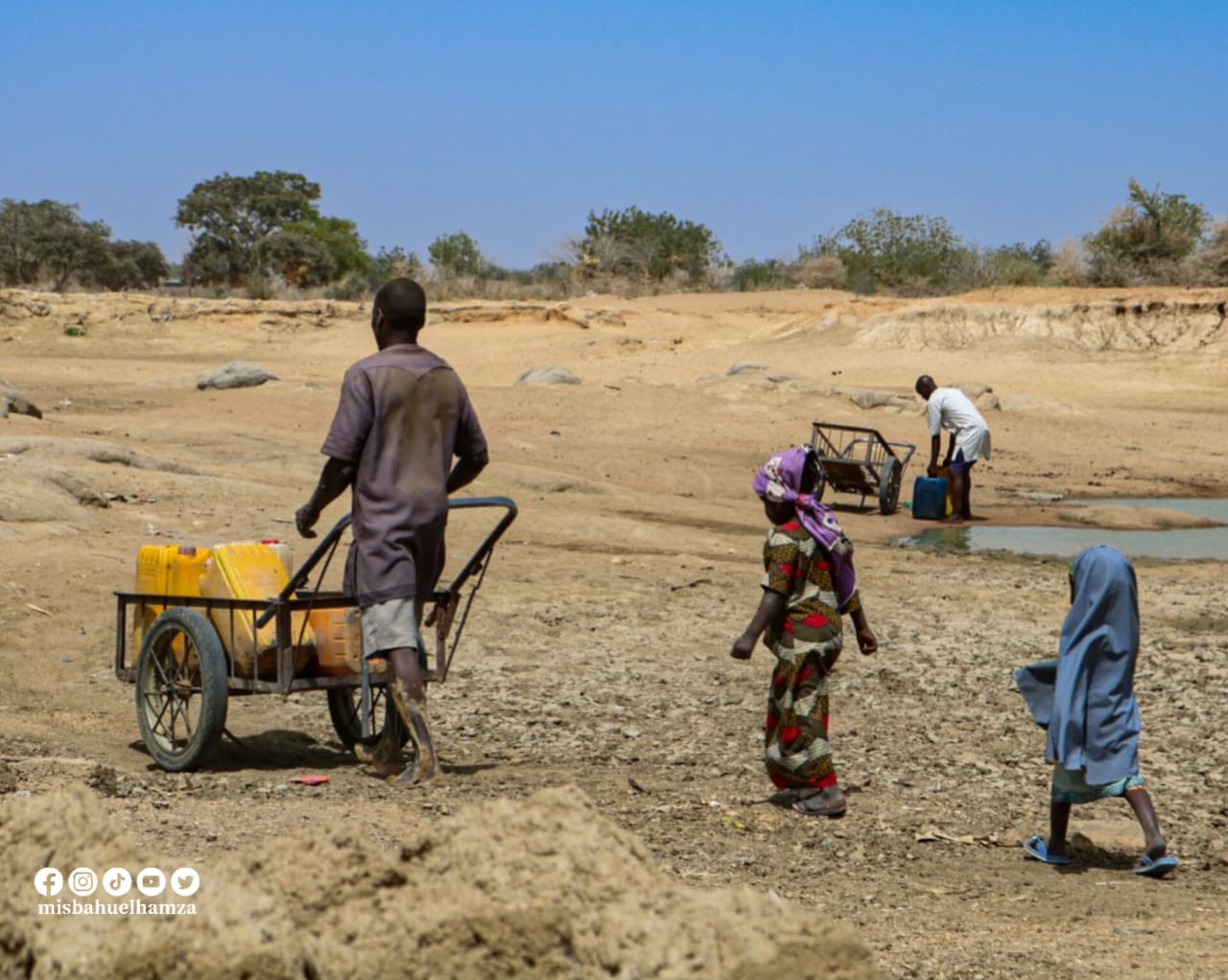
While I reside in a suburb and can afford to buy a jerrican of what seems to be clean water, in the rural areas where I often visit for work, the situation is dire. Many communities lack access to clean water sources, with broken or dried-up boreholes and wells being common. Residents, including young children, often resort to fetching water from stagnant ponds shared with cows, donkeys, camels, and even dogs. This water is what they use for all daily activities, posing serious health risks.

It’s evident that both state and local governments have neglected these communities, offering little to no solutions for their water woes. Where you see boreholes or wells in these communities, they are either constructed by individual donors or (charity) organizations, and a handful are constructed by politicians.

Governor Alhaji Abba Kabir Yusuf must be aware of the current water crisis in both rural and urban Kano. However, the pressing question remains: how long will his State of Emergency address the suffering caused by the persistent water scarcity or total lack of it across the state?

Three days ago, I heard a jingle apologizing for the water scarcity in the Kano metropolitan area, blaming the repair works at Challawa and Tamburawa treatment plants. It’s said to have been sponsored by the Kano State Water Board. To me, the jingle suggests the governor partly fulfilled his pledge; now, it’s the board’s turn to restore the water supply—or at least that’s my assumption. 

I know this isn’t the first time the board has apologized. In 2022, the then-managing director of the board was quoted as apologizing to Kano residents for failing to supply water during Ramadan. At that time, 25 litres of borehole water cost between ₦30 and ₦100.

I remain hopeful that before his remaining three years expire, Alhaji Abba Kabir Yusuf will emerge as Kano’s hero by addressing the water scarcity issue and providing relief to the growing population, including those in rural areas.

As the governor continues to address our water problem within this emergency period, I hope the demands the water board submitted to him as requested include: establishing new plants and reservoirs or enhancing existing ones, extending mainline pipes to suburbs and rural areas, ensuring independent power supply for the plants, and securing permanent employment for existing and additional staff. If the board manages its expenses independently, perhaps shifting them to the state payroll would also improve efficiency. 

With reliable service and an effective system in place, the board and the state government should be rest assured that Kano people will be more willing to pay for water, and the board does not need to depend heavily on its revenue from the industries it diverts our little water to.

Misbahu wrote from Kano via misbahulhamza@gmail.com.

Unraveling the power of PR in the conflict between Sheikh Daurawa and governor Abba Kabir

By Auwal Sani

In the heart of Kano State, recently, conflict ensued between the state’s religious police popularly known Hisbah [Command], Kano State government and the controversial TikToker, Murja Kunya. This conflict has not only sparked public debate but also highlighted the critical role of effective public relations (PR) in governance.

It all began with Kano State Governor, Abba Kabir Yusuf’s critique of Hisbah’s modus operandi, particularly in response to perceived deviations from the established laws. The governor’s remarks triggered a flurry of reactions, especially online, culminating into the unexpected resignation of Hisbah’s Director-General, Sheikh Aminu Ibrahim Daurawa. This abrupt departure further fueled tensions and political discord within the state.

However, amidst the turmoil, the saga took an intriguing turn with the involvement of Murja kunya, an ardent supporter of the Governor and his party (NNPP). Murja’s arrest by Hisbah and her miraculous release from prison without proper legal procedure raised eyebrows from various quarters, prompting questions about influence and justice.

Central to this unfolding drama is the apparent lack of effective PR strategies employed by both the government and Hisbah. A failure to conduct thorough situational analyses, engaging stakeholders, and maintaining open communication channels exacerbated the crisis, leading to a breakdown in trust between the authorities and the public.

Governor Yusuf’s comments, though well-intentioned, underscored the importance of a robust PR team to navigate sensitive issues and convey messages effectively. Collaborating with Hisbah’s leadership could have fostered dialogue and addressed concerns constructively, preventing further escalation of the situation.

Furthermore, the need for a crisis communication response team within the government and Hisbah is imperative. Timely and convincing damage control measures are essential to clarify intentions and restore public confidence in governance institutions.

Equally crucial is, the proactive engagement of relevant stakeholders by Hisbah before undertaking operations. Consultations with religious, governmental, and civil society leaders, among others, would ensure a comprehensive approach to addressing societal issues while mitigating potential conflicts.

Moreover, adequate training of Hisbah members on legal frameworks and rules of engagement are essential in preventing human rights violations and ensure professionalism in their duties. Additionally, investing in PR expertise within Hisbah’s communication department is essential to bridge the gap between the organization and the general public.

In hindsight, the confrontational response of Hisbah’s former Director-General to the governor’s criticisms highlights the need for professionalism and diplomacy in addressing internal challenges. Written correspondence or a formal meeting could have provided a more constructive platform for dialogue and resolution.

As the saga begins to fade, however, it serves as a stark reminder of the intrinsic link between effective public relations, transparent governance, and social harmony because, only through proactive engagement, strategic communication, and a commitment to openness can institutions like Hisbah navigate the complexities of contemporary society while upholding their mandates with integrity and accountability.

Auwal Sani writes from Kano State and can be reached via auwalsani986@gmail.com

On the Kano Coalition of Ulamas’ giant efforts in promoting sanity and peace in the state

By Salihi Adamu Takai

Kano State Coalition of Ulama comprises the great Islamic clerics of Kano from different sects to promote sanity and peace. The coalition is headed by Sheikh Abdulwahab Abdullah (Imam Ahlussunnah). The clerics, who grouped themselves in the religious effort of making the work of Almighty Allah effective in the state, are very important scholars of impeccable characters.

Kano State happens to be the ancient city in the northern part of Nigeria that is very popular for its religiosity. It is one of the first states in Africa to receive the light of Islam. Many scholars have revealed that Islam was received in the state through Wangarawa and Arab merchants.

The spread of the Islamic religion in the state has made it a very religious city—and the religious aspect has become very sensitive in the state. After some years of the spread of the Islamic religion in the city, there has been the existence of Sufism and other sects of beliefs.

The Islamic reformers played very vital roles in sanitizing the aspects of the religion. They focused vehemently on the teachings. They gave more emphasis to the seeking of knowledge of Islam. This aided the reformation in the religious activities of the State.

The spread of Sunnah came and knocked on every door. The objective of the Kano State Coalition of Ulama is to reform religious teachings to accommodate morality. Despite people having embraced religious knowledge and Western education, there is also a need to reform teaching activities and their adoption.

Sometimes, people have the knowledge, but they need to be guided on how to apply it to their teaching and learning. So, the reformation needs a coalition for its success. It is for the Muslims.

The Coalition of the Ulamas has been intervening in matters of religion. They are very keen on promoting sanity in religious activities. They call for peace—and peace signifies the best way of depicting Islam.

To also achieve the aim of their activities, they refer to themselves as the Coalition of Ulama of Kano. This means they comprise different Ulamas from different sects; from Izala, Qadiriyya, and Tijjaniyya.

The Coalition could also be the source of understanding one’s teachings amongst the Ulamas. The Tijjaniyya Clerics in the Coalition could understand some aspects from those Sunni Scholars.

Moreover, the Coalition led by Sheikh Abdulwahab Abdullah reconciled Sheikh Aminu Daurawa with Governor Abba Kabir Yusuf following their misunderstanding about the conduct of the Hisbah corps. Today, Daurawa has resumed his position as the Hisbah Commandant. This is one of the thousands of achievements of the Coalition. They intervene in every matter that affects the public.

May Almighty Allah continue to support the Coalition in achieving their goals, and may He reward them, amin.

Salihi Adamu Takai wrote via salihiadamu8888@gmail.com.