Local

Insecurity, abandonment cripple Zangon Gabas Primary School

Muhammad Isah Zng

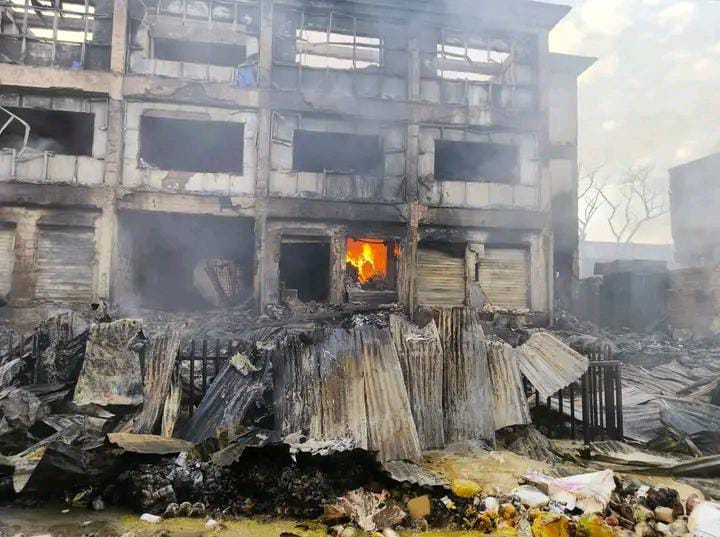
Special Primary School in Zangon Gabas, Ungogo Local Government Area of Kano State, is struggling with insecurity and abandoned, burnt classrooms, leaving pupils and teachers in a difficult learning environment.

A resident and Islamic teacher, Abdullahi Ahmed, voiced concern that the school has been neglected by the government, leaving it vulnerable to vandalism and deterioration. He stated that youths often break onto the premises after lessons to play football, which frequently results in damage to school property and theft of valuable items.

“The major problem is insecurity. Youths come into the premises, deface classrooms, and steal items. If nothing is done, this school may one day become history,” Ahmed said.

Besides security breaches, classrooms that were burned several years ago remain unrepaired and unused, further reducing available learning space. Ahmed, who also uses the classrooms for Islamic lessons, disclosed that the headmaster had hired a security guard and was paying him from personal funds to protect the remaining facilities.

Community members are urging the Kano State Government to urgently repair the classrooms that were burned and to ensure security to protect the school. Education stakeholders warn that if no action is taken, the worsening conditions could jeopardise the future of pupils in Zangon Gabas. 

Kano govt sues Ganduje, sons over alleged N4.49bn fraud, moves to reclaim Dry Port shares

By Uzair Adam 

The Kano State Government has instituted a high-profile suit before the State High Court, seeking to recover its 20 per cent equity stake in Dala Inland Dry Port Limited and reclaim funds allegedly misappropriated to the tune of N4,492,387,013.76.

According to court documents, the defendants in the charge include the former Governor of Kano State, Dr. Abdullahi Umar Ganduje; his sons, Umar Abdullahi Umar and Muhammad Abdullahi Umar; former Special Adviser to the Governor, Abubakar Sahabo Bawuro; former Executive Secretary of the Nigerian Shippers Council, Hassan Bello; a legal practitioner, Adamu Aliyu Sanda; and Dala Inland Dry Port Limited.

The Daily Reality reports that the defendants are facing a ten-count charge bordering on criminal conspiracy, misappropriation of public funds, breach of trust, and conflict of interest.

The court record indicates that the suit was filed on October 13, 2025.

According to the charge sheet, the defendants allegedly conspired to fraudulently transfer 80 per cent of the shares in Dala Inland Dry Port Limited, including the state government’s 20 per cent equity, to private entities under the fictitious name “City Green Enterprise” in an attempt to conceal the company’s actual ownership.

The prosecution further alleged that the defendants diverted over N4.49 billion of Kano State funds to execute infrastructure projects such as a double carriageway, electricity supply, and perimeter fencing at the dry port for their personal and family benefit.

In addition, the defendants were accused of abuse of office and conflict of interest, allegedly using their official positions to manipulate public resources for private gain, contrary to financial and constitutional provisions.

The prosecution listed several key witnesses, including the lead investigating officer who uncovered the alleged fraudulent transactions, and an early stakeholder in the project who was reportedly sidelined during the equity transfer process.

The summary of evidence alleges that the defendants used sham entities and proxies to conceal ownership of the Dala Inland Dry Port shares, diverted public funds to family-owned firms and personal businesses, coerced the original project founders into relinquishing control, created false documents to mislead regulators, and facilitated the diversion of N750 million through Safari Textile Ltd (STL Enterprise).

The prosecution will also present evidence showing that the 4th defendant conducted a review confirming the Kano State Government’s 20 per cent stake in the dry port, in line with a policy document initiated under former President Olusegun Obasanjo.

It further alleged that the purported transfer of shares was executed without the consent of other board members, and that the former governor, Abdullahi Ganduje, acted unilaterally to facilitate the move.

Although no date has been fixed for the hearing, the matter has been assigned to Kano State High Court 2, presided over by Justice Yusuf Ubale.

On the use of the words “mutuwa”, “rasuwa”, or “wafati” for the Prophet of Mercy

By Ibraheem A. Waziri

In the Hausa Islamic civilisation, or what one might call the moral order and cultural refinement that grew from Islam’s deep roots in Hausaland, the word mutuwa (death) is a curious thing. It is harmless, ordinary, and adaptable. One can say mutum ya mutu – “the man has died” – regardless of who the man is. The same word can apply to an animal, a tree, or even an inanimate thing whose usefulness has come to an end. It can carry tones of mockery, pity, or finality. We say ya mutu mushe when some living thing has worthlessly ended, ya mutu murus when silence or defeat takes over.

Yet, our language is not without tenderness. When someone beloved passes away, whether out of affection or courtesy, we soften the word. We say ya rasu. Rasuwa is a form of loss tinged with grief and respect. It refuses the bluntness of mutuwa. It gives the heart its due.

When it comes to the Prophet Muhammad (SAW), the most noble of all creation whose departure shook the heavens and all generations after, our forebears chose words such as wafati (a peaceful return to Allah), fakuwa (withdrawal or disappearance), and rasuwa (loss imbued with yearning). These were not accidental choices; they were marks of reverence. The Prophet’s message, after all, did not die with him. His presence lingers, like fragrance after rain. Thus, Hausa Muslims avoided the word mutuwa not because it was wrong, but because it was too plain for such a sacred absence. Language itself became a form of prayer and praise, salati towards the Prophet of Islam, as the Qur’an commands the faithful to always offer.

This sensibility reflects a civilisation shaped by Islam yet polished by Hausa thought. It has endured for over a millennium, blending revelation and reason, piety and poetry, into a coherent moral fabric. Scholars such as Professor Mahdi Adamu have rightly argued that Islam is now part of the defining essence of being Hausa. Indeed, no serious student of culture can separate the two.

When Professor Samuel Huntington, in his 1993 popular thesis The Clash of Civilisations, classified the great Islamic civilisations as Arab, Turkic, and Malay, I once protested, mildly but firmly, in my column of 22 July 2013 in LEADERSHIP Newspaper, “Egypt: Western World, Egypt, Political Islam and Lessons.” For he omitted the fourth: the African, which includes the Hausa Muslim civilisation. Perhaps he did so because we in West Africa have not been diligent in documenting our own intellectual heritage. Our scholars mostly built souls rather than libraries. Their wisdom lived largely in hearts, not in manuscripts. Yet civilisation is not measured by ink alone.

By the eleventh century, Islam had already entered Hausaland through kings, scholars, and merchants. It mingled with the social elite, who naturally became custodians of what was right and proper. Over centuries, Islamic principles and Hausa customs intermarried. Law, governance, poetry, and etiquette became fused with faith. The result was not confusion but coherence. Nothing central to Hausa civilisation contradicted Islam at its core, unless one judged too quickly or too superficially.

That is why scholars such as Murray Last, in his work The Book in the Sokoto Caliphate, observed that even the nineteenth-century jihad led by Shehu Usman Ɗanfodio did not reinvent Hausa Islamic learning; it merely revived and restructured it. The civilisation was already mature, only in need of renewal and discipline.

After colonial rule and the birth of Nigeria, this historical balance was tested. Contact with global Islamic thought from Egypt, Saudi Arabia, Iran, and beyond brought new currents of theology and reform. Many who studied abroad returned believing they had discovered a purer Islam, one untainted by “local innovation.” Movements such as Jama’atu Izalatul Bid’ah Wa Iqamatissunnah (founded in 1978) sought to purify faith and democratise knowledge. Their zeal achieved much good, spreading Islamic learning to wider circles.

The unintended cost, however, was subtle: a growing suspicion towards the inherited Hausa sense of decorum, the gentle courtesies and expressions through which Islam had long been lived here. Many young preachers, both from Izala and other traditions, began to attack words, proverbs, and customs without studying their origins or meanings. They mistook refinement for deviation. They forgot that ladabi—good manners—is itself part of faith.

In the curricula of the Arab world, where some of them studied, there was no course on “Islam and Hausa civilisation.” Thus, they returned unaware that many Hausa forms of reverence, formal linguistic expressions, and proverbs had already been filtered through the sieve of Islamic thought over centuries. They saw impurity where there was actually depth. And when a people are cut off from the noble patterns that dignify their past, they begin to doubt themselves. This self-doubt, or inferiority complex, becomes more dangerous than ignorance itself.

Still, there is light in the dusk. From the 1990s onwards, a new generation of researchers began delving into precolonial manuscripts and oral traditions, recovering the intellectual dignity of old Hausaland. They showed how Islamic education, Sufi scholarship, and Hausa ethical thought intertwined long before the arrival of Europeans or the rise of the Sokoto Caliphate. Yet this work has mostly been carried out by Western-trained scholars, the so-called yan boko. Our purely religious scholars have been slower to engage, preferring imported frameworks to indigenous memory.

The road ahead, however, must bring both together. The Hausa Muslim future—steady, confident, and intelligent—will depend on producing scholars grounded in both the Islamic sciences and the lived wisdom of Hausa culture. Not a nostalgic culture, but one aware of its thousand-year conversation with faith.

If the Turks, Arabs, and Malays take pride in their civilisational imprint upon Islam, why should the Hausa not do the same? Our civilisation too has carried the Prophet’s light for centuries, shaping it into our language, our etiquette, and even our choice of words.

So, when we say Rasuwar Manzon Tsira or Wafatin Manzon Tsira, it is not mere politeness. It is theology—lived, spoken, and refined in our own tongue. To call it otherwise is to forget who we are.

Ibraheem A. Waziri wrote from Zaria, Kaduna State, Nigeria.

Gov. Yusuf pays N5.6bn backlog to ex-councillors

By Muhammad Abubakar

Kano State Governor, Abba Kabir Yusuf, has disbursed N5.6 billion to 1,198 former councillors who served between 2018 and 2020 under the administration of ex-Governor Abdullahi Umar Ganduje.

The payment, which covers severance, gratuity, accommodation, and leave allowances, represents the second batch of liabilities inherited from the previous administration. In May, the governor released N1.8 billion to 903 councillors in the first phase of the settlement.

Speaking at the disbursement ceremony at Coronation Hall, Government House, Yusuf said his administration inherited a total of N15.6 billion in outstanding obligations to former councillors. He assured that the final tranche of N8.2 billion, covering 1,371 beneficiaries, would be cleared by the end of November.

“This is more than a financial settlement. It is about restoring dignity, fairness, and justice to those who sacrificed for grassroots governance,” the governor said.

The event was greeted with jubilation as beneficiaries, many of them members of the opposition APC, received instant payment alerts. Their leader commended Governor Yusuf for his fairness despite political differences, describing him as just and compassionate.

European-American University disowns Rarara, calling his degree fake

By Uzair Adam

The European-American University (EAU) has distanced itself from reports claiming it awarded an honorary doctorate to popular Hausa political singer Dauda Kahutu Rarara during a ceremony in Abuja.

In a disclaimer published on its official website, the University described the alleged event at NICON Luxury Hotel, Abuja, as fraudulent, stressing that it was organized without its knowledge or approval.

The institution clarified that neither Rarara nor the other individuals mentioned — Alhaji Ahmed Saleh Jnr., Prof. Mustapha Abdullahi Bujawa, and Prof. Tarela Boroh — had received any honorary recognition from EAU. 

“These individuals are not honorands of the University and have no legitimate connection with us,” the statement read.

EAU further disowned Musari Audu Isyaku, who was presented as its representative in Northern Nigeria, stating that he has no authority to act on behalf of the institution. 

It also denied that Idris Aliyu was part of its governing body, noting that the university has no such council. 

Aliyu’s fellowship with EAU was revoked immediately over his alleged role in the fraudulent ceremony.

The University reminded the public that its former Vice Chancellor, Dr Mrs. Josephine Egbuta, had been dismissed earlier this year and no longer represents the institution. 

It affirmed that Professor Luca Scotto di Tella de’ Douglas di Castel di Ripa is the current Vice Chancellor.

On its legal standing, EAU explained that it is a nonprofit private university established in France, with a Royal Charter of Incorporation from the Kingdom of Bunyoro-Kitara in Uganda. 

It dismissed references to Dominica and Panama as “outdated and false.”

The statement added that the University would work with Nigerian authorities to curb the circulation of fake certificates issued in its name and prosecute those behind the act.

EAU also disclosed that its next legitimate convocation in Nigeria is slated for November 15, 2025, while another awards ceremony will take place in Malaysia in December.

Kano gov’t recruits over 4,000 BESDA teachers, announces new education interventions

By Hadiza Abdulkadir

Kano State Governor, Engr. Abba Kabir Yusuf, has approved the recruitment of 4,315 former Better Education Service Delivery for All (BESDA) volunteer teachers into the state’s permanent and pensionable teaching service.

The governor stated that the move aligns with his administration’s consistent commitment to revitalising and reforming the education sector. 

The governor recalled that the state had earlier recruited 5,500 teachers in 2023, 5,632 in 2024, and 4,000 in May 2025, all of whom were absorbed from the BESDA voluntary teaching scheme.

To further strengthen the system, Yusuf also announced the recruitment of an additional 2,616 teachers. He flagged off a ₦200 million vehicle loan scheme and approved the distribution of 444 motorcycles and 300 computers to enhance school monitoring and evaluation.

In addition, the governor directed the reopening of the Shehu Minjibir Boarding Primary School with 180 pupils and the upgrade of another school in Ungogo Local Government Area into a boarding facility. He further approved the engagement of 17,000 watchmen across schools in the state.

Bandit kingpin attends peace talks in Katsina as communities call for negotiations

By Anwar Usman

Local communities in the Faskari local government area of Katsina State have entered into negotiations with armed groups, raising fears of a repeat of a sequence whereby the collapse of peace agreements led to renewed violence.

Reports have it that bandit representatives, including figures accused of leading raids and abductions, sat with community leaders at a gathering in Hayin Gada.

The bandits reportedly agreed to stop attacks on villages, allow farmers safe passage, and release abducted persons in exchange for freedom of movement and market access for Fulani and the development of their areas.

In attendance were the notorious kigpin Alero, who spoke on behalf of several armed groups. He said the initiative was “not the first of its kind”, but the turnout was unprecedented.

Also present was Kwashe Garwa, whose name is 19 on Nigeria’s most-wanted terrorists list. Videos shared on multiple local media show Mr Garwa, with ammunition strapped around his waist, condemning the stereotyping of Fulani herders as criminals.

Garwa stated, “In Nigeria, whenever there is a discussion, they call Fulani herders bandits and terrorists. But tell me, which tribe in the world does not have criminals among them? You, Hausawa, who say we are bandits, don’t you also have bandits among you? Yet, no one stereotypes you with such a name.”

Garwa further asserted that killings and kidnappings would not stop until “injustice” against the Fulani was addressed. “There will be no peace if security agencies do not also stop killing our people,” he added.

Reports indicate that similar peace agreements were reached in Jibia and other frontline areas, with residents negotiating directly with bandit leaders for safe passage, a cessation of raids, and the reopening of markets.

Acknowledging the arrangements, Governor Dikko Radda said at the launch of an EU-funded conflict prevention project last week that negotiations were ongoing in several frontline local government areas and credited them with restoring calm in those areas.

‎‎Yobe senator empowers six female constituents with ₦1 million each‎‎

By Kasim Isa Muhammad‎‎

In a deliberate move to cushion the impact of economic hardship and create sustainable opportunities for women, Senator Ibrahim Mohammed Bomai, who represents Yobe South Senatorial District, has empowered six women with financial support of ₦1 million each.

The initiative, which was unveiled in Potiskum on Friday, is part of the senator’s ongoing interventions aimed at addressing poverty, improving livelihoods, and encouraging women to actively participate in business and community development.‎‎

According to Yusuf Zaki, a close aide of the senator who represented him at the event, the programme was carefully designed to give women in the constituency the financial muscle to either start or expand their businesses.‎‎

He explained that Senator Bomai recognises the enormous contributions that women make to household welfare and the local economy, and has therefore prioritised their empowerment.‎‎

“Senator Bomai believes that empowering women is one of the most effective ways of reducing poverty and improving livelihoods in our communities. The ₦1 million given to each of the beneficiaries will enable them to invest in viable ventures that can sustain their families and, by extension, contribute meaningfully to the growth of the local economy,” Zaki stated while addressing journalists.‎‎

He also noted that this intervention is not an isolated gesture, but part of a broader empowerment agenda that the senator has consistently pursued since assuming office. ‎‎

According to him, the lawmaker has previously supported educational programmes for indigent students, invested in healthcare projects, and initiated youth empowerment schemes to tackle unemployment in Yobe South.‎‎

Zaki added that the women’s empowerment programme was deliberately crafted to focus on those who have shown entrepreneurial drive but lacked access to capital due to the harsh economic realities and limited opportunities in rural communities.

‎‎One of the beneficiaries, Aisha Mohammed, who operates a small tailoring business, spoke emotionally about how the support has given her a renewed sense of hope.

‎‎She said she had struggled for years to keep her shop running with outdated sewing machines and insufficient materials.

“This money is a lifeline for me. With ₦1 million, I can now buy better sewing machines, employ two apprentices and expand my shop to cater for more customers. It is not just about money; it is about the dignity and confidence it gives me to keep going. I am grateful to Senator Bomai for remembering women like us who are struggling to survive,” she told our correspondent.

‎‎Another beneficiary, revealed that she intends to invest in poultry farming, which has long been her dream but was hampered by lack of capital.‎‎

According to her, poultry has the potential to provide steady income and create employment opportunities for others in her community.

“With this support, I can start on a solid foundation by setting up proper structures and buying enough birds and feed. It is a dream come true because women in rural communities like ours hardly get access to bank loans or financial institutions. This is why we are so grateful to the senator for giving us a chance to stand on our feet,” she said.

‎‎Community leaders in Yobe South have also applauded the initiative, describing it as a commendable step towards poverty reduction and local economic revitalisation.

‎‎Alhaji Idi Jugujugu, a respected elder in Potiskum, said the programme goes beyond financial empowerment, as it also builds confidence in women and encourages them to see themselves as active contributors to development.

‎‎“This is not just about giving money, it is about building confidence in women and showing them that they can also be economic pillars in their families and communities. If more leaders would replicate such interventions, many families would escape poverty and our society would be stronger,” he stressed.‎‎

Gov. Yusuf congratulates Sheikh Daurawa on receiving honorary degree

By Muhsin Ibrahim

Kano State Governor, Alhaji Abba Kabir Yusuf, congratulates Sheikh Aminu Ibrahim Daurawa, the State Commander-General of Hisbah, on receiving an honorary doctoral degree from Usmanu Danfodio University, Sokoto. The award was conferred during the university’s 42nd convocation on September 6, 2025.

Governor Yusuf praised Sheikh Daurawa for his contributions to Islamic scholarship and his efforts in promoting morality and societal values in Kano. He emphasised that the recognition reflects the recipient’s dedication to eradicating immorality and fostering justice, bringing pride to Kano State.

The governor also assured ongoing support for Daurawa’s endeavours in serving humanity and Islam. He prayed for divine guidance and blessings to continue serving the community.

The congratulatory message was conveyed during a meeting at the Kano Government House, as announced by the governor’s spokesperson, Sanusi Bature Dawakin Tofa.

The state of emergency in education in Kano also needs an emergency response

By Ukasha  Kofarnassarawa 

Basic education in public schools in Kano State is approaching its graveyard, where it will be laid to rest sooner than expected. This is why a larger portion of the population manages to enrol their children in private schools. Only those who are economically gasping for breath can barely afford to send their kids to the rotten public school system. 

It has reached a stage where teachers and principals of public schools also send their children to private schools. Just as medical doctors who own private hospitals, many academics who earn a salary from the Ministry of Education also own private schools. The recent whistleblowing, led by Dan Bello, to expose the dysfunction of our public schools, is not surprising to those who have invested heavily in the state of our public schools. 

However, Dan Bello is only addressing one aspect of the problem, which is infrastructural decay. There are many other problems, including incompetent teachers, a lack of proper supervision, and the anti-intellectual behaviour of teachers who attend school at their convenience. You will hear a school teacher who is supposed to be in school from 7:30 am to 2 pm every working day say that he only comes to school twice a week. 

Whatever Dan Bello’s intention is in exposing the situation, I believe it’s for the betterment of the state, especially since the governor has started responding to the problem. 

We acknowledge how the previous administration abandoned public schools, sold their land to develop houses and build corner shops, and shut down many. However, this is not the time for blame games; it’s time to revive the state of our education. And that’s one of the reasons why the state indigenes voted them out and gave this administration the chance to govern.

As I extracted this from the Facebook page of the Director-General of the Kano Bureau of Statistics, he wrote: “The attached chart presents estimated statistics on the total number of public primary and secondary schools in Kano, excluding new ones currently under construction. There are approximately 9,136 public primary and secondary schools across the state. 

Based on assessments, if 70 per cent of these schools are dilapidated and require renovation, that would mean about 6,395 schools need repair. At a rate of 100 schools renovated per month, it would take approximately 64 months, or 5 years and 4 months, to fully address the problem. So, it is unrealistic to expect that all dilapidated schools can be fixed within such a short timeframe of two years.”

This chilled my blood and set me thinking about the quickest and most realistic way to revive our education. I arrived at the following conclusions:

Since it will take us approximately 5 years to address the infrastructural decay alone, how many years would it take us to address the human capital problem? To improve the situation, I propose the following:

1. The government should establish six mega schools (3 secondary schools and three primary schools) that are fully equipped. This can be developed within a one-year calendar (the NWU senate building was built in less than a year, so it’s feasible). Each school should accommodate at least 1,000 students and make it the standard, as Day Science, Dawakin Tofa, and Dawakin Kudu used to be. These schools have produced some of the best medical doctors, engineers, and teachers, who have made us proud, even on the international stage.

2. Employ well-trained teachers and develop a system that can measure their performance. Why do public school teachers who earn at least ₦70,000 (considering the minimum wage) fail to teach their students effectively, while those in private schools who earn ₦30,000 or less perform far better? It’s a supervisory issue. In private schools, teachers are monitored and appraised. Let’s inculcate this culture in the newly established schools.

3. There’s no such thing as free education in those schools! Let parents/guardians pay. At least the school can earn an income for maintenance. 

If this idea is fully implemented, by 2031, when we expect to have addressed the infrastructural decay as stated above, the state would have produced at least 5,000 high-quality graduates who can compete with their private counterparts.