Local

Kano gov’t vows tougher measures against sanitation violators

By Uzair Adam 

The Kano State Government has expressed strong dissatisfaction with the movement of vehicles and the operation of motor parks during environmental sanitation hours, warning that violators will face strict penalties.  

The Commissioner for Environment and Climate Change, Dr Dahiru Muhammad Hashim, issued the warning on Saturday while overseeing the end-of-month sanitation exercise across motor parks, markets, and major roads in the state.  

He announced plans to block key roads to prevent travellers from entering Kano during designated sanitation hours. 

The commissioner also highlighted gaps in waste management, emphasising the need for immediate intervention.  

“The issue of vehicle movement during sanitation hours will not be taken lightly, especially for those coming from outside Kano who continue to violate our regulations. 

In the next exercise, we will deploy adequate security and block some roads leading into the state,” he said.  

Dr Hashim also criticised motor parks that remained operational during the sanitation period, stressing that such actions would not be tolerated. 

“Some motor parks continue their business activities in defiance of the law, which is unacceptable. We will take decisive steps to ensure compliance,” he added.  

He urged residents and travellers to respect the restrictions and adjust their travel plans to avoid disruptions. 

He reiterated that any individual or transport operator caught violating the directive would face strict penalties.  

“I want to express my displeasure over the continuous movement of vehicles during sanitation hours. This is a clear violation of existing regulations, and anyone who fails to comply will face appropriate sanctions,” he warned.  

Meanwhile, Dr. Hashim commended the residents of the Kauyen Alu community in the Tarauni Local Government Area for actively cleaning their environment, including cemeteries, drainage channels, and surrounding areas.  

The Chairman of Tarauni Local Government, Alhaji Ahmad Muhammad, lauded the commissioner’s commitment to environmental cleanliness, assuring him of the local government’s ongoing efforts to eliminate open defecation and enhance sanitation standards.  

During the exercise, the task force arrested 28 offenders and imposed fines totalling N78,000 on those who violated sanitation laws.
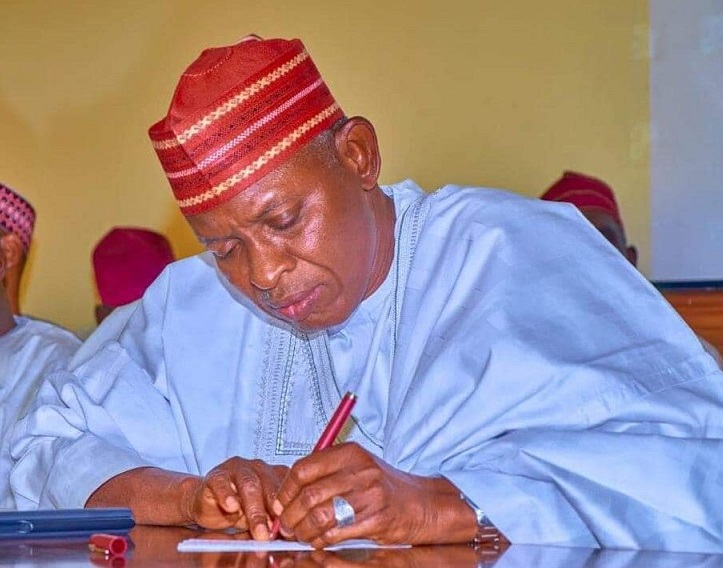
Governor Yusuf makes key appointments, revitalises Kano Line to enhance public service

By Muhammad Sulaiman

In a significant move to strengthen governance and improve public service delivery, Governor Abba Kabir Yusuf of Kano State has unveiled a series of strategic appointments and initiatives. This announcement was made through a press statement issued by his spokesperson, Sanusi Bature Dawakin Tofa, on Monday.

The governor’s actions are directed toward ensuring that skilled professionals occupy key positions within the state’s administration. He emphasizes the need for improved financial management and the overall efficiency of services provided to Kano’s citizens.

The statement noted several key appointments, including Jamila Magaji Abdullahi, the new Accountant General of Kano State. With over 16 years of experience in financial compliance and risk management, Abdullahi, a Bayero University graduate, is expected to bring integrity and transparency to the state’s financial operations. Previously, she held prominent roles in the Federal Inland Revenue Service and the Kano State Ministry of Finance.

Additionally, Muhammad Yahaya Liman has been appointed as the Director of the Treasury. Liman is a seasoned banker with extensive experience in financial reporting and regulatory compliance. He holds multiple degrees from Bayero University, including an MBA in Finance and Investment. His leadership is anticipated to significantly strengthen the state’s treasury operations.

In administration, Akibu Isa Murtala has been promoted to Special Adviser on Administration, a role that highlights his effectiveness in ensuring smooth governance processes. 

Furthermore, Governor Yusuf has reassigned Engr. Abubakar Sadiq has been appointed Deputy Managing Director of the Rural Water Supply and Sanitation Agency (RUWASA). This strategic move aims to enhance the quality of life in rural communities by addressing critical infrastructure needs.

A major highlight of the announcement was the revival of the Kano State Transport Authority, colloquially known as Kano Line. Governor Yusuf has established a strategic committee, chaired by Sa’idu Abdullahi Shu’aibu, to oversee the operation of Kano Line over the next six months. This initiative seeks to improve public transportation efficiency and align it with the state’s broader developmental goals.

The committee includes representatives from various ministries and sectors, reflecting a collaborative approach to enhancing transportation services in the state.

In his message to the newly appointed officials, Governor Yusuf highlighted the importance of innovation, dedication, and accountability in their roles. He urged them to work diligently and stressed that their contributions are vital to achieving the administration’s vision of improved governance and service delivery.

These appointments and initiatives are seen as a clear commitment from Governor Yusuf’s administration to foster development and position Kano State as a model of effective governance. 

Kunchi to Gari: Reflections on the history and semantics of the name changes

By Bashir Uba Ibrahim, Ph.D. 

Onomastics is the study of names and the naming of objects, places, and things. Its two main branches are anthroponymy and toponymy. While the former is concerned with individual proper names, family names, or surnames, the latter is interested in studying the motivations behind the proper names of places. This article is interested in toponymy—changing the names of places. Thus, it aims to synthesise the nexus between onomastics and history in naming places and how some circumstances trigger their penultimate changes. 

One of the impetuses behind this article is a Facebook post by Dr. Abdullahi Dahiru, a physician and public commentator, regarding the renaming of “Kunchi” Local Government to “Ghari.” In his post, he attributes this change to a distortion of history, citing Prof. Tijjani Naniya’s views on the etymology of “Kunchi” as historically linked to the bravery of its people. 

As a fortress town established to shield Kano from the external aggression of Damagaram, which sporadically attacked Kano in ancient times, the people of Kunchi successfully obliterated and defeated Damagaram infinitum. Thus, they were tagged by the Kano people as “Kun ci”, meaning “you have won”. As time passed, the phrase blended and metamorphosed to “Kunchi”. Henceforth, the town is called “Kunchi”, according to Prof. Naniya, cited by Dr. Abdullahi Dahiru. Therefore, the semantic change of the word was purely motivated by an extralinguistic factor, as the hardship and backwardness faced by the people of Kunchi were onomastically attributed to the pejorative nomenclature of the word in Hausa.

This scenario is called semantic and morphological change through blending in linguistics, a situation whereby the structure and meaning of the word change over time. Many types of semantic changes exist, including Broadening, Amelioration, Semantic Reclamation, and Pejoration.

The fourth one, “pejoration”, is where a semantic change of the word “kun ci” to “kunchi” falls. According to John (2000: 55), “pejoration is when the word’s meaning changes from positive to negative”. It usually occurs due to the extralinguistic factor or associating it with the taboo, as the name “kunchi” in Hausa is pejoratively associated with the taboo or something negative. 

Meanwhile, the stigma that the name “kunchi” pejoratively carries in Hausa and the negative stereotype it connotes make the people of the area opt to change the name of their local government. This will be a significant setback to the town’s history because, as time goes on, the upcoming generation from there will not know the history of their forefathers and their bravery in warfare.

On the other hand, semantic anomalies—those who believe there is no relationship between a word and what it stands for—triumph over analogists, who argue that word meaning represents what it stands for. Thus, the historical and semantic imports of the word “kun ci,” which was subsequently transformed to “Kunchi,” were not only changed but also its whole structure and form were replaced, displaced, and dislocated.

Finally, this is not the first time a place or city name has changed. Historically, we have seen how some places or cities’ names change due to varied circumstances. For instance, Mumbai, the capital of India, was formerly known as Bombay. But when the nationalist party Shiv Sena rose to power in 1995, it changed Bombay’s name to Mumbai, citing that the former name carries relics of British colonial legacy. 

Similarly, Istanbul, the capital of Turkey, was formerly known as Constantinople for hundreds of years. It was renamed Istanbul in 1930 after the Republic of Turkey was created. Therefore, changing place names is normal, depending on the circumstances and historical events that motivated them.

NB:

Dr. Raji Bello draws my attention that the case of the historical change of the name of “Kunchi” to “Gari” is similar to Lynchburg, Virginia, Black American people whose nomenclature of their city etymologically derived from the historical event of their racial subjugation and maltreatment and want the name of their town change.

Dr. Bashir Uba Ibrahim wrote from the Department of English and Literary Studies, Sule Lamido University Kafin Hausa, Jigawa State.

Gunmen invade Kano community, abduct young lady despite receiving N8 million

By Uzair Adam

Gunmen suspected to be kidnappers invaded Garo town in Kabo Local Government Area of Kano State in the early hours of Sunday, abducting a young lady after collecting N8 million from her family.

A source who spoke to journalists in the state disclosed that the attackers, numbering 10, stormed the residence of a prominent businessman, Alhaji Auwal, at Garo Sabuwar Unguwa around 1:20 a.m.

Three of them were said to be armed with guns, while the others carried different weapons. The source narrated how the assailants forced their way into the house by breaking a small door, gathering the entire family in one place and instilling fear and panic.

“The head of the family begged for the safety of his loved ones and offered to meet their demands. The gunmen were handed N8 million,” the source explained.

Despite receiving the ransom, the attackers abducted the eldest daughter of the family, a secondary school graduate, and fled the scene.

The family has not received any communication from the kidnappers regarding her whereabouts, leaving the community in a state of fear and uncertainty.

Residents are appealing to authorities to address the worsening insecurity in the area.

When contacted, Kano Police Command spokesman SP Abdullahi Haruna Kiyawa confirmed the incident and said an investigation is underway to apprehend the culprits.

“Avoid congested places”: Kano police alert residents of possible terrorist attacks

By Anwar Usman

The Kano State Police Command has alerted members of the public on suspected terrorists planning to launch attacks on public gatherings in strategic locations within the state.

This is contained in a statement issued by the command’s Public Relations Officer, SP Abdullahi Haruna Kiyawa, on Friday.

“The Kano State Police Command, in liaison with other security agencies, has received intelligence reports of suspected terrorists planning to launch attacks on public gatherings in strategic locations within Kano State.

“In response, we hereby urge residents to exercise caution and avoid crowded places and environments until further notice as a preventive measure to enable security operatives to identify and dislodge possible attackers”.

He further stated that, as part of an effort to ensure a peaceful Kano State, necessary security arrangements have been put in place.

“A team of experts from the command’s Explosive Ordinance Disposal, Chemical, Biological, Radiological and Nuclear units have been deployed to strategic locations and are on high alert.

“The unit can be reached through: 08169884988 or 07067157218 for report of suspicious persons or item(s),” Kiyawa said.

He called on members of the public to report any suspicious activity to the nearest police station or contact the state command through the designated mobile phone numbers.

He said the command remains committed to safeguarding lives and properties as well as maintaining law and order in Kano State.

“We appreciate the support and cooperation of the good people of Kano State and urge everyone to remain vigilant. Your vigilance and cooperation are crucial in ensuring public safety,” the statement revealed.

The Evolution of Yan Daba: From warriors to thugs in Kano

By Salisu Uba Kofarwambai

“Daba” comes from the Hausa term for a gathering place where people would sit and converse during their leisure time. Over time, the term took on a different connotation, referring to a spot where idle individuals would congregate, discuss, and plan their criminal activities, often fueled by drug addiction.

Historically, Hausa society had warriors known as Yan Tauri. These brave adventurers possessed magical powers and charms that made them nearly invincible in battle. They were also skilled hunters, often engaging in fierce competition over their prey. However, the Maitatsine crisis in the late 1970s to early 1980s marked a turning point for Yan Tauri. The crisis erupted when the followers of the heretic preacher Maitatsine clashed with the Nigerian government. 

Maitatsine, a Quranic teacher from Cameroon, had attracted a large following in Kano before beginning to preach against orthodox Islamic teachings. He started labelling people as infidels for merely watching TV or drinking tea with milk. When his son was killed at the street fight in Sabon Gari, Maitatsune started attacking people and killed many Kano residents.

The federal government refused to intervene, mainly due to party rivalry and Governor Abubakar Rimi’s criticism of the ruling party, NPN, and President Shehu Shagari. Thus, the Kano state government was left to handle the crisis on its own. The state government enlisted Yan Tauri’s help to combat the Maitatsine followers. Yan Tauri fought bravely, killing many followers, but this exposure to violence and bloodshed had a profound impact on them.

Following the Maitatsine crisis, Yan Tauri began to metamorphose into Yan Daba, a group notorious for their thuggery and violence. Politicians exploited Yan Daba for their gain, employing them as enforcers and thugs. During Governor Rimi’s tenure, the divide within the People’s Redemption Party (PRP) in Kano State further exacerbated the situation. The party split into two factions: the Santsi group, led by Governor Rimi, and the Tabo group, led by Malam Aminu Kano. Both factions employed Yan Daba thugs, leading to a deadly fight between the two groups.

Notorious Yan Daba members during this period included Gogarma, Mal Hadi, Gambo Cooperation, Sarki Change, Sabo Wakilin Tauri Mai Adashin Sara, Uba Dala Bala Turu, and many others. These thugs were known for their brutality and willingness to do whatever it took to achieve their objectives.

The reign of terror by Yan Daba continued until Major General Muhammadu Buhari came to power in 1983. Buhari’s administration cracked down on Yan Daba, arresting, killing, or forcing many of its members to flee Kano.

Then, in 1989, during General Ibrahim Babangida’s effort to transition Nigeria back to civilian governance, the Social Democratic Party (SDP) and the National Republican Convention (NRC) were established. These parties significantly influenced Nigeria’s move towards democracy. However, they also, perhaps unintentionally, aided the revival of Yan Daba in Kano as politicians continued to manipulate them for personal gains.

Yan Daba’s activities plagued Kano, with members engaging in robbery, assault, and other forms of violence. The emergence of notorious gangsters marked their reign of terror.

With the return of democratic rule in 1999, Yan Daba continued to pose a significant problem in Kano. Politicians continue to exploit them for their own gain, and their activities remain a major challenge for law enforcement agencies. Over time, Yan Daba has evolved, with many members now engaging in phone robbery and other forms of cybercrime.

Today, Yan Daba remains a challenge, with members engaging in various forms of criminal activity. Their history should be a cautionary tale about the dangers of exploiting violence and thuggery for political gain.

Salisu Uba Kofarwambai wrote from Kano via salisunews@gmail.com.

Jigawa judiciary sacks three, forces judges to resign over misconduct

By Uzair Adam

The Jigawa State Judicial Service Commission (JSC) has taken disciplinary action against several judicial staff for misconduct, including the dismissal of three officers, advising three Shari’a Court judges to resign, and reprimanding two others for dereliction of duty.

This was disclosed in a statement by Abbas Wangara, Director of Protocol and Publicity, Jigawa State Judiciary, on Sunday in Dutse.

According to the statement, the disciplinary measures were approved during the commission’s 178th meeting, held on January 7, following investigations into violations of judicial procedures and rules.

“In the outcome of the meeting signed by Auwalu Dan’Azumi, Secretary of the JSC, the commission received the report of an investigation committee from the High Court department in respect of two officers,” the statement said.

The affected officers, Iyal Ibrahim, a Higher Registrar on Grade Level 08, and Baffa Alhaji, a Principal Registrar on Grade Level 14, were found guilty of the illegal sale of two vehicles, exhibits of the Federal High Court, Dutse.

The commission terminated their appointments in line with Rule 5 (4) & (6) of the Jigawa State Judiciary Scheme of Service 2006 and Section 41 of the Judicial Service Commission Law, Cap. 20 Laws of Jigawa State 2012.

Additionally, the commission dismissed Abdu Aujara, a Chief Clerical Officer, for suppressing N965,000, a litigant’s deposit in a case of recovery filed by Ja’iz Bank before the Chief Magistrates Court Jahun. His dismissal was also in accordance with Section 41 of the Judicial Service Commission Law.

The commission further acted on reports from the Judiciary Public Complaint Committee (JPCC) against several Shari’a Court judges. One of them, Adamu Farin-Dutse, was accused of abusing judicial powers and misapplying the law.

Despite previous warnings, he was found liable for misconduct and advised to resign within two weeks.

Similarly, Muhammad Usman, another Shari’a Court judge, was accused of issuing a writ of possession before delivering judgment, thereby violating due process. He was also advised to resign within two weeks.

In another case, Judge Usman Zubair was found guilty of judicial irregularities, including mishandling inheritance cases and allowing unauthorized individuals to benefit from rulings.

He was similarly advised to resign. Two magistrates were reprimanded. Magistrate Munnir Abdullahi received a warning for improperly converting a civil matter to a criminal case and acting in a partisan manner.

Magistrate Yakubu Ibrahim was warned for abusing power and making derogatory remarks toward a litigant at Chief Magistrate Court Maigatari.

Wangara emphasized that these disciplinary actions reflect the commission’s commitment to ensuring a corruption-free judiciary and upholding professionalism and discipline among judicial staff.

He assured that the JSC would continue to take necessary measures to maintain standards and foster a fair working environment.

The commission reiterated its dedication to promoting a transparent and efficient judiciary in the state.

Governor Yusuf swears in new commissioners

By Sulaiman Abdullahi

Kano State Governor Abba Kabir Yusuf has inaugurated a new set of commissioners to lead key ministries in the state. The swearing-in ceremony took place on Monday at the Ante-Chamber of the Kano Government House.  

Governor Yusuf emphasised his administration’s commitment to fostering development through a capable team, noting that the appointments are strategic to achieving the state’s development goals.  

The newly sworn-in commissioners are:

1. Dr. Ismail Danmaraya – Commissioner for Finance and Economic Development  

2. Dr. Gaddafi Sani Shehu – Commissioner for Power and Renewable Energy

3. Dr. Dahir M. Hashim – Commissioner for Environment and Climate Change

4. Alhaji Shehu Wada Sagagi – Commissioner for Commerce and Industry  

5. Comrade Ibrahim Abdullahi Wayya – Commissioner for Information  

6. Abdulkadir Abdulsalam – Commissioner for Rural Development  

7. Comrade Nura Iro Ma’aji – Commissioner for Public Procurement and Project Monitoring  

8. Adamu Aliyu Kibiya – Commissioner for Humanitarian Affairs (reassigned)  

Governor Yusuf expressed confidence in the appointees’ ability to deliver on their mandates and urged them to prioritise service delivery and the welfare of Kano residents. 

Jigawa violence claims nine lives, Police say

By Uzair Adam

The Jigawa State Police Command has confirmed that nine people were killed and four others injured following a violent clash between communities in the state on Friday.

The incident, which occurred in Gululu village, Miga Local Government Area, reportedly began when a group of individuals suspected to be Fulani broke into a shop and stole hibiscus and other provisions.

According to the Police Public Relations Officer, SP Shi’isu Adam, the villagers (Hausawa) traced the suspects’ footprints to a Fulani settlement in Yankunama village, Jahun Local Government Area.

Upon confrontation, the Fulani community allegedly attacked the villagers with bows and arrows, injuring four people.

The altercation escalated as the villagers retaliated, burning houses in various locations across Miga and Jahun LGAs.

Adam stated that police teams from the Miga and Jahun Divisions intervened to restore peace, recovering nine bodies from the scene.

The victims’ remains were taken to hospitals in Jahun and Miga, where medical personnel confirmed the deaths.

The state Commissioner of Police, A.T. Abdullahi, along with other senior officers, visited the affected areas to assess the situation and ensure calm.

Community leaders, including district heads, vigilantes, and representatives of Miyetti Allah, held an emergency meeting to address the crisis and prevent further violence.

SP Shi’isu Adam assured the public that the situation is now under control and that an investigation is ongoing to apprehend those responsible.

My journey as a studentpreneur

By Amina Muhammad Sani

When I first stepped into university life, I thought it would be a breeze compared to secondary school. I assumed that financial burdens would be minimal and that I could coast through with ease. But reality quickly set in.

As a young adult, I realised I needed to take charge of my finances. That’s when I ventured into the egg business—sourcing eggs from farms and selling them to shop owners. The business initially showed promise, but I soon encountered a major hurdle: getting paid on time.

The delayed payments took a significant toll on my mental well-being. As a student entrepreneur, I relied heavily on the income from my egg business to cover essential expenses like transportation, handouts, and saving for next year’s school fees. With the uncertainty of when I’d receive payment, I found it challenging to focus on my studies. The constant worry and stress began to affect my academic performance. It was then that I decided to pivot and explore a new business venture – making samosas.

Initially, my samosa business took off, and I was thrilled to have finally found a reliable source of income. However, success comes at a cost. Making samosas was labour-intensive and time-consuming, requiring me to wake up at night to prepare for the day. The exhaustion was overwhelming, and I often dozed off during lectures. Despite the high demand and timely customer payments, I realised that the business was jeopardising my academic performance. The very reason I started the business – to support my education – was now being undermined. I knew I had to make a change again. This time, I decided to switch to making buns and doughnuts.

Making buns and doughnuts proved to be a more manageable venture, as I could prepare them in advance. However, I soon faced a new challenge: declining demand. Students lost interest in my baked goods, preferring samosas instead. The economic climate didn’t help, as the rising prices of snacks made it difficult for students to afford my products. As a result, sales dwindled, and I was left relying on the kindness of friends who purchased my snacks out of sympathy. But I knew I couldn’t sustain a business based on charity. I needed a more reliable solution. Having always been self-sufficient, I decided to explore alternative options for supporting myself financially. This led me to take on a job as a sales girl at the market.

Landing a job as a sales girl at the market was a dream come true. The pay was good, and I was finally on my way to becoming a successful, independent businesswoman – a goal I’d always been passionate about. As a final-year student in my final semester, I had a flexible schedule, with lectures only on Mondays and Thursdays. This allowed me to dedicate the remaining days to work, as agreed upon with my boss.

However, my new role came with its own set of challenges. My early morning departures and late evening returns raised concerns at home. In my community, it’s deemed improper for a female child to stay out late at night. My mom would often call me, suggesting that I quit my job, as it was deemed more suitable for men. The real issue, though, was the difficulty I faced in finding transportation after closing work at 6 PM. The location was far from home, and the rush of workers leaving at the same time made it challenging to find a ride, often leaving me stranded until 7 or 8 PM.

My experience as a salesgirl taught me valuable lessons about perseverance and determination. However, juggling this role with my academic responsibilities proved incredibly challenging. The physical and mental exhaustion were constant companions, and convincing my mom to allow me to continue working was an ongoing battle.

Through this journey, I’ve come to realise that becoming a successful businessperson requires unwavering dedication. Business and education are two distinct paths that demand individual focus. In my opinion, it’s unrealistic to expect someone to excel in both simultaneously.

I struggled to balance these two aspects of my life, and I firmly believe that students should prioritise their studies. Entrepreneurship can wait until after graduation, or students can explore business ventures that complement their academic schedules without compromising their studies. By focusing on one goal at a time, individuals can give their all and achieve success.

Amina is a level 400 student of Mass Communication, and she writes from Bayero University, Kano