Literature

End of the game

By Zee Aslam

“Bring him in and untie his eyes”, he heard a female voice snarling in the background. He tried recalling where he had heard that voice before, but it did not sound familiar to him at all. 

He looked around and saw that he was in a deserted building, there were sharp instruments everywhere, and the smell of fresh blood originated from a corner. She stood up from her chair and walked to where he was sitting with his hands tied to his feet. Before he could say a word, she had chopped off two of his fingers and whipped him severally. Then, mixed together different liquids in a bottle and handed it over to him. 

“Gulp it down, or I smash your head”, her thunderous voice echoed across the four walls. 

He couldn’t lift a finger, and his body kept trembling in fear, so she collected the bottle and emptied it down his throat. He had lost the surviving strength running through his limbs. Hence, he couldn’t retaliate nor attempt to stop her. 

“I want to watch you die slowly, shred your body into pieces and feed it to the vultures. I want the pains you inflicted on me to manifest on you before your death. That way, I will feel fulfilled”. After these words left her mouth, she picked up the knife from the table and took a few steps forward till she could hear his heart beating heavily.

“Open your mouth”, she ordered. 

“Please, have mercy on me”. He said amidst sobs. 

“Ohh wow, do you remember when I said these words too, or were you so engulfed in your selfishness that you couldn’t lend me a listening ear, you were man enough to take control notwithstanding the aftermath of your greed, right? It’s time to pay for your debt”. With this, she beckoned her boys to forcefully open his mouth while she slit part of his tongue.

“Now, swallow it, or I will proceed to slit your throat”, she bellowed dropping the piece she had cut off in his mouth. He collapsed, groaning with pain as blood streamed down his throat. 

“Get a bucket of water from the freezer and pour it all over him”. 

He dumbly opened his eyes and glimpsed at her angry figure, he wanted to speak, but words deserted his mouth, and the pain emanating from his cut couldn’t let him move his tongue. Not in a thousand years would he have imagined this happening to him. He had scaled through so many times; why is this particular victim a thorn in his flesh, does this mean his end is here after all? 

“Are you reminiscing on what had transpired between us”? Her voice jolted him back to reality. 

“After you left me almost lifeless on the street that day, I swore to make you pay for what you did. I had my boys trace your whereabouts and even gathered some information about you. That was when I learnt that society doesn’t need people like you; rapists deserve to rot in hell. But wait, don’t you have a conscience at all, how can you knock down random girls just to rape them, how on earth? I mean, why do we have to share the same earth with you all?”. She spoke in great anger. 

“Make him stand”, she ordered. 

The boys unfastened his hands and feet, then held him side by side till he was up. Staring at the sharp edge of the blade, his heart sank. 

“Why do I smell fear, are you curious to know what I intend to do with the blade?”. She asked with bittered smiles written all over her face. He only nodded. 

“Strip him off his clothes. Let’s get started”. She uttered quickly and authoritatively. His body sensated to every move she made, but he couldn’t help it. 

With tears in his eyes, he watched as she cut off his sexual organ. His wails were arrested by tying a gag around his mouth. It was a dreadful and sickening sight to behold. After going through severe agony, he was whipped to death and thrown out. His bloodied body was found in a public toilet the next day. 

That morning, her attention was called to the awful scene by a large number of a crowd she had seen along her way to the office. Many people who have seen or heard of what had befallen him had mixed feelings. Among the crowd were some of his victims. Seeing this predator lying in the pool of his own blood in this state made them feel gratified. 

She curved the corners of her mouth and flashed her most winning smile. She has finally put an end to the game he started. 

Zee Aslam can be reached via zeeaslam19059@gmail.com.

Unlocking West Africa’s Intellectual Legacy: The book unborrowed from Yale Library for 120 years

By Muhammad Jameel Yusha’u, PhD

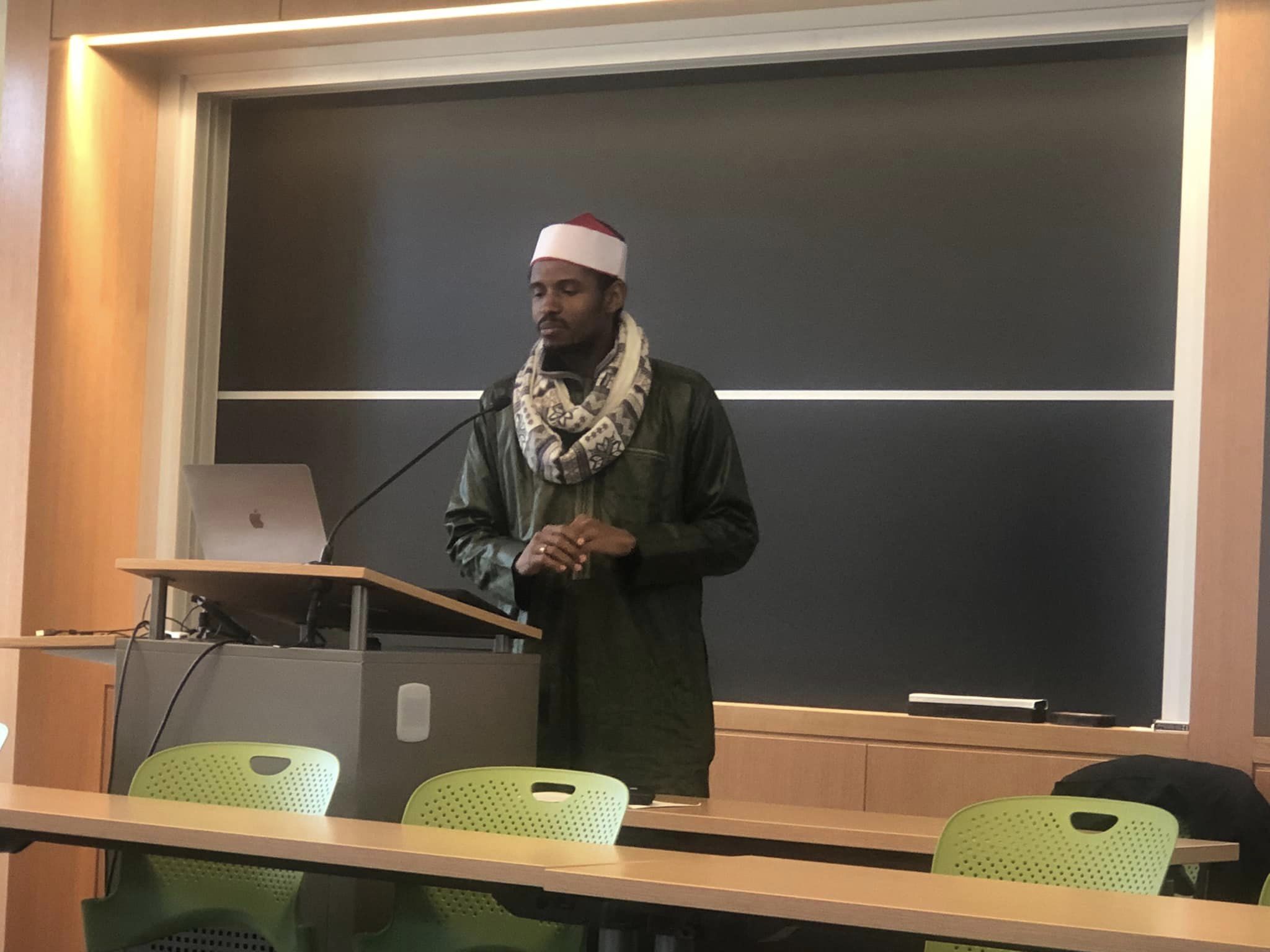
On Friday, March 3rd, 2023, I attended two events at the Divinity School. The first was a lecture convened by Professor Ousmane Kane, and the second was a joint symposium called the Zaytuna-Harvard Symposium. These two events shared similarities in that they both aimed to highlight the intellectual heritage of sub-Saharan Africa in various fields of knowledge and the importance of traditional means of knowledge acquisition.

The former was a presentation by Ustadh Umar Sheikh Tahir, the son of a prominent Nigerian scholar Sheikh Tahir Bauchi and a current PhD candidate at Columbia University. His presentation was titled “Rediscovering 18th Century Knowledge Tradition: Alkashinawi’s (d.1742) Intellectual Networks in Bilad Al-Sudan and Hijaz.” The latter was a presentation by Sheikh Hamza Yusuf, President of Zaytuna College, who spoke on “The Arts of Understanding Prerequisites for Unlocking the Islamic Tradition.” Sheikh Hamza Yusuf studied traditionally with scholars in Mauritania, West Africa.

Ustadh Umar presented the story of Muhammad Alkashinawi, a West African scholar from today’s Katsina province in Northern Nigeria. Alkashinawi developed proficiency in Arabic language, logic, mathematics, and jurisprudence in West Africa. When he moved to Hijaz, his scholarship was acknowledged, and he became a respected scholar from whom society was learning. When he died in Egypt, he was buried in the cemetery of scholars. Alkashinawi’s story highlights the journey of a scholar whose intellectual depth was developed in West Africa and whose scholarship transcended geographical boundaries.

The uniqueness of Alkashinawi’s work was not as prominent as it should have been, and Ustadh Umar’s work is more relevant in that he is translating Alkashinawi’s book into English. Interestingly, some of Alkashinawi’s work is only available at Yale University, and his book was not borrowed from the library at Yale for 120 years until Ustadh Umar asked for it.

The unborrowed book from Yale Library for 120 years

Sheikh Hamza Yusuf’s presentation highlighted the importance of traditional means of knowledge acquisition and how it translates into scholarship that transcends geographical boundaries. Both presentations mesmerised the audience, providing evidence that knowledge is a human heritage that belongs to those who work to acquire it. It is neither the monopoly of a region, ethnicity, nor race but a heritage that beautifies a society that values it.

During the symposium, I sat among the students of Zaytuna College. One of the students asked me where I was from, and I responded Nigeria. He then introduced me to one of his schoolmates from Texas, who was a descendant of Sheikh Uthman ibn Fodio. I found it interesting how the family of Uthman Dan Fodio crossed the Atlantic and still keeps the story of their genealogy intact.

Takeaway: Knowledge is a human heritage. It belongs to those who work to acquire it.

Muhammad Jameel Yusha’u, PhD, is a candidate for a Mid-Career Master’s in Public Administration at Harvard University, John F Kennedy School of Government. He can be reached via mjyushau@yahoo.com.

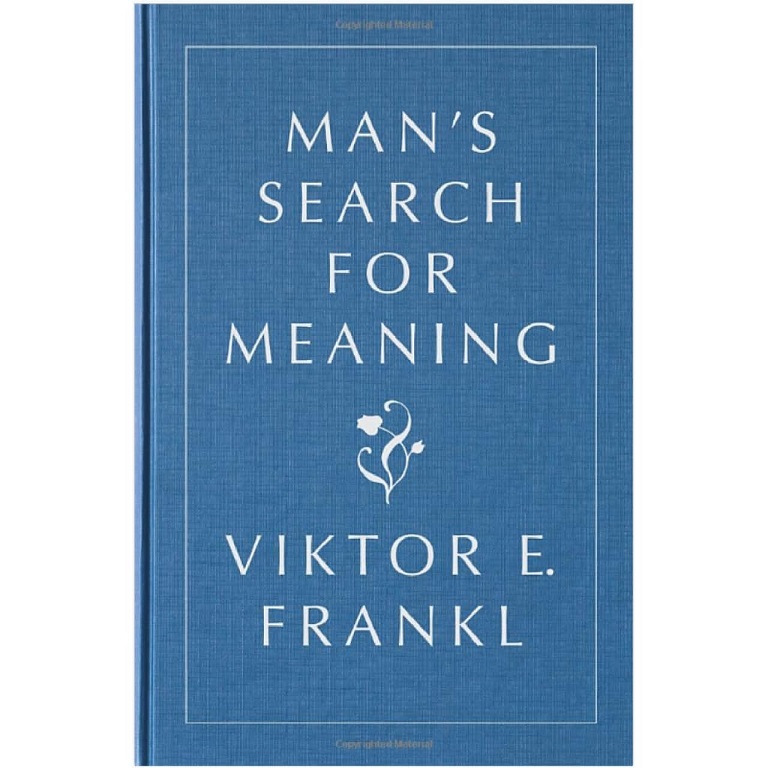
Book Review: Man’s Search for Meaning

By Muhammad Muzzammil Bashir

Think of a moment when you once found yourself in a situation where you were either physically, spiritually, or emotionally stressed, or both, where you could not help but give in and submit to your predicament, and all of a sudden, a flash of thought crossed your mind of the consequences of your choices, inspiring you to become decisive in your fate and bear with the situation while looking forward to its end until you are free from it.

The book, Man’s Search for Meaning, is the story of a psychiatrist, Victor E. Frankl, and his life at the Nazi concentration camp, envisioning and inspiring his colleagues to find meaning for life ahead while enduring the horrendous experiences of the camp.

The book accounts his experiences together with those of his colleagues’ lives at the camp, the sacrifices, the crucifixion, and the deaths of the great army of unknown and unrecorded victims, and of course, those who gave up on life and hope for a future; thus, they died less of lack of medicine or food than of lack of finding meaning or purpose to live for.

Frankl likened the experiences to assert that while we cannot avoid suffering, we can choose to learn how to cope with it, find meaning in it, and move our lives towards a renewed purpose.

The author asserts that life is not primarily a quest for pleasure, wealth, or power but rather a quest to find meaning in one’s life. He coined his ideas in theory called “logotherapy,” meaning that striving to find meaning in one’s life is the primary motivational force. The force usually comes from three possible sources: work, love, and in courage during difficult times.

A purpose-driven life is one that is enveloped in finding meaning that the mind holds subconsciously to pursue no matter the circumstances one is in. Obstacles may delay I but cannot deter that mind from pursuing its course. Fankl’s Man’s Search for Meaning is a masterpiece in this field, written in simple terms to comprehend its message easily.

Muhammad Muzzammil Bashir can be contacted via mbashir199@yahoo.com.

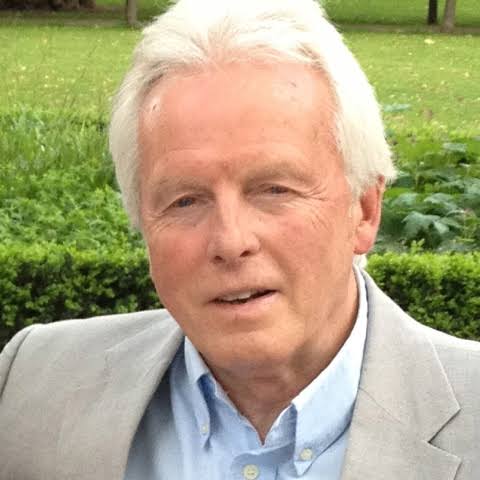
Philip J. Jaggar: The exit of another giant Hausaist scholar

By Prof. Abdalla Uba Adamu

I first met Philip Jaggar in March 2008 at the School of Oriental and African Studies (SOAS) when I was engaged as the cinematographer for a visit, mediated by the British Government, of Sheikh Dr Qaribullah Nasir Kabara of Kano, to various places in the UK, including the University of London.

While I knew of Jaggar (although never having met him before), the rest of the team was pleasantly surprised by his total command of the Hausa language (and inner city Kano Hausa at that) – and his absolute refusal to respond to any question except in Hausa. The SOAS meeting brought together an impressive list of scholars to receive Sheikh Qaribullah. These included Graham Furniss, Dmitry Bondarev (specialist on Hausa handwritten Warsh Qur’anic manuscripts of Hausaland) and Philip Jaggar himself. It was a very pleasant encounter, full of banter.

My next encounter with him was later in November 2008, when I was commissioned to deliver a lecture at the Universität Hamburg. Jaggar had taught at the university, and I was honoured he attended my public lecture. Only two meetings, but he treated me like a long-lost friend, despite the eleven-year age gap between us. I was also elated when he told me of his interest in my works which at that time were beginning to gain traction in media and cultural studies. It was our last meeting, but very memorable for me due to his simplicity, love for Kano and absolute devotion to Hausa studies. He taught at Bayero University Kano from 1973-1976 and had pleasant memories of his experiences.

Jaggar’s most famous and highly acclaimed book is simply titled Hausa (John Benjamins, 2001). It was considered a classic comprehensive reference grammar of the Hausa language spread over sixteen chapters which together provide a detailed and up-to-date description of the core structural properties of the language in theory-neutral terms, thus guaranteeing its ongoing accessibility to researchers in linguistic typology and universals.

While Jaggar, or Malam Bala as he preferred to be addressed when he was in Kano, was known for his immense contributions to Hausa grammar, I interfaced with his work on the ‘maƙera’/blacksmith industry of Kano. Jaggar was the first to provide a comprehensive study of the blacksmith industry in Kano. His landmark book, The Blacksmiths of Kano City: A Study in Tradition, Innovation and Entrepreneurship in the Twentieth Century (Rüdiger Köppe, Cologne 1994), brought out the honour, dignity, creativity, aesthetics and the technology of the metalworking industry in the heart of Africa. The blurb of the book summarizes this amazing work:

“The present book examines the factors involved in the expansion, during the colonial and post-colonial periods, of a traditional pre-European craft. It discusses the art of blacksmithing in Kano City, northern Nigeria, and its eventual conversion into a modern metalworking industry. In doing so, it challenges the widely-held and simplistic assumption that such traditional professions declined before the economic and technological onslaught of colonialism.”

For me, the book provides a fascinating and ethnographic picture of the industrialization of the inner core city where I spent the early years of my life. It vividly brought to life the alleyways, the people and the entrepreneurial focus of the various wards in the city. This alone is enough to endear a reader to the book, even without the fascinating focus on the blacksmithing industry. I was able to snatch a copy in a bookstore at the University of Maiduguri in 2003 at ₦800 – barely 2€ now, but the publisher is currently selling it for 24€, about ₦12,000.

If, and only if, someone in the policy circles of the Kano State government of the day had taken note of the book, our maƙera would have received a boost and been incorporated into the development agenda of a national creating a synergy between its creative proto-industrialists and modernity.

When he celebrated his 75th birthday in 2020, many of his colleagues paid a lot of glowing tribute to him. Now that he has sadly passed away, those tributes remain etched in stone. He will be surely missed by hundreds of his colleagues and thousands of Hausa students who benefitted, directly or indirectly, from his extensive scholarship on the Hausa language.

Tribute to Philip Jaggar (2020)
https://study.soas.ac.uk/tributes-to-philip-j-jaggar/

About Philip Jaggar
https://study.soas.ac.uk/jaggar-hausa-champion-soas/

Various scenes with Phil Jaggar and the OP, as well as with Sheikh Dr Qaribullah Nasir Kabara’s team

Reading

By Salisu Yusuf

Reading is the interpretation of some signs, symbols and codes into meaning for intellectual consumption. Reading is the third skill in the order of the four language skills behind writing, for one can only write when he knows how to read. The significance of reading can be viewed in the context of the world being a global village; reading has today made our world a unipolar entity where communities understand each other and realise their diversity.

In Islam, reading is the most crucial skill in seeking knowledge and understanding God. The first verse of revelation is “Iqra’a”, or read, for it’s through the pen(writing) that the Lord teaches man some knowledge.

Reading has been the highest source of joy for man. It emancipates and frees man from the shackles of servitude. People have read to escape from the deception of the perverts, the so-called clerics who misinterpret divine injunctions according to their caprices. Reading can wrench you from the grips and chicanery of postmodern politicians. Read and be free from the bog of tradition, the tyranny of the oppressor, the darkness of illiteracy and the glibness of the scammers. 

In fact, reading can make you a gentleman/lady; men/women have become milder, sober and more empathetic through years of excessive reading. When you read, you will understand yourself, your immediate environment, and your world. When you don’t read, you suffer from a lack of effective education. That’s called illiteracy.

 Reading can take you to places you’ve never been. I was once with the notorious Adolf Hitler in a ditch shortly before his infamous suicide. I was once in a Bagdad prison, witnessing the despicable hanging of dictator Saddam Hussein. I have been to Elysse Palace with the powerful Charles de Gaulle during his assassination attempt. Asare Konadu has given me an imaginative ride to cultural Ghana. James Hardly Chase has numerously chauffeured me to an underworld, taught me criminology, spying and espionage. Achebe has taught me some aspects of Igbo culture; in fact, he was the one who told me that “breaking cola” wasn’t only a Hausa culture.

I once read a fable with a combination of animal, bird and spirit characters. I melted into the sky, and became a spirit. I perched on branches of trees as a brood, hatching and nestling. I had become a spirit and mutated into a bird the next moment, flying on a vast, blue and cold sky, feeling acrophobic. I still remember with nostalgia those imaginative, daring escapades. A reader can go directly to a character’s mind and discover his inner thought. He can scale a river and be on war fronts. 

Reading can be your route to escape, add to your knowledge experience, and can polish your language, open you to new vistas and give you aesthetic joy.

 As an advanced reader, you shouldn’t read excessively at night (learn to rest for your mental well-being), or in sunny spots (you should go under a shade). Preferably, don’t read from a white paper; the best paper to read from is either a light yellow or light blue.

 The best thing in your reading is to protect and harness your eyes from being strained. Your eyes aren’t only your sighting treasure. They’re your intellectual and economic assets. By using the best and appropriate paper, you take a long-term measure that’s best for your eyes in later life.

The uncomfortable truth is that, you’ll reach a stage in your life when you lose that flexibility in and around your eyes. So, you must compensate them with reading glasses. But using the right paper will sustain the tempo and rhythm of your sight. You should harness your eyes at this crucial stage of your life. To quote from the famous English poet, Oliver Goldsmith, “husband out life tapers at the close. And keep the flames from wasting by repose.”

At an advanced level of our reading, we read when we’re in the mood, when we’re in the best mental state. This is why it’s crucial to coordinate your eyes and mind together during your reading; otherwise, you’ll only say the alphabet, not the semantic words. There’s a difference between saying and reading. In saying, you don’t understand; in reading, you get the gist.

During our personal/independent reading, we should avoid vocalisation and sub-vocalization because they’re diversionary; we employ the use of silent reading, where the eyes and mind do the bidding. We move the eyes but not the head.

 As an advanced reader, you should devise a contextual reading. A context reading is when a reader utilises all those syntactic, semantic, and discourse markers as well as the surrounding information, use an appropriate analytical approach to the vocabulary, and use the historical and cultural backgrounds in his quest for meaning. 

A reader should digest both the content and form. Reading is twofold; he digests the content for the message and the form or language where he learns some contextual expressions. 

Reading should be a lifetime endeavour. However, reading cannot be an obstacle to my midday siesta, my routine physical exercise, or my light walk. It cannot hinder my other religious obligations.

Reading is my morning tea, my late morning cake and drink, my heavy lunch, my afternoon dessert, and my evening supper. Reading is my light dinner. I will read until I can read no more until I feel numb and dark.

 Salisu Yusuf wrote from Katsina via salisuyusuf111@gmail.com.

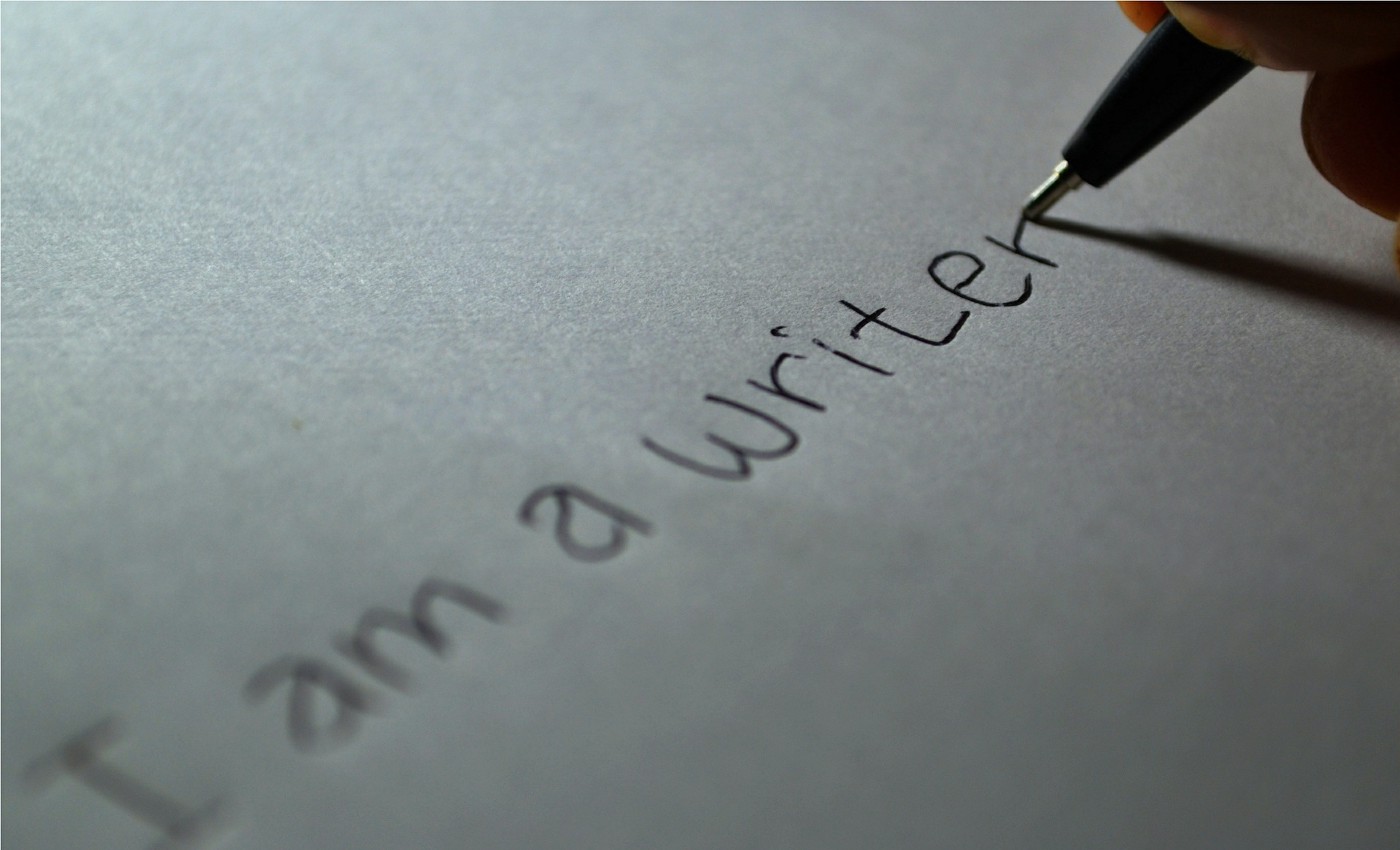
Writing

By Salisu Yusuf

Writing is the act of inscribing some signs, symbols and codes which a reader absorbs, encodes and interprets to act on, connect to, or change an attitude towards something. Writing is the fourth of the four basic language skills: listening, speaking, reading and writing. This, however, does not make writing the least important; in fact, writing is the most critical language skill in the current global context due to its perceived wider, heterogeneous and scattered audience and its permanence.

Speaking is also instant and irretrievable (at least before the invention of modern communication and broadcasting systems). You can only apologise after saying something. Writing can be edited and is retrievable. In other words, writing has some measure of revisability or verifiability. Every other form of communication is ephemeral. Only writing survives time because of its encryption. Moreover, the purpose of reading is defeated if there’s no writing. Writing has preserved divine scriptures.

Writing can make you happy because when you write, you instantly release a pent-up feeling. When you unburden, you feel you’ve got rid of something. Writing makes your day. It makes you great, famous and successful. Writers are known to have defied time and become immortals. Writers are immortals because their names defy times: Chinua Achebe, Khaled Hossein, Nuruddeen Farah, Newal Elsadawy, etc., are timeless names. The power of the pen has bound people and made the world better.

Good writing skills, the ability to convince, and the ability to communicate with a good command of language will likely attract a mass audience. These make public relations and propaganda tools for controlling narratives and persuasion.

One secret to writing is that writing widens your horizon and increases your critical thinking and sense of reasoning. It broadens your analytical skills. Writing makes you more sensible. It opens new vistas and can lead you to explore lands and thoughts that men have never explored. So, write, write, rewrite until you write the right.

Writing is, however, a slippery slope. Lest you forget, writing reveals you- it lets your audience know your personality, character traits, likes and dislikes, troubles, etc. This is because, when you write, you leave out gaps, aporias which the reader fills.

Though writing is a joyful venture, it can be a self-destructive escapade. So, know your subject matter well and write on what’s verifiable. Avoid defamatory, slanderous materials. You should know that laws of defamation cover writing, so don’t bring an issue that will likely injure the reputation of an innocent one. Men are dignified creatures. Don’t dare denigrate them.

Moreover, while writing, do not infringe on others’ copyright. Make your copy the right one. Copyright laws strictly bind writing; when you quote, acknowledge your source correctly.

As a writer, you should know that writing is fluid; it has no fixed shape. Therefore, it yields explications, expositions and interpretations. So, when you write, as Roland Barthes said, you’re a dead author. People rightly interpret your write-ups and derive multiple meanings. Therefore, when you write, you’re no longer in control of your text. You’re a dead author. Only the readers are alive and in control of the meaning.

As a writer, the sensibility of your audience is respected. Writing always goes with its moral appeal. I have not seen a fool as one who writes to level old scores, which hurts feelings. That’s the definition of a fool. 

For some, writing is a profession. For others, writing is a skill, while some look at writing as an escapement. Whatever it’s to you, write and rewrite until you write the right.

Salisu Yusuf wrote from Katsina via salisuyusuf111@gmail.com.

On writing business

By Sulaiman Maijama’a

A barrage of questions troop into my inbox daily from people outside the writing circle, declaring their interest to come in. Some questions are worthy enough, while some are funny and crazy. For example, a young lady asked me to teach her “Article Writing” via WhatsApp. Another once asked, “can I become a writer in one week?”  Somebody told me “kai kam rubutu bayi maka wahala“. What a wrongful assumption!

Let me, in order not to give a wrong impression of myself, humbly submit that I’m just a fledgling writer aspiring to be a pen wizard one day. My decision to write on “writing” this time was prompted by the fact that those who excelled are too busy to avail themselves and become beast of burden for aspiring writers. Be that as it may, a dot in the circle (like me?) may have something to offer. And as the saying goes, “there is love in sharing”. Thus, I will share the following tips for aspiring writers:

1. BE PASSIONATE AND AMBITIOUS. This, in my view, is the first step to becoming a writer. Writing is daunting, time-consuming, attention-demanding and a continuous learning process.  Whoever tells you the contrary is leading you astray. But your passion and ambition are the driving force that will keep propelling you to defy all odds and cross the blocks on your way to the promised land. I believe that one (1) inspiration can overcome ninety-nine (99) perspiration.

Haven’t you ever asked yourself why some people who read English or Mass Communication write poorly or don’t write? But others who are trained scientists are writing professionally standard _Medical Doctors, Zoologists, Agriculturalists among others write well. This is to tell you that writing is a product of passion and ambition. Regardless of what you read, you can be a writer per excellence.

2. MASTER YOUR LANGUAGE. Reasonable proficiency in a language is a prerequisite for any writer who wants to be taken seriously by his readers. Not necessarily English Language, but any language you write in. Master the language to the level that the native speaker will appreciate you. Nobody can afford to devote his time to reading trash in the name of writing. Nobody will take you seriously when your essay contains grammatical errors, sentence fragments, dangling modifiers, and incoherent and incohesive sentences and paragraphs.

3. READ. I do not know a better way a writer can improve than by taking an avid interest in reading. Reading good writings is what makes good writers. And the volume of the text you read must supersede the magnitude of your writing. For instance, you need to read and analyse at least ten articles when writing a single piece. Before you write a single book, read and review one hundred books. Do you know that when a writer stops reading, it reflects in their writings?

4. HAVE MODEL(S) AND MENTOR(S). In any profession one wants to excel in, they must have people they look up to. Different writers have different styles of writing. As a young aspiring writer, identify your hero(s), look up to them and read them more. While having a model(s) will help you raise the bar of your success by dreaming bigger, having a mentor(s) will, on the other hand, help you be on the rightful terrain to the promised land. Mentors are a blessing; they show you the way, and when you feel like giving up, they reinvigorate your confidence.

5. WRITE FREQUENTLY. It is impossible to learn writing by theory; it is learnt by the practical application of theoretical ideas. But, like a muscle getting stronger by exertion, writing improves through frequent practice. If you write frequently, you will discover that today’s writing is better than yesterday’s. Your writings this week are better than those of previous weeks. That’s one magic about it. So, never get tired of writing if you want to become a good writer.

6. HAVE AN AREA OF INTEREST.  A writer should specialise in a given area, preferably the area they are more interested in. For instance, some people are sport-loving, some follow every trend in politics, some on entertainment, some on terrorism etc. The wisdom behind identifying an area of interest is that whatever you are interested in, you will not find it too daunting but rather fun that will push you to break the glass ceiling. But this does not mean limiting yourself to a single area; a good writer should be able to write on every topic under the sun.

7. DON’T BE DECEIVED BY ENCOMIUMS: Writers carried away by flattering are likely to feel complacent. Most of the encomiums coming from people are not genuine. Regrettably, this has led to the downfall of many writers. Some people will overrate you; some will send you positive responses even without reading you. However, positive responses are motivating, but be relaxed, know your level and keep improving.

8. ACCEPT CORRECTIONS AND KEEP LEARNING. Nobody has a monopoly in this business. There is no level of professionalism a writer can attain where they are above mistakes. Even globally recognised writers make mistakes. Always keep your doors open for corrections, learn from them, and keep learning every day.

Maijama’a is a student at the Faculty of Communication, Bayero University, Kano and wrote via sulaimanmaija@gmail.com.

Tinubu marks wife’s birthday with love poem

By Ahmad Deedat Zakari

The former Lagos State governor and the Presidential Candidate of the All Progressives Congress, Bola Ahmad Tinubu, has written a love poem for his wife Senator Oluremi Tinubu to celebrate her birthday.

The politician took to his verified Facebook account to eulogize his wife in a poem on Wednesday.

Some parts of the poem reads, “Not even the demands of politics can suppress the rush of emotions I feel everytime it’s your birthday.

“Dearest Oluremi, my Senator! I love and appreciate you each passing day. Recalling how we started fills me with gratitude: how you have stood by me, unconditionally, like the Rock of Gibraltar.”

Senator Oluremi Tinubu, a senator and wife of the APC flagbearer clocks 62 on Wednesday.

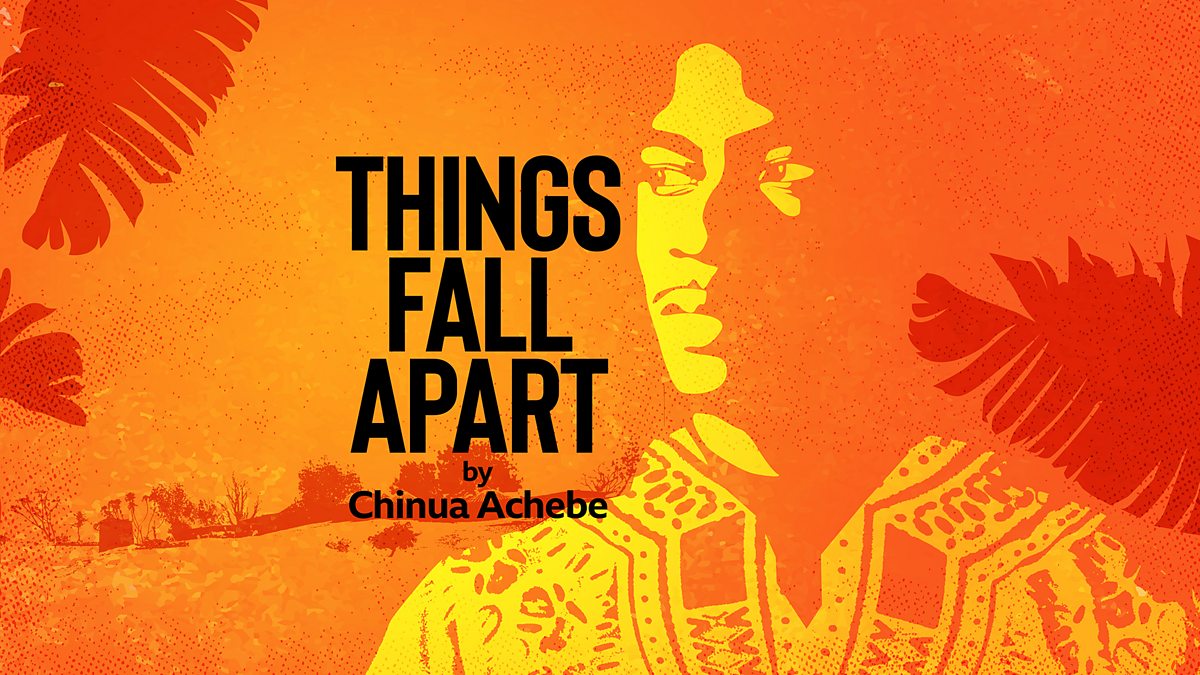
On Things Fall Apart

By Abba Musa Ibrahim

When Europeans came to Africa and said, You have no culture, no religion, no civilization, no history; Africa was bound sooner or later to reply by displaying her own accomplishments. To do this, her writers and intellectuals- stepped back into what you may call the purity before the coming of Europe. What they uncovered there they put into their books and poems, and this became known as their culture, their answer to Europe’s arrogance.   – Chinua Achebe

Things Fall Apart (1958) is a text on colonialism by Achebe. As Ngugi asserts, “There is no writing in a vacuum”. Equally, Stanley Fish, Raymond William, Edward Said, and Homi K. Bhaba, among others, strongly believe that writing consciously or unconsciously reflects political, historical or social issues at the time of its birth.

In response to Joseph Conrad’s Heart of Darkness and Joyce Carry’s Mister Johnson, Achebe came up with Things Fall Apart to rectify the distorted image of Africa popularised by the Europeans. As he was quoted, “My role as a writer is to help my society regain belief in itself and put away the complexities of years of denigration and self-abasement”.

Things Fall Apart is recognized as one of the 100 novels ever written in history. It has also been translated into more than 50 different languages. Achebe gets the title of the text from W.B Yeats, an Irish poet, in his poem, “The Second Coming.”

“Turning and turning in the widening gyre

The Falcon cannot hear the falconer

Things Fall Apart; the centre cannot hold

Mere anarchy is loosed upon the world.”

The text has 165 pages, twenty-five chapters, and three phases, each discussing a distinct matter. The first part talks about the culture, tradition, norms and values and political system of Igbo society. Meanwhile, the second part talks about the major character, Okonkwo’s exile to his mother’s kinsmen in Mbanta when he kills a boy during a funeral festival. Then, lastly, is the happenings that lead him to hang himself.

The first part of the text opens with Okonkwo, who gets renown by wiping the floor with Amalinze; his celebrity circulates far and wide. He’s also a man of action, industrious and works tirelessly to go contrary to his bone idle and workshy father. Ikemefuna is brought to Okonkwo’s household before his future is decided. Pronto, the boy, owns the love of Okonkwo.

We also glance at Okonkwo, who has four wives and children and run them with heavy hands because he wants them to shun being inactive. His strictness makes him break a week of peace by beating his wife in black and blue. He also cuts Ikemefuna down, which Ezeadu forewarns him, “That boy calls you father, do not bear a hand in his death” (P.45). He does this and takes the life of sixteen years inadvertently, which in their custom is exile for seven years.

Secondly, the second part opens in Mbaino, Okonkwo’s mother’s town, where he serves for seven years. He receives a helping hand from his boon companion, Obiereka, by looking after his remnants of farm and letting him know about the arrival of white men who wiped out Abame altogether, and oracles apprise them that;

“The strange man would break their

Clan spread destruction among them” (p.111)

He also accepts the worsened situation:

“… Now he has won our brothers and our clan

Can no longer act like one; he has put a knife

On the things that held us together and we have fallen apart” (p.141)

Thirdly, the last part of the text is on Okonkwo’s return from Mbaino, where he loses his celebrity and social prestige. He finds out that white missionaries take everything up. They erect churches, courts, government and schools. He stands up against missionaries, fighting back his fame, social prestige and customs. But, drearily, he fails by not getting any co-operation from his clan, and this frustrates him to the core, and he takes his own life.

Abba Musa Ibrahim can be reached via abbamusa6888@gmail.com.

Book Review: Nearly All The Men in Lagos Are Mad

  • Title: Nearly All The Men in Lagos Are Mad
  • Author: Damilare Kuku
  • Genre: Fiction
  • Date of Publication: 2021
  • Page: 198
  • Publisher: Masobe Books
  • Reviewer: Aliyu Idris

It is the author’s debut. It entails twelve short stories narrated in cooperative narration; almost every story revolves around a subject regarding the woman or feminine gender.

From the book title, you may sense that it’s questionable, derogatory and disrespectful to men. However, the book exposes the sufferings of women and how the men of Lagos behave, especially towards women. It involves the story of sacrifice, endurance, rape, patriarchy and phallocentric, deceit and betrayal. Women are presented as saints. But, as it happens in reality, some characters found in some stories are the reason for their suffering.

Another crucial issue highlighted and promoted in the book is the concept of feminism. Just like contemporary feminists, I am not flabbergasted to find out that one of the author’s inspirations to produce the book is a feminist (Ngozi Chimamanda Adichie).

Almost every female writer who writes in any genre of literature promotes feminism right from the 19th and 20th-century feminists such as Virginia Woolf, Simone de Beauvoir, and Kate Millet down to the present-day feminists.

Because contemporary feminist writers do not stick to one feminist ideology but many subcategories. For instance, every story in the book has a different class of feminist ideology. For example, the first story titled “Cuck-Up” uses Amazon feminism to potray how defiant women are despite appearing weak and passive.

The last story in the book, “Independence Day,”  uses cultural feminism, showing women’s kindness and gentility.

Eco-feminism in the story “Anointed Wife” emphasises that patriarchial societies are detrimental to women.

Charles E Brazzler, in his book Literary Criticism An Introduction to Theory and Practice Fifth Edition, asserts that it’s the view of contemporary feminists that subjugation of women still exists worldwide. Issues such as rape, prostitution, social injustice, early marriages, polygamy etc., the feminist writers continue to add their voices to protest through their pens and papers.

It should be noted that feminism has been broadly international in scope, and many local and general factors dictate its disposition. For example, writers from Arab traditions such as Fatima Mernissi and Leila Ahmed have attempted to articulate a feminist vision distinctly marked by their specific cultural concerns. The same is true of African-American feminists such as Alice Walker and feminists of Asian heritage such as Gayatri Spivak (Habib 2005:669).