Literature

Book Review: The Subtle Art of Not Giving a F*ck

By Hafsah Ja’afar

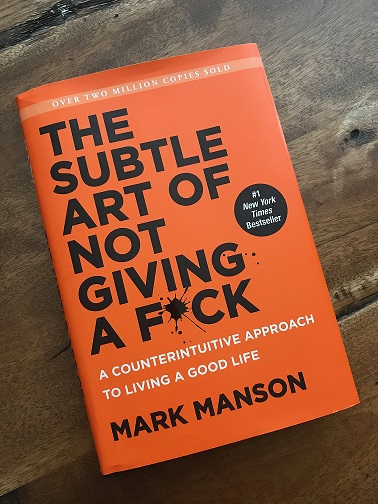
The Subtle Art of Not Given a F*ck is a book with a provoking unconventional tone that challenges traditional sundries of happiness and success. Penned by Mark Manson, this book presents a refreshingly honest and no–gibberish approach to living fulfilling lives. Manson argues that true happiness and particular growth come from accepting our limitations, embracing discomfort, and understanding that life is innately difficult and delicate.

He encourages his readers to prioritize their values and choose what truly matters to them instead of seeking constant positivity or avoiding negative gests. Throughout the book, Manson explores colourful themes such as responsibility, authenticity, and the significance of setting boundaries.

He advocates for letting go of societal prospects, embracing failures, and learning from them. He suggests that we can lead a more meaningful and authentic life by fastening on what truly matters to us—using a mix of particular stories, philosophical perceptivity, and detailed advice.

Manson provides readers with a fresh perspective on changing happiness and purpose. It encourages them to let go of external confirmation, embrace their defects, and control their lives.

Overall, this book offers a counterintuitive yet empowering gospel that challenges everyone to rethink their precedence, review success, and live a life guided by their values rather than the prospects of others.

Hafsat Ja’afar is a school teacher and wrote from Kano via jaafarhafsat@gmail.com

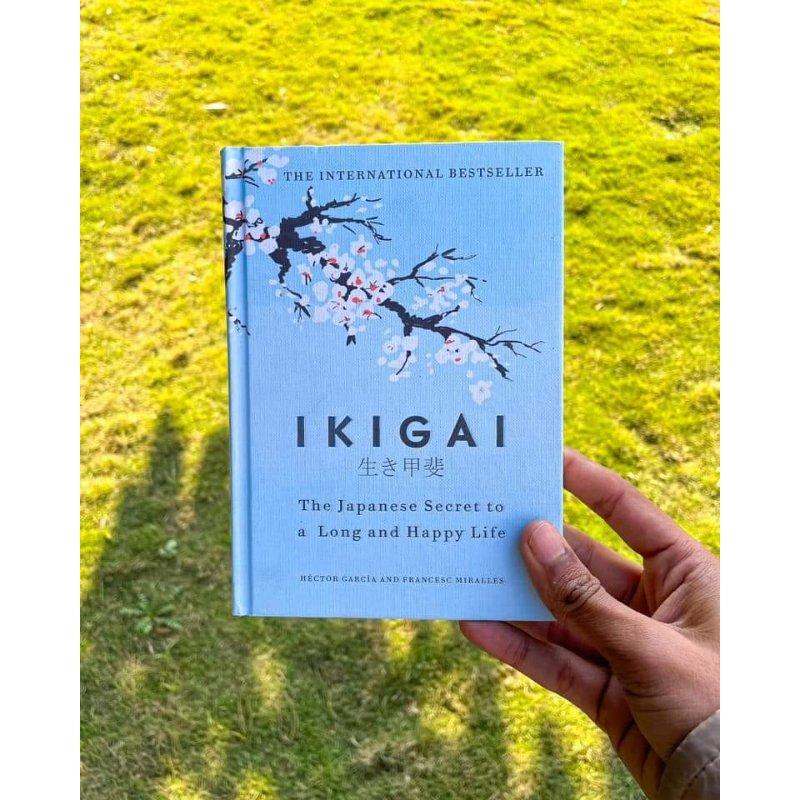
IKIGAI: The Japanese secret to long and happy life

By Hafsah Ja’afar

It is a captivating and insightful book that explores the concept of Ikigai, a Japanese philosophy that translates to ‘reason for being’ written by Hector Garcia and Francesc Miralles. This book delves into the wisdom and practices of the people of Okinawa, one of the world’s blue zones. The people of that region are known for their longevity and well-being.

The authors take readers on a journey to discover the essence of Ikigai, which lies at the intersection of four fundamental elements: What we love, what we are good at, what the world needs, and what we can be rewarded for. Drawing from extensive research and interviews with residents of Okinawa, the authors reveal how living a life driven by Ikigai can bring profound fulfilment and joy.

Through engaging anecdotes and practical guidance, the book offers valuable insights into how to uncover one’s Ikigai and cultivate it in daily life. It explores the importance of finding purpose, maintaining a strong sense of community, adopting a positive mindset, and embracing simple yet meaningful pleasures.

Ikigai provides inspiration and actionable steps to help readers discover and pursue their own Ikigai. It highlights the significance of aligning personal passions with contributing to the greater good, emphasising that a life rooted in meaning and purpose can improve well-being, longevity, and overall happiness.

With its blend of cultural wisdom and contemporary research, Ikigai: The Japanese Secret to a Long and happy life guides individuals seeking a more fulfilling and balanced existence. It offers practical tools and profound insights to help readers unlock their inner purpose, embrace the present moment, and lead a life of greater significance and contentment.

One of the surprising things about living in Japan is how active people remain after retirement. Many Japanese people never retire but rather keep doing what they love for as long as they are ‘hale and hearty’. There is no word in Japanese that means “leaving the workforce for good” as it is in English.

According to National Geographic reporter Dan Buettner, having a purpose or reason for being is so fundamental in Japan and the Japanese culture that the word retirement ceases to exist. The art of staying young while growing old is a choice you make; a healthful diet, a strong sense of community, and Ikigai (reason for being) play a significant role in their eternal youth, most especially in Okinawa (the island of eternal youth), one of the blue zones where centenarians the extraordinary human beings live in massive numbers.

Hafsat Ja’afar is a school teacher and wrote from Kano via jaafarhafsat@gmail.com

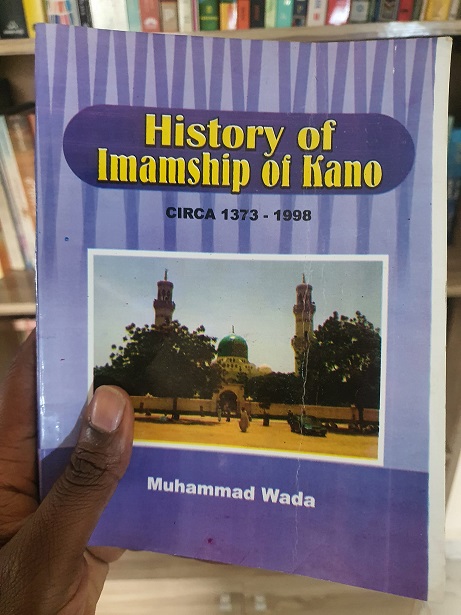
Book Review: History of Imamship of Kano

By Dr Shamsuddeen Sani

Where I got History of Imamship of Kano by Muhammad Wada is somewhat hazy in my memory, but it is an MA thesis that underwent a transformative process. The author undertook significant efforts to draw from diverse historical sources. This task merits recognition due to the inherent challenges associated with such an endeavour in the Kano historical tradition.

Despite its small physical size, this book ambitiously tackles a weighty subject matter. The initial chapter, which ideally should have served as a generous introduction, takes a look at the historical backdrop concerning the role of Imams within classical Sunni Islam. In doing so, it imparts valuable insights into their spiritual and intellectual significance. The second chapter charts the evolution of the Imams’ role within the classical religious culture of Kano before the advent of the Sokoto Jihad.

Commencing with the arrival of the Wangarawa during the 14th century, their influence played a pivotal role in the domestication of Islam as a state religion during that era. With the gradual expansion of their spiritual responsibilities and socio-political influence within the royal court, the Imams assumed a central position within the annals of Kano’s historical tradition.

The third chapter examines the transformative impact of the Sokoto Jihad at the turn of the 19th century, bringing about substantial changes to the role of Imams and how they were selected. These changes also served to define an expanded set of functions for the state-appointed Imam.

The author peppers fragments from the biographies of early post-Jihad Kano Imams alongside pivotal milestones punctuating their official lives. As the colonial powers exerted their influence in the early 20th century, the 4th chapter examines how the role of Imams underwent a notable shift, culminating in their formalisation within the judicial council, albeit with a subsequent reduction to primarily spiritual functions.

The book’s final chapter highlights the Imams and their ever-evolving roles from post-independence to the present. Moreover, it investigates the expansionist developments surrounding the establishment of Friday congregational prayer mosques across the state. While the book serves as a comprehensive introductory exploration of its subject matter, it might require additional intellectual depth that one might expect within broader, modern academic discourse.

There are also some ectopic clerical errors in the book that could have been identified and corrected before printing. While acknowledging the inherent challenge of achieving complete neutrality in historical works, it is reasonable to expect greater nuance and fairness in a work of this nature.

Dr Shamsuddeen Sani wrote from Kano. He can be reached via deensani@yahoo.com.
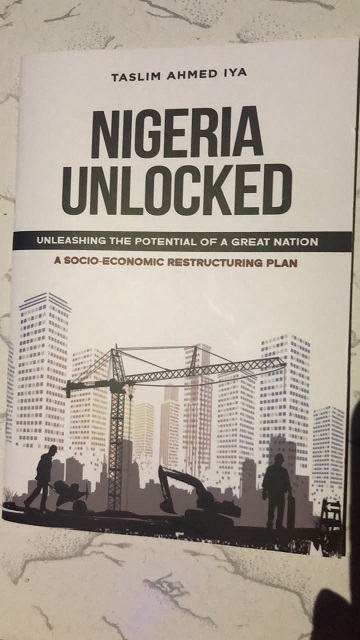
Book Review: Nigeria Unlocked

By Zahra Batul

A Nigerian entrepreneur and investor, Taslim Ahmed Iya has made a significant contribution towards resolving Nigeria’s protracted economic woes with the unveiling of his book, Nigeria Unlocked: Unleashing the Potential of a Great Nation

The 60-page book comprehensively analyses Nigeria’s current challenges and a practical roadmap for restructuring its economy. 

Interestingly, it is a product of intense research by an expert in economics and business who has obtained degrees in Economics and Management from Bocconi University in Italy. 

Taslim is also the CEO of Eximus Partners, an investment management firm focused on Long-Term Investments and Private Equity in Nigeria, Europe and the US.

The book draws from case studies and best practices from other successful emerging economies, presenting a bold vision for Nigeria’s future. 

From addressing corruption and creating a more transparent governance structure to promoting entrepreneurship and creating a skilled workforce, “Nigeria Unlocked” offers a comprehensive roadmap for revitalising the Nigerian economy and improving the lives of its citizens.

The inspiring book is available nationwide in Roving Heights and Spine and Label Bookstores.

Also available on Amazon in e-book and physical copy format

The author also worked as a Management Consultant in various industries, including Oil and Gas, Insurance, Real Estate, FMCG, Supermarkets, and Restaurants. 

His extensive experience in these industries has given him a unique perspective on the challenges and opportunities businesses face in today’s ever-changing market.

His latest literary work is essential reading for policymakers, business leaders, economists, and anyone interested in Nigeria’s economic future. It provides a clear and compelling vision for transforming Nigeria into a vibrant and prosperous nation that serves as a beacon for the rest of Africa and the world.

Apart from his professional endeavours, Taslim is also a passionate entrepreneur, having founded Uncle Tee’s, a restaurant chain in Nigeria, among others. 

He is also deeply committed to improving the education system in Nigeria. He is the founder of Youth Compass Foundation, a non-profit organisation dedicated to providing educational opportunities for young people in the country.

Zahrah Batul wrote via xahrabatul91@gmail.com.

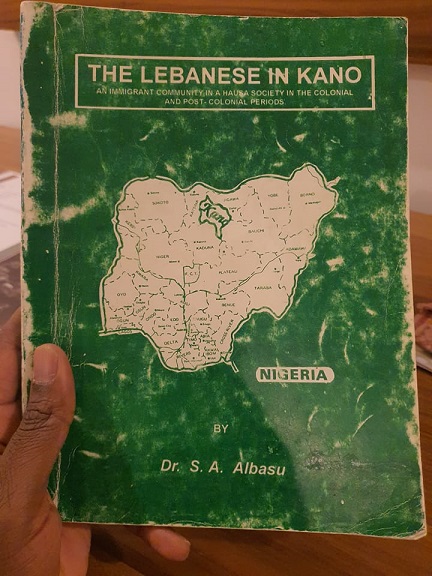
Book Review: The Lebanese in Kano

By Dr Shamsuddeen Sani

I thought The Lebanese in Kano: An Immigrant Community in a Hausa Society in the Colonial and Post-Colonial Periods merely contained a handful of newspaper tales. I was mistaken! Within its pages lies a meticulously researched body of work, a testament to the cultural heritage of Kano that begs to be savoured and preserved for generations to come. It has profound glimpses into the very foundations of Kano’s societal evolution as it illuminates the paramount role played by the Lebanese community in the rich Kano’s historical traditions.

This book, published in 1995 and authored by S.A. Albasu, unfolds with an intricate chronology of eight captivating chapters. As the introduction sets the stage, the initial chapter gracefully delves into the existing body of literature on migration, skilfully intertwining it with the historical fabric of West Africa and Nigeria. Embracing a tangent in the second chapter, Albasu illuminates the emigration of the Lebanese into Kano, beginning in the mid-19th century.

However, a pivotal juncture in Lebanese history within Kano emerged in 1920, a defining moment marked by profound geographical and religious divisions among the Lebanese migrants. The historical catalysts propelling Lebanese emigration into Nigeria were meticulously examined within this segment.

It becomes apparent that prior to the 1920s, the Lebanese immigrants in Kano predominantly belonged to the Maronite Christian community. It is only after this period that a demographic shift occurs, welcoming the arrival of Muslim Lebanese, particularly those of the Shiite sectarian extraction hailing from southern Lebanon. The book exposes the reader to the sociocultural intricacies of the Lebanese community’s towns of origin and unravels the fabric of their society, dispelling prevailing myths.

The entire Lebanese migration into Kano is thoughtfully categorised into four distinct phases, each meticulously explored with great detail: 1890-1903, 1903-1912, 1912-1920, and the 1930s during the tumultuous period of the great depression. Each of these phases represents a significant milestone in the history of the Lebanese community within Kano, as well as its impact on the city’s socioeconomic development.

Subsequent chapters of this book delve into the physical establishment of the Lebanese community, intricately entwined with crucial historical policies such as colonial taxation, the indirect rule system, and segregation policies.

Chapters four, five, and six embark on an exciting journey, covering the consolidation of the Lebanese community within Kano’s vibrant business milieu. From the thriving cattle trade to the realms of Kolanut and groundnut businesses, the book unfurls the profound influence of factors like colonial intervention, the upheaval of the Second World War, Nigeria’s independence, and the burgeoning national consciousness. The book has revelations of ground-breaking nature, leaving you enlightened and astounded, and for me, every piece seamlessly falls into place now.

Notes on “Manyan Mata” series

By Abdullahi Haruna Kandash

In my opinion, Mayan Mata is one of the best series, if not the best movie ever produced in Kannywood. The movie portrays the vicious circle of poverty, a retinue of marriages, the mutilation of pregnant women and how children in society are raised with no regard for their futures.

Sadik Sani Sadik thinks nothing a man should be ashamed of if he bullies his wife. In the series, his pregnant wife faces a crisis despite her pregnancy. Unfortunately, they lost the child by miscarriage. Jamila Nagudu experiences petty humiliation after her one and only child is taken to Almajiranci. Daso’s son is a nasty disciple, too, a spoiled one. He was taken to Almajiranci when he was a child. He follows the gang and gets spoiled.

The movie portrays what really sabotages relationships, couples and children’s futures. The best part of this movie tells us that there are people in society with more clout who show no concern for other children and other women whose lives have been shattered by the cruelty of their spouses. I became truly interested in the movie after I watched some episodes. And I have seen many things that happen in real life portrayed in the movie. The director has done a wonderful job.

Kannywood should continue to bring cultural identities into its movies. The director also depicts literature, art and culture in the movie, and all these can be vividly seen in the different scenes of the film. Literature, art and culture are not something we can simply despise. They are like the air we breathe. And If we cut them off, the whole world will suffer.

Literature has enormously helped so many movies to gather an audience because of its literariness. Manyan Mata pictures exactly what is happening in our communities nowadays. It shows how parents treat their children with contempt. The director shows us how our societies are sliding backwards and experiencing immaturity.

But the best part of it, however, is that it teaches us how to understand the beauty of humanity, that everyone’s life matters.

Fati Washa experiences a worst-case scenario with her deceased mother’s co-wife. After watching the scene where her mother’s co-wife was trying to burn her schoolbooks rudely, I sensed that the movie is trying to tell us that societies that achieve better prosperities are those where huge investments are made in education. These are societies where every child is allowed to go to school to learn. This part also attempts to show us that every child should have access to education so that just and egalitarian societies can be built.

I hope the director will continue to fight inequality and bring sameness because that is what brings safety, security and a sense of belonging among people.

Afflictions and Stitches

By Zee Aslam

The door slammed open to reveal a heart-touching moment of a mother struggling to discover her breath as she aimed to bring another life into the world. The birth of a baby is one of the world’s most wondrous and hazardous moments. 

Childbirth is a challenge, but it is undoubtedly one of life’s most rewarding events. As painful and fearsome as it may seem, the mother has this wonderful emotion overwhelming her as she awaits the arrival of her bundle of joy. 

Being a mother comes with lots of sacrifices. Your body figure will be altered, re-moulded, and your brain becomes addled as you are being re-programmed right from the womb swelling with pride down to experiencing the pain of labour. 

Pregnancy is exciting and scary all at the same time. Some days feel like a breeze, while others are just plain hard. However, the long nights with no sleep and mood swings are all worth it. 

Despite all the doctors, nurses, and loved ones in the room during childbirth, it is all about you, your body, and your child. It’s an incredible experience. It’s like uncovering a superpower you never realised you had. 

As she gasped for air while pushing out the baby, she looked around her and reminisced on the decision she took months back, which she never regretted once but still harboured doubts and fears. “What would become of this baby?” She asked herself. 

The cry of her little one signalled the beginning of a new life. She looked keenly as the nurse cleaned up her baby and placed him on her, wrapped in boundless passion. 

The aftermath of her decision just began. At night and when the hospital staff were distracted by an emergency, she stealthily sneaked out and walked miles away to a place where an orphanage was situated before dropping off the baby at the foot of a gate and then knocking at it. 

An elderly woman came out and was attracted to the baby’s cries. She stood halfway, staring at the innocent boy before she reduced her height and picked him up inside. The mother watching from afar, only wiped off tears as they streamed down her face. “That was the best she could do for her baby”. 

She travelled down memory lane to the path where some unknown men abducted, defiled and abused her. Then she thought she only paid the price of being an orphan roaming on the street, but now she knows better. 

Her life took a new turn and brought her to face its realities, she has just given away her soul and a piece of her heart to a total stranger, but she rests assured that her boy will grow up amidst other kids and be a better person. 

She calmly dragged her feet out of that street to what she called home and picked up the remnant from her shattered life, yearning to stitch them back together. 

If she could turn back the hands of time, she would. 

But since it’s beyond her control, she will only move on with her life and keep praying for the best to unfold into a piece. 

Book Review: The Alchemist

By Dansaleh Aliyu Yahya

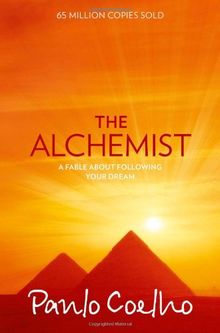
After reading Paulo Coelho’s The Alchemist, this fictional story of a young boy created a river of tears in my gapes. The main character, Santiago, a young lad, dreams and believes that dreams come true when someone follows the way to see them awaken.

At first, he (the boy) taught us that travels were the greatest sources of knowledge, experience, and wisdom when he told his father that he wanted to become a shepherd because of the love he had for knowing the true nature of his world. Nevertheless, he sold his sheep and searched for his “Personal Legend” because he now realised it was more important than just rearing animals.

Throughout the story, we would learn that if the younger person needs to have a useful life, they must learn and believe the philosophy of their older ones. On his journey, Santiago met many good people.

In addition, each of them told him one or more essential facts about life and everything.  For example, he met a king named Melchizedek, who said, “ When you want something, all universe conspires in helping you to achieve it”. I think this is the most important sentence in the book.

The books also taught us that we shouldn’t bother ourselves with our past but instead focus on our present to build a more fantastic future. He was told that when he concentrated on the present, he would always be happy. 

In his treasure search, the boy met a young woman called Fatima. They started loving each other, and he promised her he’d be back one day to marry her. There I remembered the Hausa Proverb that says, “ Garin masoyi baya nisa”. He was about to lose his treasure because of love, but the alchemist summoned him.

The story has a lot of must-be-learned philosophies that couldn’t be mentioned here due to their meanness, but I’ll try to pen down some of them below to build eagerness to read the book in those that didn’t read it. These ideologies include:

— “If you play cards the first time, you’re almost sure to win. It’s called beginners luck.”

— “Everything that happens once can never happen again. But everything that happens twice will surely happen the third time.”

— “Every day was there to be lived or mark one’s departure on one word ‘maktub’”.

— “If you start by promising what you don’t even have yet, you’ll lose your desire to work toward getting it.”

Let me stop here. However, if you have not read the book, you should look for it. I assure you, you won’t be the same person you were before reading it.

Dansaleh Aliyu Yahya can be contacted via dansalealiyu@gmail.com.

On Jonathan AC Brown’s Slavery and Islam

By Dr Shamsuddeen Sani

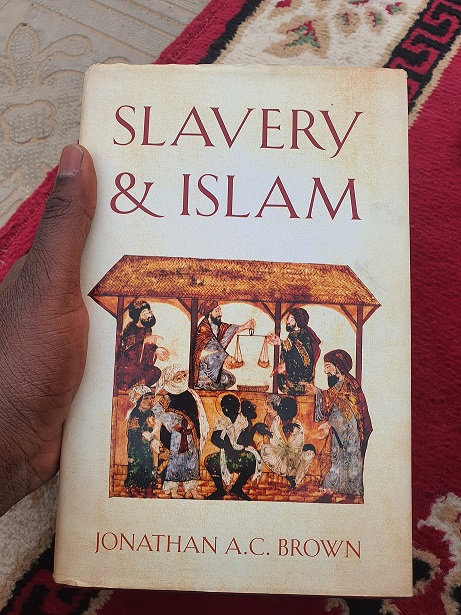
In a flurry of literary exploration, my daughter recently stumbled upon the book entitled Concubines and Power. Her curiosity was piqued as she asked me to explain the meaning of “concubine”. A seemingly simple inquiry prompted a deep and complex conversation encompassing a broad range of considerations about slavery, including its religious underpinnings and contemporary relevance.

That exchange reignited my intellectual curiosity, leading me to revisit the noteworthy insights presented in Jonathan AC Brown’s seminal work, Slavery and Islam. I was compelled to reflect on and share some of the most insightful revelations from this ground-breaking work.

The book meticulously examines the historical context and practice of slavery within the Islamic tradition, as well as the ways in which Islamic law and theology have addressed the institution of slavery. Brown argues that slavery was ubiquitous throughout much of human history and was not unique to Islam.

However, Brown also acknowledges that slavery played a significant role in the development of Islamic civilisation and that the Islamic legal tradition provided a framework for the regulation of slavery. He offers an insightful and nuanced perspective on this complex issue, providing valuable insights into the intersection of religion and human rights.

Brown’s book highlights a fundamental premise: the Islamic tradition’s nuanced and intricate approach to slavery. On the one hand, Islamic law allowed for the practice of slavery; on the other, it imposed stringent limitations on how slaves could be treated and offered opportunities for manumission. According to Brown, these regulations illustrate a deep-seated concern for the well-being of slaves and a profound appreciation of their inherent human dignity.

At the same time, Brown acknowledges that there were significant abuses of the institution of slavery within Islamic societies. For example, he notes that some Muslim scholars and rulers sought to justify and perpetuate the practice of slavery through a misinterpretation of Islamic teachings and that many slaves were subjected to inhumane treatment.

He argues that while there are certainly instances of slavery and human trafficking that occur in Muslim-majority countries, these practices are not inherently Islamic and are often the result of broader social and economic factors.

Chinua Achebe’s Man of the People: A story more than a fiction

By Saifullahi Attahir

It’s not surprising that nowadays you see my post regularly. I’m always looking forward to moments like this where  I get released from the yolk of sleep-inducing medical books. Once again, I’m lucky to be surrounded by my favourite literature I  enjoy which serves as a source of enlightenment, happiness, experience, and loyal and non-disturbing companionship.

This week I luckily came across a 362 pages novel written by a great and rare literary icon, Chinua Achebe, who needs no introduction. Dr Achebe was born around the 1930s in pre-independence Nigeria. He witnessed the early struggle of our nation with colonial amalgamation, premature political activities, and half-baked western knowledge. He was also blessed to witness the coup and the counter-coups, the civil war, the many long military juntas, and various democratic regimes. He died around 2013. what a long journey!

My respect for Achebe began when I discovered his early taste in Medicine (MBBS) at the University before switching to the Humanities. This is obvious in his surgical approach to writing and his simple use of words to convey a powerful message resembling a patient-doctor relationship in a way that no other can. Achebe is a political philosopher with all the tools to delve into politics (being famous, a great orator, experienced, a historian, and knowledgeable, of course, without the money) but decided to steer himself away from remaining a true nationalist.

The book, Man of the people, was so captivating that I couldn’t stop reading it until I was done in less than three days. How it related events in the early 1950s political arena to how it is in the present moment shows me that history is often a cyclical process with only names and dates that tend to change a little. This struck me with a reality that humans, despite our self-acclaim superior intelligence, are sometimes unfortunate gullible creatures that hardly learnt lessons from their past mistakes or the mistakes of others. This is more so true as today we rarely like to read history. Below is my take off from the book:

Chief Honourable Nanga is regarded in our settings as a wise and lucky few who was previously a low waged primary school teacher before finding his way into politics in the newly independent country. He was elected as a parliamentarian to represent his local people, who were mostly less literate in books than he was. Before his political adventure, Nanga was simple, intelligent, respectful, and friendly. All the mentioned attributes earned him the automatic approval of his people to represent them.

Of course, they weren’t wrong. Chief Nanga continues to be available to his people because he was a person you could describe as ‘let us eat together’. The main concern of his people was to bring them something to their mouths, not tangible and economically sustained programs. This automatically makes Chief Nanga the person whose main concern was to butcher the ‘national cake’ to satisfy his people and at least secure their approval for the next election round.

Chief Nanga was nominated a National Minister of Culture by the Prime Minister for his unquestionable ‘loyalty’ to the party and its leadership. The loyalty was nothing more than his ability to see wrongdoings and remains silent. Transgressions include high inflation, dashing money to party members, over-estimated contracts, sub-optimal road projects, conspicuous import duties, debt-ridden economic policies, debilitating educational reform, and countless more.

In exchange for his loyalty Chief Nanga was assured 10% of every project he was given, a 7-bedroom self-contained house, ten newly designed buses for his next election campaign, a  newly 2-storey mansion in his village hometown Anata, a new Cadillac car, and four security bodyguards. Remember that this was 1960’s politics!

In the story, there was an incident of some members of Parliaments who were not loyal to this dirty scheme of ‘party politics’ and stood their ground to expose all these scandalous affairs. Their fate was that the newspapers, magazines, and media outlets were being bought up (bribed) to write news regarding a coup plot arranged by those patriotic citizens who were later dismissed and imprisoned. At this juncture, I noticed that it’s true that news from some media outlets sometimes has some aspects of interest, either being compromised financially or for personal benefit. This required a separate article on its own.

It’s a rule of life that such activities can never continue unnoticed. Therefore a group of young, overzealous, and enlightened University graduates, some of whom were already practising in various sectors, including lawyers, doctors, teachers, and engineers led by  Max (a lawyer) and Odili (a teacher)  gathered to form a political party or rather a revolutionary movement to counter the activities of Chief Nanga’s Government. After various arrangements and meetings, they began launching their campaign. They were able to display every tactic to draw the attention of the common men and women in the country.

To cut the story short, these zealous young men were, to some level, unsuccessful in their mission; as the system began to unfold, it seemed a very complex situation where the very people they were shouting to rescue were the very culprit supporting the corruption. Those masses see the politician as saviours whose role is to go and bring them their share of the ‘national cake’ bounty because they do not view it as their right or National asset that deserves preservation up to their unborn generation.

The problem is that the same common masses are responsible for encouraging the leaders to do the vices. The common masses are the vanguards (‘yan jangaliya), the bodyguards, the local party chairman, and the man who complained of Kola-nut for his daughter’s marriage. The same masses would first laugh at him (elected politician)  after one year when he resigned from office without amassing something. Then, they would laugh at him that now he had become a  pauper, so this automatically creates the intrinsic urge to loot.

During the election campaign, Max lost his life after being attacked by those unfortunate vanguards, and  Odili sustained injuries, while his nomination paper didn’t even reach the electoral office as it was confiscated by corrupt Police. Chief Nanga’s party were ‘elected’ unopposed through massive ballot rigging and political hullabaloo. Fortunately, the country was saved by a military coup that overthrew Chief Nanga’s government.

The rest is history.

Saifullahi Attahir wrote from Dutse wrote via saifullahiattahir93@gmail.com.