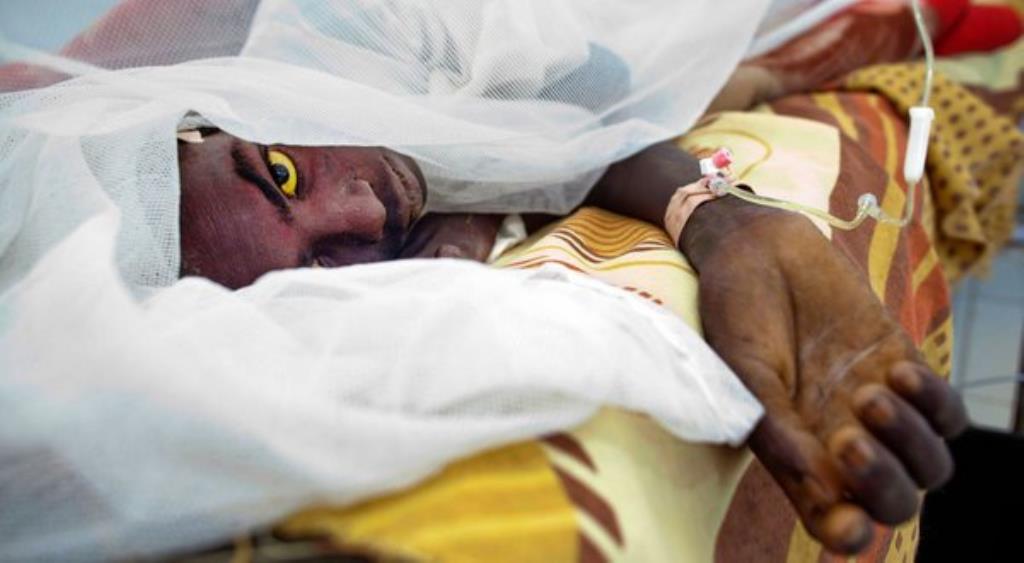
Jigawa State Ministry of Health has confirmed 141 new cases of Cerebrospinal Meningitis that claimed eight lives in the state.
The ministry’s Permanent Secretary, Dr Salisu Mu’azu, confirmed the cases to Daily Reality in Dutse, the state capital.
The Permanent Secretary, who spoke through Dr Sabi’u Muhmmad of the disease control department in the ministry, outlined some areas in Kaugama, Birniwa, Gumel, and Maigatari Local Governments the cases were identified.
Dr Muhammad said 134 out of the 141 patients were infected by Neisseria Meningitis type C, and 6 contracted Strept pneumonia while one was identified with Neisseria Meningitis type X and among the cases identified, about eight death were recorded.
He said that all measures had been put in place to avert the pandemic. He further advised communities in the affected areas to be conscious and refer a suspected case to the nearest general hospital for all necessary action. The state government has procured free medication for patients with such cases.
Kano State is the most populous state in Nigeria with a projection of over 20 million people. Access to quality and affordable healthcare services in Kano state have been a major challenge for many years which is due to various factors: inadequate healthcare facilities, shortage of healthcare professionals, poverty, and a lack of awareness and enlightenment among the people about the importance of healthcare. The incoming government under His Excellency, Abba K. Yusuf, has made a commitment to revive the healthcare system in the state through a range of initiatives.
One of the major initiatives is the recruitment of human resources for health sector. This is because, Kano has a shortage of healthcare professionals which has led to inadequate access to quality healthcare services. The government aims to attract more healthcare workers to work in the state by providing incentives and partnering with medical schools to train more healthcare experts locally.
The establishment of mobile clinics and ambulance services is also a key initiative of the government. These services will provide basic healthcare services to people living in remote areas who may not have access to healthcare otherwise. Ambulance services ensure that patients can be transported to hospitals quickly in case of an emergency, improving their chances of survival.
The free Maternal and Child Health (MNCH) program is another significant initiative. This program will provide free healthcare services to pregnant women and children under the age of five. This initiative will help in reducing maternal and child mortality rates in the state as more women will have access to free antenatal care and delivery services.
Primary healthcare services are also a priority for the government. The provision of basic healthcare services at the community level helps to reduce the burden on hospitals and clinics. This initiative will help people access healthcare services closer to their homes, especially those in remote areas.
Partnerships and donor coordination in the health sector are also critical. This initiative will lead to increased funding for healthcare services in the state and partnerships with international organizations and donors to improve healthcare infrastructure and services.
The renovation of major hospitals in the state will also be a crucial part of the incoming government’s efforts. This initiative will improve healthcare services and increase patient satisfaction. The government will also encourage private investment in the health sector to improve access to health services.
To make it easier for people, the government will set up a smart contributory health plan. The scheme is aimed at ensuring that people have access to healthcare services regardless of their income level. This initiative has helped poor and marginalized people all over the world to get better access to healthcare services.
Finally, the government will provide support for medical students and doctors in residency training. This ensures that healthcare professionals are adequately trained and prepared to provide high-quality healthcare services.
In conclusion, the incoming government under His Excellency Abba K. Yusuf’s leadership has shown a commitment to improving access to quality and affordable healthcare services in Kano state. If implemented by the government, the initiatives: recruitment of healthcare professionals, establishment of mobile clinics and ambulance services, free maternal and child health program, primary healthcare services, partnership and donor coordination in the health sector, renovation of major hospitals, private investment in the health sector, a contributory health scheme, doctor residency training and support for medical students will contribute to the improvement of healthcare services in Kano state. These initiatives have the potential to transform the healthcare system in the state and improve access to healthcare services for the people of Kano state.
A few days ago, Dr Muhsin Ibrahim shared a story about a divorcee whose ex-husband refused to pay her medical bills. This is a familiar story as it happens to many people in our society.
I know of a divorced woman with three kids who has nowhere to go. Another woman was in an abusive marriage. When asked why she wouldn’t leave her husband, she said that he took care of her financial needs.
There’s also this woman whose husband was a serial womaniser and a drunkard, yet she couldn’t leave him because she has no means to sustain herself as her parents are dead.
In this society, a woman will be married off with no skill or education. Then get divorced and be left to start from scratch, thanks to the stigma attached to divorcees. No woman should be in an abusive marriage or miserable because she lacks financial independence.
Parents should let their girls finish at least secondary school and ensure they learn a skill. Those who finished higher institutions should be allowed to work or engage in business. The time to stay idle for women has passed. We should not let this poverty and misery cycle continue.
A woman should be financially independent regardless of her marital status. In case of divorce or the husband’s death, she should be able to care for herself and her children at least.
There’s no denying that our marriage institution needs reform, and the time to do so is now. Alhamdulillah, our scholars are now discussing it, but we need action. There is a need for sensitisation across rural as well as urban communities.
Girl-child education should be supported. There are many opportunities for learning that women can learn in the comfort of their homes, and they should be encouraged to do so.
My name is Hamza. My father had two wives. The family comprised ten children from two different mothers. I was the eldest and the sixth in my mother’s room and the family, respectively. We were three in my mother’s room.
One fateful day, our father, Alhaji Basiru, and his friends travelled to Katsina. Unfortunately, they had a ghostly road accident returning to Funtua, our hometown. Only one person survived. I was not enrolled in a public primary school at that time, not to talk of my younger brothers. Our mother became our father and mother; for she had taken all the responsibilities of the father.
Glory be to the Sustainer. Since before our father gave up the ghost, she had embraced some petty trade at home like selling ruwan leda (water, then, usually, packed in a medium-sized leather after being cooled by a Randa ‘earthy pot’), roasted groundnut and selling food later. Her local restaurant, which was home, had become renowned in the locality and the neighbour then, as there were fewer restauranteurs in the area.
She used to sell a bag of rice in two or three days in the comfort of her home. Over time, competition increased. Sequel to that, she boiled to cook only a few measures of rice. I hawked the food on a silver tray when things started getting out of hand. The hawking was usually done after I returned from morning school and sold before late afternoon prayer (Asr), after which I had the opportunity to go to Islamiyya.
Furthermore, she ensured we had all we wanted so that we had the equal privilege to be educated like other children whose parents are alive. I can never forget when I told her what someone told me about what seemed to them like we were chasing education. He said one of his friends said, “If he (referring to me) must further his education, we will see who will sponsor him.”
I felt sad even after narrating the story to our mother. She said, “You see, all these hardships that I endure are for you to be educated. I wish I had money to sponsor your education to university; I can spend any amount in my belongings for you to be educated”. She continued, “Although I do not have enough money to sponsor your education, I believe you will get someone to help you, and that is what I always pray for.” Whenever I remember that, I feel motivated.
Fortunately, I sat for my SSCE and came out with flying colours. It was in the school of our neighbour and brother who sponsored a duo of us, my half-brother and I, in his school. May Allah (SWT) reward him and add to his wealth, amin.
I then applied to Ahmadu Bello University (ABU) Zaria with a JAMB score of 252 for MBBS in 2020. After some years of waiting, due to Covid-19 and the lingering strike, I sat for post-UTME and scored relatively well. However, afterwards, I did not secure admission. That may be due to too much competition.
Still, I did not give up. I knew MBBS was, most of the time, not a one-off thing. So the following year, I sat for another one, prayed, and worked harder. This time around was Federal University Dutse (FUD) and still the MBBS. After all, I got it in that school in early January this year (2023).
I owe my success to my dearest mother. As Prof. Abdalla Uba wrote, her likes are the “REAL woman of substance.” In a few years, I hope to become a feather in her cap ( to be a professional medical doctor ), become an important person to society and save the lives of many victims.
The current trends of housemaids poisoning their employers are so sickening and scary. It happened countless times, and one can’t escape seeing one or two videos of such heinous acts. From sexual and physical to mental abuse, housemaids and their masters always have these issues in their relationship.
Whenever I encounter such an incident, I wonder why we continue to employ maids or why others leave their homes and work with people they hate. I had maids, and I grew up with maids in our house. But things are different now. People do not fear God. Humanity is lost. From the employee to employers, we are all at fault.
As much as we agree, the maids are vulnerable and more likely to become victims. Unfortunately, these maids have upped their games, and the family employed them are becoming the victims. I’m not here to tell who is right or wrong, but I know that maids had abused us, taken advantage of our kindness, stolen from us, and deceived us to the extent that we decided we no longer have maids in our home.
Is it easy? No. Is it doable? Yes. We can bring an end to this problem. This issue is almost none existence in developed countries. Regardless of how educated or wealthy you are, cleaning your home is something one takes pride in doing, except for celebrities and rich people who employ the services of cleaning agencies who can hardly be cheated on and are less likely to betray too.
Another advantage of doing your house chore is that it helps you burn calories. Moving your body here and there, doing this and that makes you burn calories, makes you more energetic and more alert. As a result, you gain most of the advantages that come with doing exercise. Researchers have proven that active women around the home are healthier and less likely to be attacked with a certain illness than women who sit and do nothing all day.
As a homemaker, I’ve devised ways to survive without a maid, and with the help of Allah, I’m doing fine, if not great. I don’t have the constant apprehension of trying not to harm another person or be hurt by that person. The peace that comes with this feeling is priceless.
1. Wake up earlier than others, or simply reduce your sleep hours. You will be surprised what an extra hour will do to make your work faster and your home cleaner. This can be an hour before everyone wakes up or an hour after everyone else sleeps. This will give you undivided attention to do whatever needs to be done.
2. Engage other family members. From your kids to whomever you are living with, allocate an age-appropriate chore to everyone, and ensure they do it. Even if it’s just cleaning up after their mess. A five-year-old can wash their plate and spoon. Can pick up toys, and older than/six years old can change the bedding, bathe themselves, and clean up after using the loo.
3. Clean as you go. From always picking up dirt and cleaning drops with wipes or napkins to washing dishes as you cook and immediately after eating, you will manage to have a clean space almost all the time.
4. Reduce the number of plates for dishing up. All those fancy food flasks, jugs, spoons, forks, saucers, knives, and big trays are not a must. Use only what you need except when you have visitors. I mostly dish up from the pot straight to the plate (there are elegant plating styles to please the eyes) or a plate and a bowl. Fruits could be served or arranged in a big bowl for everyone to eat together. Drinks can be served directly in used water bottles or paper cups, so you can just throw them away after use.
5. Hire a one-day help at intervals. The point here is to get someone to help you with things you find hard and time-consuming. For example, laundry is my number one weakness, so we employed someone to do this, as the person doesn’t have to go and stay with us to achieve this. You can engage them weekly or bi-weekly, so they can help you with bulk cleaning, like removing the cobwebs, cleaning the compound, brushing sofas and rugs, and doing other deep cleanings that will help keep the house sane throughout the weeks. If this is not an option for you, you can just take the clothes to laundry services, as you will need all the help you can get.
6. The toilets. Depending on the number of people using it, a bathroom should be washed every other day. In between, ensure that every mess is cleaned after usage.
7. Fridges and freezers; the fridge can be cleaned and decluttered once a week, and the freezer can be cleaned once a month, depending on how you shop and cook.
8. Buy machines that will make your work easier. From a washing machine, a strong blender that can blend Tiger nuts and beans, a vacuum, a dishwasher, and many others, depending on your pocket size, you need all the help you can get. This is where your husband comes in. He should know that you made a sacrifice for the safety and sanity of the family, and you need his financial support and understanding.
9. Husbands, we need your support here. You see, all those allowances that should have been used to pay a maid, we need it, in two or three folds. We are the glorified house helps now. We keep the home set and safe. A token will motivate us to do better.
Verbal support is a must. Commend her efforts for taking good care of the homeland and everyone in the family. It’s not easy. I know it’s her duty, but one or two good words won’t hurt, you know?
Still, the husband should try to overlook when she sometimes errs in caring for the house. She is only human, with two hands. And if you can sometimes help with one or two things when you are less busy, that will be a plus for you and her, if you know what I mean.
If you can afford it, make water and electricity 2/47-thing. This is a necessity, not a luxury. She needs this to make work easier for her. Almost all the tasks at home need either electricity, water, or both.
10. Look for temporary help when you are sick or pregnant. Find someone reliable from your family or friends to help you before you get back on your feet.
11. If you can afford it, carve out a playroom or a play area for your kids so that they limit their playing objects to that place. Your living room should always be clean; a toy here and there will make that mission impossible.
12. Lastly, start the day with prayers and a potent stimulant. A hot black tea or coffee will do the trick. Trust me; you need it. If you are an addict like me, ensure you never run out of it. Also, habitually do the zikr – Subhanallah, Alhamdulillah, and Wallahu Akbar – while you go around your daily routines. Our prophet taught Nana Fatima this when she asked him to give her a slave to help her with domestic chores. He said this would be best for her, here and hereafter. Listen to radio, podcasts, Quranic recitations, music, or audiobook. This will energise, entertain, educate and make housework less burdensome and easy for you.
My fellow woman, this piece is not for the sick, pregnant, lazy, or full-time working mom (9-5). If you are lucky with your maid, hold on to her, don’t come and kill yourself with work.
But if you are healthy, up and doing, have a flexible job, or not working at all, this is for you; congratulation. You will be rewarded immensely for this. You will have peace of mind, thus not constantly worrying about what’s happening in your house. You will raise a family who will learn to manage a home without depending on others. You won’t raise another person’s child at the expense of yours. And trust me, it won’t last forever. Once the kids are all grown, you can relax and do minor chores.
Whenever I feel overwhelmed and think of getting a maid, this idea will often cross my mind, especially if I can afford it. I ask myself, how will I cope if I live in a Western country? This resets me.
Aisha Musa Auyo is a Doctorate researcher in Educational Psychology, a mother of three, a Home Maker, a caterer and a parenting/ relationship coach.
Social media has a double-edged function. It can uplift you or do the exact opposite. It largely depends on the people and pages you interact with. Worried about their teens’ mental health, Utah became the first US state to regulate teen social media access this week.
According to a BBC report, “under the measures enacted on Thursday, a parent or guardian’s explicit consent will be needed before children can create accounts on apps such [as] Instagram, Facebook and TikTok.”
People of all ages can have their mental health wrecked on social media if they aren’t cautious. Some of us crave attention or other’s validation. Thus, people do crazy things to get more “likes” or ensure what they do gets their friends’ applause. That is one thing some of your social media ‘friends’ will never grant you because they are not your friends in the true sense of the word. So, the earlier you understand this, the better.
Of course, you should not be carefree. Each culture has its codes, and so on. So, consider these etiquettes but worry not about people’s attention or endorsement. Social media friendship is primarily fake. Folks, especially teens, can’t understand this. Thus, trolling push them to lose self-esteem, hate themselves, and some take their lives!
I salute the government of Utah. I am sure more states in the US and elsewhere will do the same. However, as ours (in Nigeria) will likely not do the same anytime soon, parents and guardians should do more. As it’s very challenging to deny your kids access to social media, monitor whom they interact with and the pages they visit.
Muhsin Ibrahim lives and works in Cologne, Germany. He can be contacted via muhsin2008@gmail.com.
A 75-year-old man from the town of Bad Tölz in Bavaria has successfully sued his neighbour for causing a bit of a stink by lighting his barbecue with unusual irregularity. As RTL reports, the two men live in the same apartment building in the small town, and the one in the upstairs flat began to get frustrated with his neighbour, who apparently took to grilling food on an electric barbecue on his terrace almost every single day.
The smoke and rising smell became “unbearable” for the upstairs pensioner, who was named by RTL as Heinz J. Together with his wife, he reported his neighbour to the local authorities, and the case ended up in court.
While the first court threw out the complaint, the plaintiffs appealed and a second district court in Munich – after hearing testimony from around a dozen witnesses about the smell and smoke caused by the grill – eventually sided with the couple.
The court has ruled that the downstairs neighbour is only allowed to light up his barbecue four times per month and added that he is not allowed to grill two days in a row on the weekend. If he does not comply, he risks being slapped with a 250.000-euro fine.
Gone are the days when most people in our society were contented with little they had and a time when we slept with our two eyes closed; it was a communal state characterised by collectivism. Then we were our brother’s keepers when travellers were safe to journey at night without any security threats, a time when meritocracy prevailed over mediocrity when criminals were not sympathised with, and an epoch when elderly people were highly respected and venerated.
The situation is quite catastrophic currently with the substitution of collectivism with individualism. We are now dwelling in a society where everyone minds his business with no form of a collective check on the excesses of our people, especially when it comes to criminal actions. I can vividly recall when we were juveniles. Generally, few people had cars, televisions, fridges, and generators.
Children had fewer clothes bought during the festival period and ate the best dishes (rice and chicken) during the festive season or special events. Yet, we are not frustrated. On the contrary, both day and night, the entrance and doors to the house of the rich are wildly often open to play and eat together with their children, and the rich also tolerate their children eating together in the less privileged homes and vice-versa.
Children always troop into the room of anyone who has a television whenever there’s light to watch movies and listen to the news with no intimidation from anyone. In our community, we are always proud and happy if someone has a car in our area because, during any festival, all children in that community will go to the praying ground with that car. No one is under a burden to amass what they couldn’t afford just to oppress others.
Society has a culture of contentment though people strive to improve their living conditions within their means. Owing to contentment and collectivism, the crime rate was meagre because the notion of ‘i-must-make-it-anyhow’, which has ravaged our societies today, isn’t the order of the day then.
Pathetically, our society of today has been polarised and characterised by social class disparity anchored on economic buoyancy, where those who are wealthy don’t tolerate the less privileged. Thus, the relationship only exists if the poor are ready to kowtow to the dictate of the rich to advance their oppression.
Youths commit crimes including; kidnapping, armed robbery, murder, rape, internet fraud, money ritual, and alcoholism because they want to wear designer, drive the latest cars, use the latest iPhones, and party with open Street girls. Sadly, many members of our society today are abetting this aberration and terror, demonising our communities of which the parents, guidance, religious clerics, and even the bad eggs within our security personnel and government officials are not left out.
The rise in the rate of internet fraud, known as Yahoo-Yahoo! and kidnapping is one of the major causes of carnage across our communities today, but all our hands are at akimbo as if what’s happening is normal in our communities today even though we are all aware the perpetrators of this evils engage in human parts harvesting for money rituals.
Many young men on our streets today are into drug abuse, cultism, and alcoholism, which have continued to pose a severe threat to the peace and security of our communities, thus, increasing the crime rate. Our parents, known to be a model before, had soiled their integrity and never cared to know the source of the wealth of their children today. Alas, we now have the ‘yahoo-yahoo mother association’ organised to support their children who are into cybercrime and internet fraud spiritually. Let alone ladies freely engage in advanced prostitution (hook-ups) to compete and oppress others.
The schools and institutions known to be an avenue for character modelling before are nothing to write about today. People only attend school for academic accomplishment, devoid of character. Stealing and misappropriating the public commonwealth by those occupying public offices, including politicians and civil servants, is now a culture.
Regrettably, the court system and the judiciary are now blemished with conspiracies and marred with corruption. The supposed last hope of the masses has become the fortress for the rich, where the highest bidder gets the desired judgment.
How did our esteem values and norms get substituted, and why is criminality on the rise despite our religion and high level of education? I believe it’s already too late to continue to point fingers at colonialism, globalisation, or westernisation as our problem currently. But the main issue is that our values and norms have been neglected. Hence this dilemma and nightmares befall us.
As a Yoruba aphorism says, “if you know not where you’re heading to, you should know where you are coming from” Revival of our culture; norms and values are pertinent now to arrest and stem this risen criminality in our society.
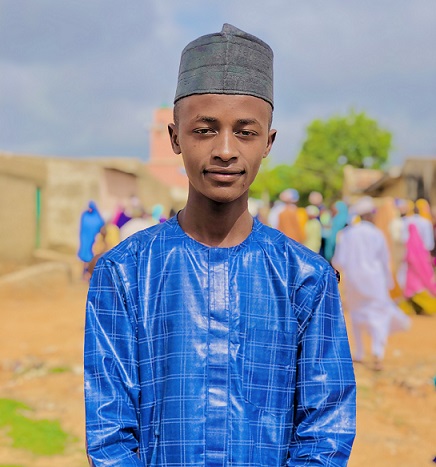
His name was Sadik. Perhaps about 11 years old. He walked into my newly allocated office in the old Mass Communications building of Bayero University Kano (Nigeria) in 2013. I was startled. He was a tiny boy with deep dark skin, a beautiful face with intense eyes and a dolphin smile. He asked if I wanted to buy Fura (steamed millet balls blended in cow milk, often used as dessert, although it could stand on its own as a nutritious meal). He did not look like any of the usual urchins who thronged the corridors of the building look for odd jobs – run errands, empty trash, sweep office when those officially charged – and paid – to do so did not. Intrigued, I ordered one. He disappeared and returned some twenty minutes later with the Fura in a transparent plastic bag. I paid him, and that was that.
He returned the following day. When I declined to buy it because I didn’t feel like drinking the Fura, he insisted I buy it for others. When I asked why, he simply retorted that I appeared richer than other staff because, first, I was a professor, and second my office was larger. I was amused by his evaluation of my finances based on my position. And true, my office was the largest for staff, but I was a new bride in the Department – having been wedded to Mass Communication after an amicable transfer from the Department of Science and Technology (thus the ‘double’ professor tag), and all stops were pulled to make me welcome. Based on his logic of having a larger office, if not a deeper pocket, I bought about ten and asked him to distribute them to colleagues.
Sadik was to become a regular fixture in the corridor. Always after 2.00 p.m. One day he came with a blue checkered school uniform. Mentally, I thanked the boy who gave him the ‘hand me down’. The uniform was from Musa Iliyasu College, located along Gwarzo Road, a few kilometres from the New Campus of Bayero University Kano. This was a private and prestigious high school in Kano, attended by the children of the well-to-do.
I was told, however, that the uniform was his own and that he was indeed a student at the famous prestigious college. Curious about the human aspect of this development, I decided to delve further. What I found was what I want to share with you regarding the world of Hausa women.
Sadik did not come from an elite home. He was from a large Fulani family living in a ruga (a Fulani cattle encampment) near Janguza Army Barracks in Kano – itself a few kilometres from Bayero University Kano, New Campus, along Gwarzo freeway. The unit was a father, three wives and eighteen children. Sadik was the eldest in his mother’s room. They were herders. Indeed, Sadik was born near Tamburawa along Zaria Road in Kano when the family was on the move in 2002. They camped near Janguza Barracks, where they located their ‘hometree’.
The mother was the one selling the Fura at Bayero University Kano New Campus that Sadiq marketed. She had a ‘stand’ near the Faculty of Engineering. She had a lot of customers in all categories of the university community. After all, even professors love Fura. Her interaction with the university community enabled her to develop an interest in education, and she wanted to get Sadiq to attend a school and eventually a university. She did not want Sadik to follow the family herd. His father, however, wanted the child to join the family herding tradition. The mother then engaged one of her customers, a professor, to drive to the ruga and convince the father to allow the child to attend school, to which he reluctantly agreed. The mother then took over the process of educating the child.
She enrolled him in a local private primary school inside the Janguza Barracks. After he finished, she inquired which was the best high school around, and Musa Iliyasu came highly recommended. She enrolled him there. An exclusive private school. Paid for from the proceeds of her Fura business. She bought a bike for Sadik to make it easy for him to attend the school, some five kilometres from their tent. His legs could barely reach the pedals, but he was enthusiastic about learning. After school, he would go to her Fura stand, park the bike and then trample all over the BUK mega building advertising his mother’s Fura (even boldly entering the Vice-Chancellor’s office to market the Fura), all the way till 6.00 p.m. when they close ‘office’.
I interacted with Sadik for three years. He was so curious, bold, confident and always lifting books on my desk, trying to read them, asking endless questions, his eyes always darting and roving all other office. He was truly an inquisitive and intelligent child.
In 2016 I temporarily relocated my place of work to Abuja, and that was the last I saw of Sadiq. I did not fully return to Bayero University till 2022. In the intervening period, I had wistfully thought of Sadik and finally decided to find out what had happened to him when I returned. It was a massive success story of doggedness by a traditional woman.
When Sadik finished Musa Iliyasu College, he told his mother he wanted to be a pilot. She asked him to find out how much it would cost. Off he went to the Nigerian College of Aviation Technology (NCAT), Zaria, where he learned the fees could be as much as ₦7.5 million. He informed his mother, who immediately asked him to continue the process of getting admitted. She would pay the entire sum – after all, she was already a millionaire with the large herd she had. She earmarked the number of cows to sell to raise the pilot school fees. Sadik did the entrance exams but did not scale the final test. So, he was not admitted.
He then applied to BUK with his JAMB score of 201 for Computer Science but did not meet the Post-UTME requirements for the program. Again, he faced rejection. His mother initiated the process of getting him alternative university admission and was advised to take him to Al-Qalam University, a non-profit Islamic university in Katsina. He went there and inquired about the admission process and the fees. With his results, he was admitted. His mother sold two of her cows for ₦450,000 and gave him the money to pay for the school fees in Computer Science and his accommodation in Katsina. He enrolled and started his program.
When he relocated to Katsina, she sent him money every day. She eventually gave him ₦200,000, with which he started a Fura packaging business, employing his co-tenants in the house he was renting. Soon, he established a small business employing other students. Eventually, he vied for and succeeded in becoming the Vice-President of the Computer Science Students Association of the Al-Qalam branch.
Sadik became a dedicated student with a consistently high CGPA, which could eventually lead to either a good second upper or a first in Computer Science. He was eventually elected the President of the Computer Science Students of his university chapter. One day, the officers of the Association came to Kano for a function during a school break and decided to see his house, especially after he told them he lived in a ruga. They were astonished to discover he was telling the truth – their respect for his modesty raised higher.
In January 2023, I was in my office at the Faculty of Communication BUK when someone walked in. I was bent on my laptop but did notice the guest removing his shoes and coming and standing in front of my desk, waiting for a pause in my typing.
I looked up at a tall well-built young man. I immediately knew it was Sadik. At 21 years, everything about him has changed, of course, but not his dolphin smile. He told me he learnt I was asking of him and decided to come and greet me. I was so happy to see him, and it was he who related to me what I had written so far. I immediately connected him to Sunusi Ahmad Baffa Dawakin Tofa, Chairman of the Kano State chapter of the Fulfulde Development Association of Nigeria (FULDAN), of which I was a patron. They promised to come together and see how Sadik could be part of community mobilisation awareness and a role model, especially for youth. Sadiq owes his success so far to his mother.
Professor Abdalla Uba Adamu and Sadik
***
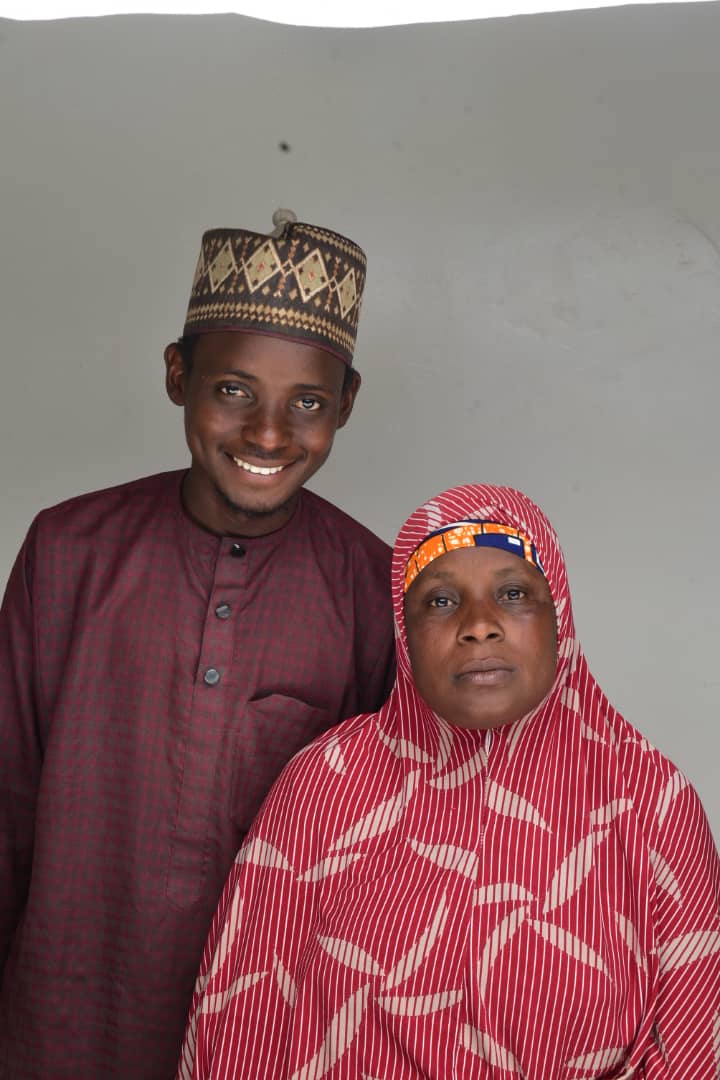
Sadik’s mother, Hajiya Hauwa Suleiman Dikko, was not an educated, entitled, privileged woman. She did not go to school. Her class was the hard knock of life. As a young girl, she missed going to school with lunchboxes and rucksacks festooned with stickers from the Marvel Cinematic Universe – Spiderman, Hulk, X-Men, and Fantastic Four. She did not attend a privileged landscaped school with paintings of Micky Mouse and Donald Duck on their walls. She had no driver to chauffer her to school in an airconditioned SUV. No TV to return to after school hours in a nice airconditioned living room. No iPads to play with. No Netflix to relax her hard stressful day. No extra lesson teacher (Uncle John or Auntie Funmi) to ensure she passed those horrible subjects such as Mathematics.
Her contemporaries who lived such life finished successfully from their expensive private schools (of course, no private school would allow mass failure, especially from children of the privileged) and had gatekeepers to ensure they got admission into the juiciest disciplines in the university of their choice. If at all in Nigeria – otherwise, it would be off to Ukraine (before it became too hot), some obscure countries in Eastern Europe, India, Cyprus, the UK or preferably, Malaysia.
When such contemporaries returned, they had cushy jobs waiting for them and a relatively easy path to the top. Eventually, they are celebrated as women of substance – given awards (which they don’t need) and celebrated in academic papers and opinion pieces as role models of female achievement and doggedness in a patriarchal society. I don’t mind their high-profile visibility. I just believe the accolades are wrongly placed, or at the very least, the Point of View (POV) should sweep around.
My female heroes? Those I will be celebrating today, the 2023 International Women’s Day? Let’s start with Sadik’s mother. And hundreds of others like her. I am sure you know one or two in your locality. They are women, often widowed, left alone, with little or no inheritance, and who, with the little they have, were able to provide much-appreciated services in their communities and keep a tight hold on their families. They don’t engage in endless and fruitless debates about gender identity or reproductive rights nor women’s representation in political representation and their share of hegemony. Rhetoric. Talking loud and saying nothing. As my main Man sang, “Like a dull knife / Just ain’t cutting / Just talking loud / Then saying nothing”. (James Brown, 1970).
Mainly, restauranteurs, these local women build people and impact their communities. With their business – restaurant (ƙosai, koko, tuwo, ɗanwake, wake da shinkafa, alkubus, gurasa, ƙashin rago, etc.), public transport (Keke NAPEP, buses, Acaba/Okada, Ƙurƙura), estate (properties, rental apartments, plots of land) – they are the role models who should be celebrated. They don’t feel entitled and are privileged in the peace of mind they have and the mentoring they do in their communities. They have no PAs, SAs, fierce dogs at the gates of their solar-powered villas and mansions, no frowning ‘maigad’ to intimidate and scare away panhandlers.
They have no SUVs as the cost of one could serve as capital for a whole year for their business. They don’t even have cars, despite some owning a transport business or so. They do not take their holidays in London or Dubai – they have no time for holidays as they are busy serving their communities. They marry off their daughters, not in grand style, with furniture imported from IKEA in China but from local makers – thus contributing to local economies.
So, what should be the concerns of women on International Women’s Day? For me, with a focus on Muslim Hausa women living in traditional communities, how about integrating them into the modern sector digital economy? Instead of empty rhetoric about gender representation, why don’t we focus on enabling them to acquire skills such as mobile phone repairs and POS services – in the comfort and safety of their homes? Many women are now engaged with mobile phones and online trading and payments. Muslim Hausa women feel unsafe in approaching service centres where clusters of men provide these services. Empowering them to be skilled in digital knowledge in the lungu and saƙo (alleyways) of our communities works better than hot-air rhetoric and genuinely can make a difference.
On this day, I, therefore, award accolades to Sadik’s mother, Hajiya Mai Ƙashin Rago Fagge (with a whole street named after her), and countless others whom I am sure Jaafar Jaafar knows more. They are truly women of substance.
Today, being International Women’s Day, please locate any in your community, go right up to her and appreciate her. Celebrate her achievements and her silent but visible impact in the community as the REAL woman of substance.
PS: Some have asked about Sadik’s whereabouts. He is in his final year at Al-Qalam, Katsina, Computer Science, and from his results so far, he is heading towards either a First Class or a very good Second Upper.
Professor Abdalla Uba Adamu can be contacted via auadamu@yahoo.com.
Sometimes last year, a Nigerian PhD student at Korean University named Abdulqaadir Yusif Maigoro tweeted about his PhD thesis research work. He talked about his findings on the relationship between gut health and autism spectrum conditions. During a presentation at the International Meeting for the Microbiological Society of Korea, Maigoro discussed how gram-negative bacteria endotoxins could travel from the gut to the brain and cause inflammation in people with an autism spectrum disorder.
The research sparked my interest, so I joined the conversation on his Tweet. I asked; if gastrointestinal issues, such as stomach aches, irritable bowel syndrome, constipation, and bloating, are commonly seen in individuals with autism and other neuro conditions. It is possible that these issues may be related to the gut-brain connection and the role that the gut plays in regulating the body’s immune response. How close are experts to getting a cure for the gut disease in Autistic individuals?
Abdulqaadir Maigoro (@Abdul_Y_Maigoro) responded that it’s true individuals with Autism condition have gastrointestinal problems, and further research is needed to fully understand the relationship between gut health and neuro conditions by exploring various mechanisms. But it is clear that the gut plays a significant role in overall physical and mental health.
Maigoro’s findings have prompted my interest in getting more information by exploring the connections between gut health and other neurological conditions, such as Autism, Depression, Anxiety, ADHD, Alzheimer’s disease, and Dementia.
Gut health has long been known to be connected to overall physical health, but recent research has also shown a link between the gut and mental health conditions such as depression and anxiety. The gut is home to the enteric nervous system, sometimes referred to as the “second brain,” which has a network of nerves, neurons, and neurotransmitters that extend throughout the digestive tract. The enteric nervous system communicates with the brain through the nervous system, hormones, and the immune system. This communication is especially important in regulating the body’s immune response, as 70% of the immune system is focused on the gut.
The gut, or “second brain”, is vital to overall human health and well-being. It breaks down food, absorbs nutrients, and eliminates waste through chemical and mechanical processes. It also has its own nervous system called the enteric nervous system, which is made up of nerves, neurons, and neurotransmitters and extends throughout the digestive tract – from the oesophagus, through the stomach and intestines, and down to the anus. Because it uses the same types of neurons and neurotransmitters as the central nervous system, some experts refer to the enteric nervous system as the “second brain.”
The enteric nervous system communicates with the brain in the head through the nervous system, hormones, and the immune system, and it plays a key role in certain diseases and mental health.
Researchers are beginning to examine the gut in people with conditions such as depression, Parkinson’s disease, Alzheimer’s disease, autism, ALS, multiple sclerosis, pain, anxiety, and other neurological disorders. They are also studying the role of the gut in gastrointestinal conditions like ulcers and constipation and how it affects brain function.
The gut is also home to microorganisms that help regulate the body’s immune response, and around 70% of the immune system is focused on the gut to fight off and eliminate foreign invaders. Research on how the gut, or “second brain,” mediates the body’s immune system is exploring ways to expand the treatment of psychiatric and other neurological conditions, including the gut’s nervous system.
Researchers are now exploring various mechanisms in an attempt to find a potential cure for neuro conditions through the gut. The medical breakthrough will surely transform the world and touch the lives of nearly every person on the planet.
Aminah M. Abubakar sent the article via mbubakar.minah@gmail.com. She can also be contacted via her Twitter handle: @MinahMbubakar11.