Kannywood

I don’t care what people say about me—Mommy Gombe 

By Uzair Adam Imam 

The graduate role played by a well-known Kannywood actress, Momy Gombe, has raised serious social media concerns.

This is coming as Momy Gombe was cast in a full NYSC khaki in a new movie, Darasi

As soon as the pictures went viral, the actress came under attack, with some university graduates condemning the role. 

The graduates and other critics say they are disappointed in the actress since she cannot speak English. 

Others claimed that Momy Gombe did not complete her secondary school education, saying she has no moral right to wear NYSC khaki. 

One of those who condemned her for wearing the khaki, Aliyu Danladi, said, “The issue is that Momy Gombe wore this NYSC khaki at the wrong time when corp members had just passed out, and the struggles were fresh in their minds. 

“I sincerely feel sad, especially when I remember waking up early for morning meditations, SAED lectures, and the evening parade,” he added. 

Another one by the name of Bello Ahmad Rufa’i said, “I am pleading with the Nigerian government to introduce a law that will ban people from wearing this khaki anyhow because nowadays people just wear it and act (as graduates) in movies.” 

According to Sulaiman Rabi’u Ishaq, “This is terribly pathetic! We suffered a lot, and this woman just came from nowhere and wore the khaki. 

Musa Miraj Rumah said, “Whoever says or thinks that she is right (to wear the khaki) mustn’t have worn it before.” 

Expressing his worry, Manir Sani Wakil stated, “What worries me the most was the fact that she has not even completed her secondary school, let alone going to any tertiary institution.” 

However, film experts have posited that the arguments were unnecessary and baseless, as films are imitations of reality. 

They also said that even if Gombe was wrong, the blame should go to the crew, not the actress, who simply followed instructions. 

Films are meant to mimic reality—experts 

Dr Ashir T. Inuwa, a senior lecturer at the Department of Mass Communication, Bayero University, Kano, said films are mere imitations of reality and, therefore, must not be real. 

Inuwa stated that Gombe must not be a graduate before she was cast as a university graduate, let alone any other role. 

He said, “Film is a replication of reality, real events, vividly through characterisation, sceneries and actors or actresses.” 

“It is a film so she can act as a graduate, professor, police or any other role, just as we see in the Bollywood movies and the rest.  

“You may find someone who has never become a local government chairman acting as a president in a movie, and it is cool because it is not real.”   

A film critic, Dr Muhsin Ibrahim, who is also a university lecturer at the University of Cologne, Germany, said that casting the actress as a graduate was not wrong.

“When did casting become an issue for us? How many times do non-Muslim actors act as Muslims and vice-versa? Or Hausa as non-Hausa, etc.? Please, we don’t have to criticise everything related to Kannywood,” he stated. 

Crew to blame for Gombe’s blunder  

Dr Ibrahim opined, “If the scriptwriter, script supervisor, and director do their job well, she should be able to deliver her lines flawlessly.” 

He added that the crew should be held responsible for any grammatical errors Gombe made while acting in the movie.  

He was quoted as saying, “In other words, if she commits grammatical errors or mispronounces words, the crew are more to blame. For instance, I once acted as an Indian sage and spoke some Hindi on the stage in India! I believe I did well.  

“Yes, I want to see Kannywood actors correctly delivering their lines (in Hausa, English, or any language).” 

Dr Inuwa also associated the flaw with the director’s inability to do his job well, reiterating that the actress must not be blamed. 

He stated, “The director of the film should be held responsible for Gombe’s grammatical errors and failure to pronounce words correctly.  

“Because it is his duty to take care of all that, giving her good training to be able to deliver her lines flawlessly.” 

I don’t care what people say about me—Mommy Gombe 

In an interview with The Daily Reality, the well-loved actress, who has recently suffered torrents of criticism, said she was not bothered by the criticism. 

Gombe says she just does her work and always tries to do everything she is instructed to the best of her ability. 

She was quoted as saying, “I don’t care what people are saying about me because I am just doing my job. Besides, I try to ensure that I do everything related to my work to the best of my ability. 

“Also, I try to ensure that I do anything I am instructed to do. That is why I don’t bother myself about this at all.”

She further called on her fans not to be distracted but to continue to support her for more interesting scenes.  

Bitter truth: A reality Gombe’s critics must know 

Despite the fact that English is the official language in Nigeria, many graduates in the country cannot speak the language fluently, a bitter reality that Gomber’s critics must know. 

Dr Ibrahim associated the menace with the emphasis students place on written exams rather than trying to demystify the mystery of the language through practice before their graduation. 

He said, “Truth be told, countless graduates (in Nigeria) cannot speak English fluently. My wife was shocked when I told her some of them studied English.  

“How is this possible? Simple: one can graduate without speaking for a minute before the class. Our emphasis is mainly on the written exams. For that, one can memorise pages and write them during exams, and that is it.”

Ali Nuhu’s appointment as MD of Nigerian Film Corporation is well-deserved 

By Habibu Ma’aruf Abdu

An interesting incident at the Awgu NYSC orientation camp, Enugu State, revealed to me the far-reaching popularity of Ali Nuhu in 2018. 

It was the early evening glow at the camp. As we strolled back from the training ground, a young Ijaw lady approached me with a cool smile on her face;

“Brother, may I ask you a few questions, please?” she inquired. 

“Why not?” I responded politely.

“Your platoon member, Oluwaseun, told me you are a Hausa from the North…”

I nodded my head in agreement: “Yes.”

“So, do you know Ali Nuhu?” she asked, her curiosity evident.

“Yes, I know him very well,” I affirmed.

Her face lit up with joy upon hearing my answer, and she muttered to herself: “No wonder!”

Curious, she continued, “Is he a brother to you…?”

Surprised, I responded, “Why this question? I know him as a famous actor. Nothing more. After all, who doesn’t know Ali Nuhu in the North? “

“Please don’t take offence; it’s just that I noticed a resemblance in your looks and actions…

“He is my favourite star. I love watching his films,” she added with enthusiasm.

From there, our conversation delved into a discussion about Nigerian cinema. I then discovered that the young lady knew no actor from Northern Nigeria besides him!

Ali Nuhu is probably the only Nigerian actor whose popularity transcends regional boundaries. His exceptional achievements in both Northern Nigeria’s Kannywood and mainstream Nollywood firmly established him as a pan-Nigerian superstar. 

I once encountered a young man in a faraway village in Igbo land wearing a T-shirt adorned with Ali Nuhu’s image. Again, when I visited Kebbi state in 2013, their most frequent question was, “Have you ever met Ali Nuhu?”

I, therefore, deemed his recent appointment as the Managing Director of the Nigerian Film Corporation by President Bola Ahmad Tinubu to be well-deserved. It is a testament to his dedication and significant contributions to the Nigerian film industry. Wishing the King of Kannywood continued success in this new position!

Habibu Maaruf Abdu wrote from Kano via habibumaaruf11@gmail.com

Tinubu appoints Ali Nuhu MD Nigerian Film Corporation

By Uzair Adam Imam

The appointment was disclosed in a statement Friday by the Special Adviser to the President ( Media & Publicity), Chief Ajuri Ngelale.

President Bola Tinubu has given his nod to the appointment of Ali Nuhu, aka the King of Kannywood, and ten other distinguished individuals to spearhead various agencies under the Federal Ministry of Art, Culture, and Creative Economy.

The appointments could be seen as a strategic move to foster growth and innovation in the arts, culture, and creative economy sector.

The recently appointed Chief Executive Officers are set to bring a fresh wave of leadership and expertise to their respective roles:

1. Tola Akerele: Takes the helm as the Director-General of the National Theatre.

2. Dr. Shaibu Husseini: Assumes the role of Director-General at the National Films and Censors Board.

3. Mr. Obi Asika: Appointed Director-General of the National Council for Arts and Culture.

4. Aisha Adamu Augie: Steps into the position of Director-General at the Centre for Black and African Arts and Culture.

5. Ekpolador-Ebi Koinyan: Appointed Chief Conservator of the National War Museum.

6. Ahmed Sodangi: Assumes the responsibility of Director-General at the National Gallery of Art.

7. Chaliya Shagaya: Takes on the role of Director-General at the National Institute of Archeology and Museums Studies.

8. Hajiya Khaltume Bulama Gana: Appointed Artistic Director of the National Troupe of Nigeria.

9. Otunba Biodun Ajiboye: Assumes the position of Director-General at the National Institute for Cultural Orientation.

10. Ali Nuhu: Takes charge as the Managing Director of the Nigerian Film Corporation.

11. Ramatu Abonbo Mohammed: Assumes the pivotal role of Director-General at the National Commission for Museums and Monuments.

The conscious reawakening of Northern storytelling: HIBAF and its long way to liberation

By Sa’id Sa’ad

In 2021, I sat at Arewa House. I listened to Late Ummaru Danjuma (Kasagi) thunder – in his old throaty yet commanding voice – bitterly about how Hausa culture and stories have diluted over the years. His face, though saddened, lit by fluorescence – old, yet much alive – spread goosebumps throughout the room, reawakening all the murdered tales back to life. No one would think that that command births the reawakening of not just Hausa culture, stories, and language but northern Nigeria’s stories.

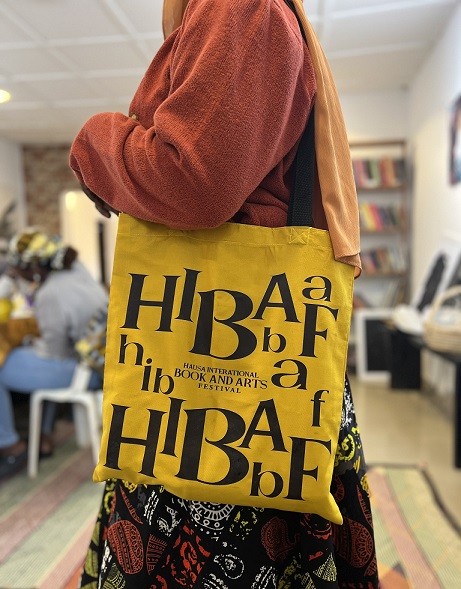
That was the maiden edition of the Hausa International Book and Arts Festival (HIBAF)—a time when literary festivals have suffered lashes of COVID-19. Literary enthusiasts, writers and journalists were once again full of life to reconnect. While some see it as a promising beginning for a new Jaipur Literature Festival of Northern Nigeria, a lot thought it was just a naming ceremony of yet another Nigerian literary festival that will soon wither due to shrinking funds.

Hausa or northern Nigeria literature – before now – couldn’t afford itself a “consistent” arts festival that solely promotes and celebrates its artistry, culture, and stories until the advent of HIBAF. However, there were several one-off attempts previously, but mostly political. One might argue that festivals like Kaduna Book and Arts Festival (KABAFEST) have blanketed the same purpose. Still, I would differ because KABAFEST is an international festival bringing international guests with national stories to a northern city. KABAFEST is – or now probably was – an arts festival “in” northern Nigeria, while HIBAF is an arts festival “for” northern Nigeria. This is not a dismissal of the influence KABAFEST had on northern Nigeria. It would be stupid to dismiss that.

However, as the region continues to suffer stereotypes about its literary prowess, HIBAF could stand on the edge of liberating northern Nigeria from such an ugly view. Perhaps the birth of what can be predicted today is the conscious reawakening of northern stories.

For a young festival with such an ambitious name, the question is: Is HIBAF only representative of the Hausa people or northern Nigeria?

It is easy to assume that HIBAF solely represents Hausas and their stories, especially for those who view them from the outside. This is mainly because, unlike other art festivals in Nigeria and around the world founded to represent a geographical entity, such as Lagos Book and Arts Festival, HIBAF is one of few whose nomenclature represents a tribe. In previous seasons, the festival granted conversations in the English Language; therefore, that says a lot about HIBAF going beyond Hausa “alone” in its programming, which I find healthy.

It would be great if HIBAF were only for Nigerian Hausas. It is okay if it is for Hausas globally. But it will be graciously honourary if HIBAF is for northern Nigeria in general. The value of this ambitious festival is in its capacity to reconnect Hausas and Hausa cultures with cultures around it through diversifying into introducing tribes that have existed with Hausas, such as Fulani, Nupe, Tiv, Igala and other northern tribes to its programming. This will mean Hausas and communities of non-Hausas in Hausa communities could re-share a space in arts and shape a positive narrative of the region in terms of collective literary and artistic prowess. This will create a unified northern story(ies).

Another issue that can’t be dismissed is the problem of northern consciousness – this time, refusal – to appreciate northern initiatives. It is a similar case for HIBAF. It is seldom difficult to see a representation of famous northern personalities – especially from Kannywood and music sub-sectors, aside from a few interested in literature such as Aminu Ala or Ado Gidan Dabino. Most hardly care. This does not mean that such personalities – who don’t care – will decline invitations from similar festivals in other parts of Nigeria. They certainly will accept. Now, the question of the “potentiality” of the festival in creating “value” and “shaping northern stories” has everything to do with bringing people of value, not just in literature but from other art sub-sectors such as Kannywood and Hausa music space into its fold.

Knowingly or unknowingly, the Kannywood industry needs more fora this time than ever. Imagine Ali Nuhu, Rahama Sadau, Fauziya D. Sulaiman and Salisu Balarabe on a panel to discuss how northern creative writers could get their – more well-written stories – to Kannywood screens. This panel can pave the way for collaboration that could place both the creative writing and Kannywood film industries decades ahead—a potential both industries share.

With its ambiguous programming nature of inculcating cultural programmes, the festival could give life to northern cultural heritages on the verge of fading with the recent digital revolution. It will be fascinating to see HIBAF Durba, HIBAF Tashe, HIBAF Dambe, Dandalin HIBAF, HIBAF Mawakan Gargajiya and other numerous HIBAF’s all-year-round that could bring back the northern cultural heritages while also Including non-Hausa cultural programme. Again, this creates unified northern cultural narratives.

This year’s HIBAF, in its third year of awesomeness and vibrancy – though still wounded by honest negative feedback from the second season – is bringing diasporic faces back home. Simply put, ‘going international with locals, and for locals.’ Such a breed can give life to a new dimension of cross-geographical collaboration between northern storytellers in the diaspora and Nigeria—a remarkable feat to a tremendous progressive bond.

While the festival, through its host organization, is becoming a spot for learning and sharpening creative and artistic mastery through workshops and seminars, it depicts how it can create a birthplace of yet new sets of Abubakar Imams and Zaynab Alkalis who would live to tell the stories. But this can also be limited if the focus is Hausa and literature alone as, thus, expansion both in language and sub-sector is where the growing inclusive value lies.

From pages of novelists to the rhymes of poets, from scenes of playwrights to screens of filmmakers, from the vocals of singers to the lyrics of songwriters, from the colours of culture to the lens of photographers, from northeast to northwest and northcentral, HIBAF could cook a recipe of blended stories – of all that have been around Hausa – to a valuable northern unified story.

Though all these are a long walk to a new revolution for northern Nigeria’s stories, it can place HIBAF at a point of liberating the region and demolishing its stereotypes.

Sa’id Sa’ad is a Nigerian writer, playwright and journalist from Maiduguri. He won the Peace Panel Short Story Prize 2018 and the NFC Essay Prize 2018. He writes from Bonn, Germany. He can be reached directly at saidsaadabubakar@gmail.com

How Kannywood can change the northern narrative

By Aminu Mohammed

This article was inspired by a Facebook post by Dr Maryam T. Hamza, who urged northerners to stop casting aspersions on actors and practitioners of the Hausa language film industry, popularly known as Kannywood. The post got me thinking about my recent trip to Nigeria last year. I still recall how enthusiastic people at home were about the movie series Dadin Kowa shown on Arewa 24. I wondered what kept them glued to the TV while watching the Dadin Kowa drama.

It is a well-known fact that many families spend ample time at home watching movies from India, Korea, Turkey, the Philippines, and other countries. While in secondary school in the 1990s, I discovered that most of my friends were conversant with the names of famous Indian actors such as Amitabh Bachchan, Dharmendra, Jeetendra, Rajesh Khan, etc. We also became conversant with Indian culture, food and cities through the movies.

This reminds me of Funke Akindele’s recent movie A Tribe Called Judah, which has become the first Nollywood movie to hit one billion Naira from the cinemas in just three weeks of its release, marking a historic moment in the Nigerian movie industry. The film portrays the challenges bedevilling low-income families in their struggle for livelihood and survival. President Bola Tinubu congratulated Funke for the feat, and eulogies from former Vice President Atiku Abubakar and Peter Obi also followed this.

We Need to Tell Our Story

I have watched the movie Amina, which tells the story of Queen Amina of Zazzau, a 16th-century Hausa kingdom in what is now known as Zaria. Although the film was interesting and well-made, I was surprised to learn that the producers, Okechukwu Ogunjiofor and Izu Ojukwu, were not from Kannywood, despite casting Ali Nuhu, among other mainstream Hausa actors, in the film. I wondered why this was the case.

While I enjoyed the movie and praised the producers for their work, I couldn’t help but feel that something was missing. I felt uneasy that outsiders were telling the story of our traditional system while our people had overlooked or neglected to do so. It bothered me that we tend to criticise and demonise artists and icons in our society rather than promote them. Are we comfortable with outsiders telling stories about our culture and traditions? Are we okay with letting outsiders define who we are?

It’s concerning that people who watch American, Chinese, Korean, Indian, and Turkish movies are quick to condemn Kannywood actors and actresses, accusing them of spreading immorality. Why do we celebrate foreign celebrities and movie stars while looking down on our own simply because they speak the same Hausa language as us? How can we expect to progress as a society when we tear down our talents and icons?

During my undergraduate days at the Ahmadu Bello University, Zaria, American pop music and gangster rap were popular among students. However, things have changed over time, and many Nigerians now listen to our local music. Nigerian artists like Burna Boy, Davido, Wizkid, Tiwa Savage, Kizz Daniel, and others are now popular across the globe. Even former U.S. President Barack Obama listens to Nigerian music. Afrobeats singers like Burna Boy and Ayra Starr were on his 2023 summer playlist.

Kannywood Has Great Potential

Nollywood has become one of Nigeria’s biggest exports in the last decade, highlighting the immense talent of Nigerians. The creative and entertainment industry has seen tremendous growth over the years, improving the livelihoods of many practitioners. Similarly, Kannywood has created numerous job opportunities for people in the North, such as actors, producers, directors, costumiers, makeup artists, fashion designers, singers, dancers, scriptwriters, and bloggers.

We must support Kannywood and promote our own talents rather than criticise them. We must stop seeing the movie industry as a place for fostering immorality and social vices. Instead, we should harness Kannywood’s potential to generate foreign exchange and enhance economic growth and development in Kano state and the entire Northern region.

Film as Instrument of Positive Change

The movie industry has the potential to inspire diligence, hard work, honesty, and productivity among our youth. It can serve as a valuable tool to promote girl-child education, literacy, and women empowerment, generate employment opportunities for talented youths, as well as change the negative perception of the North as a place plagued by religious intolerance, banditry, and insurgency.

I enjoy watching Dadin Kowa and Kwana Casa’in on Arewa24 occasionally. I also listen to Hausa songs, especially those by Naziru Sarkin Waka, to stay connected to my culture and traditions as I live outside Nigeria. It is worth noting that Kannywood movies do not depict scenes of sex, kissing, hugging, or any other inappropriate content that could tarnish the industry’s reputation.

Promoting our culture and language through movies and home-grown creative efforts is essential. We can use movies to tell heroic stories about our forefathers and instil good values, family ethics, productivity, and religious morals in our youth. I firmly believe that harnessing Kannywood’s potential can bring about the desired change in our society and encourage us to hold our political leaders accountable for their stewardship. 

Aminu Mohammed wrote this article from Ingolstadt, Germany. He can be reached at gravity23n@gmail.com.

#2: Kannywood Chronicles – Aminu Hassan Yakasai and Turmin Danya

By Prof. Abdalla Uba Adamu

An industry is a system made up of interconnecting parts that synchronise together to create a perfect dynamic and functional entity. However, there is a central creative focus. Thus, while no one can claim to have been the actual originator of commercial Kannywood since many people – and processes contributed to its development – nevertheless, the creative spark that lit the fire of Kannywood was the late novelist Aminu Hassan Yakasai. If one person can be credited with creating the industry, it was him and only him. 

In the late 1970s, the Nigerian film director Ola Balogun directed two successful Yoruba films. The first, “Ajani Ogun”, was co-produced with the actor Ade Love. The second, “Ija Ominira”, starred Ade Love. Hubert Ogunde, a famous Yoruba travelling theatre showman, decided to join the trend. He invited Ola Balogun to direct Aiye, which was hugely successful and led to a follow-up, Jaiyesinmi. 

These Yoruba films found their way to Kano’s bustling “stranger” (or, more appropriately, “guest settlers”) communities of Sabon Gari in the 1980s, where they were shown in cinemas and hotel bars. This attracted the attention of Hausa amateur TV soap opera stars and crew, such as Bashir Mudi Yakasai (cinematographer), Aminu Hassan Yakasai (scriptwriter) and Tijjani Ibrahim (director). Surprisingly, despite the massive popularity of Hausa drama in television houses and government financial muscle, the idea of full-scale commercial production of Hausa drama episodes by the television houses was never considered. Individuals wishing to own certain episodes simply go to the television station and pay the cost of the tape and a duplication fee, and that was it. There was no attempt to commercialise the process on a full scale. 

In the same period, the northern cities of Kano, Kaduna, and Jos benefitted immensely from the massive transfusion of modern media influences caused by not only a liberal society but also the tolerant interaction of diverse cultures and religions in the same public spaces. They were, undoubtedly, the creative hubs of northern Nigerian popular culture. Jos was famous for its vibrant nightclub and music scene. Kaduna also had a rich musical heritage, coupled with a TV culture. Kano was more muted and relied on music and club life inflows to Sabon Gari from other regions. 

However, one aspect of popular culture Kano had that was absent in Kaduna and Jos was prose fiction. While other cities were grooving the night away, residents of Kano were burning the midnight oil. The first published modern Hausa fiction was “So Aljannar Duniya” by Hafsat AbdulWaheed from Kano in 1980`. It opened the floodgates and led to hundreds of novelists creating a whole genre of African indigenous fiction referred to informally as Kano Market Literature. 

Also, at the same time, Kano had many drama groups that enjoyed stage plays that were often improvisational and not based on any script but with a general focus on social responsibility. These drama groups became spawning grounds for those who established the Kannywood film industry. These included Tumbin Giwa Drama Group (Auwalu Isma’ila Marshall, Shu’aibu Yawale, Ibrahim Mandawari, Adamu Muhammad, Ado Abubakar, Jamila Adamu. (Gimbiya Fatima), Hajara Usman, Ɗanlami Alhassan, etc.), Jigon Hausa Drama Club (Khalid Musa, Kamilu Muhammad, Fati Suleiman, Bala Anas Babinlata), Tauraruwa Drama & Modern Film Production (Abdullahi Zakari Fagge, Shehu Hassan Kano, Iliyasu Muhammad, Hajiya Rabi Sufi, Auwalu Ɗangata, Ado Ahmad G/Dabino, Asama’u Jama’are), and Hamdala Drama Wudil ( Its members include Rabilu Musa Ɗanlasan (lbro), Mallam Auwalu Dare, Ishaq Sidi Ishaq, Bappah Yautai, Bappah Ahmad Cinnaka, Haj. Hussaina Gombe (Tsigai), Shua’ibu Ɗanwamzam, Umar Katakore etc.) There were many more, of course, but these were foundational to Kannywood. 

The TV shows from then Radio Television Kaduna were gripping and inspiring to these drama groups. TV show stars that became role models to these Kano drama groups included Ƙasimu Yero, Usman Baba Pategi Samanja, Haruna Ɗanjuma, Harira Kachia, Hajara Ibrahim, Ashiru Bazanga (Sawun Keke) and others. 

Thus, it was that at the time of producing Bakan Gizo in Bagauda Lake Hotel 1983 to 1984 Aminu Hassan Yakasai, Ali “Kallamu” Muhammad Yakasai, Bashir Mudi Yakasai started strategising creating a drama for cinema settings (thus Kannywood was often seen as the creation of a ‘Yakasai Mafia’ as those from Yakasai dominated its creative direction!).

The tentative title of the film they were thinking of shooting was to be called Shigifa. It was a story of four unemployed graduates thinking about setting up a company – a departure from the romantic or comedic focus of then-then-popular TV shows. A script idea was floated, and Aminu Hassan Yakasai was to be the scriptwriter. However, before the idea matured, the group started getting contracts for video coverage of social events, etc. Actually, part of the coverage was also stored as footage, although the film was not eventually made. 

The precise decision to commercialise the Hausa video film, and thus create an industry, was made by Aminu Hassan Yakasai in 1986, with technical support of Bashir Mudi Yakasai, the leading cinematographer in Kano, and Tijjani Ibrahim, a producer with CTV 67. 

Aminu Hassan Yakasai was a member of the Tumbin Giwa Drama Group. He was also a writer and a member of the Raina Kama Writers Association, which spearheaded the development of what became known as Kano Market Literature in the 1980s. Thus, the idea of putting Hausa drama—and extending the concept later—on video films and selling it was a revolutionary insight, simply because no one had thought of it in the northern part of Nigeria. The project was initiated in 1986, and by 1989, a film, Turmin Danya, had been completed. It was released to the market in March 1990—giving birth to the Hausa video film industry. Salisu Galadanci was the producer, director, and cinematographer, while Bashir Mudi Yakasai provided technical advice. 

The moderate acceptance of Turmin Danya in Kano encouraged the Tumbin Giwa drama group to produce another video, Rikicin Duniya in 1991 and Gimbiya Fatima in 1992 — all with resounding success. By now, it was becoming clear to the pioneers that there seemed to be a viable Hausa video film market, and this viability laid the foundation of the fragmented nature of the Hausa video film industry. While organised groups formed to create the drama and film production units, individual members decided to stake out their territories and chart their future. Thus, Adamu Muhammad, the star of Gimbiya Fatima, decided to produce his own video film, independent of the Tumbin Giwa group in 1994. The video film was Kwabon Masoyi, based on his novel of the same name, and outlined the roadmap for the future of the Hausa video film. At the same time, it sounded the death knell of the drama groups. This was because Aminu Hassan Yakasai, who created the very concept of marketing Hausa video films—and thus created an industry—broke away from Tumbin Giwa and formed Nagarta Motion Pictures. Others followed suit.

Other organised drama groups in Kano did not fare too well either. For instance, Jigon Hausa, which released a genre-forming Munkar in 1995, broke up with the star of the video film, Bala Anas Babinlata, forming an independent Mazari Film Mirage production company (Salma Salma Duduf). Similarly, Ado Ahmad Gidan Dabino broke away from Tauraruwa Drama and Modern Films Production (which produced In Da So Da Ƙauna) and formed Gidan Dabino Video Production (Cinnaka, Mukhtar, Kowa Da Ranarsa). While Garun Malam Video Club produced Bakandamiyar Rikicin Duniya, written by Ɗan Azumi Baba, after the video film was released, Baba left the group and established RK Studios (Badaƙala). 

From field studies and interviews with the producers in Kano, most of these break-ups were not based on creative differences but on financial disagreements or personality clashes within the groups. The number of officially registered “film production” companies in Kano alone between 1995 and 2000 was more than 120. There were many others whose “studio heads” did not submit themselves to any form of registration and simply sprang into action whenever a contract to make a film was made available. 

Interestingly, Adamu Muhammad of Kwabon Masoyi Productions produced the first Hausa video film entirely in English. It was “House Boy”. Although it was an innovative experiment by a Hausa video filmmaker to enter into the English language video genre, it was a commercial disaster. Hausa audience refused to buy it because it seemed too much like a “Nigerian film”, associating it with southern Nigerian video films. When the producer took it to Onitsha—the main marketing centre for Nigerian films in the south-east part of the country—to sell to the Igbo marketers, they rebuffed him, indicating their surprise that a Hausa video producer could command enough English even to produce a video film in the language. Further, the video had no known “Nigerian film” actors and, therefore, was unacceptable to them. Thus, the Hausa audience rejected it because it looked too much like a “Nigerian film”, while non-Hausa left it because it used “unknown” Hausa actors, so it must be a Hausa film, even though the dialogue was in English!

Tragically, Aminu Hassan Yakasai died in an automobile accident on Saturday, June 16, 2001, on his way to Katsina to participate in a film, “Arziki da Tashin Hankali”.

Kannywood movie review: The Princess of Galma

  • Director: Muhammad Galadima
  • Producer: Ali Saidu Worthme
  • Company: Jammaje Productions
  • Language: English
  • Release Date: 26th December, 2023
  • Cast: Hajara Yusuf, Magaji Mijinyawa, Abba Zaki, Billy O, Tijjani Faraga, Mustapha Musty, and others.

The Princess of Galma is another ‘Kannywood film in English’ from the promoter of the genre, Malam Kabiru Musa Jammaje, who has produced a few others before. The film was screened during an annual event, ‘Jammaje Day’, attended by hundreds of English language enthusiasts. Jammaje seems to have made the event a new way for showing his English movies as the attendees clearly make the audience he targets.

Despite its glorious title, The Princess of Galma is neither a historical drama nor an epic adventure. It’s a regal fiction set in a contemporary, fictitious kingdom, Galma, where King Ahmadu (Magaji Mijinyawa) suffers from a serious illness. The film begins with King Ahmadu’s illness, which caused widespread concern in the kingdom. His only daughter, Princess Nafisa (Hajara Yusuf), is deeply worried about her father’s deteriorating health condition. 

Meanwhile, the kingdom’s cabinet deliberates on the succession dilemma, as tradition dictates that the one who marries the princess inherits the throne. This makes Waziri (Tijjani Faraga), a cabinet member, send his son Sahabi to propose to the Princess. But she promptly rejects him despite his being a royal son and the most handsome young man in the Kingdom. The ensuing drama unveils Waziri’s struggle, the princess’s personal choice, and more…

Although the plot has its share of clichés, it maintains a reasonable flow, ensuring no dull moments throughout the story. But the screenplay runs too fast to a hasty finish. It would have been better if it had more scope, especially for Waziri’s secret schemes and the Princess, who suffers magic afflictions.

Beyond its regal and romantic themes, the film emphasises the healing power of prayers. We see how the prayers heal the king after everyone has begun to despair. It also highlights the prevailing theme of good triumphing over evil, as depicted in Sahabi’s loss of the princess despite his father’s magical attempt to acquire her. Besides, it also subtly addresses big security challenges in northern Nigeria.

The film also tries to be brim-full of cultural showcase but falls short of capturing the intrinsic value it truly deserves. It lacks the seriousness and dramatic intensity expected in a movie of its genre. The technical aspects are also average. A film like this should be carefully produced with a considerable budget to get the required impact. 

However, the English usage is generally flawless. The dialogue is captivating, and the actors deliver their lines remarkably. A few scenes were rendered entirely in the Hausa language, with others having lots of code-switching and mixing to accentuate comical effects and cultural representation.

On the other hand, all the actors try to pull off a good performance, especially Hajara Yusuf, who perfectly fits the role of Princess Nafisa and delivers her lines effectively. Abba Zaki leaves an impression in a brief role as the man of Nafisa’s dream. The scenes where he expresses his love for her captivate the most. Also, Billy O. gives a very real performance, similar to Malam Abdulhadi. The comic gestures he portrays get the audience laughing throughout.

Finally, The Princess of Galma qualifies as a worthy addition to Kannywood’s archive of English movies. It has little novelty but offers much to keep you glued to the screen. I commend the efforts of the director (Muhammad Galadima) and all the cast and crew members. Rating: 3/5.

Reviewed by Habibu Maaruf Abdu

habibumaaruf11@gmail.com

Kannywood actress Aisha Humaira vows to settle late colleague Aminu S. Bono’s debts 

Kannywood actress Aisha Humaira has pledged to clear all outstanding debts left behind by her late colleague, Aminu S. Bono, who passed away on Monday following a brief illness. 

Taking to her Instagram handle to convey her condolences, Ms Humaira called upon anyone with legitimate claims against the deceased to step forward, assuring them that she would take responsibility for settling his debts. 

“I call on everyone who is owing Aminu S. Bono money or has sold anything to him on credit and was yet to pay before his death to come forward,” she stated.

“By God’s grace, I will offset the debt so long as it is not beyond my power. If the person wants to get the money even before his funeral, I will relieve him of all the burdens as long as it is not beyond my power.” 

Reflecting on the amiable character of the late actor, she expressed fond memories of their friendship and urged forgiveness from those who may have been offended by him. 

As the Kannywood community mourns the loss of Aminu S. Bono, Aisha Humaira’s compassionate gesture stands as a testament to the solidarity and support within the industry.

Murja Ibrahim Kunya, a TikToker, in the Curriculum? Why the heck not?

By Prof. Abdalla Uba Adamu

I was tagged in a Facebook thread lamenting the perceptions of Hausa popular culture studies by Muhsin Ibrahim on how such a course of action is looked down upon. Indeed, he related personal bad experiences on his encounter with what one might call ‘culture purists’ who do not see anything worthwhile studying about contemporary popular culture. I feel that my response should be enlarged beyond the one I gave in order to reach wider audiences and stimulate debate.

‘So, what exactly is ‘popular culture’? Without being bogged down by technicalities, it is simply what people like. Often referred to also ‘mass culture’. Which differentiates from the ‘elite culture’ preferences of the high order of the society. Elite culture is often favoured because it is seen as cultural representative due to its historical purity. For instance, Shata is an elite culture, while Rarara is a popular culture. Both are singers. But while Shata was a griot whose lyrics represent the historical antecedents of his society and culture, Rarara is a singer whose lyrics represent his pocket.

Thus, everything people do can come under the purview of popular culture – fashion, food, literature, cyberculture, sports, architecture, theatre, drama, films, music, art, you name it, it is popular culture. It is the dominant culture. Some of the universities that teach popular culture in the world include Harvard, Cambridge, MIT, and Stanford, to name some of the top ones, plus thousands of others.

So, why study popular culture? There are many reasons, but one of the most compelling is social awareness. Such a study makes us aware of important social issues. You may not follow Hausa TV show operas, but they illuminate critical tensions within communities, and some reflect the ideals of the political culture; Ado Ahmad Gidan Dabino’s “Kwana Casa’in” is a case in point. Mediated popular culture gives creators opportunities to be creative.

Thus, popular culture can raise awareness about important social issues. TV shows, films, and music often address topics like discrimination, environmental concerns and mental health, sparking discussions and encouraging positive change. For instance, in Kano in early 2023, AA Rufai Bullgates [sic], an individual with mental health issues, became a popular culture media celebrity due to his delusions of grandeur; at one stage, he bought Kano State for ‘gangaliyan’ naira – his coinage. It took social media to make people aware of the extent of his illness – and stop exploiting his guile.

The contempt with which we approach studies of Hausa popular culture – or, let me modify, modern/contemporary culture – allowed a big room for others to be experts on us. In this way, researchers such as Mathias Krings, Carmen McCain, Novian Whitsitt, Brian Larkin and Graham Furniss came to dominate the documentation of Hausa popular culture.

In 2007, I was a visitor to Graham Furniss’s house in London for lunch, and I was blown away by a bookshelf covering a whole wall devoted to his documentation of Hausa romantic (soyayya) fiction containing over one thousand volumes. In Kano, we refused even to acknowledge such novels existed, and at one conference, I heard a University librarian describing them as ‘trash’. Now, if you want to study the earlier novels in the genre, you can only find them in the Library of the School of Oriental and African Studies, courtesy of Graham Furniss – while they are not available at Bayero University, Kano.

Novian Whitsitt, an American, became an expert on the feminist ideologies of Bilkisu Salisu Ahmed Funtuwa and Balaraba Ramat Yakubu – two wonderful and brilliant female writers we ignored. He made a name out of researching their novels – and he had to learn the Hausa language first before he could even read the novels. In Kano, where we speak Hausa, we looked down on these writers. Now, if you want any reference to the works of these ladies, you have to go to Amazon for his books, for he is considered an expert on Hausa feminist writers.

Matthias Krings collected more Hausa cinema tapes than any European researcher and established a vibrant Hausa film reference library at Johannes Gutenberg University, Mainz, Germany, where he is based. In Kano, we refused even to acknowledge that Hausa film is worth studying – until we gave the study a shove and held an international conference on Hausa films in 2003 – the first of its kind in the whole of Africa in studying an indigenous African language film industry. Even the practitioners – filmmakers, producers, directors – don’t see the value in studying their works, believing that such is done to denigrate them rather than a critical analysis of their art. When I established Yahoo! Groups social network in 2001 – long before Facebook – those who entered the group were constantly fighting us for studying their art.

In any event, it was Brian Larkin from New York who even opened up the doors in 1997 with his brilliant paper, “Indian Films and Nigerian Lovers: Media and the Creation of Parallel Modernities.” Soon enough, he became the only reference point on the emergence of modern-mediated Hausa popular culture. I could go on, but you get the point.

As for music, no one cared – until the Talibanic censorship regime from 2007 to 2013 in Kano favourably enabled the separation of Nanaye soundtrack music from Hausa films, creating an independent Hausa Afropop music genre. It also led to the emergence of Rap music among young Hausa lyricists in 2013 – the year of creative freedom for Hausa popular culture. Billy-O produced the biggest hit Hausa Afropop hit of the year with ‘Rainy Season’, producing a brilliant Engausa song accompanied by Maryam Fantimoti.

No attempt was made to internationalise the study of the emergent music genres by anyone. They were all obsessed with studies of the songs of griot acoustic musicians, believing that the Afropop genre was a passing fad. Seeing a room for documentation, I entered into the field. In any event, I was considered a loose cannon in the whole Hausa ‘adabi’ canon. Luckily for me, my foray into Hausa popular culture, or ’Adabin Hausa’ as they often call it (while I prefer ‘Nishaɗin Hululu as the Hausa term for popular culture), was from the prisms of Stuart Hall (Birmingham School) and Frankfurt School critical theory perspectives.

Most importantly, I was analysing popular culture as a mass-mediated communication, rooting myself firmly in communication theories. I was not interested in etymology, morphology, syntax, grammar, pragmatics, stylistics or other branches of the study of literature in my analysis (I profess ignorance of these branches). My focus was that something was happening; it was providing a stethoscope on the social awareness pulse. We need to document it. It was no longer acceptable to let others become experts on us.

Thus, studying or even debating mediated popular culture was definitely frowned upon in northern Nigeria. I believe I am one of the few flying the flag of the discipline – such that it has now crept its way into a university curriculum. Next semester (December 2022/23), I will be teaching M.Sc. Popular Culture in the Department of Mass Communication – one of the very few Departments in the country courageous and bold enough to do so. It’d be a fully interactive class, touching all aspects of what gives us social awareness through mediated popular culture.

Now, to the question of Murja Ibrahim Kunya, a TikTok influencer who speaks at more than 100 km per second. She is important enough to have a Wikipedia page. Dr. Muazu Hassan Muazu was one of the lecturers teaching the EEP 4201 – Venture Creation and Growth course in the School of General and Entrepreneurship Studies (SGES), Bayero University Kano. We once taught the course together. In the first semester (2022/2023) examination, question #5 went like this: “Murja Kunya and Me Wushirya are bloggers who trend by causing scandalous contents on their social media handles, for that reason, they are given advertisement jobs. If they do that, they become – (a) influencer marketers, (b) brand ambassadors, (c) trading agents, (d) marketing managers.” Students are to choose one which they believe was the correct answer.

What drew attention was the focus on the activities of TikTokers – activities not taken seriously, especially those of Murja Kunya, who elicited different reactions from different people. One posting on Facebook even labelled her a mental health patient. And yet, here, a university is asking academic questions about their activities. The entire 70-item question paper included references to various brands – KEDCO, Rufaidah, Salima Cake, A.A. Rano, L&Z Yoghourt, Sahad Stores, MTN, Chicken Republic, and so on. All these are marketing HUBS. Why not TikTokers?

Marketers are looking for audiences – notice how those silly and irritating videos pop up on news sites on your device to attract your attention. Dr. Mu’azu’s inclusion of cyber popular culture in his course – and Chicken Republic, dealing with food, IS part of popular culture – to me, is a brilliant acknowledgement of popular culture and its social relevance. Crazy, drugged, attention-seeker or not, people follow Murja Kunya. That means audiences, that means market – making her a perfect vehicle to advertise products. So, what’s wrong with that? If a woman frying ƙosai by the roadside has the same level of audience attraction, we should also acknowledge her as a marketing potential. That does not mean we endorse what they do – it means we are interested in reaching out to their audiences to buy our products.

Without pop culture, we wouldn’t be able to understand generations, so knowing gives us all a better understanding. Overall, a critical analysis of pop culture and media can help to shed light on the ways in which media interacts with society and can help to promote a more informed and nuanced understanding of media’s role in shaping our world.

Now, print Ale Rufa’is Bullgates gangaliyan note and purchase your village.

BREAKING: Ahmed Musa donates millions to veteran Hausa actor, Karkuzu

By Abdurrahman Muhammad

The former Super Eagles captain and philanthropist, Ahmed Musa, donated the sum of ₦5.5m to the embattled veteran Hausa actor Abdullahi Shu’aibu, alias Abdullahi Kano or Karkuzu.

In a viral social media video, the aged actor, who has also gone blind, pleaded with the general public for help.

He further spoke about his daily struggle to feed, adding that he had even been threatened with eviction. Thus, he wanted people to help him own a house before his death.

The Daily Reality has yet to be able to contact Karkuzu, his family in Jos, Plateau State, or Ahmed Musa during this report. However, sources and reports have confirmed the donation.