Kannywood

Do intellectuals watch Kannywood films?

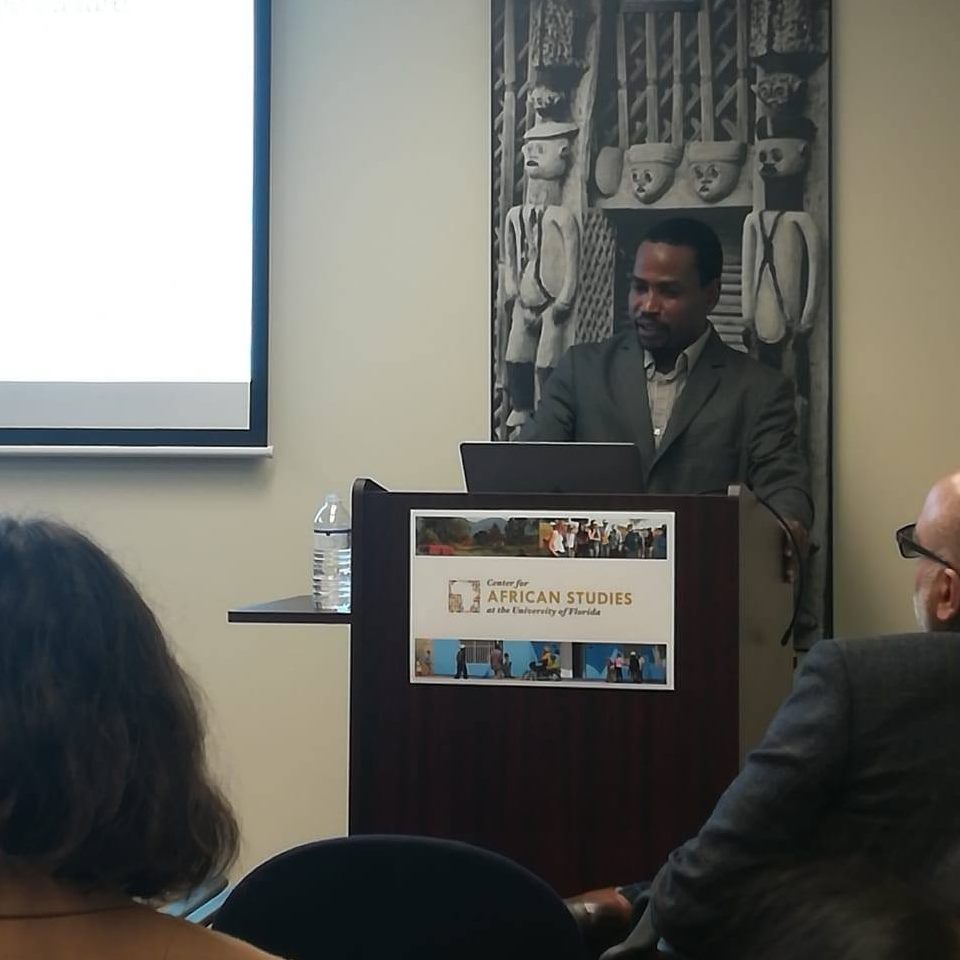
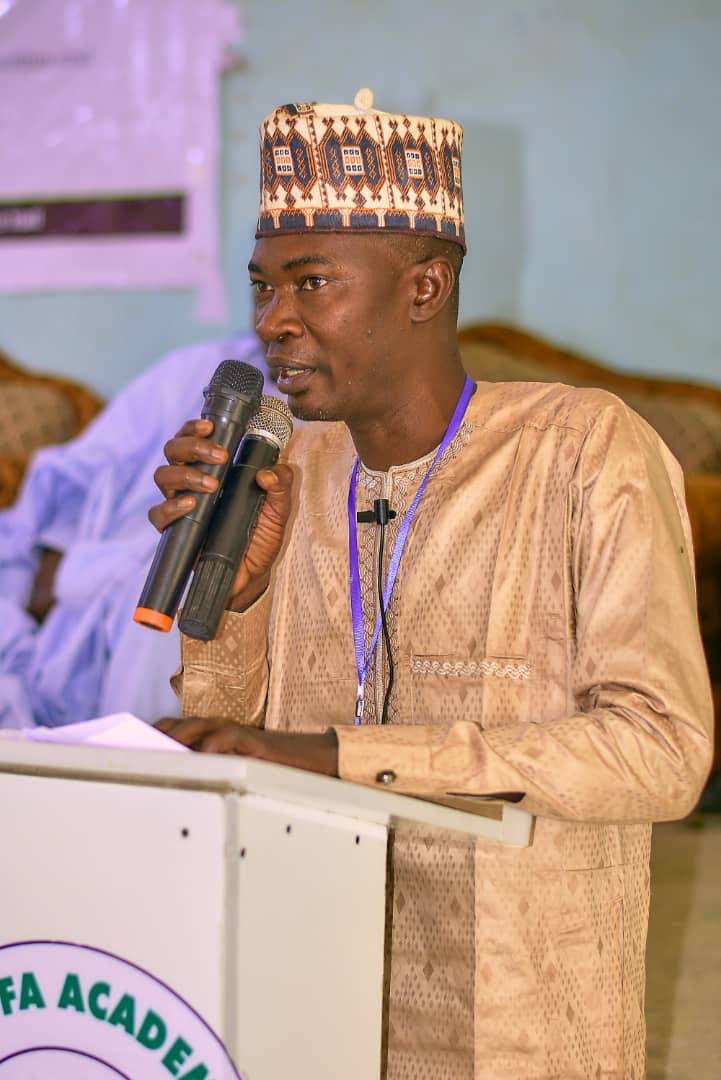
By Dr Musa Ibrahim

The popular Facebook user claiming intellectuals hardly watch Kannywood films and his supporters should understand 1) the need to ensure they conduct proper research on any subject matter or study the existing literature before speaking about it; 2) they could benefit from some guidance on critical engagement with terms, even if they are in our mother tongues, such as ‘wayewa.’ This would help them understand the concept from multifaceted perspectives and know how to use it when referring to ‘self’ and ‘other’ people’s ‘lifeworlds.’ 

When engaging with the Hausa terms ‘wayewa’ and ‘wayayyu’ (intellectualism and intellectuals, although the translations are subject to discussions), the critical questions we should ask about these terms in relation to Kannywood are: what is ‘wayewa’ (intellectualism)? Who exactly are ‘wayayyu’ (intellectuals)? Can we really know all ‘wayayyun mutane’ (intellectuals) and what they do in private and make sweeping statements about all of them without conducting thought research?

For me, it’s difficult to say who ‘wayayyu’ are because it’s subjective and varies from person to person. I mean, who someone regards as wayyaye might not be considered one by others and vice versa. Therefore, it appears to me that the person who made such a claim and their supporters may be ‘unintelligent/unintellectual’ (lacking in intelligence and intellectual approaches) or ignorant about the subjects they are referring to, especially since they ‘speculate’ about the so-called ‘wayyayun mutane’ without considering the diversity of the group. 

As a researcher of popular cultures in Africa, I can report as a fact that all categories of people in northern Nigeria and beyond watch Kannywood films. In the qualitative research we conducted, we interviewed academics, high-profile ‘ulama (Muslim clerics), lawyers, politicians, public workers (some of whom are highly placed decision-makers at various government levels), traders, and various categories of Western and/or Islamic-educated individuals who have been watching Kannywood films.

Ordinarily (if not because of our research), many of our interlocutors may not just openly admit to watching Kannywood films because of the unnecessary stereotypes associated with them. However, some of them go to the extent of referencing specific scenes from the movies they had watched to either illustrate their points or make comparisons with other films. Some influential people and their family members personally communicate with Kannywood stars they know from movies and spend millions to have them perform at their ceremonies. 

So, if we were to believe the claim that ‘intellectuals’ don’t watch Kannywood films, then we would have to say that all those who control the affairs of the region (in which the person making the claim probably lives) are not ‘wayyayu.’ However, regardless of the complexity of the terms wayewa and wayayyau, many would agree that people in the categories mentioned above, including our revered Muslim scholars who participated in the research, could fit into the ‘wayewa’ category or one of its categories (if there are many). Ba za mu ce dukkan su ba wayayyau bane.

So, the person making the claim and the bunch of uncritical minds who agreed with it have just succeeded in portraying themselves as lacking intelligence and critical thinking skills (which is synonymous to wayewa) to engage with the same concept, ‘wayewa,’ at least in this case. This is because they seem not to know ‘how’ and ‘when’ to speak for themselves and ‘how’ and ‘when’ to speak for others from an informed perspective (based on outcomes of scientific research). This also includes avoiding generalisations.

Despite politically motivated censorship from the 2000s to today, Kannywood has survived and thrived. This resilience is a testament to the support it receives from the silent majority, including highly influential individuals who appreciate its cultural significance and work behind the scenes to maintain its popularity and diffuse unnecessary tensions. This inspiring resilience assures us that Kannywood will continue to thrive in the face of differing opinions. 

To close my remarks, regardless of differing opinions about Kannywood, the cultural industry will continue to thrive in different forms. This sustained success should inspire confidence and optimism in the future of Kannywood and those who aspire to participate in the phenomenon, either indirectly as cultural studies scholars or directly as actors, directors, producers, scriptwriters, and associated roles.

Musa Ibrahim, PhD, can be reached via abbadanauta@gmail.com.

If they won’t read, let them watch

By Ado Magaji Mansur

As the saying goes, “We are the books we read.” Therefore, we should all thank our writers, past and present, for depriving themselves just to share their ideas and experiences with us through books. 

Although I am not a writer, I believe that writing books is both painful and rewarding. Without these books, our world would’ve been a totally different place. 

However, as the world is moving from script to screen, coupled with the gradual death of the reading culture and rise in the “watching” culture, especially among our people. I hereby ask the question: Can’t our intellectuals use film to transmit their great ideas to the people?

We have already made the mistake of entrusting our films to the people we all know who can’t be relied upon as the sole custodians of our culture and the psyche of our younger generation. Therefore, instead of observing and criticising the films, their makers and producers from a distance, why can’t some of the great minds among us think up some appropriate ways of putting their ideas to improve the powerful Kannywood, especially now that it’s been confirmed that they can’t live up to our didactic and moralistic expectations? And since no one can moderate (read: censor) their movies before they reach our homes, we must help them improve.

Very soon, we will start alleging or complaining that foreign countries and organisations are sponsoring and producing films like “Dadin Kowa” to intentionally misrepresent us or to sustain the stereotypical image of us that has already been created. 

Like books, films have the capacity to convey a wide range of ideas, making them a versatile tool for people from all disciplines. If handled with care, films can have a profound impact on the audience, much like books do for readers. 

Finally, I must confess that, some years back, when our friend Muhsin Ibrahim defected from Literary Studies to Theater/Film/Television studies, I secretly doubted the sagacity of his choice because I then wrongly thought that, as a promising writer and critic, he would contribute to his society better as a literary guru than a film scholar. But now we can all see his great job for Kannywood. We can all take some cues from our friend and see how we can contribute.

Adam A. Zango and matters arising in Kannywood

By Usman Abdullahi Koli, ANIPR

Adamu Abdullahi Zango, also known as Prince Zango, is a famous Kannywood figure. Adam has been acting in Hausa films for over 20 years. Zango is a multi-skilled individual who acts, sings, produces, and directs films while introducing new faces to the screens. However, despite his immense contributions, he has been a victim of accusations, controversies, and rumours, but they all turned out to be a bunch of false claims in the end. 

One of the major problems dragging the Hausa film industry back is enmity. No matter how talented an actor is, if he is not in the circle of those who consider themselves owners of the industry or if his stardom is at its peak, he is always regarded as worthless. An adage states that “united we stand, divided we fall.” The level of unity and support for one another in Kannywood is below expectations. 

Perhaps only in Kannywood do actors receive financial support when they come out crying in videos, exposing what they are going through. Such behaviour is contrary to other entertainment industries, where actors and actresses frequently check on colleagues and offer helping hands without disseminating the act on social media.   

Some years ago, in his philanthropic effort to give back to society, Zango promised to give out millions of Nairas to orphans in Kaduna. People from the industry and outside started saying he could only make promises without implementing them. This, among other factors, contributed immensely to the current reality Zango is facing in the industry. People don’t usually appreciate him or keep quiet about issues that affect him directly, turning his life into a topic of discussion every single time. 

Adam did not have the opportunity to attend higher education, but his zeal to actualise the ambitions of young people inspired him to sponsor a high number in Kaduna, Jos, and Kano States. The possession of assets, valuables, and material things by all those who work in WhiteHouse Family, an entertainment venture owned by Zango, is a testimony that he is full of kindness, selflessness, open-mindedness, and what he has never made him proud. 

What Zango is currently going through I don’t see it as depression, as claimed by many. There are people he wholeheartedly helped and trusted but turned against him. Additionally, he is facing a lot of trouble on social media from those who dislike him and are always fabricating lies about him. Yes, silence is not gold. He is supposed to speak up in his defence since no one is willing to stand up for him. The best one could do for the woman he loves is to marry and confide in her. What kills faster than a bullet is a betrayal from a life partner, and the bond of trust ends without a second thought. 

Many accused Zango of frequent marriages and serving his wives with hot breakfast (divorce) in short periods. As revealed by him, the truth of the matter is that most times, the failure of wives to be submissive, respectful, and faithful is glorified by our religion. Zango has been hiding the facts about what led him to divorce his wives from public space, but the ranting from near and far is unbecoming and unbearable. He has decided to let the hen out of the cage. Keeping some issues hidden is better, as exposing them is like adding salt to an injury. 

Furthermore, most of the films produced by Zango were created by local writers, not copies of Bollywood or Hollywood stories. The movie contributed to portraying real Hausa norms and values, cultures and traditions, dressings and foods, shelters and festivals while maintaining the religious injunctions. The languages used are authentic Hausa, along withidioms, styles, and proverbs, making it easier for children to learn. 

Despite dressing in Western attire in some movies, Zango still maintains the moral compass of Hausa and Islam. Factually, nobody can boldly point out where Adam is seen in a fantasy scene with women in films. Other characters have done worse than Zango in movies and feel that doing so is normal, without minding the repercussions on their families or people who took them as role models. By the way, who is morally upright in Kannywood? 

In summary, I have been an advocate for Kannywood, as I have written about misunderstandings between Rarara and former Governor Ganduje and the decision of MOPPAN to dismiss Rahama Sadau, among other topics in the Hausa entertainment industry. It should be noted that stakeholders and characters in Kannywood should see themselves as one family because commendation to one affects the rest and vice versa. People need to reciprocate kindness with kindness. Fans and mentees of artists should learn to respect each other by supporting themselves and resolving issues through dialogue. 

Adam Zango needs to control himself, especially in moments of anger, and stop making decisions at those times. He has faced worse situations before and stood firm. He can do it again. Let him consult relatives and trusted friends before taking any bold steps in his life. Finally, as a celebrity and a mirror to a limitless number of people, Adam Zango should ignore the negative comments, criticisms, and disrespectful and abusive words of followers on social media platforms. If he gives them no time to reply, they will have no choice but to stop. 

Kannywood has never had a gifted actor like Adam Zango in its history. He should cherish his God-given talent, be more focused and optimistic, and keep pouring out the best in him in both acting and music. Anything related to his personal life should be private, as antagonists always look for weak points or where he does wrong to attack him. He should remember that he is a son, father, and someone others admire. His words and actions, whether good or bad, would be replicated by them. 

Usman Abdullahi Koli wrote via mernoukoli@gmail.com.

OBITUARY: In memory of Saratu Daso, a Kannywood actress of eminence

By Habibu Ma’aruf Abdu

On Tuesday, April 9, 2024, the Kannywood community was shaken by the death of veteran actress Saratu Giɗaɗo, also known as Daso, at the age of 56. Her unexpected departure peacefully in her sleep on the final day of Ramadan plunged the Hausa film industry and the general public into a state of deep sorrow and disbelief.

Reflecting on the sudden death, a Kannywood scholar, Dr Muhsin Ibrahim, said: “The demise of Hajiya Saratu Giɗaɗo (Daso) really shocked me. In the beginning, I thought it was ‘fake news’. She was so alive a few hours ago.

“I have positive thoughts that she has received Allah’s mercy. She passed away while tirelessly soliciting help for orphans so that they too can celebrate Eid like other children…” he added.

Saratu Daso was undoubtedly one of the greatest, most successful and influential Hausa film stars of all time. When the news broke that she had died, a barrage of condolences instantly flooded the social media platforms. There was an unprecedented outpouring of grief from Kannywood personnel and the public alike. Thousands of people attended her funeral prayers, and many politicians paid homage to her, including the president of Nigeria, Bola Ahmed Tinubu

In a press release, the president describes the 56-year-old actress’s passing as saddening for the entire nation, which she honoured through her talent as a thespian.

The former governor of Kano state and presidential candidate Rabi’u Musa Kwankwaso also paid a condolence visit to console the family of the deceased actress.

Renowned for her captivating wit and acting prowess, the late Daso made her film debut in the year 2000 with the Sarauniya movie Linzami Da Wuta. She appeared in more than 100 films throughout her illustrious career, which spanned over two decades. Some of her notable works include Sansani, Mashi, Fil’azal, Daham, Dan Zaki, Gabar Cikin Gida, and Yar Mai Ganye.

Daso is famous for playing various roles in various film genres. She excelled in the portrayal of a dubious and aggressive elderly woman, which became her trademark. The fire she breathed in that role made her stand out among other elderly female actresses of her time.

“I’m often portrayed as a villain, and I know the nitty-gritty of villainous performances in films. I can act in various roles, but I enjoy villainous ones the most. Yet, I’m always ready to play any character if assigned to me,” she told BBC Hausa in an interview.

However, she was quite different in real life from the characters she depicted on screen. She was sweet and jovial. She once remarked, “I’m not aggressive. I’m very kind in real life. In fact, I’m such a taciturn.” Her kindness is one of the things that left a lasting impression on people within and outside the film industry. 

Actor Baballe Hayatu described her as “a good woman of great wit and charm”, while Alhassan Kwalle, chairman of the Kannywood Actors’ Guild, attested to her calm demeanour, stating, “We lived with her peacefully”.

Social media influencer and politician Maryam Shetty also wrote about her interactions with the late actress, saying, “…Daso was always a delight both on and off-screen. In 2016, I had the pleasure of meeting her at the Emir’s palace in Kano (where she was a constant face). We shared a lighthearted moment joking about our shared name.”

Similarly, another Facebook user, Hauwa Barde, affirmed Daso’s humility, noting that “…she would always reply if you commented under her post.”

An alumnus of Kaduna Polytechnic, Daso initially worked as a classroom teacher before joining the film industry. She could speak fluent English and was among the pioneering actors to star in Jammaje’s ‘Kannywood films in English.’ The genre’s promoter, Malam Kabiru Musa Jammaje, mourns the actress, reminiscing about their collaborations.

Jammaje explained: “I worked with her in our Jammaje Productions’ first film, There is a Way, as well as in Light and Darkness and In Search of the King. At one point, we even discussed the possibility of her teaching at Jammaje English Academy, although the plan never materialized”.

Saratu Daso’s legacy extended beyond her acting career; she served as Jakadiya (a traditional female protocol officer) for the 14th emir of Kano, Muhammadu Sanusi II.

She was also a dedicated philanthropist. Every Friday, she cooked food to share with orphans and her neighbours. The videos, where she gave iftar meals and advocated for orphans during the month of Ramadan, have been widely shared on social media as a tribute following her death.

Finally, as a Kannywood film reviewer, I believe that the history of the film industry would be incomplete without mentioning Daso’s contributions. Her departure leaves a void that will be difficult to fill. She will forever be remembered as a great actress of eminence who died during the blessed month of Ramadan while fasting, earning the praises of all and sundry. May Allah bestow His mercy upon her soul.

Habibu Maaruf Abdu wrote from Kano via habibumaaruf11@gmail.com.

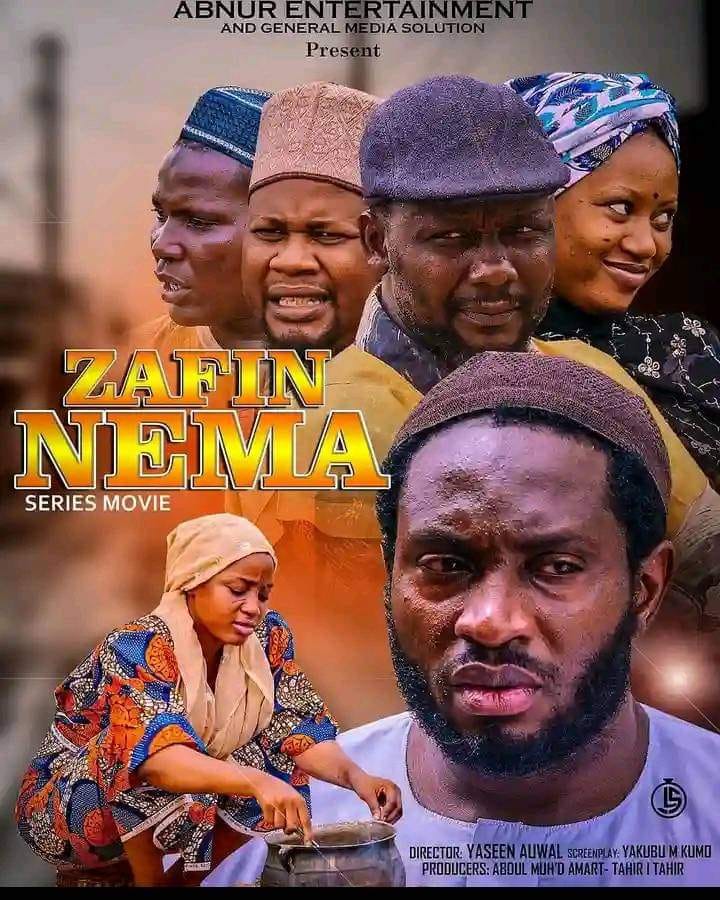
Kannywood Movie Review: Zafin Nema

By Muhammad Abubakar

It has been a while since I wrote a Kannywood movie review. The last film I reviewed was Ruwan Dare, directed by the uniquely skilled Auwal Yaseen. In this review, I will discuss the same director’s new series release (Zafin Nema), which shares some similarities with the previous movie.

Zafin Nema is a romantic comedy-drama about two lovers, Ilu (played by Sadiq Sani Sadiq) and Saude (played by Maryam Yahaya), who face numerous challenges. Ilu comes from a poor background, and Saude’s family, especially her paternal grandmother (Hajara Usman), disapproves of their relationship. As a result, Ilu and his friend Rabe (played by Tahir I. Tahir) set off to the city in search of money to marry Saude.

Ilu and Rabe vow not to return home until they become five times richer than Alhaji Dangana (played by Shehu Hassan Kano), whom Saude is forced to marry. Ilu’s financial struggles cause his relationship with Saude to fall apart, and her family’s obsession with material possessions doesn’t make things easier.

The movie is entertaining and leaves you curious about what will happen in the next episode. The cast delivers good performances, but the camera work is poor and looks like it was shot with an ordinary Android camera. However, the natural background is quite appealing.

One issue with the movie is that it’s without subtitles, despite Kannywood’s growing audience across Africa and beyond. Additionally, the subtitles in some Kannywood films are poorly done.

Surprisingly, the industry still produces movies with terrible subtitles despite having (seemingly) educated individuals. Therefore, I suggest they employ people proficient in English to handle subtitles.

Overall, Zafin Nema is a must-watch movie that you shouldn’t miss. I, therefore, recommend it for all and sundry.

Muhammad Abubakar wrote via muhammadabubakarsulaiman070@gmail.com.

Impending collapse of Nollywood, Kannywood, and music industries due to the AI revolution

By Haruna Chiroma

Before the advent of the internal combustion engine, imaging two horses engaging in a conversation about the era of internal combustion engines. One of the horses envisions a transformative job landscape with new opportunities, while the other horse opposes the idea, seeing it as a potential threat to their relevance in transportation and a possible complete displacement from the realm of transportation. Horses have no position in the post internal combustion engine era. That is my prediction for the future of the movie and music industries in Nigeria.

The Nigerian movie industry is notably divided into two main sectors: Nollywood, primarily representing movies from the southern region and Kannywood, which focuses on movies from the northern region.

In the music industry, songs are typically sung in English, Hausa, Igbo, and Yoruba. Both the movie and music industries are currently confronting the looming threat of collapse due to the disruptive impact of AI innovations, inventions, and discoveries.

The process of writing movie scripts by scriptwriters is time-consuming and varies in duration depending on the complexity and proposed length of the film. It can take anywhere from two weeks to three months to complete the initial draft before further refinement. However, with the advent of AI tools like ChatGPT, scriptwriters can significantly enhance their productivity. By utilizing ChatGPT, writers can expedite the scriptwriting process, potentially reducing the time required from months to just one or two days for complex movie scripts.

The movie industry is on the verge of collapse in the near future with the emergence of generative AI tools capable of generating video from written text. In the near future, traditional methods of movie production may become obsolete. Instead of the laborious process of location shooting, hiring actors, coordinating camera movements, applying makeup, arranging logistics, etc. a movie script written by scriptwriter can simply be fed into a text-to-video tool converter. This innovative technology will then generate a movie video representation of the script, revolutionizing the way movies are created. The tool comes equipped with video editing features, enabling users to fine-tune the video to match their requirements. The process that involves many people with different expertise working from different perspective may likely require between 2 – 3 people instead of the large number of people required in the traditional process of movie production.

Recently, OpenAI unveiled Sora, a text-to-video conversion tool, garnering widespread attention from mainstream media. This development prompted a filmmaker in Hollywood, Tyler Perry to suspend his 4 years $800 million planned movie production studio expansion arguing that Sora will eventually impact every aspect of the movie industry and jobs in the entertainment industry.

In an intriguing development, yet another valuable AI tool for video translation has emerged. This tool enables users to translate their videos into different languages such as Dutch, French, Arabic, Swahili, Chinese, Malay, and more. By doing so, the movie video creators can extend their reach beyond Nigeria and cater to audiences across Africa, Europe, and Asia, thereby expanding their potential viewer base to a larger and more diverse audience.

A deepfake movie can be produced by using the faces of renowned movie stars from both Kannywood and Nollywood, eliminating the need for these actors to physically appear in any physical location. The movie developer only requires the consent of the actors to use their faces in the deepfake video, adhering strictly to ethical guidelines in the creation of deepfake content. With these permissions in place, a movie can be crafted featuring the prominent actor(s) as the central characters, offering new possibilities in cinematic storytelling.

These emerging concepts pose a significant challenge to the movie industry, making it increasingly difficult for the traditional model to sustain itself. This trend mirrors the significant decline or almost collapse witnessed in industries such as landline telephones, photo shops, and magnetic tape, suggesting that the movie industry may face a similar fate of eventual collapse to the changing landscape.

Already the adult content industry is facing tough competition from deepfake adult videos generated by AI tools. Recently, several dedicated platforms have emerged, exacerbating challenges for the traditional adult movie sector. These platforms are attracting millions of visitors, with one particularly renowned platform drawing over 17 million viewers monthly. Typically, the platform features short deepfake adult content videos as teasers, enticing viewers to access the full content elsewhere.

While the short videos span various platforms, the primary one serves primarily for advertising and provides links to other platforms where complete videos are available for purchase.

The proliferation of deepfake adult videos has led to a surprising revelation: these videos are not freely accessible but are instead sold in dollars, accepting payments via credit cards, debit cards, or cryptocurrency. This burgeoning industry has now become a multimillion-dollar enterprise. For anonymity and ethical reasons, I intentionally omitted specific platform names to prevent further traffic influx.

This discourse underscores a poignant observation: the inevitability of the movie industry’s potential decline due to the transformative impacts of AI research. In January of this year, a deepfake pornographic image featuring a celebrity, Taylor Swift surfaced on various social media platforms. The video quickly gained traction on X (formerly Twitter), spreading rapidly like wildfire and amassing over 47 million views in less than 24 hours. Despite ethical considerations, many X users shared the video extensively before it was eventually removed and searching for the image was blocked by X. I foresee the collapse of the adult content industry in the next 3 years with the deepfake videos taking over.

In the music industry, numerous AI tools for music generation are currently in various stages of development, testing, or initial release. For example, MusicLM, an AI tool developed by Google, is designed for composing music and has shown promising capabilities in generating music.

Currently, an advanced version called MusicFx is undergoing testing in Google’s test kitchen before its public release. Users can simply prompt ideas into the music tool, and it will automatically compose the music. This advancement suggests that the future of music composition may require fewer people, as one individual can prompt the tool with ideas to generate music without the need for multiple collaborators.

Another tool is Suno V3, it generates music from text easily. Therefore, the music industry is at the verge of facing stiff competition and eventual collapse of the industry from these revolutions from AI.

Haruna Chiroma, Ph.D. Artificial Intelligence University of Hafr Al Batin, Saudi Arabia, freedonchi@yahoo.com.

Ali Nuhu: Shaping Kannywood with hard work and integrity

By Hussain Muhammad

In the tapestry of Kannywood’s illustrious legacy, one name shines with the brilliance of a thousand stars—Ali Nuhu.

His journey from a seasoned film actor to the Managing Director of the Nigerian Film Corporation is not only a testament to his hard work but also a narrative of how one individual can shape an entire industry.

Ali Nuhu’s career as an actor is marked by his ability to breathe life into characters, painting narratives that resonate with audiences across cultures and languages. Beyond his on-screen charisma, he remains untainted by the scandals that often beset the entertainment world, standing as a paragon of decency and grace.

His recent appointment as Managing Director further underscores his pivotal role in shaping Kannywood’s future. Through his leadership, he embodies the principles of excellence, integrity, and inclusivity, guiding the industry toward new horizons of success.

Ali Nuhu’s journey imparts invaluable lessons in perseverance and dedication. His unwavering commitment to his craft, coupled with his ability to navigate the pitfalls of fame gracefully, serves as an inspiration to aspiring artists and industry veterans alike.

As we celebrate Ali Nuhu’s accomplishments, we are reminded of the power of hard work, integrity, and humility in shaping not only individual careers but entire industries. His legacy will continue to inspire generations of filmmakers, actors, and enthusiasts, paving the way for a brighter, more inclusive future for Kannywood and beyond.

A critique of Ali Nuhu’s Gidan Sarauta

By Idris Ishaq Danwanka

The series Gidan Sarauta (“Royal House”), directed by Ali Nuhu, does not fully align with its title. The events portrayed in the series differ from what one would expect from a real Gidan Sarauta.

Let’s start with the characters: Ali Nuhu introduced Adam Abdullahi Adam (Abale), who played the role of a disrespectful son to a wealthy man named Rabiu Rikadawa, also known as Baba Dan Audu in Labarina. The character lacks a proper upbringing from his father and harbours a disdain for the less fortunate. While such behaviour may exist in certain places, it raises the question of why thuggery is associated with Gidan Sarauta. What message is Ali Nuhu trying to convey? 

Furthermore, would it be plausible for a devout Muslim on their deathbed to instruct their son not to show compassion towards the poor? Such teachings contradict the principles of Islam, where one is expected to seek forgiveness from Allah and reflect on their wrongdoings before passing away.

Additionally, I am not particularly pleased with the casting choices in the series. Umar M Sharif, who sometimes speaks femininely, is selected to portray a prince. While this may not bother me as much, it is concerning to see Garzali Miko, who lacks the necessary qualities for such a character, also playing the role of a prince.

Moreover, the series seems repetitive, with certain events unnecessarily repeated within the same scene. Additionally, Mommy Gombe, who is assigned a significant role, appears to be somewhat inadequate for the part.

In summary, I have several reservations regarding the direction, character choices, and portrayal of events in the Gidan Sarauta series directed by Ali Nuhu.

Idris Ishaq Danwanka studies English Language and Literature at Federal University Dutse.

KSCB: Stop the release of Naburaska’s Igiyar Zato

By Ibrahim Uba Yusuf, PhD

Trends in the Hausa Film Industry often divide the industry sharply across socio-political lines. Interactions and production have also not been exclusive to the political dynamics of Northern Nigeria or Kano in particular. However, the recent development requires caution to avoid a relapse into conflict and violence.

On January 28th, 2024, I saw a short video clip of a popular actor-cum-politician, Mustapha Badamasi Naburaska. In the video of about two minutes, the actor announced his intention to release a film that would depict the aftermath of the 2023 Kano State Governorship Petition from the Tribunal to the Supreme Court. In the video, the actor further announced his intention to portray an ‘old man and a musician’ in a negative light.

To complement his pledge, the actor released a poster of the intended film called Igiyar Zato on his Facebook page and other social media platforms. The poster contains the name of the producer and the photograph of the lead fictional character adorned with artificial grey beards just to reinforce the political figure he intends to mock. Mocking a politician is not my problem. It is purely a political affair.

I am not a card-carrying member of any political party but rather a researcher and public affairs analyst interested in teaching and conducting research relating to the Hausa Home Video Industry. In fact, my PhD thesis focused on ‘Hausa Home Videos and Peacebuilding in Northern Parts of Nigeria’. These, I believe, provided me with an opportunity to understand some nitty-gritty and make informed remarks about trends in the industry. It is useful to point out that this write-up is not intended to support or discredit any political group. The essence is to draw the attention of regulatory bodies to a danger that needs their urgent attention.

Firstly, my concern is the use of grey beards in the name of mocking an individual. While the announcement and content of the film may sound pleasing to some of his comrades and supporters, it will hoist a red flag if such content could pass the rigorous screening at the Kano State Censorship Board.

The Beard Issue

The beard issue has been a subject of ridicule during the build-up to the 2023 Guber Election in Kano State. A section of the campaigners used the beard impression to ridicule a particular contestant during their public campaigns. After the pronouncement by the apex court affirming the victory of Engineer Abba Kabir Yusuf as the duly elected governor, members of his political party have been engaged in making skit performances in communities using the beard as a subject of emphasis. The skits were done in the name of celebration, to mimic the governorship candidate of the APC.

Igiyar Zato

Although the trailer of the film has not been released, if – at all – it is going to be produced and distributed, viewers and followers of Kano politics can easily predict scenes and the likely narrative it contains. From the different posters, viewers can deduce the direction, rationale and target group of the producer, Mustapha Nabraska. Of concern is the picture of Nabraska with a fictional grey beard. This depiction is a caricature of a recommended tradition of Prophet Muhammad (SAW). Muslims may find this satire offensive, an act of irresponsibility and tantamount to rupturing the peace beingenjoyed in Kano State. Making jest at the Prophetic tradition, consciously or unconsciously, is forbidden. Sufficient is verse 65 of Suratul Tauba. While other scenes of the film might be valuable sources of analysis in the field of political communication, indeed, this depiction can likely provoke and create preventable chaos.

What does the Kano State Censorship Board Law say?

The law establishing the Kano State Censorship Board (KSCB) as a statutory regulatory body is not silent on what should be portrayed in films and home videos. The intended production contravenes the religious beliefs of the people of Kano. The film glaringly incorporates a form of amusement and deliberately alters the creation of Almighty Allah to mock an individual, which is not approved in Islam. In fact, these are yardsticks that some religious scholars used to engender their position on the illegality of popular culture.

The law, as it is, frowns at depictions in films that are not in tandem with the culture and tradition of the Kano people. Even though the law mandates all producers to submit their films to the Board for censoring after the completion of production, there is a need to amend that clause and mandate producers to share their ideas at the level of conceptualisation with the Board to be appropriately guided. It is left for the Board to decide what to do with the film if the producer decides to submit a copy before release.

Abba Al-Mustapha should Act!!!

In the interest of peace, the KSCB, under the leadership of Abba Al-Mustapha, should discontinue the promotion and production of the film at all costs. This is given the potential damages it could cause to the volatile situation in Kano. The Muslim community in Kano and beyond are saddened by this irrational depiction and public display, which directly affects a cherished symbol of the Prophet of Islam Muhammad (SAW). In the same way, you thwarted the distribution and sales of Queen Primer in Kano. Please act fast now.

The KSCB remains the beacon of hope in preserving the culture and religion of the people of Kano, and we hope that it will continue to do so without fear or favour. The Board should avoid politicisation and preferential treatment of members loyal to the government and deliberately make Kano a difficult terrain for actors and musicians who align with the opposition.

I urge the Board to assess the film on the scale of cultural and religious values and their attendant consequences to Kano State’s peace. Already, people are aggrieved and have been registering their displeasure, specifically on the fictional beard, as a subject of ridicule in the post’s comment section on Facebook and other social media platforms. Some comments are inflammatory and may likely throw the State into chaos.

This is the time of political healing and concentration on fulfilling the myriad of campaign promises. Any distraction is uncalled for. As such, there is a need for the Board to provide policy direction to actors and musicians who have become stakeholders in political campaigns on how to produce content devoid of promoting hatred, public ridicule and rupture.

Ibrahim Uba Yusuf, PhD, lectures at the Department of Mass Communication, University of Maiduguri, and is the Director of Communications, Advocacy, and Outreach at the Centre for Media, Policy, and Accountability (CMPA). He can be reached at ibrahim.mcm@unimaid.edu.ng.

Why our movie series don’t accommodate songs and dance – Kannywood directors 

By Uzair Adam Imam

The Kannywood movies are widely loved by Hausa-speaking communities across Nigeria and beyond. They are known for depicting Hausa culture and life.

The plots of Kannywood movies often feature drama, romance, and comedy, which many viewers find an escape from the harsh reality of everyday life. 

The songs and dances featured in the movies have become a signature of Kannywood cinema and are popular with audiences.

However, the songs and dances have ceased to be featured in the present Kannywood movies due to the new dimensions that the movies have taken.

In an interview with The Daily Reality, some Kannywood producers explained their reasons for taking the new direction.

Songs are incompatible with present movies – Lawan Ahmad

Lawan Ahmad, the producer of and a leading actor in the popular Hausa TV series Izzar So, said the songs have been removed to accommodate the kinds of films produced nowadays.

Ahmad said the songs still possess their enormously powerful impact in conveying messages but added that the nature of the movies nowadays does not accommodate songs. 

He said, “The songs were removed to suit the kinds of most produced movies in the Kannywood industry today. However, they are still useful in those movies.

“The songs were not removed because they are insignificant – their immense impact is still relevant.”

Hausa movies re-create folktales, history 

Another director and actor in the industry, Ali Rabi`u Ali, popularly known as Daddy, said Hausa films in those days were primarily traditional and required songs and dances. 

He stated, “Most of the Hausa films in those days were a replica of tales (tatsuniyoyi) and history that needed to be accompanied with songs and dances of dandali (a stage).” 

“These songs contribute(d) to the advertising and selling of the films. That is why the songs used to be released even before the production of the movies.

“This was to let people know about the film, just like the way Indian movies did,” Daddy explained.

He added that film series now do not require songs and dances because people are after the theme of the film, not songs.

“Besides, song and dance scenes are very costly and time-consuming, forcing us to cease using them in our films,” he stated.

Removal of songs: An opportunity for singers

Asked whether this was a threat to the Hausa singers, Ahmad said this was a wonderfully exciting opportunity for singers to be known for their intellectual production.

He stated, “This has helped the Hausa musicians to be known by the people for their talented works, as they make and act videos of their songs – and there is a lot of creativity in their businesses nowadays as singers resort to dramatic songs, with sole independent themes. 

“Now, instead of saying Ali Nuhu or Adam A. Zango should be featured in the video of their songs, the singers have seized the opportunity to sell their faces while taking a new dimension,” he added.

He added that the dramatic songs have now taken a new dimension, a development which attracts many people in Hausa communities.

Songs, dances mere imitations of Bollywood – don 

A Department of Mass Communication lecturer at Bayero University, Kano, Malama Ummi Hassan, opined that songs and dances in Hausa movies are simulacrums of Bollywood movies. 

The lecturer, who has taught film over the years, stated that “Songs and dances in Kannywood movies are mere facsimiles of Bollywood movies. And now that Bollywood has stopped using them in their movies, particularly series, Kannywood also stops.

“Bollywood now uses only some musical interludes as background sounds in their series movies to establish settings or set moods, to mention a few. Sometimes, they use the songs of the already-produced films, say Kalhonaho.” 

She added that a movie can achieve a desired theme without songs and dances.

She stated, “You must not show an actor or actress dancing before your film sells.” 

Some songs out of context

The university lecturer argued that the songs and dances in most Kannywood movies are sometimes out of context but were used to meet the tradition of Kannywood movies.

She said, “It is like the Kannywood has made it a tradition to put songs in their movies. The songs, however, are sometimes out of context.”

Ummi, who sees films and songs as two different things, advocates that the duo remain independent, with each conveying different meanings.

She added that although songs and dances have ceased to be used, the Hausa movies have witnessed a steep increment in their viewership. 

“I personally see this as a new development. Films and music are two different things. Songs can be used in the background to set the mood,” she added.

Our business at risk – singer

A singer, Hafeez Umar Maikano, who spoke to the Daily Reality, said their business is at risk following the removal of songs in the Kannywood movies.

According to Maikano, although songs have preceded films, singers now rely on filmmakers to survive.

He added, “I see this as challenging for the Hausa singers. The removal of songs from movies has discouraged not only professional but also upcoming singers.

“Before, filmmakers contracted singers to sing for a particular movie, giving them all the required information, including the theme of the movie.

“However, there is no denying that the removal has become a stepping stone to many of the singers,” Maikano added.