International

Equal Earth map wins African Union endorsement

By Muhammad Abubakar

The African Union (AU) has officially endorsed the Equal Earth map projection this month, marking a shift away from traditional world maps that many critics say distort the size of Africa and other regions in the Global South.

Developed in 2018 by cartographers Tom Patterson, Bernhard Jenny, and Bojan Šavrič, the Equal Earth projection aims to present landmasses in their true proportions while maintaining a visually appealing shape. Unlike the widely used Mercator projection, which significantly shrinks Africa relative to Europe and North America, the Equal Earth map shows the continent’s actual scale.

“The Equal Earth map restores dignity to Africa’s representation,” said an AU spokesperson. “It reflects the continent’s real size and importance in the world.”

Supporters argue that adopting the Equal Earth projection will help challenge Eurocentric biases in education, media, and policy discussions. The AU plans to encourage member states to introduce the map in schools and official publications.

Cartographers say the Equal Earth map strikes a balance between scientific accuracy and accessibility, offering a fairer perspective of the world’s geography.

Son of Boko Haram founder arrested in Chad

By Hadiza Abdulkadir

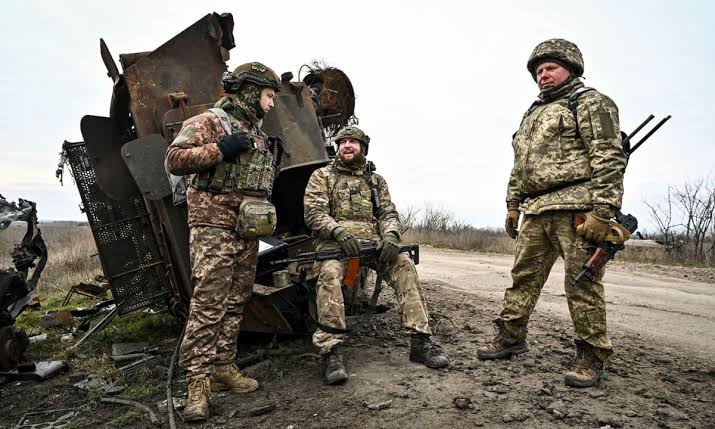
Chadian authorities have arrested Muslim Muhammad Yusuf, identified as the son of Boko Haram’s late founder, Muhammad Yusuf. Muslim, believed to be 18 or 19 years old, was captured along with five others while leading an Islamic State West Africa Province (ISWAP) cell.

Analyst Bulama Bukarti confirmed Muslim’s identity after speaking with family friends and relatives, who said he is the son of Bintu, Muhammad Yusuf’s first wife. His arrest reportedly followed a tip-off from Nigerian intelligence.

The development comes in the same week Nigeria announced the capture of two top leaders of Ansaru, a Boko Haram offshoot, and the head of the Mahmuda Group, active in parts of North Central Nigeria.

Security experts describe the arrest as a turning point, marking the first time a major faction leader has been taken alive. They warn, however, that Nigerian authorities must now focus on dismantling bandit groups wreaking havoc in the North West and North Central regions.

Ulama Forum rejects Nigeria-Israel security pact

By Muhammad Sulaiman

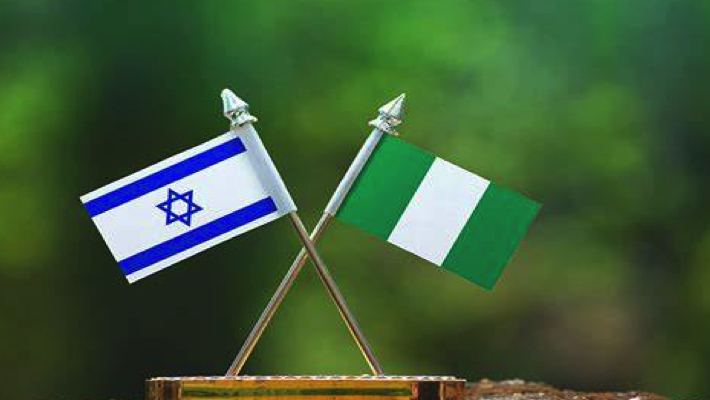
The Ulama Forum in Nigeria has condemned the reported Memorandum of Understanding (MoU) between the Federal Government and the State of Israel on security cooperation, describing it as “a dangerous and insensitive diplomatic move.”

In a statement signed by its Convener, Aminu Inuwa Muhammad, and Secretary, Engr. Basheer Adamu Aliyu, the Forum accused the Minister of State for Foreign Affairs, Mrs. Bianca Ojukwu, of unilaterally engaging Israel despite global outrage over its alleged genocide against Palestinians.

“At a time when the world of conscience is against Israel, Nigeria should be at the forefront of supporting South Africa’s genocide case at the International Court of Justice, not courting a state increasingly isolated for human rights violations,” the statement read.

The Forum warned that involving Israel in Nigeria’s internal security would erode national sovereignty, risk human rights abuses, and entrench dependence on foreign powers. It argued that “internal security issues require homegrown solutions that prioritise community engagement, social cohesion, and inclusive governance.”

Instead of seeking external assistance, the group urged the government to strengthen security institutions, address poverty and corruption, and ensure justice for offenders. It further called on President Bola Ahmed Tinubu to “call the erring minister to order” in the interest of national unity and public sensitivity.

The Forum reaffirmed its confidence in Nigeria’s security personnel and pledged continued prayers for “Allah’s guidance and support to our gallant forces.”

Nine Dutch ministers resign in solidarity with Gaza

By Muhammad Abubakar

In a stunning act of political defiance, nine Dutch ministers have resigned en masse, declaring they could not be complicit in what they described as the “silent endorsement of a humanitarian catastrophe” in Gaza.

The resignations have sent shockwaves through the Netherlands’ political establishment, shaking the foundations of the coalition government and igniting fierce debate across Europe. In their fiery joint statement, the departing ministers condemned the West’s “selective morality” and accused their own government of “turning a blind eye to mass suffering.”

Crowds gathered outside parliament in The Hague to applaud the move, with activists hailing it as an unprecedented moral stand in modern European politics. Critics, however, warned the resignations could plunge the government into chaos at a time of deepening international tensions.

“This is not about politics; it is about conscience,” one of the resigning ministers declared. “History will not forgive silence in the face of Gaza’s devastation.”

Analysts say the mass resignation marks a rare moment where political survival has been sacrificed for principle—an act many believe will reverberate far beyond Dutch borders.

AKTH, Saudi partners offer free open-heart surgeries in Kano

By Uzair Adam 

The Aminu Kano Teaching Hospital (AKTH), in collaboration with the King Salman Humanitarian Aid and Relief Centre and the Al-Balsam Association from Saudi Arabia, has successfully conducted free open-heart surgeries for patients in Kano.

Speaking to journalists about the development, the Head of the Cardiothoracic Surgery Unit at AKTH and team lead for the local medical team, Dr. Jamil Ismail Ahmad, said the initiative has brought relief to many patients who cannot afford treatment abroad.

“Normally, open-heart surgery costs between eight to ten million naira in Nigeria. But here, patients are getting it almost free of charge. 

“Outside the country, it would cost between 25 to 30 million naira, including logistics. This partnership is therefore very important,” Dr. Ahmad explained.

He noted that patients with heart diseases who require surgery but have no high-risk complications are usually considered for the program, stressing that safety remains a top priority.

“Some patients are excluded because their cases were neglected for too long, and operating on them would be too risky. Our key watchword is safety — we want to ensure that after surgery, patients are in much better condition than before,” he said.

Dr. Ahmad commended the partnership with the King Salman Humanitarian Aid and Relief Centre, describing it as highly supportive in both service delivery and local capacity building.

“Such collaborations are important globally, not only for providing services but also for building local capacity. The visiting team shares its expertise, which enhances our training and helps us sustain these services,” he added.

On patient outcomes, he revealed that survival rates in previous missions with the same team ranged between 80 and 90 per cent, and similar results are expected this time.

Dr. Ahmad also called on the government, philanthropists, and the private sector to support such initiatives, noting that investment in infrastructure, human resource training, and collaboration would strengthen healthcare delivery.

On his part, Dr. Abdullah, the team leader of the King Salman Humanitarian Aid and Relief Centre, emphasised the challenges of delivering such care in underserved regions like Nigeria, Sudan, and Yemen.

“Patients often present late because they were neglected for years. Some should have undergone surgery 10 or 20 years ago before developing complications that now make operations riskier. 

The best approach is continuous local services and proper screening. This saves lives and is more cost-effective than patients spending millions abroad in Europe, India, or North Africa,” he said.

He disclosed that so far, five patients had undergone surgery in Kano, with plans for six more cases in the following days. 

Dr. Abdullah praised the dedication of AKTH staff, including doctors, nurses, technicians, blood bank staff, and even cleaners, saying their support was crucial to the success of the program.

One of the beneficiaries’ relatives, Fatima Muhammad, expressed gratitude, saying her family could not have afforded the surgery if they had been asked to pay.

Man discovers 8-inch knife lodged in chest for eight years after hospital visit

By Abdullahi Mukhtar Algasgaini

 A 44-year-old Tanzanian man seeking treatment for pus discharge from his right nipple was stunned to learn he had been living with a large knife embedded in his chest for nearly a decade, doctors revealed in a recent medical report.  

The patient, who had no major health complaints apart from the infection, recalled being stabbed multiple times during a violent altercation eight years ago. At the time, doctors sutured his wounds but lacked the equipment to conduct an X-ray. Since he reported no pain afterwards, further investigation was never pursued.  

However, when the man visited Muhimbili National Hospital recently, an X-ray uncovered an astonishing sight—an 8-inch knife lodged near his ribcage. Miraculously, the blade had missed all vital organs.  

Surgeons successfully removed the knife along with dead tissue and pus. The patient recovered well after a brief ICU stay and was discharged within 10 days.  

Doctors described the case as “extremely rare,” noting that the body had formed a protective layer around the blade, preventing severe complications. The findings were published in the National Library of Medicine, highlighting the importance of thorough trauma assessments.

The other side of Japa syndrome: Over 140 dreams drowned in Yemen’s waters

By Gambo Zilkifilu Mohammed

The turquoise waters off Yemen’s coast, often a beacon of hope for thousands fleeing despair, have once again become a graveyard. In a chilling echo of tragedies past, more than 140 African migrants are feared dead after their overcrowded boat capsized late Saturday night on one of the world’s most perilous journeys, the so-called “Eastern Route” to survival.

Imagine the desperation that drives you onto a fragile vessel, crammed shoulder to shoulder with strangers, knowing the journey could end beneath the waves. For at least 74 souls, that nightmare became reality. 

They are missing, vanished into the vastness of the sea. The cruel waves have already surrendered 68 bodies to the shores of Abyan province in southern Yemen, a grim testament to the disaster. Only 12 shattered survivors bear witness to the final, terrifying moments.

These weren’t just numbers

They were individuals, mostly young Ethiopians, carrying the crushing weight of poverty, conflict, or climate-driven devastation back home. 

They clung to the fragile dream of menial work in the glittering Gulf states—a chance to feed families, build a future, survive. Yemen, itself ravaged by a decade of brutal civil war, famine, and disease, was never their destination, merely a deadly transit point on a path paved with broken promises.

“Many of the bodies have been found scattered along various parts of the coastline,” authorities in Abyan posted somberly on Facebook, sharing images that revealed a haunting truth: most had no life vests.

 They were utterly defenceless against the indifferent sea. Abdusattor Esoev, head of the UN’s International Organisation for Migration (IOM) in Yemen, pointed the finger squarely at the ruthless calculus of human smuggling: “The underlying cause… is due to smugglers filling boats over capacity and not providing enough life vests on board.” Profit over people, yet again.

This latest catastrophe is not an isolated horror. It’s part of a relentless, bloody pattern. Just four months ago, in March, at least 188 migrants drowned in similar circumstances between Yemen and Djibouti. The Eastern Route consumes lives with terrifying regularity.

Why do they keep coming?

 Because the alternative, staying in communities gripped by violence, starved by drought, or hollowed out by poverty,  feels like a slower death. They gamble everything for a sliver of hope. Yet, reaching Yemen offers no sanctuary. The country, fractured by war between the Houthis and the internationally recognised government, is a lethal labyrinth. Migrants face not only the sea’s fury but also airstrikes, exploitation, trafficking, and detention. Remember April? When US-made bombs obliterated a migrant detention centre in Saada, killing at least 60 souls who had already survived the crossing?

Many who do survive the voyage find themselves trapped in Yemen’s nightmare borders closed, opportunities vanished, preyed upon by smugglers demanding ransom, and subjected to abuse. The dream of the Gulf becomes a cruel mirage, replaced by a daily struggle for survival in a land consumed by its own suffering. 

The bodies washing ashore near Abyan are more than a statistic; they are a searing indictment. They represent the crushing weight of global inequality, the failure to protect the most vulnerable, and the deadly consequences of conflicts and climate crises they did not create. Each recovered body leaves a family across the Red Sea shrouded in agonising uncertainty, waiting for news that may never come. The waves took their lives, but the world’s indifference drowns their hopes.

 How many more mothers must mourn before this deadly exodus is met not with apathy, but with action?

Falcons, D’Tigress receive millions — Northern world champions snubbed by Tinubu, rescued by Atiku

By Salisu Uba Kofar-Wambai 

There is no doubt that football remains one of the strongest unifying forces for Nigerians, especially during major tournaments when our national teams fly the green-white-green flag at continental or global competitions. The story was no different recently.

The nation erupted in joy when the Super Falcons delivered a stellar performance at the recently concluded African Women’s Championship, coming out victorious in style. For their success, the players were rewarded with ₦160 million, luxury apartments in Abuja, and national honours of Officer of the Order of the Niger (OON).

Before the cheers died down, another shock arrived from the basketball court. Nigeria’s women’s basketball team, D’Tigress, achieved victory in Africa for the fifth time — an unprecedented milestone in the continent’s history. They also received ₦160 million, national honours, and additional perks from the Tinubu administration as recognition for making the country proud.

These are well-deserved accolades, and we congratulate them wholeheartedly. But in the backdrop of Nigeria’s biting economic hardship — worsened by currency devaluation and the removal of fuel subsidy — one cannot ignore that the families of these women are now among the lucky few.

It is also not lost on observers that all these celebrated athletes hail from southern Nigeria, where culture and religion give more room for women to thrive in such sports. For northern women, however, social norms and religious considerations largely shut the door on similar opportunities.

The resentment deepens when we recall another recent achievement — this time not on the field, but in the arena of intellect. A group of Nigerian students from the North travelled to London and conquered the world, emerging champions at the prestigious English-Speaking and Debate Competition. Unlike the Falcons and D’Tigress, these young women did not just defeat African teams; they beat the entire world.

Yet, to the disappointment of many, the president’s response was a mere congratulatory statement issued through his media aides. No grand reception, no cash reward, no national honours. To some in the North, this is another example of what they perceive as a lopsided and selective reward system — a reflection of the same imbalance they accuse the administration of in project allocations. This, despite the North delivering 64.5% of the votes that secured the president’s 2023 electoral victory.

Thankfully, there was a silver lining. Former Vice President Atiku Abubakar stepped in, awarding the victorious students scholarships to pursue their education to any level they desire. This gesture is commendable and serves as a reminder that recognition and reward should not depend on geography or political convenience.

Nigeria, Benin Republic reach trade deal to boost regional economic integration

By Sabiu Abdullahi

Nigeria and the Benin Republic have reached a significant agreement on a joint trade framework aimed at removing cross-border trade barriers, promoting economic growth, and strengthening ties between both nations.

The agreement was sealed during a high-level meeting held on Saturday, August 2, 2025, at the Ministry of Economy and Finance in Cotonou.

The session brought together top officials, Customs leaders, and trade experts from the two countries, all focused on improving the efficiency of cross-border trade.

Nigeria’s Minister of Industry, Trade, and Investment, Mrs. Jumoke Oduwole, described the new framework as a strategic advancement in West Africa’s quest for regional economic development.

“This agreement signals strong political will from both countries to pursue a progressive and inclusive trade relationship,” she stated.

She recalled the recent meeting between Presidents Bola Ahmed Tinubu and Patrice Talon at the West African Economic Summit, where both leaders signed a preliminary Memorandum of Understanding (MoU) and directed their technical teams to turn political agreements into real progress.

“Our joint commitment is to dismantle barriers, improve logistics, and ensure that trade becomes a tool for job creation and regional prosperity. The Heads of Customs of both nations have demonstrated commendable synergy, which we are expanding through four thematic working groups covering trade facilitation, enforcement, data sharing, and infrastructure,” she added.

Mrs. Oduwole also noted that Nigeria is positioning itself to transition from a regional trading hub to a global player in shaping equitable trade systems.

Comptroller-General of Customs, Adewale Adeniyi, MFR, assured that the Nigeria Customs Service is fully prepared to implement the agreement in line with the country’s trade agenda.

“What we have witnessed today is the culmination of intensive technical meetings between Nigeria and Benin Customs officials over the past 48 hours. We’ve developed a joint framework that reflects our Presidents’ shared vision for economic growth,” he said.

He disclosed that both countries are planning to sign a formal Memorandum of Understanding based on the framework by early 2026.

Addressing the role of Customs in improving trade processes, CGC Adeniyi said measures have been outlined to ensure corridor-based trade solutions, which will promote transit and transshipment activities and reduce the bureaucratic delays affecting small and medium businesses.

“We’re committed to removing trade barriers that hinder local businesses. New trade corridors have been identified, and connectivity between our systems has already been activated,” he added.

He also expressed gratitude to the Director-General of Benin Customs, Mrs. Adidjatou Hassan Zanouvi, for her support, particularly for Benin’s endorsement of Nigeria’s leadership role at the World Customs Organisation (WCO) Council meeting in Kinshasa, Democratic Republic of Congo.

Both delegations later toured the Cotonou Port to review existing operations and identify areas for modernisation. They also visited the Seme-Krake Joint Border Post, demonstrating their commitment to closer coordination and regional integration through joint border management.

This new agreement marks a major milestone in the trade relations between Nigeria and Benin and is expected to promote growth, transparency, and innovation across both economies.

Maryam Bukar Hassan named first UN Global Advocate for Peace

By Hadiza Abdulkadir

Nigerian spoken word artist and poet, Maryam Bukar Hassan, has been appointed the first United Nations Global Advocate for Peace, marking a historic milestone for both the artist and the continent.

Known for her evocative poetry and powerful performances, Hassan, often called “Alhanislam” by her fans, has gained international recognition for using her voice to address pressing social issues. Her latest appointment underscores the UN’s commitment to engaging young voices in the global peacebuilding process.

In her new role, Hassan is expected to lead campaigns that inspire dialogue, promote conflict resolution, and amplify youth perspectives on peace. Her message, rooted in empathy and resilience, has resonated with many around the world.

“Peace is not a silence you force into people’s mouths… It is not the absence of war; it is the presence of understanding,” she says in her latest poem — a reflection of the conviction she brings to her advocacy.

With conflict and crisis affecting millions globally, especially young people, Hassan’s appointment comes at a critical time. Her voice offers not just representation, but a rallying call for hope and healing.